Bank of Korea Interprets the AI Semiconductor Cycle: The Most Dangerous Signal Lies in Financing

marsbitPubblicato 2026-04-13Pubblicato ultima volta 2026-04-13

Introduzione

The Bank of Korea (BoK) released a report examining the sustainability of the current AI-driven semiconductor supercycle, concluding that the expansion is likely to continue until at least the first half of 2026. The report highlights three key differences from past cycles: unprecedented demand growth (driven by HBM and AI accelerators), severely constrained supply (due to complex HBM production and conservative industry expansion), and a significantly larger and longer supply-demand gap. Five critical factors will determine the cycle's longevity: 1. The profitability of AI investments, as market focus shifts from market share capture to earnings. 2. The ability of major tech firms to secure financing, with internal cash flows already insufficient to cover massive CAPEX, leading to increased corporate debt issuance and risky vendor financing structures reminiscent of the telecom bubble. 3. Uncertain impact of AI model efficiency improvements, which could either reduce per-unit demand or increase total consumption. 4. Expansion speed of major memory manufacturers, with significant new capacity from SK Hynix, Micron, and Samsung only expected from late 2027. 5. Ramping production from Chinese manufacturers, whose DRAM market share is projected to grow rapidly, pressuring prices. The report warns that financing fragility—evidenced by rising CDS spreads, off-balance-sheet SPV financing, and redemption halts in private credit funds—is the most critical risk. While the cycle rem...

Compiled by: Macro_Lin

Recently, I read a special report released by the Bank of Korea (BoK) titled "Examination of the Sustainability of the Global Semiconductor Boom." This report is quite unique.

South Korea is a major global exporter of memory chips. The financial reports of Samsung and SK Hynix are, to some extent, the national economic reports for the BoK. When this central bank itself steps in to seriously discuss how far this AI-driven semiconductor super cycle can actually go, the attitude itself is noteworthy. Sell-side research reports have their biases, bearish reports carry emotion; BoK's document is permeated with the restrained tone characteristic of a central bank, with a much higher density of argumentation than emotional charge.

Core View

The Bank of Korea judges that the amplitude and duration of the supply-demand imbalance in this memory cycle significantly exceed those of the past three cycles, and expansion is certain to continue at least until the first half of 2026. However, starting in 2027, five variables will jointly determine the timing of the reversal, with two of the most concerning signals already emerging.

I. How This Round Differs from the Past Three

BoK divides the semiconductor cycles since 2010 into four rounds: smartphone普及 (2013-2015), cloud expansion (2017-2018), pandemic non-contact demand (2020-2021), and the current round of AI diffusion (2024-present).

The script for the past three rounds was the same. New technology pulls up demand, supply lags behind to catch up, concentrated release of expanded production leads supply to surpass demand, inventory accumulates, prices fall, and the cycle reverses. Post-2017, this reversal point highly coincided with the inflection point in CAPEX of large US tech companies.

This round differs in three aspects.

First, demand growth is the fastest in history. HBM is exploding with the loading volume of AI accelerators, and general-purpose DRAM is also being driven up by inference needs. It's a synchronous expansion across all categories.

Second, supply elasticity is the worst in history. HBM processes are difficult with long expansion cycles. Memory manufacturers, having experienced the bloodbath of 2022-2023, are conservative in expansion. General-purpose DRAM production lines are being switched to HBM, further exacerbating the tightness of general-purpose products.

Third is the result. BoK created a crucial chart plotting the demand-production gap of the four cycles on the same coordinates. The imbalance amplitude and duration of this round significantly exceed those of the past three. Inventory levels at both the DRAM manufacturing and demand ends are declining, with no signs of accumulation.
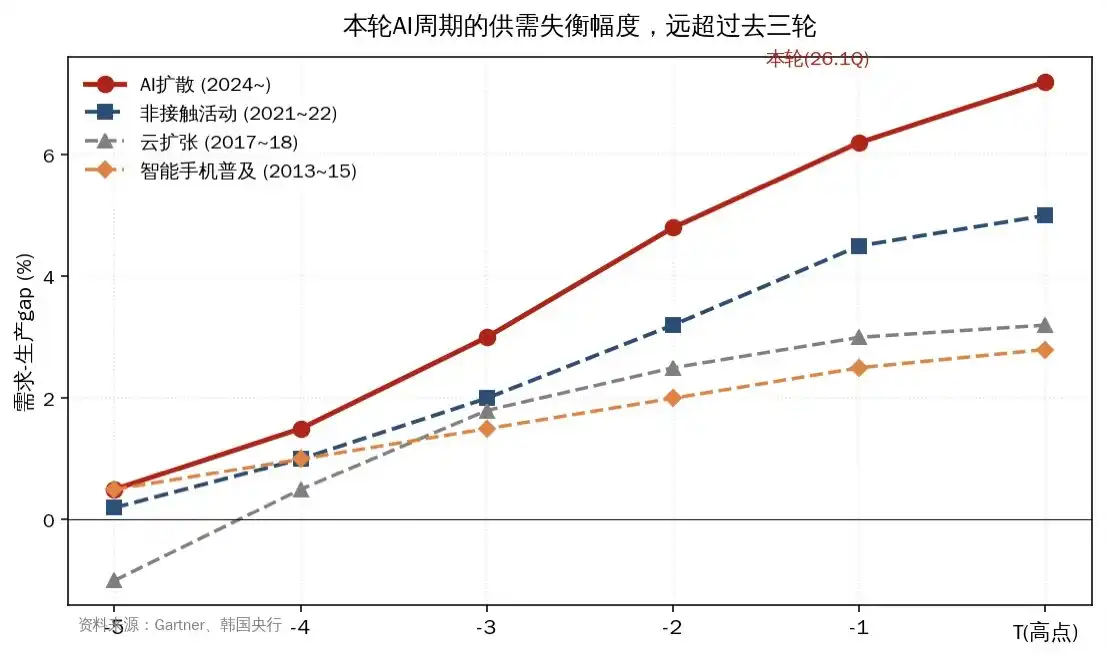
Figure 1: Comparison of Demand-Production Gaps in Past Semiconductor Cycles, Current AI Cycle Amplitude Significantly Exceeds History

II. The Five Variables Determining How Far the Cycle Can Go

BoK provides a clear five-factor framework: three on the demand side, two on the supply side. I'll explain them in order of importance.

1. Timing of Profitability Verification for AI Investments. Currently, OpenAI, Anthropic, etc., are operating at a loss. What supports their valuations and investments is the market's expectation of future dominance. BoK's judgment is subtle: starting next year, the market's focus will shift from grabbing territory to whether it can make money. Coupled with risks like data center power bottlenecks, accelerated GPU depreciation, and insufficient utilization, it's difficult for CAPEX growth to maintain its current pace.

2. Whether Large Companies Can Continuously Raise Funds. This section is the most informative part of the entire report. BoK explicitly compares the present to the telecom bubble of the late 1990s and points out a worsening fact: the internal cash flow of large companies can no longer support CAPEX of this magnitude. Starting in the second half of last year, large companies reduced buybacks and significantly issued corporate bonds; the CDS spreads of some companies have already widened.
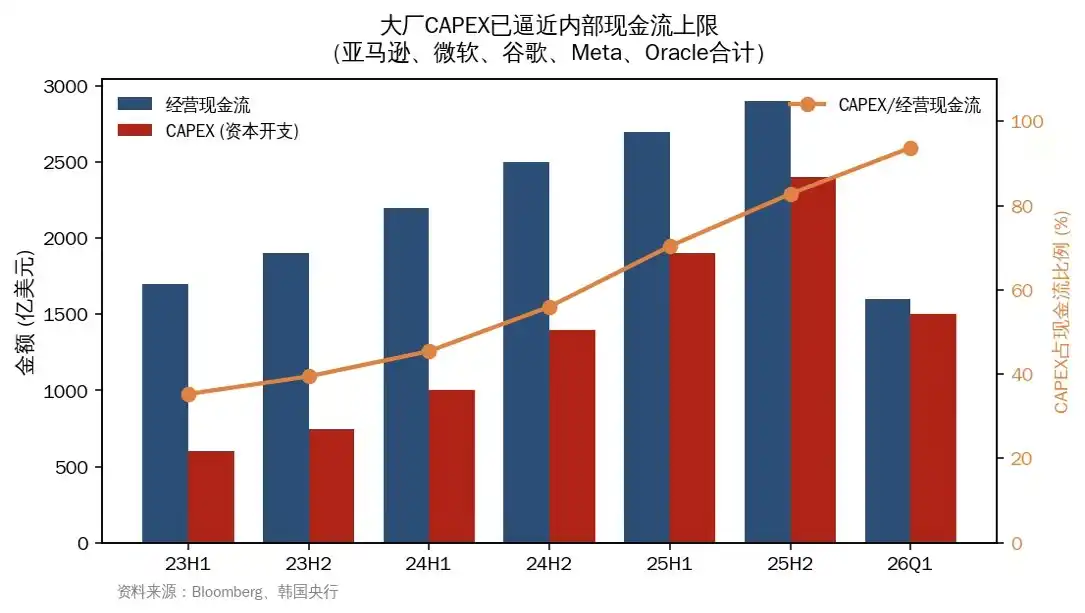
Figure 2: Large Companies' Operating Cash Flow Can No Longer Cover CAPEX, Ratio Soared from 25% to Nearly 100%
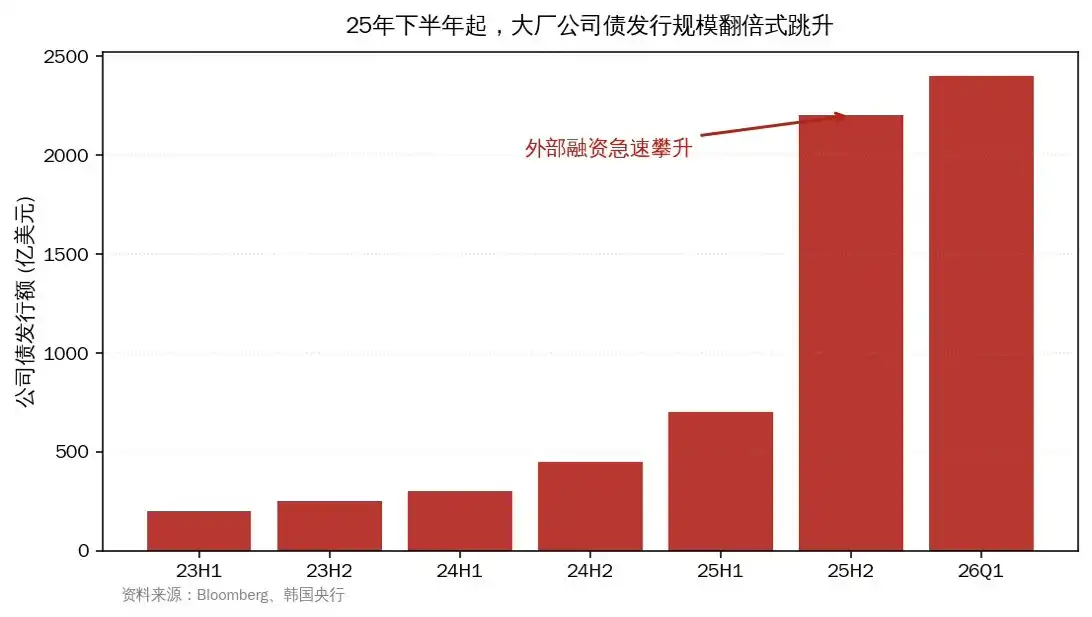
Figure 3: Corporate Bond Issuance Volume Jumped in H2 2025, External Financing Becomes Main Supplement

Even more alarming is the financing behavior itself. Neocloud companies (e.g., CoreWeave) are much smaller than large firms but must continuously procure GPUs and build AI data centers. Nvidia provides them with credit support to boost sales of its own GPUs. This structure is highly similar to the vendor financing provided by Cisco and Lucent to nascent telecom companies back then.

Another layer is off-balance-sheet financing. Meta's Hyperion data center, through SPVs and private credit, has $29.5 billion in liabilities not on Meta's balance sheet. Oracle's Stargate ($66 billion), xAI's Colossus ($20 billion) use similar structures. BoK mentions a detail: in February-March 2026, institutions like Blue Owl, BlackRock, Morgan Stanley, and Cliffwater suspended redemptions for some private credit funds due to AI disruption concerns. This is a crack.

3. Progress in AI Model Efficiency. After DeepSeek, memory-saving technologies like quantization compression, MoE, Mamba, Nvidia's CMX, Google's TurboQuant are rapidly emerging. BoK frankly admits the bidirectional impact is uncertain. Efficiency gains could either reduce unit demand or, due to Jevons Paradox, increase total demand. This factor is marked with a bidirectional arrow in BoK's overall assessment table, the only one among the five without a definitive direction.

4. Expansion Speed of Major Memory Manufacturers. This year, Samsung's P4 and SK Hynix's M15X have exhausted existing cleanroom space but it's still insufficient. The real supply release window is in the second half of 2027. SK Hynix's Yongin, Micron's new fab in 2027H2, Samsung's P5 in 2028. These are hard constraints on the supply side that can be calendared.

5. Catch-up Speed of Chinese Manufacturers. BoK assesses the technology gap between China and South Korea is about 4 years, for both HBM and general-purpose DRAM. So the high-end landscape remains stable short-term. But one number is noteworthy: the DRAM shipment share of Chinese manufacturers may rise from 10.5% in 2025 to 17% in 2027, with a growth rate over the next two years more than 3 times that of major memory makers. This share will pressure general-purpose DRAM prices, accelerating the timing of imbalance relief.
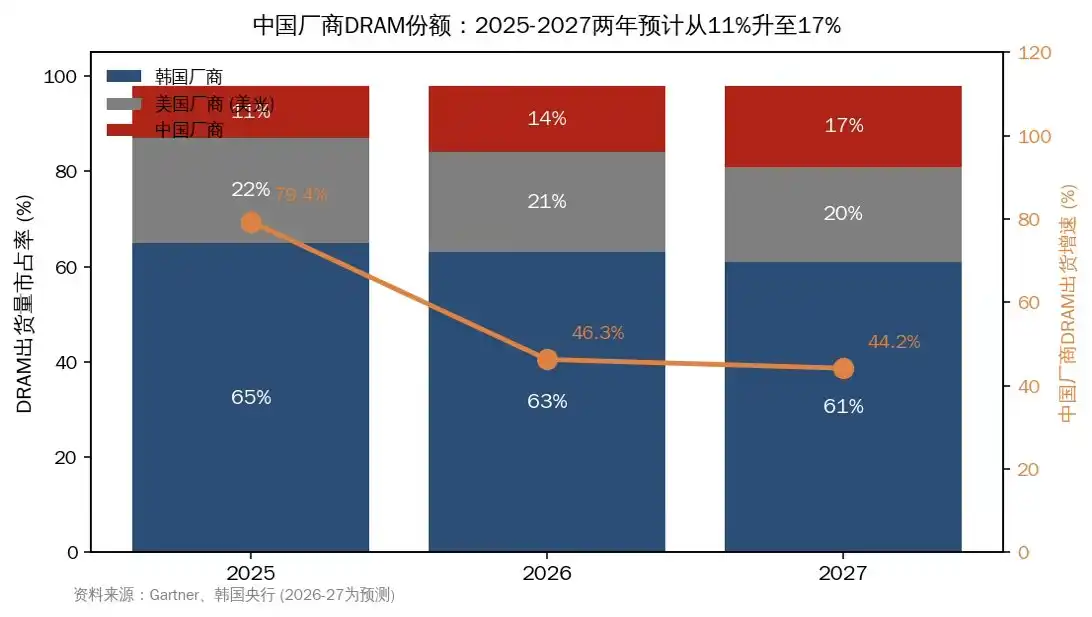
Figure 4: Chinese Manufacturers' DRAM Share Rises from 11% to 17%, Shipment Growth Far Exceeds Major Memory Makers

III. Regarding the Middle East War, BoK's Judgment is Calmer Than Expected

Currently, there are no signs of data center construction delays or memory supply slowdowns. The AI investment cycle is led by US companies, with 74% of data centers under construction in the Americas. The correlation between the global economy and semiconductors has significantly weakened in recent years.

But BoK lists several potential transmission channels. Rising oil prices increase data center operating costs, tightening financial conditions increase large companies' financing difficulties, supply disruptions of Middle Eastern raw materials and equipment (bromine, helium), and if Taiwan's energy issues affect system chip production, it would drag down memory. The most direct backlash is on the consumer side: Gartner already predicts that due to memory price increases, PC shipments will fall 10.4% YoY and smartphones 8.4% in 2026.

IV. Piecing Together the Timeline

BoK concludes with a color-coded matrix visualizing the impact strength of each of the five factors for the years 2026, 2027, and 2028. I translate the implications of this chart into a narrative timeline.

2026: The pattern of demand dominance and supply constraints continues. This is the most certain year.

2027: Contradictions begin to accumulate. Large company financing pressure rises, Chinese expansion accelerates, new fabs are not yet operational but vulnerabilities in financing end are exposed.

2028: Concentrated release from Samsung's P5, SK Hynix's Yongin, Micron's new fab. Risks on the supply side significantly amplify.

An Extension

The truly interesting part of this report is its narrative style. A central bank whose national foundation is memory did not cheerlead for its domestic industry. It spent significant篇幅 arguing the fragility of the financing structure, the bidirectional uncertainty of technological efficiency, and the微妙 inflection point in 2027 on the timeline. This restraint is an attitude in itself.

Its comparison to the telecom bubble is the part I reread several times. The script back then was: strong initial demand叠加competitive expansion,再叠加a technological innovation that arrived faster than expected (WDM - Wavelength Division Multiplexing), ultimately pushing the industry into rapid oversupply. Today's AI industry has all three conditions present, the difference is just that the critical technology equivalent to WDM hasn't appeared yet.

When domestic investors focus on the memory industry chain, their attention habitually falls on supply-side matters like HBM yield rates, CXMT progress. BoK's report pulls the focus back to the other side: the real variable in this cycle lies on the demand side, more precisely, hidden in the financing sustainability of the AI industry. Signals like Neocloud's vendor financing, off-balance-sheet leverage of SPVs, redemption halts in private credit funds—these deserve closer scrutiny than any expansion timetable.

At least until the first half of 2026, the story continues. The script thereafter depends on how the five variables above play out.

Domande pertinenti

QAccording to the Bank of Korea (BoK), what is the main reason this AI-driven semiconductor super cycle is different from the previous three cycles?

AThe BoK identifies three key differences: 1) The fastest demand growth in history, driven by HBM and general DRAM for AI; 2) The worst supply elasticity in history due to HBM's complexity and conservative post-2022 expansion; 3) The resulting supply-demand gap is significantly larger and longer-lasting than in past cycles.

QWhat are the two most critical warning signals for the cycle's sustainability that the BoK report highlights in the financing sector?

AThe two critical warning signals are: 1) Major tech companies' internal cash flow can no longer cover their massive CAPEX, forcing them to reduce buybacks and issue corporate debt. 2) The rise of vendor financing for Neocloud companies (e.g., by Nvidia) and the use of off-balance-sheet SPV financing (e.g., by Meta and Oracle), which resembles the structure of the telecom bubble. Additionally, some private credit funds have halted redemptions due to AI disruption concerns.

QHow does the BoK assess the potential impact of Chinese semiconductor manufacturers on the global market?

AThe BoK estimates a technical gap of about 4 years between Chinese and Korean manufacturers for both HBM and general DRAM. However, it notes that the shipment share of Chinese DRAM is projected to rise from 10.5% in 2025 to 17% in 2027, with a growth rate more than three times that of major manufacturers. This expansion is expected to put downward pressure on general DRAM prices and accelerate the timeline for the supply-demand imbalance to ease.

QWhat is the BoK's projected timeline for the semiconductor cycle based on its five-factor framework?

AThe BoK's projected timeline is: 2026: The expansion continues as demand outweighs constrained supply. 2027: Contradictions begin to accumulate with rising financing pressure for big tech and accelerated Chinese expansion, while new fabs are not yet online. 2028: Significant supply-side risks emerge as major new fabs from Samsung, SK Hynix, and Micron begin concentrated production.

QWhy does the BoK draw a comparison between the current AI investment cycle and the telecom bubble of the late 1990s?

AThe BoK draws the comparison due to structural similarities: strong initial demand, competitive expansion, and the potential for a rapid technological innovation to trigger oversupply. Specifically, it highlights the parallel between vendor financing provided to new cloud companies today (like Nvidia's support for CoreWeave) and the vendor financing provided by companies like Cisco and Lucent to new telecom firms during the bubble. The report suggests that today's AI industry has all the conditions present that existed before the telecom bubble, except for the specific critical technology (like WDM) that ultimately caused the crash.

Letture associate

Trading

Spot
Futures

Articoli Popolari

Cosa è $BANK

Banca AI: Un Passo Rivoluzionario nel Futuro della Banca Introduzione In un'era caratterizzata da rapidi progressi tecnologici, Banca AI si trova all'incrocio tra intelligenza artificiale (AI) e servizi bancari. Questo progetto innovativo mira a ridefinire il panorama finanziario, migliorando l'efficienza operativa, le misure di sicurezza e le esperienze dei clienti attraverso il potere dell'AI. Mentre ci impegniamo in questa esplorazione di Banca AI, esamineremo cosa comporta il progetto, le sue dinamiche operative, il suo contesto storico e i traguardi significativi. Cos'è Banca AI? Alla sua essenza, Banca AI rappresenta un'iniziativa trasformativa volta a integrare l'intelligenza artificiale in varie operazioni bancarie. Questo progetto sfrutta le capacità dell'AI per automatizzare processi, migliorare i protocolli di gestione del rischio e potenziare l'interazione con i clienti attraverso servizi personalizzati. Gli obiettivi principali di Banca AI includono: Automazione delle Funzioni Bancarie: Sfruttando le tecnologie AI, Banca AI mira ad automatizzare compiti di routine, riducendo il carico sulle risorse umane e aumentando l'efficienza. Miglioramento della Gestione del Rischio: Il progetto utilizza algoritmi AI per prevedere e identificare i rischi, rafforzando così le misure di sicurezza contro le frodi e altre minacce. Personalizzazione dei Servizi Bancari: Banca AI si concentra sull'offrire prodotti e servizi finanziari su misura analizzando i dati e i comportamenti dei clienti. Miglioramento dell'Esperienza del Cliente: L'implementazione di soluzioni guidate dall'AI, come chatbot e assistenti virtuali, mira a fornire agli utenti interazioni più umane, rivoluzionando il modo in cui i clienti si relazionano con le banche. Con questi obiettivi, Banca AI si posiziona come un attore cruciale nel rendere la banca più efficiente, sicura e centrata sull'utente. Chi è il Creatore di Banca AI? I dettagli riguardanti il creatore di Banca AI rimangono sconosciuti. Pertanto, non è stata identificata alcuna persona o organizzazione specifica nelle informazioni disponibili. L'anonimato che circonda la nascita del progetto solleva domande, ma non sminuisce la sua ambiziosa visione e obiettivi. Chi sono gli Investitori di Banca AI? Simile al creatore del progetto, informazioni specifiche riguardo gli investitori o le organizzazioni di supporto di Banca AI non sono state divulgate. Senza queste informazioni, è difficile delineare il sostegno finanziario e istituzionale che potrebbe spingere il progetto in avanti. Tuttavia, l'importanza di avere una solida base di investimento è fondamentale per sostenere lo sviluppo in un campo così innovativo. Come Funziona Banca AI? Banca AI opera su più fronti innovativi, concentrandosi su fattori unici che la differenziano dai framework bancari tradizionali. Di seguito sono riportate le caratteristiche operative chiave: Automazione: Applicando algoritmi di machine learning, Banca AI automatizza vari processi manuali all'interno delle banche. Ciò si traduce in una riduzione dei costi operativi e consente ai lavoratori umani di reindirizzare i propri sforzi verso attività più strategiche. Gestione Avanzata del Rischio: L'integrazione dell'AI nelle pratiche di gestione del rischio fornisce alle banche strumenti per prevedere con precisione potenziali minacce come le frodi, garantendo che le informazioni e i beni dei clienti rimangano al sicuro. Raccomandazioni Finanziarie Personalizzate: Attraverso l'apprendimento continuo dalle interazioni con i clienti, i sistemi AI sviluppano una comprensione sfumata delle esigenze degli utenti, consentendo loro di offrire consigli su misura per le decisioni finanziarie. Interazioni Migliorate con i Clienti: Utilizzando chatbot e assistenti virtuali alimentati dall'AI, Banca AI consente un'esperienza cliente più coinvolgente, permettendo agli utenti di risolvere rapidamente le loro richieste, riducendo così i tempi di attesa e migliorando i livelli di soddisfazione. Tutte queste caratteristiche operative posizionano Banca AI come un pioniere nel settore bancario, stabilendo nuovi standard per la fornitura di servizi e l'eccellenza operativa. Timeline di Banca AI Comprendere la traiettoria di Banca AI richiede uno sguardo al suo contesto storico. Di seguito è riportata una timeline che evidenzia traguardi e sviluppi importanti: Inizio 2010: La concettualizzazione dell'integrazione dell'AI nei servizi bancari ha cominciato a guadagnare attenzione mentre le istituzioni bancarie riconoscevano i potenziali benefici. 2018: Si è verificato un aumento significativo nell'implementazione delle tecnologie AI quando le banche hanno iniziato a utilizzare strumenti AI come i chatbot per servizi clienti di base e sistemi di gestione del rischio per migliorare la sicurezza. 2023: La sofisticazione dell'AI ha continuato ad avanzare, con l'introduzione dell'AI generativa per compiti più complessi come l'elaborazione di documenti e l'analisi degli investimenti in tempo reale. Quest'anno ha segnato un significativo salto nelle capacità offerte alle banche dalla tecnologia AI. 2024-Stato Attuale: A partire da quest'anno, Banca AI è su una traiettoria ascendente, con ricerche e sviluppi in corso pronti a migliorare ulteriormente le capacità nelle operazioni bancarie. L'esplorazione continua delle applicazioni AI suggerisce sviluppi entusiasmanti in arrivo. Punti Chiave su Banca AI Integrazione dell'AI nella Banca: Banca AI si concentra sull'adozione dell'intelligenza artificiale per snellire i processi bancari e migliorare le esperienze degli utenti. Focus su Automazione e Gestione del Rischio: Il progetto enfatizza fortemente queste aree, mirando a spostare il carico di compiti di routine mentre migliora le strutture di sicurezza attraverso analisi predittive. Soluzioni Bancarie Personalizzate: Sfruttando i dati dei clienti, Banca AI consente servizi bancari su misura che si adattano alle esigenze individuali degli utenti. Impegno per lo Sviluppo: Banca AI rimane impegnata in sforzi di ricerca e sviluppo continuativi, garantendo la sua adattabilità e rilevanza continua man mano che la tecnologia continua a evolversi. Conclusione In sintesi, Banca AI rappresenta un passo cruciale in avanti nell'industria bancaria, sfruttando l'intelligenza artificiale per rimodellare i paradigmi operativi, migliorare la sicurezza e promuovere la soddisfazione del cliente. Nonostante le lacune nelle informazioni riguardo il creatore e gli investitori, gli obiettivi chiari e i meccanismi funzionali di Banca AI forniscono una solida base per la sua continua evoluzione. Mentre la tecnologia AI continua ad avanzare e fondersi con il settore bancario, Banca AI è ben posizionata per avere un impatto significativo sul futuro dei servizi finanziari, migliorando il modo in cui comprendiamo e interagiamo con la banca.

107 Totale visualizzazioniPubblicato il 2024.04.06Aggiornato il 2024.12.03

Cosa è $BANK

Come comprare BANK

Benvenuto in HTX.com! Abbiamo reso l'acquisto di Lorenzo Protocol (BANK) semplice e conveniente. Segui la nostra guida passo passo per intraprendere il tuo viaggio nel mondo delle criptovalute.Step 1: Crea il tuo Account HTXUsa la tua email o numero di telefono per registrarti il tuo account gratuito su HTX. Vivi un'esperienza facile e sblocca tutte le funzionalità,Crea il mio accountStep 2: Vai in Acquista crypto e seleziona il tuo metodo di pagamentoCarta di credito/debito: utilizza la tua Visa o Mastercard per acquistare immediatamente Lorenzo ProtocolBANK.Bilancio: Usa i fondi dal bilancio del tuo account HTX per fare trading senza problemi.Terze parti: abbiamo aggiunto metodi di pagamento molto utilizzati come Google Pay e Apple Pay per maggiore comodità.P2P: Fai trading direttamente con altri utenti HTX.Over-the-Counter (OTC): Offriamo servizi su misura e tassi di cambio competitivi per i trader.Step 3: Conserva Lorenzo Protocol (BANK)Dopo aver acquistato Lorenzo Protocol (BANK), conserva nel tuo account HTX. In alternativa, puoi inviare tramite trasferimento blockchain o scambiare per altre criptovalute.Step 4: Scambia Lorenzo Protocol (BANK)Scambia facilmente Lorenzo Protocol (BANK) nel mercato spot di HTX. Accedi al tuo account, seleziona la tua coppia di trading, esegui le tue operazioni e monitora in tempo reale. Offriamo un'esperienza user-friendly sia per chi ha appena iniziato che per i trader più esperti.

674 Totale visualizzazioniPubblicato il 2025.05.09Aggiornato il 2025.05.09

Come comprare BANK

Discussioni

Benvenuto nella Community HTX. Qui puoi rimanere informato sugli ultimi sviluppi della piattaforma e accedere ad approfondimenti esperti sul mercato. Le opinioni degli utenti sul prezzo di BANK BANK sono presentate come di seguito.

活动图片