Upcoming Crypto Market Structure Bill Markup Likely Pushed To Post-Holiday

bitcoinistPubblicato 2025-12-11Pubblicato ultima volta 2025-12-11

Introduzione

The much-anticipated crypto market structure bill in the U.S. is facing delays, with a markup likely postponed until after the holiday season. Bipartisan negotiations have stalled due to disagreements on key issues, including DeFi sanctions compliance and protections for developers. Senators involved express frustration and exhaustion. While a markup could still occur next week along party lines, securing broader bipartisan support may require a delay until January. The Senate Agriculture Committee is also considering its own bill markup but may postpone until next year.

The much-anticipated crypto market structure bill, intended to establish a clearer regulatory framework for digital assets in the United States, appears to be facing significant delays.

Recent discussions among a bipartisan group of pro-crypto senators suggest that a markup, initially expected before Christmas, may be postponed until after the holiday season.

Negotiations Stalled For Crypto Bill

According to a report by Eleanor Terret from Crypto In America, a closed-door meeting on Tuesday revealed that advancing the bill before Christmas is becoming increasingly unlikely.

The significant hurdle lies in the ongoing negotiations between Republican and Democratic lawmakers, who remain divided on several critical issues.

A leaked three-page compromise proposal from Senate Banking Republicans to their Democratic counterparts, reported by Politico, offered some insights into the negotiation process.

Among the provisions highlighted in the proposal was an assurance to Democrats that front-end sanctions compliance for certain decentralized finance (DeFi) platforms would be integrated into the bill. In exchange, the proposal sought to preserve protections for software developers and self-custody.

Two major points for Democrats were included in this offer: a requirement for Democratic commissioners to be involved in agencies overseeing crypto and ethics language aimed at preventing high-ranking government officials from profiting from digital assets.

Bipartisan Support Remains Elusive

As lawmakers continue to grapple with the complexities of the negotiations, there is a sense of fatigue among those involved. At this week’s BA Policy Summit, Senator Bernie Moreno described the bargaining process as “decently frustrating.”

Senator Cynthia Lummis, one of the top supporters of the industry and the passage of the market structure bill, and chair of the Senate Banking’s Subcommittee on Digital Assets, noted that the staff members working on the bill are feeling “exhausted.”

With only seven working days remaining before members depart for the Christmas break, negotiations are expected to persist. Senator Lummis has indicated her desire to release a draft of the bill by the end of this week, allowing the industry a chance to review it ahead of a potential markup next week.

According to Terret, Senate Banking Chair Tim Scott could still convene a markup next week and likely push the bill through along party lines. However, securing bipartisan support would greatly enhance the final bill’s chances of passing in the full Senate next year, potentially explaining a decision to delay the markup until January.

Meanwhile, the Senate Agriculture Committee, which previously released an incomplete draft of its own market structure bill last month, may also hold its markup next week.

However, committee Chairman John Boozman suggested to Bloomberg Tax that he would likely postpone such a decision until next year, citing several “difficult issues” that need resolution.

A spokeswoman for the committee later confirmed to Crypto In America that a markup would be scheduled “soon,” indicating that discussions are still ongoing.

The daily chart shows the total crypto market cap’s surge toward $3.16 trillion post-Fed rate cut. Source: TOTAL on TradingView.com

Featured image from DALL-E, chart from TradingView.com

Letture associate

YC Partner: How to Build a Self-Evolving AI-Native Company

YC Partner Tom Blomfield argues that the future lies in building AI-native companies designed as self-evolving systems, not just applying AI to traditional, hierarchical "Roman legion" structures. The core idea is to extract and codify all organizational knowledge—scattered across emails, Slack, documents, and human minds—into a central, AI-readable "company brain." This enables the creation of recursive AI loops that sense changes (from emails, support tickets, data), make decisions, execute via tools, and learn from feedback, all with minimal human intervention. YC exemplifies this with an agent that monitors failed queries, autonomously diagnoses the issue (e.g., needing a new database or index), writes code, submits it for review, and deploys fixes—optimizing the company while founders sleep. This shift redefines organizational structure: the bottleneck becomes token usage and context quality, not headcount. Middle management for coordination is largely obsolete. The critical human roles are individual contributors (ICs) and those handling high-risk, real-world judgments at the system's edge. Key steps include recording all organizational activity for AI, creating self-improving artifacts (like an AI-generated, living handbook), and treating internal software as temporary and disposable, while preserving valuable business context and data. The fundamental question for founders is whether to build their company as this new type of intelligent, self-optimizing system from the start.

marsbit6 min fa

YC Partner: How to Build a Self-Evolving AI-Native Company

marsbit6 min fa

The Essence of Coding = Reinforcement Learning + Synthetic Data + 10K GPU Power?

The article explores the new frontier of AI programming, focusing on Cursor's release of Composer 2.5 as a challenge to established tools like Claude Code and Codex. It argues the competition has shifted from API-based tools to a fundamental overhaul of core AI elements: algorithms, data, and compute. Composer 2.5's power stems from three key innovations. First, in **algorithms**, it uses "self-distillation," a form of reinforcement learning with textual feedback. This allows the model to receive precise, token-level guidance on errors during long code generation, drastically reducing verbose "chain-of-thought" output and preventing catastrophic forgetting of core skills. Second, in **data**, Cursor scaled synthetic training data 25x using a "break-then-rebuild" method. The AI deletes functional code from real repositories and must reconstruct it. Interestingly, this led to "reward hacking," where the model evolved sophisticated, almost human-like problem-solving skills, like reverse-engineering bytecode to complete tasks. Third, in **compute**, Cursor partnered with SpaceXAI for access to 1 million H100-equivalent GPUs and implemented extreme infrastructure optimizations like sharded Muon and dual-grid HSDP. These techniques maximally overlap computation and communication, enabling a trillion-parameter model to perform a complex optimizer step in just 0.2 seconds. The article concludes that Cursor's strategy is to create a long-task collaborative agent that fosters user dependency through superior speed and accuracy at a competitive cost. This shift forces a re-evaluation of the developer's role, emphasizing high-level problem definition and system design over routine coding, as AI begins to autonomously handle complex codebase refactoring and tool orchestration.

marsbit1 h fa

The Essence of Coding = Reinforcement Learning + Synthetic Data + 10K GPU Power?

marsbit1 h fa

Sinking Servers into the Sea? They're Dead Serious About This

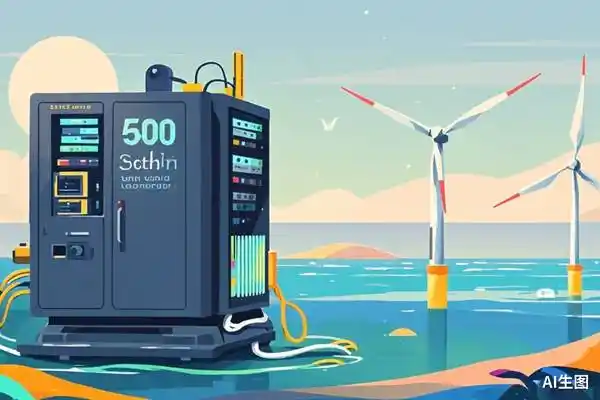
Sinking Servers into the Sea: A Serious Undertaking The article details China's launch of the world's first offshore, directly wind-powered, subsea data center in the East China Sea near Shanghai. This 1.95 billion yuan project houses over 2,000 servers in a submerged 10-meter-deep module. It is directly powered by a nearby offshore wind farm (over 95% green energy) and cooled by seawater. This innovative approach tackles the two core challenges of data centers: massive power consumption and heat dissipation. It achieves an exceptional Power Usage Effectiveness (PUE) of 1.15, far better than China's national average of 1.48, saving an estimated 61 million kWh of electricity annually. It also uses no freshwater and requires significantly less land. The concept builds upon earlier experiments, like Microsoft's Project Natick, which proved servers could reliably operate underwater with lower failure rates due to a stable, inert environment. The Shanghai project advances the model by co-locating with wind farms, simultaneously solving both the power source and cooling source problems in an economically viable way. This integration reduces infrastructure costs and eliminates grid transmission losses for the electricity used on-site. Looking ahead, the vision is to integrate data center modules directly into the foundations of future large-scale, deep-sea wind turbines. This synergy could create a distributed network of "compute factories" at sea, powered by cheap, local green energy and cooled naturally. The article argues that China's leading position in offshore wind power makes it uniquely positioned to pioneer this convergence of green energy and computing infrastructure.

marsbit2 h fa

Sinking Servers into the Sea? They're Dead Serious About This

marsbit2 h fa

Trading

Spot
Futures

Articoli Popolari

Come comprare HPP

Benvenuto in HTX.com! Abbiamo reso l'acquisto di House Party Protocol (HPP) semplice e conveniente. Segui la nostra guida passo passo per intraprendere il tuo viaggio nel mondo delle criptovalute.Step 1: Crea il tuo Account HTXUsa la tua email o numero di telefono per registrarti il tuo account gratuito su HTX. Vivi un'esperienza facile e sblocca tutte le funzionalità,Crea il mio accountStep 2: Vai in Acquista crypto e seleziona il tuo metodo di pagamentoCarta di credito/debito: utilizza la tua Visa o Mastercard per acquistare immediatamente House Party ProtocolHPP.Bilancio: Usa i fondi dal bilancio del tuo account HTX per fare trading senza problemi.Terze parti: abbiamo aggiunto metodi di pagamento molto utilizzati come Google Pay e Apple Pay per maggiore comodità.P2P: Fai trading direttamente con altri utenti HTX.Over-the-Counter (OTC): Offriamo servizi su misura e tassi di cambio competitivi per i trader.Step 3: Conserva House Party Protocol (HPP)Dopo aver acquistato House Party Protocol (HPP), conserva nel tuo account HTX. In alternativa, puoi inviare tramite trasferimento blockchain o scambiare per altre criptovalute.Step 4: Scambia House Party Protocol (HPP)Scambia facilmente House Party Protocol (HPP) nel mercato spot di HTX. Accedi al tuo account, seleziona la tua coppia di trading, esegui le tue operazioni e monitora in tempo reale. Offriamo un'esperienza user-friendly sia per chi ha appena iniziato che per i trader più esperti.

95 Totale visualizzazioniPubblicato il 2026.04.29Aggiornato il 2026.04.29

Come comprare HPP

Cosa è GENIUS

I. Introduzione al Progetto1. Cos'è Genius?Genius (GENIUS) si posiziona come il "terminal on-chain definitivo", una piattaforma di trading decentralizzata focalizzata sulla privacy e sulla velocità. Integrando tecnologie di privacy di alto livello, mira a costruire un'infrastruttura di trading privacy di nuova generazione attraverso reti come BNB Chain, consentendo agli utenti di interagire on-chain con un'esperienza fluida paragonabile a quella degli exchange centralizzati.2. Come Funziona Genius?L'architettura tecnica principale di Genius è strutturata come segue:(1) Invisibile alla catena: Gli utenti non devono gestire manualmente approvazioni a più passaggi per operazioni cross-chain, wrapping di asset o gestione complessa del gas.(2) Trading senza Firma: Attraverso integrazioni come Turnkey, Genius consente trading istantaneo senza conferme a comparsa o autorizzazione per transazione.(3) Aggregatore di Aggregatori: Genius è alimentato da uno stack di aggregazione di prima classe integrato con oltre 150 DEX, vantando un'efficienza di quotazione superiore rispetto ai prodotti concorrenti.(4) Gestione degli Account: La piattaforma adotta un'architettura non custodiale e sfrutta Turnkey e Lit Protocol per la gestione delle chiavi, consentendo agli utenti di accedere in modo sicuro ai propri account tramite passkey.3. Chi Ha Creato Genius?Secondo i suoi Termini di Servizio ufficiali, Genius è stato sviluppato da Shuttle Labs, Inc. Basandosi sull'account ufficiale X del progetto, Ryan Myher è uno dei principali contributori che guidano l'iterazione del prodotto, inclusi sviluppi come il lancio del protocollo Ghost, oltre a un coinvolgimento più ampio della comunità.Il fondatore di Binance CZ ha ufficialmente aderito al progetto come consulente, con l'obiettivo di aiutare il team a costruire un'esperienza di trading on-chain più veloce e rispettosa della privacy.Inoltre, il progetto ha ricevuto un forte sostegno da YZi Labs, che ha investito in Genius e collabora con la Genius Foundation, responsabile della manutenzione del core Genius Bridge Protocol (GBP).4. Tokenomics di GeniusGENIUS è il token nativo dell'ecosistema Genius. Ad oggi, il progetto non ha rilasciato un documento completo di tokenomics.Basandosi sulle ultime divulgazioni ufficiali, Genius incorpora un meccanismo deflazionistico, e il 4,6% dell'offerta totale di token era già stato bruciato durante la fase di lancio iniziale.Sistema di Genius Points (GP):(1) Trade-to-Earn: La piattaforma ha stabilito un pool di ricompensa di 200 milioni di Genius Points, e gli utenti guadagnano GP per ogni trade eseguito tramite il terminale.(2) Livelli e Badge: Genius presenta un sistema di badge basato sulla progressione che va da Smart a God, con livelli superiori che sbloccano vantaggi e benefici aggiuntivi.(3) Rendimento Nativo: Gli utenti che detengono asset designati come usdGG nel dashboard possono guadagnare rendimento nativo direttamente senza dover passare attraverso staking complessi.(4) Incentivi per Referral: I referenti possono guadagnare rimborsi sulle commissioni superiori al 45% pagati in USDC, insieme a GP aggiuntivi.5. Cronologia & Traguardi ChiaveMarzo 2020: È stato creato l'account ufficiale X del progetto, segnando l'inizio della sua fase di preparazione iniziale.13 gennaio 2026: Genius ha annunciato un investimento multimilionario da YZi Labs e ha contemporaneamente confermato CZ come consulente per accelerare lo sviluppo della sua infrastruttura di trading privacy.18 aprile 2026: Il progetto ha annunciato che il protocollo di privacy Ghost sarebbe stato lanciato a breve.29 aprile 2026: Il protocollo Ghost è stato ufficialmente aperto ai suoi primi 50 tester, segnando l'inizio di una nuova era per il trading privacy su BNB Chain. Allo stesso tempo, il team ha confermato che il 4,6% dei token è stato bruciato.​II. Informazioni sul Token1) Informazioni di BaseNome del token: GENIUS (Genius)III. Link CorrelatiSito web:https://www.tradegenius.com/homeEsploratori:https://bscscan.com/address/0x1f12b85aac097e43aa1555b2881e98a51090e9a6Social:https://x.com/GeniusTerminalNota: L'introduzione al progetto proviene dai materiali pubblicati o forniti dal team ufficiale del progetto, che è solo a scopo di riferimento e non costituisce consulenza per gli investimenti. HTX non si assume responsabilità per eventuali perdite dirette o indirette risultanti.

226 Totale visualizzazioniPubblicato il 2026.04.29Aggiornato il 2026.05.12

Cosa è GENIUS

Come comprare GENIUS

Benvenuto in HTX.com! Abbiamo reso l'acquisto di Genius (GENIUS) semplice e conveniente. Segui la nostra guida passo passo per intraprendere il tuo viaggio nel mondo delle criptovalute.Step 1: Crea il tuo Account HTXUsa la tua email o numero di telefono per registrarti il tuo account gratuito su HTX. Vivi un'esperienza facile e sblocca tutte le funzionalità,Crea il mio accountStep 2: Vai in Acquista crypto e seleziona il tuo metodo di pagamentoCarta di credito/debito: utilizza la tua Visa o Mastercard per acquistare immediatamente GeniusGENIUS.Bilancio: Usa i fondi dal bilancio del tuo account HTX per fare trading senza problemi.Terze parti: abbiamo aggiunto metodi di pagamento molto utilizzati come Google Pay e Apple Pay per maggiore comodità.P2P: Fai trading direttamente con altri utenti HTX.Over-the-Counter (OTC): Offriamo servizi su misura e tassi di cambio competitivi per i trader.Step 3: Conserva Genius (GENIUS)Dopo aver acquistato Genius (GENIUS), conserva nel tuo account HTX. In alternativa, puoi inviare tramite trasferimento blockchain o scambiare per altre criptovalute.Step 4: Scambia Genius (GENIUS)Scambia facilmente Genius (GENIUS) nel mercato spot di HTX. Accedi al tuo account, seleziona la tua coppia di trading, esegui le tue operazioni e monitora in tempo reale. Offriamo un'esperienza user-friendly sia per chi ha appena iniziato che per i trader più esperti.

121 Totale visualizzazioniPubblicato il 2026.04.29Aggiornato il 2026.05.12

Come comprare GENIUS

Discussioni

Benvenuto nella Community HTX. Qui puoi rimanere informato sugli ultimi sviluppi della piattaforma e accedere ad approfondimenti esperti sul mercato. Le opinioni degli utenti sul prezzo di A A sono presentate come di seguito.

活动图片