Author: Chloe, ChainCatcher
Last month, just hours before attending a state banquet with King Charles III, Eric Trump, the former president's second son, posted a five-paragraph defense of himself on X. The trigger was a controversy surrounding his involvement in a publicly-traded cryptocurrency company called "American Bitcoin," which he had been pitching to investors as capable of mining Bitcoin at roughly half the market price. A Forbes report had debunked that claim.
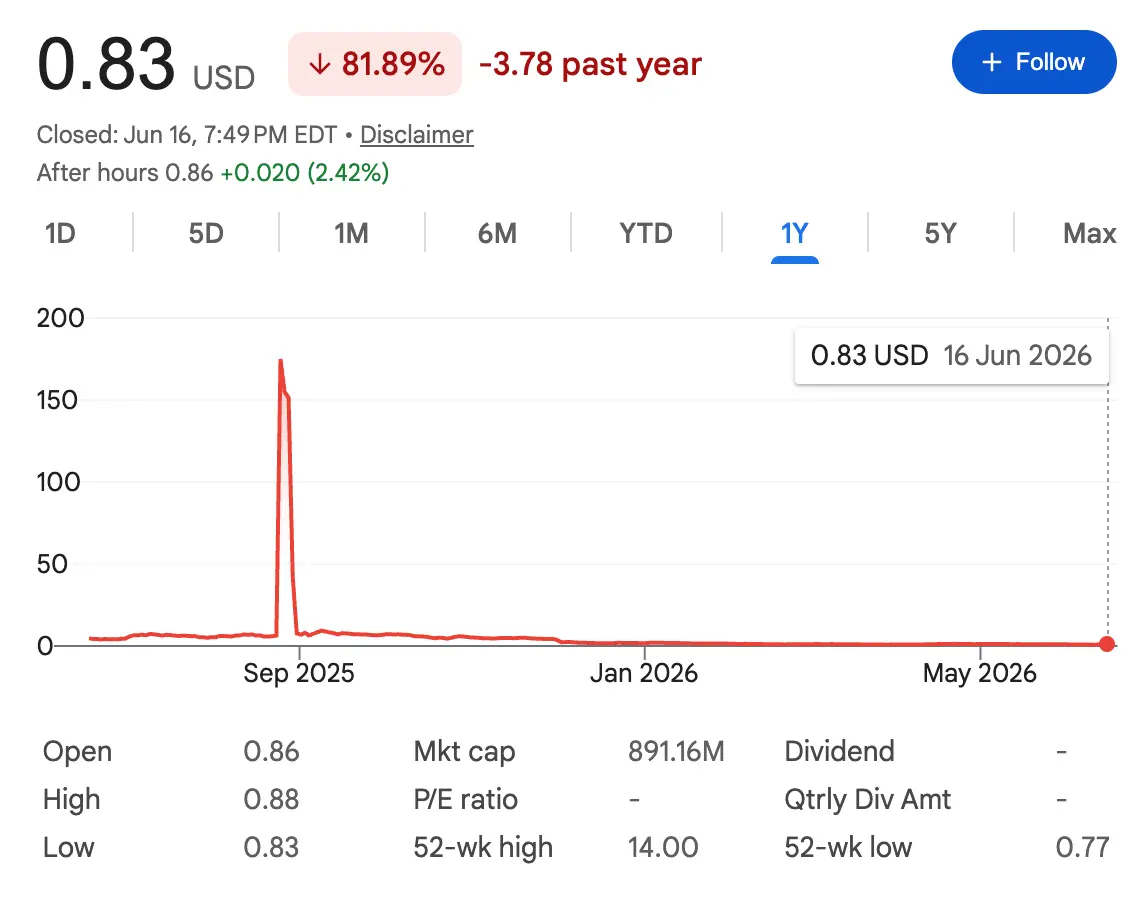
By June 17, 2026, the stock price of American Bitcoin (Nasdaq: ABTC) had fallen to about $0.83, a collapse of roughly 90% from its peak of around $175 at the end of last year and its $14 IPO price.
Then, Eric pivoted in his post to another matter weighing on him for nearly a decade: a 2017 Forbes investigation into his childhood cancer charity foundation. He wrote that the outside attacks were "insanity," as he was merely a young man "trying with all my heart to save dying children."
It is undeniable that he performed good deeds. Over the years, the foundation donated over $25 million to St. Jude Children's Research Hospital in Tennessee, operating with lean overhead, focused on fundraising while outsourcing the complex execution to others. However, its other side involves misleading rhetoric, sloppy accounting, a board entangled with interests, and unapologetic loyalty to Trump. The same playbook is now evident in the crypto industry.
The Trump Family's Habit of Emerging Unscathed from Scandals
Through Freedom of Information Act requests, Forbes obtained thousands of pages of documents revealing that between 2011 and 2016, his foundation directed at least $500,000 in charitable funds back to the family business through a series of transactions, most of which never appeared on tax filings.
These documents also explain why the Trump family consistently emerges unscathed. Their playbook is: first, mount a loud defense on television or social media; then, deploy lawyers to bury paper trails; next, adjust practices just enough to appease regulators and avoid punishment, without fundamentally changing; once the storm passes, re-emerge unabashedly as victims, asking the public for trust again—and there are always plenty willing to believe.
Eric's foundation has played this exact script from start to finish: nine years after the scandal, the renamed entity is still operating, with fundraising expanding annually, annual expenses exceeding $500,000, and events almost exclusively held at Trump-branded venues.
Blatant Conflicts of Interest, Extending Even to the White House
The foundation's origins were indeed well-intentioned. It began with Eric and his wealthy friends wanting to do good. The 2007 application to the IRS even stated: "Our family has three golf courses in New York and New Jersey available for use." The application also promised not to sign leases with any company controlled by its leadership. This held true for the first three years, with annual expenses around $50,000 and fundraising in the hundreds of thousands.
But starting in 2010, Trump Organization employees began joining the board. The following year, expenses surged to $142,000. Former club manager Ian Gillule pointed the finger directly at Trump himself in an interview: in the early days, the foundation used venues for free, and invoices often vanished. Trump was unhappy not with "helping for free," but with donating so much without leaving any paper trail or credit. He then ordered that everyone, including his own son, be charged.
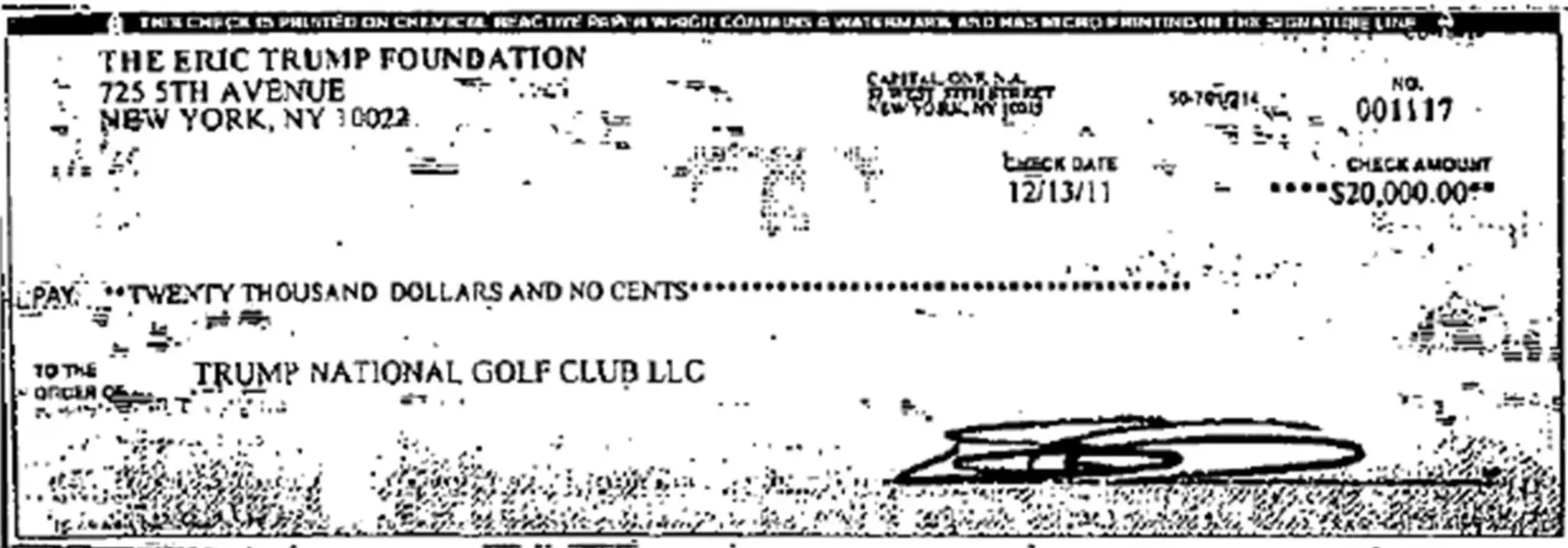
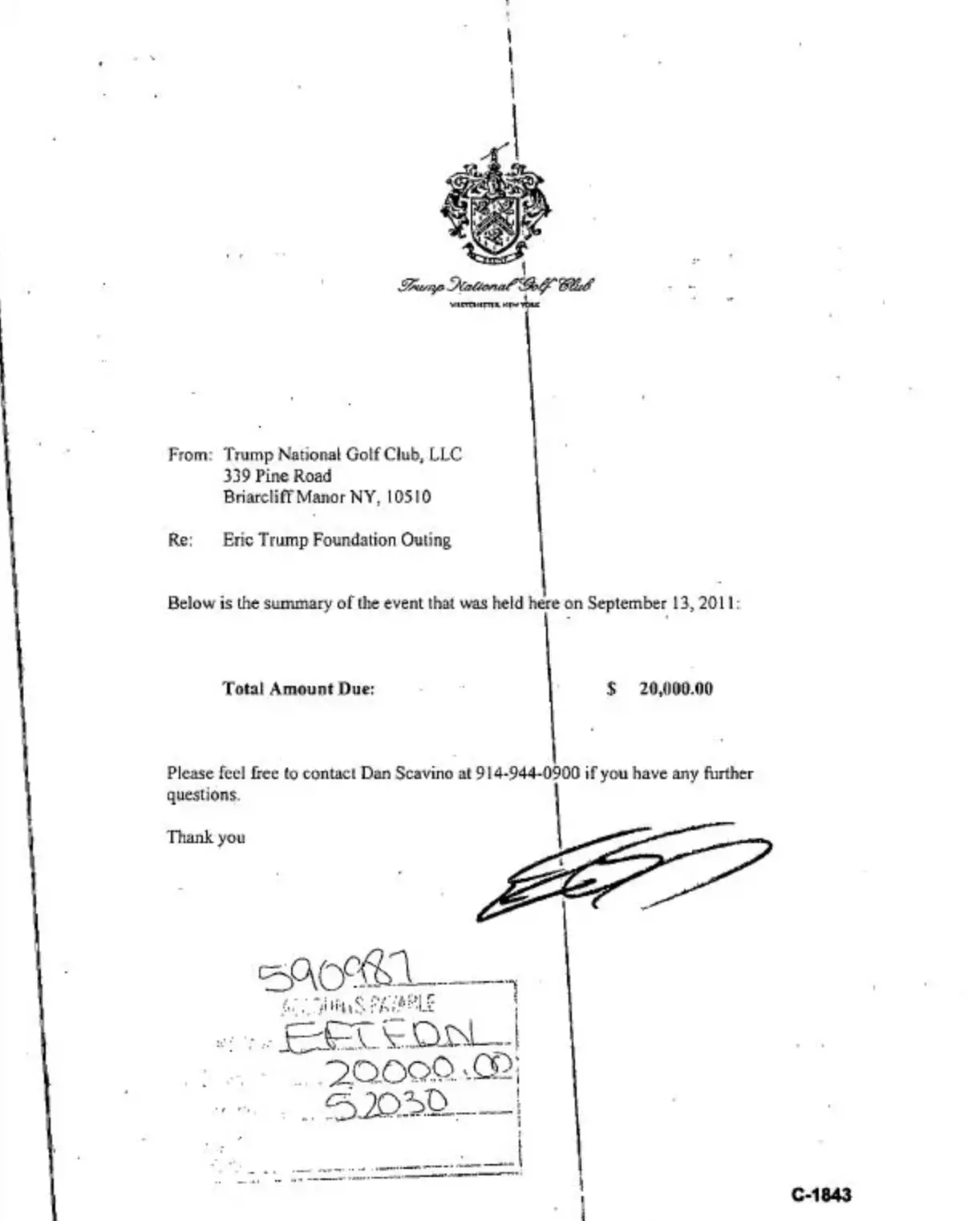
So, everyone got charged. After a 2011 event, Trump National Golf Club billed the foundation $20,000. The copy obtained by Forbes included a note: "If you have any questions, please call Dan Scavino." The conflict of interest was blatant: Dan Scavino, now White House Deputy Chief of Staff, was both the club's general manager and a foundation director at the time. The invoice also bore Eric's signature, though it's unclear in which capacity. Bills kept coming yearly: the club charged $100,000 in 2013, $99,000 in 2016, with Trump SoHo Hotel and Mar-a-Lago also taking a cut.
Toxic Candy Wrapped in Pretty Paper
"Dear Friends," Eric wrote in the 2014 fundraiser gala program, the foundation "boasts one of the lowest expense ratios in the world," insisting on using only Trump-owned venues, full-time volunteers, donated catering, and celebrity performers working pro bono, so that St. Jude received almost all proceeds.
But the books didn't match the rhetoric. The galas featured Hooters waitresses and mini Eric bobblehead dolls. Performers were mostly celebrities from "The Celebrity Apprentice." "They all performed for free," Eric claimed, yet checks he signed for performance fees totaled over $90,000. Auction items were "all donated," but the foundation spent at least $65,000 procuring them. In 2012, it even bought an item for $6,040 that sold for only $3,310. Transportation was another cost, with Sunny's alone charging over $35,000.
Furthermore, hundreds of thousands in donations flowed to other charities, several with closer ties to family interests than to childhood cancer; at least three also held fundraisers at Trump courses. In 2013, Eric even spent $1,600 of foundation funds to buy a decorative copper still and an antique bottle-washing machine near his family's winery. Of course, the foundation did donate large sums to St. Jude, increasing from $220,000 in 2007 to $2.9 million in 2016, the year of Trump's first election victory.
Eric as Victim, Feeling 'No Good Deed Goes Unpunished'
Politics soon thrust the foundation into the spotlight. In late 2016, Daily Beast and The Associated Press exposed its dealings with Trump clubs. The New York Times reported an investment manager bid nearly $60,000 at a fundraiser auction for a coffee with Ivanka Trump. The issues weren't just PR: under New York state and federal law, such related-party transactions required board votes, documentation, and disclosure on tax returns.
So Eric decided to restructure, distancing the foundation from the family: all Trump Organization employees left the board, including himself. He said his father's administration required avoiding "perception problems," and he would not personally fundraise until after his term. The foundation was renamed Curetivity, pledging all donations would go to St. Jude. Superficially, it seemed a return to its roots. But Eric remained unapologetic, telling Forbes a month after the board overhaul: "We use the best venues in the world 100% free, which is why our expense ratio is the lowest in history."
The day the article published, he appeared on Fox News, framing the scrutiny as a political witch hunt, casting himself as a victim. "I raised tens of millions of dollars, and what do I get in return? Hate."
Two days later, the Attorney General's office sent a letter requesting the books. The investigation took a toll: 2017 donations plummeted by over two-thirds, falling below $1 million, while administrative and legal costs soared from near zero to about $50,000 annually. By year-end, the AG's office wrote again, highlighting numerous issues: financial reports not conforming to accounting standards, ignoring related-party transaction rules, misleading marketing, and threatening to revoke its fundraising license.
Thereafter, the books became increasingly opaque. After Eric left the board, the occasional "related party transaction" label disappeared. The "rent/venue fees" line was often left blank. Fundraising expenses dropped from $384,000 in 2016 to $111,000 in 2017. By late 2018, when the AG's office indicated the investigation was shifting to compliance rather than enforcement, Eric re-emerged, returning to promotional materials and eventually being dubbed Curetivity's "founder." Fundraising expenses rebounded, hitting a new high of $392,000 in 2019. How much flowed back to the Trump Organization became unknowable under the murky accounting.
Today, fundraisers continue one after another at Trump-branded venues: $309,000 spent at Mar-a-Lago in 2020, with recent events held at Trump courses in North Carolina and Jupiter, Florida. If charges are similar to before, Curetivity alone could funnel around $200,000 annually into Trump's business empire, totaling over a million in two decades.
The Same Playbook Moved to Crypto
This playbook of "smooth talk, value flowing back to insiders" didn't stop at the charity foundation; it's now almost entirely replicated at American Bitcoin.
Previously, Eric packaged the company as a "money-printing machine," publicly claiming it could mine at a 53% discount to spot prices, with a cost per Bitcoin of about $57,000. It sounds strikingly similar to the foundation's "lowest expense ratio in the world." But just like the charity foundation, the books tell a different story.
The investigation was led by the same Forbes reporter, Dan Alexander, who exposed the foundation nine years ago. He found that about 70% of the company's Bitcoin wasn't mined; it was acquired by continuously issuing new shares and buying on the open market. Factoring in depreciation and SG&A, the all-in cost per coin neared $90,000, far above the $57,000 Eric claimed.
Now, the stock has crashed about 90% from its late-2025 peak of ~$175 and its $14 IPO price. Retail investors are estimated to have lost about $5 billion collectively. Financially, it's bleeding: a net loss of approximately $81.8 million in Q1 2026. Meanwhile, on the insider side, the view is completely different.
The founders originally acquired shares at near-zero cost. Even with the 90% stock drop, Eric's personal stake is still worth about $70 million; during the same period, his estimated net worth rose to around $300 million. The post-scandal script is also familiar. Facing质疑, Eric didn't directly address Forbes's calculated costs and dilution. Instead, he countered with impressive numbers like quarterly revenue growth and holdings exceeding 7,000 Bitcoins, lashing out on X that Forbes had become a political weapon and a disgrace to journalism.
Last September, Eric stood at the center of a party at the Westchester Country Club, hosting Curetivity's 19th fundraiser, surrounded by key business partners. Since his father's re-election, his estimated net worth has skyrocketed from around $40 million in 2024 to $300 million today.