Trump Crypto Deal Triggers JPMorgan Risk Debate After $500M Abu Dhabi Stake Revelation

bitcoinistPubblicato 2026-02-04Pubblicato ultima volta 2026-02-04

Introduzione

A $500 million investment by Abu Dhabi's Sheikh Tahnoon bin Zayed Al Nahyan into Trump-linked crypto platform World Liberty Financial (WLFI) has sparked a debate on political influence and regulatory risk. The deal, signed days before Trump's inauguration, has drawn scrutiny from US lawmakers, including Senator Elizabeth Warren. Trump has denied involvement. The revelation coincides with a lawsuit from Trump against JPMorgan Chase over alleged politically motivated account closures, and public clashes between CEO Jamie Dimon and crypto firms. The deal's scale, foreign involvement, and timing, coupled with Sheikh Tahnoon's role in a US-approved AI firm, have amplified concerns about transparency and influence, putting a spotlight on how major banks navigate crypto-related risks.

A reported $500 million investment by an Abu Dhabi royal into a Trump-linked crypto venture is reverberating well beyond the digital asset space, feeding into a broader debate about political influence, regulatory oversight, and how major financial institutions such as JPMorgan Chase navigate crypto-related risk.

The timing of the deal, just days before Donald Trump’s inauguration, has sharpened scrutiny at a moment when the bank is already facing a high-profile lawsuit from the US president and renewed tension with crypto firms.
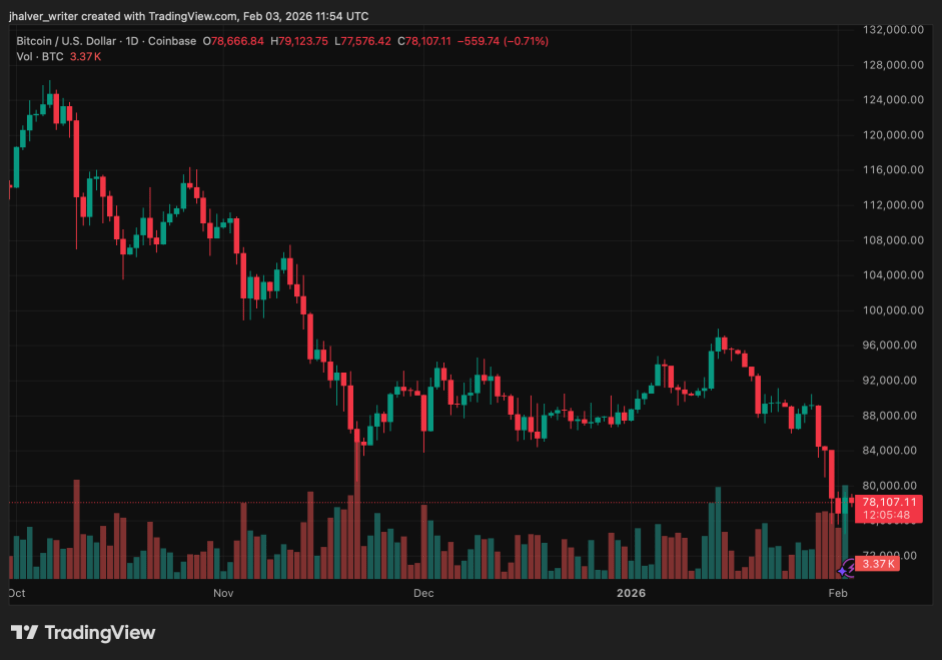
BTC's price trends to the downside on the daily chart. Source: BTCUSD on Tradingview

$500M World Liberty Financial Deal Draws Political Scrutiny

According to reporting by The Wall Street Journal, entities linked to Sheikh Tahnoon bin Zayed Al Nahyan acquired a 49% stake in World Liberty Financial (WLFI), a cryptocurrency platform tied to the Trump family, for $500 million.

The agreement was reportedly signed by Eric Trump four days before Trump returned to office. Trump has denied any knowledge of the transaction, stating that his sons manage the business independently.

The investment was structured in phases, beginning with an initial $250 million payment. Of that amount, about $187 million reportedly went to Trump-family-linked entities, with additional allocations to other WLFI founders. If completed in full, the deal would make the Tahnoon-backed vehicle WLFI’s largest shareholder.

The scale, foreign involvement, and timing of the investment have raised questions among US lawmakers, including calls from Senator Elizabeth Warren to pause regulatory reviews involving WFLI. No investigation has been announced, and WLFI has said the transaction was conducted independently of President Trump.

JPMorgan Lawsuit and Crypto Tensions Collide

The revelation comes as JPMorgan Chase faces a lawsuit from Trump alleging politically motivated account closures. The bank has said its decisions comply with legal and regulatory requirements.

Separately, JPMorgan CEO Jamie Dimon has clashed publicly with Coinbase leadership over crypto regulation, highlighting ongoing friction between traditional banks and digital asset firms.

For investors, these overlapping headlines bring renewed attention to how JPMorgan manages reputational and regulatory risk.

The bank’s stock has delivered strong multi-year returns, but analysts note that political controversy, legal costs, and shifting crypto policy could weigh on sentiment, particularly as regulators focus more closely on “debanking” practices and banks’ exposure to digital assets.

Why the Deal Resonates Beyond Crypto

The Abu Dhabi stake has drawn added attention because Sheikh Tahnoon also chairs G42, an AI firm that recently received US approval to purchase advanced chips from American suppliers.

While no wrongdoing has been alleged, the overlap between foreign capital, sensitive technology approvals, and a Trump-linked crypto venture has amplified concerns about transparency and influence.

Cover image from ChatGPT, BTCUSD chart on Tradingview

Domande pertinenti

QWhat is the significance of the $500 million investment by an Abu Dhabi royal into a Trump-linked crypto venture?

AThe $500 million investment is significant because it has sparked a broader debate about political influence, regulatory oversight, and how major financial institutions like JPMorgan navigate crypto-related risks. Its timing just before Trump's inauguration and the involvement of a foreign entity have drawn intense political scrutiny.

QWhich company received the investment and who is its largest shareholder as a result of the deal?

AThe investment was made into World Liberty Financial (WLFI), a cryptocurrency platform tied to the Trump family. If completed in full, the deal would make the Tahnoon-backed vehicle WLFI's largest shareholder with a 49% stake.

QHow has US Senator Elizabeth Warren reacted to the World Liberty Financial deal?

ASenator Elizabeth Warren has called for a pause on regulatory reviews involving World Liberty Financial (WLFI) in response to the deal.

QWhat two major issues is JPMorgan Chase currently facing that are mentioned in the article?

AJPMorgan Chase is currently facing a lawsuit from former President Trump alleging politically motivated account closures, and its CEO, Jamie Dimon, is engaged in public clashes with crypto firms like Coinbase over regulation.

QWhy does the article state the deal 'resonates beyond crypto,' citing Sheikh Tahnoon's other role?

AThe deal resonates beyond crypto because Sheikh Tahnoon also chairs G42, an AI firm that recently received US approval to purchase advanced chips from American suppliers. This overlap between foreign capital, sensitive technology approvals, and a Trump-linked venture amplifies concerns about transparency and influence.

Letture associate

Q4 Net Loss of $667 Million, Yet Stock Soars 16%, Don't Buy Coinbase Now

Coinbase reported a net loss of $667 million in Q4 2025, with revenue of $1.78 billion falling short of expectations. Despite this, its stock surged 16.46% the next day, reflecting short-term market confidence. However, analysts caution against investing in Coinbase at this time, citing high cyclicality and near-term headwinds. The company’s revenue is split between transaction-based income (56%) and subscription & services (44%). Transaction revenue relies heavily on retail trading spreads, which remain vulnerable to crypto market volatility. Subscription revenue includes stablecoin-related income (mainly from USDC interest sharing), staking, and emerging services like Coinbase One and Base L2. Key challenges include Coinbase’s high correlation with Bitcoin’s, regulatory uncertainty in the U.S., and growing competition from decentralized exchanges (DEXs) globally. Although Coinbase maintains a dominant position in the U.S. due to its regulatory compliance and trust, analysts expect continued pressure on brokerage fundamentals through 2026. Earnings are projected to underperform consensus estimates by 14% in 2026, with potential downside in a prolonged crypto downturn. While regulatory clarity may eventually benefit Coinbase, its effects are likely too slow to offset near-term financial weakness. Analysts advise waiting for a better entry point, as current risk-adjusted returns appear unfavorable.

marsbit53 min fa

Q4 Net Loss of $667 Million, Yet Stock Soars 16%, Don't Buy Coinbase Now

marsbit53 min fa

Q4 Net Loss of $667 Million, Yet Stock Soars 16%, Don't Buy Coinbase Now

Coinbase reported a net loss of $667 million in Q4 2025, with revenue of $1.78 billion falling short of expectations. Despite this, its stock surged 16.46% the next day, reflecting short-term market optimism. However, analysts caution against investing in Coinbase at this time, citing high cyclicality and near-term headwinds. Revenue is split between transaction-based income (56%) and subscription/services (44%). Transaction revenue relies heavily on retail trading spreads, which are under pressure due to declining crypto prices and reduced volatility. Subscription revenue, led by USDC interest income and staking, offers diversification but remains sensitive to interest rates and market conditions. Key debates include whether Coinbase can reduce its dependence on crypto market cycles, the sustainability of stablecoin profits, and the impact of future regulations. While the company holds a dominant position in the U.S. market due to its regulatory compliance and trust, it faces growing competition from decentralized exchanges globally. Analysts project underperformance in 2026, with earnings potentially 14% below consensus due to compressed client assets and trading activity. Although regulatory clarity may benefit Coinbase long-term, it is unlikely to offset immediate financial pressures. Valuation scenarios range from a negative IRR in a bear case to a high IRR in an optimistic rebound, but near-term risks currently outweigh potential returns.

Odaily星球日报55 min fa

Q4 Net Loss of $667 Million, Yet Stock Soars 16%, Don't Buy Coinbase Now

Odaily星球日报55 min fa

Trading

Spot
Futures
活动图片