Author: Zhang Yaqi
Source: Wall Street News
Michael Burry, the real-life inspiration for the movie "The Big Short," issued a stern warning about the Federal Reserve's latest bond-buying plan, pointing out that it is called "Reserve Management Purchases" (RMP) but actually exposes the deep-seated fragility of the U.S. banking system. He believes this move is essentially a restart of quantitative easing (QE), aimed at concealing the liquidity crunch facing the banking system, rather than the routine operation claimed by the Fed.
As previously reported by Wall Street News, the Fed announced overnight that it would begin purchasing short-term Treasury bonds as needed to maintain sufficient reserve supplies. The New York Fed simultaneously released a notice, planning to buy $40 billion in short-term Treasury bonds over the next 30 days. This is the latest action since the official halt to quantitative tightening last week. This move comes against the backdrop of unsettling interest rate fluctuations in the $12 trillion U.S. repo market recently, with ongoing turmoil in the money market forcing the Fed to act quickly.
However, Burry believes this action precisely indicates that the banking system has still not shaken off the aftermath of the 2023 small banking crisis. He warned that if the banking system still needs the central bank to "inject blood" despite having over $3 trillion in reserves, this is by no means a sign of strength but a strong signal of systemic fragility.
Burry further analyzed that each crisis seems to force the Fed to permanently expand its balance sheet; otherwise, it cannot avoid the outbreak of a bank funding crisis. The subsequent market reaction validated the tight funding conditions, with the U.S. 2-month Treasury yield jumping and the 10-year Treasury yield falling. At the same time, volatility in the repo market persists, sparking concerns about a year-end funding crunch and forcing investors to reassess the stability of the financial system.
Covert Quantitative Easing and a Fragile Banking System
Burry questioned the Fed's use of the term "Reserve Management Purchases," interpreting it as a covert move aimed at stabilizing the still struggling banking industry. According to FRED data, before the 2023 crisis, U.S. bank reserves were only $2.2 trillion, but have now climbed to over $3 trillion.
Burry issued a warning:
"If the U.S. banking system cannot operate without over $3 trillion in reserves or Fed 'life support,' this is not a sign of robustness but a symptom of fragility."
He added that the pattern now seems to be that after each crisis, the Fed needs to permanently expand its balance sheet, or else face the risk of bank funding chains breaking. While this mechanism partly explains why the stock market is performing strongly, it also reveals the financial system's extreme dependence on central bank liquidity.
Market Operation Mismatch and Hedging Strategies
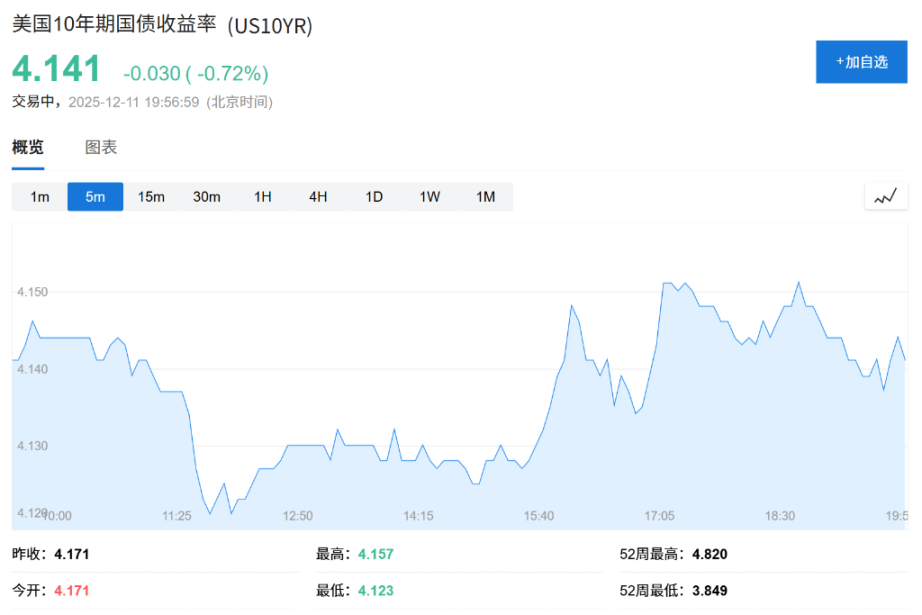
From an operational perspective, Burry highlighted a significant strategic shift between the U.S. Treasury and the Fed: the Treasury tends to sell more short-term bills, while the Fed focuses on buying these bills. This strategy helps avoid pushing up the 10-year Treasury yield. As expected by the market, after the Federal Open Market Committee (FOMC) meeting, the U.S. 2-month Treasury yield rose, while the 10-year Treasury yield fell.
Given the ongoing volatility in the repo market, some analysts expect the Fed may need to take more aggressive action to avoid a year-end funding crunch. Against this backdrop, Burry sees this as further evidence of underlying weakness in the financial system. He warned investors to be wary of misleading advice from Wall Street about buying bank stocks and revealed that for funds exceeding the FDIC's $250,000 insurance limit, he prefers holding Treasury money market funds to hedge risks.
It is important to note that the primary goal of "quantitative easing" (QE) is to lower long-term interest rates by purchasing long-term Treasury bonds and MBS to stimulate economic growth. The purpose of RMP is more technical, focusing on buying short-term Treasury bonds to ensure there is enough liquidity in the financial system's "pipes" to prevent accidents. Bank of America stated that, based on the 2019 experience, liquidity injections will quickly lower the Secured Overnight Financing Rate (SOFR), while the response of the Federal Funds Rate (FF) will be relatively delayed. This "time difference" will create significant arbitrage opportunities for investors.