Crypto industry, trade unions clash over multi-trillion dollar retirement funds

cointelegraphPubblicato 2025-12-12Pubblicato ultima volta 2025-12-12

Introduzione

A dispute has emerged in Washington between the cryptocurrency industry and labor unions over proposed legislation that would allow cryptocurrencies, such as Bitcoin, to be included in 401(k) retirement accounts. Labor unions, including the American Federation of Teachers (AFT) and the AFL-CIO, argue that cryptocurrencies are too volatile and speculative for retirement savings, posing significant risks to workers' financial security. They oppose regulatory changes that would permit exposure to such assets in pension plans. In response, crypto industry representatives contend that the proposed bill would improve oversight and allow retirement funds to access a high-performing asset class. They accuse unions of being politically motivated and dismiss their concerns as uninformed. The debate highlights a broader clash between proponents who see crypto as a means of financial democratization and critics who warn against its unregulated and risky nature.

A growing rift has emerged in Washington, D.C., between the cryptocurrency industry and labor unions as lawmakers debate whether to ease rules allowing cryptocurrencies in 401(k) retirement accounts.

The dispute centers on proposed market structure legislation that would allow retirement accounts to gain exposure to crypto, a move labor groups say could expose workers to speculative risk. In a letter sent on Wednesday to the US Senate Banking Committee, the American Federation of Teachers argued that cryptocurrencies are too volatile for pension and retirement savings, warning that workers could face significant losses.

The letter drew immediate pushback from crypto investors and industry figures. “The American Federation of Teachers has somehow developed the most logically incoherent, least educated take one could possibly author on the matter of crypto market structure regulation,” a crypto investor said on X.
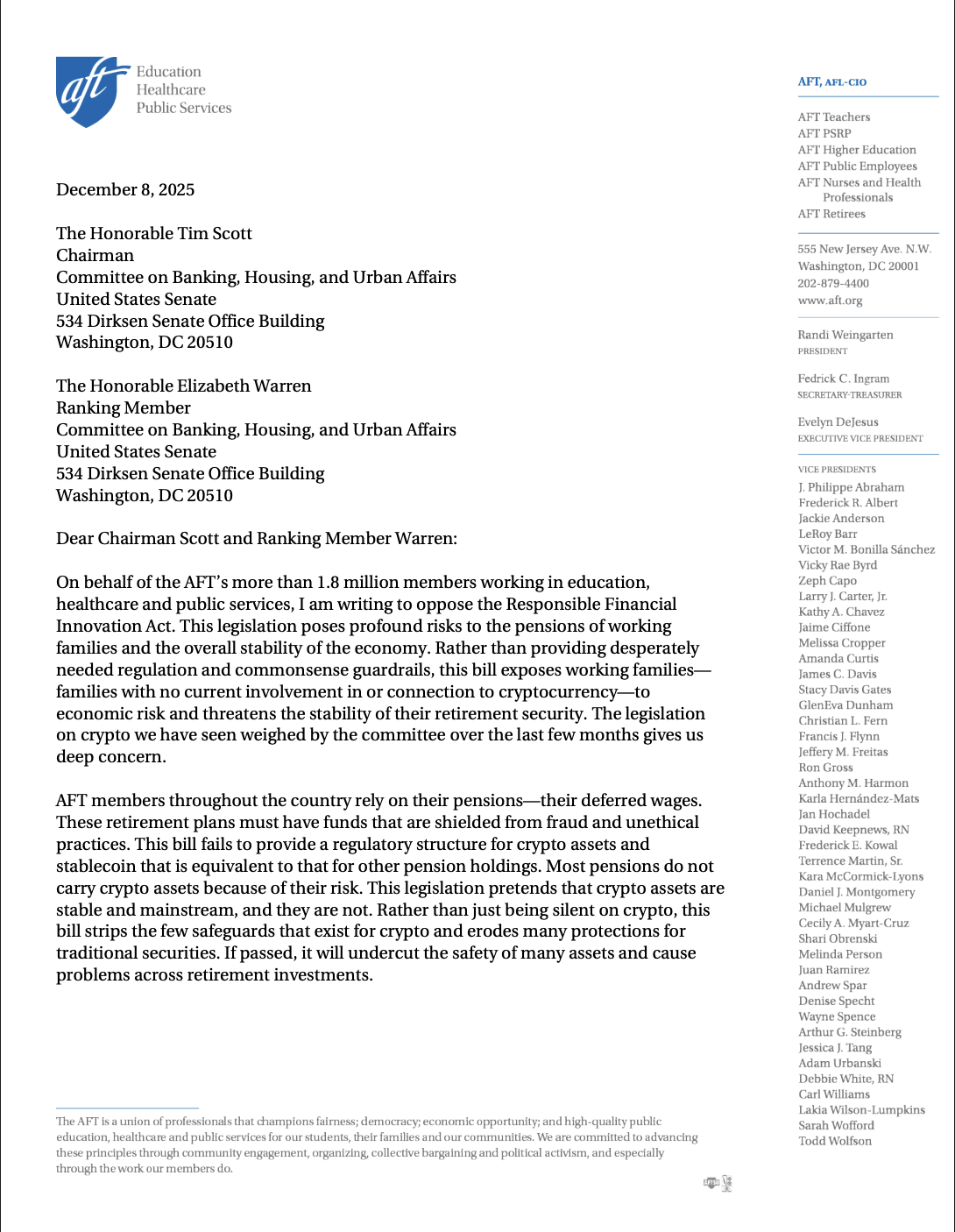
The AFT letter to Congress opposes regulatory changes that would allow 401(k) retirement accounts to hold alternative assets, including cryptocurrency. Source: CNBC

In response to the letter, Castle Island Ventures partner Sean Judge said the bill would improve oversight and reduce systemic risk, while enabling pension funds to access an asset class that has delivered strong long-term returns.

Consensys attorney Bill Hughes said the AFT’s opposition to the crypto market structure bill was politically motivated, accusing the group of acting as an extension of Democratic lawmakers.
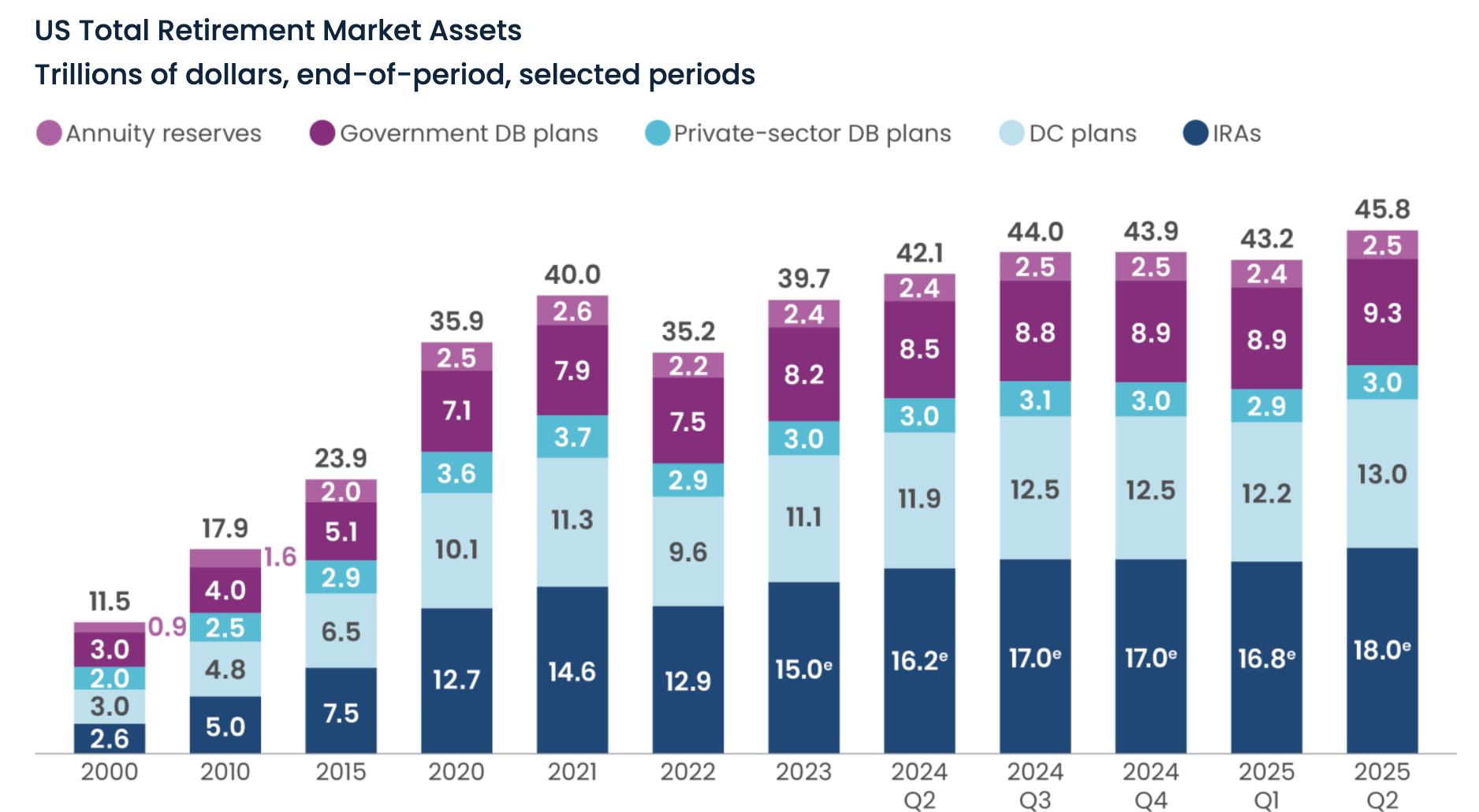
Funds held in US retirement accounts by type of account plan. Source: ICI

Related: Atkins says SEC has ‘enough authority’ to drive crypto rules forward in 2026

Opposition to crypto in retirement and pension funds mounts

Proponents of allowing crypto in retirement portfolios, on the other hand, argue that it democratizes finance, while trade unions have voiced strong opposition to relaxing current regulations, claiming that crypto is too risky for traditional retirement plans.

“Unregulated, risky currencies and investments are not where we should put pensions and retirement savings. The wild, wild west is not what we need, whether it’s crypto, AI, or social media,” AFT president Randi Weingarten said on Thursday.

The AFT represents 1.8 million teachers and educational professionals in the US and is one of the largest teachers’ unions in the country.

According to Better Markets, a nonprofit and nonpartisan advocacy organization, cryptocurrencies are too volatile for traditional retirement portfolios, and their high volatility can create time-horizon mismatches for pension investors seeking a predictable, low-volatility retirement plan.
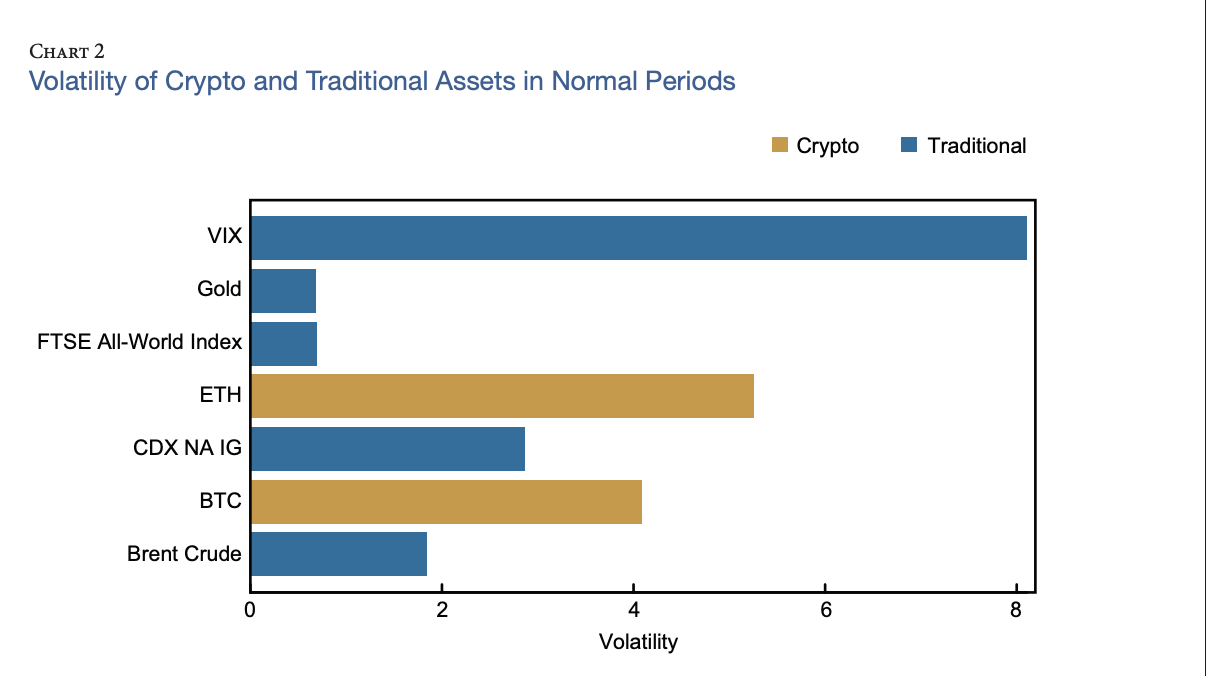
Bitcoin and Ether volatility compared to other asset classes and stock indexes. Source: US Federal Reserve

In October, the American Federation of Labor and Congress of Industrial Organizations (AFL-CIO) also wrote to Congress opposing provisions within the crypto market structure regulatory bill.

The AFL-CIO, the largest federation of trade unions in the US, wrote that cryptocurrencies are volatile and pose a systemic risk to pension funds and the broader financial system.

Magazine: 13 Christmas gifts that Bitcoin and crypto degens will love

Letture associate

The Silver Crisis: When the Paper System Begins to Fail

Silver Crisis: When the Paper System Begins to Fail In December, silver became the most volatile asset in the precious metals market, surging from $40 to over $64 per ounce—a year-to-date increase of nearly 110%, far outpacing gold. While the rally appears fundamentally justified—driven by Fed rate cut expectations, industrial demand from solar/EV/AI sectors, and declining global inventories—it masks deeper structural risks. Unlike gold, which is backed by central bank purchases, silver lacks institutional support and has minimal official reserves. Its market is shallow, with a daily trading volume of only $5 billion (vs. gold’s $150 billion), dominated by paper derivatives like futures and ETFs. This makes it vulnerable to volatility and manipulation. The real driver of the rally is a futures squeeze. The market has entered a persistent “backwardation” (futures prices exceeding spot prices), indicating either extreme bullishness or deliberate market manipulation. Physical delivery demands have surged, with COMEX and Shanghai exchange inventories dropping sharply. The system—where paper claims vastly exceed physical silver—is under stress. JPMorgan, a historically dominant player in silver markets, controls ~43% of COMEX silver inventory and acts as custodian for major silver ETFs. Its influence over physical supply and delivery eligibility adds to market fragility. The silver crisis reflects a broader shift: investors are losing faith in financialized paper assets and moving toward physical holdings. This “physicalization” trend, also seen in gold, signals declining trust in traditional financial intermediaries and a reevaluation of monetary security in a deglobalizing world. As the paper system strains, those holding physical silver—and gold—may hold the ultimate advantage.

深潮4 min fa

The Silver Crisis: When the Paper System Begins to Fail

深潮4 min fa

Trading

Spot
Futures
活动图片