Crypto Stocks Soar as Wall Street Sinks Under Pressure From Iran Risks

cryptonews.ruPubblicato 2026-08-17Pubblicato ultima volta 2026-08-17

Introduzione

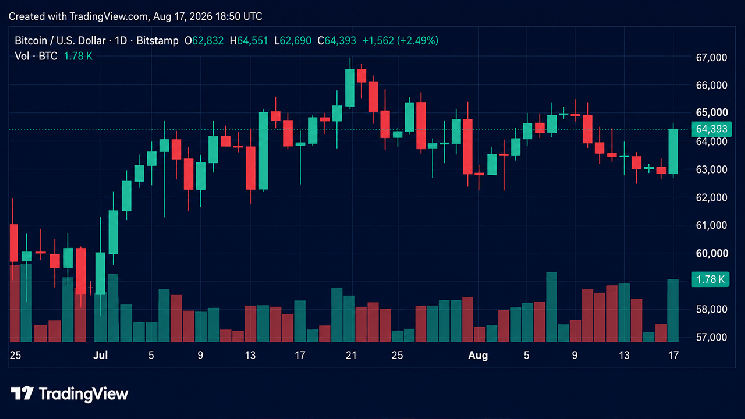
Cryptocurrency-related stocks rallied while traditional U.S. indices declined on August 17th, a divergence driven by geopolitical tensions and Bitcoin's performance. The Nasdaq, Dow Jones, and S&P 500 all fell at midday. In contrast, Bitcoin rose 1-1.5%, trading near $64,000, boosting companies like Strategy (up ~5%) and Strive (up ~5-6%). Other crypto stocks, including MARA, Circle, and Coinbase, also gained, though not all rose, indicating selective buying. The market split occurred amid escalating Middle East tensions. Former President Donald Trump threatened airstrikes against Oman if it interfered with a U.S.-Iran deal concerning the Strait of Hormuz, a critical global oil shipping chokepoint. With diplomatic efforts stalled, shipping through the strait has slowed dramatically, pushing oil prices higher (Brent near $92) and unsettling traditional markets. For crypto observers, the day highlighted the sensitivity of related stocks to Bitcoin's price. Many remain well below their 2025 highs, meaning Bitcoin's sustained recovery could fuel further gains, but a sell-off could quickly erase them. The key test is whether this divergence lasts beyond a single session, with investors watching Bitcoin's ability to hold above $63,000 alongside corporate earnings, mining costs, global crypto regulation, and developments in the Strait of Hormuz.

Around midday on August 17, the Nasdaq Composite Index was down about 56 points, the Dow Jones Industrial Average lost about 189 points, and the S&P 500 fell about 23 points. Meanwhile, the leading cryptocurrency asset—bitcoin (BTC)—gained about 1–1.5% over the past 24 hours and was trading around $64,000 by 1:30 PM Eastern Time (EDT).

Performance of the four major US indices as of 1:30 PM Eastern Time on Monday.

This divergence led to an unusual trading session. Stocks of cryptocurrency companies, which often crash alongside other speculative assets when investors become defensive, this time received support from bitcoin, while geopolitical worries hit the broader stock market harder.

Strategy and Strive Stand Out as Bitcoin Refuses to Back Down

Bitcoin reserve management company Strategy was among the top gainers, rising about 5% to around $97.50. The company holds a huge stockpile of bitcoins, which ties its share price closely to bitcoin's price. When bitcoin rises, Strategy's stock can show even sharper gains, as traders regularly use it as a publicly traded instrument for leveraged exposure to cryptocurrencies.

Shares of Strive rose about 5–6%, and MARA Holdings gained about 4–5%. Shares of Circle Internet Group also rose about 4%, and crypto exchange operator Bullish gained about 4%. By noon, Coinbase Global shares were up about 1–2% (depending on the data source), recovering from losses after opening lower.

Not all crypto-related companies were in demand. Shares of Bitgo Holdings fell about 1%, and bitcoin mining hardware manufacturer Canaan dropped about 2%. Cleanspark and Hut 8 showed more modest gains, indicating that traders were picking "winners" rather than blindly buying anything crypto-related.

Trump's Threat Against Oman Heightens Tensions in Global Markets

The split emerged against the backdrop of escalating tensions over the Strait of Hormuz—one of the world's most critical energy shipping routes—from President Donald Trump. Trump told Fox News journalist Trey Yingst that the US would launch airstrikes against Oman if that country impedes Washington from reaching a deal with Iran regarding this waterway.

Oman is conducting separate negotiations with Iran on shipping through the strait while diplomatic efforts stall. The 60-day negotiation period outlined in a June memorandum expired on Monday without resulting in a broader settlement between Washington and Tehran.

The Strait of Hormuz matters far beyond the Middle East. Before the conflict paralyzed shipping, roughly one-fifth of the world's oil and gas supplies passed through this narrow waterway, so disruptions to shipping could lead to higher fuel prices, transportation costs, and inflation worldwide.

Oil-Related Risks Keep Wall Street Traders on Edge

Oil markets reflected this tension. On Monday, Brent crude oil fluctuated around $92 per barrel, while West Texas Intermediate crude remained above $84. Shipping through the Strait of Hormuz has slowed dramatically, leaving traders anxiously watching whether negotiations can restore anything resembling normal shipping.
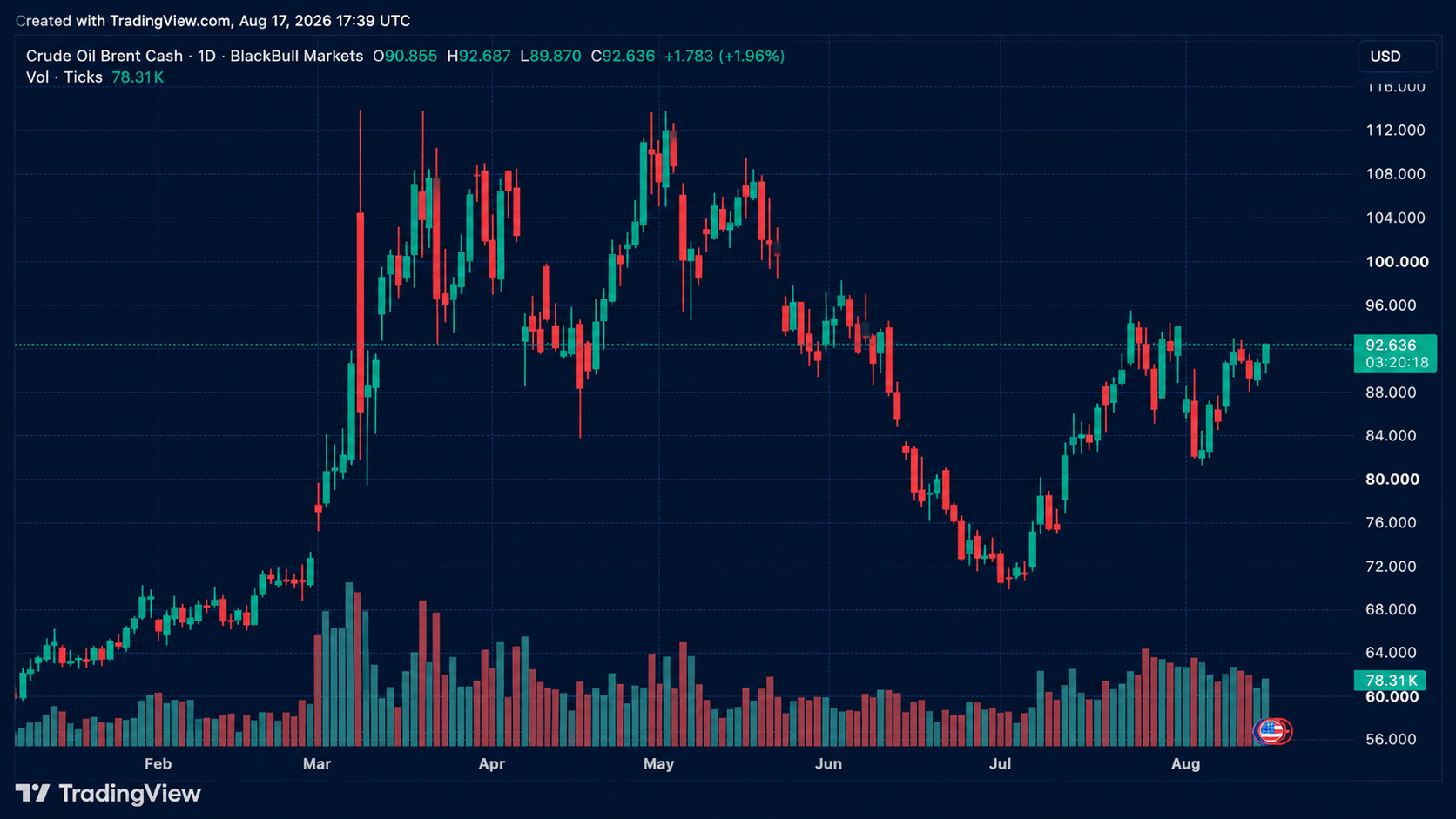
Brent crude oil prices according to Tradingview on August 17, 2026.

For crypto market observers, Monday's split between bitcoin-related company stocks and the major indices is significant because shares of many of these companies remain well below their 2025 highs. Stocks of Strategy, Coinbase, MARA, and other crypto-sensitive companies can amplify bitcoin's moves, meaning a sustained crypto recovery could fuel further gains, but another bitcoin sell-off could erase them just as quickly.

The true test will be whether this divergence lasts longer than one trading session. Investors will watch to see if bitcoin can hold at the $63,000 and $64,000 levels, as well as corporate earnings, mining costs, and global crypto legislation, while world markets remain focused on the responses from Oman and Iran and on any breakthroughs towards resuming shipping through the Strait of Hormuz.

end-content

Domande pertinenti

QWhat was the contrasting performance between major U.S. stock indices and Bitcoin on the date mentioned in the article?

AOn August 17th, major U.S. stock indices like the Nasdaq Composite, Dow Jones Industrial Average, and S&P 500 were all down, losing approximately 56, 189, and 23 points respectively around midday. In contrast, Bitcoin was up by about 1-1.5% over the previous 24 hours, trading around $64,000.

QWhich geopolitical event and associated threat, as described in the article, contributed to the pressure on Wall Street?

AGeopolitical tensions rose around the Strait of Hormuz, a critical energy shipping route. Former U.S. President Donald Trump reportedly threatened via Fox News to bomb Oman if it interfered with Washington's efforts to reach an agreement with Iran concerning the waterway, increasing market anxiety.

QHow did stocks of crypto-related companies like Strategy and Strive perform, and why is Strategy's stock particularly sensitive to Bitcoin's price?

AStocks of crypto-related companies like Strategy and Strive rose significantly, with Strategy's stock up about 5%. Strategy's stock is highly sensitive because the company holds a large reserve of Bitcoin, making its shares a leveraged vehicle for traders seeking exposure to Bitcoin's price movements.

QWhat is the strategic importance of the Strait of Hormuz, according to the article?

AThe Strait of Hormuz is a critically important global energy shipping route. Before the conflict disrupted traffic, roughly one-fifth of the world's oil and gas supplies passed through it. Disruptions there can lead to higher fuel prices, increased transport costs, and global inflation.

QWhat are some of the factors that crypto market observers will be watching to test the sustainability of the divergence between Bitcoin-linked stocks and broader markets?

AObservers will watch several factors: whether Bitcoin can sustain levels around $63,000-$64,000, corporate earnings reports, cryptocurrency mining costs, global crypto regulation, and developments in the geopolitical situation involving Oman and Iran regarding the reopening of the Strait of Hormuz.

Letture associate

Analyst Who Predicted Bitcoin's Major Drop in October Now Predicts What Could Happen Next

Sean Farrell, head of digital asset strategy at Fundstrat, analyzes the current uncertain and volatile crypto market. He notes that while traditional tech stocks hit record highs, lagging crypto assets have created market apathy, which could be an early sign of a bottom forming. Farrell's base case suggests Bitcoin and the broader crypto market may experience one final sharp decline before initiating a sustained upward trend. It remains unclear if this drop will form a new deep low or test recent lows. He points out that global liquidity conditions and rising US 10-year Treasury yields continue to pressure liquidity-sensitive assets like cryptocurrencies in the short term. Farrell states that the tech sector's growth is driven by significant corporate profit increases, whereas the crypto market hasn't yet received the necessary monetary and fiscal liquidity. Although high US Treasury issuance and rising long-term bond yields are pressuring the market, he predicts a potential shift within the next 3-6 months. After risk appetite diminishes due to high interest rates, liquidity-boosting measures from regulators or central banks could trigger a new bull market. Additionally, Farrell believes that if a new governance proposal aimed at reducing inflation on the Solana network is adopted, it would lessen sell-side pressure and could act as a significant catalyst for the token's price.

cryptonews.ru1 h fa

Analyst Who Predicted Bitcoin's Major Drop in October Now Predicts What Could Happen Next

cryptonews.ru1 h fa

Bitcoin Breaches $64,000 Mark Again as Short Sellers Lose $57.4 Million in Liquidations

Bitcoin surged back above $64,000 on Monday, reversing a dip below $63,000 that had threatened to revisit mid-August lows. The rally coincided with an announcement from MicroStrategy stating it had neither bought nor sold any Bitcoin over the past week. After falling to a daily low near $62,653, Bitcoin sharply reversed course, climbing approximately $1,000 in six hours to reach a daily high above $64,375. By early afternoon EST, it was trading above $64,200, marking a nearly 2% daily gain and turning its weekly performance positive. The price movement triggered significant liquidations in the derivatives market, with leveraged short positions losing $57.4 million over 24 hours, contributing to total crypto market liquidations nearing $220 million. While MicroStrategy paused its Bitcoin purchases, it increased its cash reserves to $4.8 billion using part of the proceeds from a recent common stock sale. The funds were also used for share buybacks and preferred dividend payments. Analysts suggest this focus on balance sheet strength helps mitigate near-term liquidation pressure, especially as Bitcoin's price remains about 15% below MicroStrategy's average acquisition cost of $75,385. However, critics argue the capital allocation disproportionately benefits preferred shareholders (STRC) over common stockholders (MSTR) and sidelines the company's core growth strategy of aggressive Bitcoin accumulation. Bitcoin initially appeared to react positively to reports of a potential 60-day ceasefire extension between the U.S. and Iran, but the rally's momentum faded after Iranian officials denied the reports. Consequently, Bitcoin currently lacks a clear macroeconomic catalyst to sustain a decisive bullish breakout.

cryptonews.ru2 h fa

Bitcoin Breaches $64,000 Mark Again as Short Sellers Lose $57.4 Million in Liquidations

cryptonews.ru2 h fa

Experienced Analyst Predicts Future of Bitcoin and Altcoin Prices: "Hold on for Another Two Months"

Cryptocurrency analyst Benjamin Cowen provided a market outlook in a recent video, focusing on Bitcoin's current price stagnation. Bitcoin is trading in a low-volume sideways range around $62,000-$63,000. Cowen notes a significant drop in market interest, citing declines in social activity and crypto content views. He points out that Bitcoin's price is stuck between the 200-week moving average and a bear market resistance band, making a downward breakout similar to past cycles highly probable. The analyst highlights a divergence from traditional stock markets, as Bitcoin remains stagnant while U.S. equity indices hit new records—a pattern he says has historical precedents, like during the 2014 and 2018 U.S. midterm elections. Cowen asserts Bitcoin follows its own four-year cycle independently of stocks. Market volatility has fallen to historically low levels, with 60-day volatility at 1.47%. Cowen expects a significant volatility spike in the coming weeks, as sharp market moves typically follow such consolidation periods. He suggests a final downward wave could reset on-chain metrics, potentially marking the cycle bottom. Cowen optimistically views the current phase as month 10 of an expected 12-month bear market. He anticipates a new bull market may begin after the cycle bottom approaches. He concludes by advising the crypto industry to focus on fundamental development, moving beyond hype-driven memecoins and security vulnerabilities, rather than just capital attraction. *This is not investment advice.

cryptonews.ru2 h fa

Experienced Analyst Predicts Future of Bitcoin and Altcoin Prices: "Hold on for Another Two Months"

cryptonews.ru2 h fa

Trading

Spot
活动图片