Nvidia's Jensen Huang, Fei-Fei Li, and Bin Lin All Invest in the Same Robotics Company

marsbitPubblicato 2026-08-25Pubblicato ultima volta 2026-08-25

Introduzione

Generalist, a San Francisco-based AI startup focused on developing a "universal brain" for robots, has rapidly raised significant funding, attracting high-profile investors including Nvidia, Jeff Bezos' Bezos Expeditions, AI pioneer Fei-Fei Li, and Xiaomi co-founder Bin Lin. Founded in 2024 by former Google DeepMind researchers Pete Florence, Andy Zeng, and former Boston Dynamics engineer Andrew Barry, the company has secured approximately $750 million across four rounds, reaching a valuation surpassing $2 billion. The company's core innovation is its GEN-1.5 model, which aims to give robots powerful generalization capabilities. Unlike traditional systems requiring extensive reprogramming for each new task, GEN-1.5 can learn from a single, brief human demonstration (3-12 seconds) without needing retraining or fine-tuning. This "physical prompting" allows a robot to perform tasks like opening jars or using new tools after seeing them done once. While current single-demo success rates average 59% on simple tasks (improving to 83% with minor fine-tuning), the technology promises to drastically reduce robot deployment time from months to seconds. Generalist's strategy is to provide the AI intelligence layer that can run on various robotic hardware, rather than building robots themselves. The founding team combines DeepMind's expertise in AI model generalization with Boston Dynamics' practical robotics experience, targeting the industry bottleneck where robot "brains" lag behind...

Wow, Generalist's funding progress bar seems to be running on a 2x speed hack, their development is moving so fast!

I'm not exaggerating. According to an Axios report, after Generalist completed a $400 million (¥2.87 billion) Series B funding round in June this year, propelling it to unicorn status, just under three months later, Generalist has quietly completed another $200 million (approx. ¥1.44 billion) funding round, with its latest valuation surpassing the $2 billion mark (approx. ¥14.36 billion).

Prominent names like Nvidia, Jeff Bezos's Bezos Expeditions, and 'AI Godmother' Fei-Fei Li are all listed among its shareholders.
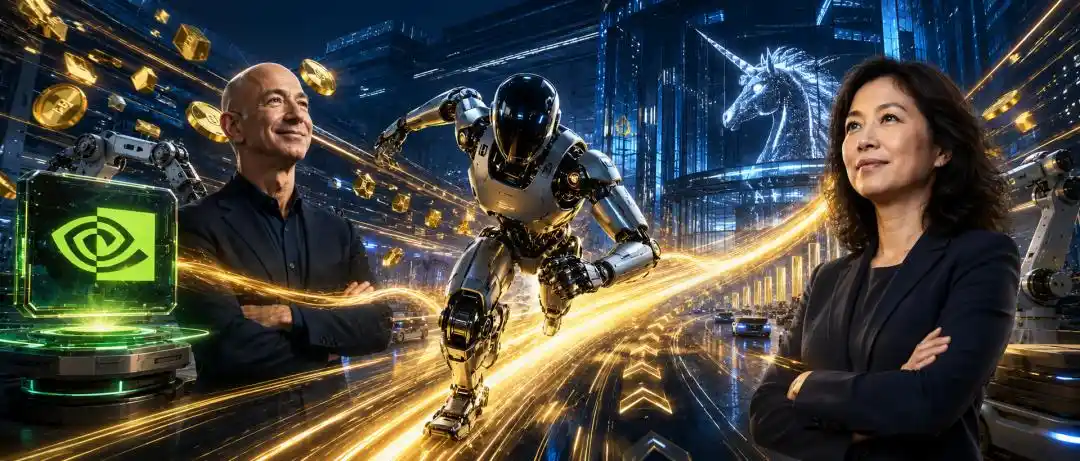
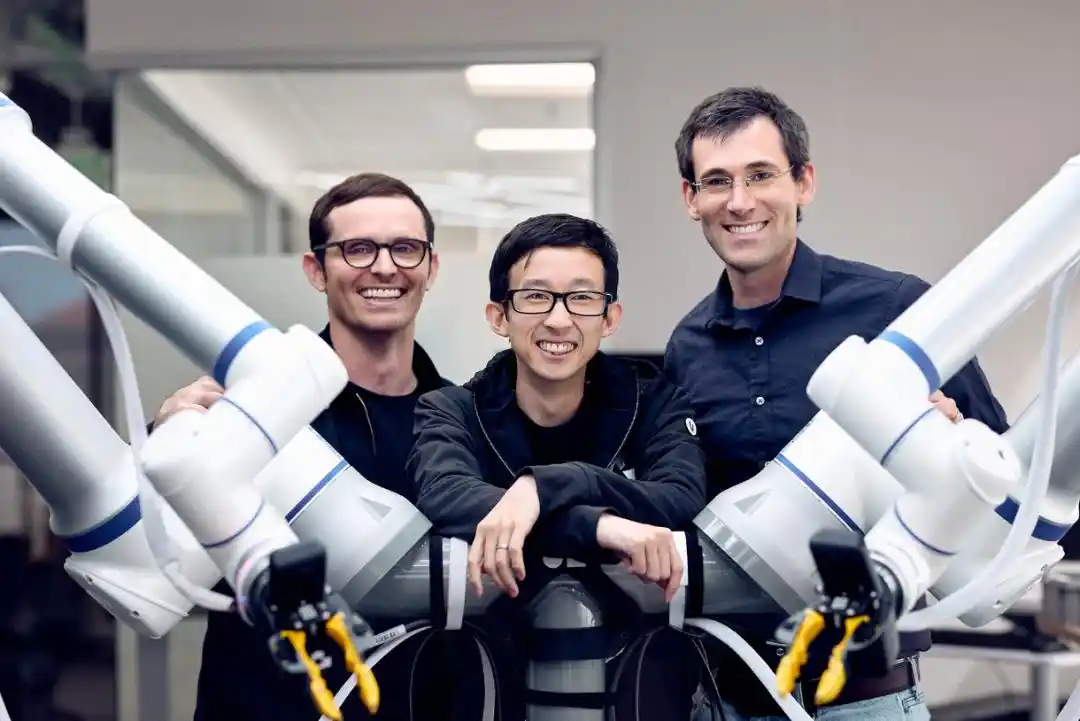
Generalist is an AI company focused on 'building a general brain for robots'. Founded in 2024 in the San Francisco Bay Area, USA, the company was co-founded by former Google DeepMind researchers Pete Florence and Andy Zeng, along with former Boston Dynamics engineer Andrew Barry.
According to Forge, as of publication, Generalist has completed 4 rounds of financing, with total funding reaching approximately $750 million (approx. ¥5.39 billion). Investors include Nvidia, Boldstart Ventures, Xiaomi co-founder Bin Lin, Fei-Fei Li, Naval Ravikant, and Zoom founder Eric Yuan, among others.

Generalist doesn't release flashy humanoid robot bodies, nor does it rely on robotic arm orders for its narrative. They rapidly gained prominence solely through their team background from Google DeepMind, OpenAI, and Boston Dynamics, and the powerful generalization capability demonstrated by GEN-1.5—'learning new tasks from a single demonstration without requiring retraining'. This propelled them to become a rising star in the embodied AI field, securing approximately $600 million (approx. ¥4.308 billion) in funding within just two months.

So, what's the story behind this company? What exactly makes GEN-1.5's generalization so strong? And what aspect of Generalist are investors betting on?

You'll find out after reading this:

No Retraining Needed, Learning from a Single Demonstration

If traditional industrial robots are chefs who can only cook from a fixed recipe, then Generalist's newly released GEN-1.5 is more like a new apprentice who can take over immediately after watching the master operate once.

In the past, robots had to undergo a lengthy 'pre-job development' phase before starting work. Their problem-solving approach largely followed the pattern of 'one scenario, one policy'—tightening screws on a production line required one program, while sorting parts required another;

Even if the task remained the same, any change in object position, shape, or tools might require engineers to re-collect data, adjust parameters, and retrain the model.

GEN-1.5 aims to lower the barrier for deploying robots from 'hiring engineers for redevelopment' to 'on-site personnel demonstrating once.'
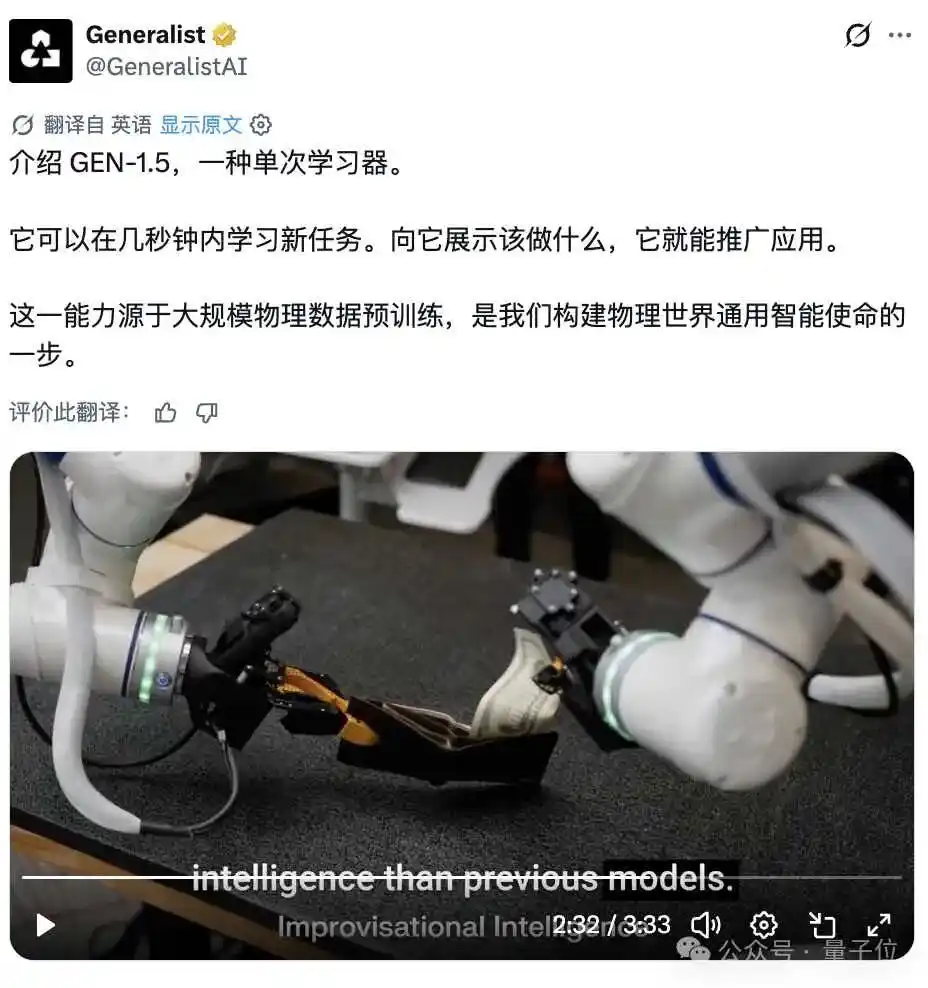
In Generalist's demo video, a worker only needs to demonstrate once using a handheld gripper or the robot itself. The model can then use the 3 to 12 seconds of sensor and motion data as 'physical prompts' to directly understand the task and begin operation, all without requiring gradient updates or fine-tuning.

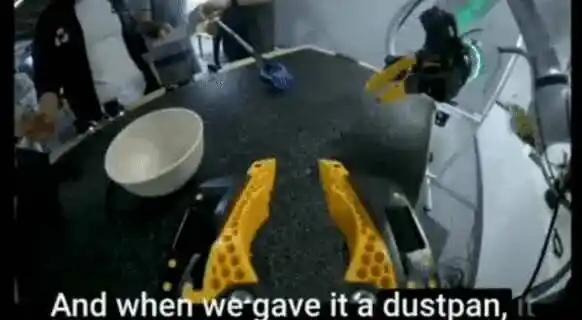
For instance, unscrewing a glass jar, unzipping a pencil case, sweeping blocks into a bowl, or even using previously unseen brushes and dustpans—it can organize actions based on the demonstration.

Of course, GEN-1.5 isn't so magical that it succeeds every time at first glance.

Official tests show its average single-demonstration success rate across 10 simple, short-duration tasks is 59%; if fine-tuned with about 5 minutes of data over 10 gradient update steps, the success rate can rise to 83%.
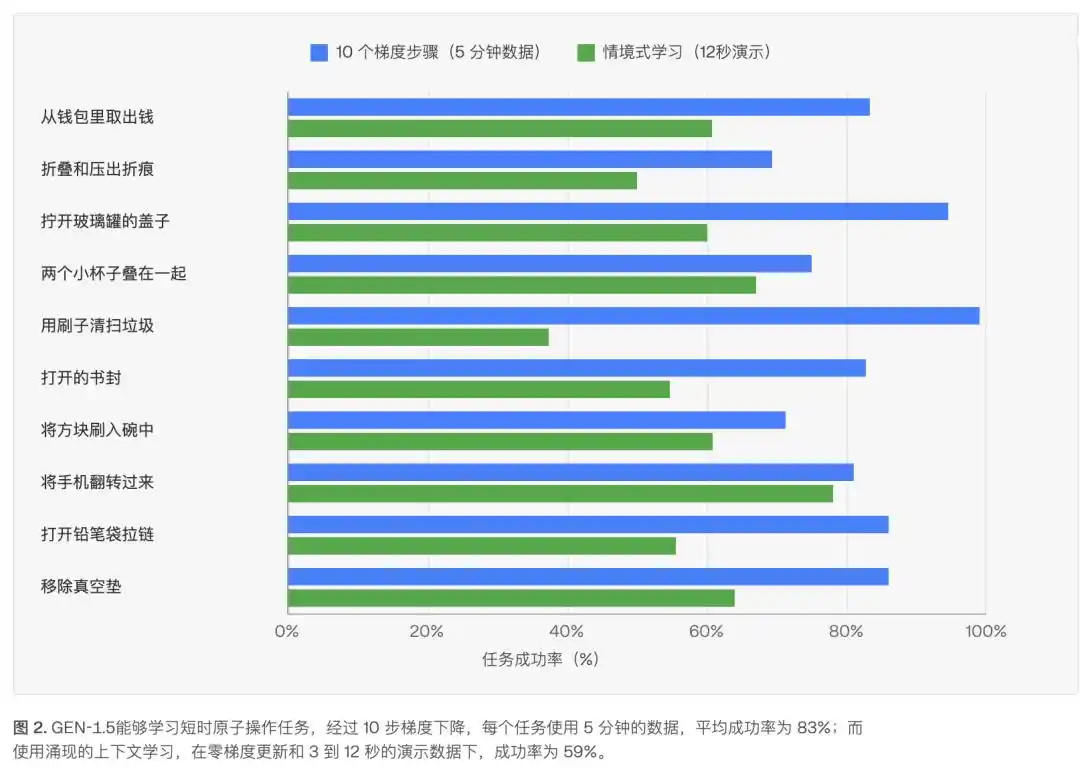
This result isn't perfect, but it proves something more important: adapting robots to tasks has the potential to be compressed from months to seconds.

This potential to become a universal foundation for robots is likely what capital is eyeing.

For clients, the same model can be deployed faster across different factories, warehouses, and labs, reducing costs associated with engineering deployment, data collection, and downtime for debugging.

For investors, Generalist isn't selling a specific robot; they're selling the intelligence layer that runs on various hardware, naturally expanding the market boundaries.

And for Generalist itself, this general capability can also set a data flywheel in motion:

The stronger the model, the more real-world tasks it can handle; the more deployments, the richer the physical interaction data collected; new data, in turn, trains the next generation of models. Ultimately, GEN-1.5 aims to give robots the ability to continuously learn and work.

This ability to 'replace month-long development with second-long adaptation' doesn't come out of thin air. It stems precisely from the founding team's decade-long firsthand experience with the pain points in the robotics industry.

A Group of DeepMind and Boston Dynamics Veterans Building a 'Robot Brain'

Generalist's founding team essentially combines the two most crucial capabilities for the robotics industry.

CEO Pete Florence holds a Ph.D. in Computer Science from MIT, studied under roboticist Russ Tedrake, was a Senior Research Scientist at Google DeepMind, helped pioneer vision-language-action models, and trained DeepMind's first multimodal large model.

Chief Scientist Andy Zeng earned his bachelor's degree from UC Berkeley, majoring in Computer Science and Mathematics, and later obtained his Ph.D. in Computer Science from Princeton University.

He served as a Research Scientist at Google DeepMind, researching robots that can write their own code and inventing methods for large-scale robot data collection using handheld grippers.

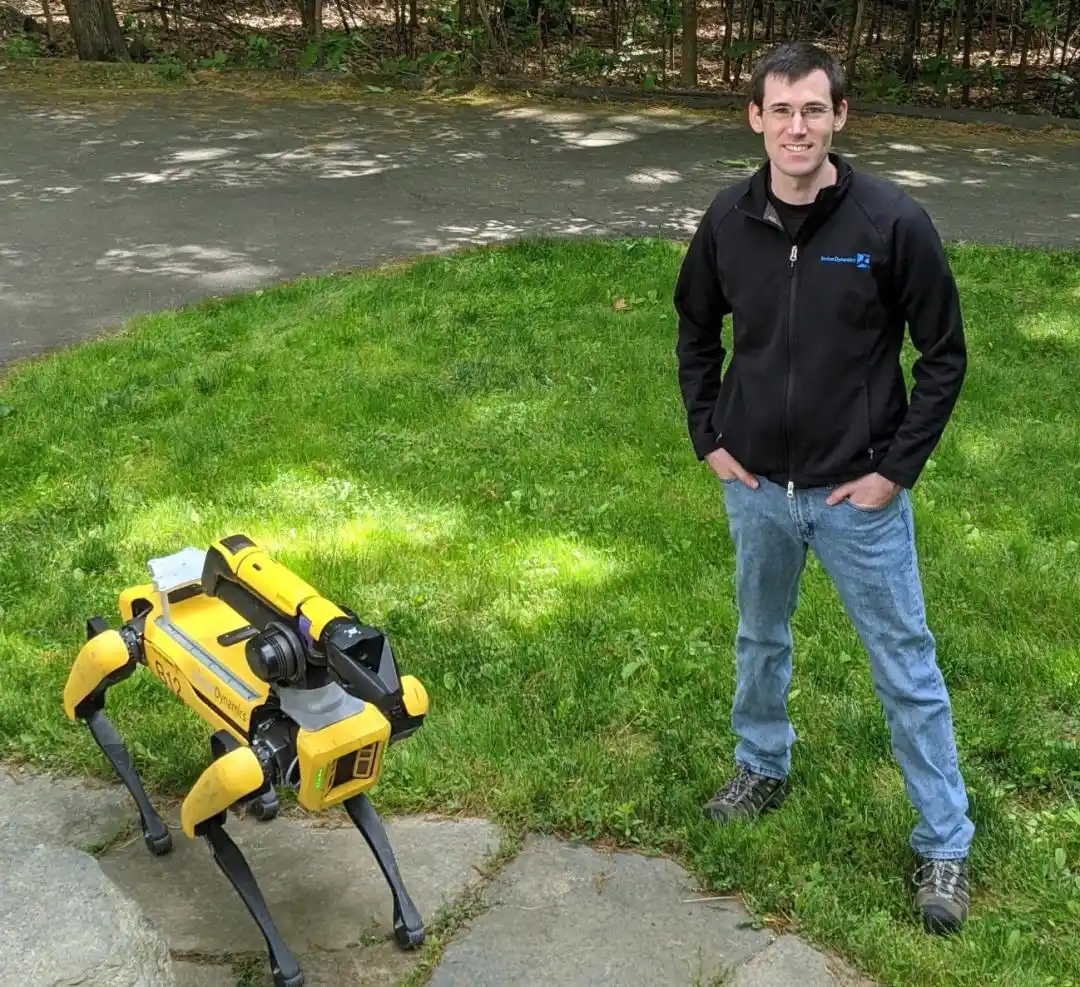
Responsible for actually embedding ideas into robotic bodies is CTO Andrew Barry.

He earned his bachelor's from Olin College of Engineering and his Ph.D. from MIT, focusing on robot control and high-speed autonomous obstacle avoidance;

Before joining Generalist, he worked at Boston Dynamics for about 5 years as a Senior Robotics Specialist, contributing to the development of the robotic arm for the Spot robot dog.

In other words, he not only knows what the model should output but also understands how a robot should move in the real world to avoid falling, shaking, or jamming.
These three individuals didn't just form a team chasing a trend because AI became hot; their work over the past decade-plus has coincidentally pointed to the same bottleneck in the robotics industry:

Hardware can already run, jump, and grasp; what truly limits real-world deployment is that the robot's 'brain' can't keep up with its 'body.'

What DeepMind brings is the model's generalization capability across different tasks, objects, and scenes;

What Boston Dynamics brings is the 'physical sense' for mechanical structures, control systems, and real environments.

This is also why Generalist chose to train a general robot brain instead of betting on a specific robot body. They understand that only when both the model and the hardware are proficient can robots move from lab demos to factories and warehouses.

Otherwise, no matter how elegant the model, it might just result in publishing more papers; no matter how flashy the robot's movements, it might still only perform pre-programmed routines.

However, GEN-1.5 still has significant room for improvement.

Learning at First Glance Doesn't Mean Ready for the Job

However, learning from a single glance doesn't mean GEN-1.5 is ready to start working in a factory.

Generalist has proactively tempered expectations for this capability. The official technical blog states that the team's current testing mostly involves simple, short-duration tasks like unscrewing jar lids, zipping zippers, and grasping objects.
GEN-1.5's average single-demonstration success rate across 10 task categories is 59%, still far from the long-duration, low-failure stable operation required on production lines.

In a real factory setting, robots must also handle variations in materials, equipment wear, human interference, and sudden malfunctions, which pose far greater challenges than lab demonstrations.

More importantly, 'learning from a single demo' primarily addresses task adaptation and doesn't automatically equate to low-cost commercialization.

Large-scale robot deployment also depends on hardware cost, operational speed, maintenance cost, safety, and system integration capabilities. Even if the model learns quickly, if the robotic arm is expensive, prone to frequent failures, or still requires extensive engineering debugging for each deployment, the business case may still not work out.

But the value of GEN-1.5 shouldn't be measured solely by its current success rate.

The emergence of GEN-1.5 demonstrates that robots have the potential to rapidly understand new tasks through a few seconds of 'physical prompts,' similar to how large models understand text prompts.

Although it hasn't yet placed robots on production lines for long-term operation, it has already made progress in reducing the time for robots to learn new tasks from months to seconds.

Moving from 'developing one program per task' to 'the same model learning different tasks'—this is the more noteworthy aspect of GEN-1.5.

It might not be a qualified worker yet, but at least it shows the potential learning method for future general robot brains.

In this sense, GEN-1.5 currently resembles a roadmap towards general-purpose robots more than a fully mature product manual.

What truly excites the market isn't just what it can do today, but the possibility it demonstrates for robots to continuously learn to do more things.

General-Purpose Robots Are Hitting the Road

If past robotics companies were vying to be 'champions in specific skills,' the story Generalist tells investors is one about a 'robot generalist.'

When robotic arms being able to grasp, place, and twist is no longer novel, the standards for capturing capital attention shift accordingly.

Rather than how many pre-programmed actions a robot knows, the market cares more about how quickly it can learn new actions, how much data it requires, and how high the deployment cost is.

Although GEN-1.5 still has a long way to go in completing its transformation from 'learning at first glance' to 'working stably for eight hours a day,' Generalist has at least validated a possibility: robots don't have to be forever confined to 'one scenario, one policy'; they too can rely on general models to quickly adapt to unfamiliar tasks, just like humans.

And when the time for robots to learn new skills shrinks from months to seconds, with marginal costs gradually approaching zero, what truly needs redefinition might not be just the robotics industry.

At that point, where will the core value of human labor lie?

This question might be even more worthy of discussion than GEN-1.5 itself.

Reference Links:

[1]https://www.axios.com/2026/08/24/robotics-ai-generalist-200m

[2]https://forgeglobal.com/generalist_stock/

[3]https://generalistai.com/blog/gen-1.5

[4]https://generalistai.com/about

[5]https://www.peteflorence.com/

[6]https://andyzeng.github.io/[7]https://abarry.org/

This article is from the WeChat public account 'QbitAI', author: Wenting

Crypto di tendenza

Domande pertinenti

QWhat is Generalist, and what is its primary focus in the AI and robotics industry?

AGeneralist is an AI company focused on developing a 'universal brain' for robots. Founded in 2024 in the San Francisco Bay Area, its core mission is to create general-purpose AI models that enable robots to quickly learn and adapt to new tasks with minimal demonstration, moving away from task-specific programming.

QWhat is the significance of Generalist's GEN-1.5 model, and how does its 'one-shot learning' capability work?

AGEN-1.5 is significant because it enables 'one-shot learning,' allowing a robot to learn a new task after just one demonstration (3-12 seconds of sensor and motion data), without needing gradient updates or fine-tuning. This 'physical prompting' dramatically reduces robot deployment time from months to seconds, representing a major step toward general-purpose robot adaptability.

QWho are the notable founders of Generalist, and what unique expertise do they bring from their previous roles?

AGeneralist was founded by Pete Florence (former Google DeepMind researcher, expertise in multimodal AI models), Andy Zeng (former Google DeepMind scientist, known for robot data collection methods), and Andrew Barry (former Boston Dynamics engineer, expertise in robot control and hardware integration). Their combined backgrounds provide deep knowledge in both AI generalization and real-world robotic systems.

QWhich prominent investors and companies have funded Generalist, and what is the company's latest valuation?

AProminent investors include NVIDIA, Bezos Expeditions (Jeff Bezos's venture fund), Fei-Fei Li ('AI godmother'), Xiaomi co-founder Bin Lin, Zoom founder Eric Yuan, and Naval Ravikant. Following a recent $200 million funding round, Generalist's valuation has surpassed $2 billion.

QWhat are the current limitations and future potential of GEN-1.5 as discussed in the article?

ACurrent limitations include a 59% average success rate on simple, short-duration tasks with one demonstration (83% after brief fine-tuning), which is insufficient for stable, long-term industrial operation. Its future potential lies in validating a path toward general-purpose robots that can learn quickly with minimal data, potentially reducing deployment costs to near zero and redefining the robotics industry and the role of human labor.

Letture associate

U.S. 'Operation Economic Outcast' Targets Iran's Crypto Sector, Over $100 Million in Oil-Related Payments Allegedly Facilitated via Cryptocurrency

U.S. Treasury Launches "Operation Economic Outcast," Sanctions Iran's Crypto Sector On August 24, the U.S. Treasury Department initiated "Operation Economic Outcast," a government-wide economic campaign against Iran. As part of this, the Office of Foreign Assets Control (OFAC) issued a sectoral sanctions determination targeting digital assets under Executive Order 13902, significantly expanding its authority. The Treasury stated that Iran is increasingly using cryptocurrency as a "tool of choice" to evade sanctions and support transactions linked to the Islamic Revolutionary Guard Corps (IRGC). Concurrently, OFAC sanctioned Ukrainian-Emirati broker Ivan Obukhov and his company, Foscom FZE. The Treasury alleges that since 2023, Obukhov has processed over $100 million in cryptocurrency payments to facilitate oil sales on behalf of the IRGC-Quds Force. Nearly 60 other entities, individuals, and vessels involved in nuclear procurement, cyber operations, and oil revenue networks were also sanctioned. This move marks an escalation from prior actions against specific exchanges, now establishing a broad basis to sanction any foreign entity deemed to operate in or support Iran's digital asset sector. Treasury Secretary Scott Bessent warned that any entity engaging economically with the Iranian regime will face the full reach of U.S. power, calling the operation an "economic D-Day" aimed at isolating Tehran.

marsbit21 min fa

U.S. 'Operation Economic Outcast' Targets Iran's Crypto Sector, Over $100 Million in Oil-Related Payments Allegedly Facilitated via Cryptocurrency

marsbit21 min fa

Is Your Account Still Blocked? Rosfinmonitoring Gets Direct Access to SBP and 'Mir'

Starting September 1, 2026, Russia's Federal Law No. 461-FZ grants Rosfinmonitoring (the Federal Financial Monitoring Service) direct access to transaction data from the National Payment Card System (NSPK), the operator of the Mir payment card system and the Faster Payments System (SBP). This allows the agency to bypass individual banks when reconstructing transaction trails for anti-money laundering (AML) purposes. The data, provided free of charge and without requiring customer consent or court orders, includes information on operations via SBP, the unified QR-code, and Mir cards, with no minimum transaction threshold. Customers will not be notified when their data is shared. The law does not introduce new taxes, automatic account freezes, or new enforcement powers. If suspicious activity is identified under existing AML laws, existing procedures with banks and law enforcement will apply. The agreement's specific terms between Rosfinmonitoring and NSPK, including the scope and historical depth of accessible data, are not public. The change centralizes access to a vast volume of domestic payments, potentially speeding up financial investigations. However, it also creates a single point of concentration for sensitive data and reduces transparency for cardholders, as customers are not informed about data requests. Observers note a global trend of expanding supervisory powers, with differences in the Russian model being the non-public agreement and the lack of customer notification.

cryptonews.ru24 min fa

Is Your Account Still Blocked? Rosfinmonitoring Gets Direct Access to SBP and 'Mir'

cryptonews.ru24 min fa

Trading

Spot

Articoli Popolari

Cosa è $S$

Comprendere SPERO: Una Panoramica Completa Introduzione a SPERO Mentre il panorama dell'innovazione continua a evolversi, l'emergere delle tecnologie web3 e dei progetti di criptovaluta gioca un ruolo fondamentale nel plasmare il futuro digitale. Un progetto che ha attirato l'attenzione in questo campo dinamico è SPERO, denotato come SPERO,$$s$. Questo articolo mira a raccogliere e presentare informazioni dettagliate su SPERO, per aiutare gli appassionati e gli investitori a comprendere le sue basi, obiettivi e innovazioni nei domini web3 e crypto. Che cos'è SPERO,$$s$? SPERO,$$s$ è un progetto unico all'interno dello spazio crypto che cerca di sfruttare i principi della decentralizzazione e della tecnologia blockchain per creare un ecosistema che promuove l'impegno, l'utilità e l'inclusione finanziaria. Il progetto è progettato per facilitare interazioni peer-to-peer in modi nuovi, fornendo agli utenti soluzioni e servizi finanziari innovativi. Al suo interno, SPERO,$$s$ mira a responsabilizzare gli individui fornendo strumenti e piattaforme che migliorano l'esperienza dell'utente nello spazio delle criptovalute. Questo include la possibilità di metodi di transazione più flessibili, la promozione di iniziative guidate dalla comunità e la creazione di percorsi per opportunità finanziarie attraverso applicazioni decentralizzate (dApps). La visione sottostante di SPERO,$$s$ ruota attorno all'inclusività, cercando di colmare le lacune all'interno della finanza tradizionale mentre sfrutta i vantaggi della tecnologia blockchain. Chi è il Creatore di SPERO,$$s$? L'identità del creatore di SPERO,$$s$ rimane piuttosto oscura, poiché ci sono risorse pubblicamente disponibili limitate che forniscono informazioni dettagliate sul suo fondatore o fondatori. Questa mancanza di trasparenza può derivare dall'impegno del progetto per la decentralizzazione—un ethos che molti progetti web3 condividono, dando priorità ai contributi collettivi rispetto al riconoscimento individuale. Centrando le discussioni attorno alla comunità e ai suoi obiettivi collettivi, SPERO,$$s$ incarna l'essenza dell'empowerment senza mettere in evidenza individui specifici. Pertanto, comprendere l'etica e la missione di SPERO rimane più importante che identificare un creatore singolo. Chi sono gli Investitori di SPERO,$$s$? SPERO,$$s$ è supportato da una varietà di investitori che vanno dai capitalisti di rischio agli investitori angelici dedicati a promuovere l'innovazione nel settore crypto. Il focus di questi investitori generalmente si allinea con la missione di SPERO—dando priorità a progetti che promettono avanzamenti tecnologici sociali, inclusività finanziaria e governance decentralizzata. Queste fondazioni di investitori sono tipicamente interessate a progetti che non solo offrono prodotti innovativi, ma contribuiscono anche positivamente alla comunità blockchain e ai suoi ecosistemi. Il supporto di questi investitori rafforza SPERO,$$s$ come un concorrente degno di nota nel dominio in rapida evoluzione dei progetti crypto. Come Funziona SPERO,$$s$? SPERO,$$s$ impiega un framework multifunzionale che lo distingue dai progetti di criptovaluta convenzionali. Ecco alcune delle caratteristiche chiave che sottolineano la sua unicità e innovazione: Governance Decentralizzata: SPERO,$$s$ integra modelli di governance decentralizzati, responsabilizzando gli utenti a partecipare attivamente ai processi decisionali riguardanti il futuro del progetto. Questo approccio favorisce un senso di proprietà e responsabilità tra i membri della comunità. Utilità del Token: SPERO,$$s$ utilizza il proprio token di criptovaluta, progettato per servire varie funzioni all'interno dell'ecosistema. Questi token abilitano transazioni, premi e la facilitazione dei servizi offerti sulla piattaforma, migliorando l'impegno e l'utilità complessivi. Architettura Stratificata: L'architettura tecnica di SPERO,$$s$ supporta la modularità e la scalabilità, consentendo un'integrazione fluida di funzionalità e applicazioni aggiuntive man mano che il progetto evolve. Questa adattabilità è fondamentale per mantenere la rilevanza nel panorama crypto in continua evoluzione. Coinvolgimento della Comunità: Il progetto enfatizza iniziative guidate dalla comunità, impiegando meccanismi che incentivano la collaborazione e il feedback. Nutrendo una comunità forte, SPERO,$$s$ può affrontare meglio le esigenze degli utenti e adattarsi alle tendenze di mercato. Focus sull'Inclusione: Offrendo basse commissioni di transazione e interfacce user-friendly, SPERO,$$s$ mira ad attrarre una base utenti diversificata, inclusi individui che potrebbero non aver precedentemente interagito nello spazio crypto. Questo impegno per l'inclusione si allinea con la sua missione generale di empowerment attraverso l'accessibilità. Cronologia di SPERO,$$s$ Comprendere la storia di un progetto fornisce preziose intuizioni sulla sua traiettoria di sviluppo e sui traguardi. Di seguito è riportata una cronologia suggerita che mappa eventi significativi nell'evoluzione di SPERO,$$s$: Fase di Concettualizzazione e Ideazione: Le idee iniziali che formano la base di SPERO,$$s$ sono state concepite, allineandosi strettamente con i principi di decentralizzazione e focus sulla comunità all'interno dell'industria blockchain. Lancio del Whitepaper del Progetto: Dopo la fase concettuale, è stato rilasciato un whitepaper completo che dettaglia la visione, gli obiettivi e l'infrastruttura tecnologica di SPERO,$$s$ per suscitare interesse e feedback dalla comunità. Costruzione della Comunità e Prime Interazioni: Sono stati effettuati sforzi attivi di outreach per costruire una comunità di early adopters e potenziali investitori, facilitando discussioni attorno agli obiettivi del progetto e ottenendo supporto. Evento di Generazione del Token: SPERO,$$s$ ha condotto un evento di generazione del token (TGE) per distribuire i propri token nativi ai primi sostenitori e stabilire una liquidità iniziale all'interno dell'ecosistema. Lancio della Prima dApp: La prima applicazione decentralizzata (dApp) associata a SPERO,$$s$ è stata attivata, consentendo agli utenti di interagire con le funzionalità principali della piattaforma. Sviluppo Continuo e Partnership: Aggiornamenti e miglioramenti continui alle offerte del progetto, inclusi partnership strategiche con altri attori nello spazio blockchain, hanno plasmato SPERO,$$s$ in un concorrente competitivo e in evoluzione nel mercato crypto. Conclusione SPERO,$$s$ rappresenta una testimonianza del potenziale del web3 e delle criptovalute di rivoluzionare i sistemi finanziari e responsabilizzare gli individui. Con un impegno per la governance decentralizzata, il coinvolgimento della comunità e funzionalità progettate in modo innovativo, apre la strada verso un panorama finanziario più inclusivo. Come per qualsiasi investimento nello spazio crypto in rapida evoluzione, si incoraggiano potenziali investitori e utenti a ricercare approfonditamente e a impegnarsi in modo riflessivo con gli sviluppi in corso all'interno di SPERO,$$s$. Il progetto mostra lo spirito innovativo dell'industria crypto, invitando a ulteriori esplorazioni delle sue innumerevoli possibilità. Mentre il percorso di SPERO,$$s$ è ancora in fase di sviluppo, i suoi principi fondamentali potrebbero effettivamente influenzare il futuro di come interagiamo con la tecnologia, la finanza e tra di noi in ecosistemi digitali interconnessi.

451 Totale visualizzazioniPubblicato il 2024.12.17Aggiornato il 2024.12.17

Cosa è $S$

Cosa è AGENT S

Agent S: Il Futuro dell'Interazione Autonoma in Web3 Introduzione Nel panorama in continua evoluzione di Web3 e criptovalute, le innovazioni stanno costantemente ridefinendo il modo in cui gli individui interagiscono con le piattaforme digitali. Uno di questi progetti pionieristici, Agent S, promette di rivoluzionare l'interazione uomo-computer attraverso il suo framework agentico aperto. Aprendo la strada a interazioni autonome, Agent S mira a semplificare compiti complessi, offrendo applicazioni trasformative nell'intelligenza artificiale (AI). Questa esplorazione dettagliata approfondirà le complessità del progetto, le sue caratteristiche uniche e le implicazioni per il dominio delle criptovalute. Cos'è Agent S? Agent S si presenta come un innovativo framework agentico aperto, progettato specificamente per affrontare tre sfide fondamentali nell'automazione dei compiti informatici: Acquisizione di Conoscenze Specifiche del Dominio: Il framework apprende in modo intelligente da varie fonti di conoscenza esterne ed esperienze interne. Questo approccio duale gli consente di costruire un ricco repository di conoscenze specifiche del dominio, migliorando le sue prestazioni nell'esecuzione dei compiti. Pianificazione su Lungo Orizzonte di Compiti: Agent S impiega una pianificazione gerarchica potenziata dall'esperienza, un approccio strategico che facilita la suddivisione e l'esecuzione efficiente di compiti complessi. Questa caratteristica migliora significativamente la sua capacità di gestire più sottocompiti in modo efficiente ed efficace. Gestione di Interfacce Dinamiche e Non Uniformi: Il progetto introduce l'Interfaccia Agente-Computer (ACI), una soluzione innovativa che migliora l'interazione tra agenti e utenti. Utilizzando Modelli Linguistici Multimodali di Grandi Dimensioni (MLLM), Agent S può navigare e manipolare senza sforzo diverse interfacce grafiche utente. Attraverso queste caratteristiche pionieristiche, Agent S fornisce un framework robusto che affronta le complessità coinvolte nell'automazione dell'interazione umana con le macchine, preparando il terreno per innumerevoli applicazioni nell'AI e oltre. Chi è il Creatore di Agent S? Sebbene il concetto di Agent S sia fondamentalmente innovativo, informazioni specifiche sul suo creatore rimangono elusive. Il creatore è attualmente sconosciuto, il che evidenzia sia la fase embrionale del progetto sia la scelta strategica di mantenere i membri fondatori sotto anonimato. Indipendentemente dall'anonimato, l'attenzione rimane sulle capacità e sul potenziale del framework. Chi sono gli Investitori di Agent S? Poiché Agent S è relativamente nuovo nell'ecosistema crittografico, informazioni dettagliate riguardanti i suoi investitori e sostenitori finanziari non sono documentate esplicitamente. La mancanza di approfondimenti pubblicamente disponibili sulle fondazioni di investimento o sulle organizzazioni che supportano il progetto solleva interrogativi sulla sua struttura di finanziamento e sulla roadmap di sviluppo. Comprendere il supporto è cruciale per valutare la sostenibilità del progetto e il suo potenziale impatto sul mercato. Come Funziona Agent S? Al centro di Agent S si trova una tecnologia all'avanguardia che gli consente di funzionare efficacemente in contesti diversi. Il suo modello operativo è costruito attorno a diverse caratteristiche chiave: Interazione Uomo-Computer Simile a Quella Umana: Il framework offre una pianificazione AI avanzata, cercando di rendere le interazioni con i computer più intuitive. Mimando il comportamento umano nell'esecuzione dei compiti, promette di elevare le esperienze degli utenti. Memoria Narrativa: Utilizzata per sfruttare esperienze di alto livello, Agent S utilizza la memoria narrativa per tenere traccia delle storie dei compiti, migliorando così i suoi processi decisionali. Memoria Episodica: Questa caratteristica fornisce agli utenti una guida passo-passo, consentendo al framework di offrire supporto contestuale mentre i compiti si sviluppano. Supporto per OpenACI: Con la capacità di funzionare localmente, Agent S consente agli utenti di mantenere il controllo sulle proprie interazioni e flussi di lavoro, allineandosi con l'etica decentralizzata di Web3. Facile Integrazione con API Esterne: La sua versatilità e compatibilità con varie piattaforme AI garantiscono che Agent S possa adattarsi senza problemi agli ecosistemi tecnologici esistenti, rendendolo una scelta attraente per sviluppatori e organizzazioni. Queste funzionalità contribuiscono collettivamente alla posizione unica di Agent S all'interno dello spazio crittografico, poiché automatizza compiti complessi e multi-fase con un intervento umano minimo. Man mano che il progetto evolve, le sue potenziali applicazioni in Web3 potrebbero ridefinire il modo in cui si svolgono le interazioni digitali. Cronologia di Agent S Lo sviluppo e le tappe di Agent S possono essere riassunti in una cronologia che evidenzia i suoi eventi significativi: 27 Settembre 2024: Il concetto di Agent S è stato lanciato in un documento di ricerca completo intitolato “Un Framework Agentico Aperto che Usa i Computer Come un Umano”, mostrando le basi per il progetto. 10 Ottobre 2024: Il documento di ricerca è stato reso pubblicamente disponibile su arXiv, offrendo un'esplorazione approfondita del framework e della sua valutazione delle prestazioni basata sul benchmark OSWorld. 12 Ottobre 2024: È stata rilasciata una presentazione video, fornendo un'idea visiva delle capacità e delle caratteristiche di Agent S, coinvolgendo ulteriormente potenziali utenti e investitori. Questi indicatori nella cronologia non solo illustrano i progressi di Agent S, ma indicano anche il suo impegno per la trasparenza e il coinvolgimento della comunità. Punti Chiave su Agent S Man mano che il framework Agent S continua a evolversi, diversi attributi chiave si distinguono, sottolineando la sua natura innovativa e il potenziale: Framework Innovativo: Progettato per fornire un uso intuitivo dei computer simile all'interazione umana, Agent S porta un approccio nuovo all'automazione dei compiti. Interazione Autonoma: La capacità di interagire autonomamente con i computer attraverso GUI segna un passo avanti verso soluzioni informatiche più intelligenti ed efficienti. Automazione di Compiti Complessi: Con la sua metodologia robusta, può automatizzare compiti complessi e multi-fase, rendendo i processi più veloci e meno soggetti a errori. Miglioramento Continuo: I meccanismi di apprendimento consentono ad Agent S di migliorare dalle esperienze passate, migliorando continuamente le sue prestazioni e la sua efficacia. Versatilità: La sua adattabilità attraverso diversi ambienti operativi come OSWorld e WindowsAgentArena garantisce che possa servire un'ampia gamma di applicazioni. Man mano che Agent S si posiziona nel panorama di Web3 e delle criptovalute, il suo potenziale per migliorare le capacità di interazione e automatizzare i processi segna un significativo avanzamento nelle tecnologie AI. Attraverso il suo framework innovativo, Agent S esemplifica il futuro delle interazioni digitali, promettendo un'esperienza più fluida ed efficiente per gli utenti in vari settori. Conclusione Agent S rappresenta un audace passo avanti nell'unione tra AI e Web3, con la capacità di ridefinire il modo in cui interagiamo con la tecnologia. Sebbene sia ancora nelle sue fasi iniziali, le possibilità per la sua applicazione sono vaste e coinvolgenti. Attraverso il suo framework completo che affronta sfide critiche, Agent S mira a portare le interazioni autonome al centro dell'esperienza digitale. Man mano che ci addentriamo nei regni delle criptovalute e della decentralizzazione, progetti come Agent S giocheranno senza dubbio un ruolo cruciale nel plasmare il futuro della tecnologia e della collaborazione uomo-computer.

875 Totale visualizzazioniPubblicato il 2025.01.14Aggiornato il 2025.01.14

Cosa è AGENT S

Come comprare S

Benvenuto in HTX.com! Abbiamo reso l'acquisto di Sonic (S) semplice e conveniente. Segui la nostra guida passo passo per intraprendere il tuo viaggio nel mondo delle criptovalute.Step 1: Crea il tuo Account HTXUsa la tua email o numero di telefono per registrarti il tuo account gratuito su HTX. Vivi un'esperienza facile e sblocca tutte le funzionalità,Crea il mio accountStep 2: Vai in Acquista crypto e seleziona il tuo metodo di pagamentoCarta di credito/debito: utilizza la tua Visa o Mastercard per acquistare immediatamente SonicS.Bilancio: Usa i fondi dal bilancio del tuo account HTX per fare trading senza problemi.Terze parti: abbiamo aggiunto metodi di pagamento molto utilizzati come Google Pay e Apple Pay per maggiore comodità.P2P: Fai trading direttamente con altri utenti HTX.Over-the-Counter (OTC): Offriamo servizi su misura e tassi di cambio competitivi per i trader.Step 3: Conserva Sonic (S)Dopo aver acquistato Sonic (S), conserva nel tuo account HTX. In alternativa, puoi inviare tramite trasferimento blockchain o scambiare per altre criptovalute.Step 4: Scambia Sonic (S)Scambia facilmente Sonic (S) nel mercato spot di HTX. Accedi al tuo account, seleziona la tua coppia di trading, esegui le tue operazioni e monitora in tempo reale. Offriamo un'esperienza user-friendly sia per chi ha appena iniziato che per i trader più esperti.

1.7k Totale visualizzazioniPubblicato il 2025.01.15Aggiornato il 2026.06.02

Come comprare S

Discussioni

Benvenuto nella Community HTX. Qui puoi rimanere informato sugli ultimi sviluppi della piattaforma e accedere ad approfondimenti esperti sul mercato. Le opinioni degli utenti sul prezzo di S S sono presentate come di seguito.

活动图片