The Launch of the First Batch of Prediction Market ETFs is Temporarily Halted, Wall Street is Eyeing This Business

marsbitPubblicato 2026-05-18Pubblicato ultima volta 2026-05-18

Introduzione

The launch of the first prediction market ETFs in the U.S. has been delayed after the SEC initiated further review, postponing their planned early May debut. The regulatory body is seeking more details from issuers like Roundhill Investments, Bitwise, and GraniteShares on product mechanics, risk disclosure, and how these funds track binary event contracts—such as political election outcomes or economic indicators—rather than traditional assets. Analysts view this not as a rejection but as a cautious, precedent-setting review, given the novel nature of these ETFs that allow investors to trade on the probability of real-world events. While the delay slows immediate rollout, it is seen as a step toward establishing clearer rules, and Wall Street's broader interest in monetizing "tradable future events" suggests this product category is likely to evolve, whether through direct event-based ETFs or investments in related platforms and infrastructure.

Author | Asher(@Asher_0210)
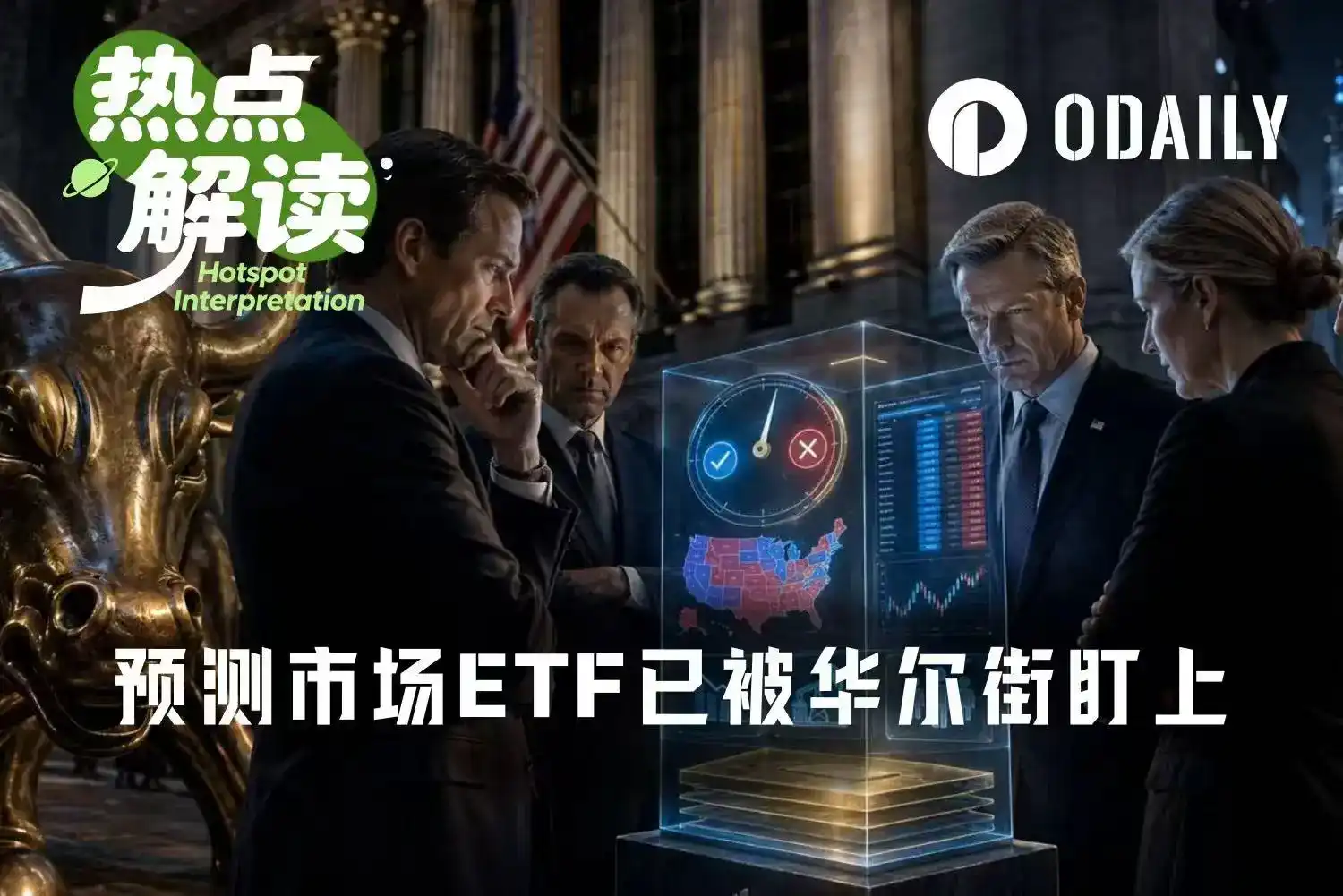
The first batch of prediction market ETFs did not launch in the U.S. market as originally planned.

Earlier this month, due to intervention by the U.S. SEC for further review, the first batch of ETF products related to prediction markets failed to become effective as scheduled, and their listing was forced to be postponed. The SEC required the issuers to supplement details regarding the product mechanism and disclosures, particularly explaining how such products track event contracts, handle settlement risks, and communicate potential extreme losses to ordinary investors.

On the Verge of Effectiveness, the U.S. SEC Hits the Pause Button

Prediction market ETFs are not a new product that suddenly emerged this month. In February of this year, Roundhill Investments was the first to submit relevant filings, followed by Bitwise Asset Management and GraniteShares. The approaches of several issuers were similar, all involving packaging real-world event outcomes into ETF products, allowing investors to trade event probabilities through traditional securities accounts.

The first batch of products initially focused on U.S. political events, including the victory of the Democratic or Republican party in the 2028 presidential election, and the control of the Senate or House in the 2026 midterm elections. Subsequently, the application scope further expanded to event-driven targets such as economic recessions, tech industry layoffs, and commodity prices, with the number of pending products exceeding 20.

According to relevant rules, such ETFs typically become effective automatically 75 days after submission, unless the SEC intervenes for further review. Precisely because multiple issuers had submitted filings as early as February, early May became a critical timeframe for the first batch of prediction market ETFs. Roundhill had previously submitted updated filings, planning for its six prediction market ETFs centered on U.S. presidential and congressional elections to become effective on May 5. The market originally expected Roundhill to potentially be the first issuer to launch prediction market ETFs, with similar products from Bitwise and GraniteShares possibly following.

However, in the end, due to the U.S. SEC's intervention for further review, the first batch of products did not see an automatic effectiveness.

Delay "Not a Fatal Issue," but Entering a More Detailed Review Stage

From the current actions of the U.S. SEC, it appears more like the prediction market ETFs were asked to provide supplementary explanations rather than being outright rejected.

If regulators believed such products fundamentally should not exist, the market might have seen clearer signals of rejection. But the SEC's current actions seem more like requiring issuers to clarify several issues, including how the products obtain exposure to event contracts, how the underlying prices are formed, how event outcomes are settled, what magnitude of losses investors might bear, and whether the disclosure documents are sufficiently straightforward.

Bloomberg ETF analyst Eric Balchunas posted on platform X, stating that the SEC's decision to further review prediction market ETFs currently seems more like the regulatory agency wanting to conduct additional verification of the disclosure documents. Given the pioneering significance of such products, once approved, they would set an important regulatory precedent for prediction market ETFs, so it's understandable that the SEC is taking more time for review.

The reason for the SEC's caution is that prediction market ETFs and traditional ETFs are not the same type of product. Ordinary sector ETFs buy a basket of stocks, thematic ETFs buy into a specific industry narrative, and Bitcoin ETFs track the price of an asset. But prediction market ETFs are not buying an asset; they are buying whether a specific event will occur or not. Whether the Democrats win the 2028 presidential election, whether the Republicans control the Senate, whether the U.S. enters an economic recession, whether the tech industry experiences large-scale layoffs—these are not traditional assets, but real-world events.

The peculiarity of prediction market ETFs lies in the fact that they look like ETFs, but their underlying structure is closer to binary event contracts. Ordinary investors seeing them in their brokerage accounts might mistake them for ordinary thematic funds, but they are not trading a basket of stocks or asset prices; rather, they are trading whether a specific event ultimately occurs or not. If the judgment is wrong, the loss could be very direct, even approaching zero. The SEC's request for supplementary disclosures is perhaps to confirm whether issuers can clearly explain this structure and its risks.

The Launch Window Remains Open, But Rules Are Key

Although the launch of prediction market ETFs has been delayed, the market currently tends to interpret this postponement as supplementary review rather than a regulatory shift towards rejection. Nate Geraci, President of The ETF Store, offered a relatively optimistic assessment. He mentioned that U.S. SEC Commissioner Hester Peirce recently stated in a speech that regulators are trying to strike a balance between regulation and innovation. Nate Geraci believes this statement might be related to prediction market ETFs and suggested such products could be launched soon.

Currently, institutions might need to focus on whether the SEC characterizes this delay as a disclosure issue or a product attribute issue. However, regardless of which review path the SEC ultimately leans towards, the prediction market ETF category is unlikely to vanish due to a single delay.

If the issue remains at the disclosure level, the first batch of products might just be launched a bit later; if regulators continue to question the product attributes, the pace will slow down, but it will also push the industry to form clearer rules. For issuers, as disclosure standards, settlement requirements, and boundaries for investor protection gradually become clear, subsequent products might actually be easier to replicate.

More importantly, institutions have already begun designing products at different levels around prediction markets. Directly tracking event outcomes like elections, recessions, and layoffs is one approach; investing in prediction market platforms, trading infrastructure, market makers, and data service providers is another. Even if the review cycle for event-outcome ETFs lengthens, prediction markets, as a financial theme, have already been incorporated into the product libraries of ETF issuers. In other words, Wall Street is not just waiting for a few election ETFs to be approved; it is placing early bets on the new business that "future events can also be traded."


Letture associate

From 'Cash Incinerator' to 'Money Printing Machine': ChangXin Technology's Remarkable Turnaround, Raking in 50 Billion in Half a Year

Changxin Technology: From "Money Incinerator" to "Money Printer" in Six Months Changxin Technology, a Chinese DRAM chipmaker once dubbed a "money incinerator" for years of massive losses, has staged a staggering financial turnaround. Its updated IPO prospectus reveals explosive 2026 first-half results: revenue forecast of 110-120 billion yuan (up 613-677% year-on-year) and net profit of 50-57 billion yuan (up 2244-2544% year-on-year). This half-year profit rivals that of major state-owned energy giants. The reversal stems from a historic memory chip super-cycle fueled by AI. Massive demand from AI servers, consuming 8-10x more DRAM than traditional servers, coupled with a supply crunch as major players shift capacity to premium HBM, has driven DRAM prices to multi-year highs. As China's only large-scale DRAM IDM (integrated design and manufacturing) firm, Changxin was positioned to capitalize. With upgraded product lines (DDR5/LPDDR5) and high capacity utilization, it achieved both volume and price increases, doubling its global market share to 7.67% in just half a year. This follows a decade of heavy investment and losses totaling 36.65 billion yuan, a gamble led by Chairman Zhu Yiming, who famously vowed to take no salary until the company was profitable. The IPO aims to raise 29.5 billion yuan, implying a valuation that some analysts project could reach 1-2 trillion yuan long-term. Debate persists over the sustainability of profits given DRAM's cyclicality, but supporters point to structurally sustained AI demand and Changxin's strategic national importance. The story is a textbook financial comeback, rewarding persistent investment in a critical industry.

marsbit14 min fa

From 'Cash Incinerator' to 'Money Printing Machine': ChangXin Technology's Remarkable Turnaround, Raking in 50 Billion in Half a Year

marsbit14 min fa

Meme Wrapped Contracts: Is alt.fun Real Innovation or a Pseudo-Need?

A new platform called alt.fun on Hyperliquid has gained attention by merging meme coin creation with leveraged futures trading. Unlike typical meme platforms like Pump.fun, alt.fun requires creators to select an underlying asset (like HYPE or S&P 500) and a leverage level (2x, 3x, or 5x) to take a long or short position. The issued meme token is directly linked to a corresponding leveraged token (LT) on BounceTech, which represents that perpetual contract position. This means the token's price is driven by both the standard bonding curve (community buying/selling) and the performance of its leveraged underlying asset, allowing value to increase even without new purchases. The platform's "graduation" to a DEX pool requires a市值 of $9,000, achievable through market demand or underlying asset growth. While this mechanism can amplify gains in trending markets, it also introduces significant risks from asset volatility, leverage decay during rebalancing, and potential liquidation during sharp price moves. Despite early traction—with its top token ALT reaching an $8.8M market cap—alt.fun faces challenges. Its limited selection of 14 underlying assets constrains variety, leading to tokens with identical financial profiles. More fundamentally, critics argue it misunderstands the meme coin ethos: its tokens are primarily financial instruments tied to asset performance, lacking the community-driven narratives and cultural appeal essential for sustaining meme coin value. The article concludes that while mechanically innovative, alt.fun may be better suited as a niche DeFi product than a true meme platform.

marsbit34 min fa

Meme Wrapped Contracts: Is alt.fun Real Innovation or a Pseudo-Need?

marsbit34 min fa

Meme Wrapped Contracts: Is alt.fun Real Innovation or Pseudo-Demand?

"Last week, the new Meme token launch platform alt.fun on Hyperliquid gained significant attention. Its flagship token ALT reached a peak market cap of $8.8 million. The platform's novelty lies in combining the mechanics of Pump.fun with leveraged trading on Hyperliquid. When a user creates a Meme token on alt.fun, they must also open a leveraged long/short position (2x, 3x, or 5x) on an underlying asset like HYPE. The platform then mints a corresponding leveraged token (LT) on BounceTech, which represents that perpetual contract position. Essentially, users are trading a tokenized derivative. This creates a dual price driver: the token's value is influenced both by market buying/selling via a bonding curve and by the performance of its underlying leveraged position. Hence the slogan: 'Your token pumps even when nobody's buying.' Tokens 'graduate' to a liquidity pool when their market cap (effectively the LT's value) reaches $9,000, achievable through either mechanism. However, this model faces key challenges. Gains are amplified only in strong, one-directional markets for the underlying asset. In volatile conditions, the mandatory 'rebalancing' of LTs leads to value decay. More fundamentally, alt.fun struggles to foster the community consensus vital for Meme tokens. Investment is driven primarily by price speculation on the underlying asset, not by narrative or cultural appeal. With limited underlying assets, token differentiation is low. The article concludes that while mechanically innovative, alt.fun may be better suited as a DeFi platform than a true Meme launchpad, as its core product lacks the community-driven essence of successful Memes."

Odaily星球日报37 min fa

Meme Wrapped Contracts: Is alt.fun Real Innovation or Pseudo-Demand?

Odaily星球日报37 min fa

South Korea's Financial Turmoil: Samsung Strike, AI Communism, and Crypto Market Bleeding Out

The South Korean financial market is facing a turbulent period marked by a triple threat: labor unrest at Samsung Electronics, controversial government proposals for redistributing AI profits, and a severe downturn in the cryptocurrency sector. The stability of the "Korean stock market bellwether," Samsung Electronics, is under threat as its largest union plans to strike on May 21st despite a partial court injunction. The government warns a prolonged strike could cause catastrophic losses, highlighting the high stakes for Korea's critical semiconductor industry. Simultaneously, a proposal by a presidential policy chief to redistribute "AI citizen dividends" from excess corporate taxes triggered significant foreign capital outflow and market volatility last week. While clarified as not a direct tax on company profits, the discussion underscores intense debates over wealth distribution in the AI era, where profits are concentrated in a few chip giants like Samsung and SK Hynix. In stark contrast to the booming AI-driven stock market, Korea's cryptocurrency sector is experiencing a dramatic collapse. Major exchanges Upbit and Bithumb reported steep declines in revenue and profits for Q1 2026. The overall crypto market valuation has nearly halved since early 2025, with trading volumes plummeting 74%. This is exacerbated by tightening regulations, including impending crypto taxes, strict anti-money laundering rules, and frozen assets from defunct exchanges affecting nearly 200,000 users. While regulators are tightening risk controls on financial institutions, the situation presents a new era of financial instability for Korea, caught between AI-fueled growth, social equity debates, and a crumbling crypto market.

Odaily星球日报53 min fa

South Korea's Financial Turmoil: Samsung Strike, AI Communism, and Crypto Market Bleeding Out

Odaily星球日报53 min fa

Trading

Spot
Futures
活动图片