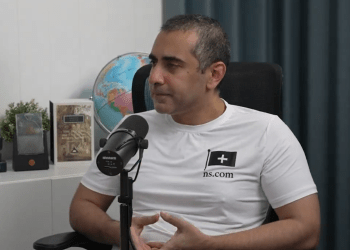
Author| Paul S. Atkins, Chairman of the U.S. SEC
Compiled| WuBlockchain Aki
This article is a transcript of the dialogue between U.S. SEC Chairman Atkins and others at ETHDenver on February 18, 2026.
Original link:https://www.sec.gov/newsroom/speeches-statements/atkins-peirce-021826-number-go-down-other-schadenfreude
Peirce: I am honored to share the stage with Chairman Atkins today. Before we begin, I would like to remind everyone: Our remarks, both his and mine, are personal statements made within our respective official capacities and do not necessarily represent the views of the Commission or other Commissioners. Chairman Atkins needs little introduction, but I will still provide a brief background for everyone.
Mr. Atkins was sworn in as the 34th Chairman of the U.S. Securities and Exchange Commission on April 21 last year. Prior to returning to the SEC, Chairman Atkins' most recent position was as CEO of Patomak Global Partners, a consulting firm he founded in 2009. Chairman Atkins served as an SEC Commissioner from 2002 to 2008; during his tenure, he advocated for regulatory transparency and consistency, and promoted the use of cost-benefit analysis in the agency's work.
Chairman Atkins began his career practicing law in New York, primarily handling various corporate transaction matters for U.S. and foreign clients, including public and private securities offerings, as well as mergers and acquisitions. He was stationed at his law firm's Paris office for two and a half years and obtained the French "conseil juridique" (legal advisor) qualification. He is a member of the New York State and Florida Bar Associations, holds a J.D. from Vanderbilt University Law School, and an A.B. (Phi Beta Kappa) from Wofford College (1980). Chairman Atkins was born in Lillington, North Carolina, and grew up in Tampa, Florida. He and his wife Sarah have three sons.
An interesting fact about Chairman Atkins: He is fluent in German and French. Presumably, he is also considering adding a new language to his skills. Mr. Chairman, have you considered learning Solidity?
Atkins: No need. Vibe coding is sufficient. Compared to BASIC-PLUS and COBOL, which I used in college, this is already a huge improvement.
Peirce: Fair point, Mr. Chairman. But if the smart contracts written by your AI start claiming "everything is a security," we'll have to suspect it's an AI hallucination. A few years ago, if someone told me I would be standing on stage at a crypto conference with the SEC Chairman, I would have thought they were talking nonsense. But here we are — so let's get down to business.
Over the past year, under the leadership of Chairman Atkins at the U.S. Securities and Exchange Commission (SEC), and during the period earlier in the year led by Acting Chairman Uyeda, we have taken many steps towards crypto regulatory "clarity," including:
Proactively solicited and obtained written responses to a series of challenging question sets covering a wide range of crypto topics;
Held multiple in-depth roundtables on several specific topics, including: the definition of securities, trading, custody, tokenization, DeFi, and privacy; Met with numerous developers and builders in person in Washington, D.C., online, and during "Crypto Roadshow" events across the country; Provided technical assistance to the United States Congress as it advanced crypto legislation;
Launched a new cooperative initiative with the Commodity Futures Trading Commission (CFTC) to establish a long-term foundation for regulatory coordination and cooperation in areas of mutual interest, including crypto; Ended the practice of "regulation by enforcement";
Issued multiple staff guidance documents and Frequently Asked Questions (FAQs) to help the market understand what matters the SEC staff considers to be within and outside the SEC's jurisdiction (covering topics such as mining, staking, meme coins, stablecoins, etc.), and how regulated institutions can comply with existing rules when engaging in crypto-related businesses; Rescinded some unhelpful staff guidance, such as SAB 121;
Issued a staff statement regarding broker-dealer custody of "crypto asset securities"; Issued an inter-divisional staff statement proposing a taxonomy for tokenized securities; Approved generic listing standards for crypto ETPs (Exchange-Traded Products);
Issued staff "no-action letters" to several projects, including those related to tokenization and DePIN; and Initiated rule design, exemptive relief, and the development of Commission interpretations to lay the groundwork for a sustainable and stable regulatory framework.
Mr. Chairman, could you give us a preview: what progress in crypto regulation can we expect this year?
Atkins: We have a lot of work to推进. In addition to continuing to communicate regarding the significant legislative work underway in Congress, as you mentioned, we will also advance regulatory work through "Project Crypto", which is now being conducted as a joint initiative with the Commodity Futures Trading Commission (CFTC).
As you all know, one of our own — Mike Selig — was previously brought into the U.S. Securities and Exchange Commission (SEC) by Commissioner Hester M. Peirce to serve as Chief Counsel of the Crypto Task Force in my office; he has now become the CFTC Chairman. We plan to jointly advance a series of important matters — regulatory coordination, joint rulemaking — to form an unprecedented common, coordinated regulatory approach, especially considering that these two agencies have often "clashed" over regulatory boundaries in the past.
As for the SEC, I expect the Commission and staff will focus on the following items in the coming weeks and months:
- Commission-level framework document: Explaining how we view crypto assets that may constitute "investment contracts" and are therefore subject to regulation. How is an investment contract formed? How does it terminate?
- Innovation exemption: Allowing limited trading of certain tokenized securities on novel platforms to enable practical experimentation and the gradual formation of a long-term regulatory framework.
- Rulemaking proposals: Establishing more common-sense, operational paths for market participants to raise capital in scenarios related to the sale of crypto assets.
- No-action letters and exemptive orders: Providing further clarity, including addressing whether products such as wallets and other user interfaces (UI) need to be registered under the Securities Exchange Act; clarifying those that do not constitute registration objects.
- Broker-dealer custody rulemaking: Undertaking rulemaking work regarding broker-dealer custody of "non-security crypto assets", including payment stablecoins.
- Transfer agent modernization rulemaking: Promoting updates to the transfer agent system to accommodate the potential role of blockchain in record keeping.
- Supplementary guidance and no-action letters: Continuing to provide additional guidance and no-action letters to help market participants understand how existing rules apply to their specific factual situations.
Peirce: That确实 sounds like a heavy workload, but for "securities rule enthusiasts" like us, this experience is a bit like participating in the Olympics — almost as thrilling as skiing down a slope at 80 miles per hour, launching into the air to perform difficult maneuvers, or completing a quadruple jump on ice followed by a backflip. Although we are far less "dramatic" than Olympic champions, we do have a rare opportunity: to re-examine a large number of complex regulatory issues in the context of this new technology. This task also requires "aerial skills," and we don't want to hurt or break anything — the only thing to break is those unnecessary regulatory obstacles that hinder technological progress.
I would like to spend a moment first talking about the "innovation exemption." The expectations and concerns it has sparked may both need to be tempered. In fact, the way people are talking about it now reminds me of those who buy abandoned storage lockers: they firmly believe that the locker must contain a rare masterpiece and a box filled with gold bars. Similarly, some are convinced that the innovation exemption will solve all their regulatory pain points at once.
On the other hand, some in traditional finance (TradFi) seem to think that this即将打开的储物柜里关着一头怪物 — a monster that will devour the entire traditional financial system in an ugly way. They worry that the innovation exemption will allow crypto companies to ignore all rules. Both sides will likely eventually find that the innovation exemption will not be as "disruptive" as either side imagines. It will be an important step towards integrating tokenized securities more smoothly into the existing financial system, but it will not change the entire financial system overnight.
What we are doing now is still incremental progress — as always. The goal is to promote the absorption of new technology by the system in a "natural growth" manner: enhancing the vitality and resilience of the system while enabling it to more effectively serve investors, businesses, and other capital users. Paul, could you talk specifically about what you envision the innovation exemption will look like?
Atkins: I am inclined to consider establishing an "innovation exemption" that allows both traditional financial incumbents and crypto-native institutions to conduct experiments within certain boundaries. For example, allowing market participants to trade certain tokenized securities through automated market makers (AMMs), even if that mechanism may not have a subject "controlled" by a single person or group. In my view, as long as market participants are willing, they should be able to interact with decentralized applications on public, permissionless blockchains. But I also expect that many Americans will prefer to have intermediaries custody assets and conduct transactions on their behalf. The choice of whether to use an intermediary should be made by the individual investor, not decided for them by the SEC. I also want to discuss: whether a "safe harbor" should be provided for participants who may in fact facilitate such transactions.
Specifically, I hope to explore: how issuers interested in tokenizing their securities can work with transfer agents or other tokenization agents to tokenize securities, enabling them to be traded on-chain through AMMs or other trading systems, environments, or platforms that provide decentralized liquidity. Under this potential path, the innovation exemption would set an upper limit on transaction size (volume) and may provide exemptions from certain rules and other requirements within a certain range — requirements that may not be relevant given how the technology operates. Buyers and sellers of tokenized securities would need to go through a whitelisting process. The exemption would be temporary but last long enough for us to evaluate: whether new rules need to be制定 in the future, or existing rules amended, to allow such transactions to continue under appropriate conditions, and to enable any relevant parties that need to complete registration to do so. I welcome feedback on this potential方案.
Peirce: Thank you for giving us a先 "glimpse into the locker." No Picasso, but no scary monster either. Just a step-by-step process from which market participants can learn, and which may help us move towards a "fit-for-purpose," long-term sustainable regulatory framework. Speaking of new things, you and I have both seen demonstrations showing how these technologies (e.g., decentralized trading) work. Among what you've seen, what has impressed you?
Atkins: One interesting aspect of this technology is the ability to "embed" compliance requirements into smart contract code. For example, a company's founders could directly写入 their promise "not to resell their securities within a certain period" into the smart contract governing the tokenized securities. Similarly, we can also use blockchain to reimagine how issuers and holders communicate. Furthermore, privacy-preserving technologies like zero-knowledge proofs could fundamentally change how we achieve the regulatory goals of the Bank Secrecy Act. In this model, Americans would not have to hand over their privacy completely to financial institutions, and the compliance costs for these intermediaries would be lower.
Peirce: That sounds promising. I have always been very concerned that financial surveillance is embedded too deeply in our financial system. Americans now have the opportunity to use new technology to protect themselves from bad actors while also protecting our nation from adversaries. We should seize this moment to重新认识 the importance of financial privacy to the safety of the American people.
Now let's talk about the "elephant in the room": How do you view the recent decline in crypto asset prices? Should regulatory attention be focused on this issue now? Should regulators panic, or even care about the price drop?
Atkins: It is not the regulator's job to worry about the daily fluctuations of the market; our duty is to ensure that market participants receive the disclosure information they need to make informed investment decisions. Whether buying stocks, precious metals, or crypto assets, if a person's sole focus is that "the number only goes up," they are likely to be disappointed. Markets rise due to a variety of factors and fall due to a variety of factors. As regulators, the most important thing we can do is ensure that the rule system for the asset classes we regulate allows market participants to obtain the necessary information, thereby expressing their judgment and sentiment about the market through decisions such as whether to buy the relevant assets.
Peirce: I agree. "Number go down" is the current流行口号, and some crypto critics are even "taking to the streets to celebrate." In German, this reaction can be called "Schadenfreude," roughly translated as "malicious joy" — pleasure derived from someone else's loss or misfortune. Here, we might call their attitude "Ethbelowthreeglee" (Ethereum below three thousand glee), or "Bitcoinunderseventylevity" (Bitcoin under seventy thousand levity).
But the best response to these critics is not to frantically search for some regulatory change to make "the number go back up." Of course, providing clearer rules through legislation and regulation can help create an environment conducive to building. But regulation is not the "source" of value emergence. You have to go out and build things that people truly want and truly need. Only then can you secure broader support across both parties in Washington — if people are actually using something, the government will be more reluctant to take it away.
Mr. Chairman, based on your years of experience in capital markets, can you share some lessons on how innovators can interact more effectively with the regulatory system and successfully advance compliance and innovation?
Atkins: I agree with your view: In Washington, building useful things that people truly want and truly need speaks for itself. If this technology can be developed and applied prudently, it could have a transformative impact on the financial system as securities gradually move onto the chain. For example, asset tokenization could change the financial system as we know it by shortening settlement cycles, facilitating the flow of collateral and dividends, easing proxy voting, or making it easier for people to构建 and manage "customized, diversified" investment portfolios. We are ready to work with entrepreneurs who are committed to building a better future.
I am somewhat reluctant to repeat the often-mocked slogan of the previous administration, but I will say it anyway: "Come in and talk to us." We will not "take sides" on any particular asset or technology, nor will we be your advocates, but we want our markets to remain open to those offering new products and services. Our rule system should not be an obstacle to innovation — especially when these innovations can further our regulatory goals of protecting investors, facilitating capital formation, and maintaining fair, orderly, and efficient markets.
Peirce: You've struck that balance well. We are not "cheerleaders" for any new asset or technology, but we want the markets to welcome those with ideas who are trying to improve how markets operate. The SEC hasn't always been friendly enough in the past. Regulation, if done improperly, can deprive the American public of benefits they could otherwise enjoy.
For example, our past unwillingness to engage constructively with token issuers led to a perverse outcome: tokens that赋予 no substantive rights to holders were less likely to attract negative regulatory attention than those that did赋予 rights. The consequence is that we now find ourselves in a world where most tokens confer no rights upon their holders.
I hope we can reach a stage where project developers are no longer afraid to design tokens that have some claim to a revenue stream and are therefore securities. Paul, what conditions and changes do we need to achieve this state where "people can发行 tokens that理所当然 fall into the securities category without fear"?
Atkins: We need to continue doing what we are doing — providing clearer rules and paths on how tokenized securities interface with the current regulatory framework, and how intermediaries comply when trading and custodying tokenized securities on behalf of clients. This work can only be done collaboratively; we welcome input from all sides, including those crypto opponents immersed in "Schadenfreude" (malicious joy).
I encourage everyone here to think: what attributes should a token have to be truly useful to people; and then work with us to promote a regulatory framework that can accommodate and support these attributes without undermining our important regulatory goals. Of course, this process takes time. Innovators do not necessarily have to wait for these changes to be fully in place before they start building. While we engage in broader discussions and assess whether fundamental adjustments to the rule system are needed, communicating with us to see if there is a viable compliance path under your specific facts and business structure with existing rules may be a necessary transitional step.
Peirce: Paul, you are known for your optimism even in difficult environments. Do you have any closing advice for the audience experiencing a tough crypto market cycle?
Atkins: Keep your head down and build what truly matters. That's how you turn "Schadenfreude" into "Freudenfreude" — that joy we feel sincerely when others succeed. A moderate amount of dark chocolate and diet cola might also help, but things like Celsius and Zyn should be consumed in moderation.