6,000 Investors Lost Everything On A 1,001x Solana Meme Coin — South Korea Just Made Its Move

bitcoinistPubblicato 2026-05-27Pubblicato ultima volta 2026-05-27

Introduzione

South Korean prosecutors have indicted five individuals for a landmark Solana-based meme coin rug pull, marking the first-ever criminal prosecution of a decentralized exchange (DEX) scam under the country's Virtual Asset User Protection Act. The group launched the CATFI token on pump.fun, artificially inflated its value through fake social media promotions and circular trading under the influencer alias "EtherFather," and then abandoned the project. The scam caused the token's price to surge 1,001 times, attracting about 6,000 investors and resulting in approximately $650,000 in confirmed losses for 256 victims. This precedent-setting case extends South Korea's crypto fraud enforcement framework to DEX transactions and influencer-driven manipulation for the first time.

South Korean prosecutors have indicted five individuals in the country’s first-ever criminal prosecution of a decentralized exchange rug pull — and the first case in which fraudulent trading charges under South Korea’s Virtual Asset User Protection Act have been applied, setting a landmark legal precedent for how the country’s crypto enforcement framework handles DEX-based market manipulation on Solana and other blockchains.

The Seoul Southern District Prosecutors’ Office Virtual Asset Crime Joint Investigation Unit announced on May 27 that it had arrested and indicted two suspects on market manipulation charges, indicted a third without arrest, and separately indicted two additional suspects for obstructing justice by helping the ringleader evade capture — five defendants in total across two separate charging tracks, per Digital Asset’s May 27 reporting of the prosecutor’s statement.
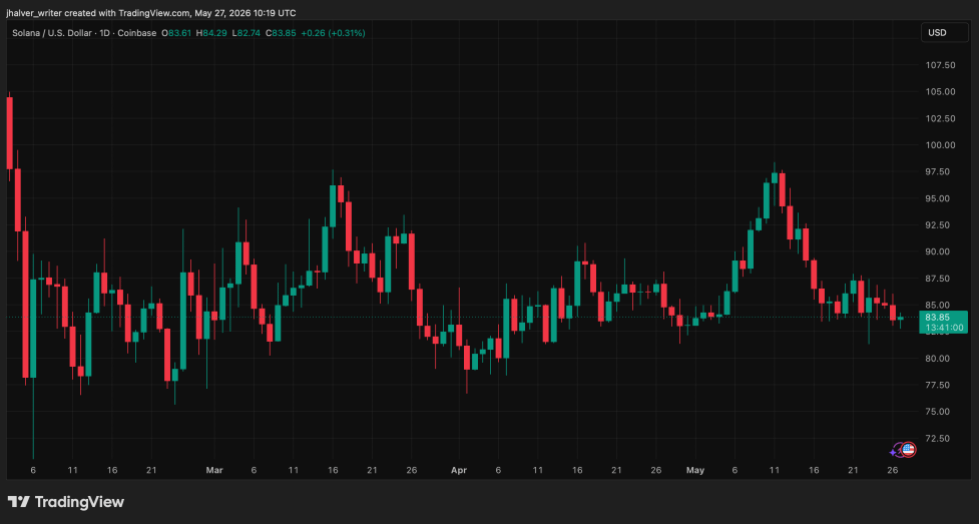
SOL's price moving sideways on the daily chart. Source: SOLUSD on Tradingview

How The Solana Scheme Worked

The operation centered on CATFI — a Solana-based meme coin launched on pump.fun, the widely used Solana token issuance platform that gained significant traction during the early 2025 meme coin frenzy. The group spent several million Korean won to launch the token and list it on a decentralized exchange, per the prosecution’s account.

The ringleader, identified only by his surname Park, operated under the influencer alias “EtherFather” on social media — presenting himself as an independent third party with no financial interest in the project while actively recommending CATFI purchases to his followers. Simultaneously, the group operated the project’s official social media accounts, artificially inflating follower counts and publishing false promotional announcements to drive retail buying interest, per the prosecutor’s statement as reported by Digital Asset.

To conceal their control over the token’s supply, the group distributed holdings across multiple wallets and conducted circular trading — a technique designed to create the appearance of organic market activity while masking the fact that the issuing parties controlled the token’s liquidity. Once retail investors had entered, the group executed the rug pull — abandoning the project and exiting with approximately 400 million Korean won in illicit proceeds from an initial outlay of roughly 10 million won, per the filing.

The Scale Of The Damage

CATFI’s price surged 1,001 times in the 26 hours following its launch, attracting approximately 6,000 investors. Of those, 256 suffered confirmed financial losses totaling approximately 900 million Korean won — roughly $650,000 at current exchange rates — per the prosecution’s figures cited in the Digital Asset report.

Why The Precedent Matters

Two firsts define this case’s significance. It is the first prosecution under the Virtual Asset User Protection Act using fraudulent trading charges — specifically the act’s prohibition on “use of fraudulent means, plans, or schemes” and “false statements on material matters” in connection with digital asset transactions, per the prosecution’s legal framing.

The prior landmark case under the same law applied market manipulation charges relating to centralized exchange activity. This case extends that framework to decentralized exchange transactions for the first time — a meaningful expansion of regulatory reach into a space prosecutors have historically struggled to address.

This development marks a critical juncture for the nascent sector’s regulatory trajectory in South Korea. A successful rug pull prosecution targeting DEX activity on Solana, influencer-driven manipulation, and coordinated wallet obfuscation simultaneously signals that Korean enforcement agencies are developing both the technical capability and the legal framework to pursue crypto fraud beyond the centralized exchange perimeter.

Cover image from Grok, SOLUSD chart from Tradingview

Domande pertinenti

QWhat is the landmark legal significance of the CATFI rug pull case in South Korea?

AIt is the first criminal prosecution of a decentralized exchange rug pull in South Korea and the first case to apply fraudulent trading charges under the Virtual Asset User Protection Act to DEX-based market manipulation, setting a key precedent.

QWhat meme coin was at the center of the scheme, and on which platform was it launched?

AThe scheme centered on the CATFI meme coin, which was launched on the Solana token issuance platform pump.fun.

QHow did the perpetrators conceal their control over the CATFI token and manipulate the market?

AThey distributed holdings across multiple wallets, conducted circular trading to simulate organic activity, used the alias 'EtherFather' to falsely promote the coin as a disinterested party, and inflated social media follower counts with false announcements to drive retail buying.

QWhat was the financial scale of the damage caused to investors in the CATFI scheme?

AApproximately 6,000 investors were attracted, with 256 confirmed to have suffered losses totaling about 900 million Korean won (roughly $650,000). The perpetrators made about 400 million won in illicit proceeds from an initial 10 million won outlay.

QWho was indicted in the case, and what were the general charges?

AFive individuals were indicted. Two were arrested and indicted for market manipulation, a third was indicted without arrest for the same, and two others were separately indicted for obstructing justice by helping the ringleader evade capture.

Letture associate

Retail Investors' 'Lead Brother' Serenity vs. Newly Minted Stock God Leopold: How Are the Two Top Hunters Mining AI's 'Physical Limits'?

The article profiles two prominent figures, Serenity and Leopold Aschenbrenner, who are gaining attention for their unconventional investment strategies focused on the physical constraints of the AI boom, moving beyond mainstream software narratives. Serenity, an anonymous online trader, advocates a "shiso leaf" theory. He targets small-cap companies with monopolies on critical, overlooked components in the AI hardware supply chain, such as specific semiconductor materials. His deep, technical analysis of bottlenecks in areas like co-packaged optics (CPO) has reportedly yielded massive returns, though his anonymity and focus on illiquid micro-cap stocks pose significant risks for followers. Leopold Aschenbrenner, a former OpenAI researcher, founded a multi-billion dollar hedge fund. His macro thesis argues that physical infrastructure—power grids, land, data centers—is the true bottleneck for AI growth, lagging far behind chip production. Consequently, his fund employs an infrastructure arbitrage strategy: heavily investing in storage and compute infrastructure companies while placing massive bearish bets (put options) against major semiconductor stocks, betting their valuations will correct as physical constraints become apparent. While their methods differ—Serenity drills into microscopic supply chain details, while Leopold takes a macroscopic, infrastructure-focused view—both share a core belief: the real power and investment alpha in the AI era lie in controlling scarce physical resources, not just software. The article concludes by noting the inherent risks in both approaches, such as liquidity issues for micro-caps and timing risks for macro bets, but suggests they signal a broader market re-evaluation of AI's foundational assets.

marsbit4 h fa

Retail Investors' 'Lead Brother' Serenity vs. Newly Minted Stock God Leopold: How Are the Two Top Hunters Mining AI's 'Physical Limits'?

marsbit4 h fa

Who Will Make Money in the Age of Agents?

In the Agents era of blockchain, traditional value capture theories face challenges. The "Fat Protocol" theory, dominant since 2016, suggested protocols capture most value as their tokens are essential for network use. However, the proliferation of interchangeable L1s, L2s, and modular layers has eroded protocol scarcity and pricing power. Conversely, the "Fat App" theory posits that applications capturing user relationships (like wallets and exchanges) become the primary value layer by controlling distribution and transaction flows. This aligns with the current "Great Repricing" cycle. Agents disrupt this logic. As software users, they lack brand loyalty, prioritize cost and efficiency, and switch between platforms seamlessly. This undermines the front-end UX moats that "Fat Apps" rely on. The article explores several potential futures: 1. **Headless Applications:** Current leading apps could strip their front-ends and become backend API infrastructure for Agents, preserving their role. 2. **Protocol Resurgence:** If integration becomes trivial, Agents might bypass aggregators and interact directly with protocols, reviving "Fat Protocol" dynamics. 3. **Pricing Power Collapse:** Agents' rational, frictionless routing could commoditize the entire stack, compressing margins toward cost and leaving little profit for intermediaries. 4. **Unprecedented Activity:** Agents may enable new, high-frequency, machine-to-machine economic activities, expanding the total value pie even if margins are thin. 5. **A New, Unnamed Model:** Historically, major tech shifts (like the internet's attention economy) create unforeseen business models. The Agents era may spawn entirely new ways to capture value. The most likely outcome is a coexistence where "Fat Apps" continue to serve human users valuing UX, while a separate, Agent-driven economy emerges governed by different rules—where loyalty is based on factors like liquidity, latency, and settlement guarantees rather than brand.

marsbit5 h fa

Who Will Make Money in the Age of Agents?

marsbit5 h fa

Trading

Spot
Futures

Articoli Popolari

Cosa è MEME 2.0

Memecoin 2.0: L'Ascesa di $MEME 2.0 nel Mondo delle Criptovalute Introduzione Nel panorama in continua evoluzione delle criptovalute, è emerso un nuovo contendente. Memecoin 2.0, simboleggiato come $MEME 2.0, porta il concetto di meme coin a un livello emozionante. Come prodotto derivato dal Memecoin originale, questo progetto ha catturato l'attenzione della comunità crypto spostando il focus da incentivi finanziari tipici a un'esperienza coinvolgente e divertente. Operando sulla blockchain di Ethereum, Memecoin 2.0 ridefinisce audacemente l'impegno della comunità nella sfera crypto. Che cos'è Memecoin 2.0, $MEME 2.0? Alla base, Memecoin 2.0 è un progetto di criptovaluta che dà priorità allo spirito di comunità e al divertimento associato alla cultura meme. A differenza delle criptovalute convenzionali, che si concentrano su casi d'uso pratici e benefici tangibili, Memecoin 2.0 si distingue abbracciando il lato più leggero della moneta digitale. Il progetto esiste senza promesse di utilità, una roadmap strutturata o ritorni finanziari, concentrandosi invece sulla creazione di una comunità vibrante incentrata sui meme e sul divertimento condiviso. Facendo così, attinge alla crescente tendenza della cultura meme nello spazio online, rendendola un giocatore unico nel mondo degli asset digitali. Creatore di Memecoin 2.0, $MEME 2.0 Nonostante ricerche approfondite sulle origini di Memecoin 2.0, l'identità esplicita del suo creatore rimane sconosciuta. Questa anonimità non è rara nella comunità crypto, dove molti progetti sono guidati da individui o gruppi che preferiscono rimanere dietro le quinte. La mancanza di informazioni pubblicamente disponibili sul creatore potrebbe essere vista come una mossa strategica, mettendo in evidenza l'impegno della comunità piuttosto che la notorietà individuale all'interno dello spazio. Investitori di Memecoin 2.0, $MEME 2.0 Le informazioni riguardanti gli investitori o il supporto finanziario per Memecoin 2.0 sono scarse. Questa assenza di dettagli potrebbe suggerire che il progetto sia autofinanziato o che il suo focus sulla comunità piuttosto che sulle strutture d'investimento tradizionali abbia attratto un tipo diverso di sostenitore. Poiché il mondo delle meme coin coinvolge tipicamente un maggior coinvolgimento di base piuttosto che investimenti istituzionali, questo approccio si allinea con l'etica dei progetti guidati dalla comunità. Come funziona Memecoin 2.0, $MEME 2.0? Memecoin 2.0 opera interamente sulla blockchain di Ethereum, capitalizzando le sue robuste caratteristiche di sicurezza e scalabilità. Sfruttando i punti di forza di Ethereum, Memecoin 2.0 può offrire un ambiente sicuro per le interazioni degli utenti garantendo che le transazioni siano sia efficienti che convenienti. Uno degli attributi unici di Memecoin 2.0 risiede nella sua struttura guidata dalla comunità. Il valore e la popolarità del token $MEME 2.0 derivano dalla partecipazione attiva dei suoi utenti, piuttosto che dalla utilità intrinseca. Questo design rinforza il focus del progetto sull'aspetto dell'intrattenimento delle criptovalute, implicando che la risata e l'impegno della comunità siano le vere monete che guidano il suo successo. Inoltre, il progetto si inserisce all'interno dell'ecosistema più ampio delle meme coin, dove il valore di ciascuna meme coin oscilla in base alla cultura, alle tendenze e all'impegno della comunità piuttosto che ai principi economici tradizionali. Cronologia di Memecoin 2.0, $MEME 2.0 Per comprendere meglio l'evoluzione e le pietre miliari di Memecoin 2.0, ecco una cronologia che evidenzia eventi significativi nella sua storia: 2024: L'inizio di Memecoin 2.0 è riconosciuto come un ramo del Memecoin originale, affermandosi all'interno del contesto fiorente delle meme coin mentre opera sulla blockchain di Ethereum. 13 luglio 2024: Memecoin 2.0 si posiziona ufficialmente come una meme coin incentrata sulla comunità sulla rete Ethereum, enfatizzando il suo approccio centrato sull'intrattenimento che invita gli utenti a impegnarsi e partecipare alla sua crescita. Punti Chiave su Memecoin 2.0, $MEME 2.0 Diverse caratteristiche critiche definiscono Memecoin 2.0: Approccio Centrico alla Comunità: La missione principale di Memecoin 2.0 è creare un'esperienza comunitaria divertente e coinvolgente, capitalizzando il piacere collettivo derivante dalla cultura memetica. Costruita su Ethereum: Operare sulla blockchain di Ethereum fornisce al progetto un'infrastruttura essenziale che garantisce sicurezza e scalabilità. Mancanza di Utilità o Roadmap: In una marcata deviazione dalle criptovalute tradizionali, Memecoin 2.0 non promette alcuna caratteristica utilitaria o ritorni finanziari, riaffermando il suo impegno per il coinvolgimento della comunità e l'impegno sociale. Focus sulla Cultura Memetica: Abbracciando gli aspetti umoristici e culturali del fenomeno meme, Memecoin 2.0 offre una piattaforma per gli utenti per interagire con la crypto offline e online. Ulteriore Contesto: L'Importanza delle Meme Coin Le meme coin sono emerse come una classe distinta di criptovaluta, spesso guidata dall'umorismo e da un approccio spensierato al trading. Queste monete generalmente mancano di significative utilità o roadmap di sviluppo, attirando gli utenti con la promessa di divertimento, interazione comunitaria e rilevanza culturale. Nel panorama del più ampio ecosistema crypto, le meme coin rianimano l'importanza dell'impegno della comunità, opponendosi ad approcci esclusivamente orientati al profitto. Progetti come Memecoin 2.0 danno il via a un'era in cui l'intrattenimento può armonizzarsi con le aspirazioni finanziarie, trasformando la blockchain in un parco giochi per la creatività e l'interazione sociale. Conclusione Memecoin 2.0, o $MEME 2.0, incarna una nuova ondata di criptovaluta che dà priorità all'impegno della comunità rispetto a rigidi strutture finanziarie. Con un focus sull'umorismo e l'interazione sociale, capitalizza sulla fascinazione circondante la cultura meme. Operando sulla blockchain di Ethereum, Memecoin 2.0 sfrutta le capacità della tecnologia mantenendo fermo il suo impegno per il valore ricreativo della valuta digitale. Mentre lo spazio delle criptovalute continua a evolversi, Memecoin 2.0 serve come testimonianza della nozione che il futuro degli asset digitali potrebbe ben dipendere da esperienze condivise, risate e solidi legami comunitari. Nel mondo imprevedibile delle crypto, forse la gioia può essere altrettanto preziosa quanto il guadagno finanziario tradizionale.

93 Totale visualizzazioniPubblicato il 2024.04.04Aggiornato il 2024.12.03

Cosa è MEME 2.0

Come comprare MEME

Benvenuto in HTX.com! Abbiamo reso l'acquisto di Memeland (MEME) semplice e conveniente. Segui la nostra guida passo passo per intraprendere il tuo viaggio nel mondo delle criptovalute.Step 1: Crea il tuo Account HTXUsa la tua email o numero di telefono per registrarti il tuo account gratuito su HTX. Vivi un'esperienza facile e sblocca tutte le funzionalità,Crea il mio accountStep 2: Vai in Acquista crypto e seleziona il tuo metodo di pagamentoCarta di credito/debito: utilizza la tua Visa o Mastercard per acquistare immediatamente MemelandMEME.Bilancio: Usa i fondi dal bilancio del tuo account HTX per fare trading senza problemi.Terze parti: abbiamo aggiunto metodi di pagamento molto utilizzati come Google Pay e Apple Pay per maggiore comodità.P2P: Fai trading direttamente con altri utenti HTX.Over-the-Counter (OTC): Offriamo servizi su misura e tassi di cambio competitivi per i trader.Step 3: Conserva Memeland (MEME)Dopo aver acquistato Memeland (MEME), conserva nel tuo account HTX. In alternativa, puoi inviare tramite trasferimento blockchain o scambiare per altre criptovalute.Step 4: Scambia Memeland (MEME)Scambia facilmente Memeland (MEME) nel mercato spot di HTX. Accedi al tuo account, seleziona la tua coppia di trading, esegui le tue operazioni e monitora in tempo reale. Offriamo un'esperienza user-friendly sia per chi ha appena iniziato che per i trader più esperti.

290 Totale visualizzazioniPubblicato il 2024.12.12Aggiornato il 2025.03.21

Come comprare MEME

Discussioni

Benvenuto nella Community HTX. Qui puoi rimanere informato sugli ultimi sviluppi della piattaforma e accedere ad approfondimenti esperti sul mercato. Le opinioni degli utenti sul prezzo di MEME MEME sono presentate come di seguito.

活动图片