‘Win-win-win’: Coinbase CEO backs April deadline for CLARITY Act

ambcryptoPubblicato 2026-02-19Pubblicato ultima volta 2026-02-19

Introduzione

Coinbase CEO Brian Armstrong and Senator Bernie Moreno are pushing for the stalled CLARITY Act to pass by April 2026, framing it as a "win-win-win" for the crypto industry, traditional banks, and American consumers. The main dispute centers on whether stablecoins should offer rewards, which banks opposing due to fears of deposit outflows. Armstrong, who had previously withdrawn support over regulatory concerns, now believes a compromise is achievable. Political timing is critical, with Moreno aiming to pass the bill before the 2026 midterms slow progress. Polymarket odds for passage have surged to 90%, indicating growing optimism. The effort is positioned as part of a broader push to advance crypto policy under the Trump administration.

At Mar-a-Lago this week, Coinbase CEO Brian Armstrong and Senator Bernie Moreno signaled a possible comeback for the stalled CLARITY Act.

Speaking at the World Liberty Forum, they pushed back against claims that the crypto industry blocked the bill, with Armstrong framing the earlier setback as a strategic pause to secure better protections for Americans.

Meanwhile, traditional banks are lobbying to remove stablecoin rewards from the bill. Against this backdrop, the CNBC appearance of Armstrong and Moreno shows that the debate is no longer just about technical rules.

It has become a larger fight over the future of finance in the U.S.

Coinbase CEO says CLARITY Act is close to approval

The duo believes there is now a real chance for the CLARITY Act to pass by April 2026.

Remarking on the same, Armstrong said,

“We are going to get this across the finish line, hopefully by April.”

Earlier this year, Armstrong withdrew his support because he was concerned about the SEC’s role and limits on stablecoins. Now, he says a compromise is possible.

Providing further insight on the why, Armstrong added,

“There’s now a path forward where we can get a win-win-win outcome here. A win for the crypto industry, a win for the banks, and a win for the American consumer to get President Trump’s crypto agenda through to the finish line.”

Reasons behind the delay in approval

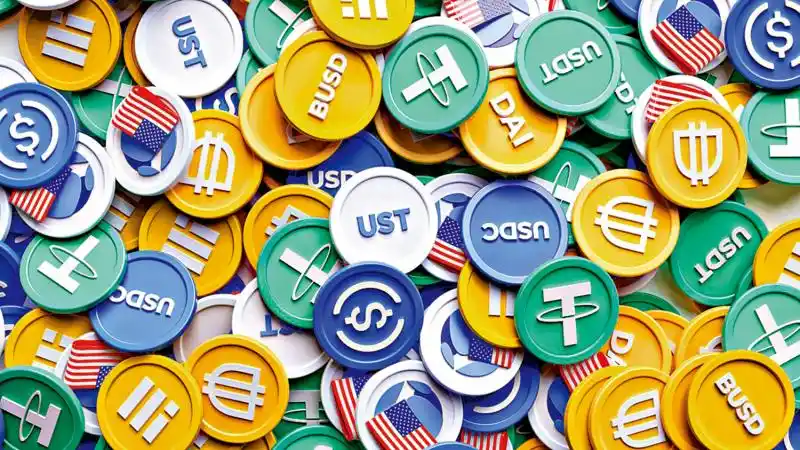
As it’s now established, the main dispute in the bill is whether stablecoins should be allowed to offer rewards or interest. Banks fear that higher returns from stablecoin wallets will pull money out of savings accounts and weaken deposits.

However, Moreno rejects this view, arguing that people should not have to protect banks and that competition will force them to offer better rates. He also supports faster payments, including daily wages instead of the usual twice-a-month cycle.

Meanwhile, politics is also affecting the bill’s timeline. With the 2026 midterms approaching, Moreno wants it passed by April before election season slows progress.

He doubts Democrats will regain the House, citing voter frustration over inflation and border issues.

Moreno said,

“The Democrats only have one idea, which is hatred of President Trump. And that’s not a very good idea in terms of actually advancing the lives of working Americans.”

Yet, both he and Armstrong praised the Trump administration for actively pushing crypto policy forward.

Polymarket data shows further optimism

This further coincided with Polymarket odds surging to 90% for passage in 2026. This shows growing confidence that the legislative deadlock is finally easing.

Still, getting the bill to President Trump’s desk will be a race against time and will require strong cooperation between different committees.

As Patrick Witt outlined, the bill’s journey is now a matter of procedural endurance rather than just conceptual debate. To reach the finish line before the November 2026 midterms, several critical steps remain.


Final Summary

  • The April target is forcing faster negotiations and limiting political delay tactics.
  • Lawmakers are positioning the bill as a win for everyday Americans, not just crypto firms.

Domande pertinenti

QWhat is the new deadline for the CLARITY Act that Coinbase CEO Brian Armstrong is backing?

AApril 2026.

QAccording to the article, what is the main point of dispute in the CLARITY Act?

AWhether stablecoins should be allowed to offer rewards or interest.

QWhy do traditional banks oppose the inclusion of stablecoin rewards in the bill?

ABanks fear that higher returns from stablecoin wallets will pull money out of savings accounts and weaken their deposits.

QWhat does Senator Bernie Moreno believe competition from stablecoins will force traditional banks to do?

AHe argues that competition will force banks to offer better rates to consumers.

QAccording to the Polymarket data mentioned in the article, what are the odds that the CLARITY Act will pass in 2026?

AThe odds have surged to 90% for passage in 2026.

Letture associate

Data Reveals the True Usage Map of Stablecoins: Over 170 Million Global Holders, More Than 90% Flowing to DEXs and CEXs

Dune Analytics, in collaboration with Steakhouse Financial, has released a comprehensive stablecoin dataset providing an institutional-grade analysis of the market. Key findings reveal the total supply of the top 15 stablecoins across EVM chains, Solana, and Tron reached $304 billion in January 2026, a 49% year-over-year increase. USDT ($197B) and USDC ($73B) dominate with an 89% market share. Despite the overall growth, ownership is highly concentrated for newer "challenger" stablecoins like USDS and USD0, where the top 10 wallets hold 60-99% of the supply. In contrast, major stablecoins like USDT and USDC are widely distributed. There are over 172 million unique stablecoin holders. Monthly transfer volume hit $10.3 trillion in January. A deep dive into on-chain activity shows over 90% of this volume is attributed to identifiable use cases. The primary use is market infrastructure, with $5.9 trillion flowing through DEX liquidity provision and swaps. This is followed by leverage/credit activities ($1.43T) and CEX-related flows ($5.99B). Velocity varies significantly. USDC on Base cycles 14x daily, indicating highly active DeFi use, while yield-focused stablecoins like USDe and USDS have much lower velocity as they are designed to be held for savings. The dataset also tracks over 200 stablecoins pegged to 20+ fiat currencies, signaling global expansion beyond the dollar, though the $1.2B non-USD supply remains a small fraction of the total market.

marsbit51 min fa

Data Reveals the True Usage Map of Stablecoins: Over 170 Million Global Holders, More Than 90% Flowing to DEXs and CEXs

marsbit51 min fa

What Brought GPT and Claude Together? Opposing the Pentagon?

The article discusses the unexpected alignment between rival AI companies OpenAI and Anthropic, driven by their shared ethical stance against the U.S. Department of Defense's demands. Anthropic, the maker of Claude, had signed a $200 million contract with the Pentagon but insisted on two red lines: no mass surveillance of U.S. citizens and no autonomous weapons without human oversight. When the Pentagon demanded unrestricted use, Anthropic refused, citing ethical concerns. In a show of solidarity, over 400 employees from OpenAI and Google signed an open letter supporting Anthropic’s position. OpenAI’s CEO also internally affirmed similar principles. However, this unity was short-lived. After Anthropic held its ground and rejected the Pentagon’s ultimatum, it was labeled a "supply chain security risk," effectively barring it from all federal contracts. Meanwhile, OpenAI secured the Pentagon contract by accepting less stringent terms, agreeing not to engage in mass surveillance or autonomous weapons but without pushing for additional legal safeguards. The piece highlights the political and ideological dimensions of the conflict, noting that Anthropic’s stance was perceived as "woke" and ideologically driven, while OpenAI’s more pragmatic approach was rewarded. The outcome signals the high cost of resisting government pressure in the AI industry and raises questions about the real-world value of ethical principles when faced with political and economic consequences.

marsbit1 h fa

What Brought GPT and Claude Together? Opposing the Pentagon?

marsbit1 h fa

Trading

Spot
Futures

Articoli Popolari

Come comprare WIN

Benvenuto in HTX.com! Abbiamo reso l'acquisto di WINkLink (WIN) semplice e conveniente. Segui la nostra guida passo passo per intraprendere il tuo viaggio nel mondo delle criptovalute.Step 1: Crea il tuo Account HTXUsa la tua email o numero di telefono per registrarti il tuo account gratuito su HTX. Vivi un'esperienza facile e sblocca tutte le funzionalità,Crea il mio accountStep 2: Vai in Acquista crypto e seleziona il tuo metodo di pagamentoCarta di credito/debito: utilizza la tua Visa o Mastercard per acquistare immediatamente WINkLinkWIN.Bilancio: Usa i fondi dal bilancio del tuo account HTX per fare trading senza problemi.Terze parti: abbiamo aggiunto metodi di pagamento molto utilizzati come Google Pay e Apple Pay per maggiore comodità.P2P: Fai trading direttamente con altri utenti HTX.Over-the-Counter (OTC): Offriamo servizi su misura e tassi di cambio competitivi per i trader.Step 3: Conserva WINkLink (WIN)Dopo aver acquistato WINkLink (WIN), conserva nel tuo account HTX. In alternativa, puoi inviare tramite trasferimento blockchain o scambiare per altre criptovalute.Step 4: Scambia WINkLink (WIN)Scambia facilmente WINkLink (WIN) nel mercato spot di HTX. Accedi al tuo account, seleziona la tua coppia di trading, esegui le tue operazioni e monitora in tempo reale. Offriamo un'esperienza user-friendly sia per chi ha appena iniziato che per i trader più esperti.

249 Totale visualizzazioniPubblicato il 2024.12.11Aggiornato il 2025.03.21

Discussioni

Benvenuto nella Community HTX. Qui puoi rimanere informato sugli ultimi sviluppi della piattaforma e accedere ad approfondimenti esperti sul mercato. Le opinioni degli utenti sul prezzo di WIN WIN sono presentate come di seguito.

活动图片