South Korea's Crypto Tax Countdown Begins: Escalating Three-Way Game Between CEXs, Retail Investors, and Regulators

marsbitPubblicato 2026-05-08Pubblicato ultima volta 2026-05-08

Introduzione

South Korea's National Tax Service has initiated final preparations to implement a virtual asset tax starting January 2027, with reporting for comprehensive income tax due by May 2028. The tax applies a 22% rate on annual profits exceeding 2.5 million KRW from transfers and leasing, affecting an estimated 13.26 million people. To enforce this, authorities plan to collect data from major domestic exchanges like Upbit and Bithumb and launch a comprehensive virtual asset analysis system. This move follows two previous postponements and signifies a shift towards institutionalized management. The plan also involves international data sharing under the OECD's CARF framework from next year to curb capital flight. However, tensions exist between regulators and exchanges over data sharing and new anti-money laundering rules. The industry, represented by DAXA, opposes proposed regulations requiring the reporting of all cross-border transfers over $6,800 as suspicious, arguing it renders AI risk systems useless and creates an impractical administrative burden. Given Korea's market—comprising 30% of global volume with 85% in altcoins and dominated by retail speculation—the tax could reduce short-term speculative trading and stabilize the domestic market by limiting capital outflows. Its implementation may also influence global crypto regulatory and taxation models, serving as a significant case study for other jurisdictions.

Author: Gallina, CryptoPulse Labs

At the end of April, the South Korean National Tax Service formally initiated preparatory work for taxation on virtual assets, with plans to implement it in January 2027 and prepare for comprehensive income tax declarations in May 2028.

This taxation covers income from the transfer and leasing of virtual assets, applying a 22% tax rate to annual gains exceeding 2.5 million won. It is expected to involve approximately 13.26 million people.

To this end, the National Tax Service plans to obtain data from domestic trading platforms such as Upbit, Bithumb, and Coinone and promote the launch of a comprehensive virtual asset analysis system to establish a complete taxation infrastructure.

South Korea's virtual asset taxation is transitioning from policy preparation to institutional enforcement, while simultaneously facing practical challenges regarding cooperation from trading platforms and regulatory coordination. This may serve as an important window for observing the global crypto market.

1. Preparations Before Tax Implementation: How the National Tax Service is Building the Virtual Asset System

The South Korean National Tax Service categorizes income from the transfer and leasing of virtual assets as "other income," setting a clear tax rate of 22%, with the aim of establishing a systematic and operational taxation mechanism.

Previously, virtual asset taxation experienced two postponements in 2022 and 2024, reflecting the difficulty in coordinating technology, law, and the market. The clarification of the target timeline this time indicates that the taxation infrastructure has entered its final preparatory stage.

The National Tax Service plans to acquire transaction data from major domestic exchanges while constructing a comprehensive virtual asset analysis system to promote cross-platform data integration. The launch of this system will enable tax authorities to monitor capital flows, track profit distribution, and provide data support for future tax declarations.

More importantly, this taxation plan will also rely on the OECD's CARF international information exchange agreement, sharing data on overseas investors starting next year to prevent capital flight and tax evasion.

By classifying virtual assets under the "other income" category rather than traditional capital gains, the South Korean tax system simplifies the collection process while laying the groundwork for future regulatory classification.

This move reflects the South Korean government's shift from fragmented regulation to institutionalized management in the digital asset field, aiming to establish a transparent and enforceable tax framework while balancing compliance and market stability.

2. The Tug-of-War Between Regulation and Crypto Platforms: Data Sharing and Compliance Challenges

During the implementation of taxation preparatory work, a delicate tension has emerged in the relationship between South Korean authorities and various trading platforms.
Recently, the South Korean Personal Information Protection Commission launched an investigation into Upbit and Bithumb, focusing on whether the two platforms shared order book data with overseas platforms without user consent.

These cross-border data transfers are primarily used to enhance trading liquidity but may violate relevant provisions of the Personal Information Protection Act. The investigation has completed written inquiries and on-site inspections, with results expected in the second half of 2026.

Previously, the two trading platforms have been subject to multiple reviews for inadequate fulfillment of anti-money laundering obligations or other compliance issues, with Bithumb even facing record fines for violations.

Similarly, recently, the South Korean crypto industry collectively opposed further tightening of anti-money laundering regulations.

According to Yonhap News Agency reports, the Digital Asset eXchange Alliance (DAXA), representing 27 registered Virtual Asset Service Providers (VASPs), submitted comments on the proposed amendment to the Enforcement Decree of the Specific Financial Information Act.

The new regulations require domestic VASPs to report as a Suspicious Transaction Report (STR) any virtual asset transfers to or from overseas VASPs, regardless of risk level, if the amount reaches 10 million won (approximately $6,800) or more.

While intended to strengthen anti-money laundering monitoring, the requirement for "non-discriminatory reporting of large cross-border transfers" may lead to a disconnect between regulatory objectives and the industry's practical operational capabilities.

DAXA pointed out that the rule, ignoring transaction risk levels, reduces the value of AI risk control systems invested in by exchanges, such as Upbit's abnormal transaction detection, to mere formality, degrading intelligent compliance to mechanical reporting.

Furthermore, the new regulation would cause the annual report volume of South Korea's five major trading platforms—Upbit, Bithumb, Coinone, Korbit, and Gopax—to surge from about 63,000 cases last year to over 5.4 million cases, an 85-fold increase, posing extreme operational difficulties.

The industry also opposes the proposed additional requirement to verify the accuracy of customer information, viewing it as imposing obligations not clearly stipulated by law.

The highly localized nature of the South Korean virtual asset market is also noteworthy, with its trading volume accounting for 30% of the global total, altcoins comprising up to 85%, while the proportion of Bitcoin and Ethereum is relatively low. The main market participants are retail investors, exhibiting obvious speculative characteristics.

This structure places continuous pressure on trading platforms to balance maintaining liquidity and fulfilling compliance obligations. The friction between regulatory demands and platform business objectives, to some extent, reflects the unique investor behavior and institutional environment of the South Korean market.

3. Capital Flows and Price Volatility: Potential Transmission of Tax Policy

The advancement of virtual asset taxation in South Korea has a direct impact on its domestic market. Taxation will regulate investor behavior, making taxes transparent and potentially curbing short-term speculative activities.

Simultaneously, relying on cross-border information exchange agreements, the space for capital flight is limited, promoting greater stability in the local market order. Tax policy will also influence exchange operating strategies, forcing platforms to adjust between ensuring liquidity and compliance.

From a global perspective, while the South Korean market has a large trading volume, its high proportion of altcoins and relatively insufficient market depth mean its price volatility has a significant spillover effect on global markets.
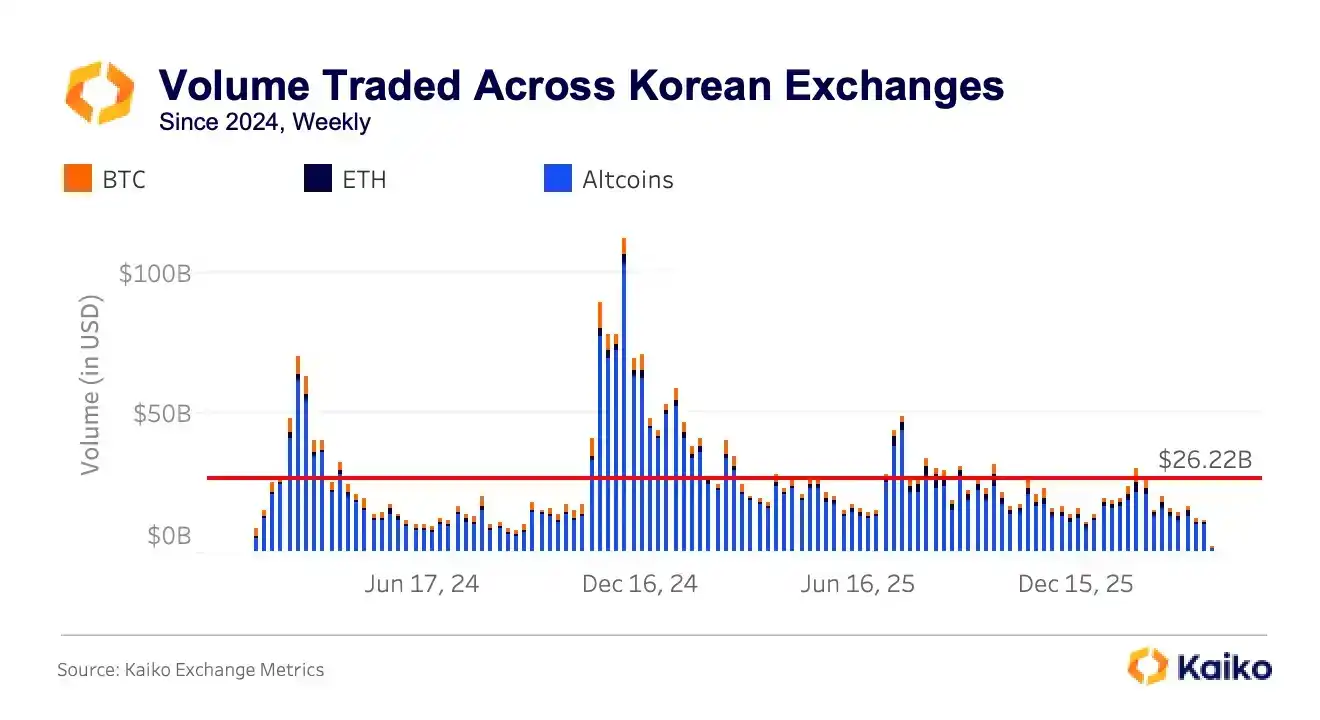
After tax implementation, market funds may be redistributed. Trading enthusiasm for high-volatility assets domestically may decline, affecting international investors' participation strategies in Asian markets.

South Korea's regulatory model and information-sharing experience can serve as a reference for other countries, potentially influencing the global virtual asset taxation and compliance system.

The clear timeline and technical infrastructure construction for this taxation also provide institutional expectations for international capital, offering clearer references for the global market regarding price discovery, liquidity risks, and investment strategies in the South Korean market.

Especially in the areas of cross-border capital management and personal information protection, South Korea's practices may become reference cases for other jurisdictions when formulating policies.

Conclusion

The initiation of virtual asset taxation by the South Korean National Tax Service marks a critical step from policy deliberation to institutionalized management. Although friction exists between domestic trading platforms and regulatory agencies, the construction of tax and data infrastructure helps standardize the market and control capital flows.

The highly speculative nature and cross-border transaction characteristics of the South Korean market mean its taxation practice will not only affect the domestic ecosystem but may also serve as a reference for global cryptocurrency regulation and tax models. Observing market reactions after the final tax implementation will aid in understanding the trends and challenges in the global virtual asset market's institutionalization process.


Domande pertinenti

QWhat are the key steps and timeline for South Korea's upcoming virtual asset taxation plan?

ASouth Korea's National Tax Service (NTS) has officially started preparations in April, with the tax scheduled for implementation on January 1, 2027. This is in preparation for the comprehensive income tax filing in May 2028. The plan involves building a Virtual Asset Comprehensive Analysis System, collecting transaction data from major domestic exchanges like Upbit and Bithumb, and leveraging international information exchange agreements like the OECD's CARF.

QWhat is the tax rate and threshold for virtual asset gains in South Korea's new system?

AThe taxation applies to gains from the transfer and leasing of virtual assets. Gains exceeding 2.5 million KRW (approximately $1,700) per year will be subject to a tax rate of 22%. This is expected to affect approximately 13.26 million people.

QWhat are the main points of friction between South Korean regulators and cryptocurrency exchanges (CEXs)?

AThere are two primary areas of tension. First, data sharing and privacy: regulators are investigating exchanges like Upbit and Bithumb for potentially sharing user order book data with overseas platforms without proper consent. Second, compliance burden: the industry, represented by DAXA, strongly opposes a proposed anti-money laundering rule that would require reporting *all* cross-border transfers over 10 million KRW (~$6,800) as suspicious transactions, which they argue renders AI risk-control systems useless and would increase reporting volume by 85 times, making it operationally unfeasible.

QHow might South Korea's virtual asset taxation policy impact its domestic market and global investors?

ADomestically, the policy aims to standardize investor behavior, reduce short-term speculation, and stabilize the market by limiting capital flight through international data sharing. It may reduce trading volume in high-volatility altcoins, which dominate the Korean market. Globally, Korea's high trading volume and unique market structure (85% altcoin share) mean its price volatility significantly impacts global markets. The country's regulatory model and experience with data sharing could serve as a reference for other jurisdictions shaping their own crypto tax and compliance frameworks.

QWhat is the classification of virtual asset income under the South Korean tax system, and why is it significant?

AVirtual asset transfer and leasing income is classified as 'Other Income' rather than traditional capital gains. This is significant because it simplifies the taxation process within the existing legal framework and establishes a foundational category for future regulatory classification, marking a shift from fragmented oversight to systematic, institutionalized management of digital assets.

Letture associate

Undercover in Crypto for 8 Years, 5 Jobs: The Revolution and Scam in My Eyes

"Undercover in Crypto for 8 Years, 5 Jobs: The Revolution and the Scam I Saw" In 2017, the author entered crypto believing it would revolutionize everything: replacing fiat, disintermediating finance, and shifting power to users. Eight years later, almost none of that has happened as predicted. The author worked at Circle, Messari, Coinbase, and Crossmint, witnessing the asset class grow from under $10B to over $4T, through multiple speculative bubbles and a near-systemic crisis. The journey began with the 2017-18 ICO frenzy, an "internet bubble 2.0" fueled by Ethereum. The promised "decentralized Uber" never materialized; instead, it was an era of greed, fraud, and rampant speculation where founders cashed out early. In the 2018-19 hangover, the focus shifted. The seeds of crypto's next phase were planted: stablecoins (like USDC) for borderless dollars and DeFi (decentralized finance) for rebuilding financial primitives like lending and trading on-chain. The COVID-19 pandemic and massive monetary stimulus triggered "DeFi Summer" in 2020-21. DeFi's value soared 250x to $180B, but it resembled a high-stakes game for mercenary traders with "food-themed" tokens. A new bubble formed around NFTs, with digital art selling for millions. The 2022 "crypto winter" mirrored the 2008 financial crisis. The collapse of the algorithmic stablecoin Terra (UST) triggered a chain reaction, bringing down hedge funds (Three Arrows Capital) and lending platforms (Celsius, Voyager). The final blow was the implosion of FTX and Sam Bankman-Fried, who had misused customer funds. This was crypto's "Lehman Moment." After the crash, the Biden administration's hostile regulatory crackdown under the SEC pushed innovation toward the legally safest, most absurd path: meme coins. The 2024 meme coin mania peaked at $150B before imploding. This political pressure, however, mobilized the industry. Donald Trump capitalized, promising a crypto-friendly stance, which many credit for helping him win the 2024 election. Trump's victory marked a turning point. A pro-crypto SEC chair took over, the "GENIUS Act" provided clear stablecoin rules in 2025, and institutional adoption accelerated. Circle (maker of USDC) IPO'd, and traditional giants like MoneyGram began using stablecoins for cross-border payments via firms like Crossmint. Looking back, the predicted consumer revolution (decentralized Uber) didn't happen. Instead, crypto built the plumbing for a new internet financial system. Each boom/bust cycle refined the infrastructure for global, 24/7 finance accessible to anyone online. The $300B+ stablecoin market, settling tens of trillions annually and creating demand for U.S. debt, is now a strategic U.S. priority. The future lies in convergence, not replacement. Crypto will be the backend, invisible to most users. The next frontier is integration with AI, where autonomous agents will use crypto wallets and stablecoins to transact. The result will be a global financial system equally accessible in New York or Nigeria, paving the way for countless new innovations.

marsbit47 min fa

Undercover in Crypto for 8 Years, 5 Jobs: The Revolution and Scam in My Eyes

marsbit47 min fa

AI Relay Stations: The Hidden Pitfalls Behind Low Costs, How to Screen and Avoid Them?

AI Relay Stations: The Hidden Risks Behind Low Costs and How to Avoid Pitfalls AI relay stations are becoming a popular gateway to various models, offering lower prices, a wider selection, and a unified interface for tools like Claude Code and Cursor. However, their appeal masks significant risks. Users may unknowingly surrender prompts, code, business documents, customer data, and even full project contexts. The demand is driven by genuine needs: cost savings compared to expensive official APIs (e.g., GPT, Claude), easier access amid regional restrictions, and the push from AI-powered development tools. But not everyone needs a relay station. Light users should exhaust free official quotas first. Heavy users, like developers, can adopt a layered approach, using top models for critical tasks and cheaper local models for routine work. If a relay station is necessary, follow a careful selection and usage protocol: 1. **Verify First:** Test model authenticity, latency, and stability before purchasing credits. Check the quality of provided documentation. 2. **Isolate Configuration:** Use unique API keys for each service, manage them via environment variables, and set usage limits to control costs and potential damage from leaks. 3. **Classify Your Data:** Develop a habit of data grading before sending requests. Only send non-sensitive, public information directly. Desensitize semi-sensitive data (e.g., internal documents) by removing names and specifics. Never send highly sensitive data like passwords, private keys, or confidential customer information. 4. **Handle AI Coding Tools Separately:** Tools like Cursor can send extensive project context (file contents, directory structures, error logs). Use relay stations only for independent, non-core code tasks. For sensitive projects, switch back to official APIs or local models. 5. **Monitor and Prepare an Exit:** Regularly check billing statements, follow platform updates and community feedback, and always have a backup provider. Ensure your setup uses standard OpenAI-compatible APIs for easy migration. Ultimately, relay stations are tools, not default solutions. Their value lies in solving access needs at a controlled cost, but maintaining that control requires proactive risk management through verification, isolation, data classification, and continuous monitoring.

marsbit51 min fa

AI Relay Stations: The Hidden Pitfalls Behind Low Costs, How to Screen and Avoid Them?

marsbit51 min fa

US Stock Registration Giant Acquired by Cryptocurrency Exchange, Accelerating Stock Tokenization

Bullish (NYSE: BLSH), a crypto asset trading platform, announced a $4.2 billion acquisition of Equiniti, a major Wall Street transfer agent serving nearly 3,000 public companies. This move aims to accelerate stock tokenization by securing a critical, regulated piece of financial infrastructure that maintains official shareholder records and handles dividends. The deal signals intensifying competition in the tokenization race. True "native" on-chain securities require a licensed transfer agent for legal ownership registration—a bottleneck Bullish now aims to solve. The acquisition positions Bullish to bridge traditional equity markets with blockchain, leveraging Equiniti's extensive client network and compliance credentials. This follows recent key developments: ICE (NYSE's parent) plans a new tokenized securities platform, and the SEC approved Nasdaq's tokenized stock pilot. Bullish's strategy is to establish a neutral, cross-platform infrastructure ahead of these initiatives. The combined company expects high growth from its tokenization business, targeting the vast U.S. equity market. The narrative is shifting from "crypto vs. Wall Street" to convergence, where legacy infrastructure is upgraded onto blockchain rails. The next 18 months will be crucial for observing the rollout of NYSE's platform, Bullish-Equiniti integration, and the broader adoption of tokenized securities by institutions.

marsbit1 h fa

US Stock Registration Giant Acquired by Cryptocurrency Exchange, Accelerating Stock Tokenization

marsbit1 h fa

Trading

Spot
Futures

Articoli Popolari

Cosa è $S$

Comprendere SPERO: Una Panoramica Completa Introduzione a SPERO Mentre il panorama dell'innovazione continua a evolversi, l'emergere delle tecnologie web3 e dei progetti di criptovaluta gioca un ruolo fondamentale nel plasmare il futuro digitale. Un progetto che ha attirato l'attenzione in questo campo dinamico è SPERO, denotato come SPERO,$$s$. Questo articolo mira a raccogliere e presentare informazioni dettagliate su SPERO, per aiutare gli appassionati e gli investitori a comprendere le sue basi, obiettivi e innovazioni nei domini web3 e crypto. Che cos'è SPERO,$$s$? SPERO,$$s$ è un progetto unico all'interno dello spazio crypto che cerca di sfruttare i principi della decentralizzazione e della tecnologia blockchain per creare un ecosistema che promuove l'impegno, l'utilità e l'inclusione finanziaria. Il progetto è progettato per facilitare interazioni peer-to-peer in modi nuovi, fornendo agli utenti soluzioni e servizi finanziari innovativi. Al suo interno, SPERO,$$s$ mira a responsabilizzare gli individui fornendo strumenti e piattaforme che migliorano l'esperienza dell'utente nello spazio delle criptovalute. Questo include la possibilità di metodi di transazione più flessibili, la promozione di iniziative guidate dalla comunità e la creazione di percorsi per opportunità finanziarie attraverso applicazioni decentralizzate (dApps). La visione sottostante di SPERO,$$s$ ruota attorno all'inclusività, cercando di colmare le lacune all'interno della finanza tradizionale mentre sfrutta i vantaggi della tecnologia blockchain. Chi è il Creatore di SPERO,$$s$? L'identità del creatore di SPERO,$$s$ rimane piuttosto oscura, poiché ci sono risorse pubblicamente disponibili limitate che forniscono informazioni dettagliate sul suo fondatore o fondatori. Questa mancanza di trasparenza può derivare dall'impegno del progetto per la decentralizzazione—un ethos che molti progetti web3 condividono, dando priorità ai contributi collettivi rispetto al riconoscimento individuale. Centrando le discussioni attorno alla comunità e ai suoi obiettivi collettivi, SPERO,$$s$ incarna l'essenza dell'empowerment senza mettere in evidenza individui specifici. Pertanto, comprendere l'etica e la missione di SPERO rimane più importante che identificare un creatore singolo. Chi sono gli Investitori di SPERO,$$s$? SPERO,$$s$ è supportato da una varietà di investitori che vanno dai capitalisti di rischio agli investitori angelici dedicati a promuovere l'innovazione nel settore crypto. Il focus di questi investitori generalmente si allinea con la missione di SPERO—dando priorità a progetti che promettono avanzamenti tecnologici sociali, inclusività finanziaria e governance decentralizzata. Queste fondazioni di investitori sono tipicamente interessate a progetti che non solo offrono prodotti innovativi, ma contribuiscono anche positivamente alla comunità blockchain e ai suoi ecosistemi. Il supporto di questi investitori rafforza SPERO,$$s$ come un concorrente degno di nota nel dominio in rapida evoluzione dei progetti crypto. Come Funziona SPERO,$$s$? SPERO,$$s$ impiega un framework multifunzionale che lo distingue dai progetti di criptovaluta convenzionali. Ecco alcune delle caratteristiche chiave che sottolineano la sua unicità e innovazione: Governance Decentralizzata: SPERO,$$s$ integra modelli di governance decentralizzati, responsabilizzando gli utenti a partecipare attivamente ai processi decisionali riguardanti il futuro del progetto. Questo approccio favorisce un senso di proprietà e responsabilità tra i membri della comunità. Utilità del Token: SPERO,$$s$ utilizza il proprio token di criptovaluta, progettato per servire varie funzioni all'interno dell'ecosistema. Questi token abilitano transazioni, premi e la facilitazione dei servizi offerti sulla piattaforma, migliorando l'impegno e l'utilità complessivi. Architettura Stratificata: L'architettura tecnica di SPERO,$$s$ supporta la modularità e la scalabilità, consentendo un'integrazione fluida di funzionalità e applicazioni aggiuntive man mano che il progetto evolve. Questa adattabilità è fondamentale per mantenere la rilevanza nel panorama crypto in continua evoluzione. Coinvolgimento della Comunità: Il progetto enfatizza iniziative guidate dalla comunità, impiegando meccanismi che incentivano la collaborazione e il feedback. Nutrendo una comunità forte, SPERO,$$s$ può affrontare meglio le esigenze degli utenti e adattarsi alle tendenze di mercato. Focus sull'Inclusione: Offrendo basse commissioni di transazione e interfacce user-friendly, SPERO,$$s$ mira ad attrarre una base utenti diversificata, inclusi individui che potrebbero non aver precedentemente interagito nello spazio crypto. Questo impegno per l'inclusione si allinea con la sua missione generale di empowerment attraverso l'accessibilità. Cronologia di SPERO,$$s$ Comprendere la storia di un progetto fornisce preziose intuizioni sulla sua traiettoria di sviluppo e sui traguardi. Di seguito è riportata una cronologia suggerita che mappa eventi significativi nell'evoluzione di SPERO,$$s$: Fase di Concettualizzazione e Ideazione: Le idee iniziali che formano la base di SPERO,$$s$ sono state concepite, allineandosi strettamente con i principi di decentralizzazione e focus sulla comunità all'interno dell'industria blockchain. Lancio del Whitepaper del Progetto: Dopo la fase concettuale, è stato rilasciato un whitepaper completo che dettaglia la visione, gli obiettivi e l'infrastruttura tecnologica di SPERO,$$s$ per suscitare interesse e feedback dalla comunità. Costruzione della Comunità e Prime Interazioni: Sono stati effettuati sforzi attivi di outreach per costruire una comunità di early adopters e potenziali investitori, facilitando discussioni attorno agli obiettivi del progetto e ottenendo supporto. Evento di Generazione del Token: SPERO,$$s$ ha condotto un evento di generazione del token (TGE) per distribuire i propri token nativi ai primi sostenitori e stabilire una liquidità iniziale all'interno dell'ecosistema. Lancio della Prima dApp: La prima applicazione decentralizzata (dApp) associata a SPERO,$$s$ è stata attivata, consentendo agli utenti di interagire con le funzionalità principali della piattaforma. Sviluppo Continuo e Partnership: Aggiornamenti e miglioramenti continui alle offerte del progetto, inclusi partnership strategiche con altri attori nello spazio blockchain, hanno plasmato SPERO,$$s$ in un concorrente competitivo e in evoluzione nel mercato crypto. Conclusione SPERO,$$s$ rappresenta una testimonianza del potenziale del web3 e delle criptovalute di rivoluzionare i sistemi finanziari e responsabilizzare gli individui. Con un impegno per la governance decentralizzata, il coinvolgimento della comunità e funzionalità progettate in modo innovativo, apre la strada verso un panorama finanziario più inclusivo. Come per qualsiasi investimento nello spazio crypto in rapida evoluzione, si incoraggiano potenziali investitori e utenti a ricercare approfonditamente e a impegnarsi in modo riflessivo con gli sviluppi in corso all'interno di SPERO,$$s$. Il progetto mostra lo spirito innovativo dell'industria crypto, invitando a ulteriori esplorazioni delle sue innumerevoli possibilità. Mentre il percorso di SPERO,$$s$ è ancora in fase di sviluppo, i suoi principi fondamentali potrebbero effettivamente influenzare il futuro di come interagiamo con la tecnologia, la finanza e tra di noi in ecosistemi digitali interconnessi.

75 Totale visualizzazioniPubblicato il 2024.12.17Aggiornato il 2024.12.17

Cosa è $S$

Cosa è AGENT S

Agent S: Il Futuro dell'Interazione Autonoma in Web3 Introduzione Nel panorama in continua evoluzione di Web3 e criptovalute, le innovazioni stanno costantemente ridefinendo il modo in cui gli individui interagiscono con le piattaforme digitali. Uno di questi progetti pionieristici, Agent S, promette di rivoluzionare l'interazione uomo-computer attraverso il suo framework agentico aperto. Aprendo la strada a interazioni autonome, Agent S mira a semplificare compiti complessi, offrendo applicazioni trasformative nell'intelligenza artificiale (AI). Questa esplorazione dettagliata approfondirà le complessità del progetto, le sue caratteristiche uniche e le implicazioni per il dominio delle criptovalute. Cos'è Agent S? Agent S si presenta come un innovativo framework agentico aperto, progettato specificamente per affrontare tre sfide fondamentali nell'automazione dei compiti informatici: Acquisizione di Conoscenze Specifiche del Dominio: Il framework apprende in modo intelligente da varie fonti di conoscenza esterne ed esperienze interne. Questo approccio duale gli consente di costruire un ricco repository di conoscenze specifiche del dominio, migliorando le sue prestazioni nell'esecuzione dei compiti. Pianificazione su Lungo Orizzonte di Compiti: Agent S impiega una pianificazione gerarchica potenziata dall'esperienza, un approccio strategico che facilita la suddivisione e l'esecuzione efficiente di compiti complessi. Questa caratteristica migliora significativamente la sua capacità di gestire più sottocompiti in modo efficiente ed efficace. Gestione di Interfacce Dinamiche e Non Uniformi: Il progetto introduce l'Interfaccia Agente-Computer (ACI), una soluzione innovativa che migliora l'interazione tra agenti e utenti. Utilizzando Modelli Linguistici Multimodali di Grandi Dimensioni (MLLM), Agent S può navigare e manipolare senza sforzo diverse interfacce grafiche utente. Attraverso queste caratteristiche pionieristiche, Agent S fornisce un framework robusto che affronta le complessità coinvolte nell'automazione dell'interazione umana con le macchine, preparando il terreno per innumerevoli applicazioni nell'AI e oltre. Chi è il Creatore di Agent S? Sebbene il concetto di Agent S sia fondamentalmente innovativo, informazioni specifiche sul suo creatore rimangono elusive. Il creatore è attualmente sconosciuto, il che evidenzia sia la fase embrionale del progetto sia la scelta strategica di mantenere i membri fondatori sotto anonimato. Indipendentemente dall'anonimato, l'attenzione rimane sulle capacità e sul potenziale del framework. Chi sono gli Investitori di Agent S? Poiché Agent S è relativamente nuovo nell'ecosistema crittografico, informazioni dettagliate riguardanti i suoi investitori e sostenitori finanziari non sono documentate esplicitamente. La mancanza di approfondimenti pubblicamente disponibili sulle fondazioni di investimento o sulle organizzazioni che supportano il progetto solleva interrogativi sulla sua struttura di finanziamento e sulla roadmap di sviluppo. Comprendere il supporto è cruciale per valutare la sostenibilità del progetto e il suo potenziale impatto sul mercato. Come Funziona Agent S? Al centro di Agent S si trova una tecnologia all'avanguardia che gli consente di funzionare efficacemente in contesti diversi. Il suo modello operativo è costruito attorno a diverse caratteristiche chiave: Interazione Uomo-Computer Simile a Quella Umana: Il framework offre una pianificazione AI avanzata, cercando di rendere le interazioni con i computer più intuitive. Mimando il comportamento umano nell'esecuzione dei compiti, promette di elevare le esperienze degli utenti. Memoria Narrativa: Utilizzata per sfruttare esperienze di alto livello, Agent S utilizza la memoria narrativa per tenere traccia delle storie dei compiti, migliorando così i suoi processi decisionali. Memoria Episodica: Questa caratteristica fornisce agli utenti una guida passo-passo, consentendo al framework di offrire supporto contestuale mentre i compiti si sviluppano. Supporto per OpenACI: Con la capacità di funzionare localmente, Agent S consente agli utenti di mantenere il controllo sulle proprie interazioni e flussi di lavoro, allineandosi con l'etica decentralizzata di Web3. Facile Integrazione con API Esterne: La sua versatilità e compatibilità con varie piattaforme AI garantiscono che Agent S possa adattarsi senza problemi agli ecosistemi tecnologici esistenti, rendendolo una scelta attraente per sviluppatori e organizzazioni. Queste funzionalità contribuiscono collettivamente alla posizione unica di Agent S all'interno dello spazio crittografico, poiché automatizza compiti complessi e multi-fase con un intervento umano minimo. Man mano che il progetto evolve, le sue potenziali applicazioni in Web3 potrebbero ridefinire il modo in cui si svolgono le interazioni digitali. Cronologia di Agent S Lo sviluppo e le tappe di Agent S possono essere riassunti in una cronologia che evidenzia i suoi eventi significativi: 27 Settembre 2024: Il concetto di Agent S è stato lanciato in un documento di ricerca completo intitolato “Un Framework Agentico Aperto che Usa i Computer Come un Umano”, mostrando le basi per il progetto. 10 Ottobre 2024: Il documento di ricerca è stato reso pubblicamente disponibile su arXiv, offrendo un'esplorazione approfondita del framework e della sua valutazione delle prestazioni basata sul benchmark OSWorld. 12 Ottobre 2024: È stata rilasciata una presentazione video, fornendo un'idea visiva delle capacità e delle caratteristiche di Agent S, coinvolgendo ulteriormente potenziali utenti e investitori. Questi indicatori nella cronologia non solo illustrano i progressi di Agent S, ma indicano anche il suo impegno per la trasparenza e il coinvolgimento della comunità. Punti Chiave su Agent S Man mano che il framework Agent S continua a evolversi, diversi attributi chiave si distinguono, sottolineando la sua natura innovativa e il potenziale: Framework Innovativo: Progettato per fornire un uso intuitivo dei computer simile all'interazione umana, Agent S porta un approccio nuovo all'automazione dei compiti. Interazione Autonoma: La capacità di interagire autonomamente con i computer attraverso GUI segna un passo avanti verso soluzioni informatiche più intelligenti ed efficienti. Automazione di Compiti Complessi: Con la sua metodologia robusta, può automatizzare compiti complessi e multi-fase, rendendo i processi più veloci e meno soggetti a errori. Miglioramento Continuo: I meccanismi di apprendimento consentono ad Agent S di migliorare dalle esperienze passate, migliorando continuamente le sue prestazioni e la sua efficacia. Versatilità: La sua adattabilità attraverso diversi ambienti operativi come OSWorld e WindowsAgentArena garantisce che possa servire un'ampia gamma di applicazioni. Man mano che Agent S si posiziona nel panorama di Web3 e delle criptovalute, il suo potenziale per migliorare le capacità di interazione e automatizzare i processi segna un significativo avanzamento nelle tecnologie AI. Attraverso il suo framework innovativo, Agent S esemplifica il futuro delle interazioni digitali, promettendo un'esperienza più fluida ed efficiente per gli utenti in vari settori. Conclusione Agent S rappresenta un audace passo avanti nell'unione tra AI e Web3, con la capacità di ridefinire il modo in cui interagiamo con la tecnologia. Sebbene sia ancora nelle sue fasi iniziali, le possibilità per la sua applicazione sono vaste e coinvolgenti. Attraverso il suo framework completo che affronta sfide critiche, Agent S mira a portare le interazioni autonome al centro dell'esperienza digitale. Man mano che ci addentriamo nei regni delle criptovalute e della decentralizzazione, progetti come Agent S giocheranno senza dubbio un ruolo cruciale nel plasmare il futuro della tecnologia e della collaborazione uomo-computer.

497 Totale visualizzazioniPubblicato il 2025.01.14Aggiornato il 2025.01.14

Cosa è AGENT S

Come comprare S

Benvenuto in HTX.com! Abbiamo reso l'acquisto di Sonic (S) semplice e conveniente. Segui la nostra guida passo passo per intraprendere il tuo viaggio nel mondo delle criptovalute.Step 1: Crea il tuo Account HTXUsa la tua email o numero di telefono per registrarti il tuo account gratuito su HTX. Vivi un'esperienza facile e sblocca tutte le funzionalità,Crea il mio accountStep 2: Vai in Acquista crypto e seleziona il tuo metodo di pagamentoCarta di credito/debito: utilizza la tua Visa o Mastercard per acquistare immediatamente SonicS.Bilancio: Usa i fondi dal bilancio del tuo account HTX per fare trading senza problemi.Terze parti: abbiamo aggiunto metodi di pagamento molto utilizzati come Google Pay e Apple Pay per maggiore comodità.P2P: Fai trading direttamente con altri utenti HTX.Over-the-Counter (OTC): Offriamo servizi su misura e tassi di cambio competitivi per i trader.Step 3: Conserva Sonic (S)Dopo aver acquistato Sonic (S), conserva nel tuo account HTX. In alternativa, puoi inviare tramite trasferimento blockchain o scambiare per altre criptovalute.Step 4: Scambia Sonic (S)Scambia facilmente Sonic (S) nel mercato spot di HTX. Accedi al tuo account, seleziona la tua coppia di trading, esegui le tue operazioni e monitora in tempo reale. Offriamo un'esperienza user-friendly sia per chi ha appena iniziato che per i trader più esperti.

910 Totale visualizzazioniPubblicato il 2025.01.15Aggiornato il 2025.03.21

Come comprare S

Discussioni

Benvenuto nella Community HTX. Qui puoi rimanere informato sugli ultimi sviluppi della piattaforma e accedere ad approfondimenti esperti sul mercato. Le opinioni degli utenti sul prezzo di S S sono presentate come di seguito.

活动图片