Rate Hikes to Save STRC, Selling Bitcoin to Preserve Credit: Strategy Picks Its Two Most Expensive Paths

链捕手Pubblicato 2026-06-30Pubblicato ultima volta 2026-06-30

Introduzione

Over the past six weeks, Strategy has faced a significant crisis of confidence, with its core securities MSTR and STRC experiencing sharp price declines. The situation escalated as the company utilized dollar reserves intended for dividends and interest payments to repurchase debt, and then sold a small amount of Bitcoin for the first time since 2022—an action that contradicted its "never sell" narrative and signaled potential liquidity strain. In response, Strategy introduced a Digital Credit capital framework. This formalized a series of measures to manage the pressure down its capital structure: ordinary shareholders have already borne costs through equity dilution from an $11.5 billion ATM offering; new rules enforce a hard dollar reserve covering at least 12 months of expected dividend and interest payments; the STRC dividend rate was increased from 11.5% to 12%; and, most notably, Bitcoin was officially integrated into the capital toolkit, with board authorization to sell up to $1.25 billion worth if needed to support obligations and repurchase programs. The market reacted with a mix of relief and skepticism. While the announcement triggered a sharp single-day rally in both MSTR and STRC, the preferred shares still trade at a significant discount. Supporters view the framework as pragmatic crisis management that provides a price floor and clearer rules. Critics argue that institutionalizing Bitcoin sales undermines the core investment thesis and, with Bitcoin's price ...

Over the past six weeks, Strategy's two core securities have experienced a significant crisis of confidence. The MSTR stock price fell below $87, hitting a new low since February 2024, down over 50% from its peak. STRC plummeted from near its par value to a historic low of $74 last Thursday, a 26% discount to its $100 par value.

Public discourse surrounding this global largest corporate Bitcoin holder has shifted from its previous long-termist narrative to widespread questioning of the sustainability of its financing model.

Just as market concerns intensified, Strategy yesterday launched a Digital Credit Capital Framework, formalizing what was previously a one-time Bitcoin sale for emergency purposes into an institutionalized capital management tool.

How the Pressure Mounted Step by Step

The earliest hidden trigger of this crisis dates back to May 15th. Strategy repurchased $1.5 billion of convertible bonds maturing in 2029 at an approximately 8% discount. This transaction utilized dollar reserves that were supposed to be earmarked specifically for preferred stock dividends and debt interest payments, slashing the company's cash coverage capacity from the promised 24 months to about 6 months.

In the last week of May, Strategy sold Bitcoin for the first time since 2022, offloading 32 BTC to demonstrate the company's ability to support dividends by liquidating assets. However, this signal was interpreted negatively by the market. For a company whose core narrative has long been "never selling Bitcoin," even a small-scale sale subtly conveyed that its funding chain was beginning to tighten.

Subsequently, the company's shareholder meeting approved a plan to change STRC's dividends to twice a month, and dollar reserves also recovered to over $1 billion. Last week, Strategy sold over 12.66 million shares of MSTR through a common stock ATM offering, raising approximately $1.15 billion net. The secondary market is still digesting the new shares.

Meanwhile, the company's Bitcoin purchasing pace noticeably slowed. During the fundraising in the previous two weeks, about half was used to buy Bitcoin; in the third week, the purchase size drastically shrank, with most funds retained to pay STRC dividends.
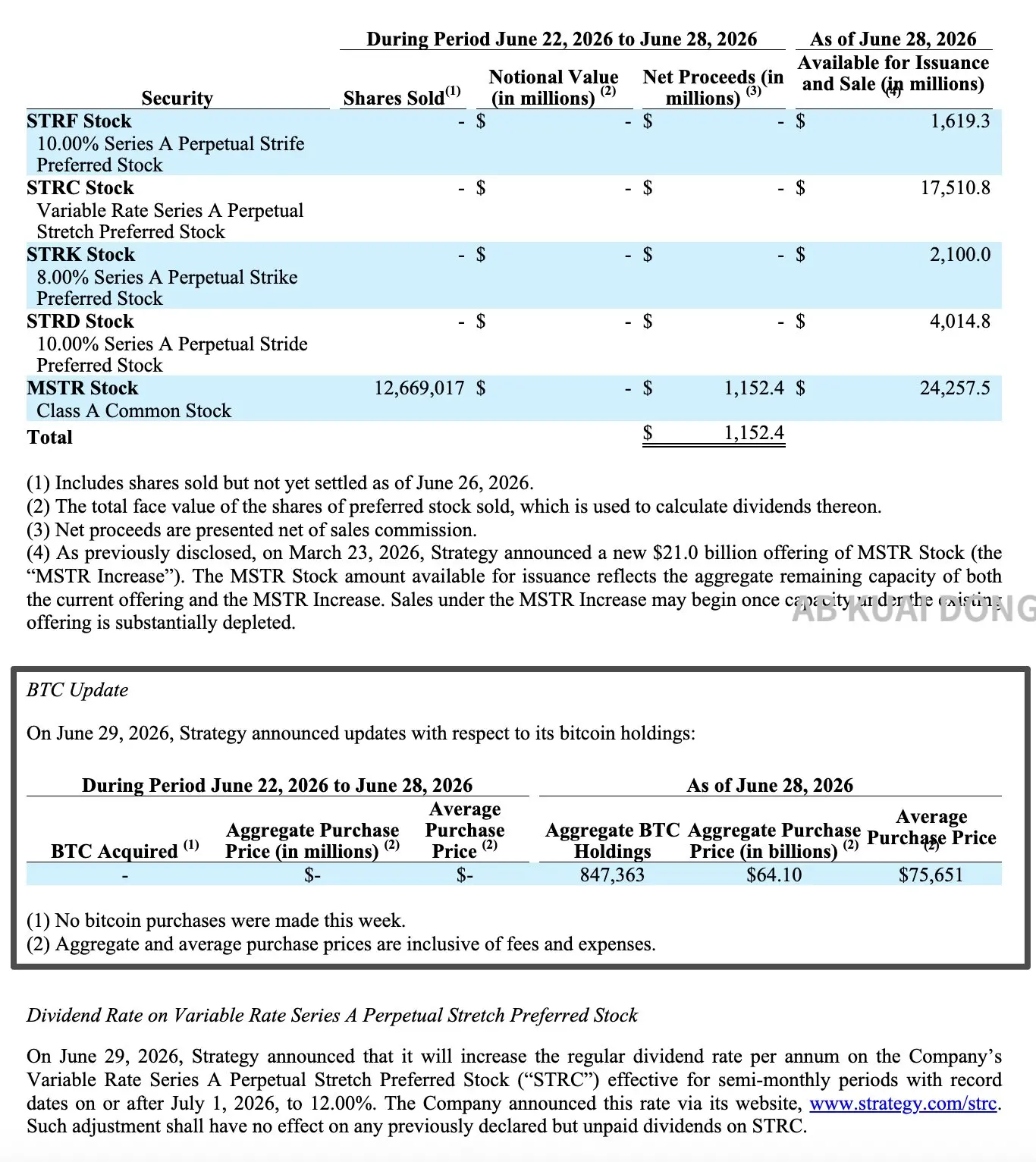
On June 26th, STRC fell to its historic low of $74. Concurrent data showed that STRC's 90-day correlation coefficient with Bitcoin rose to nearly 0.70, the highest level since the product's launch in July 2025.

The Framework Passes Costs Down the Capital Structure

On June 29th, Strategy filed an 8-K form, introducing the Digital Credit Capital Framework. This framework includes hard coverage requirements for dollar reserves, a dynamic evaluation mechanism for STRC dividends, a total of $2 billion in repurchase authorization, and a BTC liquidation plan of up to $1.25 billion.

The emergence of the Digital Credit Capital Framework essentially channels the pressure accumulated over the past six weeks down the company's capital structure step by step.

Delphi Digital's analysis noted that when Bitcoin appreciates, the cost is borne by common shareholders paying preferred stock dividends. Once the mNAV falls below 1x, this transmission channel fails, forcing the company to turn to reserves and selling Bitcoin. Strategy is currently in this stage.
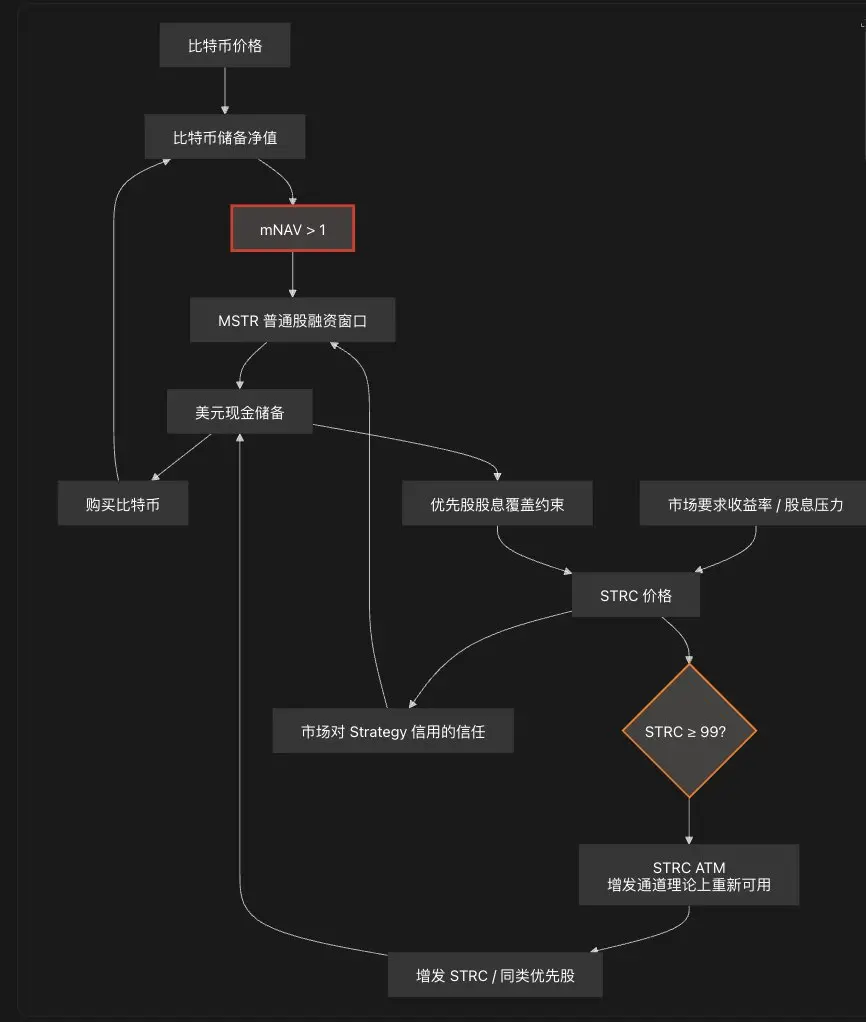
Image Source: X user @bitfish

The first wave of costs is borne by common shareholders. The entire $1.15 billion raised from last week's ATM offering was transferred into reserves, meaning common shareholders are already footing the bill for the preferred stock's solvency at the cost of equity dilution.

The second step is to establish hard rules for dollar reserves. The framework stipulates that this cash reserve can only be used to pay preferred stock dividends and debt interest. Management must maintain a size sufficient to cover at least the next 12 months of expected expenditures. As of June 28th, the company's reserve balance was $2.55 billion. Based on annualized dividend and interest expenses of approximately $1.76 billion, the coverage period is about 17.4 months.

The third step is to raise STRC's annualized dividend yield from 11.5% to 12%, effective July 1st. The company also stated that future dividend yields will be assessed monthly on a comprehensive basis and will not be increased solely because STRC trades below par value. This arrangement attempts both to maintain the preferred stock's attractiveness and avoid excessive future cash flow pressure.

The fourth step, and the one that elicited the strongest market reaction, is that Bitcoin itself is formally incorporated into the capital management toolkit. The Board authorized a BTC liquidation plan, allowing the sale of Bitcoin to raise up to $1.25 billion to replenish dollar reserves, pay preferred stock dividends and interest expenses, or fund the repurchase plan. If all uses—paying dividends/interest, repurchasing preferred and common stock—are counted, the theoretical liquidation scale could exceed $1.25 billion, with any excess requiring further Board approval.

It's worth noting that Zach Pandl, Head of Research at Grayscale Research, recently stated that, rather than raising STRC's dividend yield by 50 basis points, it would be better to directly sell over $3 billion worth of Bitcoin to more thoroughly fulfill cash payment obligations and restore market confidence. This view aligns with the company's new framework, indicating that the market has long recognized the company has few options left.

Faced with the three options of repurchasing STRC, selling Bitcoin, or cutting dividends, Strategy rejected the last one. The two $1 billion repurchase authorizations and the Bitcoin sale plan were simultaneously activated, and the dividend was not only not cut but raised by 50 basis points.
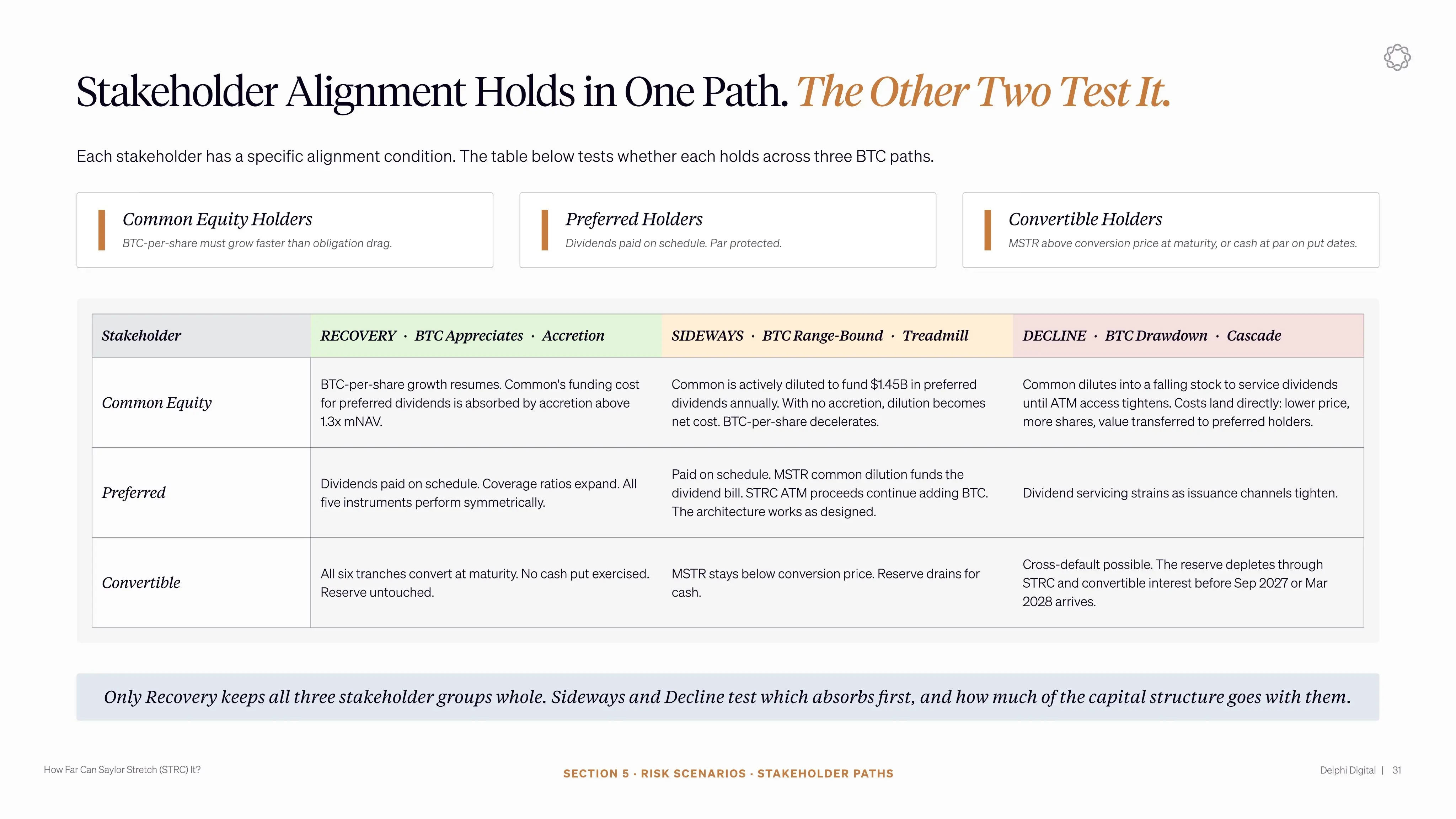
In the short term, the rate hike helps pull STRC back from deep discount to near par value. But in the long run, a higher dividend rate means future cash flow pressure hasn't truly eased, and Bitcoin has officially transformed from a long-term asset to be only bought and never sold into a capital management tool that can be liquidated under specific conditions.

The Market Remains Half-Convinced, Half-Skeptical

On the day the framework was announced, MSTR closed up 12.6%, and STRC rose 12.2% in sync, rebounding to $83.67, both marking the largest single-day gains recently. However, the STRC price still has about a 16% discount, with a considerable distance from the company's target range of $99 to $100.

Some supportive voices for Strategy view this as a relatively pragmatic crisis management move. Dollar reserve coverage has significantly improved from its previous strained state, and the introduction of repurchase tools provides an expectation of price support for the preferred stock. Benchmark Equity Research reiterated its Buy rating, maintaining a $570 price target. Based on MSTR's Monday closing price of $92.68, this target implies about 515% upside potential.

Analyst Mark Palmer pointed out in a report that the framework formally grants management permission to operate the capital machine in reverse when market conditions require, including repurchasing common and perpetual preferred stock, liquidating Bitcoin to fulfill obligations, and suspending common stock issuance when the stock price no longer trades at a premium to net asset value. He believes this means Strategy has become an active manager on both ends of the capital structure, which is a significant positive for shareholders.

But skeptical voices are equally clear. Crypto KOL @MengLayer pointed out that institutionalizing Bitcoin sales from a one-time emergency move not only weakens the narrative tension but, more directly, poses the problem that the current Bitcoin price is already below the company's average holding cost of about $75,700. Selling assets below cost to maintain the credit structure in this range is, in itself, a difficult operation, hardly an easy path.

Ripple CEO Brad Garlinghouse has previously stated that financial engineering itself does not create long-term value; an asset's long-term value ultimately stems from actual utility. He believes Strategy's model of relying on preferred stock financing to buy Bitcoin over the past year has already negatively impacted the overall crypto market.

More notably, this discussion has transcended the company level. Galaxy Digital CEO Mike Novogratz stated that the recent drop in Bitcoin price is fundamentally caused by the confidence collapse triggered by Strategy. As the world's largest corporate Bitcoin holder, Strategy's stock and preferred securities performance have become a key indicator for traders to gauge risk across the entire Bitcoin market.

Finally

Following the framework release, the market experienced a short-term rebound, but formally including Bitcoin as a capital management option has brought the previously implied tension to the surface.

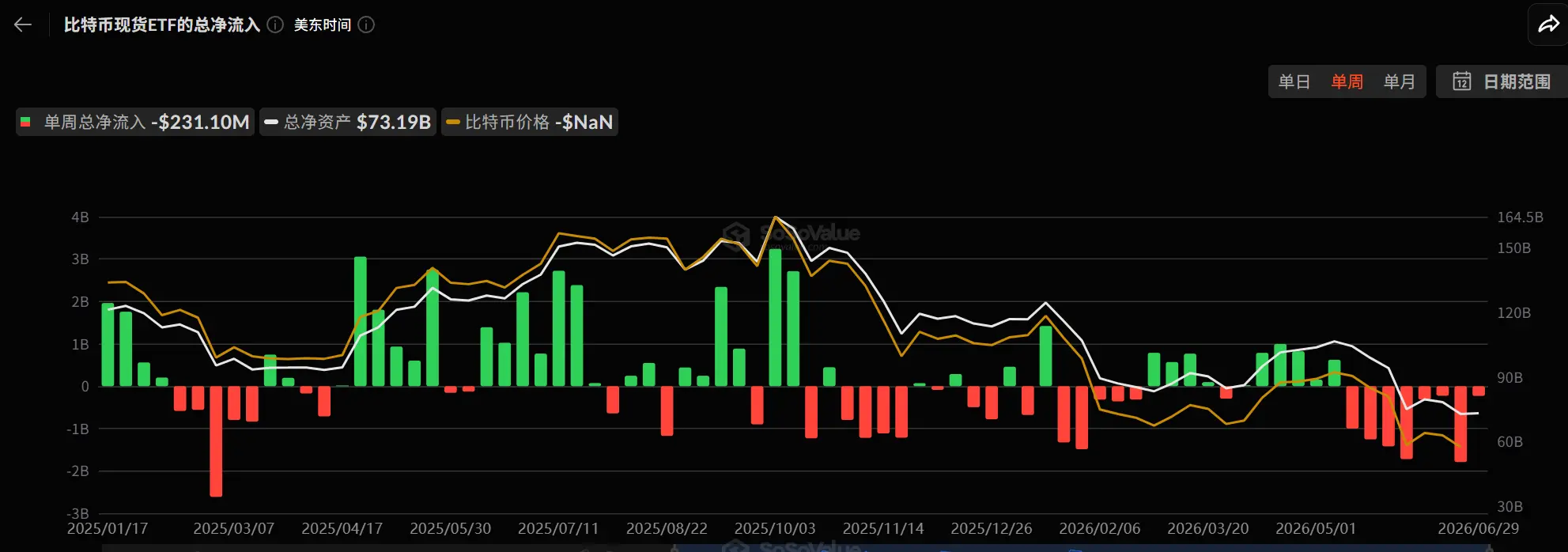
The flip side of market sentiment is also worth noting. For the week ending June 26th, U.S. spot Bitcoin ETFs saw a net outflow of $1.79 billion, marking the second-largest single-week net outflow on record, with net outflow weeks extending to seven consecutive weeks. Global non-mining publicly traded companies' net Bitcoin purchases last week were only $14.65 million, an 83% decrease month-over-month.
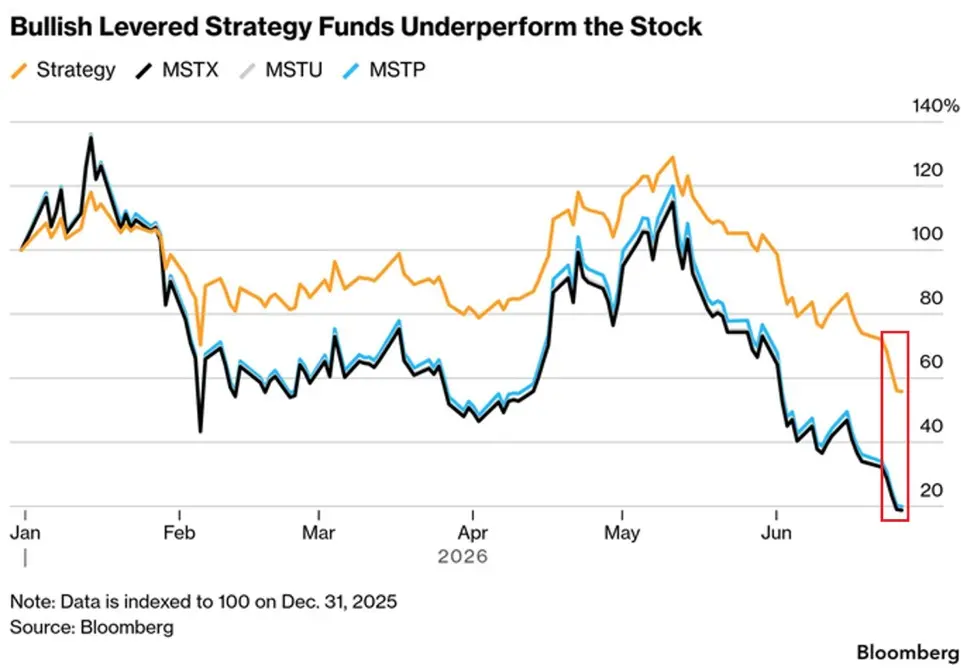
Meanwhile, the leveraged MicroStrategy ETFs (both long and short) launched in 2024 have each fallen over 90% since inception. Despite billions of dollars in inflows earlier, the leverage effect is magnifying losses dramatically.
On one side, incremental buying from institutional channels like ETFs and public companies has clearly dried up; on the other, retail leverage exposure is being repeatedly crushed.

This new framework may alleviate liquidity and credit issues to some extent, giving Strategy more maneuvering room during Bitcoin's downturn. But whether STRC can truly return near par value ultimately depends on whether the market believes the company can sustainably cover these dividends without further dilution or Bitcoin liquidation. A rebound in Bitcoin price would make this task easier.


Crypto di tendenza

Domande pertinenti

QWhat is the core crisis that Strategy's two key securities (MSTR and STRC) have faced in the past six weeks?

ABoth of Strategy's core securities have experienced a significant confidence crisis. MSTR's stock price fell below $87, hitting a new low since February 2024, marking a decline of over 50% from its peak. STRC plummeted from near its face value to a historical low of $74 last Thursday, representing a 26% discount to its $100 face value.

QWhat major action did Strategy take on June 29th to address its capital management issues?

AOn June 29th, Strategy filed an 8-K form to introduce its 'Digital Credit' capital framework. This framework institutionalized measures including hard coverage requirements for its US dollar reserves, a dynamic assessment mechanism for STRC dividends, a $2 billion total share repurchase authorization, and a plan allowing for the sale of up to $1.25 billion worth of Bitcoin to support these obligations.

QAccording to the article, how does the new capital framework transfer costs down the company's capital structure?

AThe framework transfers costs down the capital structure in several waves. First, common shareholders bear the cost through equity dilution (e.g., the $1.15 billion ATM offering). Second, it establishes hard rules for US dollar reserves dedicated to covering dividend and interest payments. Third, it increases the STRC dividend yield from 11.5% to 12%. Fourth and most critically, it formally authorizes the sale of Bitcoin as a capital management tool, shifting the potential cost onto the core 'never sell' asset itself.

QWhat are the main arguments from supporters and critics regarding Strategy's new capital framework?

ASupporters, like Benchmark Equity Research, view it as pragmatic crisis management that provides tools (reserve rules, buybacks) to stabilize the situation and demonstrates active capital structure management. Critics, however, argue that institutionalizing Bitcoin sales undermines the company's core 'never sell' narrative and forces it to sell assets below its average cost basis (~$75.7K) to maintain its credit structure, which is a costly and challenging move.

QWhat broader market trends does the article link to the pressures faced by Strategy?

AThe article links Strategy's difficulties to broader negative trends in the Bitcoin market. These include historic net outflows from US spot Bitcoin ETFs (e.g., $1.79 billion in the week ending June 26th), a significant decline in net Bitcoin buying by global non-mining public companies, and the severe underperformance (over 90% declines) of leveraged MicroStrategy ETFs, indicating a drying up of institutional buying and heavy losses in leveraged retail positions.

Letture associate

Earning Six Figures and Still Struggling to Rent in San Francisco

A couple in San Francisco with a combined tech income over $360,000 struggled for months to find a one-bedroom apartment under $5,000 per month. Their story highlights how the AI wealth boom, driven by upcoming IPOs from companies like OpenAI and Anthropic, is dramatically escalating the city's cost of living. Even six-figure salaries are becoming insufficient for a comfortable lifestyle. The article details the financial reality for tech workers earning around $180,000 annually. After taxes, retirement contributions, and healthcare, take-home pay is roughly $7,000 per month. With average rents exceeding $3,800 and one-bedrooms often costing $4,500-$5,200, discretionary income shrinks to $1,500-$2,500. This contrasts sharply with reported median total compensations of $640,000 at OpenAI and $420,000 at Anthropic. The AI gold rush is identified as the primary driver. The scale of potential wealth from these IPOs, far surpassing previous tech booms, is flooding the housing market. Data shows San Francisco's average rent is now the highest in the U.S., with vacancy rates in desirable neighborhoods plummeting to around 3%. The overall cost of living is 65.6% above the national average. The piece features multiple professionals, including a 25-year-old with a $250,000 salary, facing housing instability, fierce competition for rentals, and a persistent, low-grade financial anxiety despite high earnings. It concludes that the rapid concentration of AI wealth is redefining what constitutes a "high salary" in San Francisco, pushing out mid-tier tech talent and creating a stark divide between those in the AI sector and everyone else.

marsbit1 h fa

Earning Six Figures and Still Struggling to Rent in San Francisco

marsbit1 h fa

Has Bitcoin Bottomed? Unpacking 12 Key Data Indicators

Author: BitalkNews **Title: Has Bitcoin Bottomed? Analyzing 12 Key Data Indicators** The current Bitcoin price is around $59,600, representing a maximum drawdown of approximately 53% from the 2025 high. The market is in a deep correction phase. Multiple indicators suggest valuations are nearing historical lows, but a confirmed bottom requires more time. **Summary of Key Indicators:** 1. **Fear & Greed Index:** At 16, indicating "Extreme Fear," similar to levels seen during the 2022 FTX collapse. 2. **Rainbow Chart:** BTC has fallen into the "Bitcoin is dead" zone, only the second such occurrence historically. 3. **MVRV Ratio:** Currently around 1.13, near the lower historical band, pointing to a bottoming valuation area (approx. $53,200-$53,400). 4. **Realized Price:** The aggregate cost basis is ~$53,400; the current price is only about 12% above it but hasn't broken below yet. 5. **UTXO Profit/Loss Ratio:** Has dropped to its lowest level this cycle, signaling a potential "capitulation" event often seen near cycle bottoms. 6. **Long-Term Holder SOPR:** For holders >155 days, it's at 0.662, now negative, indicating seasoned investors are selling at a loss. 7. & 8. **Miner Health:** ~20% of miners are unprofitable, and actual miner revenue is below theoretical levels, indicating ongoing miner stress. 9. **ETF Flows:** U.S. spot BTC ETFs have seen sustained net outflows, including a 13-day streak with over $1.7B in weekly outflows. 10. **Strategy Risk:** Strategy's stock premium has significantly contracted, pressuring the traditional "borrow-to-buy" model. 11. **Bear Duration & Drawdown:** The correction has lasted >265 days with a ~52.5% drawdown, shorter in depth but lengthy in duration. 12. **Market Expectations (Polymarket):** Betting markets suggest an ~80% probability of BTC falling below $55,000 and a notable chance below $50,000. **Conclusion:** Bitcoin is in a deep correction with potential bottom formation. Valuation metrics are in historically low ranges, and on-chain capitulation signals are accumulating. However, a complete shakeout isn't finished—the realized price hasn't been breached, and ETF demand hasn't reversed. The area below $60,000 holds long-term appeal, but patience is advised. Key signals to watch for include a return to ETF inflows, a recovery in the Long-Term Holder SOPR, and easing miner pressure.

marsbit1 h fa

Has Bitcoin Bottomed? Unpacking 12 Key Data Indicators

marsbit1 h fa

Trading

Spot

Articoli Popolari

Cosa è BITCOIN

Comprendere HarryPotterObamaSonic10Inu (ERC-20) e la sua posizione nel mondo delle criptovalute Negli ultimi anni, il mercato delle criptovalute ha assistito a un aumento della popolarità delle meme coin, catturando l'interesse non solo dei trader, ma anche di coloro che cercano coinvolgimento comunitario e valore di intrattenimento. Tra questi token unici c'è HarryPotterObamaSonic10Inu (ERC-20), un progetto intrigante che mescola riferimenti culturali nel tessuto delle criptovalute. Questo articolo esplora gli aspetti chiave di HarryPotterObamaSonic10Inu, analizzando i suoi meccanismi, l'etica guidata dalla comunità e il suo coinvolgimento con il panorama crittografico più ampio. Che cos'è HarryPotterObamaSonic10Inu (ERC-20)? Come suggerisce il suo nome, HarryPotterObamaSonic10Inu è una meme coin costruita sulla blockchain di Ethereum, classificata secondo lo standard ERC-20. A differenza delle criptovalute tradizionali che possono enfatizzare l'utilità pratica o il potenziale investimento, questo token prospera grazie al valore di intrattenimento e alla forza della sua comunità. Il progetto mira a creare un ambiente in cui gli utenti coinvolti possono riunirsi, condividere idee e partecipare ad attività ispirate a diversi fenomeni culturali. Una caratteristica notevole di HarryPotterObamaSonic10Inu è la zero tassa sulle transazioni. Questo elemento allettante tende a incoraggiare il trading e il coinvolgimento della comunità, privo di costi aggiuntivi che possono scoraggiare i trader di piccole dimensioni. L'offerta totale della moneta è fissata a un miliardo di token, un numero che segna la sua intenzione di mantenere una circolazione sostanziale all'interno della comunità. Creatore di HarryPotterObamaSonic10Inu (ERC-20) Le origini di HarryPotterObamaSonic10Inu sono avvolte in un certo mistero; i dettagli sul creatore rimangono sconosciuti. Lo sviluppo di questo token non presenta un team identificabile o un piano esplicito, cosa non rara nel settore delle meme coin. Invece, il progetto è emerso organicamente, con il suo progresso fortemente dipendente dall'entusiasmo e dalla partecipazione della sua comunità. Investitori di HarryPotterObamaSonic10Inu (ERC-20) Per quanto riguarda investimenti esterni e finanziamenti, HarryPotterObamaSonic10Inu rimane ambiguo. Il token non elenca alcuna fondazione di investimento conosciuta o un sostegno organizzativo significativo. Invece, la linfa vitale del progetto è la sua comunità di base, che informa la sua crescita e sostenibilità attraverso azioni collettive e coinvolgimento nello spazio crittografico. Come funziona HarryPotterObamaSonic10Inu (ERC-20)? In quanto meme coin, HarryPotterObamaSonic10Inu opera principalmente al di fuori delle strutture tradizionali che governano spesso il valore degli asset. Ci sono diversi aspetti distintivi che definiscono il funzionamento del progetto: Transazioni senza tasse: Senza costi fiscali sulle transazioni, gli utenti possono comprare e vendere liberamente il token senza preoccuparsi di costi nascosti. Coinvolgimento della comunità: Il progetto prospera sull'interazione della comunità, sfruttando le piattaforme social per creare entusiasmo e facilitare il coinvolgimento. Discussioni, condivisione di contenuti e coinvolgimento sono elementi cruciali che aiutano ad espandere la sua portata e a favorire la lealtà tra i sostenitori. Nessuna utilità pratica: Va notato che HarryPotterObamaSonic10Inu non offre un'utilità concreta all'interno dell'ecosistema finanziario. Piuttosto, è classificato come un token principalmente per attività di intrattenimento e comunitarie. Riferimento culturale: Il token incorpora astutamente elementi della cultura pop per attirare interesse, collegandosi a appassionati di meme e seguaci delle criptovalute. HarryPotterObamaSonic10Inu esemplifica come le meme coin operino in modo diverso rispetto ai progetti di criptovalute più tradizionali, entrando nel mercato come costrutti sociali innovativi piuttosto che come asset utilitari. Cronologia di HarryPotterObamaSonic10Inu (ERC-20) La storia di HarryPotterObamaSonic10Inu è segnata da diversi traguardi notevoli: Creazione: Il token è emerso da un meme virale, catturando l'immaginazione di molti appassionati di criptovalute. Le date di creazione specifiche non sono disponibili, sottolineando la sua crescita organica. Inserimento negli scambi: HarryPotterObamaSonic10Inu ha fatto il suo ingresso in vari scambi, consentendo un accesso e un trading più facili da parte della comunità. Iniziative di coinvolgimento della comunità: Attività in corso volte a migliorare l'interazione della comunità, comprese gare, campagne sui social media e generazione di contenuti da parte di fan e sostenitori. Piani di espansione futura: La tabella di marcia del progetto include il lancio di una collezione NFT, merchandising e un sito di eCommerce relativo ai suoi temi culturali, coinvolgendo ulteriormente la comunità e cercando di aggiungere più dimensioni al suo ecosistema. Punti chiave su HarryPotterObamaSonic10Inu (ERC-20) Natura guidata dalla comunità: Il progetto dà priorità al contributo collettivo e alla creatività, garantendo che il coinvolgimento degli utenti sia al centro del suo sviluppo. Classificazione come meme coin: Rappresenta l'epitome delle criptovalute basate sull'intrattenimento, distinguendosi dai veicoli d'investimento tradizionali. Nessuna affiliazione diretta con Bitcoin: Nonostante la somiglianza nel nome del ticker, HarryPotterObamaSonic10Inu è distintivo e non ha alcuna relazione con Bitcoin o altre criptovalute consolidate. Focus sulla collaborazione: HarryPotterObamaSonic10Inu è progettato per creare uno spazio per la collaborazione e la condivisione di storie tra i suoi detentori, fornendo un canale per la creatività e il legame comunitario. Prospettive future: L'ambizione di espandersi oltre il suo presupposto iniziale verso NFT e merchandising delinea un percorso per il progetto per potenzialmente entrare in strade più mainstream all'interno della cultura digitale. Poiché le meme coin continuano a catturare l'immaginazione della comunità crittografica, HarryPotterObamaSonic10Inu (ERC-20) si distingue per i suoi legami culturali e il suo approccio centrato sulla comunità. Anche se potrebbe non adattarsi al modello tipico di un token orientato all'utilità, la sua essenza risiede nella gioia e nella camaraderia coltivate tra i suoi sostenitori, evidenziando la natura in evoluzione delle criptovalute in un'epoca sempre più digitale. Con la continuazione dello sviluppo del progetto, sarà importante osservare come le dinamiche della comunità influenzano la sua traiettoria nel panorama in continuo cambiamento della tecnologia blockchain.

1.7k Totale visualizzazioniPubblicato il 2024.04.01Aggiornato il 2024.12.03

Cosa è BITCOIN

Come comprare BTC

Benvenuto in HTX.com! Abbiamo reso l'acquisto di Bitcoin (BTC) semplice e conveniente. Segui la nostra guida passo passo per intraprendere il tuo viaggio nel mondo delle criptovalute.Step 1: Crea il tuo Account HTXUsa la tua email o numero di telefono per registrarti il tuo account gratuito su HTX. Vivi un'esperienza facile e sblocca tutte le funzionalità,Crea il mio accountStep 2: Vai in Acquista crypto e seleziona il tuo metodo di pagamentoCarta di credito/debito: utilizza la tua Visa o Mastercard per acquistare immediatamente BitcoinBTC.Bilancio: Usa i fondi dal bilancio del tuo account HTX per fare trading senza problemi.Terze parti: abbiamo aggiunto metodi di pagamento molto utilizzati come Google Pay e Apple Pay per maggiore comodità.P2P: Fai trading direttamente con altri utenti HTX.Over-the-Counter (OTC): Offriamo servizi su misura e tassi di cambio competitivi per i trader.Step 3: Conserva Bitcoin (BTC)Dopo aver acquistato Bitcoin (BTC), conserva nel tuo account HTX. In alternativa, puoi inviare tramite trasferimento blockchain o scambiare per altre criptovalute.Step 4: Scambia Bitcoin (BTC)Scambia facilmente Bitcoin (BTC) nel mercato spot di HTX. Accedi al tuo account, seleziona la tua coppia di trading, esegui le tue operazioni e monitora in tempo reale. Offriamo un'esperienza user-friendly sia per chi ha appena iniziato che per i trader più esperti.

4.1k Totale visualizzazioniPubblicato il 2024.12.12Aggiornato il 2026.06.02

Come comprare BTC

Cosa è $BITCOIN

ORO DIGITALE ($BITCOIN): Un'Analisi Completa Introduzione all'ORO DIGITALE ($BITCOIN) L'ORO DIGITALE ($BITCOIN) è un progetto basato su blockchain che opera sulla rete Solana, con l'obiettivo di combinare le caratteristiche dei metalli preziosi tradizionali con l'innovazione delle tecnologie decentralizzate. Sebbene condivida un nome con Bitcoin, spesso definito “oro digitale” a causa della sua percezione come riserva di valore, l'ORO DIGITALE è un token separato progettato per creare un ecosistema unico all'interno del panorama Web3. Il suo obiettivo è posizionarsi come un asset digitale alternativo valido, anche se i dettagli riguardanti le sue applicazioni e funzionalità sono ancora in fase di sviluppo. Cos'è l'ORO DIGITALE ($BITCOIN)? L'ORO DIGITALE ($BITCOIN) è un token di criptovaluta esplicitamente progettato per l'uso sulla blockchain di Solana. A differenza di Bitcoin, che fornisce un ruolo di stoccaggio di valore ampiamente riconosciuto, questo token sembra concentrarsi su applicazioni e caratteristiche più ampie. Aspetti notevoli includono: Infrastruttura Blockchain: Il token è costruito sulla blockchain di Solana, nota per la sua capacità di gestire transazioni ad alta velocità e a basso costo. Dinamiche di Offerta: L'ORO DIGITALE ha un'offerta massima fissata a 100 quadrilioni di token (100P $BITCOIN), sebbene i dettagli riguardanti la sua offerta circolante siano attualmente non divulgati. Utilità: Sebbene le funzionalità precise non siano esplicitamente delineate, ci sono indicazioni che il token potrebbe essere utilizzato per varie applicazioni, potenzialmente coinvolgendo applicazioni decentralizzate (dApp) o strategie di tokenizzazione degli asset. Chi è il Creatore dell'ORO DIGITALE ($BITCOIN)? Attualmente, l'identità dei creatori e del team di sviluppo dietro l'ORO DIGITALE ($BITCOIN) rimane sconosciuta. Questa situazione è tipica tra molti progetti innovativi nel settore blockchain, in particolare quelli allineati con la finanza decentralizzata e i fenomeni delle meme coin. Sebbene tale anonimato possa favorire una cultura guidata dalla comunità, intensifica le preoccupazioni riguardo alla governance e alla responsabilità. Chi sono gli Investitori dell'ORO DIGITALE ($BITCOIN)? Le informazioni disponibili indicano che l'ORO DIGITALE ($BITCOIN) non ha alcun sostenitore istituzionale noto o investimenti di venture capital prominenti. Il progetto sembra operare su un modello peer-to-peer incentrato sul supporto e sull'adozione della comunità piuttosto che su percorsi di finanziamento tradizionali. La sua attività e liquidità si trovano principalmente su exchange decentralizzati (DEX), come PumpSwap, piuttosto che su piattaforme di trading centralizzate consolidate, evidenziando ulteriormente il suo approccio di base. Come Funziona l'ORO DIGITALE ($BITCOIN) Le meccaniche operative dell'ORO DIGITALE ($BITCOIN) possono essere elaborate in base al suo design blockchain e alle caratteristiche della rete: Meccanismo di Consenso: Sfruttando il proof-of-history (PoH) unico di Solana combinato con un modello di proof-of-stake (PoS), il progetto garantisce una validazione efficiente delle transazioni contribuendo all'alta performance della rete. Tokenomics: Sebbene meccanismi deflazionistici specifici non siano stati dettagliati ampiamente, l'ampia offerta massima di token implica che potrebbe soddisfare microtransazioni o casi d'uso di nicchia che devono ancora essere definiti. Interoperabilità: Esiste il potenziale per l'integrazione con l'ecosistema più ampio di Solana, inclusi vari piattaforme di finanza decentralizzata (DeFi). Tuttavia, i dettagli riguardanti integrazioni specifiche rimangono non specificati. Cronologia degli Eventi Chiave Ecco una cronologia che evidenzia traguardi significativi riguardanti l'ORO DIGITALE ($BITCOIN): 2023: Il dispiegamento iniziale del token avviene sulla blockchain di Solana, contrassegnato dal suo indirizzo di contratto. 2024: L'ORO DIGITALE guadagna visibilità poiché diventa disponibile per il trading su exchange decentralizzati come PumpSwap, consentendo agli utenti di scambiarlo contro SOL. 2025: Il progetto assiste a un'attività di trading sporadica e a un potenziale interesse per impegni guidati dalla comunità, sebbene non siano state documentate partnership significative o avanzamenti tecnici fino ad ora. Analisi Critica Punti di Forza Scalabilità: L'infrastruttura sottostante di Solana supporta alti volumi di transazioni, il che potrebbe migliorare l'utilità di $BITCOIN in vari scenari di transazione. Accessibilità: Il potenziale basso prezzo di trading per token potrebbe attrarre investitori al dettaglio, facilitando una partecipazione più ampia grazie a opportunità di proprietà frazionata. Rischi Mancanza di Trasparenza: L'assenza di sostenitori, sviluppatori o di un processo di audit pubblicamente noti potrebbe generare scetticismo riguardo alla sostenibilità e all'affidabilità del progetto. Volatilità del Mercato: L'attività di trading è fortemente dipendente dal comportamento speculativo, il che può comportare una significativa volatilità dei prezzi e incertezze per gli investitori. Conclusione L'ORO DIGITALE ($BITCOIN) emerge come un progetto intrigante ma ambiguo all'interno dell'evolvente ecosistema di Solana. Sebbene tenti di sfruttare la narrativa dell'“oro digitale”, la sua partenza dal ruolo consolidato di Bitcoin come riserva di valore sottolinea la necessità di una chiara differenziazione della sua utilità e struttura di governance. L'accettazione e l'adozione future dipenderanno probabilmente dall'affrontare l'attuale opacità e dalla definizione più esplicita delle sue strategie operative ed economiche. Nota: Questo rapporto comprende informazioni sintetizzate disponibili a ottobre 2023, e potrebbero essersi verificati sviluppi oltre il periodo di ricerca.

112 Totale visualizzazioniPubblicato il 2025.05.13Aggiornato il 2025.05.13

Cosa è $BITCOIN

Discussioni

Benvenuto nella Community HTX. Qui puoi rimanere informato sugli ultimi sviluppi della piattaforma e accedere ad approfondimenti esperti sul mercato. Le opinioni degli utenti sul prezzo di BTC BTC sono presentate come di seguito.

活动图片