Crypto ATM Giant Bitcoin Depot Warns Of Possible Collapse

bitcoinistPubblicato 2026-05-16Pubblicato ultima volta 2026-05-16

Introduzione

Crypto ATM operator Bitcoin Depot has warned of potential collapse in an SEC filing, citing "substantial doubt" about its ability to continue. The company faces a severe crisis driven by a sharp $80 million revenue drop in Q1 2026, a $9.5 million net loss, and over $20 million in legal judgments. Intensifying regulatory pressure is a key factor, including a proposed nationwide ban on crypto ATMs in Canada and multiple lawsuits from U.S. states like Massachusetts and Iowa. These actions, alongside enhanced compliance controls, have drastically reduced customer transaction volume. The company's stock (BTM) plummeted over 40% in five days. In a leadership change, former MoneyGram CEO Alex Holmes replaced Scott Buchanan in March, bringing compliance expertise to navigate the challenging legal and regulatory landscape. The future of the business remains highly uncertain.

Bitcoin Depot had roughly 220 machines running in Canada when the Canadian government released its Spring Economic Update in April, proposing a nationwide ban on crypto ATMs to combat scammers and money launderers. The timing could not have been worse for the company.

A Company Running Out Of Room

The Atlanta-based crypto kiosk operator disclosed in a Form 10-Q filing with the US Securities and Exchange Commission on Tuesday that management has “substantial doubt” about whether the business can keep running.

Chief financial officer David Gray cited more than $20 million in legal judgments accrued in the fourth quarter of 2025, alongside a wave of lawsuits from state regulators and a sharp drop in transaction volume.

Revenue fell by $80 million in the first quarter of 2026 compared to the same period a year earlier. The company also posted a net loss of $9.5 million over those three months.

Officials pointed to tightening regulations and enhanced compliance controls as the main reasons customers are using the machines less.
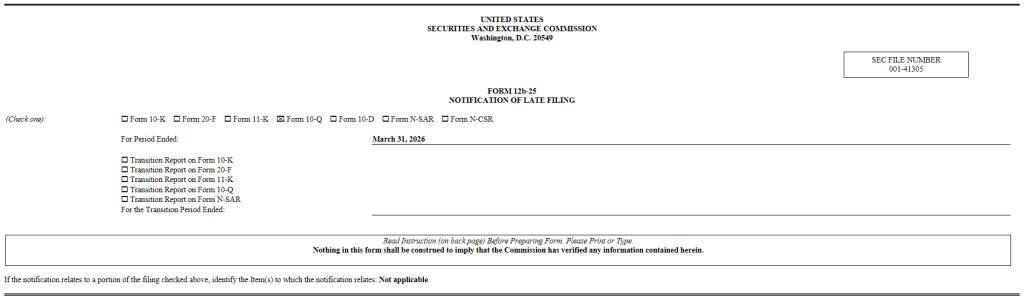
Source: SEC

States Are Closing The Door

The legal pressure started before the Canadian proposal. In January, Bitcoin Depot paid close to $2 million to Maine’s Consumer Credit Protection Bureau to settle a complaint.

Massachusetts, Iowa, and other states have since filed their own actions against the company. Individual cities and towns have also moved to restrict or ban crypto kiosks, with local officials citing concerns about residents falling victim to scams.

BTCUSD currently trading at $78,103. Chart: TradingView

Shares of Bitcoin Depot, which trade on the Nasdaq under the ticker BTM, dropped more than 40% over five trading days, sliding from $5 to $2.90.

In March, the company replaced CEO Scott Buchanan, who had held the position for just three months, with Alex Holmes.

Holmes ran MoneyGram from 2016 to 2024 and is known for his background in regulatory compliance — a skill set Bitcoin Depot clearly needs right now.

Leadership Shift, Uncertain Road

The company’s SEC filing described the revenue decline as being driven by a combination of regulatory impacts and enhanced compliance controls.

Reports indicate Bitcoin Depot is trying to manage existing legal exposure while adapting to a market that looks very different than it did a year ago.

Whether the new leadership can stabilize the business remains to be seen. The machines are still running. The lawsuits are not stopping. And the regulatory walls are getting closer on both sides of the border.

Featured image from ICIJ, chart from TradingView

Domande pertinenti

QWhat major event did the Canadian government announce in April that negatively impacted Bitcoin Depot?

AIn April, the Canadian government released its Spring Economic Update, proposing a nationwide ban on crypto ATMs to combat scammers and money launderers.

QAccording to its SEC filing, what are the main reasons cited for the decline in Bitcoin Depot's revenue?

AThe main reasons cited for the revenue decline are tightening regulations and enhanced compliance controls, which have led to customers using the machines less.

QWho is the new CEO of Bitcoin Depot as of March, and what is his relevant background?

AThe new CEO as of March is Alex Holmes, who previously ran MoneyGram from 2016 to 2024 and is known for his background in regulatory compliance.

QWhat significant financial challenges did Bitcoin Depot's CFO cite for the fourth quarter of 2025?

ACFO David Gray cited more than $20 million in legal judgments accrued in the fourth quarter of 2025, alongside a wave of lawsuits from state regulators and a sharp drop in transaction volume.

QHow did Bitcoin Depot's stock price (BTM) perform over five trading days following the news?

AShares of Bitcoin Depot (ticker BTM) dropped more than 40% over five trading days, sliding from $5 to $2.90.

Letture associate

In the AI Era, How to Onboard Without Starting from Scratch

In the AI era, onboarding new employees often resembles a botched relay race baton handoff, where the organization maintains speed while the newcomer starts from zero. The author, after joining Ramp, argues the core problem is a lack of accessible, shared organizational "context"—the collective knowledge from meetings, documents, Slack discussions, and decisions. Instead of relying on slow, manual onboarding or isolated AI tools, the solution is building a continuously updated "company brain." This system acts as a central, AI-native knowledge base that absorbs all company signals. The author describes building a prototype using an Obsidian vault powered by Claude, fed by automated meeting transcripts and notes, and topped with reusable agent "skills." The current enterprise AI approach, deploying specific workflow agents, is likened to the "chatbot era"—useful but disconnected. The real gap is the absence of a shared brain that all agents and employees can access from day one. The future lies in making context layer infrastructure the priority: write context first, then install tools; record every meeting; build the wiki before the dashboard. When new hires, AI agents, and even customers can immediately access this living company brain, the costly "ramp-up" period becomes obsolete. True organizational speed is achieved when maximum velocity and seamless context transfer happen simultaneously.

marsbit1 min fa

In the AI Era, How to Onboard Without Starting from Scratch

marsbit1 min fa

Vitalik: We Need to Create Sanctuaries, Not Fight AI

In a recent interview, Vitalik Buterin, founder of Ethereum, addresses the central anxiety of the AI era. He argues the primary risk isn't AI's intelligence, but human passivity—ceding decisions, privacy, and agency to centralized systems or "super AIs" for a sense of "disempowering safety." His solution is not to fight AI, but to build "sanctuary technologies." These are optional, non-totalizing spaces that protect users while preserving their sovereignty and privacy. Ethereum is presented as a prime example, offering a parallel financial system one can freely choose, not a fix for the old one. Reflecting on his journey from a 19-year-old on "autopilot" to an active "pilot," Vitalik notes the world reinvents itself every 5-10 years. To keep up, individuals must actively pilot their lives, not be passive passengers. He stresses that active learning vastly outperforms passive learning, even with equal time invested. His practical advice for builders and individuals in the AI age includes: periodically forcing oneself to do tasks manually to keep the mind engaged; prioritizing active learning and verification over outsourcing answers; building tools that help retain human agency; not outsourcing all strategic thinking to AI; and preserving serendipity through real-world interactions. Ultimately, Buterin redefines Ethereum/crypto's role: not to win against or fix the old world, but to provide a free, optional alternative. The core message is that as AI grows more powerful, the truly scarce resource will be proactive humans who retain their sovereignty, privacy, and capacity for independent thought. The era demands not less tool use, but more intentional and active use of technology.

链捕手3 h fa

Vitalik: We Need to Create Sanctuaries, Not Fight AI

链捕手3 h fa

Trading

Spot
Futures

Articoli Popolari

Come comprare ATM

Benvenuto in HTX.com! Abbiamo reso l'acquisto di Atletico De Madrid Fan Token (ATM) semplice e conveniente. Segui la nostra guida passo passo per intraprendere il tuo viaggio nel mondo delle criptovalute.Step 1: Crea il tuo Account HTXUsa la tua email o numero di telefono per registrarti il tuo account gratuito su HTX. Vivi un'esperienza facile e sblocca tutte le funzionalità,Crea il mio accountStep 2: Vai in Acquista crypto e seleziona il tuo metodo di pagamentoCarta di credito/debito: utilizza la tua Visa o Mastercard per acquistare immediatamente Atletico De Madrid Fan TokenATM.Bilancio: Usa i fondi dal bilancio del tuo account HTX per fare trading senza problemi.Terze parti: abbiamo aggiunto metodi di pagamento molto utilizzati come Google Pay e Apple Pay per maggiore comodità.P2P: Fai trading direttamente con altri utenti HTX.Over-the-Counter (OTC): Offriamo servizi su misura e tassi di cambio competitivi per i trader.Step 3: Conserva Atletico De Madrid Fan Token (ATM)Dopo aver acquistato Atletico De Madrid Fan Token (ATM), conserva nel tuo account HTX. In alternativa, puoi inviare tramite trasferimento blockchain o scambiare per altre criptovalute.Step 4: Scambia Atletico De Madrid Fan Token (ATM)Scambia facilmente Atletico De Madrid Fan Token (ATM) nel mercato spot di HTX. Accedi al tuo account, seleziona la tua coppia di trading, esegui le tue operazioni e monitora in tempo reale. Offriamo un'esperienza user-friendly sia per chi ha appena iniziato che per i trader più esperti.

161 Totale visualizzazioniPubblicato il 2024.12.11Aggiornato il 2025.03.21

Come comprare ATM

Discussioni

Benvenuto nella Community HTX. Qui puoi rimanere informato sugli ultimi sviluppi della piattaforma e accedere ad approfondimenti esperti sul mercato. Le opinioni degli utenti sul prezzo di ATM ATM sono presentate come di seguito.

活动图片