Hong Kong launches CARF crypto tax consultation to combat evasion

cointelegraphPubblicato 2025-12-09Pubblicato ultima volta 2025-12-09

Introduzione

Hong Kong has launched a public consultation on implementing the Crypto-Asset Reporting Framework (CARF) to align its crypto tax data sharing with global standards and combat cross-border tax evasion. The initiative, led by Financial Services Secretary Christopher Hui, also includes potential updates to the Common Reporting Standard (CRS). This move reinforces Hong Kong’s existing efforts in international tax cooperation, having exchanged financial account data with partner jurisdictions since 2018. CARF has seen broad global adoption, with 76 countries pledging to implement it by 2029. However, some jurisdictions like Switzerland and the U.S. are proceeding cautiously or with delays.

Hong Kong has launched a public consultation on how to implement the international Crypto-Asset Reporting Framework, or CARF, as it moves to bring crypto tax data sharing in line with global standards.

According to a Tuesday press release, Hong Kong is seeking input on both the implementation of CARF and changes to tax reporting standards. The announcement explicitly ties the move to the local administration’s efforts to fight cross-border tax evasion.

The move constitutes standardization rather than a change of direction by the local government. As the announcement points out, Hong Kong authorities have been annually exchanging financial account information with partner jurisdictions since 2018.

Hong Kong’s Secretary for Financial Services and the Treasury, Christopher Hui, said adopting CARF would demonstrate the government’s “commitment to promoting international tax co-operation and combating cross-border tax evasion.”

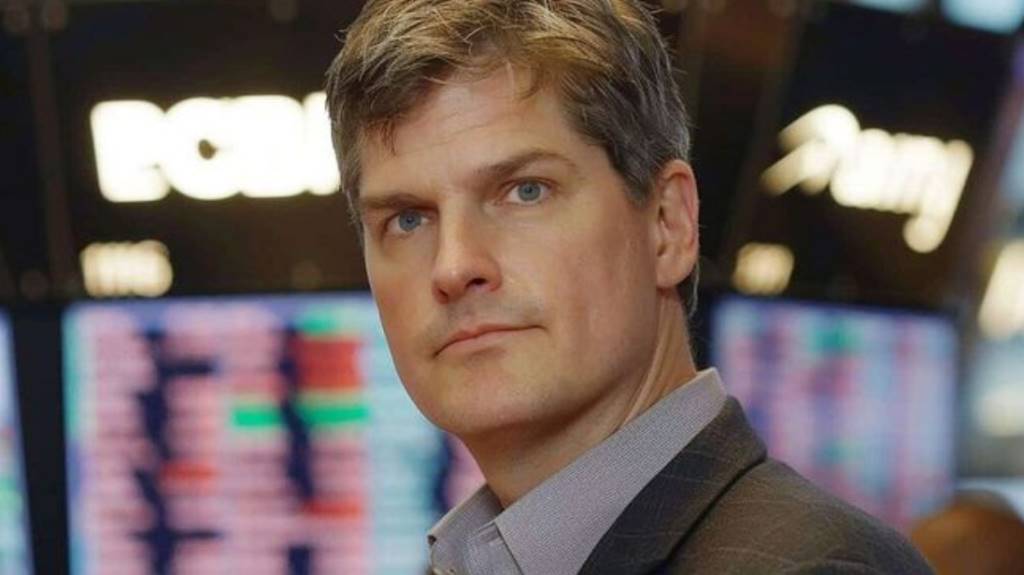
Christopher Hui, Hong Kong’s Secretary for Financial Services and the Treasury. Source: Wikimedia

In addition to joining CARF, Hong Kong is also seeking comments on adopting the Common Reporting Standard (CRS). Just like CARF, CRS is an Organisation for Economic Co-operation and Development (OECD) initiative that aims to standardize aspects of tax reporting internationally.

Related: Japan’s new crypto tax could wake ‘sleeping giant’ of retail investors

CARF sees widespread international adoption

CARF has gained traction with regulators worldwide. In early November, reports indicated that 47 national governments had issued a joint pledge to adopt it quickly. Brazil has also recently been reported to be weighing joining the data exchange program.

Others appear to be dragging their feet. At the end of November, Switzerland delayed implementing CARF until 2027 and is still deciding which countries it will share data with. Also in November, the US was reviewing the Internal Revenue Service’s (IRS) proposal to join the CARF program.

However, adoption of the data sharing program has been growing at a steady pace. A list — maintained by the OECD and updated on Dec. 4 — shows that 48 nations pledged to adopt CARF by 2027, 27 by 2028, and the US by 2029.

Related: UK takes ‘meaningful step forward’ with proposed DeFi tax overhaul

Countries that have pledged CARF adoption and those that have not. Source: OECD

This brings the total to 76 countries that have pledged to share crypto data so far. A separate OECD list shows that 53 countries have already signed the Multilateral Competent Authority Agreement, the legal instrument that enables automatic data exchange.

Recent figures show a 70% year-on-year increase in Cayman Islands foundation company registrations. Legal professionals at Walkers said that CARF likely excludes structures that merely hold crypto assets, such as protocol treasuries, investment funds, or passive foundations, making Cayman Islands foundations a potential escape.

Magazine: When privacy and AML laws conflict: Crypto projects’ impossible choice

Letture associate

How to Become a Web3 Super Individual?

How to Become a Web3 Super Individual? A fundamental trend is emerging: individuals are replacing institutions as the core of value creation in the crypto industry. A "Super Individual" is a self-sufficient cycle of content creation, trading, and entrepreneurship, often augmented by AI as a cognitive partner. The convergence of AI and Crypto grants individuals systemic power. AI liberates cognition and creation (e.g., writing, coding, analysis), while Crypto liberates assets and identity (e.g., self-custody wallets, permissionless transactions). Together, they form a powerful flywheel: AI increases efficiency, and Crypto amplifies the results. Three primary paths exist: 1. **KOL (Content Creator):** Leverage trust and influence to access project allocations ("KOL rounds"). AI transforms content creation from manual labor into a systematic, "cognitively enhanced" workflow. 2. **Project Founder (Builder):** Use AI to efficiently solve problems and build MVPs, drastically reducing startup costs and enabling one-person companies. Success hinges on being an efficient "AI collaborator." 3. **Trader:** Evolve from manual trading to "Vibe Coding"—using natural language to instruct AI to generate executable trading scripts and tools. This automates repetitive tasks, allowing a focus on strategy evolution. Core competencies for a Super Individual are essential: * **Content Production:** The fundamental tool for amplifying influence. * **On-Chain Intuition:** The ability to use tools like Dune and Etherscan to gain an informational edge from raw blockchain data. * **AI Collaboration:** Mastering tools like ChatGPT and Cursor to perform tasks previously requiring a team. * **Independent Judgment:** Developing a personal framework for decision-making to navigate market noise, FOMO, and losses. A key enabler is **Vibe Coding**, which allows anyone to build applications using natural language commands for AI, making product creation accessible without traditional coding skills. The process involves describing a concept to an AI, which generates the code, followed by debugging and deploying the project. The consensus among industry KOLs is clear: Super Individuals are not天生的 geniuses but driven, ordinary people who leverage tools, practice self-driven learning, and focus on long-term compounding. The ultimate goal is to become a "value creator" rather than just a "value holder," finding security in one's ability to create value amidst the irreversible trends of AI and Web3.

深潮13 min fa

How to Become a Web3 Super Individual?

深潮13 min fa

Trading

Spot
Futures
活动图片