Altman Returns to Stanford and Admits Mistake: Outsourcing Thinking to AI, a Generation's Brains Are Atrophying

marsbitPubblicato 2026-07-16Pubblicato ultima volta 2026-07-16

Introduzione

Sam Altman returned to Stanford University and admitted he was wrong about AI's impact on education. He predicted that after an initial phase of student cheating with ChatGPT, the education system would rapidly reform itself to teach more critical thinking. However, three and a half years later, while AI has advanced dramatically, teaching and assessment methods remain largely unchanged—still focused on memorization, standardized answers, and closed-book exams. Altman expressed deep concern that this disconnect is causing a "cognitive atrophy," where outsourcing thinking to AI erodes students' critical reasoning skills. Research supports this: grades have dropped in high-stakes exams after ChatGPT's introduction, and while assignment scores in writing and coding have inflated due to AI use, exam performance hasn't improved, indicating "outsourcing" rather than learning. He argues the problem lies in institutional inertia. The education system, built on the premise that tasks are time-consuming, hasn't adapted to a world where AI makes shortcuts effortless. Students are being evaluated by outdated standards, risking a generational gap in essential cognitive skills. Altman proposes a shift: education should move from testing memorization to fostering judgment, creativity, and the ability to ask better questions. Core practices like writing and programming remain vital not for their outputs, which AI can generate, but for the thinking process they train. The urgent need is to...

Everyone thought schools would be forced to drastically transform by AI.

But three and a half years after ChatGPT's debut, education has barely changed.

In May of this year, Sam Altman returned to his alma mater, Stanford University, took the stage in the CS153 class, and admitted his mistake:

This was one of my prediction errors.

He also issued a stern warning: if we don't change, human thinking capacity will atrophy.

Not long ago, on the CS153 stage at Stanford, OpenAI CEO Sam Altman was asked: What do you think about education?

He paused: "I'm very worried. I thought it would have changed by now."
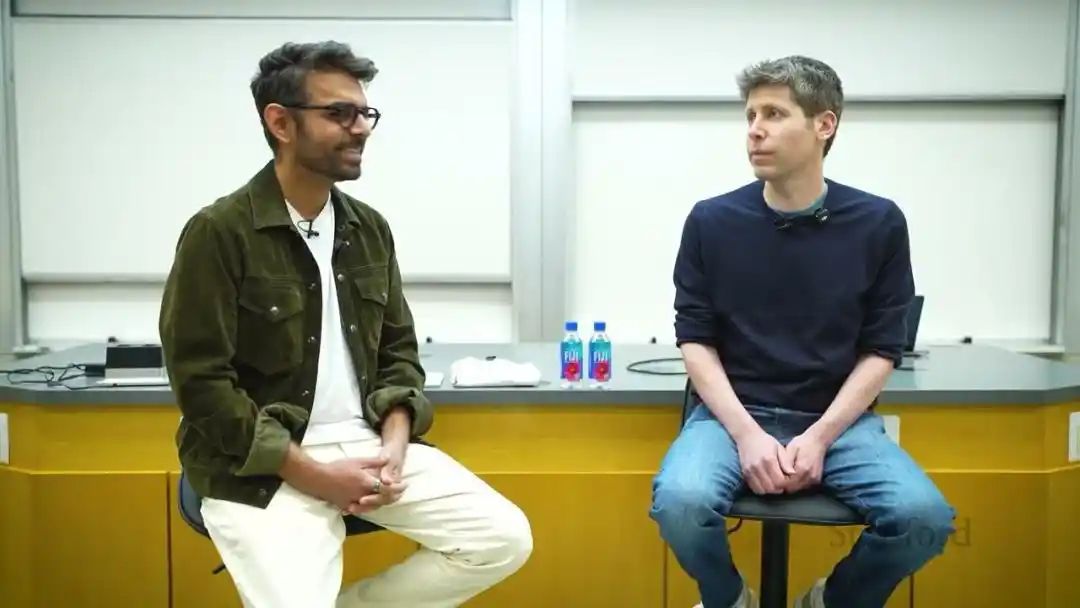
Altman appears at Stanford CS153 class discussing education in the AI era, admitting he underestimated the speed of the education system's transformation. (Source: Stanford Online)

Three and a half years ago, right after ChatGPT launched, Altman predicted that students would cheat for a year, then the entire education system would be forced to restructure itself, teaching people to think better than before.

However, three and a half years later, the script didn't unfold as Altman imagined.

On the AI side, it evolved from GPT-3.5, which could only write copy, to models that can disprove mathematical conjectures that stumped mathematicians for decades.

On the school side, they're still testing students with the same old things: rote memorization, standard answers, closed-book exams.

Homework, exams, theses... everything remains the same. Scouring the entire education system, he couldn't find a single significant structural change.

A man who bet correctly on the "Scaling Law" turned out to be mistaken about education.

He said this was one of his biggest prediction mistakes in recent years.

A person who constantly talks about Artificial General Intelligence (AGI) is actually anxious about the classroom.

What exactly is he afraid of?

He Thought Schools Should Have Changed Already

Rewind to November 2022, just after ChatGPT's release.

Back then, Altman's assessment was still optimistic:

The first year, students would use it to cheat and learn little; then the education system would reinvent itself, teaching courses much better than before.

According to his vision, teachers would assign projects that necessitated using AI, forcing students to use their brains more and come up with new ideas.

In 2024, he publicly expressed optimism: superintelligence would bring a personal tutor for everyone, education would shift from rote memorization to problem-solving, to critical thinking.

The result? AI advanced by leaps and bounds year after year, while education remained stagnant.

AI Outsourcing Is Hollowing Out Critical Thinking

This disconnect is what Altman is truly worried about.

He says if we continue to teach and evaluate students using the methods of the "pre-AGI world," it will not only render these methods ineffective but also cause people to "fail to learn how to think," leading to the gradual atrophy of critical thinking.

Outsourcing thinking to AI starts as just a shortcut.

But use it or lose it—the mental muscle responsible for independent thinking, like an unused arm, will subtly shrink and weaken, or as Altman puts it—muscle atrophy.

Is this just Altman's concern, or is it already a reality?

Some research shows that after ChatGPT entered the classroom, monthly test scores dropped by about 20% within six months; for high-stakes entrance exams that truly determine one's future, scores fell by 18% and 24% respectively, and this deficit takes up to two years to gradually become apparent.

More telling is an analysis from the University of California, Berkeley (UC Berkeley).

Among over 500,000 grade samples, grades in subjects like writing and programming noticeably shifted upward after ChatGPT, but the increase was entirely in homework scores, while exam scores remained unchanged.
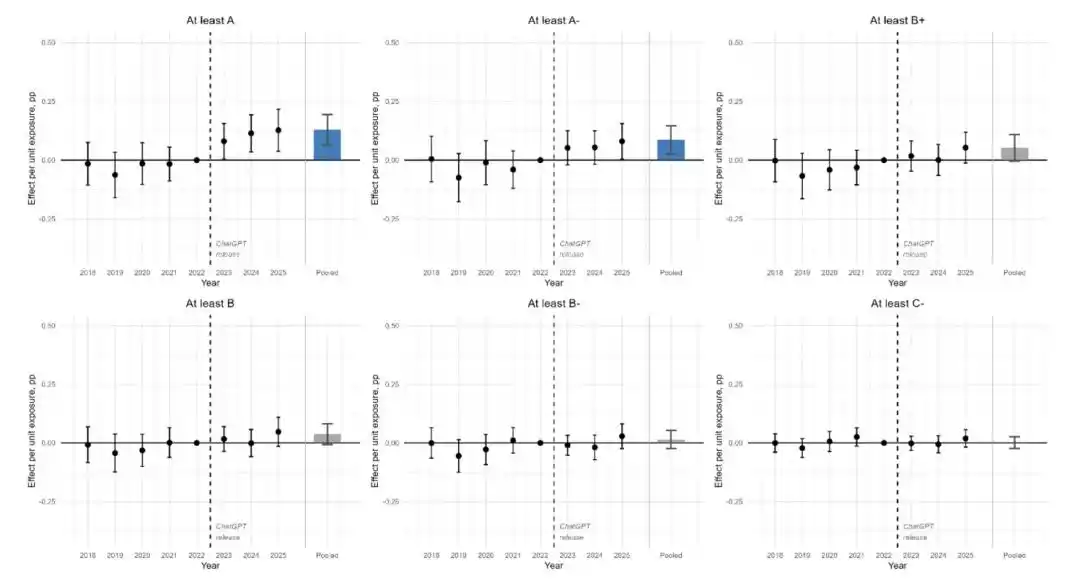
UC Berkeley analysis of over 500,000 grades: After ChatGPT's release, the proportion of A and A- grades in writing and programming courses significantly increased (blue significantly positive), while B+ and below barely moved. (Source: Chirikov/CSHE)

Why? This is "outsourcing," not "learning."

Another study spanning ten years and covering millions of US math interactions points to the same conclusion: with the arrival of chatbots, problems are solved faster, but less is learned.

Homework submissions are getting more polished, but minds are getting emptier.

Where Is the Promised Renaissance in Education?

Altman isn't the only one puzzled.
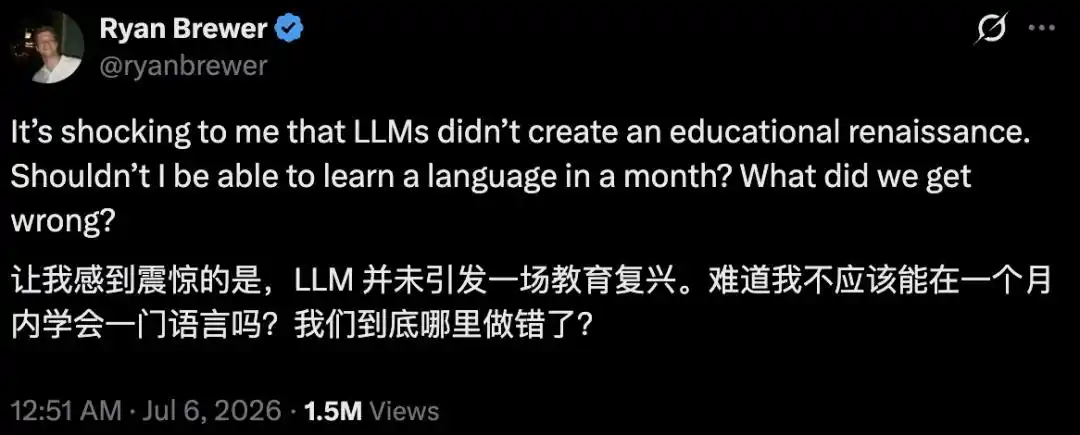
OpenAI technical team member Ryan Brewer posted, saying it's shocking that large language models haven't sparked an educational renaissance:

Shouldn't I be able to learn a language in a month? Where did we go wrong?

Similar doubts spread rapidly on X: With the most powerful learning tool in history in hand, why haven't AI tutors entered every household? Why is the education revolution so delayed?

The answer lies not in technology, but in institutional inertia.

The university's evaluation system—exams, theses, homework—has been built over centuries on an implicit premise: these tasks are too time-consuming for anyone to take shortcuts.

AI has changed that premise.

But schools are still using pre-AGI standards to measure a new generation raised with AI, even as the first generation of ChatGPT natives have already graduated.

Tools update with a version number; systems update over a generation: the technology is already here, but the rules remain in the previous era.

A 24/7, tireless, personalized, almost-free AI tutor could theoretically be given to every child today.

But it hasn't arrived, and the real reason is the pace at which the education system restructures itself.

In the same speech, Altman offered another prediction:

It's been three and a half years since ChatGPT appeared. Even if AI merely progresses along the same curve for another three and a half years, what human society can do will be on a completely different scale than today.

As technology races ahead exponentially, the gap between it and education will only widen, ultimately to be filled by the students currently sitting in old exams, old homework, and old evaluation systems.

The skills they learn may be taken over by AI the moment they leave school; the judgment they fail to develop may be difficult to recover in a lifetime.

The debt incurred is a generation's "cognitive deficit."

If Machines Can Write, Why Must Humans Still Learn?

So what should we still teach?

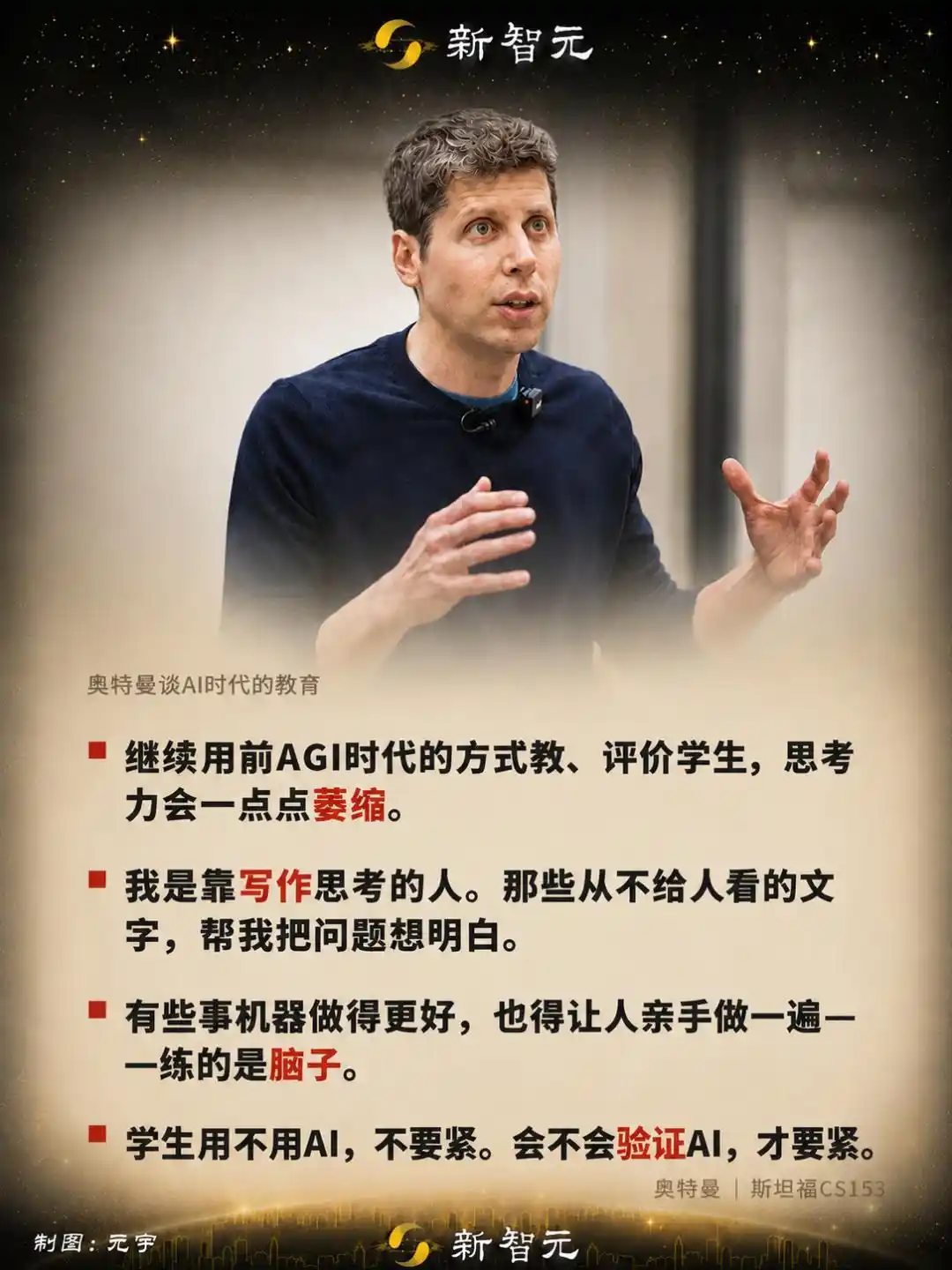
Altman's answer is somewhat counterintuitive: Some things, even though machines can do them better, humans must still do them by hand.

He gave his own example.

He said he's the kind of person who "thinks by writing," producing a lot of text never meant for anyone else, just to clarify a problem, and he's grateful he learned to write.

Programming is the same; AI can generate code in a second, but the process of building logic by hand trains the brain.

In essence, writing and programming are like math proofs in the calculator era: the machine already knows the answer, but we still have students derive it themselves. The goal isn't the answer behind the problem, but the meta-skills of "thinking" and "learning," and writing and programming are the tools to train them.

Following this logic, Altman advocates shifting the goal of education from "remembering more knowledge" to "asking better questions"; from testing memory to testing judgment, creativity, and genuine interdisciplinary skills.
And the root of the problem lies precisely in the evaluation system.

What do today's exams still test?

Memory, standard answers, completing tasks alone and closed-book. These three things are exactly what AI is best at and can most easily do for you.

When schools still evaluate students by "who remembers more, who answers more accurately," AI has turned "remembering more, answering accurately" into a zero-cost commodity.

How much meaning remains in numbers measured by a ruler that AI can easily pass, when used to gauge the abilities of the next generation?

This is what truly worries Altman: It's not most crucial whether students use AI; what's crucial is whether they can *verify* AI.

More concerning than over-reliance on AI is using AI without knowing how to verify it, accepting the machine's output at face value.

If this inertia persists for another three and a half years, a generation will gradually lose the training ground for independent thought, only to realize too late: they've almost forgotten how to think for themselves.

References:

https://www.youtube.com/watch?v=F_7M4Hc-usM

https://x.com/hesamation/status/2073884828861071557

https://x.com/ryanbrewer/status/2073812031988535760

This article is from the WeChat public account "Xin Zhi Yuan", author: ASI Revelations

Crypto di tendenza

Domande pertinenti

QWhat was Sam Altman's original prediction about the impact of ChatGPT on education, and how did reality differ from his expectation?

ASam Altman initially predicted that after a year of students using ChatGPT to cheat, the education system would be forced to fundamentally restructure itself to teach people how to think better. However, three and a half years later, he admitted this was a major prediction error, as education has seen almost no significant structural change while AI has advanced rapidly.

QAccording to Sam Altman, what is the primary danger of continuing to use pre-AGI teaching and assessment methods in an AI era?

AThe primary danger is the atrophy of critical thinking skills. If students outsource their thinking to AI and education systems continue to rely on methods that value memorization and standardized answers over genuine understanding, the 'muscle' for independent thought will weaken and shrink due to lack of use.

QWhat evidence from UC Berkeley's grade analysis suggests students are 'outsourcing' rather than 'learning' with AI?

AAn analysis of over 500,000 grades at UC Berkeley showed that in courses like writing and programming, the proportion of students receiving A and A- grades increased significantly after ChatGPT's release, but grades for exams (B+ and below) remained virtually unchanged. This indicates AI is helping improve homework scores without corresponding gains in exam performance, pointing to outsourcing of work rather than deeper learning.

QWhy does Sam Altman believe that activities like writing and programming remain essential to learn, even though AI can do them well?

AHe believes the process of doing these activities trains the 'meta-skills' of thinking and learning. Just as students still work through math proofs in the calculator era, writing and programming are tools to structure logic and clarify thought. The value is not in the final product but in the cognitive exercise the process provides for the brain.

QWhat does Sam Altman suggest should be the new focus of education in the age of AI, and what is the main obstacle to achieving this shift?

AHe suggests shifting the focus from memorizing knowledge to asking better questions, and from testing memory to assessing judgment, creativity, and interdisciplinary skills. The main obstacle is the inertia of the current evaluation system, which still relies on assessing memorization, standardized answers, and closed-book tasks—precisely the areas where AI excels, making such assessments increasingly meaningless.

Letture associate

Top 11 NFT games to play in July 2026

NFT games provide players with true ownership of in-game assets through blockchain technology, unlike traditional games. Here are the top 11 NFT games for July 2026: 1. **RavenQuest:** A free-to-play MMORPG with player-driven economy, housing NFTs, and guild wars. 2. **Decentraland:** A user-owned Ethereum-based virtual world for socializing, gaming, and buying digital real estate (LAND NFTs). 3. **Axie Infinity:** A pioneering play-to-earn game where players collect, breed, and battle NFT creatures called Axies. 4. **Pixels:** A free-to-play Ronin-based game focused on farming, crafting, and managing Pixelmon avatars in a player-driven economy. 5. **Gods Unchained:** A free-to-play strategy card game where every card is an NFT, built on Ethereum with Immutable X. 6. **My DeFi Pet:** Combines pet collection, breeding, and battling with DeFi mechanics, using the DPET token. 7. **Alien Worlds:** A fast-paced, decentralized metaverse game where players (explorers) mine resources and compete for the TLM token. 8. **The Sandbox:** A blockchain metaverse where users buy LAND NFTs and create, own, and monetize gaming experiences. 9. **Wreck League:** A mech fighting game with customizable NFT parts, featuring a hybrid Web2/Web3 model and strategic combat. 10. **Undeads Game:** A zombie apocalypse-themed game where players choose to be humans or zombies, with all assets as tradable NFTs. 11. **Shrapnel:** A first-person shooter set in 2043 where players battle for a resource called Sigma, with weapons and gear as NFTs. NFT games offer innovative formats and true digital ownership, but players should research each game before committing.

ambcrypto5 min fa

Top 11 NFT games to play in July 2026

ambcrypto5 min fa

Bitcoin Consolidation Underway: Selling Pressure from Long-Term Holders Eases, ETF Outflows Slow

Bitcoin is in the process of bottoming out, with key dynamics shifting. Long-term holder capitulation has cooled from its peak, and profit-taking has largely subsided. The sell-off at the June lows was absorbed by broad-based buying. The price is now recovering and testing towards key overhead resistance around the short-term holder cost basis near $69,000, where significant supply pressure is expected. Macro drivers are evolving: Bitcoin is increasingly reacting inversely to the US dollar and showing a more positive response to favorable economic data like soft inflation reports, while its correlation with equities has weakened. On-chain data shows that long-term holders are now mainly selling at a loss, a classic late-cycle signal. This primary source of sell-side pressure is no longer expanding. ETF outflows have slowed but haven't reversed, indicating institutional selling has paused but not turned into buying. In derivatives markets, bearish bets are being unwound as seen in falling put/call ratios and reduced crash protection costs, though this positioning adjustment hasn't yet translated into strong spot market buying. Volatility has compressed to yearly lows, a potential calm before the next decisive move. While the foundation for a recovery is being laid with seller exhaustion and demand absorption at lows, confirmation is still missing. A sustainable uptrend requires spot-driven buying to decisively break and hold above the short-term holder cost basis. Failure to do so, or a reacceleration of long-term holder losses, would signal a return to range-bound trading.

marsbit25 min fa

Bitcoin Consolidation Underway: Selling Pressure from Long-Term Holders Eases, ETF Outflows Slow

marsbit25 min fa

Jensen Huang Turns Japan into NVIDIA's "Physical AI" Pivot Point: A Life-Saving Favor 30 Years Ago, a Full-Stack Bind 30 Years Later

NVIDIA CEO Jensen Huang’s recent visit to Japan signals a strategic push to make the country a core hub for its global “physical AI” ecosystem. During his trip, NVIDIA announced partnerships with Japanese robotics giants Fanuc and Yaskawa Electric, and expanded its collaboration with Toyota across autonomous driving, factory simulation, and smart city applications. Huang emphasized that AI-driven robotics will become intelligent, adaptable, and accessible. The visit also highlighted a historic reunion with former SEGA president Shoichiro Irimajiri, who helped save NVIDIA from bankruptcy in the 1990s with a critical investment. Now, SEGA plans to support NVIDIA’s RTX Spark platform for future game releases. Behind the scenes, Huang hosted a dinner with key Japanese semiconductor and electronics supply chain leaders, including Kioxia, Shin-Etsu Chemical, Tokyo Electron, and Ajinomoto, underscoring Japan’s role in NVIDIA’s hardware roadmap. Beyond robotics and automotive, NVIDIA is deepening ties across Japanese industries. In healthcare, companies like Eisai and Fujifilm are using NVIDIA’s BioNeMo and Blackwell platforms for AI-driven drug discovery and medical imaging. In finance, Mizuho Bank and SMFG are building AI factories powered by NVIDIA systems. In quantum computing, RIKEN’s supercomputers, equipped with Blackwell GPUs, are advancing research. Market speculation also points to a potential partnership with Japan’s state-backed “physical AI” consortium, Noetra. Huang dismissed concerns about an AI bubble, stating demand remains strong and a decade of infrastructure building is needed. He framed Japan’s manufacturing expertise and automation needs as a natural fit for the physical AI era.

marsbit50 min fa

Jensen Huang Turns Japan into NVIDIA's "Physical AI" Pivot Point: A Life-Saving Favor 30 Years Ago, a Full-Stack Bind 30 Years Later

marsbit50 min fa

When Traditional Finance Couldn't Reach People in Crisis, Bitcoin Did

When traditional finance fails to reach people in crisis, Bitcoin can step in. This article, based on a report by Forbes, details the struggles of humanitarian crowdfunding due to banking regulations, sanctions, and compliance rules. The piece highlights the case of Sami Jamal Al-Shannat in Gaza, who raised funds via GoFundMe but couldn't receive the money directly due to platform restrictions, forcing reliance on an intermediary which later failed. This exposes a systemic flaw: platforms like GoFundMe, bound by traditional finance rules, often cannot send funds directly to crisis zones, creating dependency and risk. The article contrasts this with Bitcoin's potential. It cites how the Open Dialogue Foundation used Bitcoin to bypass delays and send aid to Ukraine immediately after Russia's invasion. Developers argue the current model relies on too many intermediaries, especially for cross-border or restricted jurisdictions. The core issue is identified as *trust*. Donors don't know recipients, relying on platforms and middlemen for verification. New platforms like Geyser and Agora are attempting to redesign this trust architecture. Geyser uses a network of "Field Partners" to vet local projects. Agora removes the platform from the payment flow; donations go directly to a recipient's crypto wallet, with trust placed in third-party verifiers (like known organizations) who vouch for projects, not control the funds. This shift empowers recipients with direct control over funds—a significant change for those in traumatic situations. However, challenges remain: wallet security, the need for project verification, and ensuring accountability for fund use are not solved by direct payments alone. The problem extends beyond crowdfunding. Financial sanctions and complex regulations increasingly hinder legitimate cross-border funding for activists, journalists, and NGOs, sometimes amounting to "transnational financial repression." Bitcoin-based tools are becoming a necessary lifeline. In conclusion, while Bitcoin and open payment networks don't eliminate the need for judgment and accountability, they enable a systemic shift. They allow direct beneficiary control and decentralized trust networks, bypassing the legacy financial restrictions that prevent traditional platforms from reaching those most in need.

Foresight News1 h fa

When Traditional Finance Couldn't Reach People in Crisis, Bitcoin Did

Foresight News1 h fa

Trading

Spot

Articoli Popolari

Cosa è $S$

Comprendere SPERO: Una Panoramica Completa Introduzione a SPERO Mentre il panorama dell'innovazione continua a evolversi, l'emergere delle tecnologie web3 e dei progetti di criptovaluta gioca un ruolo fondamentale nel plasmare il futuro digitale. Un progetto che ha attirato l'attenzione in questo campo dinamico è SPERO, denotato come SPERO,$$s$. Questo articolo mira a raccogliere e presentare informazioni dettagliate su SPERO, per aiutare gli appassionati e gli investitori a comprendere le sue basi, obiettivi e innovazioni nei domini web3 e crypto. Che cos'è SPERO,$$s$? SPERO,$$s$ è un progetto unico all'interno dello spazio crypto che cerca di sfruttare i principi della decentralizzazione e della tecnologia blockchain per creare un ecosistema che promuove l'impegno, l'utilità e l'inclusione finanziaria. Il progetto è progettato per facilitare interazioni peer-to-peer in modi nuovi, fornendo agli utenti soluzioni e servizi finanziari innovativi. Al suo interno, SPERO,$$s$ mira a responsabilizzare gli individui fornendo strumenti e piattaforme che migliorano l'esperienza dell'utente nello spazio delle criptovalute. Questo include la possibilità di metodi di transazione più flessibili, la promozione di iniziative guidate dalla comunità e la creazione di percorsi per opportunità finanziarie attraverso applicazioni decentralizzate (dApps). La visione sottostante di SPERO,$$s$ ruota attorno all'inclusività, cercando di colmare le lacune all'interno della finanza tradizionale mentre sfrutta i vantaggi della tecnologia blockchain. Chi è il Creatore di SPERO,$$s$? L'identità del creatore di SPERO,$$s$ rimane piuttosto oscura, poiché ci sono risorse pubblicamente disponibili limitate che forniscono informazioni dettagliate sul suo fondatore o fondatori. Questa mancanza di trasparenza può derivare dall'impegno del progetto per la decentralizzazione—un ethos che molti progetti web3 condividono, dando priorità ai contributi collettivi rispetto al riconoscimento individuale. Centrando le discussioni attorno alla comunità e ai suoi obiettivi collettivi, SPERO,$$s$ incarna l'essenza dell'empowerment senza mettere in evidenza individui specifici. Pertanto, comprendere l'etica e la missione di SPERO rimane più importante che identificare un creatore singolo. Chi sono gli Investitori di SPERO,$$s$? SPERO,$$s$ è supportato da una varietà di investitori che vanno dai capitalisti di rischio agli investitori angelici dedicati a promuovere l'innovazione nel settore crypto. Il focus di questi investitori generalmente si allinea con la missione di SPERO—dando priorità a progetti che promettono avanzamenti tecnologici sociali, inclusività finanziaria e governance decentralizzata. Queste fondazioni di investitori sono tipicamente interessate a progetti che non solo offrono prodotti innovativi, ma contribuiscono anche positivamente alla comunità blockchain e ai suoi ecosistemi. Il supporto di questi investitori rafforza SPERO,$$s$ come un concorrente degno di nota nel dominio in rapida evoluzione dei progetti crypto. Come Funziona SPERO,$$s$? SPERO,$$s$ impiega un framework multifunzionale che lo distingue dai progetti di criptovaluta convenzionali. Ecco alcune delle caratteristiche chiave che sottolineano la sua unicità e innovazione: Governance Decentralizzata: SPERO,$$s$ integra modelli di governance decentralizzati, responsabilizzando gli utenti a partecipare attivamente ai processi decisionali riguardanti il futuro del progetto. Questo approccio favorisce un senso di proprietà e responsabilità tra i membri della comunità. Utilità del Token: SPERO,$$s$ utilizza il proprio token di criptovaluta, progettato per servire varie funzioni all'interno dell'ecosistema. Questi token abilitano transazioni, premi e la facilitazione dei servizi offerti sulla piattaforma, migliorando l'impegno e l'utilità complessivi. Architettura Stratificata: L'architettura tecnica di SPERO,$$s$ supporta la modularità e la scalabilità, consentendo un'integrazione fluida di funzionalità e applicazioni aggiuntive man mano che il progetto evolve. Questa adattabilità è fondamentale per mantenere la rilevanza nel panorama crypto in continua evoluzione. Coinvolgimento della Comunità: Il progetto enfatizza iniziative guidate dalla comunità, impiegando meccanismi che incentivano la collaborazione e il feedback. Nutrendo una comunità forte, SPERO,$$s$ può affrontare meglio le esigenze degli utenti e adattarsi alle tendenze di mercato. Focus sull'Inclusione: Offrendo basse commissioni di transazione e interfacce user-friendly, SPERO,$$s$ mira ad attrarre una base utenti diversificata, inclusi individui che potrebbero non aver precedentemente interagito nello spazio crypto. Questo impegno per l'inclusione si allinea con la sua missione generale di empowerment attraverso l'accessibilità. Cronologia di SPERO,$$s$ Comprendere la storia di un progetto fornisce preziose intuizioni sulla sua traiettoria di sviluppo e sui traguardi. Di seguito è riportata una cronologia suggerita che mappa eventi significativi nell'evoluzione di SPERO,$$s$: Fase di Concettualizzazione e Ideazione: Le idee iniziali che formano la base di SPERO,$$s$ sono state concepite, allineandosi strettamente con i principi di decentralizzazione e focus sulla comunità all'interno dell'industria blockchain. Lancio del Whitepaper del Progetto: Dopo la fase concettuale, è stato rilasciato un whitepaper completo che dettaglia la visione, gli obiettivi e l'infrastruttura tecnologica di SPERO,$$s$ per suscitare interesse e feedback dalla comunità. Costruzione della Comunità e Prime Interazioni: Sono stati effettuati sforzi attivi di outreach per costruire una comunità di early adopters e potenziali investitori, facilitando discussioni attorno agli obiettivi del progetto e ottenendo supporto. Evento di Generazione del Token: SPERO,$$s$ ha condotto un evento di generazione del token (TGE) per distribuire i propri token nativi ai primi sostenitori e stabilire una liquidità iniziale all'interno dell'ecosistema. Lancio della Prima dApp: La prima applicazione decentralizzata (dApp) associata a SPERO,$$s$ è stata attivata, consentendo agli utenti di interagire con le funzionalità principali della piattaforma. Sviluppo Continuo e Partnership: Aggiornamenti e miglioramenti continui alle offerte del progetto, inclusi partnership strategiche con altri attori nello spazio blockchain, hanno plasmato SPERO,$$s$ in un concorrente competitivo e in evoluzione nel mercato crypto. Conclusione SPERO,$$s$ rappresenta una testimonianza del potenziale del web3 e delle criptovalute di rivoluzionare i sistemi finanziari e responsabilizzare gli individui. Con un impegno per la governance decentralizzata, il coinvolgimento della comunità e funzionalità progettate in modo innovativo, apre la strada verso un panorama finanziario più inclusivo. Come per qualsiasi investimento nello spazio crypto in rapida evoluzione, si incoraggiano potenziali investitori e utenti a ricercare approfonditamente e a impegnarsi in modo riflessivo con gli sviluppi in corso all'interno di SPERO,$$s$. Il progetto mostra lo spirito innovativo dell'industria crypto, invitando a ulteriori esplorazioni delle sue innumerevoli possibilità. Mentre il percorso di SPERO,$$s$ è ancora in fase di sviluppo, i suoi principi fondamentali potrebbero effettivamente influenzare il futuro di come interagiamo con la tecnologia, la finanza e tra di noi in ecosistemi digitali interconnessi.

123 Totale visualizzazioniPubblicato il 2024.12.17Aggiornato il 2024.12.17

Cosa è $S$

Cosa è AGENT S

Agent S: Il Futuro dell'Interazione Autonoma in Web3 Introduzione Nel panorama in continua evoluzione di Web3 e criptovalute, le innovazioni stanno costantemente ridefinendo il modo in cui gli individui interagiscono con le piattaforme digitali. Uno di questi progetti pionieristici, Agent S, promette di rivoluzionare l'interazione uomo-computer attraverso il suo framework agentico aperto. Aprendo la strada a interazioni autonome, Agent S mira a semplificare compiti complessi, offrendo applicazioni trasformative nell'intelligenza artificiale (AI). Questa esplorazione dettagliata approfondirà le complessità del progetto, le sue caratteristiche uniche e le implicazioni per il dominio delle criptovalute. Cos'è Agent S? Agent S si presenta come un innovativo framework agentico aperto, progettato specificamente per affrontare tre sfide fondamentali nell'automazione dei compiti informatici: Acquisizione di Conoscenze Specifiche del Dominio: Il framework apprende in modo intelligente da varie fonti di conoscenza esterne ed esperienze interne. Questo approccio duale gli consente di costruire un ricco repository di conoscenze specifiche del dominio, migliorando le sue prestazioni nell'esecuzione dei compiti. Pianificazione su Lungo Orizzonte di Compiti: Agent S impiega una pianificazione gerarchica potenziata dall'esperienza, un approccio strategico che facilita la suddivisione e l'esecuzione efficiente di compiti complessi. Questa caratteristica migliora significativamente la sua capacità di gestire più sottocompiti in modo efficiente ed efficace. Gestione di Interfacce Dinamiche e Non Uniformi: Il progetto introduce l'Interfaccia Agente-Computer (ACI), una soluzione innovativa che migliora l'interazione tra agenti e utenti. Utilizzando Modelli Linguistici Multimodali di Grandi Dimensioni (MLLM), Agent S può navigare e manipolare senza sforzo diverse interfacce grafiche utente. Attraverso queste caratteristiche pionieristiche, Agent S fornisce un framework robusto che affronta le complessità coinvolte nell'automazione dell'interazione umana con le macchine, preparando il terreno per innumerevoli applicazioni nell'AI e oltre. Chi è il Creatore di Agent S? Sebbene il concetto di Agent S sia fondamentalmente innovativo, informazioni specifiche sul suo creatore rimangono elusive. Il creatore è attualmente sconosciuto, il che evidenzia sia la fase embrionale del progetto sia la scelta strategica di mantenere i membri fondatori sotto anonimato. Indipendentemente dall'anonimato, l'attenzione rimane sulle capacità e sul potenziale del framework. Chi sono gli Investitori di Agent S? Poiché Agent S è relativamente nuovo nell'ecosistema crittografico, informazioni dettagliate riguardanti i suoi investitori e sostenitori finanziari non sono documentate esplicitamente. La mancanza di approfondimenti pubblicamente disponibili sulle fondazioni di investimento o sulle organizzazioni che supportano il progetto solleva interrogativi sulla sua struttura di finanziamento e sulla roadmap di sviluppo. Comprendere il supporto è cruciale per valutare la sostenibilità del progetto e il suo potenziale impatto sul mercato. Come Funziona Agent S? Al centro di Agent S si trova una tecnologia all'avanguardia che gli consente di funzionare efficacemente in contesti diversi. Il suo modello operativo è costruito attorno a diverse caratteristiche chiave: Interazione Uomo-Computer Simile a Quella Umana: Il framework offre una pianificazione AI avanzata, cercando di rendere le interazioni con i computer più intuitive. Mimando il comportamento umano nell'esecuzione dei compiti, promette di elevare le esperienze degli utenti. Memoria Narrativa: Utilizzata per sfruttare esperienze di alto livello, Agent S utilizza la memoria narrativa per tenere traccia delle storie dei compiti, migliorando così i suoi processi decisionali. Memoria Episodica: Questa caratteristica fornisce agli utenti una guida passo-passo, consentendo al framework di offrire supporto contestuale mentre i compiti si sviluppano. Supporto per OpenACI: Con la capacità di funzionare localmente, Agent S consente agli utenti di mantenere il controllo sulle proprie interazioni e flussi di lavoro, allineandosi con l'etica decentralizzata di Web3. Facile Integrazione con API Esterne: La sua versatilità e compatibilità con varie piattaforme AI garantiscono che Agent S possa adattarsi senza problemi agli ecosistemi tecnologici esistenti, rendendolo una scelta attraente per sviluppatori e organizzazioni. Queste funzionalità contribuiscono collettivamente alla posizione unica di Agent S all'interno dello spazio crittografico, poiché automatizza compiti complessi e multi-fase con un intervento umano minimo. Man mano che il progetto evolve, le sue potenziali applicazioni in Web3 potrebbero ridefinire il modo in cui si svolgono le interazioni digitali. Cronologia di Agent S Lo sviluppo e le tappe di Agent S possono essere riassunti in una cronologia che evidenzia i suoi eventi significativi: 27 Settembre 2024: Il concetto di Agent S è stato lanciato in un documento di ricerca completo intitolato “Un Framework Agentico Aperto che Usa i Computer Come un Umano”, mostrando le basi per il progetto. 10 Ottobre 2024: Il documento di ricerca è stato reso pubblicamente disponibile su arXiv, offrendo un'esplorazione approfondita del framework e della sua valutazione delle prestazioni basata sul benchmark OSWorld. 12 Ottobre 2024: È stata rilasciata una presentazione video, fornendo un'idea visiva delle capacità e delle caratteristiche di Agent S, coinvolgendo ulteriormente potenziali utenti e investitori. Questi indicatori nella cronologia non solo illustrano i progressi di Agent S, ma indicano anche il suo impegno per la trasparenza e il coinvolgimento della comunità. Punti Chiave su Agent S Man mano che il framework Agent S continua a evolversi, diversi attributi chiave si distinguono, sottolineando la sua natura innovativa e il potenziale: Framework Innovativo: Progettato per fornire un uso intuitivo dei computer simile all'interazione umana, Agent S porta un approccio nuovo all'automazione dei compiti. Interazione Autonoma: La capacità di interagire autonomamente con i computer attraverso GUI segna un passo avanti verso soluzioni informatiche più intelligenti ed efficienti. Automazione di Compiti Complessi: Con la sua metodologia robusta, può automatizzare compiti complessi e multi-fase, rendendo i processi più veloci e meno soggetti a errori. Miglioramento Continuo: I meccanismi di apprendimento consentono ad Agent S di migliorare dalle esperienze passate, migliorando continuamente le sue prestazioni e la sua efficacia. Versatilità: La sua adattabilità attraverso diversi ambienti operativi come OSWorld e WindowsAgentArena garantisce che possa servire un'ampia gamma di applicazioni. Man mano che Agent S si posiziona nel panorama di Web3 e delle criptovalute, il suo potenziale per migliorare le capacità di interazione e automatizzare i processi segna un significativo avanzamento nelle tecnologie AI. Attraverso il suo framework innovativo, Agent S esemplifica il futuro delle interazioni digitali, promettendo un'esperienza più fluida ed efficiente per gli utenti in vari settori. Conclusione Agent S rappresenta un audace passo avanti nell'unione tra AI e Web3, con la capacità di ridefinire il modo in cui interagiamo con la tecnologia. Sebbene sia ancora nelle sue fasi iniziali, le possibilità per la sua applicazione sono vaste e coinvolgenti. Attraverso il suo framework completo che affronta sfide critiche, Agent S mira a portare le interazioni autonome al centro dell'esperienza digitale. Man mano che ci addentriamo nei regni delle criptovalute e della decentralizzazione, progetti come Agent S giocheranno senza dubbio un ruolo cruciale nel plasmare il futuro della tecnologia e della collaborazione uomo-computer.

577 Totale visualizzazioniPubblicato il 2025.01.14Aggiornato il 2025.01.14

Cosa è AGENT S

Come comprare S

Benvenuto in HTX.com! Abbiamo reso l'acquisto di Sonic (S) semplice e conveniente. Segui la nostra guida passo passo per intraprendere il tuo viaggio nel mondo delle criptovalute.Step 1: Crea il tuo Account HTXUsa la tua email o numero di telefono per registrarti il tuo account gratuito su HTX. Vivi un'esperienza facile e sblocca tutte le funzionalità,Crea il mio accountStep 2: Vai in Acquista crypto e seleziona il tuo metodo di pagamentoCarta di credito/debito: utilizza la tua Visa o Mastercard per acquistare immediatamente SonicS.Bilancio: Usa i fondi dal bilancio del tuo account HTX per fare trading senza problemi.Terze parti: abbiamo aggiunto metodi di pagamento molto utilizzati come Google Pay e Apple Pay per maggiore comodità.P2P: Fai trading direttamente con altri utenti HTX.Over-the-Counter (OTC): Offriamo servizi su misura e tassi di cambio competitivi per i trader.Step 3: Conserva Sonic (S)Dopo aver acquistato Sonic (S), conserva nel tuo account HTX. In alternativa, puoi inviare tramite trasferimento blockchain o scambiare per altre criptovalute.Step 4: Scambia Sonic (S)Scambia facilmente Sonic (S) nel mercato spot di HTX. Accedi al tuo account, seleziona la tua coppia di trading, esegui le tue operazioni e monitora in tempo reale. Offriamo un'esperienza user-friendly sia per chi ha appena iniziato che per i trader più esperti.

1.1k Totale visualizzazioniPubblicato il 2025.01.15Aggiornato il 2026.06.02

Come comprare S

Discussioni

Benvenuto nella Community HTX. Qui puoi rimanere informato sugli ultimi sviluppi della piattaforma e accedere ad approfondimenti esperti sul mercato. Le opinioni degli utenti sul prezzo di S S sono presentate come di seguito.

活动图片