Peeking Through Windows, Precision Hijacking? Two Giants of Prediction Markets Engage in Corporate Espionage

foresightnews_apiPubblicato 2026-06-05Pubblicato ultima volta 2026-06-05

Introduzione

Polymarket, a prediction market platform, is investigating a suspected corporate espionage case involving its main rival, Kalshi. Polymarket accuses Kalshi of stealing business information and copying product launches through potentially illicit means, compiling a "plagiarism file" documenting over a dozen suspiciously coincidental product releases and marketing campaigns. Key incidents include a February 2026 free-grocery pop-up event, where Kalshi launched an almost identical campaign just nine days before Polymarket's scheduled launch, seemingly to siphon attention. Furthermore, an article leaked Kalshi's plans for a perpetual futures trading product merely an hour before Polymarket's own planned announcement for a similar tool in April 2026. Polymarket executives suspect either an internal mole or physical surveillance, noting that the office of Paradigm—a Kalshi investor—directly faces their Manhattan workspace, leading them to install dark window film. Both Paradigm and Kalshi have dismissed the allegations as baseless and ridiculous. Kalshi claims its product developments are independent and coincidental timing is merely market-driven. The rivalry intensifies as both companies secure significant funding, with Polymarket seeking a $15 billion valuation and Kalshi valued at $22 billion amid growing regulatory scrutiny of the prediction market industry.


By: Marc Vartabedian, New York Post

Compiled by: Luffy, Foresight News


The prediction market platform Polymarket is investigating a suspected case of corporate espionage by a competitor. The platform allows users to place bets on sports events, weather, and geopolitical conflicts. The company alleges its top rival, Kalshi, used improper methods to steal business information and copycat its products.


Led by its 27-year-old CEO Shayne Coplan, the New York-based prediction platform has compiled a "copycat file," documenting over a dozen suspicious incidents: the launch times and product designs of several Kalshi new offerings were strikingly similar to Polymarket's, with coincidences in release timing being alarmingly abnormal.


Matthew Modabber, head of markets at Polymarket, said in a phone interview that the coincidences were simply too many and too abnormal, suggesting a deliberate and aggressive effort to copy their business.
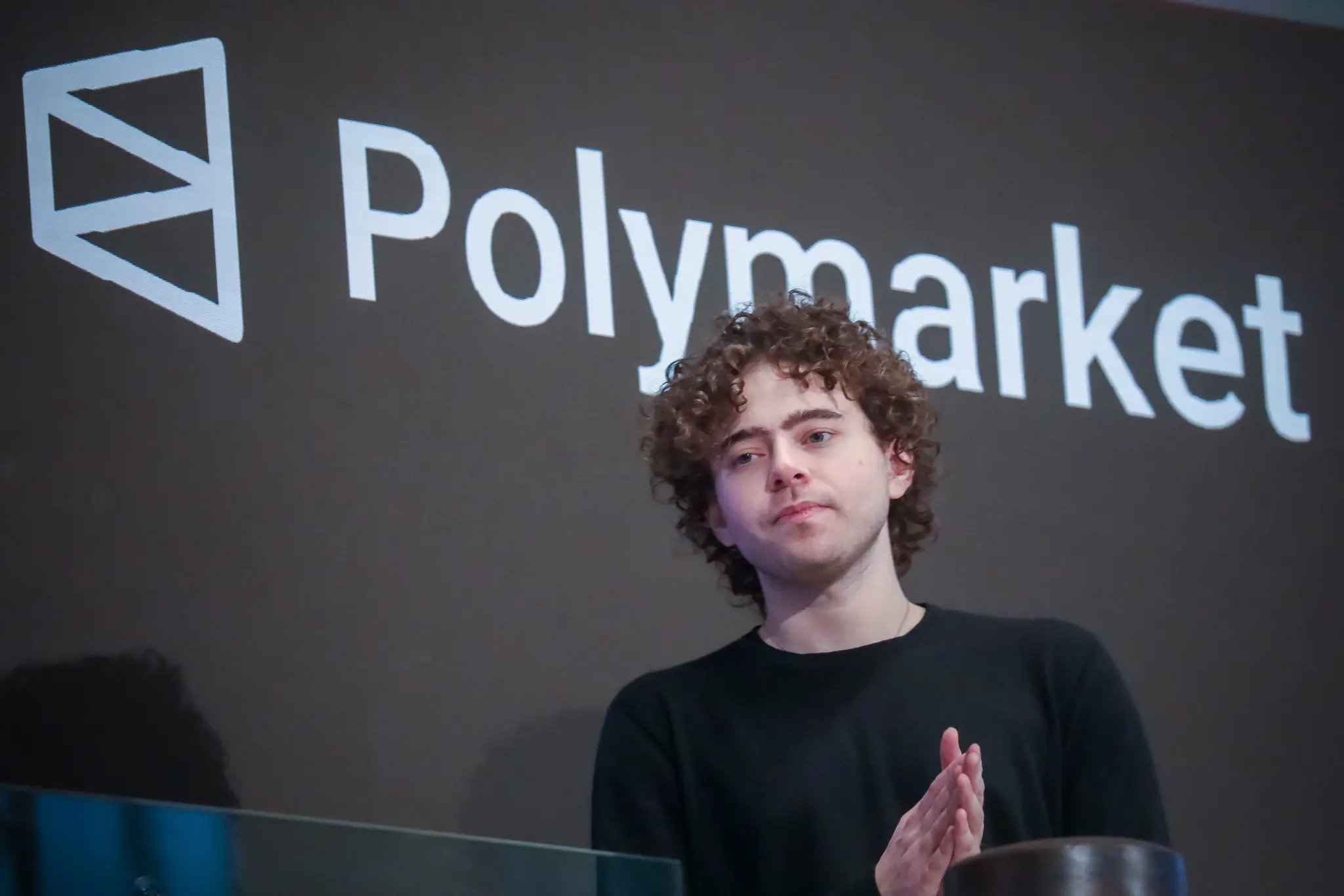

Polymarket CEO Shayne Coplan speaking at the New York Stock Exchange on November 13 last year


The executive did not disclose further details, but people familiar with the matter revealed the company internally suspects two possibilities: one is a mole planted inside Polymarket; the other is a more bizarre suspicion of surveillance.


In recent months, several employees have suggested that Paradigm, an investor in Kalshi, may have been monitoring Polymarket's Lower Manhattan office from across the street. Paradigm's office in New York's SoHo district faces Polymarket's office, with floor-to-ceiling windows offering a direct view into Polymarket's workspace, potentially even observing employees' computer screens. The street-level below houses trendy clothing stores and the upscale restaurant Balthazar.


Due to surveillance concerns, Polymarket specifically applied dark tinted window film to its office windows this spring. An internal employee stated: "The possibility of being spied on was discussed in company meetings. The final conclusion was that, given Kalshi's past conduct, such clandestine surveillance is entirely plausible."


When asked about the espionage allegations, a Paradigm spokesperson responded: "That claim is laughable." Kalshi spokesperson Jack Such responded: "The related accusations are baseless, bordering on delusional. Polymarket is welcome to spend its energy on self-investigation. Kalshi will continue to diligently improve its products."
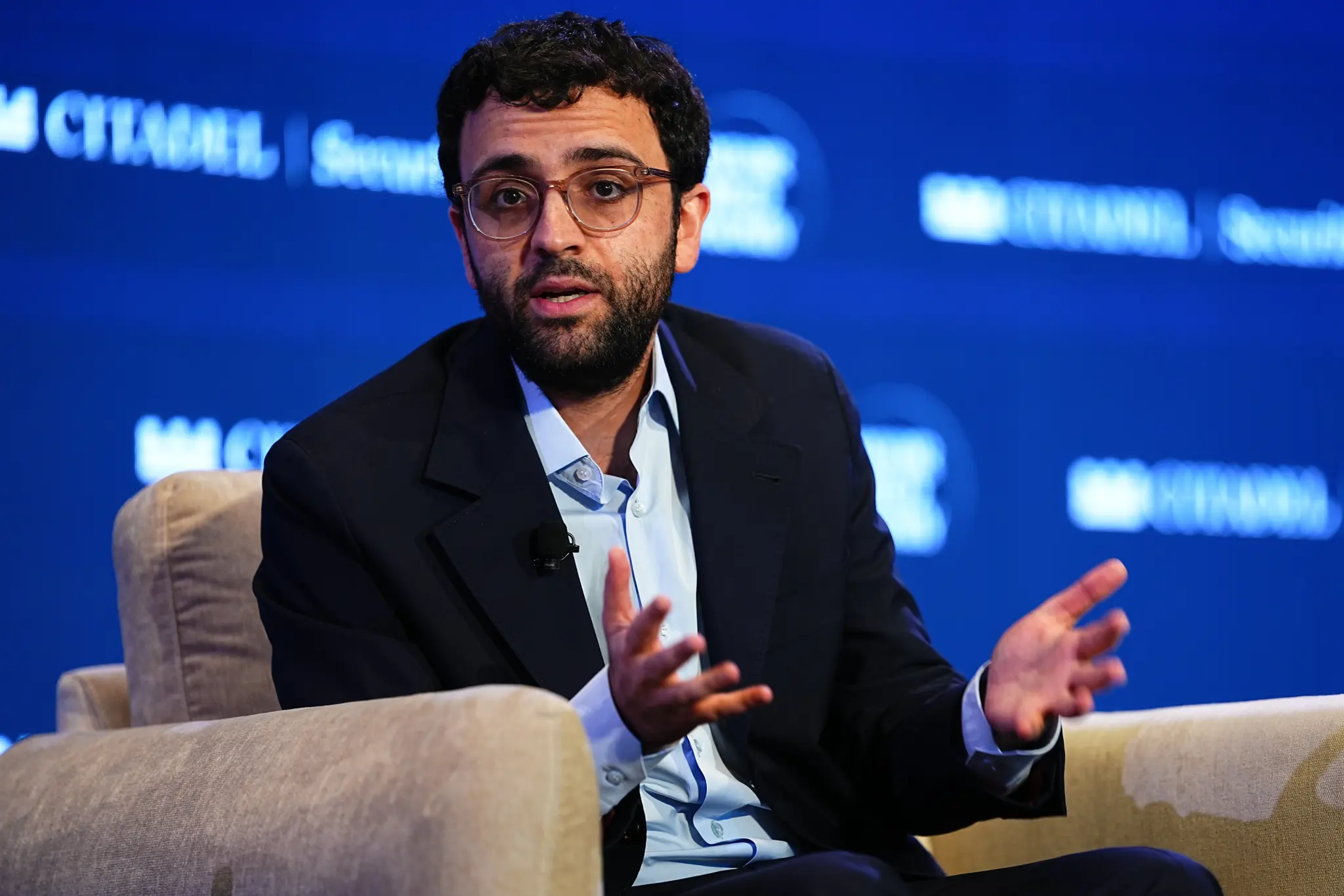

Kalshi co-founder Tarek Mansour speaking at the Semafor World Economy Summit in Washington, D.C., on April 15


Polymarket's investigation focuses on two points: how Kalshi precisely obtained advance knowledge of its new product launches and marketing campaign schedules, and what level of detail they acquired to enable such efficient and comprehensive replication.


Suspicions within the platform have been accumulating over the past year, and an incident at an offline event in February became the catalyst for the current conflict. Polymarket had been preparing a pop-up grocery store event since last November, scheduled to open in Manhattan on February 12: the first 300 in-store customers would receive free groceries. For this, they signed contracts totaling $643,380 for venue, branding, and execution.


Just nine days before Polymarket's opening, Kalshi suddenly launched an identical free grocery marketing campaign at a Westside supermarket in New York, distributing $50 grocery vouchers with the promotional slogan "Free Market," while simultaneously launching prediction markets on topics like monthly egg price increases.


A Polymarket insider claimed the move was clearly intended to divert traffic from their event. Founder Shayne, who grew up in New York, said the event held special significance for the company, and being maliciously hijacked was very disappointing for the team.


Kalshi's head of communications, Elisabeth Diana, denied copying, stating their grocery marketing plan had been in preparation for a long time and they did not obtain the competitor's event timing through an insider. Kalshi spokesperson Such added that both companies' event inspirations came from the New York Mayor's campaign platform promoting grocery subsidies.


Furthermore, since January, Polymarket had been secretly developing a spot perpetual contract trading tool, allowing users to bet on real-time price movements of assets like stocks without holding the underlying asset, originally scheduled for announcement and launch on April 21. However, just one hour before Polymarket's announcement, the tech media outlet *The Information* published an exclusive article citing anonymous sources, revealing Kalshi was about to launch a similar perpetual contract product.


Polymarket's office is located in a fashionable New York neighborhood, directly across the street from Paradigm


According to sources, Polymarket executives were furious about this.


One source said, "It seemed like they knew we would announce that day, which is very suspicious."


Such explained that Kalshi's perpetual product development started in 2024. He believed *The Information* learned about the plan from a social media teaser Kalshi posted on X on April 13. The teaser showed a video of what appeared to be an infinite loop spring toy with the caption "Timeless," which in finance refers to perpetual futures contracts, contracts that never expire.


Polymarket's "copycat file" includes over a dozen sets of screenshots comparing official announcements, social media posts, and product interfaces from both companies. An executive stated these archived cases represent only one-tenth of all similar incidents.


One page of the file records: On June 10, 2025, at 9:01 AM, Polymarket announced on X an hourly crypto price prediction product, garnering nearly 24 million impressions. On the same day at 9:00 AM, the brokerage Webull jointly announced with Kalshi the launch of an identical product. Polymarket's file notes: "Same day?"


But Such countered, stating Kalshi had already launched a similar product before June 10, 2025, and that day was merely its listing on Webull through partnership. He argued it was actually Polymarket that launched later, making it clear who copied whom.


There are also cases of advertising material collisions. On Friday, August 22 last year, Polymarket ran a Meta ad in California for football betting, with the prominent headline "Hey, California"; just one weekend later, Kalshi launched an almost identical targeted ad with the same headline.


Such stated "Hey, California" is generic promotional language, not protected by trademark or copyright. He argued that claiming corporate espionage based solely on an advertising slogan is illogical.


The feud between the two prediction platforms has intensified in 2026. U.S. lawmakers and regulators are tightening oversight of prediction markets, with the industry facing criticism related to insider trading and war gambling. Meanwhile, capital continues to pour heavily into both leading platforms.


According to data from analytics firm PitchBook, Polymarket, founded in 2020, has raised approximately $2 billion to date, with its latest funding round aiming for a valuation of $15 billion. Kalshi, founded in 2018, has raised $2.6 billion, with its latest valuation at $22 billion, double its valuation from December last year.

Domande pertinenti

QWhat are the two main prediction market platforms involved in the alleged corporate espionage case, as described in the article?

AThe two main prediction market platforms are Polymarket and Kalshi.

QWhat specific incident in February did Polymarket cite as a key event leading to heightened suspicions against Kalshi?

APolymarket cited an incident where, just 9 days before their planned Manhattan pop-up grocery event, Kalshi launched a similar free-groceries promotional event in New York, which Polymarket believed was an attempt to divert traffic from their own event.

QWhat two possibilities does Polymarket internally suspect regarding how Kalshi might have obtained its confidential information?

APolymarket internally suspects two possibilities: that there is a mole within Polymarket, or that Kalshi's investor Paradigm has been conducting surveillance from their office across the street.

QHow did Polymarket reportedly respond to the surveillance concerns regarding Paradigm's office location?

AIn response to the surveillance concerns, Polymarket reportedly installed dark, tinted window film on their office windows during the spring.

QAccording to the article, what was Kalshi's explanation for the coincidental timing of their perpetual futures product announcement with Polymarket's?

AKalshi's spokesperson, Such, explained that their perpetual product development started in 2024 and suggested that the media outlet The Information learned of their plans from a social media teaser Kalshi posted on April 13th, not from inside information about Polymarket's schedule.

Letture associate

Near Returns to the AI Stage: Transformation into a Public Chain Due to 'Payroll Difficulties,' Agent and Privacy Emerge as New Growth Narratives

NEAR Returns to AI Origins: From Payroll Struggles to Blockchain, Now Focusing on AI Agents and Privacy NEAR Protocol's journey began not with grand blockchain ambitions, but from a practical hurdle: its AI startup founders, including Transformer paper co-author Illia Polosukhin, couldn't efficiently pay international developers in 2017. This led them to pivot and build a high-performance, scalable blockchain. After years navigating various crypto narratives like sharding and cross-chain interoperability, NEAR is now leveraging its AI roots to re-enter the AI arena. A key driver is its "NEAR Intents" layer, which abstracts complex cross-chain transactions. Users simply state their goal (e.g., swap BTC for ETH), and a solver network finds the optimal route. This system has processed over $20B in cross-chain volume, generating significant fee revenue. A major growth area is private transactions via "Confidential Intents/Swaps," which hide trade details until settlement to protect against MEV and front-running. Remarkably, private swaps recently accounted for over 40% of NEAR's transaction volume, highlighting strong demand but also potential regulatory scrutiny. With its AI-founder pedigree, NEAR is positioning itself at the intersection of blockchain, AI agents, and privacy, aiming to become infrastructure for the emerging agent economy while navigating the challenges of its rapid adoption.

marsbit2 h fa

Near Returns to the AI Stage: Transformation into a Public Chain Due to 'Payroll Difficulties,' Agent and Privacy Emerge as New Growth Narratives

marsbit2 h fa

From Ethereum to AI's 'CROPS': What Exactly is This Set of 'Slow Variables' That Vitalik Repeatedly Emphasizes?

In recent discussions, Vitalik Buterin has frequently emphasized the concept of "CROPS," a framework defining core values for Ethereum's development. CROPS stands for Censorship Resistance, Capture Resistance, Open Source, Privacy, and Security. Initially outlined in the Ethereum Foundation's "EF Mandate," it represents a commitment to user sovereignty, ensuring that the network resists external control, remains open, protects privacy, and prioritizes security. The relevance of CROPS extends beyond Ethereum's foundational principles, becoming crucial in the context of AI integration. As AI agents begin handling wallet operations and automated transactions, the risk increases that users may cede control over their digital assets, privacy, and intentions to centralized AI service providers. A "CROPS AI" would therefore emphasize local execution where possible, privacy-preserving remote model calls (e.g., using zero-knowledge proofs), and transparent, verifiable processes to maintain user agency. Vitalik highlights a significant convergence between "CROPS Ethereum access layer" and "CROPS AI." Both address the same fundamental challenge: how users can access powerful services—be it blockchain data via RPCs or AI models—without exposing sensitive information or relinquishing ultimate control. This intersection points toward a future digital entry point that is more private, secure, and user-controlled. Ultimately, CROPS is not merely an abstract ideal but a practical guidepost. It steers development—from protocol resilience and wallet design to AI agent safety—towards a future where users retain self-sovereignty even as digital systems grow more complex and powerful. In an era of accelerating AI adoption, these "slow variables" of censorship resistance, openness, privacy, and security may define Ethereum's enduring value.

marsbit2 h fa

From Ethereum to AI's 'CROPS': What Exactly is This Set of 'Slow Variables' That Vitalik Repeatedly Emphasizes?

marsbit2 h fa

Silicon Valley 'Startup Guru' Steve Hoffman: Web3 + AI Could Be a Trap

Silicon Valley investor and "Godfather of Startups" Steve Hoffman warns that combining Web3 with AI is likely a trap, not a promising venture. In an interview, Hoffman argues that while AI is a foundational technology touching all industries, Web3 adds complexity, friction, and regulatory risk without solving mainstream consumer or business needs. He advises founders to focus on deep, specialized applications where startups can out-iterate giants, rather than on generic features easily replicated by large tech companies. Hoffman observes that Silicon Valley will lead foundational AI research, while China excels at rapid, large-scale application and commercialization, particularly in robotics. He stresses that AI-driven autonomous agents capable of collaborative, multi-step tasks are 2-4 years away, which will cause significant job displacement. The solution is not to slow AI but to redesign business models around human-AI collaboration and reform social systems like education and retraining. For startups, Hoffman recommends focusing on vertical, expertise-heavy domains to build defensibility. He sees major opportunities in AI fraud detection and cybersecurity. Key founder mindsets include systemic thinking over feature-focus, relentless customer centricity, building adaptive teams, and deeply understanding AI's capabilities and limits. Hoffman is also leading a non-profit initiative to establish university centers aimed at training future leaders in responsible, human-value-aligned AI innovation.

marsbit3 h fa

Silicon Valley 'Startup Guru' Steve Hoffman: Web3 + AI Could Be a Trap

marsbit3 h fa

Token Inefficient, Economy Tokenless

The article "Tokens Aren't Economical, Economics Aren't Tokenized" analyzes a pivotal shift in the AI industry from a technology-driven narrative to one dominated by capital efficiency. It highlights two concurrent trends: a severe capital shortage due to the exorbitant and recurring costs of compute (e.g., OpenAI's high burn rate) and a wave of corporate spin-offs where major tech companies are separating their AI units (like Kuaishou's Kling and Baidu's Kunlunxin). The core argument is that AI's "anti-internet" business model, where user growth increases costs rather than profits, has created a disconnect between high valuations and actual cash flow. Spin-offs address this by allowing AI assets to be valued independently. Within a parent company, they are seen as cost centers, but as standalone entities, they are priced based on their growth potential and scarcity in the primary market, leading to massive valuation premiums (e.g., Kling's estimated value tripling post-spin-off). The industry is at an inflection point, moving from "model worship" to "value realization." The competition is evolving from a pure compute (GPU) race to a broader focus on systemic efficiency and full-stack engineering (involving CPUs and orchestration) to achieve viable commercialization. The year 2026 is framed as a critical moment where the industry must definitively answer how to economically translate AI capability into tangible business value, reshaping the sector's future power structure.

marsbit3 h fa

Token Inefficient, Economy Tokenless

marsbit3 h fa

Trading

Spot
Futures
活动图片