Assessing World Liberty Financial after 235mln WLFI exchange transfer

ambcryptoPubblicato 2026-01-26Pubblicato ultima volta 2026-01-26

Introduzione

World Liberty Financial (WLFI) experienced significant volatility, dropping to $0.15 before rebounding to $0.18 and then declining again to trade at $0.1641, down 6.21% daily. The project deposited 235 million WLFI tokens, worth $40.63 million, into Binance—a move not seen since its launch. This transfer, potentially for market-making, an airdrop, or liquidity purposes, triggered bearish sentiment among investors. Spot Netflow turned positive, indicating increased selling pressure, while top holders’ outflows exceeded inflows. Key momentum indicators, including RSI and SMI, declined, suggesting weakened upside momentum and potential further losses toward $0.15 if selling continues. Reclaiming $0.17 remains a short-term bullish possibility.

After World Liberty Financial dropped to a low of $0.15, the altcoin rebounded to a high of $0.18, then retraced towards $0.16.

As of this writing, World Liberty Financial [WLFI] traded at $0.1641, down 6.21% on the daily charts. Before this slip, WLFI had been on an upward trajectory, rising by 2.56% on the weekly charts.

This volatility to the upside has created a favorable environment for market participants to make strategic moves.

World Liberty Financial moves 250 million

According to Onchain Lens, World Liberty Financial deposited 235 million WLFI, worth $40.63 million, into Binance.

This team’s wallet has not made any deposits into Binance since WLFI was launched, signaling a major market shift. Following the transfer, the team wallet still holds $1.7 billion worth of WLFI, according to Arkham data.

In many cases, such a massive move indicates the market is preparing for market-making or liquidity.

For instance, one crypto analyst, 0xShonkovich, suggested that the transfers are likely an airdrop for USD1 holders since the program is expected to run for 4 weeks.

Despite that, holders and traders could interpret the transfers as bearish. As a result, market participants panic-sell even before the news is confirmed, creating significant sell pressure.

Selling pressure on the rise again

On the 25th of January, buyers stepped into the market aggressively to defend $0.17 levels, but their efforts proved futile, as WLFI closed at a lower low.

This sentiment shifted drastically on the 26th of January, with participants across the market flipping bearish. As a result, the altcoin’s Spot Netflow turned positive, climbing to $5.18 million, a significant jump from -$2.33 million.

When this metric turns positive, it suggests that most traders increased their exchange deposits, a sign of increased selling.

Coupled with that, World Liberty Financial Top Holders increased outflows, offloading 254.9 million tokens compared to 240 million in inflows. As a result, the balance change turned negative, dropping to -14 million, suggesting increased selling from the group.

Historically, higher selling activity across market participants has accelerated downside momentum, leading to lower prices.

What’s next for WLFI?

World Liberty Financial’s weakness returned to the market after the team transferred WLFI into exchanges. As a result, the altcoin’s Relative Strength Index (RSI) fell into the bearish zone after it formed a bearish crossover the previous day.

As such, RSI dropped to 47, which suggested that sellers stepped into the market, as noted earlier. At the same time, its Stochastic Momentum Index (SMI) dropped from 13 to 4.4, indicating strengthened downside momentum.

With these momentum indicators dropping to such areas, they suggested weakened upside momentum, with buyers displaced from the market.

Such market conditions leave WLFI vulnerable and could lead to further losses. If it happens, with sellers increasing spending, WLFI will seek support around $1.5.

However, if the market neutralizes the team’s transfers, WLFI will seek to reclaim $0.17 and target $0.19 in the short term.


Final Thoughts

  • World Liberty Financial deposited 235 million WLFI, worth $40.63 million.
  • WLFI declined 6.2% to a low of $0.1602 after investors flipped bearish and panic sold.

Domande pertinenti

QWhat was the value of World Liberty Financial (WLFI) tokens transferred to Binance and what was their total worth?

A235 million WLFI tokens were transferred to Binance, with a total worth of $40.63 million.

QHow did the WLFI price change after the large deposit was made to the exchange?

AAfter the deposit, WLFI's price declined by 6.21% on the daily charts, dropping to a low of $0.1602 as investors turned bearish and panic-sold.

QWhat does a positive Spot Netflow value indicate for the WLFI market?

AA positive Spot Netflow value indicates that most traders are increasing their exchange deposits, which is a sign of increased selling pressure in the market.

QAccording to the article, what are two possible interpretations of the large token transfer by the World Liberty Financial team?

AThe transfer could indicate the market is preparing for market-making or liquidity, such as an airdrop for USD1 holders. Alternatively, it could be interpreted as a bearish signal, causing panic-selling.

QWhat key momentum indicators suggested that sellers had stepped into the WLFI market?

AThe Relative Strength Index (RSI) fell into the bearish zone at 47 after a bearish crossover, and the Stochastic Momentum Index (SMI) dropped from 13 to 4.4, indicating strengthened downside momentum and that buyers were displaced from the market.

Letture associate

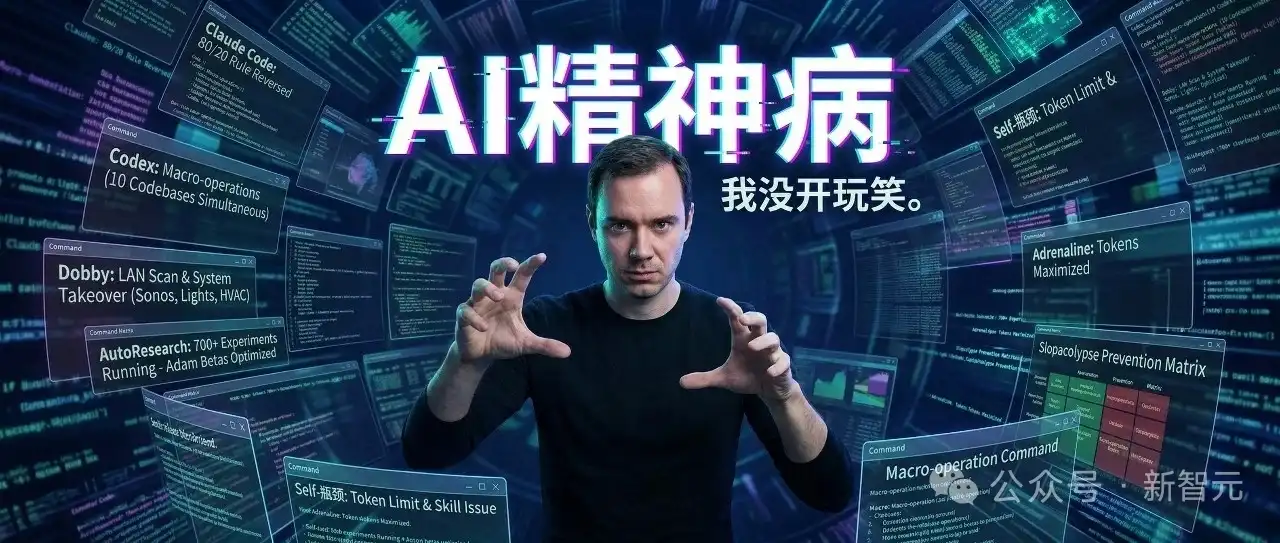
Karpathy Diagnosed with "AI Psychosis"! Not Eating or Sleeping, 16 Hours a Day Raising Lobsters

Andrej Karpathy recently revealed that he has developed what he calls "AI psychosis," an obsessive state where he spends up to 16 hours a day directing AI agents instead of writing code himself. In a podcast with Sarah Guo, he explained that his workflow has shifted from 80% hand-coding and 20% AI-assisted to the reverse, or even more extreme. He now manages multiple AI agents simultaneously, treating them as a team to execute tasks. Karpathy admitted that he’s become addicted to optimizing AI performance, constantly worrying about whether he’s using tokens efficiently or pushing the system to its limit. He highlighted the importance of an agent’s “personality,” noting that Claude Code feels more like a collaborative teammate compared to colder, more mechanical alternatives. He also shared practical applications, such as "Dobby," a Claude-based smart home agent that integrates and controls all his home devices through natural language, replacing six separate apps. In research, his "AutoResearch" project used AI to run 700 experiments, resulting in an 11% training speed improvement for an AI model—discovering optimizations he had missed as a human researcher. Despite the capabilities, Karpathy noted that AI agents still exhibit uneven performance—sometimes brilliant, other times childlike—due to limitations in reinforcement training. He predicts that 2026 will see a "slopacolypse," with AI generating vast amounts of mediocre content. His experience signals a broader shift: humans are becoming directors of AI systems rather than executors, navigating a new era of human-AI collaboration.

marsbit13 min fa

Karpathy Diagnosed with "AI Psychosis"! Not Eating or Sleeping, 16 Hours a Day Raising Lobsters

marsbit13 min fa

AI Wealth Tutorial: Start with NSFW, Then Sell Courses

The article "AI致富教程:先搞色色,再去卖课" (AI Money-Making Guide: Start with Adult Content, Then Sell Courses) explores how AI-generated content (AIGC) is being monetized, particularly through adult entertainment and low-barrier creative work, before ultimately shifting to selling instructional courses. A16Z’s report highlights a striking trend: in the U.S., user spending on OnlyFans surpassed combined spending on OpenAI and The New York Times. This reflects a broader pattern where “sexual appeal outperforms productivity.” Early adopters used tools like Midjourney and Stable Diffusion to create AI-generated virtual models, offering “girlfriend experiences” on platforms like Fanvue, where AI models now contribute significantly to revenue. Similarly, some turned to AI-generated children’s books, though market saturation and quality issues quickly diminished profitability. Both paths often lead to selling courses—packaging the “get-rich-quick” illusion to newcomers. However, the real barrier isn’t technical proficiency but aesthetic judgment: the ability to translate vague ideas into precise prompts. Those with design, photography, or writing backgrounds excel because they know what “good” looks like; others struggle even with advanced tools. The rise of AI also brings ethical and trust issues. Clients often reject AI-assisted work on principle, perceiving it as “unfair” or lacking human effort. Regulations now require AI-generated content labeling, but boundaries remain unclear—especially for hybrid human-AI creations. The core question isn’t just whether AI was used, but whether someone is genuinely accountable for the output. In summary, while AI lowers entry barriers for content creation, success still hinges on traditional skills like审美 (aesthetic sense), and the real money often moves from creating content to selling the dream of easy success.

marsbit1 h fa

AI Wealth Tutorial: Start with NSFW, Then Sell Courses

marsbit1 h fa

Asia's Web3 Policy Landscape Reshaped: Justin Sun's GWDC Korea Speech Highlights Collaboration and Balance as the Most Scarce Competitiveness in the Next Phase

On March 23, the Hong Kong–Korea Web3 Policy Promotion Alliance Preparatory Committee was officially established, alongside the launch of the "2026 GWDC Global Developers Conference · Seoul (Korea Station)." The online launch event, hosted by Web3Labs, HYPAI Labs, and GWDC, featured key figures including Hong Kong Legislative Council Member Wu Jiezhuang, South Korean National Assembly Member Byung-deok Min, TRON founder Justin Sun, and Bithumb CEO Lee Jae-won. In his keynote speech titled "Asia’s New Web3 Era: Improving Regulatory Systems, Empowering Infrastructure, and Deepening International Collaboration," Justin Sun discussed global regulatory trends, TRON’s infrastructure strategy and AI developments, and the importance of cross-border policy cooperation in the Asia-Pacific region. He emphasized that global regulatory landscape is becoming clearer and more standardized, citing legislative progress in the U.S., E.U. MiCA enforcement, Hong Kong’s stablecoin framework, and pro-innovation environments in Singapore and the UAE. Sun highlighted that regulatory clarity has driven significant market growth, with the stablecoin market expanding from $206 billion to over $320 billion. However, he cautioned that excessive regulation could hinder innovation and stressed the need for balanced policies that foster both safety and growth. He also shared updates on TRON’s development, noting it has over 370 million registered accounts and processes $20–30 billion in daily transactions, making it a leading blockchain for stablecoin transfers, particularly USDT. TRON is also advancing in AI integration, having joined the Linux Foundation’s Agentic AI Council alongside major tech and financial institutions. Sun endorsed the newly formed Hong Kong–Korea alliance as a model for international regulatory coordination, which can prevent fragmentation and promote secure, innovation-friendly policies. He also mentioned TRON’s role in global financial security efforts, including the freezing of over $300 million in illicit funds through the T3 anti-financial crime task force. In closing, Sun expressed his commitment to supporting cross-regional collaboration for a secure, transparent, and thriving global Web3 ecosystem.

比推1 h fa

Asia's Web3 Policy Landscape Reshaped: Justin Sun's GWDC Korea Speech Highlights Collaboration and Balance as the Most Scarce Competitiveness in the Next Phase

比推1 h fa

Trading

Spot
Futures

Articoli Popolari

Come comprare T

Benvenuto in HTX.com! Abbiamo reso l'acquisto di Threshold Network Token (T) semplice e conveniente. Segui la nostra guida passo passo per intraprendere il tuo viaggio nel mondo delle criptovalute.Step 1: Crea il tuo Account HTXUsa la tua email o numero di telefono per registrarti il tuo account gratuito su HTX. Vivi un'esperienza facile e sblocca tutte le funzionalità,Crea il mio accountStep 2: Vai in Acquista crypto e seleziona il tuo metodo di pagamentoCarta di credito/debito: utilizza la tua Visa o Mastercard per acquistare immediatamente Threshold Network TokenT.Bilancio: Usa i fondi dal bilancio del tuo account HTX per fare trading senza problemi.Terze parti: abbiamo aggiunto metodi di pagamento molto utilizzati come Google Pay e Apple Pay per maggiore comodità.P2P: Fai trading direttamente con altri utenti HTX.Over-the-Counter (OTC): Offriamo servizi su misura e tassi di cambio competitivi per i trader.Step 3: Conserva Threshold Network Token (T)Dopo aver acquistato Threshold Network Token (T), conserva nel tuo account HTX. In alternativa, puoi inviare tramite trasferimento blockchain o scambiare per altre criptovalute.Step 4: Scambia Threshold Network Token (T)Scambia facilmente Threshold Network Token (T) nel mercato spot di HTX. Accedi al tuo account, seleziona la tua coppia di trading, esegui le tue operazioni e monitora in tempo reale. Offriamo un'esperienza user-friendly sia per chi ha appena iniziato che per i trader più esperti.

230 Totale visualizzazioniPubblicato il 2024.12.10Aggiornato il 2025.03.21

Come comprare T

Discussioni

Benvenuto nella Community HTX. Qui puoi rimanere informato sugli ultimi sviluppi della piattaforma e accedere ad approfondimenti esperti sul mercato. Le opinioni degli utenti sul prezzo di T T sono presentate come di seguito.

活动图片