BitMine enters Ethereum staking race with new MAVAN platform – Details

ambcryptoPubblicato 2026-03-27Pubblicato ultima volta 2026-03-27

Introduzione

BitMine Immersion Technologies, the world's largest Ethereum treasury firm, has launched a new ETH staking platform called MAVAN (Made in America Validator Network) with the goal of becoming the leading staking provider. The company has already staked 3.14 million ETH worth over $6.8 billion and holds a total of 4.6 million ETH, representing 3.8% of the total supply. It aims to control 5% of the circulating supply and generate $300 million in annual yield. While staking all its ETH would make it the second-largest platform, surpassing Binance, it would still need an additional 5 million ETH to overtake current leader Lido, which holds nearly 9 million staked ETH. BitMine also plans to expand into other proof-of-stake networks and blockchain infrastructure in the future.

Bitmine Immersion Technologies, the world’s largest Ethereum treasury firm, now aims to replace Lido as the top ETH staking platform. On Wednesday, the firm unveiled its ETH staking platform dubbed MAVAN (an acronym for Made in America Validator Network).

The firm reported that it has already staked 3,142, 643 ETH as of Tuesday, 24 March, translating to over $6.8B worth of staked ETH based on current market prices. In the past week alone, BitMine staked 101.7K ETH, worth $219M.

At the time of writing, BitMine held a total of 4.6 million ETH or 3.8% of the total supply. It aims to control 5% of the circulating supply.

It also bought an additional 50K ETH earlier on Thursday, bringing its weekly buys to over 117K ETH. This meant the remaining unstaked ETH was over 1.5 million ETH. This too will be staked in the coming weeks, the firm said.

BitMine’s aggressive bet on ETH staking

The end goal is to become the top staking platform for institutions with the potential to generate $300M annually at the current 2.83% 7-day BMNR yield. Tom Lee, the chairman of the firm, added,

Because Bitmine is the largest owner of Ethereum in the world, shortly after launch, MAVAN will be the largest Ethereum staking platform in the world.

Highlighting MAVAN and Bitmine’s long-term staking strategy, Lee continued,

We plan to expand across additional proof-of-stake (PoS)networks and critical blockchain infrastructure over time, and through 2026, we’ll grow our efforts in areas such as on-chain vaults, post-quantum client development, and more.

In other words, other PoS chains like SOL, BNB, Tron [TRX], and others could fall in BitMine’s staking orbit.

However, the update could shake up the broader ETH staking ecosystem, which is currently facing stiff competition amid growing appetite for low-risk institutional staking.

In fact, Lido, the top leader in the segment, confirmed that the ongoing structural shift was partly responsible for its 23% annual revenue fall in 2025. Although its market share also shrank, it was still leading in the segment with nearly 9 million staked ETH.

Alas, with BitMine now eyeing its position, will it defend its top spot? Well, that depends on whether Lido’s staking outflows continue in the next few months.

As it stands, even if BitMine stakes its entire 4.6 million ETH stash, that would make it the second-largest staking platform, surpassing Binance. However, it would still need an extra 5 million ETH to dislodge Lido from the top seat.
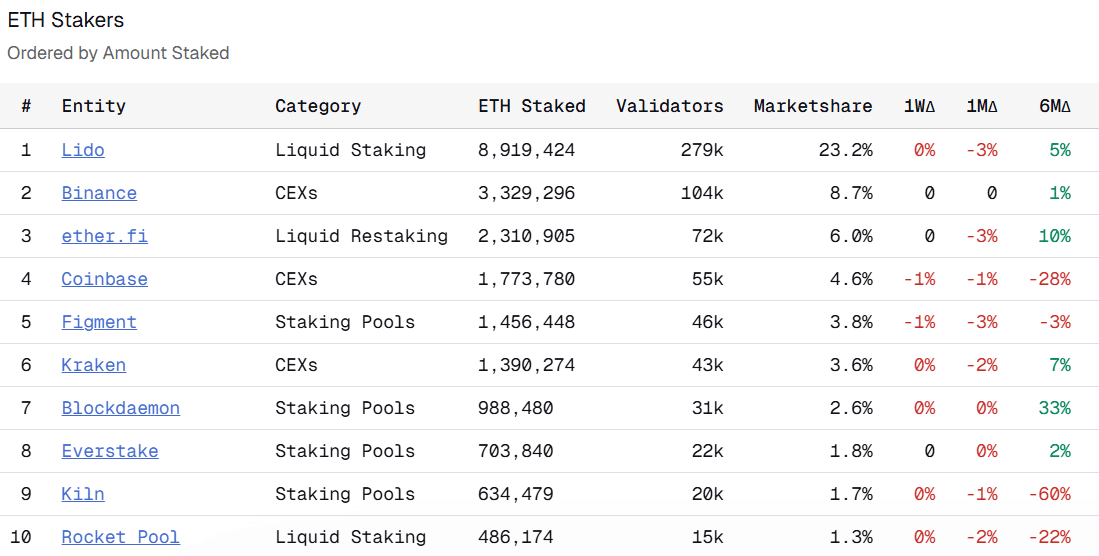
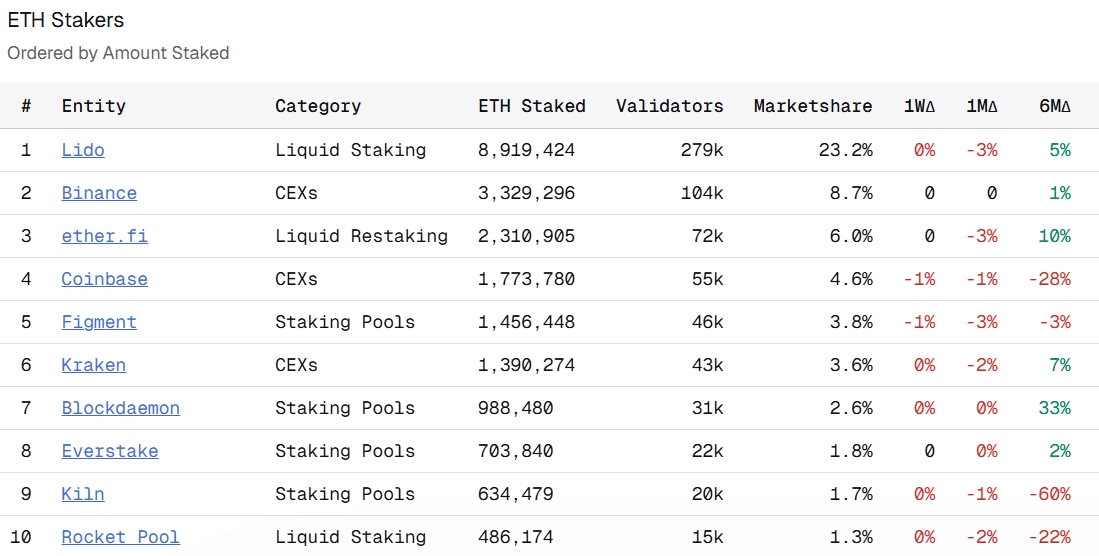
Source: Dune

Final Summary

  • BitMine unveiled the MAVAN staking platform and plans to stake the whole of its 4.6 million ETH stash to get $300M in annual yield revenue.
  • However, it will need over 5 million ETH to displace Lido as the top staking platform.

Domande pertinenti

QWhat is the name of the new ETH staking platform launched by BitMine and what does the acronym stand for?

AThe new ETH staking platform is called MAVAN, which stands for Made in America Validator Network.

QHow much Ethereum (ETH) has BitMine already staked as of March 24th, and what is its total ETH holding?

AAs of March 24th, BitMine has staked 3,142,643 ETH. The company's total ETH holding is 4.6 million.

QWhat is BitMine's stated end goal for its staking platform in terms of annual revenue and current yield?

ABitMine's end goal is to generate $300 million in annual revenue at the current 2.83% 7-day BMNR yield.

QWho is the current leader in the ETH staking segment and how much ETH do they have staked?

ALido is the current leader in the ETH staking segment with nearly 9 million staked ETH.

QBesides Ethereum, what other types of networks does BitMine plan to expand into, according to Chairman Tom Lee?

AAccording to Tom Lee, BitMine plans to expand across additional proof-of-stake (PoS) networks, such as SOL, BNB, and Tron [TRX], as well as critical blockchain infrastructure.

Letture associate

From Threat to Ceasefire: How Did the U.S. Lose Its Dominance?

From escalating threats to a sudden ceasefire, the US appears to have lost its dominant position in the confrontation with Iran. The conflict has entered a more complex phase where ceasefire and strategic maneuvering coexist. A key shift lies in the reversal of the diplomatic structure: rather than forcing Iranian concessions through military action, the US has been drawn into a negotiation framework based on Tehran’s "Ten-Point Plan." Although Washington has not formally accepted all terms, its de facto recognition of Iran’s control over the Strait of Hormuz marks a significant strategic retreat. This has allowed Iran to regain diplomatic and economic leverage. The outcome is counterintuitive: the conflict has not weakened Iran but instead restored its deterrence capability. Meanwhile, the failure of US military means has undermined the credibility of American threats, forcing any future negotiations to be based on genuine compromise. However, the ceasefire remains fragile, with localized clashes continuing and Israel’s actions adding further uncertainty. The situation remains on the brink of escalation, highly dependent on external variables. More profoundly, a conflict originally intended to pressure or even topple the Iranian regime may instead consolidate its internal power structure. The US has shifted from a dominant party to a negotiator, while Iran has moved from a pressured state to an active player. The confrontation has thus entered a longer-term and more complicated stage.

marsbit37 min fa

From Threat to Ceasefire: How Did the U.S. Lose Its Dominance?

marsbit37 min fa

Trading

Spot
Futures
活动图片