Solayer Unveils Multi-Asset Perpetual Trading Platform Dubbed Margin Trade

TheNewsCryptoPubblicato 2026-05-22Pubblicato ultima volta 2026-05-22

Introduzione

Solayer, a high-performance Solana Virtual Machine-compatible Layer 1 blockchain, has launched public testing for its multi-asset perpetual trading platform, Margin Trade. Built by former Citadel and Kraken traders, the platform enables unified margin, on-chain trading of both crypto and traditional assets like gold, oil, and a U.S. equities index. Following a private beta, the public testnet launch aims to offer capital efficiency and real-time execution in a single environment, moving away from fragmented traditional platforms. Margin Trade leverages Solayer's InfiniSVM infrastructure, which supports over 330,000 transactions per second with fast finality and low fees via SOL for gas, enabling high-throughput decentralized applications. This launch is part of Solayer's broader financial product diversification, which includes its Solayer Pay stablecoin platform. Backed by a $35 million ecosystem fund, future plans for Margin Trade include adding single-stock equities and volatility products, along with trading competitions and incentive programs.

Solayer, a high-performance Solana Virtual Machine (SVM)-compatible Layer 1 blockchain, has launched public testing for its flagship multi-asset perpetual trading platform, Margin Trade.

Solayer opens Margin Trade to public testing

Built by a team at Solayer Labs, and former traders with backgrounds at Citadel and Kraken, Margin Trade offers unified margin with on-chain trading of both cryptocurrencies and traditional market instruments on a single platform. Its traditional finance offerings include commodities such as gold, silver, and oil, as well as the MT500, a synthetic index that tracks United States equities.

The public launch of the Margin Trade on Solana testnet follows last week’s private beta, which involved early users, partners, and traders from Solayer’s waitlist. During the same period, Solayer finalized protocol integrations, marketing collaborations, and strategic partnerships in preparation for today’s release.

Regarding this, Joshua Sum, the Chief Product Officer at Solayer Labs, stated:

“Most perpetual futures trading infrastructure today remains siloed across separate markets and fragmented collateral account structures. Margin Trade is designed to bring capital efficiency, real-time execution, and multi-asset exposure in a unified environment that feels closer to the vision of truly global financial markets than traditional trading platforms.”

Being native to Solayer’s InfiniSVM, Margin Trade leverages the chain’s hardware-accelerated infrastructure for efficient, scalable, and low-latency functioning. The chain delivers over 330,000 transactions per second (TPS), with roughly 400 milliseconds of finality for its 304,000 users. All these highly valuable features are indispensable for building high-throughput, performance-critical decentralized applications on the network.

Even more, using Solana’s native token (SOL) for gas fees makes transactions exceptionally affordable, as Solana’s fees are among the lowest in the entire crypto ecosystem.

Solayer’s entrance into the financial arena

Margin Trade’s debut further enforces Solayer’s product diversification initiative – from building infrastructure to live financial markets. Among its financial products is Solayer Pay, the stablecoin payments platform that recently launched a physical card to support merchant-customer transactions. Margin Trade’s launch also shows the utility of the $35 million ecosystem fund backing high-throughput on-chain applications.

In the future, Margin Trade plans on expanding its offerings to include single-stock equities and volatility products. Solayer is also planning trading competitions, ranking systems, and referral-based incentive programs as part of its broader ecosystem development.


TagsBlockchainSolayer

Domande pertinenti

QWhat is Margin Trade, and what types of assets does it support for trading?

AMargin Trade is Solayer's flagship multi-asset perpetual trading platform. It supports on-chain trading of both cryptocurrencies and traditional market instruments, including commodities like gold, silver, and oil, as well as the MT500 synthetic index which tracks US equities.

QOn which blockchain is Margin Trade built, and what are some of its key technical advantages?

AMargin Trade is built on Solayer, a high-performance SVM-compatible Layer 1 blockchain. It leverages the chain's hardware-accelerated infrastructure for efficient, scalable, and low-latency functioning. Solayer achieves over 330,000 transactions per second (TPS) with roughly 400 milliseconds of finality, which is crucial for high-throughput decentralized applications.

QWho developed Margin Trade, and what is notable about the team's background?

AMargin Trade was built by a team at Solayer Labs, which includes former traders with professional backgrounds at major financial institutions like Citadel and the cryptocurrency exchange Kraken.

QWhat did Joshua Sum, CPO at Solayer Labs, highlight as a key problem with current perpetual futures trading, and how does Margin Trade address it?

AJoshua Sum stated that most perpetual futures trading infrastructure today remains siloed across separate markets and has fragmented collateral account structures. Margin Trade is designed to address this by bringing capital efficiency, real-time execution, and multi-asset exposure in a unified environment that aligns with the vision of truly global financial markets.

QWhat future plans does Solayer have for the Margin Trade platform and its broader ecosystem?

AIn the future, Margin Trade plans to expand its offerings to include single-stock equities and volatility products. Solayer also plans trading competitions, ranking systems, and referral-based incentive programs as part of its broader ecosystem development.

Letture associate

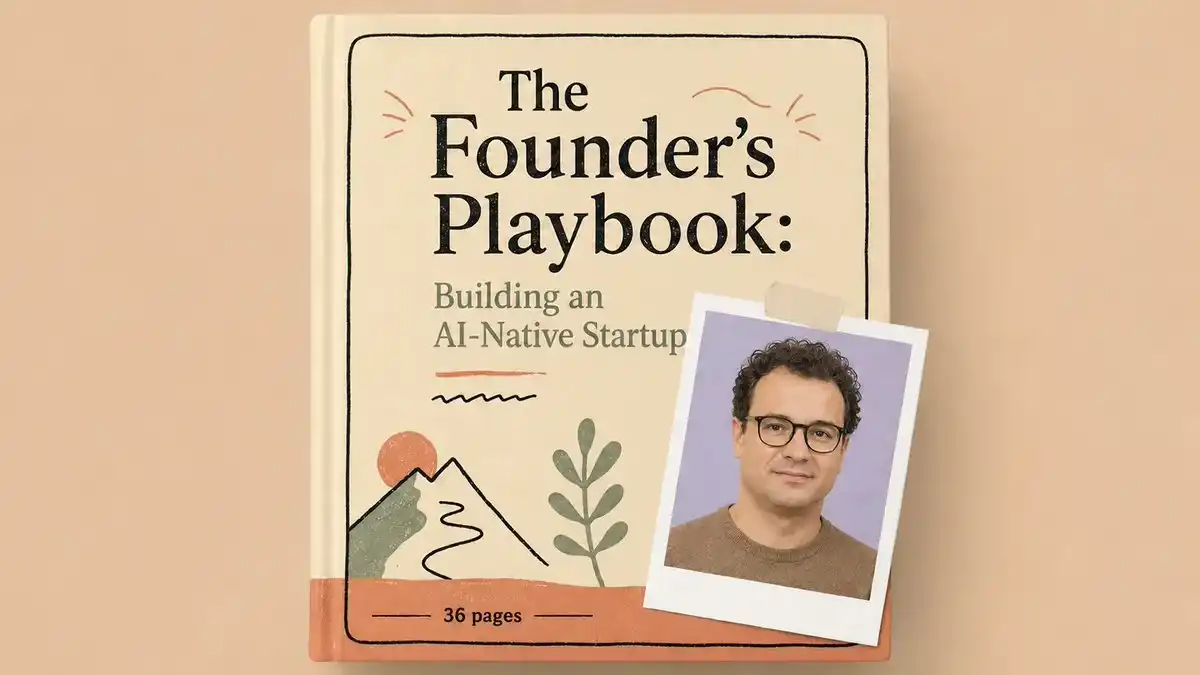
Anthropic Major Release: "The Founder's Playbook" - All 4 Stages of Entrepreneurship, Completely Reimagined with AI

**Anthropic Releases "The Founder's Playbook," Reimagining the Four Stages of Startups with AI** The logic of entrepreneurship is being fundamentally reshaped by AI. Anthropic's new handbook, "The Founder's Playbook: Building an AI-Native Startup," defines the AI-native startup as a new species: not a traditional company with AI tools, but a venture driven by AI from day one. The founder's role is transforming from a hands-on builder to a conductor or architect, orchestrating AI agents for execution while focusing on high-level judgment and strategy. Anthropic outlines a product matrix of Claude tools for different tasks: Claude Chat for interactive research, Claude Code for generating production-ready code, and Claude Cowork for automating knowledge-intensive workflows. The handbook structures the startup lifecycle into four stages, detailing core goals, pitfalls, and AI applications for each: 1. **Idea Stage**: Focuses on validating a real problem. The core challenge is avoiding confirmation bias. AI practices include using Claude as a "structured devil's advocate" to challenge assumptions and for automated market/competitor research. 2. **MVP Stage**: Aims to gather early signals of Product-Market Fit (PMF). Key risks are technical debt and scope creep due to rapid AI-assisted development. Recommended AI uses include maintaining project memory documents (e.g., CLAUDE.md), using Claude Code for structured coding, and automating user feedback analysis. 3. **Launch Stage**: Centers on establishing scalable growth, operations, and compliance. Challenges include accelerating technical debt and founders becoming bottlenecks. AI should be used to build an "operating system" for launch—automating routine tasks (scheduling, reporting, content) and code audits—freeing founders for critical decisions. 4. **Scale Stage**: Focuses on achieving sustainable business operations. The main challenge is delegating operational control. AI should be leveraged for differentiated marketing, operational optimization, and building competitive moats through data network effects. The handbook concludes that in the AI era, "Can we build it?" is no longer the primary constraint. The advantage shifts back to foundational strengths: **insight, judgment, and a deep understanding of a specific problem and audience.**

marsbit5 h fa

Anthropic Major Release: "The Founder's Playbook" - All 4 Stages of Entrepreneurship, Completely Reimagined with AI

marsbit5 h fa

Eight Departments Launch Severe Crackdown on Cross-Border Securities Firms, How to Interpret This?

China's top financial regulators, including the CSRC and seven other ministries, have launched a sweeping crackdown on unlicensed cross-border securities operations. The core action involves a joint enforcement plan and the issuance of administrative penalties against major offshore internet brokers like Futu and Tiger Brokers for conducting unauthorized securities business in mainland China without a domestic license. The primary legal basis is China's requirement for securities businesses to operate with proper, locally issued licenses. The crackdown aims to eliminate a major regulatory gray area, plugging channels that allowed massive, unmonitored capital outflows which posed risks to financial stability, currency controls, and foreign exchange reserves. It also seeks to protect mainland investors who previously lacked legal recourse when dealing with offshore platforms and to secure sensitive financial data. The immediate impact is severe for the targeted brokers, including a complete ban on new mainland business, forced liquidation of existing mainland client positions over two years, and the confiscation of illegal profits estimated in the billions. Their U.S.-listed shares plummeted in response. Market analysts warn that the forced sell-off of an estimated 250-280 billion RMB in assets, concentrated in U.S. tech stocks, Chinese ADRs, and Hong Kong equities, could create sustained selling pressure on these markets over the next two years, potentially lowering valuations. For mainland investors, legal cross-border investment channels will become extremely constrained. The high asset threshold for the Stock Connect program and the severe shortage of QDII fund quotas—leading to chronic high premiums on popular U.S.-focused ETFs—mean retail access to overseas markets like the U.S. will be sharply limited. Conversely, some of the returning capital may flow into domestic A-share sectors like AI, semiconductors, and advanced manufacturing. However, this could further inflate valuations in these already elevated sectors. In conclusion, regulators frame this move not as closing off cross-border investment, but as a necessary step to enforce compliance, manage systemic risk, and steer investors toward regulated, protected channels like QDII and Stock Connect for the long-term health of the financial system.

链捕手5 h fa

Eight Departments Launch Severe Crackdown on Cross-Border Securities Firms, How to Interpret This?

链捕手5 h fa

Trading

Spot
Futures

Articoli Popolari

Come comprare LAYER

Benvenuto in HTX.com! Abbiamo reso l'acquisto di Solayer (LAYER) semplice e conveniente. Segui la nostra guida passo passo per intraprendere il tuo viaggio nel mondo delle criptovalute.Step 1: Crea il tuo Account HTXUsa la tua email o numero di telefono per registrarti il tuo account gratuito su HTX. Vivi un'esperienza facile e sblocca tutte le funzionalità,Crea il mio accountStep 2: Vai in Acquista crypto e seleziona il tuo metodo di pagamentoCarta di credito/debito: utilizza la tua Visa o Mastercard per acquistare immediatamente SolayerLAYER.Bilancio: Usa i fondi dal bilancio del tuo account HTX per fare trading senza problemi.Terze parti: abbiamo aggiunto metodi di pagamento molto utilizzati come Google Pay e Apple Pay per maggiore comodità.P2P: Fai trading direttamente con altri utenti HTX.Over-the-Counter (OTC): Offriamo servizi su misura e tassi di cambio competitivi per i trader.Step 3: Conserva Solayer (LAYER)Dopo aver acquistato Solayer (LAYER), conserva nel tuo account HTX. In alternativa, puoi inviare tramite trasferimento blockchain o scambiare per altre criptovalute.Step 4: Scambia Solayer (LAYER)Scambia facilmente Solayer (LAYER) nel mercato spot di HTX. Accedi al tuo account, seleziona la tua coppia di trading, esegui le tue operazioni e monitora in tempo reale. Offriamo un'esperienza user-friendly sia per chi ha appena iniziato che per i trader più esperti.

277 Totale visualizzazioniPubblicato il 2025.02.11Aggiornato il 2025.03.21

Come comprare LAYER

Discussioni

Benvenuto nella Community HTX. Qui puoi rimanere informato sugli ultimi sviluppi della piattaforma e accedere ad approfondimenti esperti sul mercato. Le opinioni degli utenti sul prezzo di LAYER LAYER sono presentate come di seguito.

活动图片