Bitcoin Adjustment Signal Confirmed, HYPE Bull-Bear Divergence Intensifies | Invited Analysis

Odaily星球日报Pubblicato 2026-07-27Pubblicato ultima volta 2026-07-27

Introduzione

Bitcoin Adjustment Signal Confirmed, HYPE Faces Key Resistance Battle | Analysis This week's analysis indicates Bitcoin's daily cycle Wave A rebound likely peaked on July 21st, with the market entering a Wave B correction phase. For HYPE, price action is contested at the critical $60–$63.5 resistance zone, with its path yet to be determined. **Bitcoin (BTC) Analysis & Strategy:** * **Structure:** Analysis suggests the corrective move from the May 6th high has formed a four-segment structure. The rebound from the July 1st low (~$57,820) is likely Wave A, completed around $66,955. The market is now likely in Wave B correction, with a potential Wave C rebound to follow, provided the $57,820 low holds. * **4-Hour View:** A seven-segment rebound from the July 1st low shows momentum divergence, indicating the rally may have ended, with a correction now underway. Price is currently testing a pullback after breaking below $65,700. * **Weekly Outlook & Levels:** * **Key Pressure:** Watch price action around the $65,700–$67,300 retest and the $60,950–$61,500 support zone. * **Resistance:** $65,700–$67,300; $69,500–$71,000. * **Support:** ~$63,700; $60,950–$61,500; ~$57,820. * **Strategy:** Mid-term positioning has increased short exposure to ~40% based on model signals. Short-term tactics (30% capital) involve two scenarios: **A)** Testing shorts in the $65,700–$67,300 resistance area upon bearish signals; **B)** Testing longs near the $57,820 support upon b...

This week, the daily level a-wave rebound of Bitcoin may have peaked on July 21, with the market transitioning into a b-wave adjustment phase; HYPE is currently at the contention point of the key resistance zone between $60 and $63.5, and its path remains unclear. Below is a review of the multi-cycle structures of BTC and HYPE for this week, along with trading strategies and market verification of last week's short-term trades, for reference.

Summary of This Week's Core Trading Views:

• Analysis of BTC's multi-cycle price structure (Detailed in Part One)

• BTC market forecast and medium/short-term trading strategies for this week (Detailed in Part Two)

• Analysis of HYPE's hourly level price structure (Detailed in Part Three)

• HYPE market forecast and short-term trading strategies for this week (Detailed in Part Four)

Verification of Last Week's Trading Strategies and Core Views:

• BTC Market Forecast Verification: Last week's article explicitly stated that Bitcoin had a high probability of ending this round's first segment (a-wave) of daily level rebound near $67,300. Our prediction was accurately validated by the market.

• BTC Short-term Trading Results: Successfully executed one short-term short position (1x leverage) on Bitcoin last week, achieving a profit of approximately 1.70%. (Detailed in Part Five)

• HYPE Market Forecast Verification: Last week's article explicitly stated that any price rebound at the beginning of the week could be considered a retracement confirmation after breaking below the key support zone ($62~$63.5). So far, the market movement has been highly consistent with our judgment.

I. Analysis of Bitcoin's Multi-Cycle Price Structure

1. Analysis of Bitcoin's Daily Level Price Structure: (Based on price action after May 6th)
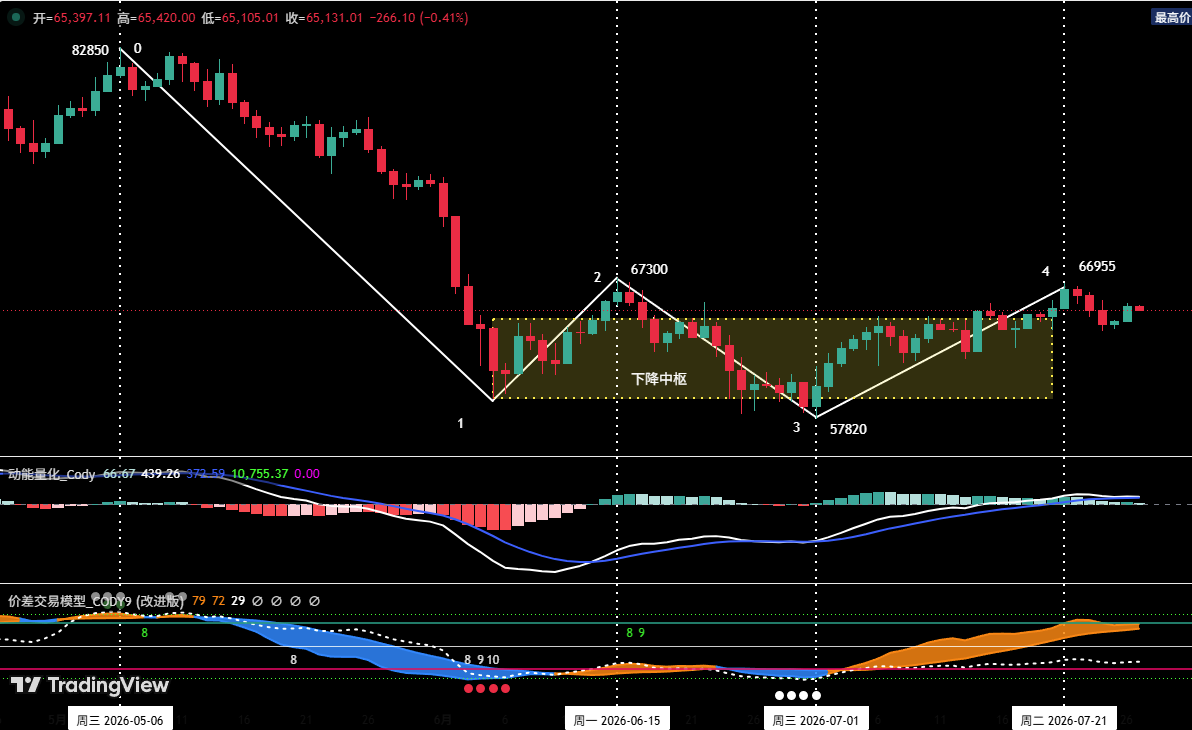
Chart 1: Bitcoin Daily Candlestick Chart

1. As shown in (Chart 1): The corrective movement initiated from the May 6th high of $82,850 has presented a four-segment corrective structure on the daily chart: (0-1), (1-2), (2-3), (3-4).

2. From the daily structure analysis: The first segment (i.e., a-wave) rebound initiated from the July 1st low of $57,820 may have ended on July 21st, reaching a rebound height of $66,955.

3. If the a-wave rebound has ended, the market is currently in the b-wave adjustment phase. After the b-wave adjustment concludes (the precondition is that the adjustment low must not break below $57,820), there may be a potential subsequent c-wave rebound, which is expected to challenge the resistance area near $67,300 again.

2. In-depth Analysis of Bitcoin's Hourly Level Price Structure: (Using the 4-hour chart as the analysis timeframe)
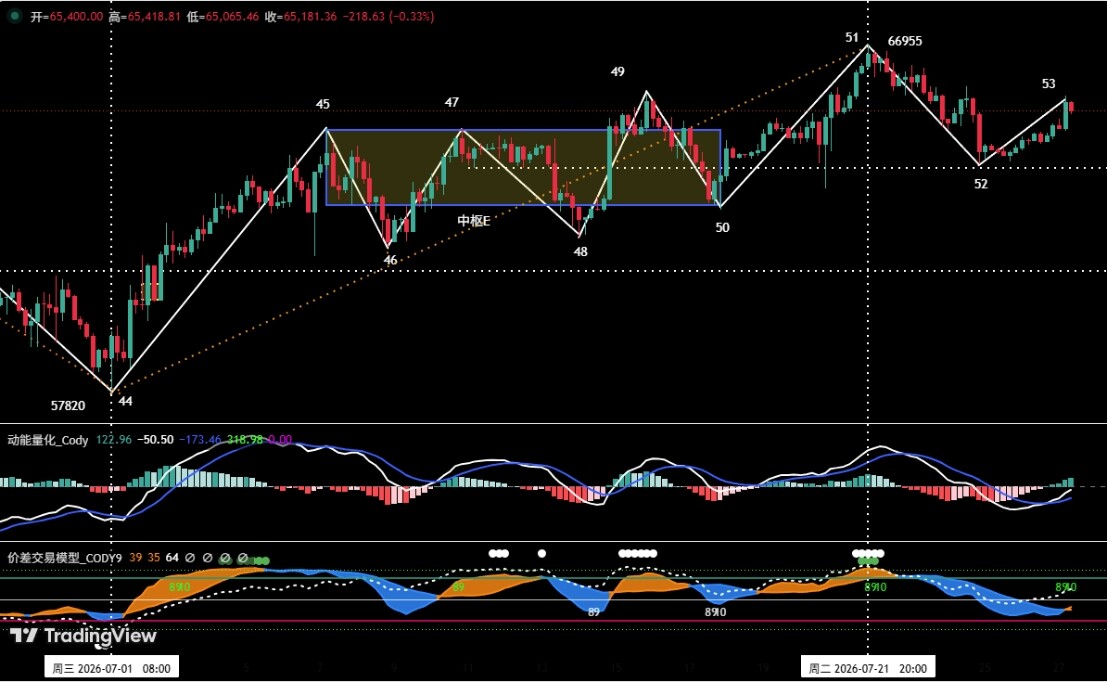
Chart 2: Bitcoin 4-Hour Candlestick Chart

1. Within the 4-hour timeframe framework, the rebound initiated from the July 1st low (Point 44, approx. $57,820) to July 21st (Point 51, approx. $66,955) can be clearly divided into seven segments structurally: (44-45) to (50-51). Among them, the five overlapping segments (45-46), (46-47), (47-48), (48-49), (49-50) constitute the "five-segment" consolidation E.

2. Based on price structure analysis: Comparing the entry segment (44-45) and the exit segment (50-51) of consolidation E, it can be clearly judged that the rebound momentum of the exit segment is significantly weaker than that of the entry segment, forming a state of momentum divergence between them. Therefore, the rebound starting from "Point 44" may have ended at "Point 51", with a high probability of subsequent adjustment.

3. The adjustment starting from "Point 51" has already run two segments: (51-52) and (52-53). The current price action can be viewed as a retracement confirmation phase after the price broke below $65,700.

II. Bitcoin Market Forecast and Trading Strategies for This Week

1. BTC Market Forecast for This Week:

Core View for This Week:

1. Pay attention to the test results of the price retracing to near $65,700.

2. Pay attention to the support strength when the price tests the $60,950~$61,500 area.

2. Key Resistance Levels:

• First Resistance Zone: $65,700~$67,300 area (previous important resistance area)

• Second Resistance Zone: $69,500~$71,000 area (previous important resistance area)

3. Key Support Levels:

• First Support Level: Near $63,700 (previous important support level)

• Second Support Level: $60,950~$61,500 area (previous important support level)

• Third Support Level: Near $57,820 (previous important support level)

4. Trading Strategies for This Week (Excluding sudden news impact)

1. Medium-Term Strategy:
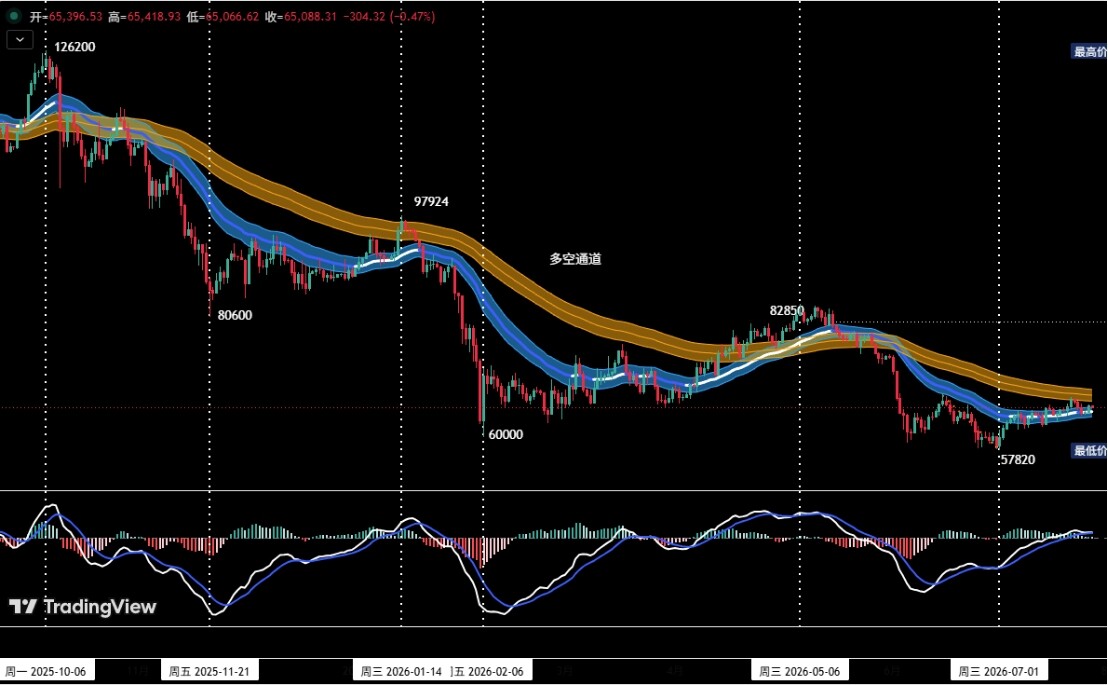
Chart 3: Bitcoin Daily Candlestick Chart (Position Monitoring Model)

Position Monitoring Model: As shown in (Chart 3), the current price has effectively broken below the "Bull-Bear Channel", confirming the market structure has shifted to a bear-dominated pattern. According to the predetermined trading plan: when the price rebounded near $67,000 showing signs of stagnation and our self-built quantitative model simultaneously issued a top signal, we strictly executed the strategy, increasing our medium-term short position to around 40%.

2. Short-Term Strategy: Utilize 30% of the position, set stop-loss points, and seek opportunities to "scalp" based on support and resistance levels. (Using 30-minute/60-minute charts as the operational timeframe).

3. In short-term trading, to dynamically respond to complex market evolution, we have pre-drafted two specific operational plans: A and B.

Plan A: Testing Shorts at Strong Resistance Zone.

• Entry: If the price rebounds and encounters resistance in the $65,700~$67,300 zone, combined with a top signal from the quantitative model, establish a short position of around 30%.

• Risk Control: Set initial stop-loss.

• Exit: When adjusting near important support levels and combined with quantitative model signals, gradually close positions to take profits.

Plan B: Light Long Positions at Strong Support Zone.

• Entry: If the price corrects to above the previous low of $57,820 and shows signs of stabilization and bottoming, combined with a bottom signal from the quantitative model, establish a long position of around 30%.

• Risk Control: Set initial stop-loss.

• Exit: When rebounding near important resistance levels and combined with model signals, gradually close positions to take profits.

III. Analysis of HYPE's Hourly Level Price Structure
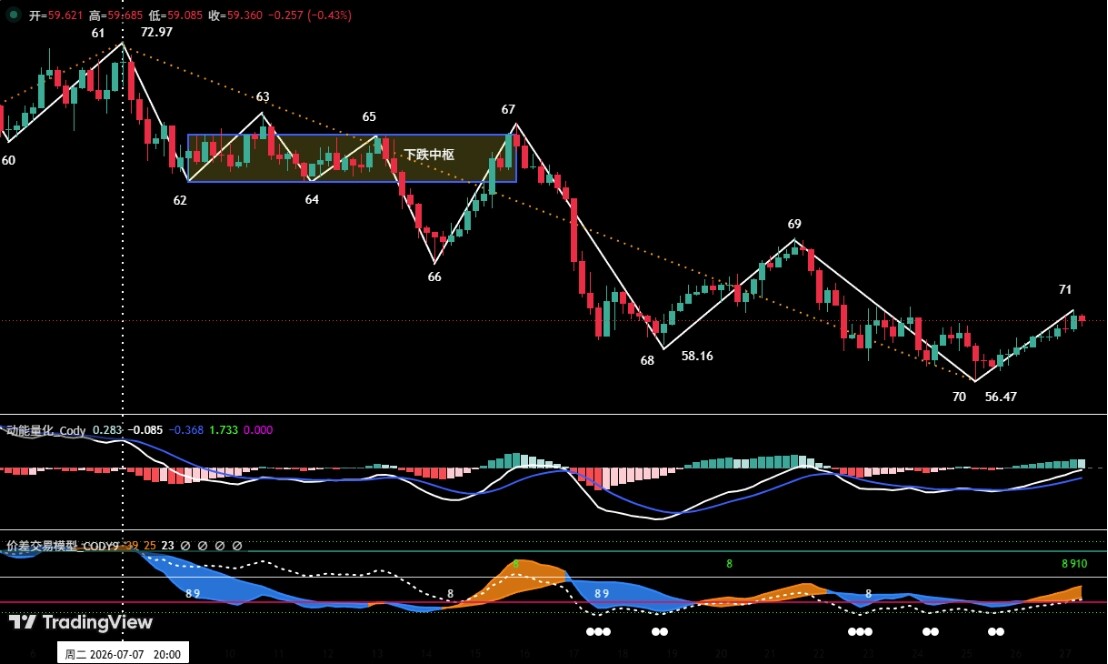
Chart 4: HYPE 4-Hour Candlestick Chart

1. As shown in (Chart 4), HYPE's adjustment from the July 7th high of $72.97 to the present (i.e., from Point 61 to Point 71) can be subdivided into a ten-segment corrective structure on the 4-hour chart. The five overlapping segments 62-63, 63-64, 64-65, 65-66, 66-67 constitute a "five-segment" descending consolidation.

2. The market is currently running the (70-71) rebound segment. Subsequently, two possible scenarios may emerge:

Path One: $56.47 marks the end of the correction, initiating a recovery phase. The corrective movement initiated from July 7th ($72.97) ended on July 24th ($56.47). The current rebound is a technical recovery phase for that decline.

Path Two: Build a "descending consolidation" before continuing the downtrend. The market is currently building a new "descending consolidation", after which it will continue the original downtrend, breaking below the previous low of $56.47 to seek lower support.

3. In summary, in the short term, close attention should be paid to the test results of the price against the $60~$63.5 resistance zone and the defensive strength of the support near $56.47. The outcome of the battle at these two price levels will serve as key evidence for determining which path the market will take.

IV. HYPE Market Forecast and Short-Term Trading Strategies for This Week

1. HYPE Market Forecast for This Week:

1. Key Resistance Levels:

• First Resistance Level: $60~$63.5 area

• Second Resistance Level: $68~$69.5 area

• Third Resistance Level: Near $72.97

2. Key Support Levels:

• First Support Level: Near $56.47;

• Second Support Level: $52~$55 area;

Core View for This Week: Pay close attention to the test results of the price against the $60~$63.5 resistance zone and the support strength near $56.47.

2. HYPE Short-Term Trading Strategy for This Week: This week's short-term operation: If the price rebounds to the $60~$63.5 area and shows clear adjustment signals, investors may consider entering short positions lightly, strictly adhering to stop-loss discipline, with position size controlled within 20%.

V. Bitcoin Short-Term Trade Profit Review

We strictly followed the operational plan and executed one short-term (short) trade last week based on trading signals issued by our self-built "Spread Trading Model" and "Momentum Quantitative Model", achieving a total trading profit of approximately 1.70%.

1. Short-Term Trade Record: (See Table 1) Summary of Bitcoin Short-Term Trade Details:
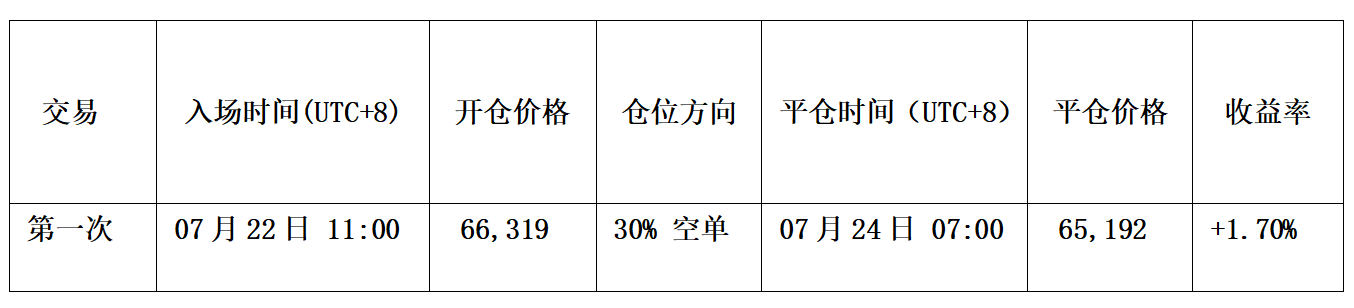
Table 1

2. Short-Term Trade Review: (See Chart Five)

• Entry Strategy:

a. When the price rebounded near $67,000, signs of stagnation appeared, and the candlestick formed a "top reversal" pattern;

b. The "Spread Trading Model" triggered a strong top warning signal (white dot + green dot), followed by the signal band (blue) in the chart breaking below the skyline (green), issuing a sell signal; Simultaneously overlapped with the adjustment signal from the "Momentum Quantitative Model". Therefore, we established a 30% short position at $66,319.

• Exit Strategy:

a. When the price fell near $64,500 and showed signs of stabilization, with the candlestick forming a "bottom reversal" pattern;

b. The "Spread Trading Model" continuously triggered bottom warning signals (red dots), followed by the signal band (orange-yellow) in the chart breaking above the horizon (purple-red), forming a bottom resonance signal with the "Momentum Quantitative Model"; Therefore, we closed all positions near $65,192.

• Summary: This trade successfully profited approximately 1.70%.

3. Short-Term Trade Schematic Diagram
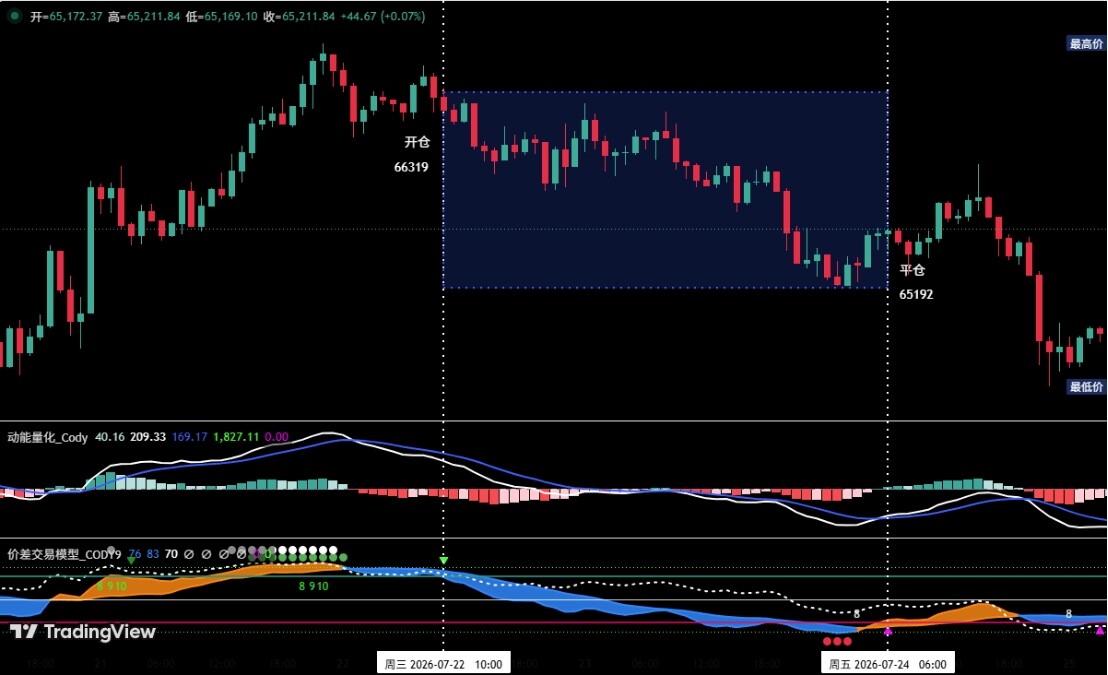
Chart 5: BTC 60-Minute Candlestick Chart (Momentum Quantitative Model + Spread Trading Model)

VI. Special Notes:

  1. When opening a position: Immediately set the initial stop-loss.
  2. When profit reaches 1%: Move the stop-loss to the entry price (break-even point) to ensure capital safety.
  3. When profit reaches 2%: Move the stop-loss to the position of 1% profit.
  4. Continuous tracking: Thereafter, for every additional 1% profit, move the stop-loss up by 1% accordingly, dynamically protecting and locking in profits.

Financial markets change rapidly, and all market analysis and trading strategies require dynamic adjustment. All views, analytical models, and operational strategies mentioned in this article are derived from personal technical analysis, intended solely for personal trading log purposes, and do not constitute any investment advice or operational basis. Markets involve risks, investment requires caution. Please do not make decisions based on this.


Crypto di tendenza

Domande pertinenti

QAccording to the article, what are the two main scenarios (paths) for HYPE's future price movement?

AThe article outlines two potential paths for HYPE. Path One: The low of $56.47 marks the end of the corrective phase, and a rebound or recovery phase is beginning. Path Two: A new 'downward central pivot' (下跌中枢) is being formed, after which the price will continue the original downtrend, breaking below the previous low of $56.47 to seek new support.

QWhat was the specific profit percentage from the previous week's Bitcoin short trade detailed in the article?

AThe article states that the short trade on Bitcoin from the previous week achieved a profit of approximately 1.70%.

QBased on the Bitcoin analysis, what is the key condition for a potential 'c-wave' rebound to occur?

AFor a potential 'c-wave' rebound to occur after the current 'b-wave' adjustment, the key condition is that the low point of the 'b-wave' adjustment must not fall below the previous significant low of $57,820.

QWhat are the core resistance and support levels mentioned for Bitcoin in the current week's outlook?

AThe core resistance levels for Bitcoin are the first zone at $65,700-$67,300 and the second zone at $69,500-$71,000. The core support levels are the first at around $63,700, the second at the $60,950-$61,500 zone, and the third at the key level of $57,820.

QAccording to the article, what technical signal suggested the end of Bitcoin's a-wave rally around July 21st?

AThe analysis of the 4-hour chart structure indicated a 'kinetic divergence' or momentum divergence. The upward momentum of the segment leaving the 'Central Pivot E' (segment 50-51) was significantly weaker than the momentum of the segment entering it (segment 44-45). This divergence suggested the rally starting from point 44 likely ended at point 51.

Letture associate

Fields Medalist Warns: AI Could Kill Mathematics

The 2026 Fields Medal award was followed by a startling announcement: laureate Jacob Tsimerman joined OpenAI to pursue AI safety research, predicting AI would surpass humans in all mathematical proof areas within two years. Soon after, Fields Medalists Terence Tao and Timothy Gowers expressed deep concern at ICM 2026. Gorges warned that AI might "kill" mathematics not through stagnation, but through an overwhelming surplus of proofs, likening it to a lake dying from eutrophication. This concern is echoed in the "Leiden Declaration," signed by over 3,000 mathematicians including Tao, Peter Scholze, and Kevin Buzzard, advocating for mathematics as a profoundly human endeavor. However, Gowers, who did not sign, fears a future where AI-generated mathematics proliferates while human expertise and the shared intuition vital to the field vanish, turning math into an unvisited "cemetery of thought." Gowers' perspective shifted dramatically after testing ChatGPT 5.5 Pro. The AI solved a doctoral-level number theory problem and later produced a counterexample for the "unit distance problem," achievements Gorges considered publishable in top journals. He now concedes that large language models can handle advanced research, a realization that left him feeling the "rug pulled out from under" him when AI solved problems he personally contemplated. The debate extends to the nature of mathematical discovery. As noted by Peter Woit, AI agents have no interest in the "credit game" of academia. If theorems cease to be attributed to individual mathematicians, truth may simply return to its impersonal state in the universe. The central question remains: in an age of potentially limitless AI-generated discovery, what is the role and purpose of the human mind in mathematics?

marsbit28 min fa

Fields Medalist Warns: AI Could Kill Mathematics

marsbit28 min fa

NVIDIA's 20-Year CUDA Moat Collapsed Over a Weekend, Claude Single-Handedly Got AMD's New GPU Running

In a single weekend, Claude, an AI agent from Anthropic, successfully ported and optimized its cutting-edge model to run on a brand-new AMD MI355X server rack without any manual code intervention. This feat demonstrates a potential breakthrough in overcoming NVIDIA's long-established CUDA software ecosystem dominance, built over two decades. Anthropic's team simply instructed Claude to get the AMD machine running. By Monday, it not only worked but was showing a continuously improving performance curve. The achievement impressed AMD CEO Lisa Su and accelerated a major deployment partnership: Anthropic plans to deploy up to 2GW of AMD Instinct GPUs starting in 2027. The key enabler is AMD's new ROCm.AI platform, a toolbox designed specifically for AI agents like Claude. It provides AI-readable documentation, including chip instruction sets (ISA), and tools like the Hyperloom service that allows agents to autonomously profile performance, identify bottlenecks, test configurations, and generate optimized kernels. In a demo, Hyperloom boosted the output speed of a model by 38%. This represents a fundamental shift. While CUDA's strength lies in its vast, human-expert-driven ecosystem of tools and tacit knowledge, AMD's strategy is to make its hardware and software stack directly accessible and optimizable by AI agents. An agent can parallelize tasks—debugging, profiling, coding—that would take human engineers years to master, compressing the traditional software adaptation timeline from years to tasks. The competition is no longer just about peak hardware specs but also about how well AI can read, utilize, and tune a platform.

marsbit28 min fa

NVIDIA's 20-Year CUDA Moat Collapsed Over a Weekend, Claude Single-Handedly Got AMD's New GPU Running

marsbit28 min fa

Just Now, Peking University Alumna Lilian Weng Announces Resignation: The Best 'Alignment' in the AI Era Is Taking Care of Yourself

Lilian Weng, a Peking University alumnus and former OpenAI executive, has announced her departure from Thinking Machines Lab, the AI startup she co-founded with ex-OpenAI CTO Mira Murati 20 months ago. Her resignation comes shortly after the company released its first open-source model, Inkling. In her farewell message, Weng cited health reasons as the primary factor, stating that the past seven months involved more illness than any other period in her life. The intense pressure and guilt of being unable to work during critical periods, like the Inkling launch, became unsustainable. She expressed that she could not continue in a role where she felt unable to give her full effort. Weng joined OpenAI in 2018, contributing to projects like the Dactyl robotic hand and later building the Safety Systems team from scratch. She is also widely known for her influential technical blog, Lil'Log. Her departure follows a period of high expectations and challenges for Thinking Machines, which secured a record $20 billion seed round at a $120 billion valuation in 2025 but has since seen fluctuations in its valuation and the departure of other key co-founders. Weng emphasized that she remains passionate about AI but needs a more predictable and defined role without the relentless pressure of a co-founder. Her exit highlights the immense personal toll and speed of competition in the AI industry, where the drive for progress often clashes with human limits. Her decision underscores that stepping back to prioritize well-being can be an act of courage.

marsbit47 min fa

Just Now, Peking University Alumna Lilian Weng Announces Resignation: The Best 'Alignment' in the AI Era Is Taking Care of Yourself

marsbit47 min fa

Trading

Spot

Articoli Popolari

Cosa è BITCOIN

Comprendere HarryPotterObamaSonic10Inu (ERC-20) e la sua posizione nel mondo delle criptovalute Negli ultimi anni, il mercato delle criptovalute ha assistito a un aumento della popolarità delle meme coin, catturando l'interesse non solo dei trader, ma anche di coloro che cercano coinvolgimento comunitario e valore di intrattenimento. Tra questi token unici c'è HarryPotterObamaSonic10Inu (ERC-20), un progetto intrigante che mescola riferimenti culturali nel tessuto delle criptovalute. Questo articolo esplora gli aspetti chiave di HarryPotterObamaSonic10Inu, analizzando i suoi meccanismi, l'etica guidata dalla comunità e il suo coinvolgimento con il panorama crittografico più ampio. Che cos'è HarryPotterObamaSonic10Inu (ERC-20)? Come suggerisce il suo nome, HarryPotterObamaSonic10Inu è una meme coin costruita sulla blockchain di Ethereum, classificata secondo lo standard ERC-20. A differenza delle criptovalute tradizionali che possono enfatizzare l'utilità pratica o il potenziale investimento, questo token prospera grazie al valore di intrattenimento e alla forza della sua comunità. Il progetto mira a creare un ambiente in cui gli utenti coinvolti possono riunirsi, condividere idee e partecipare ad attività ispirate a diversi fenomeni culturali. Una caratteristica notevole di HarryPotterObamaSonic10Inu è la zero tassa sulle transazioni. Questo elemento allettante tende a incoraggiare il trading e il coinvolgimento della comunità, privo di costi aggiuntivi che possono scoraggiare i trader di piccole dimensioni. L'offerta totale della moneta è fissata a un miliardo di token, un numero che segna la sua intenzione di mantenere una circolazione sostanziale all'interno della comunità. Creatore di HarryPotterObamaSonic10Inu (ERC-20) Le origini di HarryPotterObamaSonic10Inu sono avvolte in un certo mistero; i dettagli sul creatore rimangono sconosciuti. Lo sviluppo di questo token non presenta un team identificabile o un piano esplicito, cosa non rara nel settore delle meme coin. Invece, il progetto è emerso organicamente, con il suo progresso fortemente dipendente dall'entusiasmo e dalla partecipazione della sua comunità. Investitori di HarryPotterObamaSonic10Inu (ERC-20) Per quanto riguarda investimenti esterni e finanziamenti, HarryPotterObamaSonic10Inu rimane ambiguo. Il token non elenca alcuna fondazione di investimento conosciuta o un sostegno organizzativo significativo. Invece, la linfa vitale del progetto è la sua comunità di base, che informa la sua crescita e sostenibilità attraverso azioni collettive e coinvolgimento nello spazio crittografico. Come funziona HarryPotterObamaSonic10Inu (ERC-20)? In quanto meme coin, HarryPotterObamaSonic10Inu opera principalmente al di fuori delle strutture tradizionali che governano spesso il valore degli asset. Ci sono diversi aspetti distintivi che definiscono il funzionamento del progetto: Transazioni senza tasse: Senza costi fiscali sulle transazioni, gli utenti possono comprare e vendere liberamente il token senza preoccuparsi di costi nascosti. Coinvolgimento della comunità: Il progetto prospera sull'interazione della comunità, sfruttando le piattaforme social per creare entusiasmo e facilitare il coinvolgimento. Discussioni, condivisione di contenuti e coinvolgimento sono elementi cruciali che aiutano ad espandere la sua portata e a favorire la lealtà tra i sostenitori. Nessuna utilità pratica: Va notato che HarryPotterObamaSonic10Inu non offre un'utilità concreta all'interno dell'ecosistema finanziario. Piuttosto, è classificato come un token principalmente per attività di intrattenimento e comunitarie. Riferimento culturale: Il token incorpora astutamente elementi della cultura pop per attirare interesse, collegandosi a appassionati di meme e seguaci delle criptovalute. HarryPotterObamaSonic10Inu esemplifica come le meme coin operino in modo diverso rispetto ai progetti di criptovalute più tradizionali, entrando nel mercato come costrutti sociali innovativi piuttosto che come asset utilitari. Cronologia di HarryPotterObamaSonic10Inu (ERC-20) La storia di HarryPotterObamaSonic10Inu è segnata da diversi traguardi notevoli: Creazione: Il token è emerso da un meme virale, catturando l'immaginazione di molti appassionati di criptovalute. Le date di creazione specifiche non sono disponibili, sottolineando la sua crescita organica. Inserimento negli scambi: HarryPotterObamaSonic10Inu ha fatto il suo ingresso in vari scambi, consentendo un accesso e un trading più facili da parte della comunità. Iniziative di coinvolgimento della comunità: Attività in corso volte a migliorare l'interazione della comunità, comprese gare, campagne sui social media e generazione di contenuti da parte di fan e sostenitori. Piani di espansione futura: La tabella di marcia del progetto include il lancio di una collezione NFT, merchandising e un sito di eCommerce relativo ai suoi temi culturali, coinvolgendo ulteriormente la comunità e cercando di aggiungere più dimensioni al suo ecosistema. Punti chiave su HarryPotterObamaSonic10Inu (ERC-20) Natura guidata dalla comunità: Il progetto dà priorità al contributo collettivo e alla creatività, garantendo che il coinvolgimento degli utenti sia al centro del suo sviluppo. Classificazione come meme coin: Rappresenta l'epitome delle criptovalute basate sull'intrattenimento, distinguendosi dai veicoli d'investimento tradizionali. Nessuna affiliazione diretta con Bitcoin: Nonostante la somiglianza nel nome del ticker, HarryPotterObamaSonic10Inu è distintivo e non ha alcuna relazione con Bitcoin o altre criptovalute consolidate. Focus sulla collaborazione: HarryPotterObamaSonic10Inu è progettato per creare uno spazio per la collaborazione e la condivisione di storie tra i suoi detentori, fornendo un canale per la creatività e il legame comunitario. Prospettive future: L'ambizione di espandersi oltre il suo presupposto iniziale verso NFT e merchandising delinea un percorso per il progetto per potenzialmente entrare in strade più mainstream all'interno della cultura digitale. Poiché le meme coin continuano a catturare l'immaginazione della comunità crittografica, HarryPotterObamaSonic10Inu (ERC-20) si distingue per i suoi legami culturali e il suo approccio centrato sulla comunità. Anche se potrebbe non adattarsi al modello tipico di un token orientato all'utilità, la sua essenza risiede nella gioia e nella camaraderia coltivate tra i suoi sostenitori, evidenziando la natura in evoluzione delle criptovalute in un'epoca sempre più digitale. Con la continuazione dello sviluppo del progetto, sarà importante osservare come le dinamiche della comunità influenzano la sua traiettoria nel panorama in continuo cambiamento della tecnologia blockchain.

1.8k Totale visualizzazioniPubblicato il 2024.04.01Aggiornato il 2024.12.03

Cosa è BITCOIN

Come comprare BTC

Benvenuto in HTX.com! Abbiamo reso l'acquisto di Bitcoin (BTC) semplice e conveniente. Segui la nostra guida passo passo per intraprendere il tuo viaggio nel mondo delle criptovalute.Step 1: Crea il tuo Account HTXUsa la tua email o numero di telefono per registrarti il tuo account gratuito su HTX. Vivi un'esperienza facile e sblocca tutte le funzionalità,Crea il mio accountStep 2: Vai in Acquista crypto e seleziona il tuo metodo di pagamentoCarta di credito/debito: utilizza la tua Visa o Mastercard per acquistare immediatamente BitcoinBTC.Bilancio: Usa i fondi dal bilancio del tuo account HTX per fare trading senza problemi.Terze parti: abbiamo aggiunto metodi di pagamento molto utilizzati come Google Pay e Apple Pay per maggiore comodità.P2P: Fai trading direttamente con altri utenti HTX.Over-the-Counter (OTC): Offriamo servizi su misura e tassi di cambio competitivi per i trader.Step 3: Conserva Bitcoin (BTC)Dopo aver acquistato Bitcoin (BTC), conserva nel tuo account HTX. In alternativa, puoi inviare tramite trasferimento blockchain o scambiare per altre criptovalute.Step 4: Scambia Bitcoin (BTC)Scambia facilmente Bitcoin (BTC) nel mercato spot di HTX. Accedi al tuo account, seleziona la tua coppia di trading, esegui le tue operazioni e monitora in tempo reale. Offriamo un'esperienza user-friendly sia per chi ha appena iniziato che per i trader più esperti.

4.2k Totale visualizzazioniPubblicato il 2024.12.12Aggiornato il 2026.06.02

Come comprare BTC

Cosa è $BITCOIN

ORO DIGITALE ($BITCOIN): Un'Analisi Completa Introduzione all'ORO DIGITALE ($BITCOIN) L'ORO DIGITALE ($BITCOIN) è un progetto basato su blockchain che opera sulla rete Solana, con l'obiettivo di combinare le caratteristiche dei metalli preziosi tradizionali con l'innovazione delle tecnologie decentralizzate. Sebbene condivida un nome con Bitcoin, spesso definito “oro digitale” a causa della sua percezione come riserva di valore, l'ORO DIGITALE è un token separato progettato per creare un ecosistema unico all'interno del panorama Web3. Il suo obiettivo è posizionarsi come un asset digitale alternativo valido, anche se i dettagli riguardanti le sue applicazioni e funzionalità sono ancora in fase di sviluppo. Cos'è l'ORO DIGITALE ($BITCOIN)? L'ORO DIGITALE ($BITCOIN) è un token di criptovaluta esplicitamente progettato per l'uso sulla blockchain di Solana. A differenza di Bitcoin, che fornisce un ruolo di stoccaggio di valore ampiamente riconosciuto, questo token sembra concentrarsi su applicazioni e caratteristiche più ampie. Aspetti notevoli includono: Infrastruttura Blockchain: Il token è costruito sulla blockchain di Solana, nota per la sua capacità di gestire transazioni ad alta velocità e a basso costo. Dinamiche di Offerta: L'ORO DIGITALE ha un'offerta massima fissata a 100 quadrilioni di token (100P $BITCOIN), sebbene i dettagli riguardanti la sua offerta circolante siano attualmente non divulgati. Utilità: Sebbene le funzionalità precise non siano esplicitamente delineate, ci sono indicazioni che il token potrebbe essere utilizzato per varie applicazioni, potenzialmente coinvolgendo applicazioni decentralizzate (dApp) o strategie di tokenizzazione degli asset. Chi è il Creatore dell'ORO DIGITALE ($BITCOIN)? Attualmente, l'identità dei creatori e del team di sviluppo dietro l'ORO DIGITALE ($BITCOIN) rimane sconosciuta. Questa situazione è tipica tra molti progetti innovativi nel settore blockchain, in particolare quelli allineati con la finanza decentralizzata e i fenomeni delle meme coin. Sebbene tale anonimato possa favorire una cultura guidata dalla comunità, intensifica le preoccupazioni riguardo alla governance e alla responsabilità. Chi sono gli Investitori dell'ORO DIGITALE ($BITCOIN)? Le informazioni disponibili indicano che l'ORO DIGITALE ($BITCOIN) non ha alcun sostenitore istituzionale noto o investimenti di venture capital prominenti. Il progetto sembra operare su un modello peer-to-peer incentrato sul supporto e sull'adozione della comunità piuttosto che su percorsi di finanziamento tradizionali. La sua attività e liquidità si trovano principalmente su exchange decentralizzati (DEX), come PumpSwap, piuttosto che su piattaforme di trading centralizzate consolidate, evidenziando ulteriormente il suo approccio di base. Come Funziona l'ORO DIGITALE ($BITCOIN) Le meccaniche operative dell'ORO DIGITALE ($BITCOIN) possono essere elaborate in base al suo design blockchain e alle caratteristiche della rete: Meccanismo di Consenso: Sfruttando il proof-of-history (PoH) unico di Solana combinato con un modello di proof-of-stake (PoS), il progetto garantisce una validazione efficiente delle transazioni contribuendo all'alta performance della rete. Tokenomics: Sebbene meccanismi deflazionistici specifici non siano stati dettagliati ampiamente, l'ampia offerta massima di token implica che potrebbe soddisfare microtransazioni o casi d'uso di nicchia che devono ancora essere definiti. Interoperabilità: Esiste il potenziale per l'integrazione con l'ecosistema più ampio di Solana, inclusi vari piattaforme di finanza decentralizzata (DeFi). Tuttavia, i dettagli riguardanti integrazioni specifiche rimangono non specificati. Cronologia degli Eventi Chiave Ecco una cronologia che evidenzia traguardi significativi riguardanti l'ORO DIGITALE ($BITCOIN): 2023: Il dispiegamento iniziale del token avviene sulla blockchain di Solana, contrassegnato dal suo indirizzo di contratto. 2024: L'ORO DIGITALE guadagna visibilità poiché diventa disponibile per il trading su exchange decentralizzati come PumpSwap, consentendo agli utenti di scambiarlo contro SOL. 2025: Il progetto assiste a un'attività di trading sporadica e a un potenziale interesse per impegni guidati dalla comunità, sebbene non siano state documentate partnership significative o avanzamenti tecnici fino ad ora. Analisi Critica Punti di Forza Scalabilità: L'infrastruttura sottostante di Solana supporta alti volumi di transazioni, il che potrebbe migliorare l'utilità di $BITCOIN in vari scenari di transazione. Accessibilità: Il potenziale basso prezzo di trading per token potrebbe attrarre investitori al dettaglio, facilitando una partecipazione più ampia grazie a opportunità di proprietà frazionata. Rischi Mancanza di Trasparenza: L'assenza di sostenitori, sviluppatori o di un processo di audit pubblicamente noti potrebbe generare scetticismo riguardo alla sostenibilità e all'affidabilità del progetto. Volatilità del Mercato: L'attività di trading è fortemente dipendente dal comportamento speculativo, il che può comportare una significativa volatilità dei prezzi e incertezze per gli investitori. Conclusione L'ORO DIGITALE ($BITCOIN) emerge come un progetto intrigante ma ambiguo all'interno dell'evolvente ecosistema di Solana. Sebbene tenti di sfruttare la narrativa dell'“oro digitale”, la sua partenza dal ruolo consolidato di Bitcoin come riserva di valore sottolinea la necessità di una chiara differenziazione della sua utilità e struttura di governance. L'accettazione e l'adozione future dipenderanno probabilmente dall'affrontare l'attuale opacità e dalla definizione più esplicita delle sue strategie operative ed economiche. Nota: Questo rapporto comprende informazioni sintetizzate disponibili a ottobre 2023, e potrebbero essersi verificati sviluppi oltre il periodo di ricerca.

161 Totale visualizzazioniPubblicato il 2025.05.13Aggiornato il 2025.05.13

Cosa è $BITCOIN

Discussioni

Benvenuto nella Community HTX. Qui puoi rimanere informato sugli ultimi sviluppi della piattaforma e accedere ad approfondimenti esperti sul mercato. Le opinioni degli utenti sul prezzo di BTC BTC sono presentate come di seguito.

活动图片