ZRO slides 12% as token unlock pressure mounts: Spot buyers step in

ambcryptoPubblicato 2026-02-24Pubblicato ultima volta 2026-02-24

Introduzione

ZRO, the native token of LayerZero, has declined 12% amid renewed selling pressure and weakening market confidence. This downturn follows a significant 114% recovery between late December and mid-February, which had fully reclaimed prior losses. The asset is facing structural headwinds from its monthly token unlock, with 32.6 million ZRO (worth ~$52.25 million) released on February 20, amplifying downside pressure in a thin demand environment. On-chain data shows a contraction in holder counts and an 8.78% drop in market capitalization, indicating capital flight. Community sentiment also fell sharply. However, spot markets have seen net inflows of $2.67 million over 48 hours, suggesting some accumulation at current levels as traders bet on a potential medium-term rebound.

Following the market drawdown on the 6th of October, LayerZero’s native token, ZRO, stood out as one of the few assets that rebounded swiftly.

The recovery erased prior losses and pushed a large share of holders back to breakeven. However, that momentum has since faded.

Back-to-back losses across the broader market have altered the tone, and ZRO has not been spared.

In its most recent leg lower, the token dropped 12% in 24 hours alone, reflecting renewed selling pressure and weakening confidence.

Technical structure shifts

After topping out around the 6th of October—just before a broader market correction that affected majors such as Bitcoin [BTC]—ZRO entered a prolonged downturn.

The asset declined 54% over a twelve-week stretch, establishing a clear bearish phase.

A reversal emerged in the week ending on the 29th of December. Buyers regained control, triggering a recovery that extended for six weeks through the 16th of February.

This rebound was decisive. ZRO rallied 114% during that window, fully reclaiming its previous losses and restoring short-term bullish structure.

However, the character of the market has changed again.

Over the past two weeks, price has fallen 10%, signaling that sellers have reasserted dominance. The shift suggests distribution rather than consolidation, with market participants increasingly positioning defensively.

Token unlock pressure weighs on demand

Fundamentals are reinforcing the technical weakness.

According to CoinMarketCap, approximately 32.6 million ZRO tokens—valued at $52.25 million—are unlocked on the 20th of each month.

This recurring supply injection creates structural headwinds, particularly when demand fails to absorb the added liquidity.

The latest unlock occurred on the 20th of February. With sentiment already fragile, the additional supply likely amplified downside pressure, limiting bid depth and contributing to ZRO’s underperformance.

In thin demand environments, unlock events often accelerate declines rather than merely extend them.

Holder distribution confirms exit trend

On-chain metrics show a steady contraction in holder count, reinforcing the narrative of distribution.

The decline became more pronounced on the 26th of January, roughly one week after the January unlock, as investors reduced exposure. Current data places the holder count at approximately 1.01 million addresses.

Market capitalization reflects the same deterioration. ZRO’s market cap has fallen 8.78% over the period, sliding from $592.16 million to $482.72 million at the time of writing.

In absolute terms, $109.44 million has exited the asset in less than a month—a clear indication of capital flight rather than rotational consolidation.

Community positioning also mirrors the shift. Community Sentiment shows that bullish conviction dropped sharply on the 20th of February, falling from 88% to 75%.

Historically, such confidence drawdowns correlate with extended price weakness, as optimism retreats and speculative demand cools.

Unless sentiment stabilizes, downside volatility may persist.

Spot accumulation offers a counter-signal

Despite the broader weakness, Spot traders appear to be absorbing supply.

Data from CoinGlass indicated that in just over 48 hours, net Spot inflows reached $2.67 million. In practical terms, more ZRO was purchased than sold on Spot markets during that period.

When price declines alongside net accumulation, it often signals that a segment of market participants views current levels as discounted.

These buyers may be positioning for a medium-term rebound, betting that risk-to-reward conditions have improved.

For now, ZRO sits at a crossroads. Unlock-driven supply, falling holder counts, and weakening sentiment tilt the structure bearish.

Yet, steady Spot accumulation suggests that not all investors have abandoned the asset—at least not yet.


Final Summary

  • ZRO’s decline is tied to fundamental pressure, including its recurring monthly token unlock.
  • Spot investors, however, continue to accumulate despite the broader sell-off.

Domande pertinenti

QWhat was the immediate price performance of ZRO following the market drawdown on October 6th?

AZRO rebounded swiftly, erasing prior losses and pushing a large share of holders back to breakeven.

QWhat fundamental factor is creating structural headwinds and contributing to ZRO's selling pressure?

AA recurring monthly token unlock of approximately 32.6 million ZRO tokens (valued at $52.25 million) on the 20th of each month is creating structural headwinds.

QWhat on-chain metric confirms the narrative of distribution and capital flight from ZRO?

AThe on-chain data shows a steady contraction in the holder count, which has fallen to approximately 1.01 million addresses, and a market cap decline of 8.78% ($109.44 million) in less than a month.

QDespite the bearish trends, what positive counter-signal was provided by Spot traders?

AData indicated net Spot inflows of $2.67 million in just over 48 hours, meaning more ZRO was purchased than sold on Spot markets, suggesting some investors view current levels as discounted.

QHow did the community's sentiment towards ZRO change around the February 20th unlock event?

ACommunity Sentiment showed that bullish conviction dropped sharply on February 20th, falling from 88% to 75%.

Letture associate

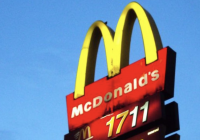
AI Sends Software Stocks Crashing, Investors Flee to McDonald's

Amid the 2026 market turmoil, AI's rapid advancements triggered a sell-off in software and tech stocks, as each new AI capability—from automating workflows to rewriting legacy systems—threatened entire sectors. Investors, fearing AI's disruptive power, flocked to "HALO" stocks (Heavy Assets, Low Obsolescence)—companies like McDonald’s, Walmart, and ExxonMobil—whose physical products (e.g., burgers, oil) are immune to AI disruption. This shift reversed Wall Street’s long-standing preference for asset-light tech firms, with energy, materials, and consumer staples outperforming. Ironically, AI giants themselves are becoming capital-intensive, investing heavily in infrastructure like data centers. While U.S. markets panic about AI’s threats, China focuses on its opportunities, with investors bullish on AI applications and firms like Tencent and Alibaba. During the Spring Festival, Chinese tech companies spent billions promoting AI services, integrating them into daily life. The divergence stems from valuation differences and market maturity: U.S. tech was overvalued and vulnerable, while Chinese tech, emerging from a slump, sees AI as a growth driver. The author cautions that the fear-driven rush to HALO stocks may be an overreaction, as history shows technology rarely destroys resilient industries—instead, it forces adaptation. The real risk lies in poorly positioned companies, not AI itself. The key question isn’t whether AI will disrupt, but whether a company can harness it as a tool rather than succumb to it.

比推35 min fa

AI Sends Software Stocks Crashing, Investors Flee to McDonald's

比推35 min fa

Trading

Spot
Futures

Articoli Popolari

Come comprare ZRO

Benvenuto in HTX.com! Abbiamo reso l'acquisto di LayerZero (ZRO) semplice e conveniente. Segui la nostra guida passo passo per intraprendere il tuo viaggio nel mondo delle criptovalute.Step 1: Crea il tuo Account HTXUsa la tua email o numero di telefono per registrarti il tuo account gratuito su HTX. Vivi un'esperienza facile e sblocca tutte le funzionalità,Crea il mio accountStep 2: Vai in Acquista crypto e seleziona il tuo metodo di pagamentoCarta di credito/debito: utilizza la tua Visa o Mastercard per acquistare immediatamente LayerZeroZRO.Bilancio: Usa i fondi dal bilancio del tuo account HTX per fare trading senza problemi.Terze parti: abbiamo aggiunto metodi di pagamento molto utilizzati come Google Pay e Apple Pay per maggiore comodità.P2P: Fai trading direttamente con altri utenti HTX.Over-the-Counter (OTC): Offriamo servizi su misura e tassi di cambio competitivi per i trader.Step 3: Conserva LayerZero (ZRO)Dopo aver acquistato LayerZero (ZRO), conserva nel tuo account HTX. In alternativa, puoi inviare tramite trasferimento blockchain o scambiare per altre criptovalute.Step 4: Scambia LayerZero (ZRO)Scambia facilmente LayerZero (ZRO) nel mercato spot di HTX. Accedi al tuo account, seleziona la tua coppia di trading, esegui le tue operazioni e monitora in tempo reale. Offriamo un'esperienza user-friendly sia per chi ha appena iniziato che per i trader più esperti.

109 Totale visualizzazioniPubblicato il 2024.12.10Aggiornato il 2025.03.21

Come comprare ZRO

Discussioni

Benvenuto nella Community HTX. Qui puoi rimanere informato sugli ultimi sviluppi della piattaforma e accedere ad approfondimenti esperti sul mercato. Le opinioni degli utenti sul prezzo di ZRO ZRO sono presentate come di seguito.

活动图片