Ethereum Foundation to stake 70K ETH as network staking nears one-third of supply

ambcryptoPubblicato 2026-03-09Pubblicato ultima volta 2026-03-09

Introduzione

The Ethereum Foundation has announced plans to stake up to 70,000 ETH (worth approximately $140 million) from its treasury using infrastructure developed by Bitwise's Onchain Solutions unit. The staking initiative will begin with an initial deposit of 2,016 ETH. This development occurs as Ethereum's staking ecosystem continues to grow significantly, with 37.6 million ETH (30.2% of the circulating supply) now staked across over 1.17 million validators. Despite the high number of validators, staking remains concentrated among large providers, with Lido holding the largest market share at 22.9%. The Foundation will utilize Bitwise's open-source staking tools, including Dirk and Vouch, to enhance security and reduce single points of failure. By staking its ETH, the Foundation aims to generate recurring rewards (estimated at over 2,000 ETH annually at 3-4% yield) while supporting network security, marking an evolution in its treasury strategy.

The Ethereum Foundation has begun staking part of its treasury. According to an announcement from Bitwise Asset Management, the foundation plans to stake up to 70,000 ETH using infrastructure developed by Bitwise’s Onchain Solutions unit.

The initiative will begin with an initial deposit of 2,016 ETH, with additional allocations expected over time.

At current market prices, the full staking program represents roughly $140 million worth of ETH.

Ethereum staking surpasses 37M ETH

The development comes as Ethereum’s staking ecosystem continues to expand rapidly.

Recent data shows that approximately 37.6 million ETH is currently staked, representing about 30.2% of the total circulating supply. The network now supports more than 1.17 million validators, reflecting the scale of participation in Ethereum’s proof-of-stake system.

These figures highlight how staking has become a core component of Ethereum’s economic model since the network transitioned to proof-of-stake in 2022.

As more ETH is locked in validator contracts, the freely circulating supply continues to decline.

Validator landscape dominated by large providers

Despite the growing number of validators, staking activity remains concentrated among several major providers.

Liquid staking protocol, Lido, currently holds the largest share of staked ETH. It controls about 22.9% of the staking market with more than 8.6 million ETH deposited.

Centralized exchanges such as Binance and Coinbase also rank among the largest staking operators, alongside restaking platforms like Ether.fi.

The concentration of stake among major operators has long been a point of discussion within the Ethereum community, particularly regarding decentralization and validator diversity.

Bitwise infrastructure selected for staking operations

To support the treasury staking initiative, the Ethereum Foundation will deploy open-source software originally developed by Attestant, a staking infrastructure provider acquired by Bitwise in 2024.

The Dirk distributed signer allows validators to operate across multiple jurisdictions while eliminating single points of failure.

Meanwhile, Vouch enables operators to run multiple validator clients simultaneously, helping reduce the risk of network-wide outages linked to software monocultures.

Bitwise executives described the foundation’s adoption of the tools as validation of the infrastructure’s security and resilience.

Treasury strategy evolves

The move also signals an evolving treasury strategy for the Ethereum Foundation, which historically relied on grants, ecosystem funding, and periodic asset sales to support development.

By staking a portion of its ETH reserves, the foundation can generate recurring staking rewards while continuing to contribute to network security.

At typical Ethereum staking yields of roughly 3–4% annually, a 70,000 ETH allocation could generate over 2,000 ETH in yearly rewards, depending on network conditions.


Final Summary

  • The Ethereum Foundation has begun staking its treasury, with plans to deploy up to 70,000 ETH using Bitwise-developed infrastructure tools.
  • The move comes as Ethereum staking surpasses 37 million ETH, with roughly 30% of the network’s supply now locked in validator contracts.

Letture associate

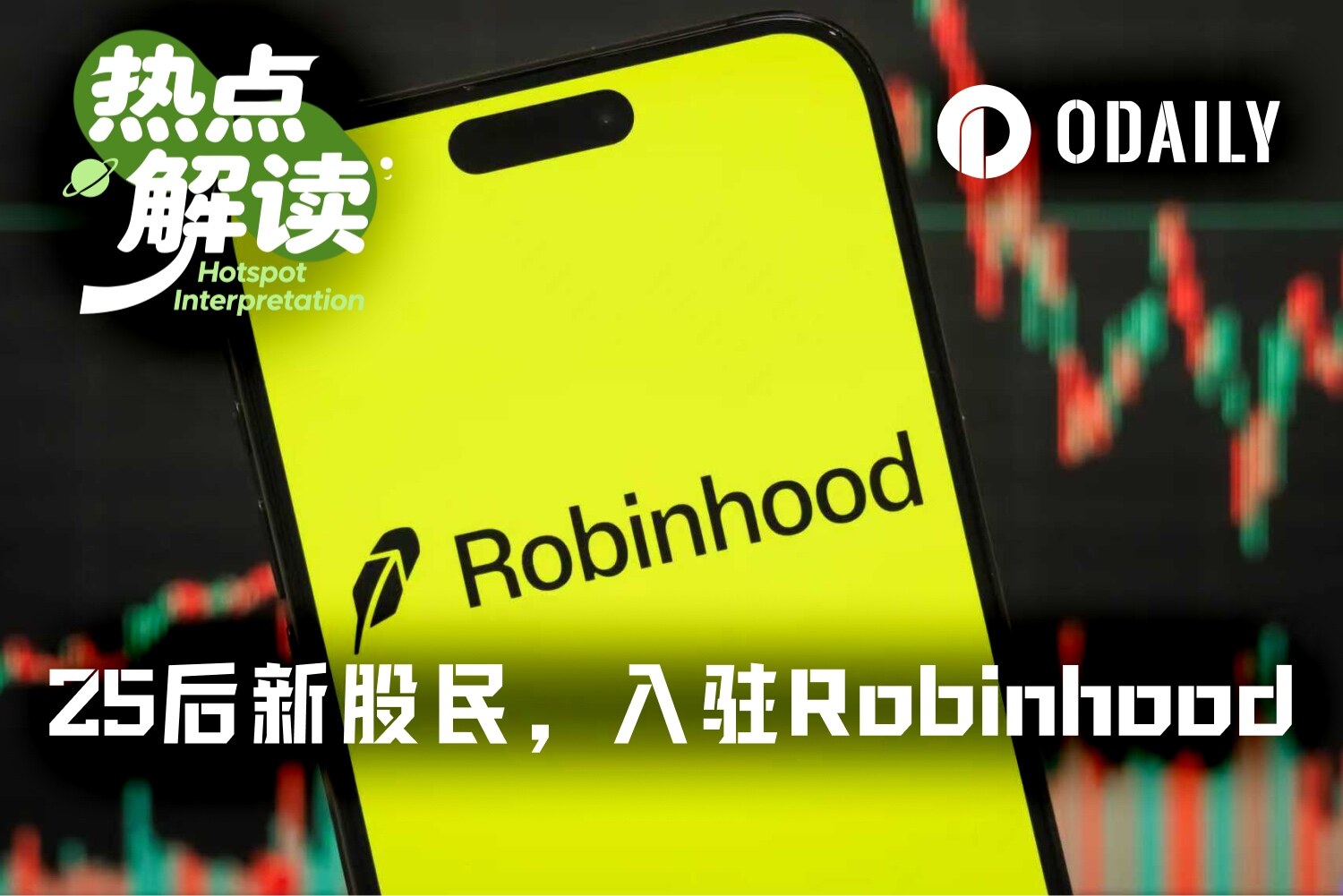
Robinhood Gains a New Batch of Stock Investors, the Oldest is 1 Year Old, the Youngest is -3 Years Old

US Treasury designates Robinhood as broker and initial trustee for "Trump Accounts" (also known as 530A accounts), a tax-advantaged investment program established under the "Big and Beautiful" Act. The initiative, aimed at children born between January 1, 2025, and January 1, 2029, provides each eligible newborn with a $1,000 initial federal deposit. Private donors, such as Michael Dell, have also contributed significantly. The accounts are restricted to low-cost index funds tracking broad market indices like the S&P 500, and funds are locked until the child turns 18. With an estimated 14.4 million children eligible, the program represents a potential $14.4 billion in initial government funding, growing to hundreds of billions with private and family contributions. This creates a long-term, passive investment pool of potentially trillions of dollars. Robinhood, selected over competitors like JPMorgan and Charles Schwab, stands to be a major beneficiary. The deal grants the platform millions of new, long-lifecycle users—the oldest are one year old, the youngest are yet to be born—who are effectively locked into its ecosystem. Upon turning 18, these accounts convert to IRA-like retirement accounts, allowing Robinhood to capture their adult investing activity. The stable, long-term, and predictable nature of these assets also diversifies Robinhood's business beyond its reliance on active retail trading. The government endorsement significantly boosts its institutional credibility and opens new avenues in wealth management.

Odaily星球日报1 min fa

Robinhood Gains a New Batch of Stock Investors, the Oldest is 1 Year Old, the Youngest is -3 Years Old

Odaily星球日报1 min fa

AI, Why Does It Also Need to Sleep?

Anthropic's accidental leak of Claude Code's source code in 2026 revealed an experimental feature called "autoDream," part of the KAIROS system, which gives AI a sleep-like cycle. Unlike the prevailing AI agent paradigm of continuous, uninterrupted operation, autoDream operates offline when users are inactive. It processes and consolidates daily logs—resolving contradictions, converting vague observations into facts, and discarding redundant information—while avoiding the accumulation of noise in the limited context window, a phenomenon known as "context corruption." This mirrors human brain function: the hippocampus temporarily stores daily experiences, and during rest, the brain prioritizes and transfers important memories to the neocortex through processes like active systems consolidation. Both systems must go offline to perform memory maintenance, as simultaneous processing and consolidation compete for resources. autoDream differs in one key aspect: it labels its outputs as "hints" rather than definitive truths, requiring verification upon use—a cautious approach unlike human memory, which often constructs narratives with high confidence. The emergence of this sleep-like mechanism suggests that, beyond mere biological imitation, intelligent systems may inherently require periodic rest to maintain coherence and performance. It challenges the assumption that more power and continuous operation always lead to greater intelligence, pointing instead to the necessity of rhythmic cycles in advanced cognition.

marsbit1 h fa

AI, Why Does It Also Need to Sleep?

marsbit1 h fa

Trading

Spot
Futures

Articoli Popolari

Come comprare ONE

Benvenuto in HTX.com! Abbiamo reso l'acquisto di Harmony (ONE) semplice e conveniente. Segui la nostra guida passo passo per intraprendere il tuo viaggio nel mondo delle criptovalute.Step 1: Crea il tuo Account HTXUsa la tua email o numero di telefono per registrarti il tuo account gratuito su HTX. Vivi un'esperienza facile e sblocca tutte le funzionalità,Crea il mio accountStep 2: Vai in Acquista crypto e seleziona il tuo metodo di pagamentoCarta di credito/debito: utilizza la tua Visa o Mastercard per acquistare immediatamente HarmonyONE.Bilancio: Usa i fondi dal bilancio del tuo account HTX per fare trading senza problemi.Terze parti: abbiamo aggiunto metodi di pagamento molto utilizzati come Google Pay e Apple Pay per maggiore comodità.P2P: Fai trading direttamente con altri utenti HTX.Over-the-Counter (OTC): Offriamo servizi su misura e tassi di cambio competitivi per i trader.Step 3: Conserva Harmony (ONE)Dopo aver acquistato Harmony (ONE), conserva nel tuo account HTX. In alternativa, puoi inviare tramite trasferimento blockchain o scambiare per altre criptovalute.Step 4: Scambia Harmony (ONE)Scambia facilmente Harmony (ONE) nel mercato spot di HTX. Accedi al tuo account, seleziona la tua coppia di trading, esegui le tue operazioni e monitora in tempo reale. Offriamo un'esperienza user-friendly sia per chi ha appena iniziato che per i trader più esperti.

206 Totale visualizzazioniPubblicato il 2024.12.12Aggiornato il 2025.03.21

Come comprare ONE

Discussioni

Benvenuto nella Community HTX. Qui puoi rimanere informato sugli ultimi sviluppi della piattaforma e accedere ad approfondimenti esperti sul mercato. Le opinioni degli utenti sul prezzo di ONE ONE sono presentate come di seguito.

活动图片