DeepSeek's Next Battlefield: The War Quietly Begins in This Fifth-Tier City

marsbitPubblicato 2026-08-11Pubblicato ultima volta 2026-08-11

Introduzione

DeepSeek and other major AI players are quietly shifting their battle for supremacy to the infrastructure front, with Wulanchabu, a small city in Inner Mongolia, emerging as a key battleground. The article details a visit to the massive data center clusters there, highlighting the industry's pivot from a light-asset model of renting computing power to a strategic race to build and control foundational AI infrastructure. Wulanchabu's advantages—low electricity costs (around ¥0.32-0.35 per kWh, 90% green energy), cool climate, and proximity to Beijing—have made it China's largest AI computing cluster. Companies like Alibaba Cloud are deploying modular, prefabricated data center "cabins" that can be assembled on-site in as little as 100 days, dramatically accelerating deployment compared to traditional multi-year construction. This "new Foxconn" model standardizes components for mass production. The drive for efficiency is paramount. Alibaba’s latest architecture flattens design, integrating power distribution, backup batteries, and liquid-cooled server racks into single modules. The ultimate bottleneck is power. As AI training and, increasingly, inference demand skyrocket, electricity cost and availability become decisive competitive factors. The industry faces the challenge of aligning fast-paced computing demand with slower power grid planning. DeepSeek's significant investment in building its own computing center in Wulanchabu underscores this trend: securing large-scale,...

After passing through multiple security checks and having phone camera lenses covered with privacy film, Phoenix Network Technology entered this data center located in Ulanqab, Inner Mongolia. This facility supports the large-scale intelligent computing operations of cloud providers and AI companies, serving as a microcosm of China's AI industry's struggle for computing infrastructure.

Contrary to expectations of dusty scenes, a low, deep hum filled the air—the sound of chilled air roaring through the containerized modules. Orange-and-white massive box-like structures stood in orderly rows, awaiting the insertion of computing cards.

"It can be said that today, not a single card is idle. Delivery translates directly to productivity; faster delivery enables greater customer value," explained Wang Chaoyang, General Manager of Alibaba Cloud Global Data Centers, to us.

Since the beginning of this year, as AI newcomers like DeepSeek have announced plans to build or co-build their own data centers, the industry has been quietly shifting from the light-asset model of "renting space, buying computing power" towards gaining deeper control over the computing power foundation. The corporate logic has also evolved from simply purchasing cards to stockpiling strategic assets, with ten thousand or even a hundred thousand cards becoming the starting threshold.

Ulanqab has thus become a key battleground for AI giants vying for computing power dominance. From self-built data centers with self-developed equipment to modular "containerized" solutions achieving rapid 100-day delivery in leased facilities, a "new Foxconn" model for the AI era is emerging.

Visiting Ulanqab: What's Inside an Intelligent Computing Center?

Ulanqab, a grassland city in central Inner Mongolia with an annual average temperature of just 4.3 degrees Celsius, entered the AI industry's spotlight in mid-year following a recruitment notice from DeepSeek.

Historically known as the "Potato Capital of China," Ulanqab introduced Huawei in 2013 to build its first cloud data center as the mobile internet era dawned, officially kicking off the big data epoch. In the subsequent years, the rise and fall of the internet unfolded here silently in symbols unreadable by humans, with Huawei, Alibaba, Apple, Kuaishou, 21Vianet, and GDS successively establishing a presence.

According to local government data, by the end of 2025, Ulanqab had signed 84 data center projects, 81 of which are intelligent computing centers, with total investments exceeding 500 billion yuan.

In 2026, a new protagonist arrived. DeepSeek began large-scale recruitment for its intelligent computing center in Ulanqab, planning to build an ultra-large intelligent computing center with a total power capacity of 1 Gigawatt (GW) there, simultaneously hiring IDC design and planning engineers.

Following the industry's collective gaze, the veil was lifted on a massive intelligent computing center cluster originally hidden on the grasslands. Phoenix Network Technology also arrived in Ulanqab this August.

"One step west from Beijing, and you're in Ulanqab." Exiting the high-speed rail station, besides the refreshing cool air, eye-catching red promotional banners were visible.

Situated 350 km from Beijing, reachable by high-speed rail in under two hours, with network latency as low as 4 milliseconds, a cool climate year-round, strong winds, dry air, and located away from seismic zones... Most importantly, it's a "price trough" for electricity, with green power accounting for 90% of its supply and electricity prices at 0.32-0.35 yuan per kWh—hosting the same data center in Ulanqab could save 5 billion yuan in annual electricity costs compared to a neighboring city.

With these combined advantages, Ulanqab has become the nation's largest intelligent computing cluster, surpassing all Eastern Data to Western Computing nodes, transforming into a true "City of Tokens."

Alibaba Cloud's data center campus is also in Ulanqab. Here, there is not only a data center Alibaba built years ago but also a newly constructed 5.0 containerized data center delivered in just 100 days using modular design—the latter now handles 80% of Alibaba Cloud's intelligent computing business.

Left: The top of the Alibaba data center office building, featuring a 'Mongolian yurt'-style structure for insulation; Right: Exterior view of the data center.

Here, we discovered that data center construction isn't just about "building houses." Like DeepSeek hiring IDC design and planning engineers, it's full of intricacies. For instance, Alibaba's self-built 2.0 architecture data center in Ulanqab represents the pinnacle of the previous generation's technology. To save power, Alibaba trialed its self-developed Panama Power Supply here, drastically compressing the power transformation process. To conserve water, the data center employs a closed-loop system, even utilizing server-generated heat to warm equipment rooms in winter.

In the power distribution room, our guide explained, "In traditional data centers, the first floor is all infrastructure, with servers on the second. But in our new 5.0 architecture, everything has been 'flattened.'"

This "flattening" essentially means "transforming construction into manufacturing, replacing projects with products," Wang Chaoyang clarified. Everything from the 10kV medium-voltage power distribution and the self-developed Panama Power Supply to lithium battery backup and liquid-cooled IT cabinets is prefabricated inside the containers. On-site, it's merely about positioning the containers like Lego blocks and connecting the cables.

"In the past, building a data center required thousands of workers on site. Now, it's a team of cranes positioning the containers. Our record is from breaking ground on a new building to delivery in four and a half months." The guide revealed that while currently constrained by pulsed shortages of upstream raw materials and components—making the ideal 100-day timeline with "30 days of prefabrication" sometimes difficult to hit perfectly—the assembly phase has been optimized to the extreme.

DeepSeek Joins the Fray, Competing for Computing Infrastructure

In recent years, competition among large model companies has focused on algorithms, data, and model parameters.

But entering the era of ten-thousand or even hundred-thousand-card training, computing power has transformed from a "procured resource" into a strategic asset determining a company's survival.

DeepSeek's heavy investment is a microcosm of this trend. A harsh reality faces all AI race contenders: readily available computing power facilities on the market have long been snapped up. Traditional construction cycles of 12 months or more simply cannot keep pace with the exponential explosion in Token demand. In the context of an AI demand boom, whoever can more quickly secure a large-scale, high-density, low-cost, dedicated computing power foundation holds the ticket to the next round of competition.

Moreover, the rise of Agents has led to an explosive growth in inference demand as well. According to China's National Bureau of Statistics, the national daily Token call volume surpassed 140 trillion in March 2026. This necessitates an even larger scale of data center construction.

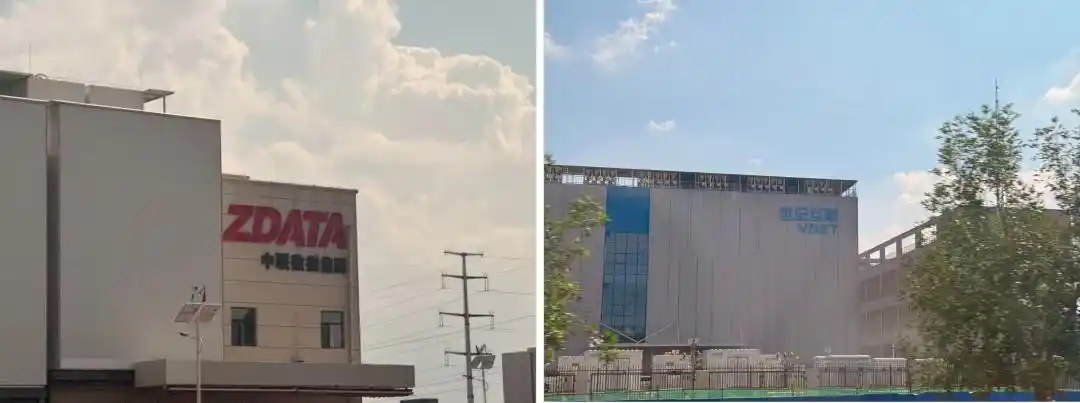
The massive Token demand has led to data centers springing up everywhere. Phoenix Network Technology witnessed numerous projects under construction in Ulanqab. In areas like Yiwutang, Bayin, and Chayou Qianqi, besides internet companies like Huawei, Kuaishou, and Alibaba, third-party data service providers like 21Vianet and Zhongjin Data occupy even larger plots.
How to make Tokens operate more efficiently has become a new competitive focus in the AI era.

Wang Chaoyang recalled significant internal opposition when the modular solution was first proposed, deemed too costly. "But once a product iterates and optimizes, costs will inevitably come down." Resistance persisted when seeking partners. "One partner disagreed, saying the cost was too high. Upon review, we found they had overestimated the cost per kilowatt by more than one-third. They later regretted it deeply; they had miscalculated." Wang stated that many partners have now fully accepted the approach.

What made him more aware of the industry shift was the reaction from competitors. "One of our biggest competitors spent three months internally learning it. Hearing we were developing the next architecture made them very nervous. Other partners are also asking when our new standard will be released." Not just domestically; overseas operators are following suit. In his view, this solution has evolved from Alibaba's own exploration into a path the industry is collectively adopting.

Alibaba Cloud has even more ambitious plans for data center construction—"to become the Foxconn of this industry." Through an ODM model, they aim for the supply chain to engage in large-scale manufacturing according to Alibaba's self-developed standards.

Inside the containers, even a power supply module is highly standardized. The guide used the on-site air conditioning as an example: "The market predominantly offers AC air conditioning, but AC to DC conversion incurs losses. Alibaba specifically commissioned a smaller manufacturer to customize DC air conditioning for this architecture." Wang Chaoyang later added that within this modular solution, "each module has undergone optimal debugging," and China's supply chain can fully keep up. "Wherever we want to build in a major base, these manufacturers are willing to follow us and set up local factories."

Wang Chaoyang emphasized that modularization is useless if not achieving over 90%. "If only 30% or 20% is modularized, it only solves part of the product issue. First, it doesn't address overall cost problems; second, it certainly doesn't solve overall delivery timeline issues." He also acknowledged the practical challenge of modularization: "once internally finalized, it's hard to change. Fortunately, we can now continuously iterate. Behind modularization must be versioning and standardization."

This capability to turn data centers into "standard products" could also stir the landscape of the US-China AI race. Wang Chaoyang further mentioned that China's manufacturing capacity is "frightening"; finding a few enterprises in Zhejiang can produce these containerized data centers. In contrast, facing widespread shortages of skilled labor overseas and delivery cycles stretching to 30 months, leveraging modular products from China's supply chain would present a crushing advantage. "When performance catches up with competitors, our Token cost will undoubtedly be at a killer level."

The Ultimate Limit of AI is Electricity

The ultimate limit of computing power is electricity. All efforts toward extreme efficiency and cost control ultimately point to electricity.

"For the same data center, locating it in Ulanqab versus a neighboring city can result in a 50 billion yuan difference in annual electricity costs," said Wang Chaoyang. When data center scales are over ten times larger than before, with single cabinet power heading towards 1000 kilowatts (equivalent to the heat emitted by over ten thousand people), electricity price becomes the sole critical factor besides chips.

However, cheap electricity isn't simply waited for. As AI enters the era of inference explosion, computing power demand presents a "two-way flow"—training workloads head west in a "three-level depth" pursuit of low-cost green power, while inference workloads move east in a "three-level下沉" (sinking) to be closer to economic hubs.

This encounters the current biggest pain point: computing-power-electricity coordination. Wang Chaoyang observed that many current so-called source-grid-load-storage initiatives are essentially for new energy consumption, not genuine computing power coordination. "Electricity delivery takes three to five years, but our computing power delivery is compressed to 100 days. When Tokens are experiencing quasi-exponential explosion, planning coordination is crucial."

Caption: Construction sites are everywhere.

He judges that the gap between current planned scale and actual demand is so significant that it will force the industry to develop explosive solutions within two years. "Power companies are excited but unsure how to participate. Future data centers cannot be rigid loads; they must become flexible, self-regulating systems, allowing computing power to adapt to electricity supply, achieving dynamic balance."

To find balance in water-scarce Inner Mongolia, Alibaba is also relentlessly tackling water usage. In Ulanqab, data centers exclusively use reclaimed water, with benchmark projects achieving a Water Usage Effectiveness (WUE) as low as 0.088, almost negligible water consumption. Wang Chaoyang admitted: "Using more water can save electricity, and low water pricing leads manufacturers to prefer water cooling. But when building ultra-large clusters, social costs must be considered, finding that微妙 (subtle)临界点 (critical point) between optimal cost and greenness."

From the "Potato Capital" to "China's Computing Power Capital," Ulanqab is witnessing a frenzied advance in computing infrastructure. As Alibaba Cloud and others transform data centers from "civil engineering projects" into "products" mass-producible on factory assembly lines, and as new players like DeepSeek also begin building their own computing power foundations along this path, a new paradigm for AI infrastructure, supported by Chinese manufacturing, is emerging.

Inside those orange-and-white containers on the grasslands, Tokens are being produced 24/7. The next chapter of this computing power surge may well be the true arrival of AI普惠 (inclusiveness/accessibility) when these "Chinese solutions" flow globally along the supply chain.

This article is from the WeChat public account "Phoenix Network Technology," author: Phoenix Network Technology.


Crypto di tendenza

Domande pertinenti

QAccording to the article, why has Ulanqab become a key battleground for AI giants competing in computing power infrastructure?

AUlanqab has become a key battleground due to its combination of advantages: proximity to Beijing (350 km, ~2 hours by high-speed rail with 4ms latency), low average annual temperature (4.3°C), high green electricity ratio (90%), and extremely low electricity prices (0.32-0.35 RMB/kWh), saving up to 5 billion RMB in annual electricity costs compared to neighboring cities for similar data centers.

QWhat is the core innovation behind Alibaba Cloud's new 5.0 data center architecture described in the article?

AThe core innovation is the 'flattened' modular 'cabin' design. It transforms data center construction from an on-site engineering project into a factory-produced product. Prefabricated cabins containing medium-voltage power distribution, self-developed Panama power supplies, lithium battery backup, and liquid-cooled IT cabinets are delivered to the site. They are then simply hoisted into place and connected, drastically reducing construction time from years to a target of 100 days.

QWhat major shift in strategy for AI companies does the article highlight, using DeepSeek as an example?

AThe article highlights a strategic shift from a light-asset model of 'renting data center space and buying computing power' to deeply controlling the computing power infrastructure itself. Companies like DeepSeek are moving towards building or co-building their own large-scale data centers, treating computing power as a strategic asset to be stockpiled, with thresholds starting at tens of thousands or even hundreds of thousands of GPUs.

QWhat challenge related to power supply does Alibaba Cloud's Wang Zhaoyang identify for the future of large-scale AI computing clusters?

AHe identifies the challenge of 'computing-power coordination.' The delivery timeline for new power infrastructure is often 3-5 years, while modular data center delivery can be compressed to 100 days. This creates a significant planning gap as token demand grows explosively. He argues future data centers must evolve from being rigid power loads to becoming flexible, self-adaptive systems that dynamically balance computing tasks with the available power supply.

QWhat broader industry role does Alibaba Cloud envision for itself through its modular data center approach, according to the article?

AAlibaba Cloud envisions itself becoming the 'Foxconn of the industry.' It aims to use an ODM (Original Design Manufacturer) model, where the supply chain mass-produces data center modules according to Alibaba's self-developed standards. This 'productization' and standardization of data centers could leverage China's manufacturing capacity for a competitive advantage, potentially influencing the global AI infrastructure landscape.

Letture associate

Trading Volume Halved: Korea's Two Major Crypto Exchanges Launch Listing Wars

As South Korea's stock market cools from its peak summer performance, leading cryptocurrency exchanges Upbit and Bithumb are intensifying their competition to list new digital assets. Following a significant slump in crypto trading volume during the first half of 2025—with total volume across five major KRW-based exchanges falling nearly 50% year-on-year as capital flooded into equities—the two exchanges have sharply increased their listing pace since July. In just over a month, both Upbit and Bithumb have each added 17 new KRW-trading pairs, far exceeding their average of 6-10 listings per month earlier in the year. This acceleration coincides with a decline in the Korean Composite Stock Price Index's (KOSPI) daily trading volume and a reduction in the proportion of retail investor participation in stocks. Analysts suggest that with the stock market's "wealth effect" diminishing, crypto exchanges are now competing more aggressively for the limited attention and risk capital of local retail investors. The newly listed assets are already contributing significantly to trading activity on the platforms. On Upbit, for example, several coins listed since July now rank among its top-traded assets by volume, collectively accounting for nearly 20% of its 24-hour trading volume recently. However, this surge in new listings appears to be primarily redistracting existing capital within the shrunken crypto market rather than attracting substantial new inflows. Consequently, the strategies of the two dominant exchanges, which together control about 96% of the KRW crypto trading market, are becoming increasingly similar, with both rushing to list the same trending assets to prevent the other from capturing all available trading demand.

marsbit17 min fa

Trading Volume Halved: Korea's Two Major Crypto Exchanges Launch Listing Wars

marsbit17 min fa

Behind a 26-Year-Old Hong Kong Trader's $150 Million Loss: A South Korean Stock Market 'Great Escape'

In 2026, the South Korean stock market, propelled by the AI boom's demand for high-performance memory chips, witnessed a dramatic rally and subsequent crash, illustrating the perils of excessive leverage, structural market flaws, and retail investor frenzy. The initial surge was driven by soaring share prices of memory giants Samsung Electronics and SK Hynix. This "once-in-a-lifetime" wealth creation story captivated local Korean retail investors, many of whom invested heavily using leverage, and attracted global capital through products like Hong Kong-listed leveraged ETFs. However, the market's heavy reliance on these two stocks and widespread leverage created systemic fragility. The turning point came in June 2026. A series of circuit-breaker halts triggered a vicious cycle of forced liquidations, leading to a steep market plunge. The collapse erased fortunes, leaving many leveraged retail investors in debt. It also exposed a high-profile case in Hong Kong where a 26-year-old trader, using unauthorized company funds and double leverage on a SK Hynix ETF, incurred massive losses of HKD 150 million. Analysis points to key factors behind the extreme volatility: the overwhelming dominance of two stocks in the KOSPI index, a culture of rampant retail leverage, and a fundamental mispricing where investors treated cyclical semiconductor stocks as perpetual growth stories. As the market entered a volatile consolidation phase, seasoned investors emphasized core risk management principles: avoiding leverage, understanding industry cycles, maintaining a margin of safety, and being wary of extreme market consensus. The episode serves as a stark reminder that high returns are inextricably linked to high risk, especially when amplified by leverage.

marsbit27 min fa

Behind a 26-Year-Old Hong Kong Trader's $150 Million Loss: A South Korean Stock Market 'Great Escape'

marsbit27 min fa

Trading

Spot

Articoli Popolari

Cosa è $S$

Comprendere SPERO: Una Panoramica Completa Introduzione a SPERO Mentre il panorama dell'innovazione continua a evolversi, l'emergere delle tecnologie web3 e dei progetti di criptovaluta gioca un ruolo fondamentale nel plasmare il futuro digitale. Un progetto che ha attirato l'attenzione in questo campo dinamico è SPERO, denotato come SPERO,$$s$. Questo articolo mira a raccogliere e presentare informazioni dettagliate su SPERO, per aiutare gli appassionati e gli investitori a comprendere le sue basi, obiettivi e innovazioni nei domini web3 e crypto. Che cos'è SPERO,$$s$? SPERO,$$s$ è un progetto unico all'interno dello spazio crypto che cerca di sfruttare i principi della decentralizzazione e della tecnologia blockchain per creare un ecosistema che promuove l'impegno, l'utilità e l'inclusione finanziaria. Il progetto è progettato per facilitare interazioni peer-to-peer in modi nuovi, fornendo agli utenti soluzioni e servizi finanziari innovativi. Al suo interno, SPERO,$$s$ mira a responsabilizzare gli individui fornendo strumenti e piattaforme che migliorano l'esperienza dell'utente nello spazio delle criptovalute. Questo include la possibilità di metodi di transazione più flessibili, la promozione di iniziative guidate dalla comunità e la creazione di percorsi per opportunità finanziarie attraverso applicazioni decentralizzate (dApps). La visione sottostante di SPERO,$$s$ ruota attorno all'inclusività, cercando di colmare le lacune all'interno della finanza tradizionale mentre sfrutta i vantaggi della tecnologia blockchain. Chi è il Creatore di SPERO,$$s$? L'identità del creatore di SPERO,$$s$ rimane piuttosto oscura, poiché ci sono risorse pubblicamente disponibili limitate che forniscono informazioni dettagliate sul suo fondatore o fondatori. Questa mancanza di trasparenza può derivare dall'impegno del progetto per la decentralizzazione—un ethos che molti progetti web3 condividono, dando priorità ai contributi collettivi rispetto al riconoscimento individuale. Centrando le discussioni attorno alla comunità e ai suoi obiettivi collettivi, SPERO,$$s$ incarna l'essenza dell'empowerment senza mettere in evidenza individui specifici. Pertanto, comprendere l'etica e la missione di SPERO rimane più importante che identificare un creatore singolo. Chi sono gli Investitori di SPERO,$$s$? SPERO,$$s$ è supportato da una varietà di investitori che vanno dai capitalisti di rischio agli investitori angelici dedicati a promuovere l'innovazione nel settore crypto. Il focus di questi investitori generalmente si allinea con la missione di SPERO—dando priorità a progetti che promettono avanzamenti tecnologici sociali, inclusività finanziaria e governance decentralizzata. Queste fondazioni di investitori sono tipicamente interessate a progetti che non solo offrono prodotti innovativi, ma contribuiscono anche positivamente alla comunità blockchain e ai suoi ecosistemi. Il supporto di questi investitori rafforza SPERO,$$s$ come un concorrente degno di nota nel dominio in rapida evoluzione dei progetti crypto. Come Funziona SPERO,$$s$? SPERO,$$s$ impiega un framework multifunzionale che lo distingue dai progetti di criptovaluta convenzionali. Ecco alcune delle caratteristiche chiave che sottolineano la sua unicità e innovazione: Governance Decentralizzata: SPERO,$$s$ integra modelli di governance decentralizzati, responsabilizzando gli utenti a partecipare attivamente ai processi decisionali riguardanti il futuro del progetto. Questo approccio favorisce un senso di proprietà e responsabilità tra i membri della comunità. Utilità del Token: SPERO,$$s$ utilizza il proprio token di criptovaluta, progettato per servire varie funzioni all'interno dell'ecosistema. Questi token abilitano transazioni, premi e la facilitazione dei servizi offerti sulla piattaforma, migliorando l'impegno e l'utilità complessivi. Architettura Stratificata: L'architettura tecnica di SPERO,$$s$ supporta la modularità e la scalabilità, consentendo un'integrazione fluida di funzionalità e applicazioni aggiuntive man mano che il progetto evolve. Questa adattabilità è fondamentale per mantenere la rilevanza nel panorama crypto in continua evoluzione. Coinvolgimento della Comunità: Il progetto enfatizza iniziative guidate dalla comunità, impiegando meccanismi che incentivano la collaborazione e il feedback. Nutrendo una comunità forte, SPERO,$$s$ può affrontare meglio le esigenze degli utenti e adattarsi alle tendenze di mercato. Focus sull'Inclusione: Offrendo basse commissioni di transazione e interfacce user-friendly, SPERO,$$s$ mira ad attrarre una base utenti diversificata, inclusi individui che potrebbero non aver precedentemente interagito nello spazio crypto. Questo impegno per l'inclusione si allinea con la sua missione generale di empowerment attraverso l'accessibilità. Cronologia di SPERO,$$s$ Comprendere la storia di un progetto fornisce preziose intuizioni sulla sua traiettoria di sviluppo e sui traguardi. Di seguito è riportata una cronologia suggerita che mappa eventi significativi nell'evoluzione di SPERO,$$s$: Fase di Concettualizzazione e Ideazione: Le idee iniziali che formano la base di SPERO,$$s$ sono state concepite, allineandosi strettamente con i principi di decentralizzazione e focus sulla comunità all'interno dell'industria blockchain. Lancio del Whitepaper del Progetto: Dopo la fase concettuale, è stato rilasciato un whitepaper completo che dettaglia la visione, gli obiettivi e l'infrastruttura tecnologica di SPERO,$$s$ per suscitare interesse e feedback dalla comunità. Costruzione della Comunità e Prime Interazioni: Sono stati effettuati sforzi attivi di outreach per costruire una comunità di early adopters e potenziali investitori, facilitando discussioni attorno agli obiettivi del progetto e ottenendo supporto. Evento di Generazione del Token: SPERO,$$s$ ha condotto un evento di generazione del token (TGE) per distribuire i propri token nativi ai primi sostenitori e stabilire una liquidità iniziale all'interno dell'ecosistema. Lancio della Prima dApp: La prima applicazione decentralizzata (dApp) associata a SPERO,$$s$ è stata attivata, consentendo agli utenti di interagire con le funzionalità principali della piattaforma. Sviluppo Continuo e Partnership: Aggiornamenti e miglioramenti continui alle offerte del progetto, inclusi partnership strategiche con altri attori nello spazio blockchain, hanno plasmato SPERO,$$s$ in un concorrente competitivo e in evoluzione nel mercato crypto. Conclusione SPERO,$$s$ rappresenta una testimonianza del potenziale del web3 e delle criptovalute di rivoluzionare i sistemi finanziari e responsabilizzare gli individui. Con un impegno per la governance decentralizzata, il coinvolgimento della comunità e funzionalità progettate in modo innovativo, apre la strada verso un panorama finanziario più inclusivo. Come per qualsiasi investimento nello spazio crypto in rapida evoluzione, si incoraggiano potenziali investitori e utenti a ricercare approfonditamente e a impegnarsi in modo riflessivo con gli sviluppi in corso all'interno di SPERO,$$s$. Il progetto mostra lo spirito innovativo dell'industria crypto, invitando a ulteriori esplorazioni delle sue innumerevoli possibilità. Mentre il percorso di SPERO,$$s$ è ancora in fase di sviluppo, i suoi principi fondamentali potrebbero effettivamente influenzare il futuro di come interagiamo con la tecnologia, la finanza e tra di noi in ecosistemi digitali interconnessi.

331 Totale visualizzazioniPubblicato il 2024.12.17Aggiornato il 2024.12.17

Cosa è $S$

Cosa è AGENT S

Agent S: Il Futuro dell'Interazione Autonoma in Web3 Introduzione Nel panorama in continua evoluzione di Web3 e criptovalute, le innovazioni stanno costantemente ridefinendo il modo in cui gli individui interagiscono con le piattaforme digitali. Uno di questi progetti pionieristici, Agent S, promette di rivoluzionare l'interazione uomo-computer attraverso il suo framework agentico aperto. Aprendo la strada a interazioni autonome, Agent S mira a semplificare compiti complessi, offrendo applicazioni trasformative nell'intelligenza artificiale (AI). Questa esplorazione dettagliata approfondirà le complessità del progetto, le sue caratteristiche uniche e le implicazioni per il dominio delle criptovalute. Cos'è Agent S? Agent S si presenta come un innovativo framework agentico aperto, progettato specificamente per affrontare tre sfide fondamentali nell'automazione dei compiti informatici: Acquisizione di Conoscenze Specifiche del Dominio: Il framework apprende in modo intelligente da varie fonti di conoscenza esterne ed esperienze interne. Questo approccio duale gli consente di costruire un ricco repository di conoscenze specifiche del dominio, migliorando le sue prestazioni nell'esecuzione dei compiti. Pianificazione su Lungo Orizzonte di Compiti: Agent S impiega una pianificazione gerarchica potenziata dall'esperienza, un approccio strategico che facilita la suddivisione e l'esecuzione efficiente di compiti complessi. Questa caratteristica migliora significativamente la sua capacità di gestire più sottocompiti in modo efficiente ed efficace. Gestione di Interfacce Dinamiche e Non Uniformi: Il progetto introduce l'Interfaccia Agente-Computer (ACI), una soluzione innovativa che migliora l'interazione tra agenti e utenti. Utilizzando Modelli Linguistici Multimodali di Grandi Dimensioni (MLLM), Agent S può navigare e manipolare senza sforzo diverse interfacce grafiche utente. Attraverso queste caratteristiche pionieristiche, Agent S fornisce un framework robusto che affronta le complessità coinvolte nell'automazione dell'interazione umana con le macchine, preparando il terreno per innumerevoli applicazioni nell'AI e oltre. Chi è il Creatore di Agent S? Sebbene il concetto di Agent S sia fondamentalmente innovativo, informazioni specifiche sul suo creatore rimangono elusive. Il creatore è attualmente sconosciuto, il che evidenzia sia la fase embrionale del progetto sia la scelta strategica di mantenere i membri fondatori sotto anonimato. Indipendentemente dall'anonimato, l'attenzione rimane sulle capacità e sul potenziale del framework. Chi sono gli Investitori di Agent S? Poiché Agent S è relativamente nuovo nell'ecosistema crittografico, informazioni dettagliate riguardanti i suoi investitori e sostenitori finanziari non sono documentate esplicitamente. La mancanza di approfondimenti pubblicamente disponibili sulle fondazioni di investimento o sulle organizzazioni che supportano il progetto solleva interrogativi sulla sua struttura di finanziamento e sulla roadmap di sviluppo. Comprendere il supporto è cruciale per valutare la sostenibilità del progetto e il suo potenziale impatto sul mercato. Come Funziona Agent S? Al centro di Agent S si trova una tecnologia all'avanguardia che gli consente di funzionare efficacemente in contesti diversi. Il suo modello operativo è costruito attorno a diverse caratteristiche chiave: Interazione Uomo-Computer Simile a Quella Umana: Il framework offre una pianificazione AI avanzata, cercando di rendere le interazioni con i computer più intuitive. Mimando il comportamento umano nell'esecuzione dei compiti, promette di elevare le esperienze degli utenti. Memoria Narrativa: Utilizzata per sfruttare esperienze di alto livello, Agent S utilizza la memoria narrativa per tenere traccia delle storie dei compiti, migliorando così i suoi processi decisionali. Memoria Episodica: Questa caratteristica fornisce agli utenti una guida passo-passo, consentendo al framework di offrire supporto contestuale mentre i compiti si sviluppano. Supporto per OpenACI: Con la capacità di funzionare localmente, Agent S consente agli utenti di mantenere il controllo sulle proprie interazioni e flussi di lavoro, allineandosi con l'etica decentralizzata di Web3. Facile Integrazione con API Esterne: La sua versatilità e compatibilità con varie piattaforme AI garantiscono che Agent S possa adattarsi senza problemi agli ecosistemi tecnologici esistenti, rendendolo una scelta attraente per sviluppatori e organizzazioni. Queste funzionalità contribuiscono collettivamente alla posizione unica di Agent S all'interno dello spazio crittografico, poiché automatizza compiti complessi e multi-fase con un intervento umano minimo. Man mano che il progetto evolve, le sue potenziali applicazioni in Web3 potrebbero ridefinire il modo in cui si svolgono le interazioni digitali. Cronologia di Agent S Lo sviluppo e le tappe di Agent S possono essere riassunti in una cronologia che evidenzia i suoi eventi significativi: 27 Settembre 2024: Il concetto di Agent S è stato lanciato in un documento di ricerca completo intitolato “Un Framework Agentico Aperto che Usa i Computer Come un Umano”, mostrando le basi per il progetto. 10 Ottobre 2024: Il documento di ricerca è stato reso pubblicamente disponibile su arXiv, offrendo un'esplorazione approfondita del framework e della sua valutazione delle prestazioni basata sul benchmark OSWorld. 12 Ottobre 2024: È stata rilasciata una presentazione video, fornendo un'idea visiva delle capacità e delle caratteristiche di Agent S, coinvolgendo ulteriormente potenziali utenti e investitori. Questi indicatori nella cronologia non solo illustrano i progressi di Agent S, ma indicano anche il suo impegno per la trasparenza e il coinvolgimento della comunità. Punti Chiave su Agent S Man mano che il framework Agent S continua a evolversi, diversi attributi chiave si distinguono, sottolineando la sua natura innovativa e il potenziale: Framework Innovativo: Progettato per fornire un uso intuitivo dei computer simile all'interazione umana, Agent S porta un approccio nuovo all'automazione dei compiti. Interazione Autonoma: La capacità di interagire autonomamente con i computer attraverso GUI segna un passo avanti verso soluzioni informatiche più intelligenti ed efficienti. Automazione di Compiti Complessi: Con la sua metodologia robusta, può automatizzare compiti complessi e multi-fase, rendendo i processi più veloci e meno soggetti a errori. Miglioramento Continuo: I meccanismi di apprendimento consentono ad Agent S di migliorare dalle esperienze passate, migliorando continuamente le sue prestazioni e la sua efficacia. Versatilità: La sua adattabilità attraverso diversi ambienti operativi come OSWorld e WindowsAgentArena garantisce che possa servire un'ampia gamma di applicazioni. Man mano che Agent S si posiziona nel panorama di Web3 e delle criptovalute, il suo potenziale per migliorare le capacità di interazione e automatizzare i processi segna un significativo avanzamento nelle tecnologie AI. Attraverso il suo framework innovativo, Agent S esemplifica il futuro delle interazioni digitali, promettendo un'esperienza più fluida ed efficiente per gli utenti in vari settori. Conclusione Agent S rappresenta un audace passo avanti nell'unione tra AI e Web3, con la capacità di ridefinire il modo in cui interagiamo con la tecnologia. Sebbene sia ancora nelle sue fasi iniziali, le possibilità per la sua applicazione sono vaste e coinvolgenti. Attraverso il suo framework completo che affronta sfide critiche, Agent S mira a portare le interazioni autonome al centro dell'esperienza digitale. Man mano che ci addentriamo nei regni delle criptovalute e della decentralizzazione, progetti come Agent S giocheranno senza dubbio un ruolo cruciale nel plasmare il futuro della tecnologia e della collaborazione uomo-computer.

765 Totale visualizzazioniPubblicato il 2025.01.14Aggiornato il 2025.01.14

Cosa è AGENT S

Come comprare S

Benvenuto in HTX.com! Abbiamo reso l'acquisto di Sonic (S) semplice e conveniente. Segui la nostra guida passo passo per intraprendere il tuo viaggio nel mondo delle criptovalute.Step 1: Crea il tuo Account HTXUsa la tua email o numero di telefono per registrarti il tuo account gratuito su HTX. Vivi un'esperienza facile e sblocca tutte le funzionalità,Crea il mio accountStep 2: Vai in Acquista crypto e seleziona il tuo metodo di pagamentoCarta di credito/debito: utilizza la tua Visa o Mastercard per acquistare immediatamente SonicS.Bilancio: Usa i fondi dal bilancio del tuo account HTX per fare trading senza problemi.Terze parti: abbiamo aggiunto metodi di pagamento molto utilizzati come Google Pay e Apple Pay per maggiore comodità.P2P: Fai trading direttamente con altri utenti HTX.Over-the-Counter (OTC): Offriamo servizi su misura e tassi di cambio competitivi per i trader.Step 3: Conserva Sonic (S)Dopo aver acquistato Sonic (S), conserva nel tuo account HTX. In alternativa, puoi inviare tramite trasferimento blockchain o scambiare per altre criptovalute.Step 4: Scambia Sonic (S)Scambia facilmente Sonic (S) nel mercato spot di HTX. Accedi al tuo account, seleziona la tua coppia di trading, esegui le tue operazioni e monitora in tempo reale. Offriamo un'esperienza user-friendly sia per chi ha appena iniziato che per i trader più esperti.

1.5k Totale visualizzazioniPubblicato il 2025.01.15Aggiornato il 2026.06.02

Come comprare S

Discussioni

Benvenuto nella Community HTX. Qui puoi rimanere informato sugli ultimi sviluppi della piattaforma e accedere ad approfondimenti esperti sul mercato. Le opinioni degli utenti sul prezzo di S S sono presentate come di seguito.

活动图片