YZi Labs Invests of Tens of Millions, CZ as Advisor: How to Earn Genius Points?

Odaily星球日报Pubblicato 2026-01-14Pubblicato ultima volta 2026-01-14

Introduzione

An article titled "YZi Labs Invests Tens of Millions, CZ as Advisor: How to Earn Genius Points?" reports on a major investment in the decentralized exchange Genius. YZi Labs has invested tens of millions of dollars, and former Binance CEO CZ will serve as an advisor. Genius is a privacy-focused DEX supporting spot, perpetual contracts, and copy trading across over 10 blockchains, including BNB Chain and Solana. It aims to offer a CEX-like experience with self-custody and has processed over $60 million in testnet volume. CZ and Genius's team clarified that Genius is not a direct competitor to Aster, another YZi Labs portfolio project, but rather a trading terminal that enables cross-chain token access with privacy features. The article provides a step-by-step guide for users to interact with the platform and earn GP points through trading and referrals. A recommended "low-cost points strategy" involves trading the USDC-USDT pair to minimize volatility impact, executing larger trades to reduce gas fee ratios, and spinning a daily bonus wheel after reaching $10,000 in trading volume. Users can also earn additional rewards through referrals and social tasks. The platform is currently in a test phase, with a public testnet for its privacy protocol planned for Q2 2026.

Original | Odaily Planet Daily (@OdailyChina)

Author | Asher (@Asher_ 0210)
Last night, a blockbuster news rocked the community—YZi Labs has invested "tens of millions of dollars" in DEX Genius, and CZ will also personally join as an advisor.

Odaily Planet Daily is here to give you the first look at Genius, a step-by-step guide to interacting with Genius, and the current interaction strategy based on personal testing.

Project Introduction
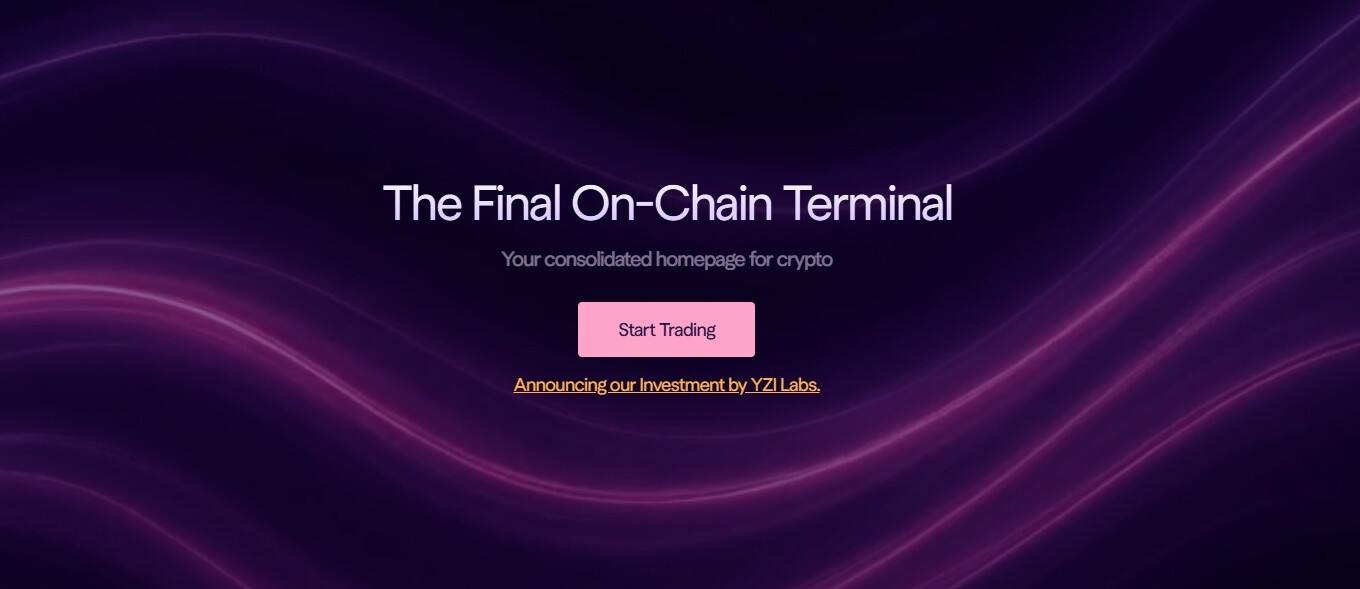
Genius is a privacy-centric decentralized exchange (DEX) offering spot, perpetual contracts, and copy trading, supporting over 10 public chains including BNB Chain and Solana. Its goal is to become an on-chain alternative to Binance—bringing the speed, liquidity, and privacy experience of a CEX on-chain while remaining fully self-custodial and non-custodial (users hold their private keys). The platform has already processed over $60 million in trading volume during its testing phase and plans to launch a public test of its privacy protocol in Q2 2026. Back in October 2024, Genius announced the completion of a $6 million seed funding round led by CMCC Global, with participation from Cadenza Ventures, AVA Labs, Arca, Flow Traders, and other institutions.

In response to the community's view that "YZi Labs' investment in Genius is bearish for Aster," CZ posted on X, stating, "Genius is a trading terminal connected to exchanges, not a competitor to Aster."

Additionally, Genius's CMO Ryan also addressed a similar question in the community—"What's the difference between Aster and Genius? Why would YZi Labs invest in another project doing Perp DEX?" Ryan stated, "I think both are important; Aster is a very important perpetual exchange. I believe YZi Labs' motivation for investing in Genius is to enable everyone to access any token on any chain (and soon, privately)."
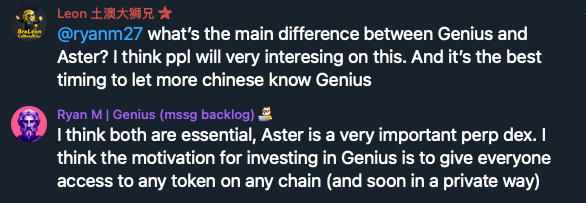
Genius CMO Ryan discusses the relationship between Aster and Genius

It's clear that both CZ and the Genius team believe Genius and Aster have different positioning and are not in direct competition.

Step-by-Step Guide

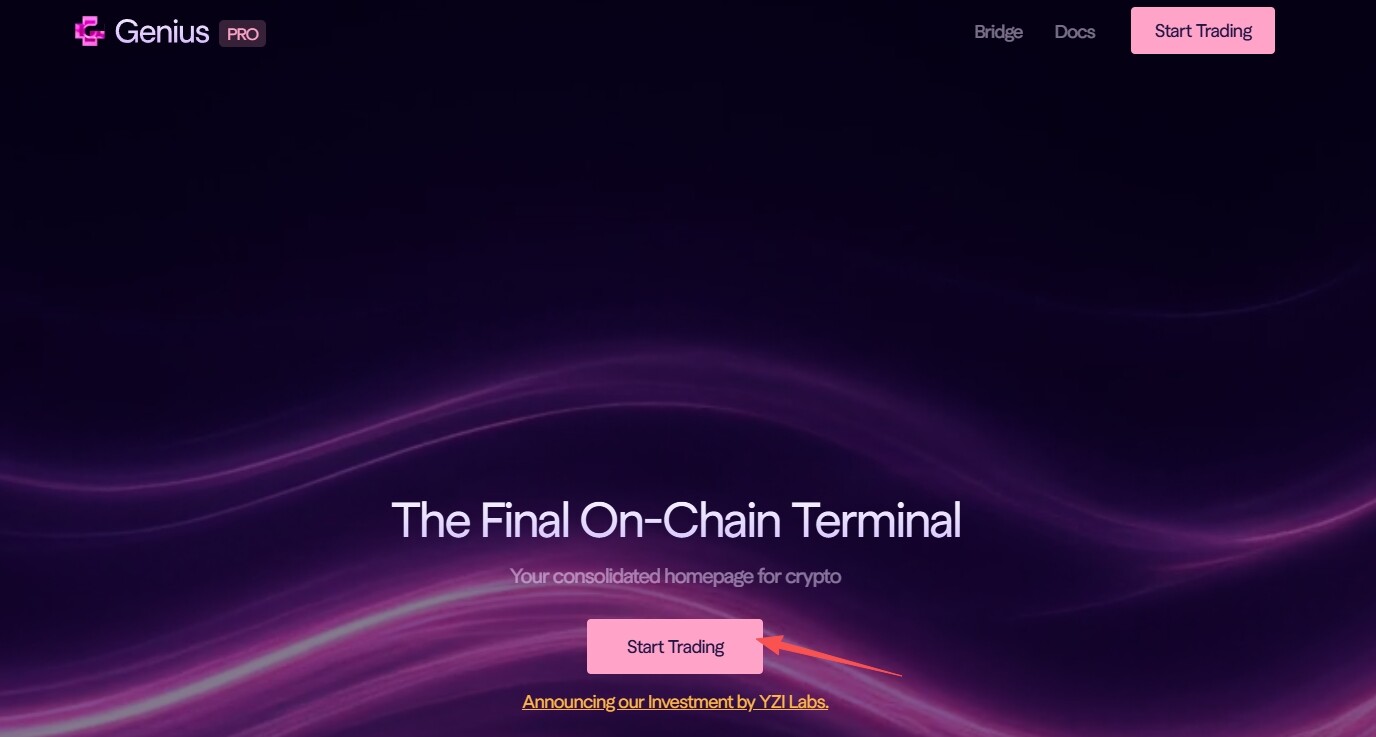
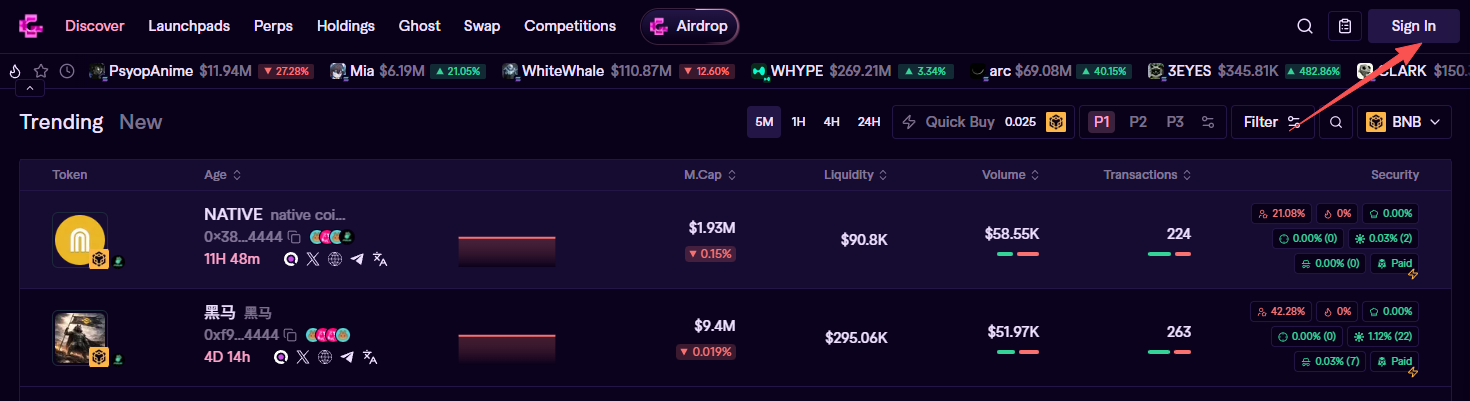
STEP 1. Go to the official website (Link: https://www.tradegenius.com/ref/NY8SYH). Using this referral link gives you 500 GP points. Click "Start Trading," then click "Sign In" at the top to log in with your wallet.
STEP 2. Click on "Airdrop" at the top to see your current GP points and personal referral link.
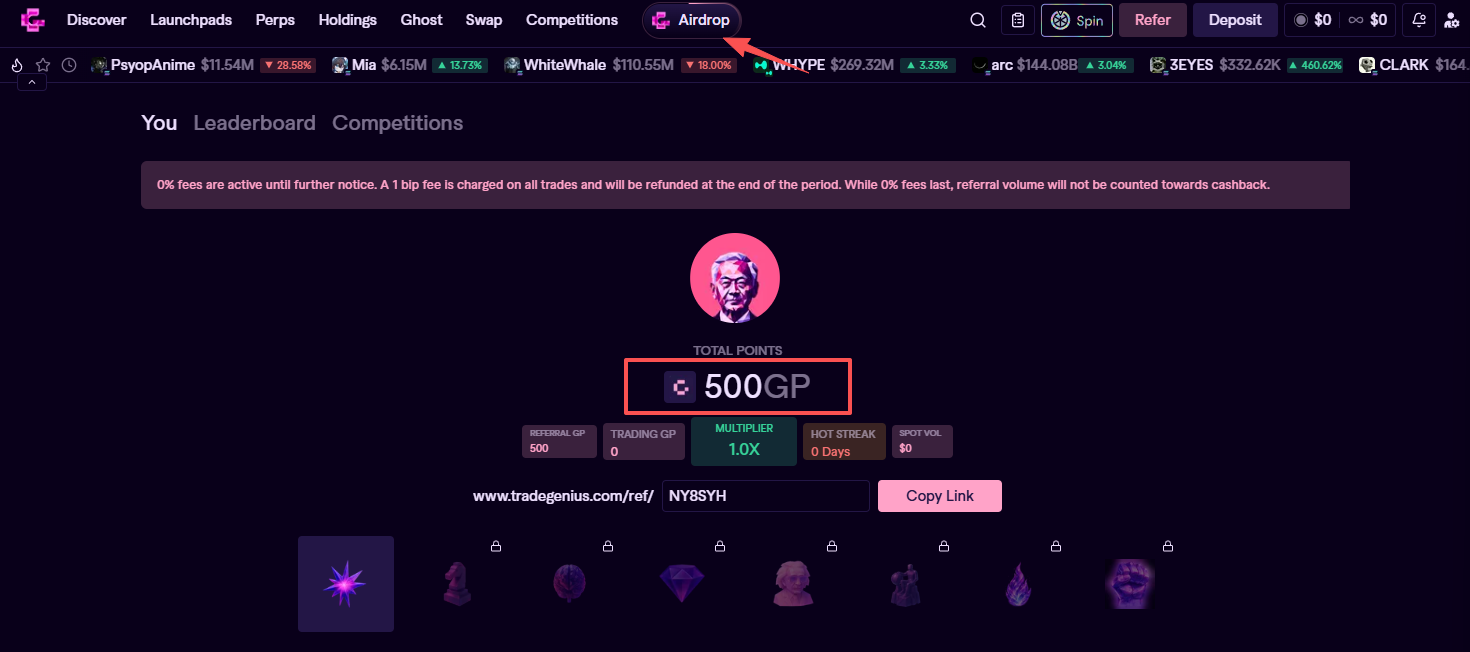
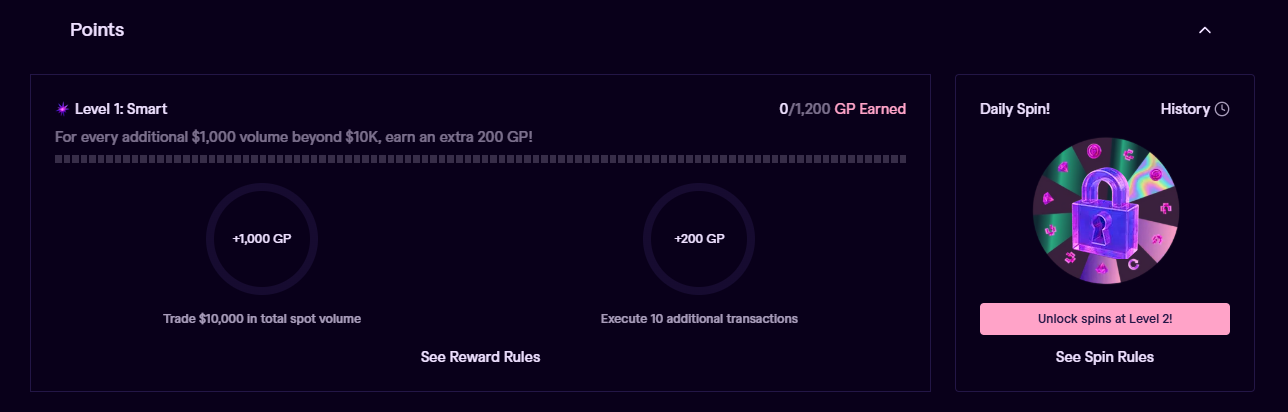
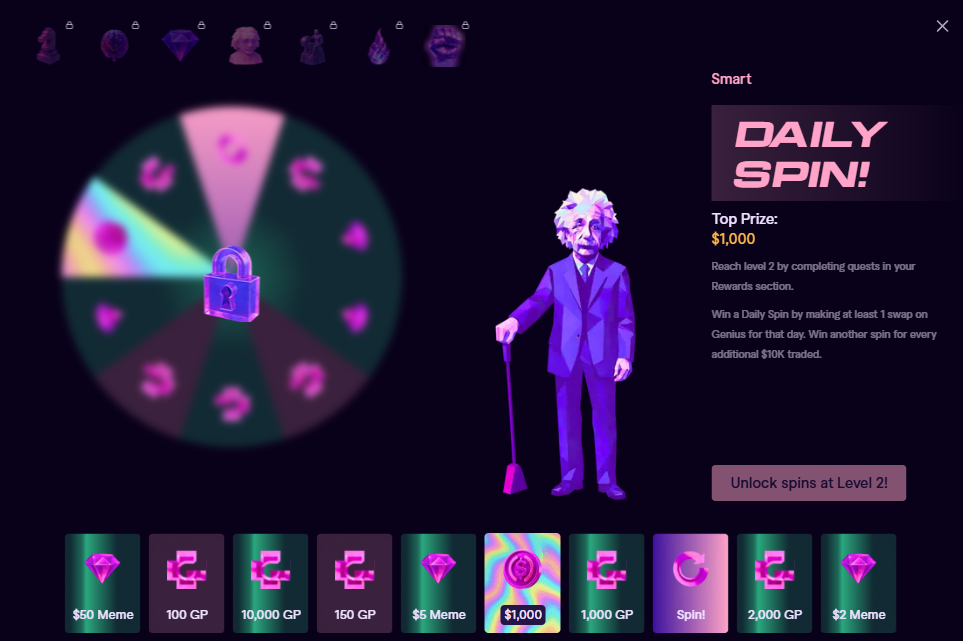
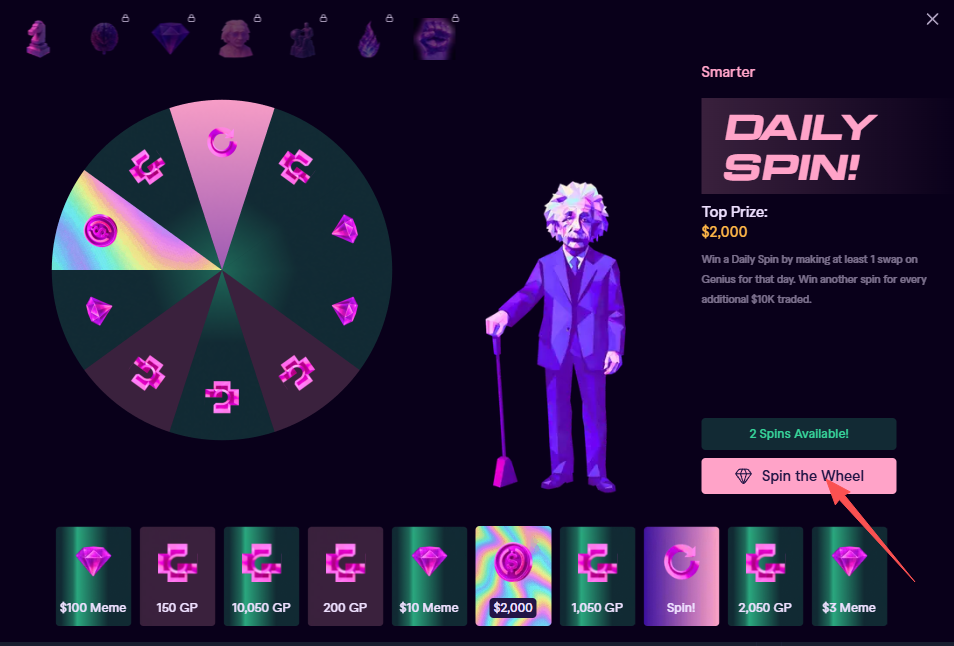
STEP 3. Under the "Airdrop" section, first is "Points." Accumulate $10,000 in trading volume to get 1200 GP points. After exceeding $10,000, every additional $1000 in trading volume earns 200 GP points. Additionally, trading at least once daily gives you one free spin on the wheel. Every additional $10,000 in trading volume grants an extra spin, with no upper limit.
Other rules for earning points through trading:

  • Users earn 1 GP point for every $100 in spot trading volume / $1000 in perpetual contract trading volume;
  • Trade consecutively for 7 days to earn a win streak multiplier (resets after one day without trading);
  • Base multiplier and win streak multiplier apply to user's spot and perpetual contract trading (referral points not included).
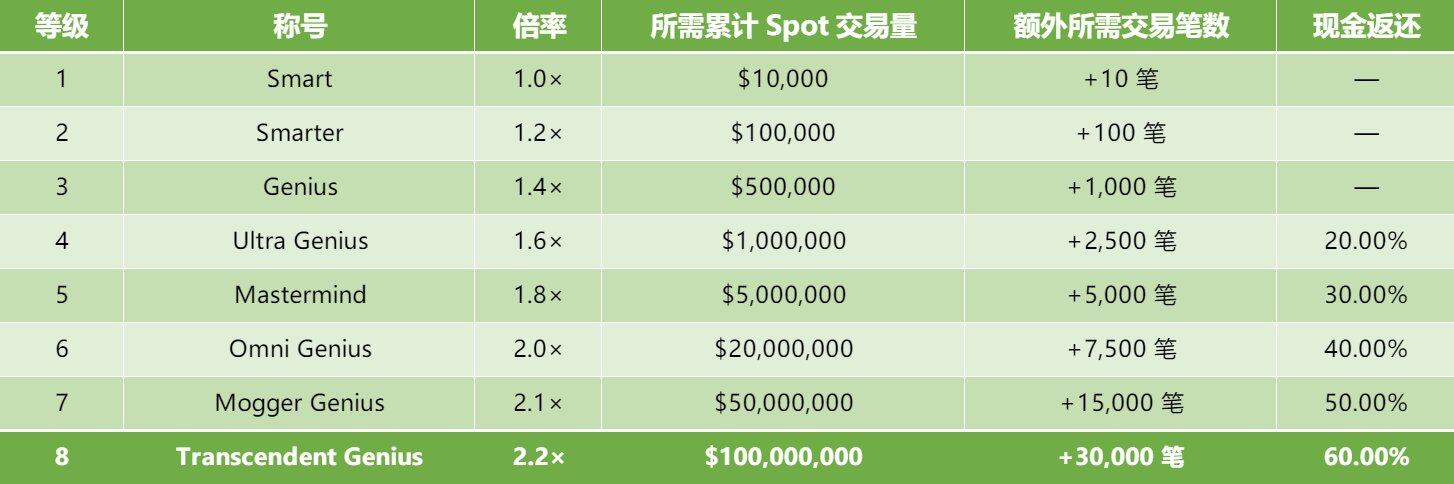
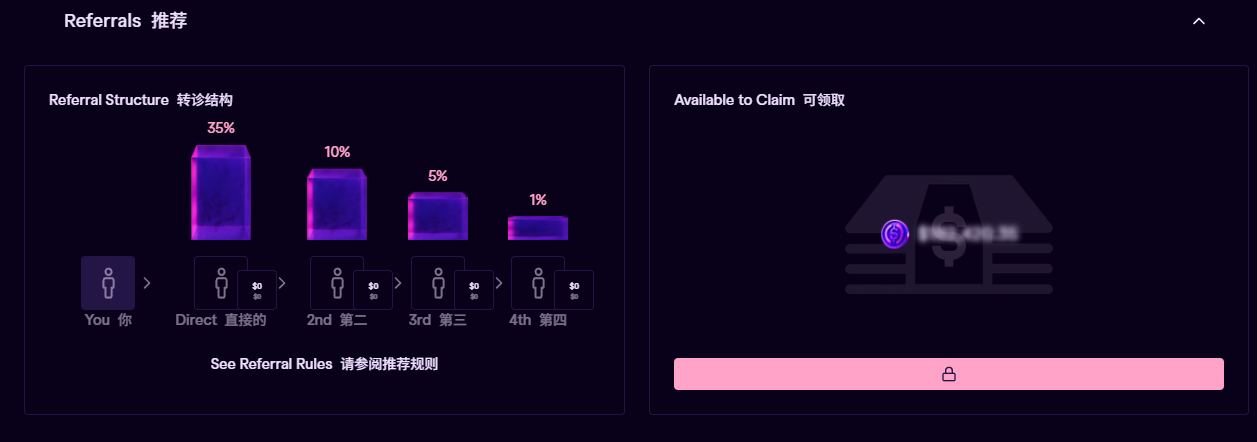
STEP 4. Under the "Airdrop" section, next is "Referrals." Invite friends to earn more GP points.
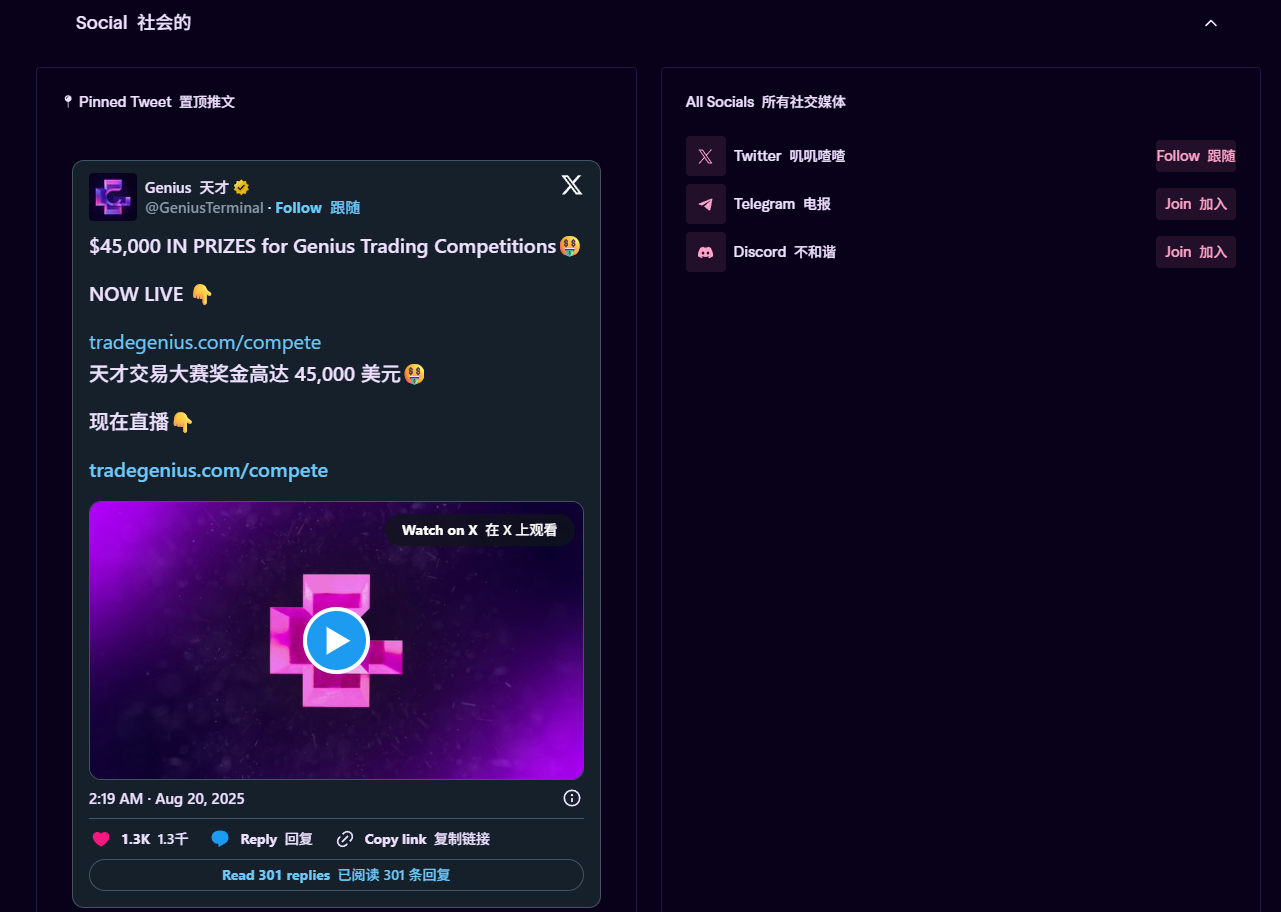
STEP 5. Under the "Airdrop" section, lastly is "Social" (the "Token Rewards" section is not yet open, skip for now), which contains official social media information.
STEP 6. Click on "Deposit" at the top. Supports deposits of EVM, Solana, and SUI assets. Official recommendation is to send ETH or USDC.

Current "Basic Income Points Earning" Strategy Sharing

Based on actual interaction, I've summarized a "basic income points earning" strategy. The specific operational思路 is as follows:

1、To minimize wear and tear from token price fluctuations, choose spot trading for USDC-USDT.
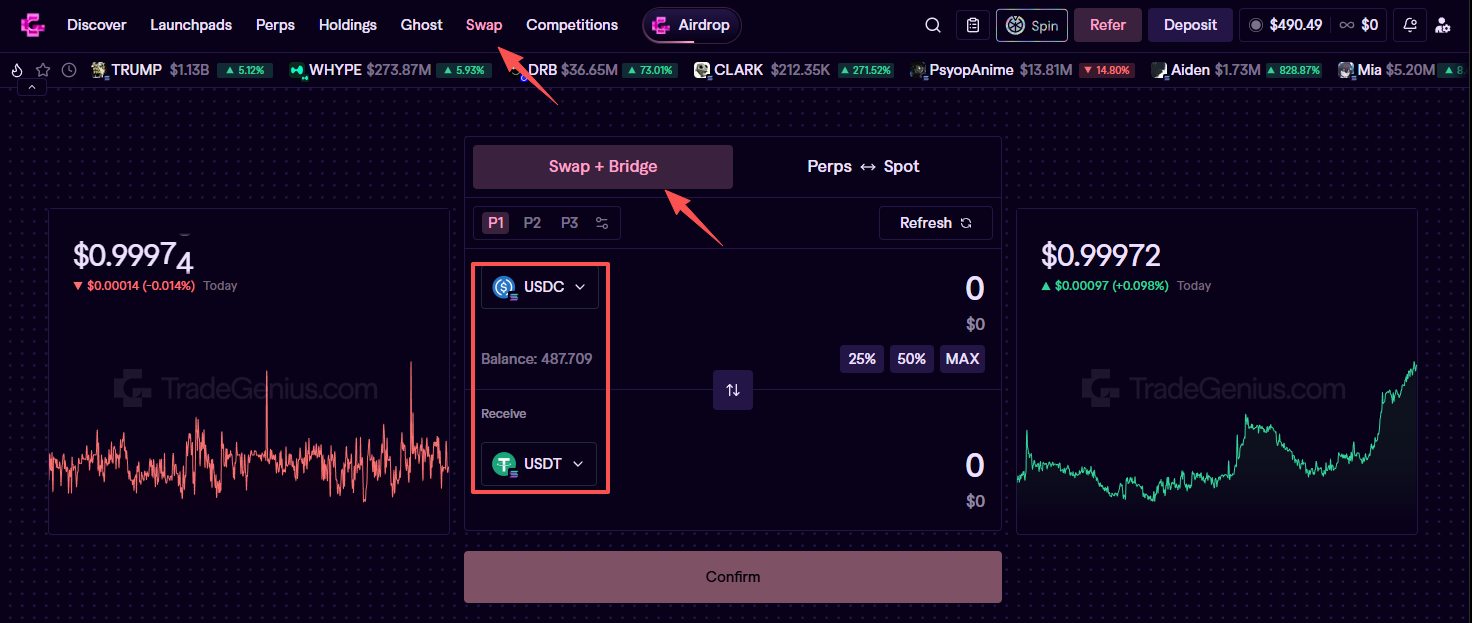
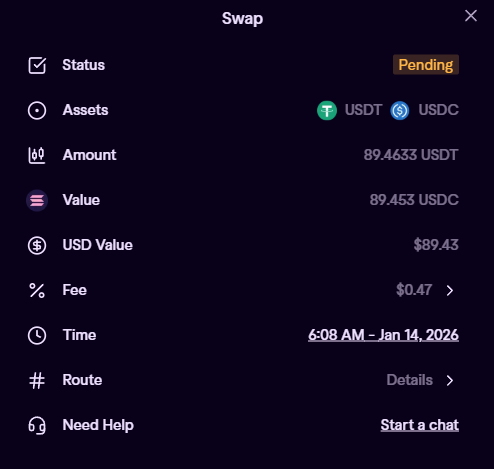
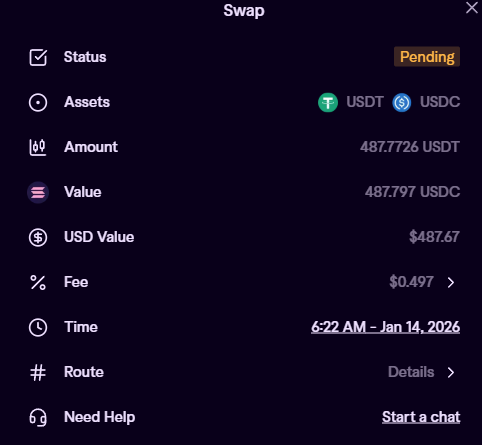
2、Try to make the single transaction amount larger. The Gas fee paid for a test transaction of $400 and $100 is almost the same, as shown below.
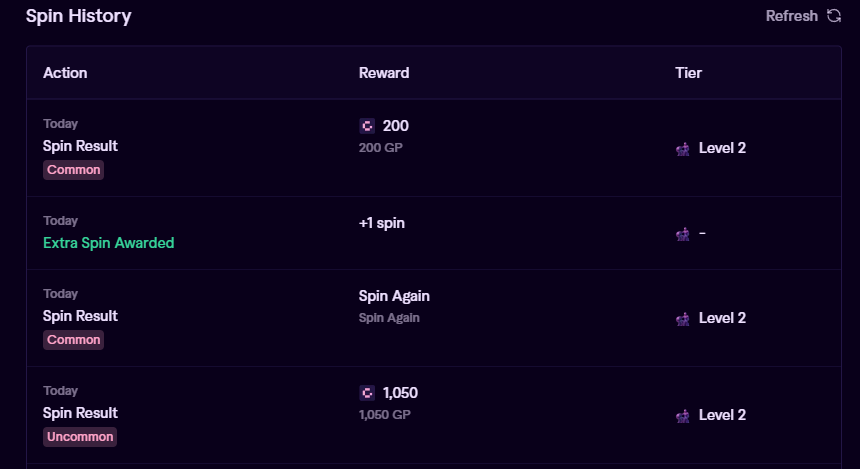
3、Once you unlock the wheel spin by reaching $10,000 in trading volume, just make one trade per day to qualify for the spin. There's no need to "frantically increase trading volume."
Domande pertinenti

QWhat is Genius and what is its primary focus?

AGenius is a privacy-focused decentralized exchange (DEX) that offers spot trading, perpetual contracts, and copy trading. It supports over 10 blockchains, including BNB Chain and Solana, and aims to provide a chain-based alternative to centralized exchanges like Binance by combining CEX-like speed, liquidity, and privacy with self-custody and non-custodial features.

QWhy did CZ and YZi Labs invest in Genius, and how is it different from Aster?

ACZ and YZi Labs invested in Genius because it is a trading terminal that connects to exchanges, not a direct competitor to Aster. Genius focuses on enabling access to any token on any chain, soon with privacy features, while Aster is primarily a perpetual contract exchange. The investments and advisory role highlight the complementary rather than competitive nature of the two projects.

QHow can users earn GP points on the Genius platform?

AUsers can earn GP points by trading: 1 GP point for every $100 in spot trading volume or $1000 in perpetual contract volume. Additional points come from a 1200 GP bonus for reaching $10,000 in cumulative trading volume, with 200 GP for every additional $1,000. Daily trading grants a spin-the-wheel chance, and more spins are earned per $10,000 in trading. Inviting friends via a personal link also rewards points.

QWhat is the recommended 'low-cost points earning' strategy mentioned in the article?

AThe recommended strategy to minimize costs while earning points is to: 1) Trade the USDC-USDT pair to reduce price volatility wear. 2) Execute larger single transactions (e.g., $400 instead of $100) to optimize gas fees, which are similar for both amounts. 3) Reach $10,000 in trading to unlock the daily spin-the-wheel feature, then only trade once daily to maintain the spin opportunity without excessive volume.

QWhat are the steps to start using Genius platform and earn the sign-up bonus?

ATo start using Genius and earn the 500 GP sign-up bonus: 1) Visit the official website via an invite link (e.g., https://www.tradegenius.com/ref/NY8SYH). 2) Click 'Start Trading' and then 'Sign In' to connect a wallet. 3) Navigate to the 'Airdrop' section to view points and your referral link. 4) Deposit assets like ETH or USDC via supported chains (EVM, Solana, SUI). 5) Begin trading to accumulate points and bonuses.

Letture associate

Prediction Markets Take Center Stage, But Perp DEXs Quietly Profit from the US-Iran War

In late February 2025, escalating tensions in the Middle East led to large-scale airstrikes by the U.S. and Israel against Iran, causing significant volatility in global financial markets. While traditional markets were closed during the weekend, investors turned to on-chain platforms to trade assets like gold, oil, and silver. Prediction markets such as Polymarket and Kalshi saw a surge in activity, with war-related contracts driving record trading volumes. However, perpetual decentralized exchanges (perp DEXs), particularly Hyperliquid, also capitalized on the situation. Hyperliquid’s commodities contracts—including gold, oil, and silver—experienced unprecedented liquidity and trading volume, with silver contracts alone reaching over $3.5 billion in daily volume at their peak. The platform’s HIP-3 market, trade.xyz, saw weekend trading volumes hit all-time highs, attracting large institutional and high-net-worth users due to its transparency, lack of trading restrictions, and non-custodial nature. In contrast, centralized exchanges (CEXs), though also offering real-world asset (RWA) trading, lacked the same level of visibility and trust among sophisticated traders. Hyperliquid’s upcoming HIP-4 feature introduces outcome-based contracts for prediction and options-like products, further expanding its role as a platform for pricing uncertainty. The growth of perp DEXs reflects a broader trend toward 24/7, globally accessible financial markets, though regulatory challenges remain a potential risk.

marsbit21 min fa

Prediction Markets Take Center Stage, But Perp DEXs Quietly Profit from the US-Iran War

marsbit21 min fa

Three Years Later: How Has AI Evolved from a 'Chat Tool'?

Three years ago, AI was primarily seen as a novel tool for chatting, image generation, and entertainment—products like ChatGPT, Midjourney, and Character.AI were used more for demonstration than daily reliance. The evolution occurred in two major phases. First, AI became embedded into established applications like CapCut, Canva, and Notion, transforming from a feature into core infrastructure. Platforms diverged: ChatGPT aimed to become a super-app entry point for consumer internet use, while Claude evolved into a professional operating system for knowledge work, creating sticky platform flywheels through integration into calendars, email, and workflows. The true breakthrough emerged recently as AI shifted from generating content to executing tasks autonomously. AI agents like OpenClaw now decompose goals, retrieve information, process data, and deliver results without human intervention. Simultaneously, "Vibe Coding" tools (e.g., Cursor, Replit) enable AI to build entire software products based on human-defined objectives. This progression toward autonomous action is naturally aligning AI with Web3. Blockchain offers machine-native interfaces, programmable assets, and 24/7 operational capability, allowing AI to execute and settle transactions trustlessly without human intermediaries. Together, AI and Web3 are forming the foundational stack for the next internet—where AI acts, and Web3 enables seamless, auditable machine-to-machine coordination and commerce.

marsbit37 min fa

Three Years Later: How Has AI Evolved from a 'Chat Tool'?

marsbit37 min fa

Trading

Spot
Futures
活动图片