Tom Li Suggests Managing Robots Through Smart Contracts

cryptonews.ruPubblicato 2026-08-19Pubblicato ultima volta 2026-08-19

Introduzione

Tom Lee, Chairman of BitMine, advocates for using Ethereum blockchain and smart contracts to verify and control the actions of AI-powered robots, especially as their physical capabilities begin to surpass human limits. He cites a new Chinese humanoid robot as an example. Lee sees no threat in recent Stanford research showing AI models converging toward a "single intelligence," arguing this trend increases blockchain's relevance for ensuring transparency and control. He agrees with BlackRock's view on the growing convergence of AI and crypto but believes Ethereum will be the primary platform for AI and robotics. Lee notes the rising ETH/BTC ratio, expecting new catalysts from asset tokenization by major US financial firms and the development of AI agents. This contrasts with Ethereum co-founder Vitalik Buterin's previously expressed concerns about uncontrolled advanced AI.

Li responded to a post citing research from Stanford University. The study's authors argued that the largest AI models are converging towards a "single intelligence" through training cycles on synthetic data, with 98% alignment in reasoning chains. Li sees no threat in this and asserts that this development increases the demand for blockchain, as smart contracts allow for transparent verification and control of AI actions.

The Chairman of BitMine mentioned a new Chinese humanoid robot that can jump nearly two meters and run at a speed of 12.6 meters per second, significantly surpassing human physical capabilities. The Ethereum blockchain could be used to verify and control robot actions, Li suggested. The businessman is confident: Ethereum and smart contracts will allow humanity to maintain control over AI-robot actions as their capabilities begin to exceed human limits.

3/
Robots may soon exceed human capabilities... check out this robot jumps higher and runs faster than humans

- blockchains will be an important settlement layer to verify and control actions of robots

tickers: $BMNR $BMNPhttps://t.co/5u9PkQkLHI

— Thomas (Tom) Lee (not drummer) FundstratDirect.com (@fundstrat) August 18, 2026

Li also commented on a Bitcoin Magazine post stating that BlackRock, managing $15 trillion in assets, remains optimistic about Bitcoin despite its 50% decline from the October all-time high of $126,198. The businessman agreed with BlackRock representatives who claim that cryptocurrencies and AI are becoming increasingly intertwined, but in his view, it is Ethereum that will be most frequently used in AI and robotics.

Currently, the ETH to BTC price ratio is 0.02994 and continues to rise, breaking its long-term downtrend, the entrepreneur noted. The previous growth in the ratio was related to the boom in Initial Coin Offerings (ICOs), Non-Fungible Tokens (NFTs), and stablecoins, Li recalled. He expects that new catalysts for the ratio's growth will be the tokenization of assets by major US financial companies and the development of AI agents.

Earlier, Ethereum co-founder Vitalik Buterin expressed concerns about superintelligent artificial intelligence (AI). In the developer's opinion, if left unchecked, AI could rebel against humanity.

end-content
Domande pertinenti

QAccording to Tom Lee, why are smart contracts and blockchain technology becoming increasingly important in the context of AI development?

ATom Lee believes they are becoming more important because smart contracts allow for the transparent verification and control of AI actions, which is crucial as AI models converge towards a 'single intelligence' and as robots begin to exceed human physical capabilities.

QWhat specific application does Tom Lee propose for the Ethereum blockchain regarding advanced robots?

AHe proposes that the Ethereum blockchain could be used to verify and control the actions of robots, helping humanity maintain oversight as robots' capabilities surpass human limits.

QWhat did Tom Lee say is the new catalyst he expects for the growth of the ETH/BTC price ratio?

AHe expects the new catalysts to be the tokenization of assets by major U.S. financial companies and the development of AI agents.

QHow did Tom Lee respond to the concerns about AI raised by the co-founder of Ethereum, Vitalik Buterin?

AThe article does not state Tom Lee's direct response to Vitalik Buterin's concerns. It only mentions Buterin's fears separately, while Lee's focus is on using blockchain as a solution for control.

QWhat was the key finding of the Stanford University research mentioned in the article regarding large AI models?

AThe Stanford research found that the largest AI models are converging towards a 'single intelligence' through training cycles on synthetic data, with a 98% match in their reasoning chains.

Letture associate

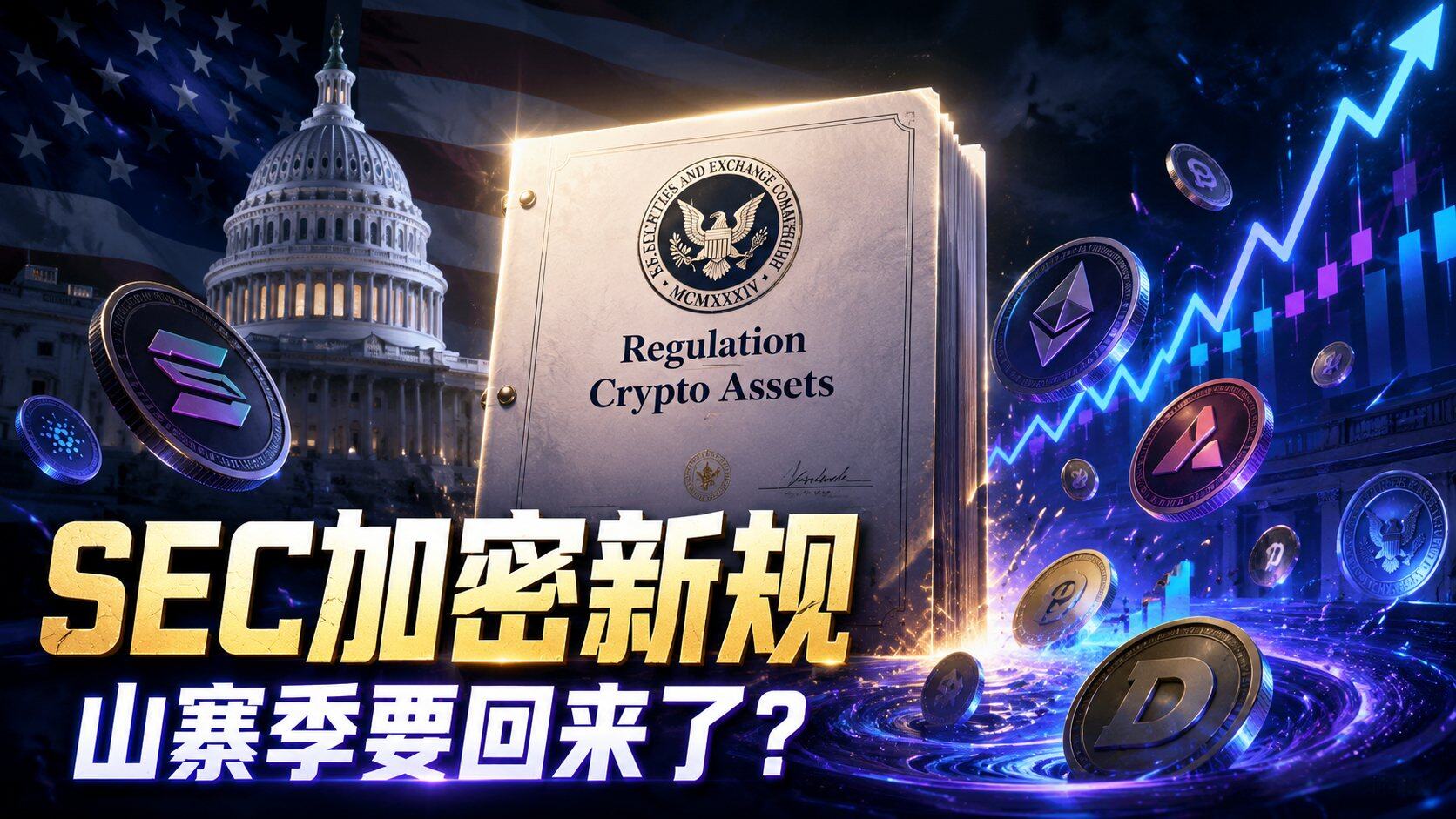
Interpretation of SEC's New Crypto Regulatory Rules: Fundraising Below $5 Million Exempt from Registration, Is Altcoin Season Making a Comeback?

The U.S. Securities and Exchange Commission (SEC) has proposed a new regulatory framework titled "Regulation Crypto Assets." This proposal aims to establish tailored exemptions for crypto asset fundraising and a pathway for tokens to transition out of being classified as securities. The core provisions include two exemptions from standard securities registration: 1. **Startup Exemption**: Allows early-stage projects to raise up to $5 million over four years with simplified, narrative-based disclosures, avoiding full registration. 2. **Fundraising Exemption**: Permits raising up to $75 million within any 12-month period. It requires audited financial statements and imposes ongoing reporting obligations, similar to the Regulation A+ framework. A key component is the **Investment Contract Safe Harbor**. This rule allows a token initially sold as an investment contract (a security) to lose that designation once the issuer has completed or permanently ceased the "essential managerial efforts" promised to investors. This theoretically clears regulatory hurdles for tokens where development is finished or abandoned. The proposal defines a narrow scope, applying only to crypto assets that are not securities themselves and are part of an investment contract involving no other assets. This SEC initiative is seen as a response to the stalled progress of the comprehensive *CLARITY Act* in Congress. It represents a shift from relying solely on the historical Howey test, which the SEC admits is ill-suited for dynamic crypto assets. The proposal is currently in a 60-day public comment period, with a final rule likely months away, leaving the U.S. regulatory landscape for crypto in a transitional state.

Odaily星球日报33 min fa

Interpretation of SEC's New Crypto Regulatory Rules: Fundraising Below $5 Million Exempt from Registration, Is Altcoin Season Making a Comeback?

Odaily星球日报33 min fa

Latest: Korean QFI Has Bought Changxin Technology

Latest Data Shows Korean QFI Has Purchased Changxin Technology According to data from SEIBro (under Korea Securities Depository, KSD), Korean investors, acting as Qualified Foreign Investors (QFI), have been actively purchasing shares of Changxin Technology (stock code 688825), a company recently listed on China's Sci-Tech Innovation Board (STAR Market). Over the past month until August 18, they made a net purchase of this stock worth approximately $45.32 million (around CNY 307 million), making it the top A-share by net purchase volume for Korean investors during that period. This activity has significantly boosted overall Korean net buying in A-shares. As Changxin Technology is not yet included in the Stock Connect schemes, QFI is currently the only channel for overseas investors like these Koreans to access its shares. SEIBro data indicates Korean buying began as early as July 28, the stock's second trading day. The stock appeared in Korean investor purchase lists using a temporary virtual ISIN code in settlement instructions, as its official international code had not yet been assigned. The listing has garnered significant international attention. On its first trading day (July 27), the actively managed U.S. ETF Tema Memory ETF (DISK) swiftly added Changxin Technology to its portfolio, giving it a substantial 10.56% weighting. Another active ETF, Roundhill Memory ETF (DRAM), also quickly included the stock. Furthermore, global index provider MSCI has added Changxin Technology to its MSCI China All Shares Index, prompting passive fund inflows. Analysts highlight Changxin Technology's unique position to serve China's rapidly growing AI ecosystem amid a global semiconductor memory supply shortage driven by AI demand. Besides Changxin Technology, other A-shares heavily bought by Korean investors recently include Weichai Power, Demingli, Changdian Technology, and CSOP China STAR Chip ETF.

marsbit1 h fa

Latest: Korean QFI Has Bought Changxin Technology

marsbit1 h fa

Trading

Spot
活动图片