The Ethereum Community Is in an Uproar! Who Stands to Lose with EIP-8363?

marsbitPubblicato 2026-08-05Pubblicato ultima volta 2026-08-05

Introduzione

The Ethereum community is deeply divided over the controversial EIP-8363 proposal, which aims to introduce a "tapered issuance burn" to curb the growth of ETH staking. Authored by researchers including Jérôme de Tychey and Justin Drake, the proposal would gradually reduce and eventually eliminate the consensus-layer issuance rewards for validators when the total staked ETH approaches 50% of the total supply (approximately 60.25 million ETH). This is intended to discourage excessive staking concentration among large institutional providers and reduce the dilution pressure on non-staking ETH holders, potentially strengthening native ETH as a neutral asset. Currently, even at 100% staking, validators have a theoretical minimum reward of about 1.5%. EIP-8363 would implement a burn mechanism based on the staking ratio, making net consensus rewards approach zero at the 50% threshold, though execution-layer rewards (priority fees, MEV) remain unaffected. At the current ~33% staking ratio, annual consensus yield would drop from ~2.6% to ~1.2%. An 18-month transition period is proposed to soften the impact. The community reaction has been largely negative. Critics, including Aave founder Stani Kulechov and ether.fi CEO Mike Silagadze, argue it undermines predictable cash flows for institutional investors, hurts solo stakers by making their operations less viable against fixed costs, and could destabilize the DeFi ecosystem built around Liquid Staking Tokens (LSTs). They also fear it...

Original author: KarenZ, Foresight News

Intuitively, the more ETH staked, the higher the economic cost to attack the network.

However, an increase in the staking scale does not necessarily bring an equivalent gain in security; if the new stakes primarily flow to a few large service providers, the validator ecosystem might instead become more centralized.

On August 4th, Jérôme de Tychey, founder of EthCC, Justin Drake from the Ethereum Foundation, and four other researchers jointly submitted the "Tapered Issuance Burn" proposal. It attempts to install a "revenue downslope" for the continuously growing staking ratio, and when the staked amount approaches 50% of the total ETH supply, the consensus-layer issuance rewards obtained by validators will be completely offset.

This proposal was initially released with the number EIP-8361, but as that number had already been assigned to another proposal, it was subsequently changed to EIP-8363. Although it is still in the early draft stage, it has rapidly become one of the most contentious topics in the Ethereum community.

What is this proposal actually trying to do?

Currently, Ethereum consensus-layer rewards decrease as the total amount staked increases. However, even if all ETH were staked, there still exists a theoretical lower bound of approximately 1.5% for the nominal consensus yield of an individual validator.

The authors of EIP-8363 argue that this means the protocol always provides positive incentives for more staking, without a real "stop button," which could drive ETH towards concentration among large custodians, exchanges, and staking derivatives.

Additionally, unstaked ETH is continuously diluted by new issuance. Liquid Staking Tokens (LSTs), because they come with yield, can more easily replace native ETH as collateral in DeFi and savings assets. The proposal authors hope to reduce this dilution pressure, allowing native ETH to become a more competitive neutral asset again.

The solution given by the proposal is not to prohibit new validators from entering, nor to rigidly lock the staking ratio at 50%, but to deduct and burn a portion of the validator's calculated reward after its normal calculation. The burn proportion depends on the total effective staked balance: calculated as "the ratio of the total effective staked balance to 60.25 million ETH raised to the power of 1.5," with an upper limit of 100%, i.e.:
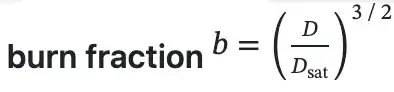
60.25 million ETH is approximately half of the current total ETH supply. As the staked amount approaches this value, the validator's net consensus-layer profit gradually approaches zero; upon reaching or exceeding this value, the consensus-layer issuance rewards earned by normally, fully performing validators will be completely offset by the new burn deductions. It should be added that 60.25 million ETH is a fixed value proposed to be written into the protocol at the hard fork.

There are two points easily misunderstood here:

First, 50% is not a staking cap, nor a target staking ratio. Validators can still continue to join; the proposal merely hopes the market will stop growing on its own before the reward is insufficient to cover liquidity, operational, slashing, and regulatory risks.

Second, the so-called "reward reaching zero" refers only to the net consensus-layer issuance reward. Execution-layer income such as priority fees and MEV is not affected by this proposal.
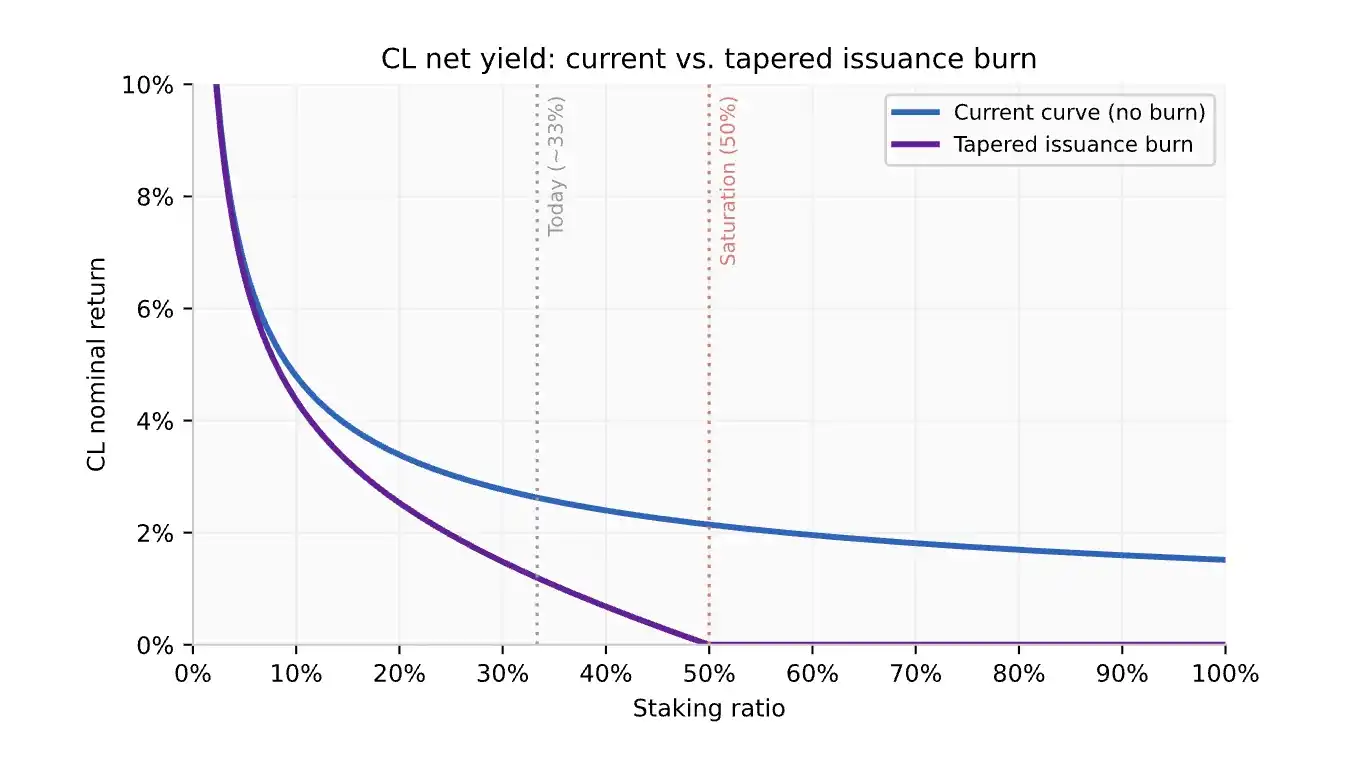
Net consensus-layer profit under the current issuance curve and the EIP-8363 curve

According to the proposal's curve, the annual consensus-layer issuance would peak near a staking ratio of about 19.8%, then decline as the staking ratio increases. Estimating with the current staking ratio of about 33%, if this curve were fully implemented at the fork, the consensus-layer yield would decrease from about 2.6% to about 1.2%.
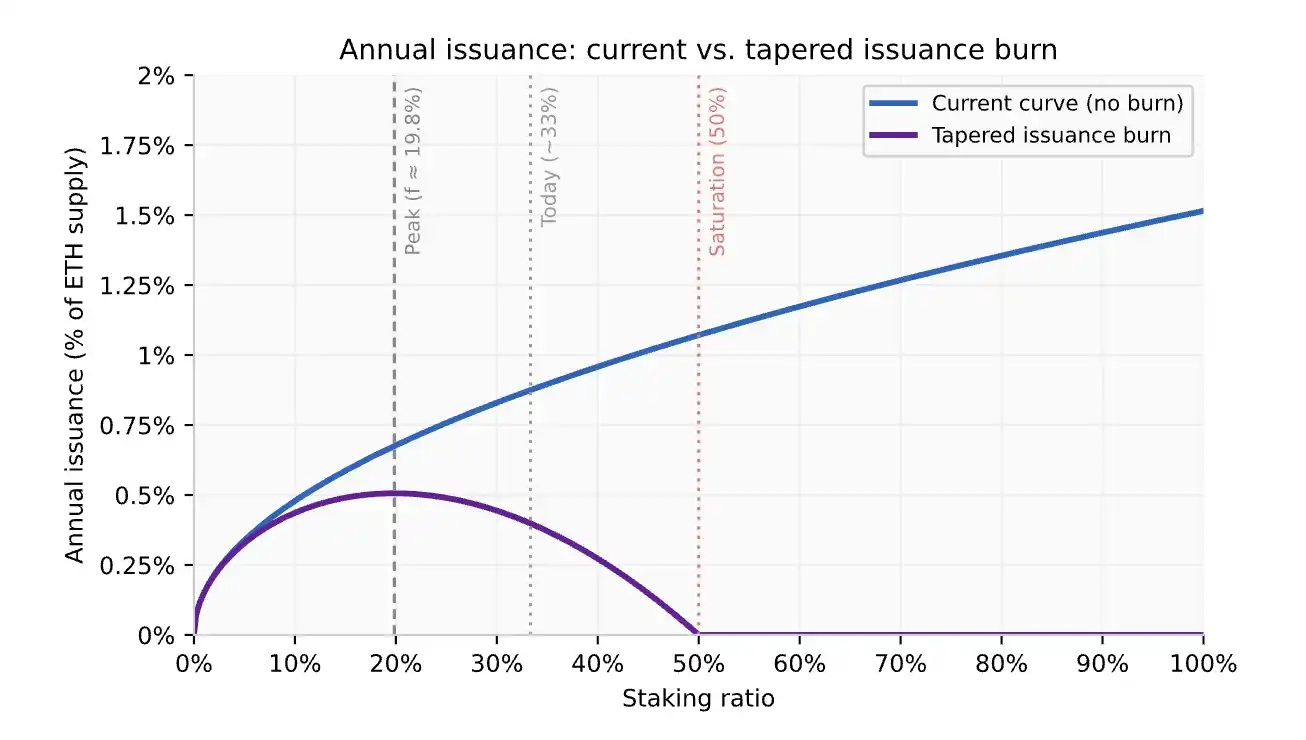
Annual issuance under the current issuance curve and the EIP-8363 curve

To avoid a sudden halving of rewards, the proposal designs an 18-month transition period: upon activation, the base reward factor will be temporarily increased from 64 to 128, then gradually reduced back to 64 over 65 steps, with each step lasting approximately 8.6 days. Therefore, the initial net profit upon activation would be close to current levels, then gradually decline. However, the rule of "providing no consensus-layer issuance incentive after 50%" takes effect from the first day of activation; it does not wait for 18 months.

Currently, this proposal is still an unmerged Core EIP draft, in the editing review and consensus assessment stage. The authors have separately submitted PR #12087, hoping to have it listed as Proposed for Inclusion for the Hegotá upgrade. This PR is also not yet merged; the current formal Hegotá Meta EIP does not include it.

Ethereum core developers plan to discuss Hegotá proposal cut-off items at the 184th ACDC meeting on August 6th. Even if it enters Proposed for Inclusion, it does not guarantee implementation; it would still need to go through subsequent stages of developer assessment, client implementation, testing, and Scheduled for Inclusion.

Community reaction is clearly negative

Jérôme de Tychey, one of the EIP-8363 authors, believes this is a "minimalist, market-driven" change. He also stated in a forum response that the issuance debate started back in 2023, and this proposal merely opens a formal feedback window; it does not equate to being confirmed for inclusion.

He also warned that if validator entries remain continuously full and exits are few, the staked amount could exceed 70 million ETH by early 2028, accounting for over 55% of the supply; reversing course then could lead to larger exit volumes and market disruptions.

The side supporting reduced issuance mainly cites three reasons:

  • Ethereum may be paying too high a cost for economic security that is already sufficiently abundant;
  • Unstaked holders are continuously diluted, forced to choose between "bearing dilution" and "undertaking staking risk";
  • LSTs, ETFs, and custodial services continuously lower staking friction, potentially ultimately allowing a few intermediaries to simultaneously control large amounts of ETH and validation rights.

However, opposition voices are more concentrated in the current public reaction.

Aave founder Stani Kulechov believes that consensus-layer staking rewards varying with the staking ratio and ultimately approaching zero would undermine the cash flow predictability valued by institutions when allocating ETH, and compress positive interest rate strategies like ETH lending and LST loop staking.

Obol co-founder Oisín Kyne points out that Ethereum's true security depends not only on how much ETH is staked, but also on whether the validation power is sufficiently decentralized. If rewards drop to extremely low levels, large institutions with low capital costs and low sensitivity to yield might have the ability to stay in the game long-term and squeeze out high-cost independent operators.

ether.fi CEO Mike Silagadze criticized the proposal for being submitted just before the Hegotá deadline, leaving insufficient lead time for ecosystem developers to discuss it; he worries that low yields will impact staking-related protocols and reduce institutional confidence in Ethereum's governance stability.

Ethereum community member Ryan Berckmans summarized that opponents at least include those worried about who will run validators under zero rewards, those unwilling to reduce staking yields, those opposed to modifying ETH monetary policy again, and those hoping to avoid escalating controversy disrupting ecosystem growth. He personally supports moderately reducing issuance but opposes letting rewards trend all the way to zero, also believing the current proposal is too divisive for the community.

A relatively neutral view comes from ARK Invest research director Lorenzo Valente. He frames this debate from the perspective of ETH's asset positioning. If one emphasizes ETH's "internet bond" attributes more, weakening staking yield indeed damages the lending market and yield curve; if one emphasizes ETH as a neutral currency and store of value more, then the base yield obtained through loop staking mainly comes from protocol issuance, at the cost of unstaked holders being diluted. Reducing issuance means reducing this transfer of yield from unstaked holders to stakers and their leverage strategies.

Who Benefits and Who Bears the Pressure?

If this proposal passes, Solo Stakers would be affected first.

The 18-month transition period spreads out the reward decline but does not reduce fixed costs like hardware, electricity, and operation/maintenance. The proposal maintains the current offline penalty intensity while lowering net rewards, so it would take longer for a single fault to be compensated by subsequent rewards. The proposal itself estimates that at the current ~33% staking ratio, the time needed to compensate for downtime losses could increase to about 3.8 times the current duration.

For large operators with backup power, disaster recovery, and 24/7 operations, such changes are relatively easier to absorb; for home validators, a few internet outages or device failures could significantly erode annual returns.

Tax treatment could also amplify this disparity. The EIP-8363 proposal notes that in some jurisdictions, it's currently unclear whether tax authorities would recognize income based on the pre-deduction reward. If the burned portion can only be recognized as a capital loss, a solo staker's post-tax earnings could be lower than the apparent net reward.

The impact would further transmit to LSTs. The base yield for products like stETH and rETH comes from the underlying validators; when consensus-layer issuance decreases, the yield gap between LSTs and native ETH would also narrow. Whether users are still willing to bear smart contract, governance, custody, and de-pegging risks for one or two percentage points of yield would become a new pricing question.

Loop strategies relying on LST yield would feel pressure sooner. The common approach is to borrow ETH, buy or mint LSTs, then use the LSTs as collateral to borrow more ETH. As staking yield gradually approaches borrowing costs, the positive interest rate spread of such trades would gradually disappear, and leveraged positions might contract voluntarily. Aave, Morpho, Pendle, and products built around LST yield might consequently face decreased ETH borrowing demand, capital utilization rates, and liquidity.

The impact would ultimately affect the entire DeFi interest rate system. Staking yield is an important base rate for ETH-denominated markets; LST lending, fixed income, yield splitting, and loop leverage are all priced around this benchmark.

Of course, LSTs would not lose all their utility because of this. What might truly change is LSTs' advantage relative to native ETH.

Looking further upstream, the staking income of ETFs, exchanges, custodians, and ETH treasury companies would also decline. For institutions relying on staking yield to enhance asset returns, ETH's predictable cash flow would weaken, potentially affecting their willingness for new allocations. Aave founder Stani Kulechov therefore believes this proposal would make it harder for institutions to evaluate ETH's yield and weaken ETH's competitiveness relative to other yield-bearing assets.

The actual impact on institutions may not be uniform. When base yields fall, high-cost participants might exit first, while the largest institutions least dependent on staking yield might instead be more capable of staying. This is precisely the reason opponents fear further validator centralization.

For ordinary ETH holders, the direction of impact is relatively clear. The burned issuance does not go to a specific protocol or fund but benefits all ETH holders collectively by reducing dilution.

However, reduced issuance does not mean ETH will necessarily become deflationary, nor can one deduce that the price will necessarily rise. The final supply change still depends on EIP-1559 fee burns, network usage, validator issuance, and market conditions. If lower yields simultaneously weaken institutional allocation, LST demand, and on-chain lending activity, demand-side changes could also offset some of the supply-side benefits.

Crypto di tendenza

Domande pertinenti

QWhat is the main objective of the EIP-8363 proposal, and what specific issue does it aim to address?

AThe main objective of EIP-8363, the 'Tapered Issuance Burn' proposal, is to install a "downward slope" for staking rewards as the total amount of staked ETH increases. It aims to address the concern that the protocol currently provides positive incentives for more staking indefinitely, potentially leading to excessive concentration of ETH and validator power among a few large custodians, exchanges, and staking derivatives (LSTs). It seeks to reduce the dilution pressure on non-staked ETH and make native ETH a more competitive neutral asset.

QHow does the EIP-8363 proposal technically achieve the reduction in consensus layer rewards for validators?

AThe proposal calculates validator rewards normally but then deducts and burns a portion of them. The burn ratio depends on the total effective staked balance relative to 60.25 million ETH (approximately half of the current supply). The formula uses the 1.5th power of this ratio, capped at 100%. As the staked amount approaches 60.25 million ETH, validators' net consensus layer rewards trend towards zero. At or above this threshold, the newly added burn would completely offset the consensus layer issuance rewards for fully performing validators. Execution layer income like priority fees and MEV remains unaffected.

QWhat are some of the key arguments raised by opponents of the EIP-8363 proposal?

AOpponents argue that: 1) It weakens the predictability of cash flows from staking, which is valued by institutions when allocating ETH. 2) Extremely low rewards could disproportionately squeeze out high-cost solo stakers, leaving capital-rich, yield-insensitive large entities in control, potentially increasing centralization. 3) It could negatively impact protocols built around staking yields (e.g., LSTs, lending markets, leverage strategies). 4) The proposal was submitted close to the Hegotá upgrade deadline, leaving insufficient time for community discussion. 5) It represents another contentious change to ETH's monetary policy that could disrupt ecosystem growth.

QAccording to the article, how might the EIP-8363 proposal disproportionately impact solo stakers compared to large institutional operators?

ASolo stakers (home validators) would be more severely impacted because the proposal lowers net rewards without reducing fixed costs like hardware, electricity, and maintenance. The offline penalty severity remains the same, so recovering from a downtime incident would take longer with lower subsequent rewards. Large operators with backup power, disaster recovery systems, and 24/7 operations can more easily absorb these changes. Furthermore, potential unfavorable tax treatments in some jurisdictions, where the burned portion might only be recognized as a capital loss, could further reduce solo stakers' after-tax income.

QWhat is the potential impact of EIP-8363 on Liquid Staking Tokens (LSTs) and the broader DeFi ecosystem?

AThe yield gap between LSTs and native ETH would narrow as the underlying consensus layer rewards decline. This could reduce the attractiveness of LSTs, as users may be less willing to take on smart contract, governance, and de-peg risks for a smaller yield premium. Strategies relying on LST yield, such as looping (borrowing ETH to buy/mint LST and re-collateralizing), would see their positive carry diminish and potentially unwind. This could lead to decreased ETH borrowing demand, lower utilization rates, and reduced liquidity in protocols like Aave, Morpho, and Pendle, ultimately affecting the entire ETH-denominated DeFi interest rate system.

Letture associate

Trading

Spot

Articoli Popolari

Cosa è ETH 3.0

ETH3.0 e $eth 3.0: Un'Analisi Approfondita del Futuro di Ethereum Introduzione Nel panorama in rapida evoluzione delle criptovalute e della tecnologia blockchain, ETH3.0, spesso indicato come $eth 3.0, è emerso come un argomento di considerevole interesse e speculazione. Il termine comprende due concetti principali che warrantono chiarimenti: Ethereum 3.0: Questo rappresenta un potenziale futuro aggiornamento volto ad aumentare le capacità dell'attuale blockchain di Ethereum, concentrandosi principalmente sul miglioramento della scalabilità e delle prestazioni. ETH3.0 Meme Token: Questo progetto di criptovaluta distinto cerca di sfruttare la blockchain di Ethereum per creare un ecosistema incentrato sui meme, promuovendo il coinvolgimento all'interno della comunità delle criptovalute. Comprendere questi aspetti di ETH3.0 è essenziale non solo per gli appassionati di criptovalute, ma anche per coloro che osservano tendenze tecnologiche più ampie nello spazio digitale. Che cos'è ETH3.0? Ethereum 3.0 Ethereum 3.0 è pubblicizzato come un aggiornamento proposto per la rete Ethereum già stabilita, che è stata la spina dorsale di molte applicazioni decentralizzate (dApps) e contratti smart sin dalla sua nascita. I miglioramenti previsti si concentrano principalmente sulla scalabilità, integrando tecnologie avanzate come lo sharding e le prove a conoscenza zero (zk-proofs). Queste innovazioni tecnologiche mirano a facilitare un numero senza precedenti di transazioni al secondo (TPS), potenzialmente raggiungendo milioni, affrontando così una delle limitazioni più significative della tecnologia blockchain attuale. Il miglioramento non è meramente tecnico, ma anche strategico; è volto a preparare la rete Ethereum per un'adozione e un'utilità diffuse in un futuro contrassegnato da un aumento della domanda di soluzioni decentralizzate. ETH3.0 Meme Token Al contrario di Ethereum 3.0, l'ETH3.0 Meme Token si avventura in un dominio più leggero e giocoso, combinando la cultura dei meme di internet con la dinamica delle criptovalute. Questo progetto consente agli utenti di acquistare, vendere e scambiare meme sulla blockchain di Ethereum, fornendo una piattaforma che promuove il coinvolgimento della comunità attraverso la creatività e interessi condivisi. L'ETH3.0 Meme Token mira a dimostrare come la tecnologia blockchain possa intersecarsi con la cultura digitale, creando casi d'uso che siano sia divertenti che finanziariamente praticabili. Chi è il Creatore di ETH3.0? Ethereum 3.0 L'iniziativa verso Ethereum 3.0 è principalmente propulsa da un consorzio di sviluppatori e ricercatori all'interno della comunità di Ethereum, tra cui Justin Drake. Conosciuto per le sue intuizioni e contributi all'evoluzione di Ethereum, Drake è stato una figura di spicco nelle discussioni riguardanti la transizione di Ethereum verso un nuovo livello di consenso, chiamato “Beam Chain.” Questo approccio collaborativo allo sviluppo significa che Ethereum 3.0 non è il prodotto di un creatore singolo, ma piuttosto una manifestazione di ingegno collettivo focalizzato sul progresso della tecnologia blockchain. ETH3.0 Meme Token I dettagli riguardanti il creatore dell'ETH3.0 Meme Token sono attualmente non rintracciabili. La natura dei token meme conduce spesso a una struttura più decentralizzata e guidata dalla comunità, il che potrebbe spiegare la mancanza di attribuzione specifica. Questo si allinea con l'etica della comunità crypto più ampia, dove l'innovazione spesso nasce da sforzi collaborativi piuttosto che individuali. Chi sono gli Investitori di ETH3.0? Ethereum 3.0 Il supporto per Ethereum 3.0 proviene principalmente dalla Ethereum Foundation insieme a una comunità entusiasta di sviluppatori e investitori. Questa associazione fondamentale fornisce un considerevole grado di legittimità e migliora le prospettive di implementazione di successo poiché sfrutta la fiducia e la credibilità costruite nel corso degli anni di operazioni della rete. Nel clima in rapida evoluzione delle criptovalute, il supporto della comunità gioca un ruolo cruciale nello sviluppo e nell'adozione, posizionando Ethereum 3.0 come un serio contenditore per i futuri progressi della blockchain. ETH3.0 Meme Token Sebbene le fonti attualmente disponibili non forniscano informazioni esplicite riguardo ai fondamenti o alle organizzazioni di investimento che sostengono l'ETH3.0 Meme Token, ciò è indicativo del modello di finanziamento tipico per i token meme, che spesso si basa sul supporto di base e sul coinvolgimento della comunità. Gli investitori in tali progetti sono tipicamente individui motivati dal potenziale per innovazioni guidate dalla comunità e dallo spirito di cooperazione trovato all'interno della comunità crypto. Come Funziona ETH3.0? Ethereum 3.0 Le caratteristiche distintive dell'Ethereum 3.0 risiedono nella sua proposta di implementazione della tecnologia di sharding e zk-proof. Lo sharding è un metodo di partizionamento della blockchain in pezzi più piccoli e gestibili o “shard,” che possono elaborare transazioni in modo concorrente piuttosto che sequenziale. Questa decentralizzazione dell'elaborazione aiuta a prevenire la congestione e garantisce che la rete rimanga reattiva anche sotto un carico pesante. La tecnologia delle prove a conoscenza zero (zk-proof) contribuisce con un ulteriore livello di sofisticazione consentendo la validazione delle transazioni senza rivelare i dati sottostanti coinvolti. Questo aspetto non solo migliora la privacy, ma aumenta anche l'efficienza complessiva della rete. Si parla anche di incorporare una macchina virtuale Ethereum a conoscenza zero (zkEVM) in questo aggiornamento, amplificando ulteriormente le capacità e l'utilità della rete. ETH3.0 Meme Token L'ETH3.0 Meme Token si distingue capitalizzando sulla popolarità della cultura dei meme. Stabilisce un mercato per gli utenti che desiderano partecipare al trading di meme, non solo per divertimento, ma anche per potenziale guadagno economico. Integrando funzioni come lo staking, la fornitura di liquidità e meccanismi di governance, il progetto promuove un ambiente che incentiva l'interazione e la partecipazione della comunità. Offrendo una miscela unica di intrattenimento e opportunità economica, l'ETH3.0 Meme Token mira ad attrarre un pubblico variegato, che va dagli appassionati di crypto ai semplici intenditori di meme. Timeline di ETH3.0 Ethereum 3.0 11 Novembre 2024: Justin Drake accenna al prossimo aggiornamento ETH 3.0, incentrato sui miglioramenti della scalabilità. Questo annuncio segna l'inizio delle discussioni formali riguardo l'architettura futura di Ethereum. 12 Novembre 2024: La proposta attesa per Ethereum 3.0 dovrebbe essere svelata a Devcon a Bangkok, preparando il terreno per un feedback più ampio della comunità e potenziali passi successivi nello sviluppo. ETH3.0 Meme Token 21 Marzo 2024: L'ETH3.0 Meme Token viene ufficialmente elencato su CoinMarketCap, segnando il suo ingresso nel dominio pubblico delle criptovalute e aumentando la visibilità per il suo ecosistema basato sui meme. Punti Chiave In conclusione, Ethereum 3.0 rappresenta una significativa evoluzione all'interno della rete Ethereum, concentrandosi sul superamento delle limitazioni riguardanti scalabilità e prestazioni attraverso tecnologie avanzate. I suoi aggiornamenti proposti riflettono un approccio proattivo alle future esigenze e usabilità. D'altra parte, l'ETH3.0 Meme Token incarna l'essenza della cultura guidata dalla comunità nello spazio delle criptovalute, sfruttando la cultura dei meme per creare piattaforme coinvolgenti che incoraggiano la creatività e la partecipazione degli utenti. Comprendere gli scopi e le funzionalità distinte di ETH3.0 e $eth 3.0 è fondamentale per chiunque sia interessato ai continui sviluppi nello spazio crypto. Con entrambe le iniziative che tracciano percorsi unici, esse sottolineano collettivamente la natura dinamica e multifacetica dell'innovazione blockchain.

276 Totale visualizzazioniPubblicato il 2024.04.04Aggiornato il 2024.12.03

Cosa è ETH 3.0

Cosa è ETHEREUM

HarryPotterTrumpHomerSimpson777Inu: Panoramica di un Progetto Crypto Web3 Introduzione Nel mondo in rapida evoluzione delle criptovalute e della finanza decentralizzata, progetti innovativi emergono frequentemente, catturando l'interesse della comunità degli investitori e degli appassionati di crypto. Uno di questi progetti è HarryPotterTrumpHomerSimpson777Inu, una criptovaluta che si trova all'incrocio tra cultura popolare e tecnologia blockchain. Questo token guidato dalla comunità mescola personaggi e figure politiche ben noti, con l'obiettivo di creare una piattaforma coinvolgente e promuovere un'adozione diffusa. Che cos'è HarryPotterTrumpHomerSimpson777Inu? HarryPotterTrumpHomerSimpson777Inu è un token costruito sulla blockchain di Ethereum, progettato per essere accessibile e divertente per un pubblico diversificato. L'unicità di questo progetto deriva dal suo approccio tematico, che intreccia elementi di fantasia, politica e intrattenimento. Sfruttando il fascino nostalgico di personaggi amati, il progetto cerca di creare un'esperienza di criptovaluta coinvolgente, incoraggiando il coinvolgimento e la partecipazione della comunità. L'obiettivo principale di HarryPotterTrumpHomerSimpson777Inu è stabilire un token che risuoni con gli utenti a livello personale, promuovendo sia il divertimento che il coinvolgimento nell'ambito crypto. Questo branding distintivo mira ad attrarre individui che in precedenza potrebbero non essersi interessati alle criptovalute, facilitando un nuovo punto di ingresso per utenti potenziali. Creatore di HarryPotterTrumpHomerSimpson777Inu L'identità del creatore dietro HarryPotterTrumpHomerSimpson777Inu rimane sconosciuta. Questa non è una pratica rara nel dominio delle criptovalute, dove l'anonimato è spesso preferito dai fondatori come mezzo di protezione della privacy e promozione di un ethos decentralizzato. Questa oscurità non diminuisce il valore del progetto; al contrario, riflette una tendenza più ampia all'interno del settore, dove molti progetti di successo sono emersi da origini anonime. Investitori di HarryPotterTrumpHomerSimpson777Inu Le informazioni pubbliche riguardo agli investitori di HarryPotterTrumpHomerSimpson777Inu sono limitate. La natura del progetto, incentrata sul coinvolgimento della comunità, suggerisce una dipendenza da investimenti di piccole dimensioni da parte di singoli appassionati piuttosto che da sostegni sostanziali da fondazioni di investimento consolidate o corporation. Questo livello di trasparenza nel finanziamento è tipico di molti progetti di criptovaluta guidati dalla comunità, dove il supporto spesso proviene da movimenti di base piuttosto che da investitori istituzionali. Come Funziona HarryPotterTrumpHomerSimpson777Inu? Operando sulla blockchain di Ethereum, HarryPotterTrumpHomerSimpson777Inu sfrutta la sua solida infrastruttura per facilitare transazioni e promuovere interazioni tra gli utenti all'interno della comunità. Ciò che distingue questo progetto è il suo posizionamento tematico: canalizzando il carisma di personaggi iconici provenienti da diversi ambiti culturali, crea un'identità di marca distintiva. Questo approccio non solo attrae gli utenti, ma coltiva anche una comunità fedele attorno al token. Le meccaniche operative del progetto si concentrano sul coinvolgimento della comunità. Adotta un modello decentralizzato che incoraggia la partecipazione, consentendo agli utenti di interagire attraverso vari canali mentre promuovono lo scambio di idee e esperienze. Inoltre, il progetto abbraccia i principi del Web3, privilegiando la sovranità degli utenti e la decentralizzazione, che sono i pilastri del futuro di Internet. Timeline di HarryPotterTrumpHomerSimpson777Inu La storia di HarryPotterTrumpHomerSimpson777Inu è segnata da diversi eventi decisivi: 12 agosto 2023: L'inizio di HarryPotterTrumpHomerSimpson777Inu, segnando il suo ingresso nell'ecosistema delle criptovalute. Fase di Sviluppo: Un periodo focalizzato sulla costruzione di una strategia completa per stimolare la crescita guidata dalla comunità e il coinvolgimento degli utenti. Listing sugli Scambi: Sebbene i dettagli specifici di listing non siano stati divulgati, il progetto è stato reso accessibile su vari scambi di criptovalute, migliorando la sua visibilità nel mercato. Coinvolgimento della Comunità: Sforzi continui per coinvolgere attivamente la comunità, stabilendo canali di dialogo e promuovendo la partecipazione attraverso varie attività, tra cui concorsi, discussioni e votazioni comunitarie. Aspetti Chiave di HarryPotterTrumpHomerSimpson777Inu Focus sulla Comunità Un tratto distintivo di HarryPotterTrumpHomerSimpson777Inu è la sua forte enfasi sul coinvolgimento della comunità. Il progetto incoraggia attivamente gli utenti a partecipare a discussioni, condividere idee e contribuire all'evoluzione del progetto. Questa interazione coltiva un senso di appartenenza e di ownership tra i membri della comunità, essenziale per la sostenibilità a lungo termine del token. Utilizzo della Blockchain di Ethereum La scelta di costruire sulla blockchain di Ethereum consente a HarryPotterTrumpHomerSimpson777Inu di sfruttare le sue caratteristiche di sicurezza ben consolidate e architettura decentralizzata. Questa base garantisce affidabilità per le transazioni e fornisce un framework affidabile su cui sviluppare varie funzionalità. Approccio Tematico Unico Fusione di elementi della cultura pop nella sua identità, HarryPotterTrumpHomerSimpson777Inu crea una narrazione coinvolgente che lo differenzia da altre criptovalute. L'amalgama di personaggi e temi genera riconoscimento e intrigo immediati, rendendo il token relazionabile a un'ampia gamma di utenti potenziali. Anonimato nello Sviluppo Il creatore anonimo del progetto rimane una caratteristica ricorrente in molte iniziative di criptovaluta. Questo aspetto evidenzia un ethos di decentralizzazione, introducendo anche un livello di mistero che potrebbe affascinare un segmento della comunità crypto, attirando l'attenzione sul progetto e invitando l'impegno da parte di utenti che supportano l'idea di un'iniziativa decentralizzata e gestita dalla comunità. Conclusione HarryPotterTrumpHomerSimpson777Inu si presenta come un'aggiunta distintiva al panorama delle criptovalute, combinando il fascino della cultura popolare con le meccaniche innovative della tecnologia blockchain. Sebbene i dettagli riguardanti il creatore e gli investitori specifici rimangano non divulgati, il focus del progetto sulla comunità e il suo approccio tematico lo contraddistinguono come un potenziale attore influente nel contesto del Web3 e delle criptovalute. Man mano che l'ecosistema delle criptovalute continua ad espandersi, iniziative come HarryPotterTrumpHomerSimpson777Inu ci ricordano le molteplici modalità in cui la blockchain può connettere le comunità globali attraverso narrazioni e valori condivisi.

1.2k Totale visualizzazioniPubblicato il 2024.04.06Aggiornato il 2024.12.03

Cosa è ETHEREUM

Come comprare ETH

Benvenuto in HTX.com! Abbiamo reso l'acquisto di Ethereum (ETH) semplice e conveniente. Segui la nostra guida passo passo per intraprendere il tuo viaggio nel mondo delle criptovalute.Step 1: Crea il tuo Account HTXUsa la tua email o numero di telefono per registrarti il tuo account gratuito su HTX. Vivi un'esperienza facile e sblocca tutte le funzionalità,Crea il mio accountStep 2: Vai in Acquista crypto e seleziona il tuo metodo di pagamentoCarta di credito/debito: utilizza la tua Visa o Mastercard per acquistare immediatamente EthereumETH.Bilancio: Usa i fondi dal bilancio del tuo account HTX per fare trading senza problemi.Terze parti: abbiamo aggiunto metodi di pagamento molto utilizzati come Google Pay e Apple Pay per maggiore comodità.P2P: Fai trading direttamente con altri utenti HTX.Over-the-Counter (OTC): Offriamo servizi su misura e tassi di cambio competitivi per i trader.Step 3: Conserva Ethereum (ETH)Dopo aver acquistato Ethereum (ETH), conserva nel tuo account HTX. In alternativa, puoi inviare tramite trasferimento blockchain o scambiare per altre criptovalute.Step 4: Scambia Ethereum (ETH)Scambia facilmente Ethereum (ETH) nel mercato spot di HTX. Accedi al tuo account, seleziona la tua coppia di trading, esegui le tue operazioni e monitora in tempo reale. Offriamo un'esperienza user-friendly sia per chi ha appena iniziato che per i trader più esperti.

3.1k Totale visualizzazioniPubblicato il 2024.12.10Aggiornato il 2026.06.02

Come comprare ETH

Discussioni

Benvenuto nella Community HTX. Qui puoi rimanere informato sugli ultimi sviluppi della piattaforma e accedere ad approfondimenti esperti sul mercato. Le opinioni degli utenti sul prezzo di ETH ETH sono presentate come di seguito.

活动图片