Analyzing if Hyperliquid can become the 24/7 derivatives hub – Why and why not?

ambcryptoPubblicato 2026-03-08Pubblicato ultima volta 2026-03-08

Introduzione

Crypto markets operate 24/7, providing continuous price discovery, especially during off-hours geopolitical or macroeconomic events, as seen with recent Middle East tensions. Derivatives dominate this ecosystem, with perpetual futures volume vastly exceeding spot trading. Hyperliquid [HYPE], a high-speed Layer-1 blockchain, is emerging as a key decentralized derivatives hub. It features ultra-fast block finality, an on-chain order book, and a cross-margin model. With significant volume and open interest, it is consolidating liquidity in the decentralized space, sometimes offering better order book depth than centralized competitors like Binance. While it has the potential to become a global, 24/7 risk-transfer layer, persistent market fragmentation could limit this advantage.

Market activity across crypto venues increasingly reflects the structural advantage of continuous trading infrastructure. Unlike traditional financial markets, crypto operates without closing hours, enabling uninterrupted price discovery throughout the week.

Traditional equity exchanges such as the NYSE and NASDAQ function for roughly 32.5 hours weekly. On the contrary, crypto markets sustain liquidity and trading activity across the full 168-hour cycle. This structural difference becomes especially relevant when geopolitical or macroeconomic shocks occur outside conventional trading windows.

During recent Middle East tensions, volatility surfaced over the weekend while traditional markets remained closed. Bitcoin [BTC] funding rates briefly turned negative as participants rapidly repriced global risk.

Meanwhile, derivatives dominated this ecosystem. Perpetual Futures volume reached over $92 trillion in 2025, exceeding spot trading by roughly 4.6 times.

At the same time, institutional OTC volumes rose 109% year over year, reinforcing crypto’s expanding role in continuous global risk pricing.

Hyperliquid’s architecture enables always-on derivatives markets

Hyperliquid [HYPE] runs on a sovereign Layer-1 designed for high-speed derivatives trading. HyperBFT consensus delivers median block finality near 0.2 seconds, while the 99th percentile remains under 0.9 seconds. As a result, execution latency stays lower than many competing decentralized venues.

At the same time, the fully on-chain central limit order book enables direct price discovery and precise order matching. The cross-margin collateral model also links positions across markets, allowing traders to deploy capital more efficiently.

Market activity is evidence of this structure. At press time, daily perpetual futures volume was around $7.3 billion, while Open Interest stood near $5.8 billion.

Meanwhile, HIP-3 tokenized markets capture off-hours volatility, generating about $2.2 billion in daily volume.

WTI contracts alone surged 140% to roughly $242 million. HIP-4 outcome markets further expand derivatives coverage beyond price speculation.

Liquidity consolidation or market fragmentation?

Hyperliquid is rapidly consolidating liquidity within decentralized derivatives markets. Over the past two years, global crypto derivatives activity has expanded by 75%. At the same time, decentralized exchanges increased their market share to about 10.2%. Within this shift, Hyperliquid has emerged as a major liquidity hub.

Order book depth seemed to reinforce this transition too. Hyperliquid holds roughly $3 million in BTC liquidity near the mid-price. In comparison, Binance maintains about $2.1 million in the same trading range. As a result, larger trades often face lower slippage.

Participation has continued to expand as market makers and institutions monitor liquidity conditions. If liquidity concentrates around shared collateral and composable derivatives, Hyperliquid could anchor a global 24/7 risk-transfer layer.

However, persistent fragmentation may limit its structural advantage.


Final Summary

  • Crypto markets are increasingly functioning as the world’s continuous risk-pricing layer, where 24/7 trading and derivatives liquidity absorb macro shocks beyond traditional market hours.
  • Hyperliquid [HYPE] is emerging as a major decentralized derivatives hub, where liquidity consolidation around shared collateral could redefine global 24/7 risk transfer.


Domande pertinenti

QWhat is the key structural advantage of crypto markets over traditional financial markets like NYSE and NASDAQ?

ACrypto markets operate 24/7 without closing hours, enabling uninterrupted price discovery and trading activity across a full 168-hour week, unlike traditional exchanges which function for roughly 32.5 hours weekly.

QHow did Hyperliquid's technical architecture contribute to its performance as a derivatives trading venue?

AHyperliquid runs on a sovereign Layer-1 blockchain with HyperBFT consensus, achieving median block finality near 0.2 seconds and execution latency lower than many competing decentralized venues. It also features a fully on-chain central limit order book for direct price discovery and a cross-margin collateral model for efficient capital deployment.

QWhat evidence from market activity supports Hyperliquid's emergence as a major derivatives hub?

AAt the time of the article, Hyperliquid's daily perpetual futures volume was around $7.3 billion with Open Interest near $5.8 billion. Its tokenized markets (HIP-3) generated about $2.2 billion in daily volume, and it was rapidly consolidating liquidity within the decentralized derivatives market segment.

QAccording to the article, what is a potential risk that could limit Hyperliquid's structural advantage?

APersistent market fragmentation may limit Hyperliquid's structural advantage, even though it is currently consolidating liquidity.

QBeyond price speculation, how does Hyperliquid expand its derivatives coverage?

AHyperliquid expands its derivatives coverage beyond price speculation through HIP-4 outcome markets.

Letture associate

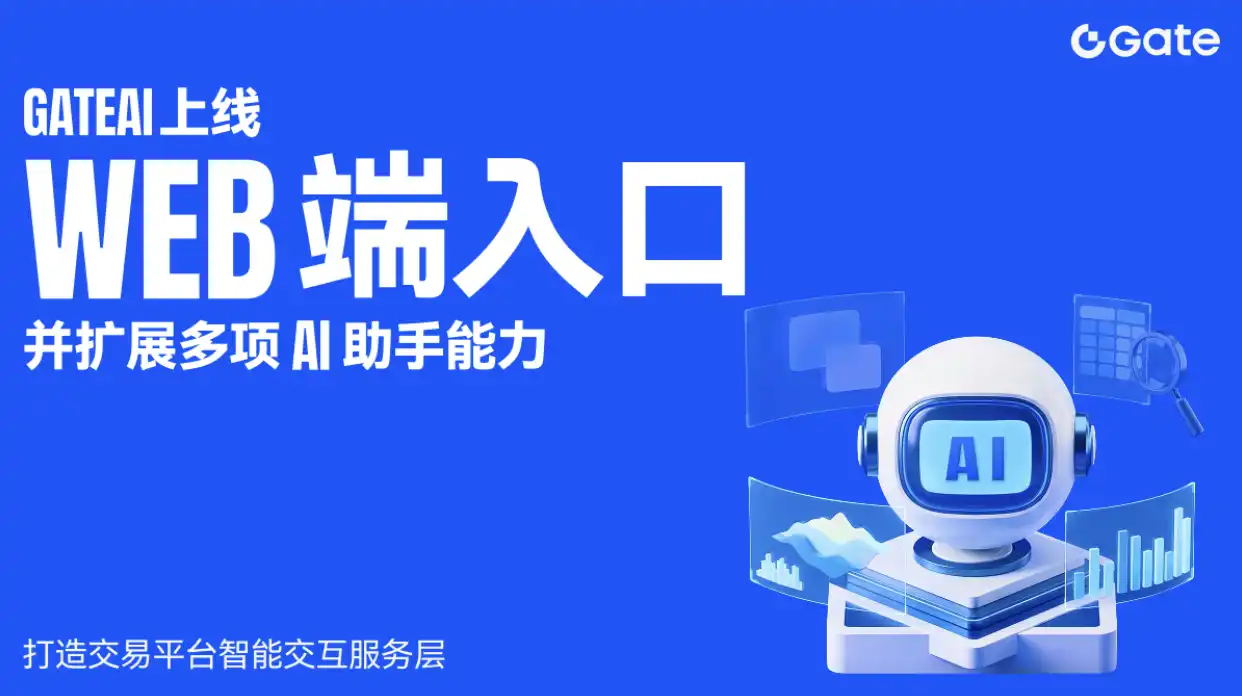
GateAI Launches Web Portal and Expands Multiple AI Assistant Capabilities, Building an Intelligent Interaction Service Layer for Trading Platforms

Gate, a leading digital asset trading platform, has launched the web version of its AI product, GateAI, marking its largest functional expansion to date. The upgrade introduces over ten new modules, including user center, marketing activities, asset management, and personalized recommendations, transforming GateAI from a trading assistant into a comprehensive smart service layer for the entire user journey. Users can now access GateAI via a fixed entry at the bottom of any page on the website, such as the homepage, market trends, or help center, to ask questions about market analysis, product details, or platform guidance. The AI also intelligently suggests questions based on the user’s current page. The dedicated full-page chat interface integrates market sentiment indicators, industry news feeds, and recommended topics, allowing users to observe markets, access information, and engage in in-depth conversations seamlessly. Logged-in users can view and continue past conversations. The web version currently supports core functions like spot trading, wealth management subscriptions, and flash swaps. The expansion also enhances the GateAI app with capabilities covering user accounts, promotions, unified accounts, quantitative asset management, rebate systems, and new user onboarding. GateAI now offers personalized services, such as recommending financial products based on user assets and risk preferences, and guiding new users through KYC, first deposit, and initial trading steps. By using natural language, users can trigger complex operations that previously required navigating multiple pages. This update reflects Gate's ongoing investment in AI infrastructure, including earlier initiatives like Gate for AI, which opens core exchange capabilities via APIs. GateAI makes these features accessible to everyday users, positioning AI as a key entry point to platform services. As AI integrates deeper into the digital asset industry, Gate is advancing trading platforms from traditional interfaces to AI-driven intelligent service layers.

marsbit55 min fa

GateAI Launches Web Portal and Expands Multiple AI Assistant Capabilities, Building an Intelligent Interaction Service Layer for Trading Platforms

marsbit55 min fa

Trading

Spot
Futures
活动图片