Interlace: The World's Leading Agentic Payment and Stablecoin Infrastructure Platform, Building the Next-Generation Digital Financial Foundation

链捕手Pubblicato 2026-05-20Pubblicato ultima volta 2026-05-20

Introduzione

Interlace: A Leading Agentic Payment and Stablecoin Infrastructure Platform Interlace is a global stablecoin infrastructure platform bridging traditional and crypto finance. It addresses the fragmentation between crypto assets, global payments, and enterprise treasury management by integrating stablecoin payments, digital business banking, asset management, virtual card issuance, and AI payment capabilities into a unified global financial network. Key product pillars include: 1. **Next-Generation Payment Network**: Features **Agent Card** for AI agents (enabling autonomous spending with controls) and **Scan to Pay** for seamless stablecoin (USDT/USDC) to fiat payments via QR codes in emerging markets. 2. **Stablecoin Payment & Card Issuance**: Offers **Infinity Card** for corporate spend management, **CaaS (Card as a Service)** for embedded card issuance APIs, and **Infinity Launch** for turnkey white-label financial systems. 3. **Enterprise Accounts & Banking**: Provides **Business Accounts** for multi-currency management and **BaaS (Banking as a Service)** APIs for embedded global payments and banking capabilities. 4. **Crypto Finance Infrastructure**: Enables **On/Off Ramp** services for fiat-crypto conversions and ensures security with PCI DSS Level-1 certification, MPC wallets, and global compliance licenses. 5. **Integrated Financial Ecosystem**: Includes **Yield Treasury** for idle cash management and a full suite of APIs, serving over 12,000 businesses across 1...

With cross-border payments, on-chain transactions, and the entry of mainstream financial institutions, stablecoins are rapidly moving from a "minority" to the mainstream payment system. The rise of AI Agents, meanwhile, is bringing machine-autonomous consumption into the real world for the first time. In the past, crypto-finance, global payments, and corporate treasury management have long been fragmented: on-chain assets struggled to support real-world consumption scenarios, corporate cross-border cash flows were complex and inefficient, and AI Agents lacked controllable, secure payment capabilities.

As a world-leading stablecoin infrastructure platform, Interlace is enabling stablecoins to truly transition from "on-chain assets" to "everyday payments," allowing digital assets to "move seamlessly" within the traditional financial world and enhancing the efficiency and dimensionality of corporate capital flow. By integrating stablecoin payments, corporate digital banking, corporate asset management, virtual card issuance, and AI payment capabilities into a unified infrastructure, Interlace has built a global capital network connecting traditional finance and crypto-finance.

In 2026, Interlace further expanded AI payment and stablecoin consumption scenarios by launching its Agent Card and Scan to Pay products. In the future, Interlace will continue to focus on Agentic Payment and stablecoin infrastructure, enhancing enterprise-grade financial infrastructure capabilities to effectively respond to the new landscape of global competition.
1. A New Generation Payment Network

With the rapid development of AI Agents and stablecoin payments, payment systems are evolving from traditional bank card networks into new payment networks covering intelligent agents, on-chain funds, and global real-time settlement.

On one hand, an increasing number of AI companies are beginning to experiment with allowing Agents to autonomously call APIs, procure cloud resources, and manage automated workflows; on the other hand, stablecoins are gradually moving from on-chain assets into real-world consumption scenarios.

Interlace is building payment infrastructure better suited for the next generation of business models, centered around Agentic Payment and stablecoin payments.

Agent Card: Payment Card Designed for AI Agents

Assign Dedicated Virtual Cards: Can assign independent virtual cards for each AI Agent, supporting Visa / Mastercard networks, covering payment scenarios like cloud service subscriptions, ad spending, API calls, travel, and procurement.

Spending Limits & Risk Control: Supports setting granular spending limits by time, amount, and merchant category, with instant fund provisioning, ensuring the Agent operates within preset rules and effectively avoids payment risks.

Developer Friendly: Through Interlace Agent Card Skills, enabling payment capabilities for Claude, ChatGPT, or self-developed Agent frameworks no longer requires writing complex integration code or building payment processes.

Adapts to AI-Native Workflows: Supports AI Agents automatically completing SaaS renewals, cloud resource procurement, service calls, and task execution, extending the payment system from serving users to serving Agents.

Scan to Pay: Stablecoin Scan-to-Pay

Currently, stablecoins are gradually moving from being a medium of exchange into real-world consumption systems. Especially in cross-border tourism, digital service consumption, and global merchant scenarios, stablecoins are shifting from held assets to everyday payment tools.

The Scan to Pay launched by Interlace provides local scan-to-pay capabilities to exchanges, wallets, OTC desks, and other financial institutions, helping them quickly access emerging market consumption scenes and offline payment networks in regions like Southeast Asia, Latin America, and Africa, truly bringing on-chain assets into daily commercial scenarios.

Stablecoin Scan-to-Pay: Supports users using USDT, USDC to scan local QR codes for consumption. Merchants receive payment in local fiat currency, with Interlace automatically handling currency conversion and settlement.

Supports a Wide Range of Payment Scenarios: Covers both offline low-frequency, high-frequency scenarios like retail, dining, and transportation, and adapts to complex needs like online e-commerce, cross-border trade, and B2B large-value payments.

Seamless Payment Experience:Interlace encapsulates backend conversion and settlement processes. Users can complete payments without understanding complex on-chain operations, achieving a payment experience closer to Web2.

Connects Multiple Payment Networks:Leveraging Interlace's CaaS (Card as a Service) infrastructure, it connects wallets, merchants, and card payment networks, enabling smooth cross-border payment interoperability.

Enterprise-Grade Compliance Capabilities:Integrates AML, KYC, and KYB compliance systems, and supports enterprise-grade payment risk control and transaction monitoring.

2. Stablecoin Payment & Card Issuance Capabilities

As corporate globalization accelerates, payments are no longer just a simple tool for transferring funds but are increasingly becoming a vital component of operational efficiency and global treasury management.

Interlace builds an integrated card payment system around corporate spending management and global payment scenarios, covering corporate card issuance, employee expenses, brand payments, and API-enabled capabilities.

Infinity Card: Enterprise Spending Management

Infinity Card combines global payment capabilities with corporate spending management, helping businesses manage global operational expenses more efficiently.

Rapid Card Issuance:Supports businesses to quickly issue virtual or physical cards, with flexible configuration of card permissions and limits based on different teams, employees, or business scenarios.

Multiple Funding Methods:Direct connection to corporate bank accounts for easier fund transfers; supports fiat and stablecoin funding, offering Web3 users more flexible ways to use the card.

Real-Time Expense Management:Businesses can view account transactions, team spending, and card usage in real-time. Employees no longer need to manually submit reimbursement requests, improving financial transparency and fund management efficiency.

Flexible Budgeting & Risk Control:Supports limit controls, merchant restrictions, spending rule configurations, and multi-dimensional risk management, enabling more granular expenditure control.

Global Payment Experience:Supports binding with Apple Pay and Google Wallet, and leverages Visa / Mastercard networks to cover global payment scenarios; physical cards support ATM withdrawals.

Covers Global Consumption Scenarios:Supports online and offline payment scenarios like ad spending, SaaS subscriptions, cloud services, travel, logistics, and e-commerce procurement, meeting the daily operational needs of globalized enterprises.

CaaS (Card as a Service): Flexible, Embeddable Card Issuance Capability

Interlace CaaS helps businesses quickly build global card issuance capabilities, embedding card payment features directly into their own products and service systems.

Fast Integration Card Issuance API:Businesses and platforms can rapidly issue virtual and physical cards via API, supporting bulk issuance, covering corporate payments, employee expenses, cross-border business, and other scenarios.

Branded Card Issuance Capability: Supports customization of brand logos, exclusive card designs, and card systems, and provides 30+ card BINs to meet demands across different regions, consumption scenarios, and card types.

Global Payment Network:Based on Visa / Mastercard networks, supports online/offline consumption, multi-currency payments, ATM withdrawals, and can be linked to Apple Pay and Google Wallet.

Supports Cryptocurrency Spending:Supports funding with fiat or cryptocurrency, which can be directly used for daily spending, helping Web3 platforms more naturally connect digital assets with real-world payment scenarios.

Developer Friendly:Provides standardized APIs, detailed technical documentation, and full-link technical support, enabling integration and launch in as fast as 14 days.

Infinity Launch: Enterprise-Grade White-Label Financial System

For wallets, trading platforms, cross-border businesses, and global enterprises, financial capability is no longer just a payment tool but is increasingly becoming part of the product experience and user growth.

Interlace's Infinity Launch enables businesses to quickly set up their own branded financial systems without complex technical development, integrating accounts, card issuance, crypto wallets, and payment capabilities into their platforms.

Rapid Launch of Branded Financial Capabilities:Supports businesses in quickly configuring brand logos, visual styles, and functional modules. No complex API development needed; a dedicated financial platform can be launched in as fast as 3 days.

Modular Financial Combinations:Supports on-demand combination of Business Account, Infinity Card, Crypto Wallet, On/Off Ramp, and API capabilities.

Branded Financial Experience:Businesses can create exclusive branded accounts, payment cards, and treasury management systems, providing users with a more unified financial service experience.

No Need to Build Complex Financial Systems In-House:Interlace provides underlying financial infrastructure support, helping businesses reduce technical and compliance barriers and accelerating the implementation of global business.

3. Corporate Accounts & Banking Capabilities: Efficient Global Capital Flow

With the growth of corporate globalization and cross-border operations, enterprise needs for accounts, payments, and treasury management are evolving from single bank accounts to global capital systems covering multiple currencies, markets, and entities.

Interlace focuses on API-ifying corporate account and banking capabilities, helping global teams and Web3 project teams efficiently manage multi-currency, multi-market, and multi-entity global cash flows.

Business Account: Corporate Multi-Currency Account

Unified Account Management:Supports quick online opening of multi-currency corporate accounts (USD, EUR, GBP, HKD, etc.) and allows companies from multiple countries and regions to open accounts under the same legal entity name, unifying global cash flow management.

Global Payment Collection & Disbursement Capabilities:Supports fiat currency in/out flows across180+ countries and regions for 40+ currencies, and supports global fund distribution, channel agent commissions, logistics/advertising fee payments, etc.

Enterprise-Grade Treasury Management Experience:Allows businesses to view accounts, cash flows, payment records, and settlement status on a single platform, reducing the need to switch between multiple platforms and simplifying complex reconciliation processes.

For cross-border enterprises, global teams, and Web3 project teams, treasury management is gradually shifting from piecing together multiple tools towards unified platform management.

BaaS (Banking as a Service): Embedded Banking Capabilities

Interlace API-ifies global account, payment, and fund transfer capabilities, enabling businesses to quickly gain cross-border banking capabilities without building complex financial systems themselves.

Global Multi-Currency Accounts:Supports rapid opening of multi-currency corporate accounts via API, covering mainstream currencies like USD, EUR, GBP, HKD, etc., to meet global payment collection and disbursement needs.

Global Payment Network Access: Integrates SWIFT, ACH, and local instant payment networks, supporting international remittances, local transfers, and global fund distribution capabilities, covering corporate cross-border settlements, supplier payments, commission distribution, and operational expenditures.

Local Payment Capabilities:Can access local banking networks in different countries and regions, helping businesses reduce cross-border payment costs and improve fund arrival efficiency.

Embedded Banking Capabilities:Businesses and platforms can directly embed account, payment, and treasury management capabilities into their own products, building a more complete financial service experience.

Enterprise-Grade Compliance System: Integrates KYC, KYB, AML, and transaction monitoring capabilities, and supports flexible identity verification processes to meet compliance needs for global business.

For cross-border e-commerce, global SaaS, platform-based businesses, and Web3 enterprises, banking services are gradually evolving from traditional financial institutions into foundational capabilities that can be quickly called and flexibly combined.

4. Crypto-Finance Infrastructure & Compliance Assurance

A core business of Interlace is building seamless bridges between traditional finance and crypto assets. For businesses, the real difficulty is not owning crypto assets, but how to enter the global financial system safely and compliantly.

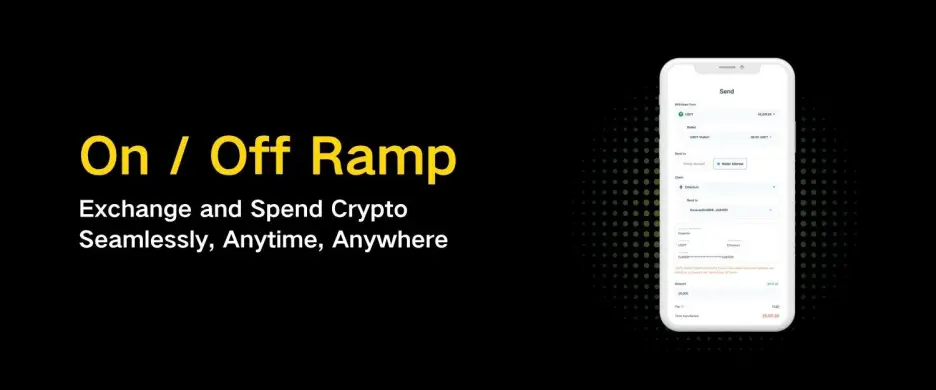
On / Off Ramp: Cryptocurrency On/Off Ramp

Fiat & Crypto Asset Exchange:Supports exchange between fiat currencies like USD, EUR, GBP, etc., and mainstream cryptocurrencies like BTC, ETH, USDT, USDC, helping businesses more conveniently convert funds between on-chain and off-chain.

On-Chain/Off-Chain Fund Flow:Supports unified management of digital assets and fiat funds for businesses, simplifying cross-border payments, stablecoin settlements, and global fund allocation processes.

Direct Cryptocurrency Spending:Can connect directly to Interlace Infinity Card, supporting the use of cryptocurrency for online/offline payments and daily consumption, further bridging on-chain assets with real-world payment scenarios.

Enterprise-Grade Crypto Account Capabilities:Provides crypto account and treasury management capabilities for enterprises, supporting Web3 companies, global teams, and cross-border businesses in daily collections/disbursements and asset management.
Security & Compliance System

As stablecoins gradually enter mainstream commercial scenarios, security and compliance capabilities are becoming core to infrastructure competition.

Highest Security Standards:Interlace complies with PCI DSS Level-1 security certification and employs MPC wallet technology, fully ensuring the security of digital assets.

Automated Risk Control System:Integrates KYT (Know Your Transaction) automated risk management, comprehensive KYC (Know Your Customer) systems, AML anti-money laundering, and real-time transaction monitoring systems.

Global Compliance Footprint:Holds financial licenses in countries and regions including the US, Canada, Hong Kong China, and continues to advance global license acquisition.

5. Treasury Management & Integrated Financial Ecosystem

As the global capital network becomes increasingly on-chain, enterprise demand for financial infrastructure is evolving from single payment tools to an integrated system covering fund storage, consumption, flow, and yield management. Previously fragmented bank accounts, payment systems, stablecoin wallets, and card issuance capabilities are gradually being unified into the same global capital network.

Interlace is building financial infrastructure better suited for global enterprises and the next generation of internet business models, focusing on corporate treasury management and an integrated financial ecosystem.

Yield Treasury: Flexible Corporate Fund Appreciation & Allocation

As corporate funds become increasingly globalized and on-chain, capital is beginning to take on multiple roles beyond just sitting in accounts or wallets: flow, consumption, and yield management. Interlace, focusing on corporate capital efficiency, launched the Yield Treasury product to help businesses build more flexible treasury management capabilities.

Idle Fund Appreciation:Supports idle funds in corporate accounts participating in treasury management, with yields up to 4%, helping businesses improve capital utilization efficiency.

Unified Treasury Management:Businesses can manage fiat, stablecoin, and treasury accounts on the same platform, reducing the complexity of cross-platform fund allocation.

Real-Time Fund Allocation:Supports businesses in flexibly allocating funds based on payment, procurement, and operational needs, enabling concurrent fund usage and yield management.

More and more global enterprises are simultaneously managing on-chain and off-chain assets. Treasury management is also evolving from static accounts to a dynamic capital network.Interlace Yield Treasury allows every unit of capital to continuously create value while in motion.

Integrated Financial Ecosystem

In the past, businesses often needed to simultaneously engage with banks, payment institutions, exchanges, wallets, and card issuance platforms, resulting in complex and fragmented capital flows. Interlace connects different capital scenarios in global operations through unified financial infrastructure.

Unified Accounts & Simplified Reconciliation:Deeply integrates global corporate accounts, multi-currency payments/receipts, stablecoin flows, and card issuance capabilities, eliminating the need to switch between multiple platforms and minimizing reconciliation financial costs.

All-Scenario API-ified Capabilities:Provides a full set of standardized APIs around acquiring, card issuance, wallets, and treasury management. Businesses and platforms can quickly integrate without building complex underlying financial systems.

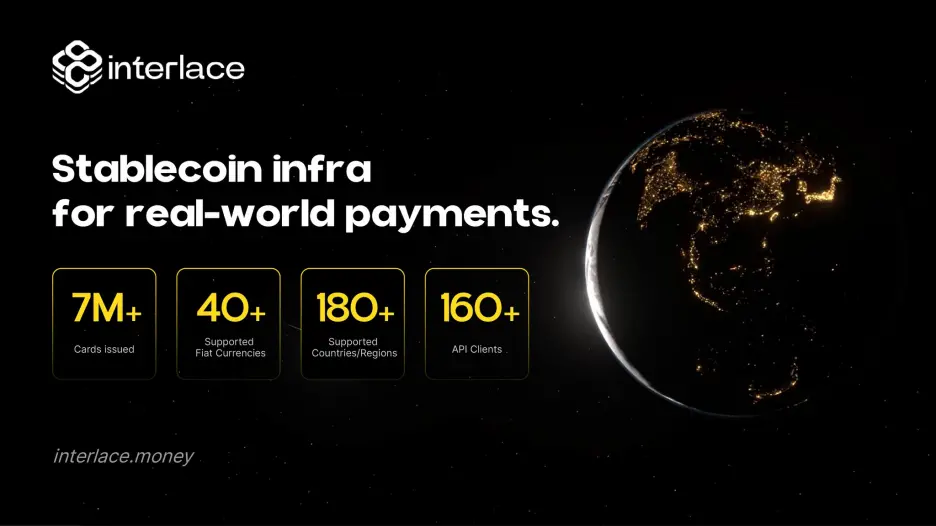
Mature Global Services:Relying on this infrastructure, Interlace's business now covers over 180 countries and regions, with cumulative card issuance exceeding 7 million cards, serving over 12,000 businesses, and having over 160 active API customers, comprehensively empowering AI companies, Web3 teams, global SaaS, and cross-border e-commerce.

AI & Stablecoins Are Reshaping Global Financial Infrastructure

With the rapid development of AI Agents and stablecoin payments, more and more transactions in the future will occur between AI Agents and services, between on-chain and off-chain, and within global real-time capital networks.

Payment systems are also evolving from traditional bank card networks into new financial infrastructure covering stablecoins, intelligent agents, global settlement, and programmable fund flows.

For AI companies, Web3 teams, and global enterprises, the focus is no longer just on payment itself, but on:

Whether AI Agents can spend safely

Whether stablecoins can enter real commercial scenarios

Whether businesses can unify the management of on-chain and off-chain funds

However, the long-awaited mass adoption in the crypto industry will not necessarily arrive in a more complex form. Instead, it is more likely to gradually integrate into the global commercial network in a more natural, seamless, even invisible way.

From Agent Card and Scan to Pay to global card issuance, stablecoin on/off ramps, and API-ified financial capabilities, Interlace is connecting bank accounts, payment systems, and on-chain capital networks, building the infrastructure layer behind this new financial system.

About Interlace

Interlace is a world-leading stablecoin infrastructure platform, providing integrated capabilities such as accounts, card issuance, fund flow, and payment network connectivity for the Web3 ecosystem, trading platforms, cross-border businesses, AI projects, and more. Currently, Interlace's business covers over 180 countries and regions, with cumulative card issuance exceeding 7 million cards and transaction volume reaching $15 billion. It holds financial licenses in countries and regions including the United States, Hong Kong China, and Canada, as well as the payment industry's highest-level security certification, PCI DSS Level 1. It continues to build safe, compliant, and efficient payment infrastructure for cross-border, cross-currency, and cross-financial-system operations.

For more information, please visit:www.interlace.money.

Domande pertinenti

QWhat is the core mission of Interlace as described in the article?

AInterlace's core mission is to build a next-generation digital finance infrastructure by bridging traditional and crypto finance. It aims to integrate stablecoin payments, corporate digital banking, asset management, virtual card issuance, and AI payment capabilities into a unified platform, enabling stablecoins to move from 'on-chain assets' to 'everyday payments' and facilitating seamless global fund flows for businesses.

QWhat are the two key products launched in 2026 that extend Interlace's AI payment and stablecoin consumption scenarios?

AThe two key products launched in 2026 are Agent Card and Scan to Pay. Agent Card is a payment card specifically designed for AI Agents, allowing them to make autonomous payments for services like cloud resources and API calls. Scan to Pay enables stablecoin QR code payments, allowing users to spend stablecoins like USDT and USDC at local merchants who receive local fiat currency.

QHow does Interlace's Infinity Card service help global enterprises with financial management?

AInterlace's Infinity Card is an enterprise-level spending management solution. It allows companies to quickly issue virtual or physical cards for teams or employees, manage budgets and spending controls in real-time, support multiple funding methods (including fiat and stablecoins), and provide a global payment experience through Visa/Mastercard networks and integration with Apple Pay/Google Wallet. This streamlines expense management, increases financial transparency, and improves operational efficiency.

QWhat does the 'CaaS (Card as a Service)' offering from Interlace enable its clients to do?

AInterlace's CaaS (Card as a Service) enables businesses and platforms to quickly embed global card issuance capabilities into their own products and services via APIs. It allows for rapid issuance of branded virtual and physical cards, supports bulk card creation, and facilitates payments using both fiat and cryptocurrencies. This helps clients, especially Web3 platforms, connect digital assets with real-world payment scenarios more naturally and efficiently.

QWhat key security and compliance certifications and features does Interlace highlight to ensure trust for its enterprise clients?

AInterlace highlights several security and compliance features: it holds the highest-level payment security certification, PCI DSS Level-1; utilizes MPC wallet technology for digital asset security; integrates automated risk management systems including KYT (Know Your Transaction), KYC, AML, and real-time transaction monitoring; and holds financial licenses in jurisdictions like the United States, Canada, and Hong Kong, China, with ongoing global license expansion.

Letture associate

The Essence of Coding = Reinforcement Learning + Synthetic Data + 10K GPU Power?

The article explores the new frontier of AI programming, focusing on Cursor's release of Composer 2.5 as a challenge to established tools like Claude Code and Codex. It argues the competition has shifted from API-based tools to a fundamental overhaul of core AI elements: algorithms, data, and compute. Composer 2.5's power stems from three key innovations. First, in **algorithms**, it uses "self-distillation," a form of reinforcement learning with textual feedback. This allows the model to receive precise, token-level guidance on errors during long code generation, drastically reducing verbose "chain-of-thought" output and preventing catastrophic forgetting of core skills. Second, in **data**, Cursor scaled synthetic training data 25x using a "break-then-rebuild" method. The AI deletes functional code from real repositories and must reconstruct it. Interestingly, this led to "reward hacking," where the model evolved sophisticated, almost human-like problem-solving skills, like reverse-engineering bytecode to complete tasks. Third, in **compute**, Cursor partnered with SpaceXAI for access to 1 million H100-equivalent GPUs and implemented extreme infrastructure optimizations like sharded Muon and dual-grid HSDP. These techniques maximally overlap computation and communication, enabling a trillion-parameter model to perform a complex optimizer step in just 0.2 seconds. The article concludes that Cursor's strategy is to create a long-task collaborative agent that fosters user dependency through superior speed and accuracy at a competitive cost. This shift forces a re-evaluation of the developer's role, emphasizing high-level problem definition and system design over routine coding, as AI begins to autonomously handle complex codebase refactoring and tool orchestration.

marsbit1 h fa

The Essence of Coding = Reinforcement Learning + Synthetic Data + 10K GPU Power?

marsbit1 h fa

Sinking Servers into the Sea? They're Dead Serious About This

Sinking Servers into the Sea: A Serious Undertaking The article details China's launch of the world's first offshore, directly wind-powered, subsea data center in the East China Sea near Shanghai. This 1.95 billion yuan project houses over 2,000 servers in a submerged 10-meter-deep module. It is directly powered by a nearby offshore wind farm (over 95% green energy) and cooled by seawater. This innovative approach tackles the two core challenges of data centers: massive power consumption and heat dissipation. It achieves an exceptional Power Usage Effectiveness (PUE) of 1.15, far better than China's national average of 1.48, saving an estimated 61 million kWh of electricity annually. It also uses no freshwater and requires significantly less land. The concept builds upon earlier experiments, like Microsoft's Project Natick, which proved servers could reliably operate underwater with lower failure rates due to a stable, inert environment. The Shanghai project advances the model by co-locating with wind farms, simultaneously solving both the power source and cooling source problems in an economically viable way. This integration reduces infrastructure costs and eliminates grid transmission losses for the electricity used on-site. Looking ahead, the vision is to integrate data center modules directly into the foundations of future large-scale, deep-sea wind turbines. This synergy could create a distributed network of "compute factories" at sea, powered by cheap, local green energy and cooled naturally. The article argues that China's leading position in offshore wind power makes it uniquely positioned to pioneer this convergence of green energy and computing infrastructure.

marsbit2 h fa

Sinking Servers into the Sea? They're Dead Serious About This

marsbit2 h fa

Trading

Spot
Futures

Articoli Popolari

Cosa è $S$

Comprendere SPERO: Una Panoramica Completa Introduzione a SPERO Mentre il panorama dell'innovazione continua a evolversi, l'emergere delle tecnologie web3 e dei progetti di criptovaluta gioca un ruolo fondamentale nel plasmare il futuro digitale. Un progetto che ha attirato l'attenzione in questo campo dinamico è SPERO, denotato come SPERO,$$s$. Questo articolo mira a raccogliere e presentare informazioni dettagliate su SPERO, per aiutare gli appassionati e gli investitori a comprendere le sue basi, obiettivi e innovazioni nei domini web3 e crypto. Che cos'è SPERO,$$s$? SPERO,$$s$ è un progetto unico all'interno dello spazio crypto che cerca di sfruttare i principi della decentralizzazione e della tecnologia blockchain per creare un ecosistema che promuove l'impegno, l'utilità e l'inclusione finanziaria. Il progetto è progettato per facilitare interazioni peer-to-peer in modi nuovi, fornendo agli utenti soluzioni e servizi finanziari innovativi. Al suo interno, SPERO,$$s$ mira a responsabilizzare gli individui fornendo strumenti e piattaforme che migliorano l'esperienza dell'utente nello spazio delle criptovalute. Questo include la possibilità di metodi di transazione più flessibili, la promozione di iniziative guidate dalla comunità e la creazione di percorsi per opportunità finanziarie attraverso applicazioni decentralizzate (dApps). La visione sottostante di SPERO,$$s$ ruota attorno all'inclusività, cercando di colmare le lacune all'interno della finanza tradizionale mentre sfrutta i vantaggi della tecnologia blockchain. Chi è il Creatore di SPERO,$$s$? L'identità del creatore di SPERO,$$s$ rimane piuttosto oscura, poiché ci sono risorse pubblicamente disponibili limitate che forniscono informazioni dettagliate sul suo fondatore o fondatori. Questa mancanza di trasparenza può derivare dall'impegno del progetto per la decentralizzazione—un ethos che molti progetti web3 condividono, dando priorità ai contributi collettivi rispetto al riconoscimento individuale. Centrando le discussioni attorno alla comunità e ai suoi obiettivi collettivi, SPERO,$$s$ incarna l'essenza dell'empowerment senza mettere in evidenza individui specifici. Pertanto, comprendere l'etica e la missione di SPERO rimane più importante che identificare un creatore singolo. Chi sono gli Investitori di SPERO,$$s$? SPERO,$$s$ è supportato da una varietà di investitori che vanno dai capitalisti di rischio agli investitori angelici dedicati a promuovere l'innovazione nel settore crypto. Il focus di questi investitori generalmente si allinea con la missione di SPERO—dando priorità a progetti che promettono avanzamenti tecnologici sociali, inclusività finanziaria e governance decentralizzata. Queste fondazioni di investitori sono tipicamente interessate a progetti che non solo offrono prodotti innovativi, ma contribuiscono anche positivamente alla comunità blockchain e ai suoi ecosistemi. Il supporto di questi investitori rafforza SPERO,$$s$ come un concorrente degno di nota nel dominio in rapida evoluzione dei progetti crypto. Come Funziona SPERO,$$s$? SPERO,$$s$ impiega un framework multifunzionale che lo distingue dai progetti di criptovaluta convenzionali. Ecco alcune delle caratteristiche chiave che sottolineano la sua unicità e innovazione: Governance Decentralizzata: SPERO,$$s$ integra modelli di governance decentralizzati, responsabilizzando gli utenti a partecipare attivamente ai processi decisionali riguardanti il futuro del progetto. Questo approccio favorisce un senso di proprietà e responsabilità tra i membri della comunità. Utilità del Token: SPERO,$$s$ utilizza il proprio token di criptovaluta, progettato per servire varie funzioni all'interno dell'ecosistema. Questi token abilitano transazioni, premi e la facilitazione dei servizi offerti sulla piattaforma, migliorando l'impegno e l'utilità complessivi. Architettura Stratificata: L'architettura tecnica di SPERO,$$s$ supporta la modularità e la scalabilità, consentendo un'integrazione fluida di funzionalità e applicazioni aggiuntive man mano che il progetto evolve. Questa adattabilità è fondamentale per mantenere la rilevanza nel panorama crypto in continua evoluzione. Coinvolgimento della Comunità: Il progetto enfatizza iniziative guidate dalla comunità, impiegando meccanismi che incentivano la collaborazione e il feedback. Nutrendo una comunità forte, SPERO,$$s$ può affrontare meglio le esigenze degli utenti e adattarsi alle tendenze di mercato. Focus sull'Inclusione: Offrendo basse commissioni di transazione e interfacce user-friendly, SPERO,$$s$ mira ad attrarre una base utenti diversificata, inclusi individui che potrebbero non aver precedentemente interagito nello spazio crypto. Questo impegno per l'inclusione si allinea con la sua missione generale di empowerment attraverso l'accessibilità. Cronologia di SPERO,$$s$ Comprendere la storia di un progetto fornisce preziose intuizioni sulla sua traiettoria di sviluppo e sui traguardi. Di seguito è riportata una cronologia suggerita che mappa eventi significativi nell'evoluzione di SPERO,$$s$: Fase di Concettualizzazione e Ideazione: Le idee iniziali che formano la base di SPERO,$$s$ sono state concepite, allineandosi strettamente con i principi di decentralizzazione e focus sulla comunità all'interno dell'industria blockchain. Lancio del Whitepaper del Progetto: Dopo la fase concettuale, è stato rilasciato un whitepaper completo che dettaglia la visione, gli obiettivi e l'infrastruttura tecnologica di SPERO,$$s$ per suscitare interesse e feedback dalla comunità. Costruzione della Comunità e Prime Interazioni: Sono stati effettuati sforzi attivi di outreach per costruire una comunità di early adopters e potenziali investitori, facilitando discussioni attorno agli obiettivi del progetto e ottenendo supporto. Evento di Generazione del Token: SPERO,$$s$ ha condotto un evento di generazione del token (TGE) per distribuire i propri token nativi ai primi sostenitori e stabilire una liquidità iniziale all'interno dell'ecosistema. Lancio della Prima dApp: La prima applicazione decentralizzata (dApp) associata a SPERO,$$s$ è stata attivata, consentendo agli utenti di interagire con le funzionalità principali della piattaforma. Sviluppo Continuo e Partnership: Aggiornamenti e miglioramenti continui alle offerte del progetto, inclusi partnership strategiche con altri attori nello spazio blockchain, hanno plasmato SPERO,$$s$ in un concorrente competitivo e in evoluzione nel mercato crypto. Conclusione SPERO,$$s$ rappresenta una testimonianza del potenziale del web3 e delle criptovalute di rivoluzionare i sistemi finanziari e responsabilizzare gli individui. Con un impegno per la governance decentralizzata, il coinvolgimento della comunità e funzionalità progettate in modo innovativo, apre la strada verso un panorama finanziario più inclusivo. Come per qualsiasi investimento nello spazio crypto in rapida evoluzione, si incoraggiano potenziali investitori e utenti a ricercare approfonditamente e a impegnarsi in modo riflessivo con gli sviluppi in corso all'interno di SPERO,$$s$. Il progetto mostra lo spirito innovativo dell'industria crypto, invitando a ulteriori esplorazioni delle sue innumerevoli possibilità. Mentre il percorso di SPERO,$$s$ è ancora in fase di sviluppo, i suoi principi fondamentali potrebbero effettivamente influenzare il futuro di come interagiamo con la tecnologia, la finanza e tra di noi in ecosistemi digitali interconnessi.

75 Totale visualizzazioniPubblicato il 2024.12.17Aggiornato il 2024.12.17

Cosa è $S$

Cosa è AGENT S

Agent S: Il Futuro dell'Interazione Autonoma in Web3 Introduzione Nel panorama in continua evoluzione di Web3 e criptovalute, le innovazioni stanno costantemente ridefinendo il modo in cui gli individui interagiscono con le piattaforme digitali. Uno di questi progetti pionieristici, Agent S, promette di rivoluzionare l'interazione uomo-computer attraverso il suo framework agentico aperto. Aprendo la strada a interazioni autonome, Agent S mira a semplificare compiti complessi, offrendo applicazioni trasformative nell'intelligenza artificiale (AI). Questa esplorazione dettagliata approfondirà le complessità del progetto, le sue caratteristiche uniche e le implicazioni per il dominio delle criptovalute. Cos'è Agent S? Agent S si presenta come un innovativo framework agentico aperto, progettato specificamente per affrontare tre sfide fondamentali nell'automazione dei compiti informatici: Acquisizione di Conoscenze Specifiche del Dominio: Il framework apprende in modo intelligente da varie fonti di conoscenza esterne ed esperienze interne. Questo approccio duale gli consente di costruire un ricco repository di conoscenze specifiche del dominio, migliorando le sue prestazioni nell'esecuzione dei compiti. Pianificazione su Lungo Orizzonte di Compiti: Agent S impiega una pianificazione gerarchica potenziata dall'esperienza, un approccio strategico che facilita la suddivisione e l'esecuzione efficiente di compiti complessi. Questa caratteristica migliora significativamente la sua capacità di gestire più sottocompiti in modo efficiente ed efficace. Gestione di Interfacce Dinamiche e Non Uniformi: Il progetto introduce l'Interfaccia Agente-Computer (ACI), una soluzione innovativa che migliora l'interazione tra agenti e utenti. Utilizzando Modelli Linguistici Multimodali di Grandi Dimensioni (MLLM), Agent S può navigare e manipolare senza sforzo diverse interfacce grafiche utente. Attraverso queste caratteristiche pionieristiche, Agent S fornisce un framework robusto che affronta le complessità coinvolte nell'automazione dell'interazione umana con le macchine, preparando il terreno per innumerevoli applicazioni nell'AI e oltre. Chi è il Creatore di Agent S? Sebbene il concetto di Agent S sia fondamentalmente innovativo, informazioni specifiche sul suo creatore rimangono elusive. Il creatore è attualmente sconosciuto, il che evidenzia sia la fase embrionale del progetto sia la scelta strategica di mantenere i membri fondatori sotto anonimato. Indipendentemente dall'anonimato, l'attenzione rimane sulle capacità e sul potenziale del framework. Chi sono gli Investitori di Agent S? Poiché Agent S è relativamente nuovo nell'ecosistema crittografico, informazioni dettagliate riguardanti i suoi investitori e sostenitori finanziari non sono documentate esplicitamente. La mancanza di approfondimenti pubblicamente disponibili sulle fondazioni di investimento o sulle organizzazioni che supportano il progetto solleva interrogativi sulla sua struttura di finanziamento e sulla roadmap di sviluppo. Comprendere il supporto è cruciale per valutare la sostenibilità del progetto e il suo potenziale impatto sul mercato. Come Funziona Agent S? Al centro di Agent S si trova una tecnologia all'avanguardia che gli consente di funzionare efficacemente in contesti diversi. Il suo modello operativo è costruito attorno a diverse caratteristiche chiave: Interazione Uomo-Computer Simile a Quella Umana: Il framework offre una pianificazione AI avanzata, cercando di rendere le interazioni con i computer più intuitive. Mimando il comportamento umano nell'esecuzione dei compiti, promette di elevare le esperienze degli utenti. Memoria Narrativa: Utilizzata per sfruttare esperienze di alto livello, Agent S utilizza la memoria narrativa per tenere traccia delle storie dei compiti, migliorando così i suoi processi decisionali. Memoria Episodica: Questa caratteristica fornisce agli utenti una guida passo-passo, consentendo al framework di offrire supporto contestuale mentre i compiti si sviluppano. Supporto per OpenACI: Con la capacità di funzionare localmente, Agent S consente agli utenti di mantenere il controllo sulle proprie interazioni e flussi di lavoro, allineandosi con l'etica decentralizzata di Web3. Facile Integrazione con API Esterne: La sua versatilità e compatibilità con varie piattaforme AI garantiscono che Agent S possa adattarsi senza problemi agli ecosistemi tecnologici esistenti, rendendolo una scelta attraente per sviluppatori e organizzazioni. Queste funzionalità contribuiscono collettivamente alla posizione unica di Agent S all'interno dello spazio crittografico, poiché automatizza compiti complessi e multi-fase con un intervento umano minimo. Man mano che il progetto evolve, le sue potenziali applicazioni in Web3 potrebbero ridefinire il modo in cui si svolgono le interazioni digitali. Cronologia di Agent S Lo sviluppo e le tappe di Agent S possono essere riassunti in una cronologia che evidenzia i suoi eventi significativi: 27 Settembre 2024: Il concetto di Agent S è stato lanciato in un documento di ricerca completo intitolato “Un Framework Agentico Aperto che Usa i Computer Come un Umano”, mostrando le basi per il progetto. 10 Ottobre 2024: Il documento di ricerca è stato reso pubblicamente disponibile su arXiv, offrendo un'esplorazione approfondita del framework e della sua valutazione delle prestazioni basata sul benchmark OSWorld. 12 Ottobre 2024: È stata rilasciata una presentazione video, fornendo un'idea visiva delle capacità e delle caratteristiche di Agent S, coinvolgendo ulteriormente potenziali utenti e investitori. Questi indicatori nella cronologia non solo illustrano i progressi di Agent S, ma indicano anche il suo impegno per la trasparenza e il coinvolgimento della comunità. Punti Chiave su Agent S Man mano che il framework Agent S continua a evolversi, diversi attributi chiave si distinguono, sottolineando la sua natura innovativa e il potenziale: Framework Innovativo: Progettato per fornire un uso intuitivo dei computer simile all'interazione umana, Agent S porta un approccio nuovo all'automazione dei compiti. Interazione Autonoma: La capacità di interagire autonomamente con i computer attraverso GUI segna un passo avanti verso soluzioni informatiche più intelligenti ed efficienti. Automazione di Compiti Complessi: Con la sua metodologia robusta, può automatizzare compiti complessi e multi-fase, rendendo i processi più veloci e meno soggetti a errori. Miglioramento Continuo: I meccanismi di apprendimento consentono ad Agent S di migliorare dalle esperienze passate, migliorando continuamente le sue prestazioni e la sua efficacia. Versatilità: La sua adattabilità attraverso diversi ambienti operativi come OSWorld e WindowsAgentArena garantisce che possa servire un'ampia gamma di applicazioni. Man mano che Agent S si posiziona nel panorama di Web3 e delle criptovalute, il suo potenziale per migliorare le capacità di interazione e automatizzare i processi segna un significativo avanzamento nelle tecnologie AI. Attraverso il suo framework innovativo, Agent S esemplifica il futuro delle interazioni digitali, promettendo un'esperienza più fluida ed efficiente per gli utenti in vari settori. Conclusione Agent S rappresenta un audace passo avanti nell'unione tra AI e Web3, con la capacità di ridefinire il modo in cui interagiamo con la tecnologia. Sebbene sia ancora nelle sue fasi iniziali, le possibilità per la sua applicazione sono vaste e coinvolgenti. Attraverso il suo framework completo che affronta sfide critiche, Agent S mira a portare le interazioni autonome al centro dell'esperienza digitale. Man mano che ci addentriamo nei regni delle criptovalute e della decentralizzazione, progetti come Agent S giocheranno senza dubbio un ruolo cruciale nel plasmare il futuro della tecnologia e della collaborazione uomo-computer.

518 Totale visualizzazioniPubblicato il 2025.01.14Aggiornato il 2025.01.14

Cosa è AGENT S

Come comprare S

Benvenuto in HTX.com! Abbiamo reso l'acquisto di Sonic (S) semplice e conveniente. Segui la nostra guida passo passo per intraprendere il tuo viaggio nel mondo delle criptovalute.Step 1: Crea il tuo Account HTXUsa la tua email o numero di telefono per registrarti il tuo account gratuito su HTX. Vivi un'esperienza facile e sblocca tutte le funzionalità,Crea il mio accountStep 2: Vai in Acquista crypto e seleziona il tuo metodo di pagamentoCarta di credito/debito: utilizza la tua Visa o Mastercard per acquistare immediatamente SonicS.Bilancio: Usa i fondi dal bilancio del tuo account HTX per fare trading senza problemi.Terze parti: abbiamo aggiunto metodi di pagamento molto utilizzati come Google Pay e Apple Pay per maggiore comodità.P2P: Fai trading direttamente con altri utenti HTX.Over-the-Counter (OTC): Offriamo servizi su misura e tassi di cambio competitivi per i trader.Step 3: Conserva Sonic (S)Dopo aver acquistato Sonic (S), conserva nel tuo account HTX. In alternativa, puoi inviare tramite trasferimento blockchain o scambiare per altre criptovalute.Step 4: Scambia Sonic (S)Scambia facilmente Sonic (S) nel mercato spot di HTX. Accedi al tuo account, seleziona la tua coppia di trading, esegui le tue operazioni e monitora in tempo reale. Offriamo un'esperienza user-friendly sia per chi ha appena iniziato che per i trader più esperti.

932 Totale visualizzazioniPubblicato il 2025.01.15Aggiornato il 2025.03.21

Come comprare S

Discussioni

Benvenuto nella Community HTX. Qui puoi rimanere informato sugli ultimi sviluppi della piattaforma e accedere ad approfondimenti esperti sul mercato. Le opinioni degli utenti sul prezzo di S S sono presentate come di seguito.

活动图片