Bubblemaps challenges PEPE’s fair launch, alleges 30% of genesis supply bundled

cointelegraphPubblicato 2025-12-11Pubblicato ultima volta 2025-12-11

Introduzione

Bubblemaps has challenged the "fair launch" narrative of memecoin PEPE, alleging that approximately 30% of its genesis supply was bundled by a single entity at its April 2023 launch. This contradicts the project’s claim of being a "coin for the people" with no presale allocations. According to the analysis, the same wallet cluster sold $2 million worth of tokens the day after launch, creating significant sell pressure that prevented PEPE from reaching a $12 billion market cap. The token's price has fallen over 81% in the past year. The findings were uncovered using Bubblemaps' Time Travel feature, a forensic tool designed to detect insider activity and prevent rug pulls. The report highlights broader concerns about memecoin scams, citing examples like the WOLF token, which crashed 99% in hours.

Blockchain data is casting doubt on the “for the people” launch narrative of memecoin Pepe, with new analysis suggesting that nearly a third of the initial supply was held by a single entity and contributed to heavy early selling pressure.

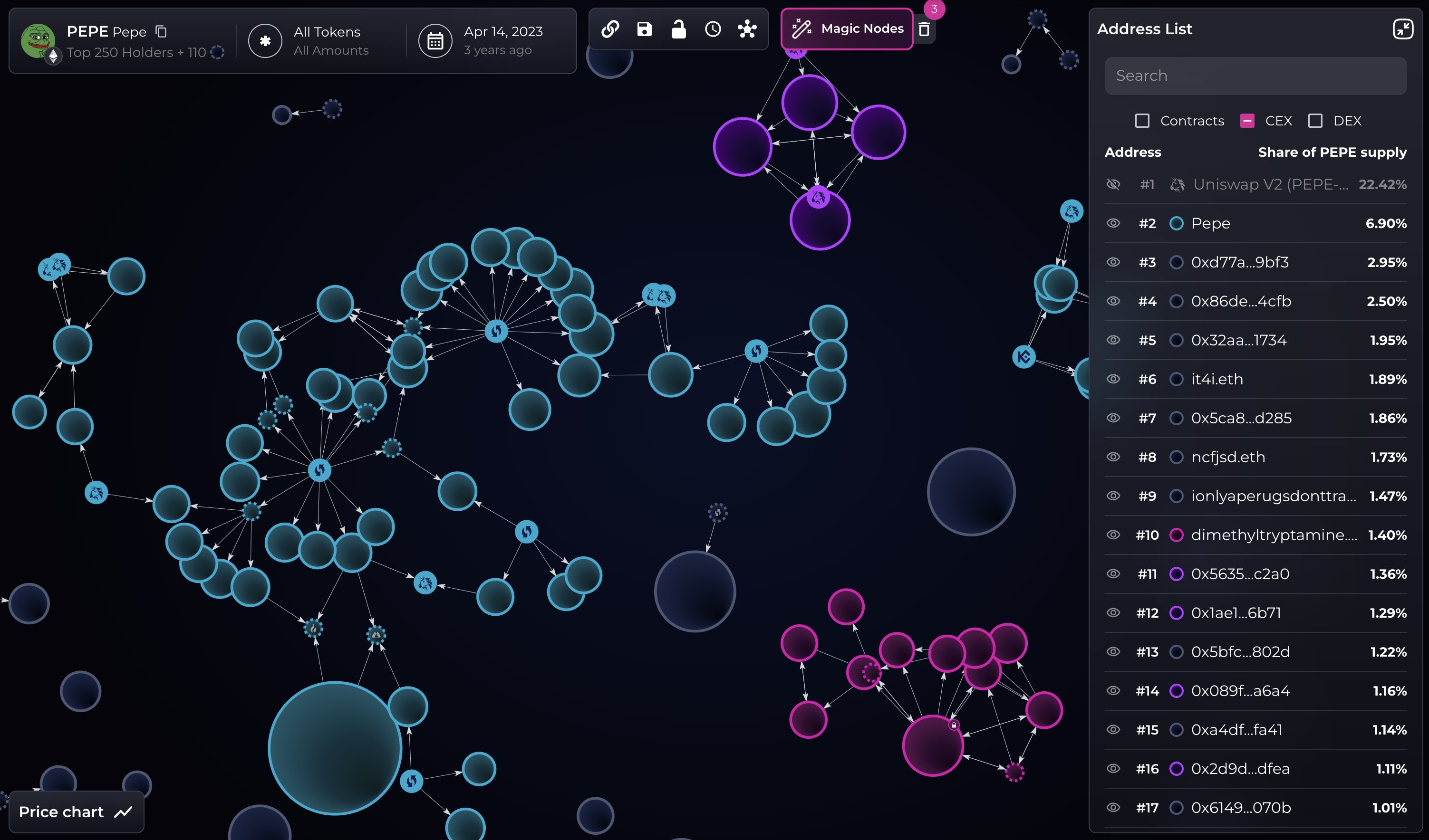
About 30% of the Pepe (PEPE) token supply was bundled at launch in April 2023, blockchain data visualization platform Bubblemaps claimed Wednesday in a post on X, adding that investors were “lied to.”

The same wallet cluster sold $2 million worth of PEPE tokens the day after launch, adding significant sell pressure that stopped the token from surpassing the $12 billion milestone, according to Bubblemaps.

That concentration of the genesis supply contrasts with Pepe’s original branding as a “coin for the people.” The project’s website says the token launched “in stealth” with no presale allocations.
Source: Bubblemaps

Related: Silk Road-linked Bitcoin wallets move $3M to new address

PEPE’s price fell 5.7% in the past 24 hours and is down over 81% in the past year, according to CoinMarketCap data.
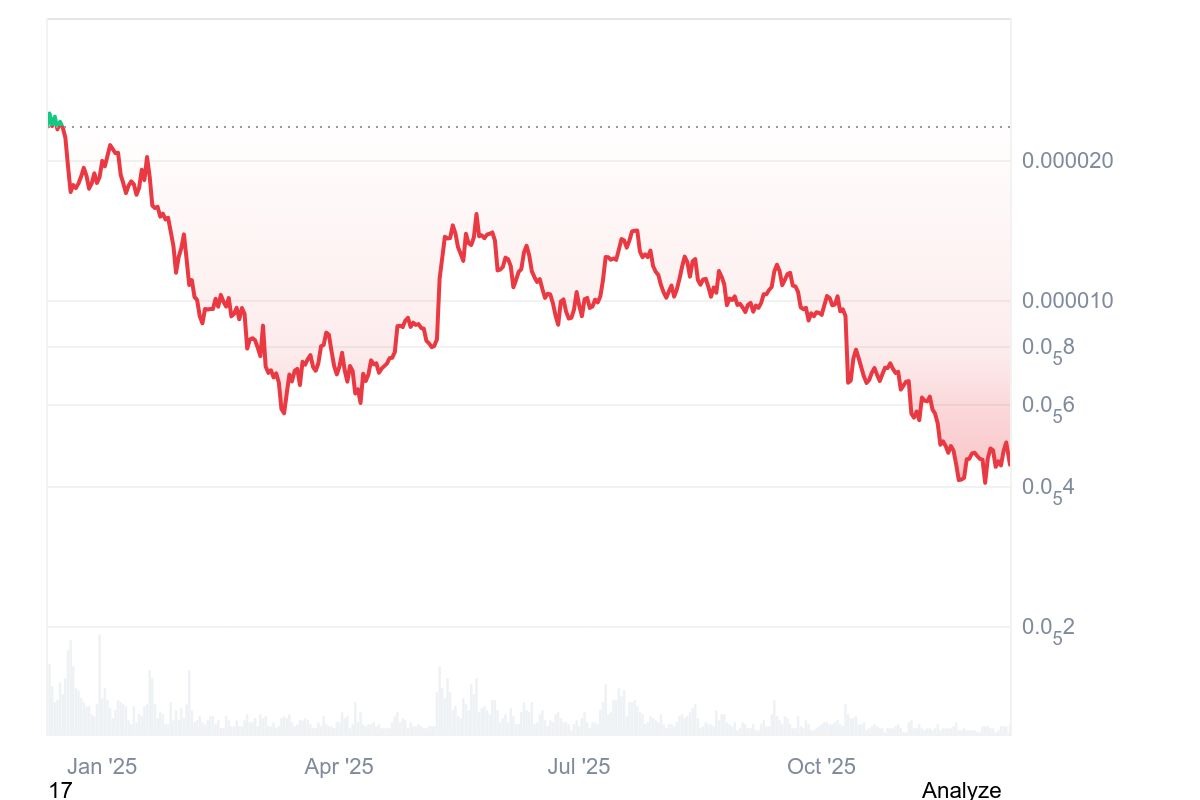
PEPE/USD, 1-year chart. Source: CoinMarketCap.com

Adding to investor concerns, Pepe’s website was exploited earlier in December, temporarily redirecting users to a malicious inferno drainer, a scam tool used for phishing attacks, wallet drainers and social engineering scams.

Despite PEPE’s downside, some crypto traders managed to make millions of dollars on the memecoin.

In March, one trader turned an initial investment of $2,000 into $43 million by holding PEPE. The trader realized a $10 million profit on his position, having held through a 74% decline from PEPE’s all-time high before selling.

Related: Crypto nears its ‘Netscape moment’ as industry approaches inflection point

Forensics tool targets insider-heavy launches

The latest findings were uncovered through Bubblemaps’ Time Travel feature, a forensic-grade analytics tool launched earlier in May, that enables Web3 users to reconstruct the historical distribution of tokens, aiming to detect early insider activity or coordinated accumulation efforts to prevent rug pulls and memecoin scams.

Spotting tokens with a large portion of the supply concentrated across a few wallets can help investors detect scams such as rug pulls, where insiders remove liquidity or stage a mass sell-off, resulting in a steep price collapse that leaves investors with worthless tokens.

Bubblemaps played a key role in uncovering suspicious wallet activity related to multiple memecoins, including the Melania token and an array of fake Eric Trump-themed memecoins.

In one of this year’s most damaging rug pulls, the Wolf of Wall Street-inspired WOLF token crashed 99% within a few hours, wiping out nearly $42 million of market capitalization on March 16.
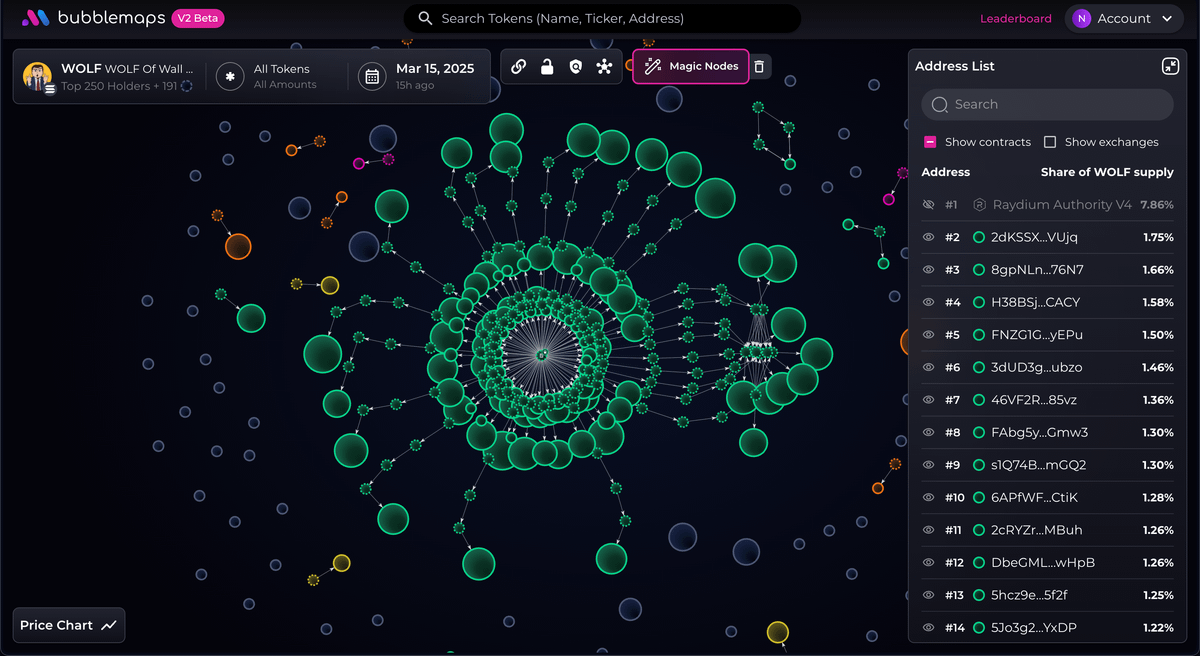
Source: Bubblemaps

The token was created by Hayden Davis, the co-creator of the Official Melania Meme (MELANIA) and the Libra token.

Magazine: Memecoin degeneracy is funding groundbreaking anti-aging research
Letture associate

Cory Iring's Christmas Experiment: $30,000 for Subscribers and High-Stakes Play with No Risk

Cory Iring, a well-known poker player and content creator, has launched an unconventional Christmas initiative for his audience. Instead of a traditional freeroll, he is running a competition with a total prize pool of $30,000, offering subscribers a chance to play in high-stakes cash games without any personal financial risk. The project is supported by CoinPoker and has attracted attention for its innovative approach to player engagement and transparent selection process. The idea originated from Iring’s personal experience. Earlier this year, he aimed to reach $1 million in capital through cryptocurrency investments in Bitcoin, Ethereum, and Solana. However, a sharp market downturn disrupted his plans, leading him to seek an alternative path. Rather than making motivational claims like many influencers, Iring returned to poker—a environment where he feels professional—and applied a classic staking model in an unusual format. Instead of seeking investors, he offered his subscribers the opportunity to play at high limits with his financial backing. The selection is conducted through cash games on the CoinPoker platform. Participants register with the promo code "CE" and play freerolls between December 6 and 25. As part of the promotion, two $10,000 buy-ins for games at The Lodge—a Texas card room run by Doug Polk—are being awarded. An additional $10,000 will be distributed among finalists as cash prizes. Winners are chosen in two categories. "The Protege" focuses on efficiency and final financial results, while "The Grinder" is based on gameplay volume: the most active participants enter a separate mini-tournament, whose winner receives a second high-stakes buy-in. Organizers emphasize that only honest play counts, with no tolerance for artificial attempts to increase the number of freerolls played. The first stage has already concluded. The winner in The Protege category was a subscriber named Kayla, who earned a spot in a real cash game against experienced regulars. Despite her lack of experience in such lineups, she ended the session with a profit, proving that the format works not only on paper but also at the table. The second stage remains open, with the final tournament planned for late December. For many participants, this is a rare opportunity to test themselves in conditions usually accessible only to professionals. Iring’s project demonstrates how a personal challenge can evolve into a large-scale media and gaming initiative. The freeroll combines content, live poker, and real money, offering the audience not abstract promises but a concrete chance to play at high stakes. For CoinPoker, it’s another step toward unconventional formats; for players, it’s an opportunity to enter high-stakes games through a fair and transparent selection process.

bitcoinist45 min fa

Cory Iring's Christmas Experiment: $30,000 for Subscribers and High-Stakes Play with No Risk

bitcoinist45 min fa

Trading

Spot
Futures
活动图片