Cursor's New 1.5T Model Abandons Kimi Foundation, $60 Billion Stock Swap for Cursor, Musk's First Move Targets Microsoft's GitHub

marsbitPubblicato 2026-06-17Pubblicato ultima volta 2026-06-17

Introduzione

Cursor, a popular AI-powered coding tool, has been acquired by SpaceX in an all-stock deal valued at $60 billion. The announcement coincided with Cursor's unveiling of major new developments at the Compile conference: a new 1.5 trillion+ parameter AI model and a "GitHub for agents" platform called Origin. The upcoming model, trained from scratch on over 100,000 GPUs with 10-20x more computational power than before, marks a shift from Cursor's previous reliance on models like Kimi. Cursor's CEO, Michael Truell, emphasized the model will be a "generally intelligent" assistant, moving beyond just code generation to handle broader engineering tasks like planning, testing, and UI interaction. Simultaneously, Cursor introduced Origin, a "Git-native" code hosting platform designed for AI agents that perform thousands of operations daily, featuring automated conflict resolution for large-scale, AI-generated code changes. The acquisition by SpaceX provides Cursor with significant computational resources. Analysts suggest this combination—Cursor's expertise in reinforcement learning and SpaceX's computing power—could position them strongly in the AI race, potentially challenging established players like GitHub, Claude Code, and Codex.

Today, at the Compile conference, Cursor announced several product "futures": an upcoming 1.5T model utilizing more computing power, and Origin, a "GitHub-like" Git platform designed for AI agents.

This quickly drew widespread attention from users, as it came almost simultaneously with the news that SpaceX had officially announced it had exercised its option to acquire Cursor in an all-stock transaction. According to the agreement, Cursor will receive SpaceX stock valued at $60 billion, with the specific transaction expected to be completed in the third quarter of 2026. Previous reports indicated that Cursor had turned down acquisition interest from several major AI companies last year.

"At this rate, Cursor will become the #1 or #2 coding agent within a year. The team is incredible... and now backed by unlimited compute. This is the best acquisition since Instagram and YouTube." commented one netizen.

Secured Compute, Training Models from Scratch

Several netizens revealed that Cursor CEO Michael Truell shared details about the new model at today's Compile conference: a new model with over 1.5T parameters, no longer a shell over Kimi, pre-trained from scratch on over 100,000 GPUs.
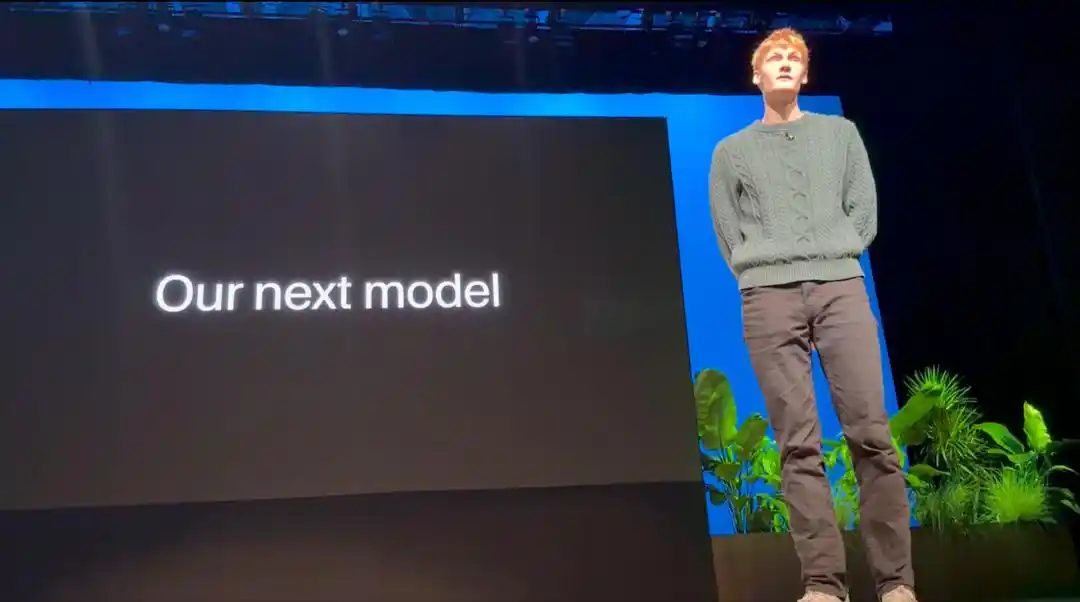
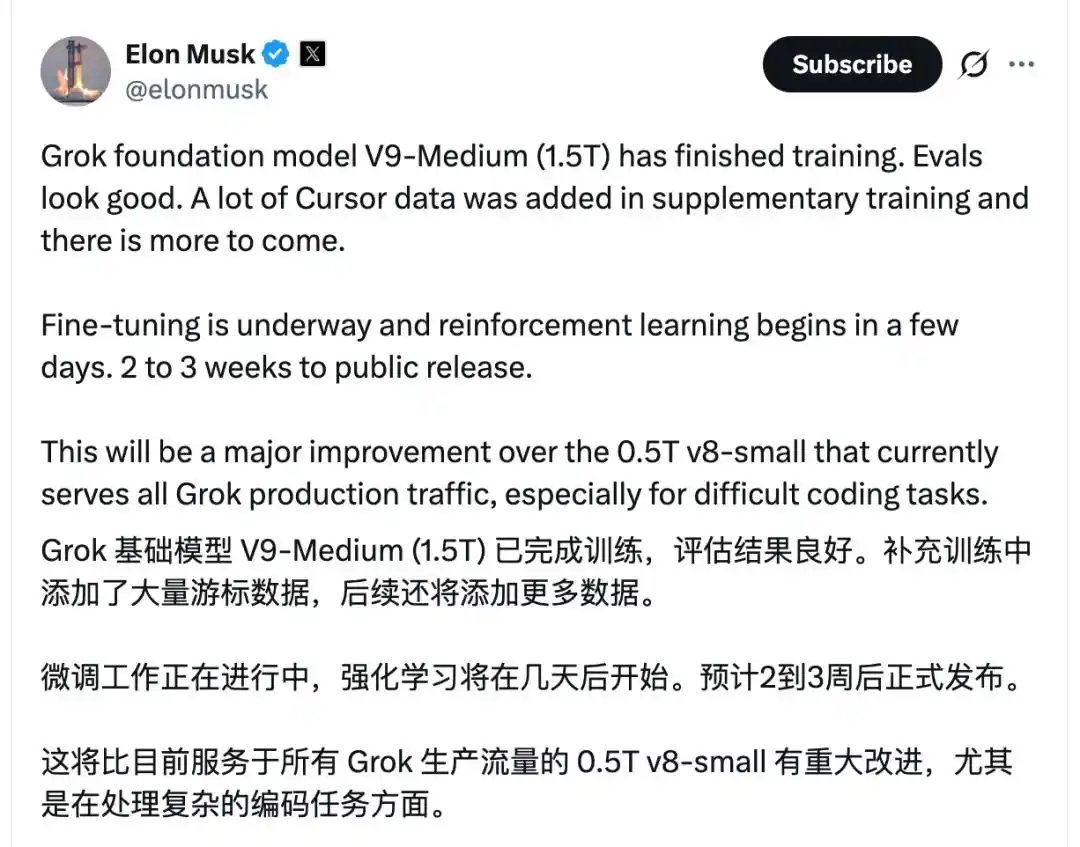
Over the past few months, SpaceXAI has been jointly training a model with Cursor, which will soon be released on Cursor and Grok Build.

Speculation is that the new model Michael mentioned is the 1.5T foundation model Musk referred to on May 25th, followed by two reinforcement learning pipelines, one for Cursor and one for Grok.
At the conference, Michael revealed three key differences in the new model being trained.

First, it is large-scale, on the same magnitude as OpenAI's AGI-level models.

Second, it is trained from scratch, not fine-tuned from an open-source model. "We love open source and want to find more ways to give back to the community. But training a base model from the ground up allows us better control over model behavior and further coverage of the workloads that I and you truly care about," Michael said. Previously, Cursor was alleged to have been a shell over Kimi.

Third, and most crucially, the computational resources Cursor now uses are 10 to 20 times what was previously available. While the previous generation model used more resources than before, this marks the first truly massive increase in compute investment.

"This is hugely important," Michael stated. "In the past, from Composer 1 to Composer 2.5, the compute scale for training our models was actually quite small compared to frontier labs, which greatly limited what we could do. Many methods for making models better essentially run into the same problem: can we run more experiments, can we train the model longer. So, this order-of-magnitude increase in compute does allow us to create differentiated capabilities and, hopefully very soon, get those into your hands and deliver truly exciting, powerful new features."

However, netizen Lisan al Gaib pointed out, "Opus 4.5 to 4.8, and GPT-5 to GPT-5.5, aren't actually that huge! (They are all below 2 trillion parameters)." He continued, "This means the current performance of GPT-5.5 and Opus 4.8 is achievable for open-source models. Because guess what else is at this scale? DeepSeek-V4-Pro."

Gaib stated that the only remaining moat is scale:

So far, Anthropic is the only lab that has successfully transitioned to the ~10T parameter scale, which is also why I no longer think OpenAI can catch up by year-end. Anthropic just needs to keep pouring RL compute into Mythos, and it will keep improving for the next 1-2 years.

Google didn't go that big, and they pulled back a bit too much on sparsity. They also clearly don't know how to actually polish a model to usability with RL.

OpenAI is still haunted by the ghost of GPT-4.5.

xAI and Meta are still in the planning phase.

Previously, Wall Street investor Gavin Baker spoke highly of Cursor: "Besides Anthropic, Cursor has more 'proprietary code training data tokens' than any other lab in the world. Cursor's internal code model, Composer 2.5, is already approaching frontier model levels even before undergoing a full Colossus-level training."

Some netizens are optimistic about the acquisition deal: "Cursor excels at reinforcement learning, and SpaceX has enough computing power to train a 10T model. Therefore, SpaceX might win the AI race."

More Than Just Code

Additionally, some netizens noticed that Cursor's announcement tweet did not describe itself as "for developers," but simply as "useful AI." Therefore, they believe Cursor is likely to become a direct competitor to Codex and Claude Desktop.

To some extent, this aligns with Michael's emphasis on the new model's positioning at the conference: "This will be an intelligent model that's not just good at writing code."

Michael believes this is crucial for what the team wants to achieve. "Our goal is to enable anyone to build what they want with a computer. And right now, the bottleneck is shifting from 'writing code' itself to the full range of capabilities you'd want from an engineering colleague."

This means it needs to know how to use the tools an engineer uses; it needs to be able to monitor, plan, genuinely test software, and click buttons in an interface; it also means the team needs to present the user experience well, letting users clearly see what changes the agent has made.

"So, we're moving beyond just 'trustworthy coding' to give this model stronger general intelligence. The training for this has already started and will be released in the coming weeks. And all of this is powered by our collaboration with SpaceX. And as you know, this is more than just an ordinary partnership now," Michael said.

In his view, there aren't actually many AI players or institutions today that can truly co-design both the product layer and the model layer simultaneously. The company DNA of other players often comes from either big tech companies or started as labs before gradually moving towards the developer and product side. The company behind Cursor, for better or worse, is fundamentally built around developers. It's a company made up of people who genuinely want to make tools useful for developers.

Therefore, Michael believes that as the company enters its next phase, it's the first time a group of people who truly understand product details and developer workflows are combined with the ability to directly modify the foundational capabilities of the model. "What we can influence isn't just pixels on the screen; we can also edit the underlying capabilities of the model itself, and model capability is a very important part of the product."

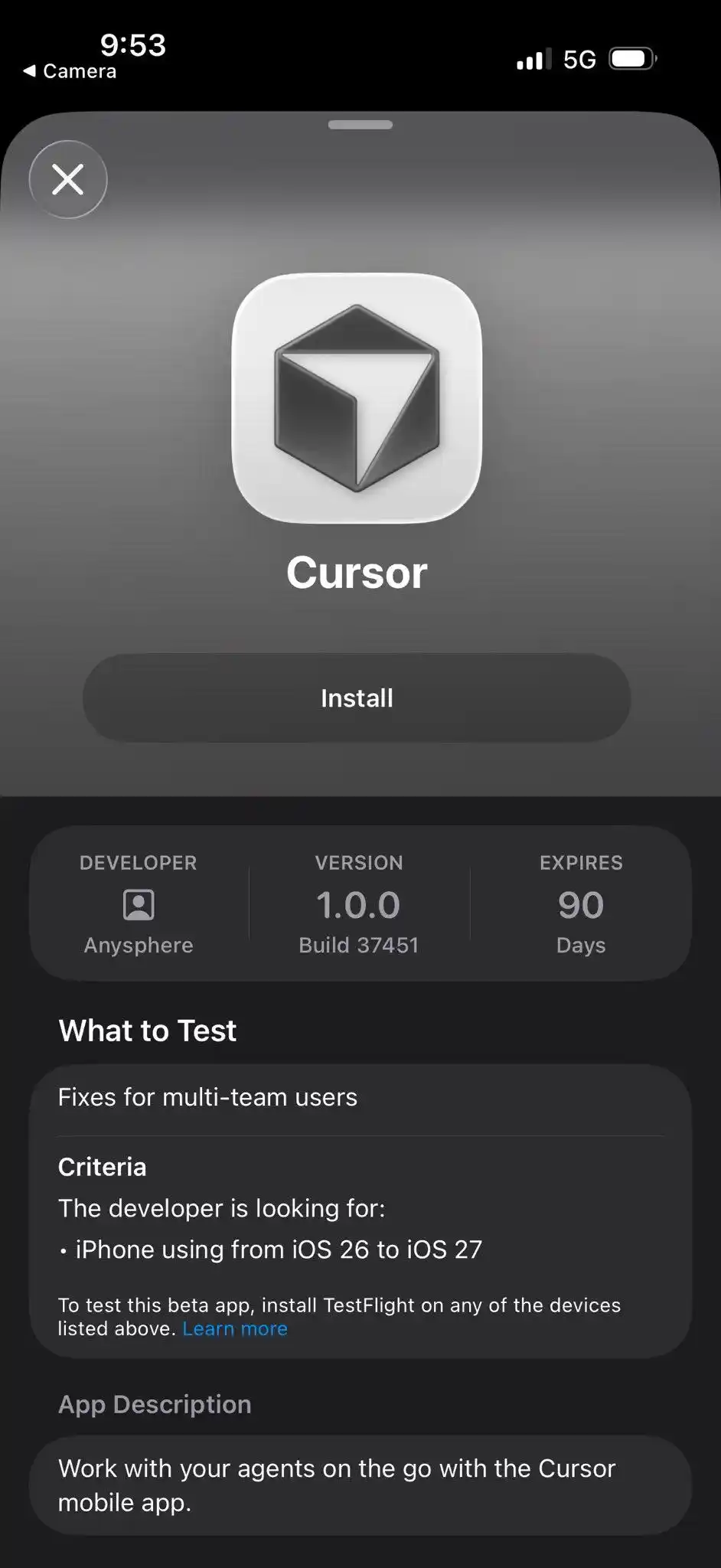
It's worth noting that Cursor Mobile is now in beta, which includes remote control functionality for Mac hosts.
Git Platform for Agents, Challenging Microsoft's GitHub

In addition to the model, Cursor also announced Origin, an agent-native Git platform.

"Modern Git hosting platforms are designed for human developers: they only clone repos occasionally, push code a few times a day, not for AI agents that will clone and push thousands of times a day," Cursor engineer Austin Nick Piel stated on X. "Excited to be building a Git hosting platform for this new world."

Origin is Cursor's attempt to build a "agent-native" competitor to GitHub: it's a Git-compatible code hosting platform, but its underlying assumption is that in the future, a massive number of AI agents will be cloning, creating branches, committing code, rebasing, reviewing code, and fixing failed tasks in parallel.

Some netizens believe this also makes the company's acquisition of Graphite last year more interesting. "Graphite brought stacked PRs, code review workflows, merge queues, and a clearer collaboration experience, while Origin adds the code hosting layer underneath."

Thus, Cursor is no longer just "VS Code with AI." They are attempting to control the entire AI software factory: write code in Cursor, run agents in parallel, review code with a Graphite-style workflow, and host and merge code via Origin.

"GitHub was built for human-scale software development. Origin is packaged as the infrastructure for the next bottleneck: in an era of mass agent-generated code, how do you coordinate, review, and safely merge that code?" they summarized.

According to videos posted by netizens, Graphite co-founder Tomas Reimers was the one introducing Origin at the Compile conference.
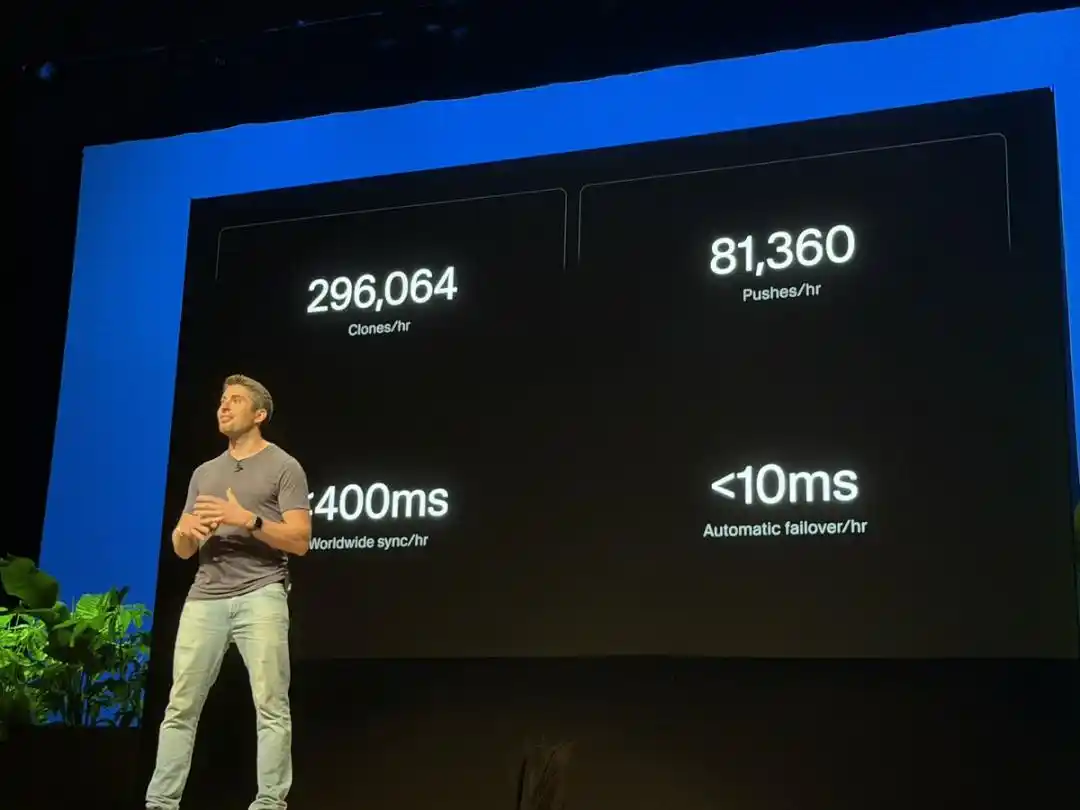
Software development is far more than just writing code. It also includes testing, reviewing, merging, and deploying correctly. We've been working hard to find the best ways to accelerate these parts of the software development process.

"Over the past few years, we've noticed a trend: as these companies start adopting AI programming, the tools they've relied on in the past are beginning to become unreliable. That's because AI tools have completely transformed the industry over the last few years. They've given every developer the chance to become a 10x to 100x more productive developer," Tomas said. "But that change also requires developer tools to fundamentally change. That's why, after being acquired by Cursor, we accelerated our most ambitious project: rebuilding this layer of infrastructure from scratch."

Reportedly, Origin is scalable to handle agent workloads, supports API and MCP extensions, and has built-in agent mechanisms for automatically resolving merge conflicts and collaboration failures.

One developer commented, "My favorite feature is probably automatic conflict resolution. When dozens of AI agents submit code simultaneously, causing huge merge conflicts, Origin will be able to automatically fix those conflicts."

"Perhaps it's time for a competitor to GitHub, to see if that can bring about change," another netizen quipped. "GitHub watches everyone slowly recreate its features, one by one." Of course, some also questioned, "Cursor can't even manage its own customer service, and now they want to do Git?"

Officially, Origin is set to launch this fall, with a waitlist now open. Some developers worry that by the time this "future" product actually launches, people might have forgotten about it.

Conclusion

Many are impressed by the achievements of Cursor, founded in 2023 by four MIT graduates: starting as a crypto communications startup, later expanding into AI programming tools. The company was one of the earliest to fully integrate major model capabilities into an IDE. It is a fork of Visual Studio Code with deep AI integration. However, incumbent platforms and larger AI companies have since introduced similar features.

Currently, Cursor's annualized revenue has reached several billion dollars. But as Anthropic's Claude Code gained dominance in this space, Cursor's market share has also declined. Foreign media reports indicate that Cursor is still striving to achieve profitability.

Cursor's tools allow developers to switch between different AI models, including those from OpenAI, Anthropic, xAI, Google, and others. The company competes with Anthropic's Claude Code and OpenAI's Codex, products capable of writing code, debugging software, and automating tasks.

As a wholly-owned subsidiary of SpaceX, Cursor now has more computing power, and some analysts suggest SpaceX can also leverage this to win lucrative enterprise customers. Previously, many enterprise customers largely avoided using SpaceX's self-developed chatbot assistant, Grok. Competing with Claude and ChatGPT, Musk positions Grok as an "anti-woke," truth-seeking chatbot, but it still lags behind other frontier models.

News of Cursor's acquisition by SpaceX emerged as early as April. At that time, SpaceX signed a compute and option agreement with Anysphere, Cursor's parent company. SpaceX would provide Cursor with GPU cluster compute at a certain scale, and the two would collaborate to improve existing models, including Grok, and potentially jointly develop new AI models and related products.

At the time, this collaboration did not equate to an acquisition. According to SpaceX's prospectus, SpaceX obtained a right, but not an obligation, to acquire Cursor in the future at a pre-agreed price. If SpaceX exercised the option after this offering, the consideration would be paid in SpaceX Class A common stock, based on an implied equity valuation of $60 billion for Cursor and the volume-weighted average closing price of SpaceX Class A common stock over the seven consecutive trading days preceding the acquisition's completion.

The agreement also included a substantial exit "breakup fee." If SpaceX terminated the option agreement, or if Cursor terminated it due to a material breach by SpaceX, Cursor would be entitled to a $1.5 billion termination fee, plus $8.5 billion in deferred service fees under the agreement, totaling $10 billion. The fee could be paid in cash; if SpaceX's IPO had not been completed by then, it could also be paid in Class A common stock.

SpaceX completed its public offering last Friday, with its stock rising 19% on the first day, 20% on Monday, and about 5% on Tuesday, with a current market capitalization of approximately $2.66 trillion. After the stock price increase, SpaceX's market cap surpassed Amazon's on Tuesday, entering the ranks of the top 5 US-listed companies by market value.

Today, SpaceX's acquisition of Cursor is finalized, but it's also a new beginning. Whether the two can disrupt the current market landscape as many developers hope remains to be seen.

References:

https://www.wsj.com/business/spacex-agrees-to-buy-ai-coding-agent-cursor-for-60-billion-7a473340?st=2addXh&reflink=article_copyURL_share

https://x.com/morganlinton/status/2066946225837109735

This article is from WeChat official account "InfoQ" (ID: infoqchina), author: Chu Xingjuan.

Crypto di tendenza

Domande pertinenti

QWhat is the key reason why Cursor's new 1.5T+ model is significant, according to its CEO Michael Truell?

AThe key reasons are its scale, being on par with OpenAI's AGI-level models; its training from scratch, which allows for better control over model behavior; and most importantly, the 10 to 20 times increase in computational resources, which enables more experiments and longer training to achieve differentiated capabilities.

QWhat is Cursor's new 'Origin' platform, and who is its primary target competitor?

AOrigin is an 'agent-native' Git hosting platform designed for a future with numerous AI agents performing tasks like cloning, committing, and reviewing code in parallel. Its primary target competitor is Microsoft's GitHub.

QWhat was the reported implied equity value of Cursor in the SpaceX acquisition deal?

AThe implied equity value of Cursor in the SpaceX acquisition deal was $60 billion, to be paid in SpaceX A-class common stock.

QAccording to the article, what is the broader goal for Cursor's new model, beyond just writing code?

AThe broader goal is to build a useful AI model with stronger general intelligence. It aims to help anyone build what they want on a computer, encompassing all the capabilities one would expect from an engineering colleague, such as using tools, monitoring, planning, testing software, and interacting with interfaces.

QWhat was one of the major concerns or challenges mentioned for Cursor prior to the SpaceX deal?

APrior to the SpaceX deal, a major challenge for Cursor was that its market share was declining as Anthropic's Claude Code gained dominance in the AI programming tool space, and the company was still working towards achieving profitability.

Letture associate

Why Is the World Nervous About Japan Raising Interest Rates?

In June 2026, the Bank of Japan raised its policy rate to 1%, marking its first hike to this level since 1995. While this rate remains low compared to global peers like the US and Europe, the move signals a profound shift for a nation that has been a global source of ultra-cheap funding for decades. Japan's long-standing near-zero or negative interest rates had facilitated massive "yen carry trades," where international investors borrowed low-cost yen to invest in higher-yielding assets worldwide, such as US tech stocks and emerging market bonds. This made Japan a critical, often overlooked, source of global liquidity. Japan's ultra-loose policy stemmed from structural challenges post-1990s asset bubble: aging demographics, chronic low inflation/deflation, and high public debt. Recent shifts, including sustained wage growth (exceeding 5% in recent years) and inflation consistently above the 2% target, have created a "wage-price spiral" possibility, prompting the policy normalization. The global market's concern lies not in the absolute rate but in the potential unwinding of the yen carry trade. As Japanese borrowing costs rise, the economics of these leveraged global investments change, potentially triggering deleveraging and capital outflows from risk assets. Market anxiety focuses on the end of a thirty-year consensus that Japan would perpetually provide cheap funding. Ultimately, the global impact will depend on the interplay with US monetary policy. While Japan is tightening, the significant interest rate differential with the US remains. The key future dynamic is whether simultaneous Japanese hikes and eventual US rate cuts will narrow this gap, forcing a major recalibration of global capital flows and asset pricing built on an era of abundant, cheap yen liquidity.

marsbit9 h fa

Why Is the World Nervous About Japan Raising Interest Rates?

marsbit9 h fa

Trading

Spot
Futures

Articoli Popolari

Cosa è $S$

Comprendere SPERO: Una Panoramica Completa Introduzione a SPERO Mentre il panorama dell'innovazione continua a evolversi, l'emergere delle tecnologie web3 e dei progetti di criptovaluta gioca un ruolo fondamentale nel plasmare il futuro digitale. Un progetto che ha attirato l'attenzione in questo campo dinamico è SPERO, denotato come SPERO,$$s$. Questo articolo mira a raccogliere e presentare informazioni dettagliate su SPERO, per aiutare gli appassionati e gli investitori a comprendere le sue basi, obiettivi e innovazioni nei domini web3 e crypto. Che cos'è SPERO,$$s$? SPERO,$$s$ è un progetto unico all'interno dello spazio crypto che cerca di sfruttare i principi della decentralizzazione e della tecnologia blockchain per creare un ecosistema che promuove l'impegno, l'utilità e l'inclusione finanziaria. Il progetto è progettato per facilitare interazioni peer-to-peer in modi nuovi, fornendo agli utenti soluzioni e servizi finanziari innovativi. Al suo interno, SPERO,$$s$ mira a responsabilizzare gli individui fornendo strumenti e piattaforme che migliorano l'esperienza dell'utente nello spazio delle criptovalute. Questo include la possibilità di metodi di transazione più flessibili, la promozione di iniziative guidate dalla comunità e la creazione di percorsi per opportunità finanziarie attraverso applicazioni decentralizzate (dApps). La visione sottostante di SPERO,$$s$ ruota attorno all'inclusività, cercando di colmare le lacune all'interno della finanza tradizionale mentre sfrutta i vantaggi della tecnologia blockchain. Chi è il Creatore di SPERO,$$s$? L'identità del creatore di SPERO,$$s$ rimane piuttosto oscura, poiché ci sono risorse pubblicamente disponibili limitate che forniscono informazioni dettagliate sul suo fondatore o fondatori. Questa mancanza di trasparenza può derivare dall'impegno del progetto per la decentralizzazione—un ethos che molti progetti web3 condividono, dando priorità ai contributi collettivi rispetto al riconoscimento individuale. Centrando le discussioni attorno alla comunità e ai suoi obiettivi collettivi, SPERO,$$s$ incarna l'essenza dell'empowerment senza mettere in evidenza individui specifici. Pertanto, comprendere l'etica e la missione di SPERO rimane più importante che identificare un creatore singolo. Chi sono gli Investitori di SPERO,$$s$? SPERO,$$s$ è supportato da una varietà di investitori che vanno dai capitalisti di rischio agli investitori angelici dedicati a promuovere l'innovazione nel settore crypto. Il focus di questi investitori generalmente si allinea con la missione di SPERO—dando priorità a progetti che promettono avanzamenti tecnologici sociali, inclusività finanziaria e governance decentralizzata. Queste fondazioni di investitori sono tipicamente interessate a progetti che non solo offrono prodotti innovativi, ma contribuiscono anche positivamente alla comunità blockchain e ai suoi ecosistemi. Il supporto di questi investitori rafforza SPERO,$$s$ come un concorrente degno di nota nel dominio in rapida evoluzione dei progetti crypto. Come Funziona SPERO,$$s$? SPERO,$$s$ impiega un framework multifunzionale che lo distingue dai progetti di criptovaluta convenzionali. Ecco alcune delle caratteristiche chiave che sottolineano la sua unicità e innovazione: Governance Decentralizzata: SPERO,$$s$ integra modelli di governance decentralizzati, responsabilizzando gli utenti a partecipare attivamente ai processi decisionali riguardanti il futuro del progetto. Questo approccio favorisce un senso di proprietà e responsabilità tra i membri della comunità. Utilità del Token: SPERO,$$s$ utilizza il proprio token di criptovaluta, progettato per servire varie funzioni all'interno dell'ecosistema. Questi token abilitano transazioni, premi e la facilitazione dei servizi offerti sulla piattaforma, migliorando l'impegno e l'utilità complessivi. Architettura Stratificata: L'architettura tecnica di SPERO,$$s$ supporta la modularità e la scalabilità, consentendo un'integrazione fluida di funzionalità e applicazioni aggiuntive man mano che il progetto evolve. Questa adattabilità è fondamentale per mantenere la rilevanza nel panorama crypto in continua evoluzione. Coinvolgimento della Comunità: Il progetto enfatizza iniziative guidate dalla comunità, impiegando meccanismi che incentivano la collaborazione e il feedback. Nutrendo una comunità forte, SPERO,$$s$ può affrontare meglio le esigenze degli utenti e adattarsi alle tendenze di mercato. Focus sull'Inclusione: Offrendo basse commissioni di transazione e interfacce user-friendly, SPERO,$$s$ mira ad attrarre una base utenti diversificata, inclusi individui che potrebbero non aver precedentemente interagito nello spazio crypto. Questo impegno per l'inclusione si allinea con la sua missione generale di empowerment attraverso l'accessibilità. Cronologia di SPERO,$$s$ Comprendere la storia di un progetto fornisce preziose intuizioni sulla sua traiettoria di sviluppo e sui traguardi. Di seguito è riportata una cronologia suggerita che mappa eventi significativi nell'evoluzione di SPERO,$$s$: Fase di Concettualizzazione e Ideazione: Le idee iniziali che formano la base di SPERO,$$s$ sono state concepite, allineandosi strettamente con i principi di decentralizzazione e focus sulla comunità all'interno dell'industria blockchain. Lancio del Whitepaper del Progetto: Dopo la fase concettuale, è stato rilasciato un whitepaper completo che dettaglia la visione, gli obiettivi e l'infrastruttura tecnologica di SPERO,$$s$ per suscitare interesse e feedback dalla comunità. Costruzione della Comunità e Prime Interazioni: Sono stati effettuati sforzi attivi di outreach per costruire una comunità di early adopters e potenziali investitori, facilitando discussioni attorno agli obiettivi del progetto e ottenendo supporto. Evento di Generazione del Token: SPERO,$$s$ ha condotto un evento di generazione del token (TGE) per distribuire i propri token nativi ai primi sostenitori e stabilire una liquidità iniziale all'interno dell'ecosistema. Lancio della Prima dApp: La prima applicazione decentralizzata (dApp) associata a SPERO,$$s$ è stata attivata, consentendo agli utenti di interagire con le funzionalità principali della piattaforma. Sviluppo Continuo e Partnership: Aggiornamenti e miglioramenti continui alle offerte del progetto, inclusi partnership strategiche con altri attori nello spazio blockchain, hanno plasmato SPERO,$$s$ in un concorrente competitivo e in evoluzione nel mercato crypto. Conclusione SPERO,$$s$ rappresenta una testimonianza del potenziale del web3 e delle criptovalute di rivoluzionare i sistemi finanziari e responsabilizzare gli individui. Con un impegno per la governance decentralizzata, il coinvolgimento della comunità e funzionalità progettate in modo innovativo, apre la strada verso un panorama finanziario più inclusivo. Come per qualsiasi investimento nello spazio crypto in rapida evoluzione, si incoraggiano potenziali investitori e utenti a ricercare approfonditamente e a impegnarsi in modo riflessivo con gli sviluppi in corso all'interno di SPERO,$$s$. Il progetto mostra lo spirito innovativo dell'industria crypto, invitando a ulteriori esplorazioni delle sue innumerevoli possibilità. Mentre il percorso di SPERO,$$s$ è ancora in fase di sviluppo, i suoi principi fondamentali potrebbero effettivamente influenzare il futuro di come interagiamo con la tecnologia, la finanza e tra di noi in ecosistemi digitali interconnessi.

77 Totale visualizzazioniPubblicato il 2024.12.17Aggiornato il 2024.12.17

Cosa è $S$

Cosa è AGENT S

Agent S: Il Futuro dell'Interazione Autonoma in Web3 Introduzione Nel panorama in continua evoluzione di Web3 e criptovalute, le innovazioni stanno costantemente ridefinendo il modo in cui gli individui interagiscono con le piattaforme digitali. Uno di questi progetti pionieristici, Agent S, promette di rivoluzionare l'interazione uomo-computer attraverso il suo framework agentico aperto. Aprendo la strada a interazioni autonome, Agent S mira a semplificare compiti complessi, offrendo applicazioni trasformative nell'intelligenza artificiale (AI). Questa esplorazione dettagliata approfondirà le complessità del progetto, le sue caratteristiche uniche e le implicazioni per il dominio delle criptovalute. Cos'è Agent S? Agent S si presenta come un innovativo framework agentico aperto, progettato specificamente per affrontare tre sfide fondamentali nell'automazione dei compiti informatici: Acquisizione di Conoscenze Specifiche del Dominio: Il framework apprende in modo intelligente da varie fonti di conoscenza esterne ed esperienze interne. Questo approccio duale gli consente di costruire un ricco repository di conoscenze specifiche del dominio, migliorando le sue prestazioni nell'esecuzione dei compiti. Pianificazione su Lungo Orizzonte di Compiti: Agent S impiega una pianificazione gerarchica potenziata dall'esperienza, un approccio strategico che facilita la suddivisione e l'esecuzione efficiente di compiti complessi. Questa caratteristica migliora significativamente la sua capacità di gestire più sottocompiti in modo efficiente ed efficace. Gestione di Interfacce Dinamiche e Non Uniformi: Il progetto introduce l'Interfaccia Agente-Computer (ACI), una soluzione innovativa che migliora l'interazione tra agenti e utenti. Utilizzando Modelli Linguistici Multimodali di Grandi Dimensioni (MLLM), Agent S può navigare e manipolare senza sforzo diverse interfacce grafiche utente. Attraverso queste caratteristiche pionieristiche, Agent S fornisce un framework robusto che affronta le complessità coinvolte nell'automazione dell'interazione umana con le macchine, preparando il terreno per innumerevoli applicazioni nell'AI e oltre. Chi è il Creatore di Agent S? Sebbene il concetto di Agent S sia fondamentalmente innovativo, informazioni specifiche sul suo creatore rimangono elusive. Il creatore è attualmente sconosciuto, il che evidenzia sia la fase embrionale del progetto sia la scelta strategica di mantenere i membri fondatori sotto anonimato. Indipendentemente dall'anonimato, l'attenzione rimane sulle capacità e sul potenziale del framework. Chi sono gli Investitori di Agent S? Poiché Agent S è relativamente nuovo nell'ecosistema crittografico, informazioni dettagliate riguardanti i suoi investitori e sostenitori finanziari non sono documentate esplicitamente. La mancanza di approfondimenti pubblicamente disponibili sulle fondazioni di investimento o sulle organizzazioni che supportano il progetto solleva interrogativi sulla sua struttura di finanziamento e sulla roadmap di sviluppo. Comprendere il supporto è cruciale per valutare la sostenibilità del progetto e il suo potenziale impatto sul mercato. Come Funziona Agent S? Al centro di Agent S si trova una tecnologia all'avanguardia che gli consente di funzionare efficacemente in contesti diversi. Il suo modello operativo è costruito attorno a diverse caratteristiche chiave: Interazione Uomo-Computer Simile a Quella Umana: Il framework offre una pianificazione AI avanzata, cercando di rendere le interazioni con i computer più intuitive. Mimando il comportamento umano nell'esecuzione dei compiti, promette di elevare le esperienze degli utenti. Memoria Narrativa: Utilizzata per sfruttare esperienze di alto livello, Agent S utilizza la memoria narrativa per tenere traccia delle storie dei compiti, migliorando così i suoi processi decisionali. Memoria Episodica: Questa caratteristica fornisce agli utenti una guida passo-passo, consentendo al framework di offrire supporto contestuale mentre i compiti si sviluppano. Supporto per OpenACI: Con la capacità di funzionare localmente, Agent S consente agli utenti di mantenere il controllo sulle proprie interazioni e flussi di lavoro, allineandosi con l'etica decentralizzata di Web3. Facile Integrazione con API Esterne: La sua versatilità e compatibilità con varie piattaforme AI garantiscono che Agent S possa adattarsi senza problemi agli ecosistemi tecnologici esistenti, rendendolo una scelta attraente per sviluppatori e organizzazioni. Queste funzionalità contribuiscono collettivamente alla posizione unica di Agent S all'interno dello spazio crittografico, poiché automatizza compiti complessi e multi-fase con un intervento umano minimo. Man mano che il progetto evolve, le sue potenziali applicazioni in Web3 potrebbero ridefinire il modo in cui si svolgono le interazioni digitali. Cronologia di Agent S Lo sviluppo e le tappe di Agent S possono essere riassunti in una cronologia che evidenzia i suoi eventi significativi: 27 Settembre 2024: Il concetto di Agent S è stato lanciato in un documento di ricerca completo intitolato “Un Framework Agentico Aperto che Usa i Computer Come un Umano”, mostrando le basi per il progetto. 10 Ottobre 2024: Il documento di ricerca è stato reso pubblicamente disponibile su arXiv, offrendo un'esplorazione approfondita del framework e della sua valutazione delle prestazioni basata sul benchmark OSWorld. 12 Ottobre 2024: È stata rilasciata una presentazione video, fornendo un'idea visiva delle capacità e delle caratteristiche di Agent S, coinvolgendo ulteriormente potenziali utenti e investitori. Questi indicatori nella cronologia non solo illustrano i progressi di Agent S, ma indicano anche il suo impegno per la trasparenza e il coinvolgimento della comunità. Punti Chiave su Agent S Man mano che il framework Agent S continua a evolversi, diversi attributi chiave si distinguono, sottolineando la sua natura innovativa e il potenziale: Framework Innovativo: Progettato per fornire un uso intuitivo dei computer simile all'interazione umana, Agent S porta un approccio nuovo all'automazione dei compiti. Interazione Autonoma: La capacità di interagire autonomamente con i computer attraverso GUI segna un passo avanti verso soluzioni informatiche più intelligenti ed efficienti. Automazione di Compiti Complessi: Con la sua metodologia robusta, può automatizzare compiti complessi e multi-fase, rendendo i processi più veloci e meno soggetti a errori. Miglioramento Continuo: I meccanismi di apprendimento consentono ad Agent S di migliorare dalle esperienze passate, migliorando continuamente le sue prestazioni e la sua efficacia. Versatilità: La sua adattabilità attraverso diversi ambienti operativi come OSWorld e WindowsAgentArena garantisce che possa servire un'ampia gamma di applicazioni. Man mano che Agent S si posiziona nel panorama di Web3 e delle criptovalute, il suo potenziale per migliorare le capacità di interazione e automatizzare i processi segna un significativo avanzamento nelle tecnologie AI. Attraverso il suo framework innovativo, Agent S esemplifica il futuro delle interazioni digitali, promettendo un'esperienza più fluida ed efficiente per gli utenti in vari settori. Conclusione Agent S rappresenta un audace passo avanti nell'unione tra AI e Web3, con la capacità di ridefinire il modo in cui interagiamo con la tecnologia. Sebbene sia ancora nelle sue fasi iniziali, le possibilità per la sua applicazione sono vaste e coinvolgenti. Attraverso il suo framework completo che affronta sfide critiche, Agent S mira a portare le interazioni autonome al centro dell'esperienza digitale. Man mano che ci addentriamo nei regni delle criptovalute e della decentralizzazione, progetti come Agent S giocheranno senza dubbio un ruolo cruciale nel plasmare il futuro della tecnologia e della collaborazione uomo-computer.

548 Totale visualizzazioniPubblicato il 2025.01.14Aggiornato il 2025.01.14

Cosa è AGENT S

Come comprare S

Benvenuto in HTX.com! Abbiamo reso l'acquisto di Sonic (S) semplice e conveniente. Segui la nostra guida passo passo per intraprendere il tuo viaggio nel mondo delle criptovalute.Step 1: Crea il tuo Account HTXUsa la tua email o numero di telefono per registrarti il tuo account gratuito su HTX. Vivi un'esperienza facile e sblocca tutte le funzionalità,Crea il mio accountStep 2: Vai in Acquista crypto e seleziona il tuo metodo di pagamentoCarta di credito/debito: utilizza la tua Visa o Mastercard per acquistare immediatamente SonicS.Bilancio: Usa i fondi dal bilancio del tuo account HTX per fare trading senza problemi.Terze parti: abbiamo aggiunto metodi di pagamento molto utilizzati come Google Pay e Apple Pay per maggiore comodità.P2P: Fai trading direttamente con altri utenti HTX.Over-the-Counter (OTC): Offriamo servizi su misura e tassi di cambio competitivi per i trader.Step 3: Conserva Sonic (S)Dopo aver acquistato Sonic (S), conserva nel tuo account HTX. In alternativa, puoi inviare tramite trasferimento blockchain o scambiare per altre criptovalute.Step 4: Scambia Sonic (S)Scambia facilmente Sonic (S) nel mercato spot di HTX. Accedi al tuo account, seleziona la tua coppia di trading, esegui le tue operazioni e monitora in tempo reale. Offriamo un'esperienza user-friendly sia per chi ha appena iniziato che per i trader più esperti.

1.1k Totale visualizzazioniPubblicato il 2025.01.15Aggiornato il 2026.06.02

Come comprare S

Discussioni

Benvenuto nella Community HTX. Qui puoi rimanere informato sugli ultimi sviluppi della piattaforma e accedere ad approfondimenti esperti sul mercato. Le opinioni degli utenti sul prezzo di S S sono presentate come di seguito.

活动图片