70% of the Public Opposes AI, Americans Hope the U.S. Loses the AI War

marsbitPubblicato 2026-06-06Pubblicato ultima volta 2026-06-06

Introduzione

70% of Americans believe AI development is moving too fast, with growing public resistance evolving from online criticism to real-world protests and violence. This widespread anti-AI sentiment stems from fears of job losses, rising utility costs, environmental damage, threats to democracy, and financial instability. Key incidents illustrate the backlash: Google's former CEO Eric Schmidt was loudly booed at a graduation for promoting AI; AI company ads are vandalized; protests and even violent attacks target AI firms and data centers. Polls show deep public pessimism and strong local opposition to data center construction, often surpassing resistance to nuclear power plants. The core grievances are economic and practical: AI is seen as automating jobs, concentrating wealth, and increasing household electricity and water bills due to massive data center resource demands. Environmentalists also oppose AI's high energy use and carbon emissions. This opposition has turned AI into a major political issue in the US. While the Trump administration prioritizes AI innovation for global competition, bipartisan pushback is growing. Democrats and factions within the MAGA movement are forming temporary alliances to support stricter regulations and local bans on new data centers, pressuring the administration to choose between its tech industry backers and its voter base. The situation highlights a profound national divide over AI's future.

"Young people, you shouldn't ask if AI will reshape the world—it definitely will. The question is whether you can participate in and influence AI's development."

If this were said at a Chinese student's graduation ceremony, most would probably think it sounds quite reasonable. That's the trend of the times, and one should indeed actively embrace AI.

But when American students heard it, they just wanted to punch the speaker.

I. The Great Anti-AI Unification

The opening quote came from former Google CEO Eric Schmidt during his speech at the University of Arizona's graduation ceremony. After he said it, the students in the audience collectively let out piercing boos. Every subsequent mention of AI was met with jeers, making the scene extremely awkward.
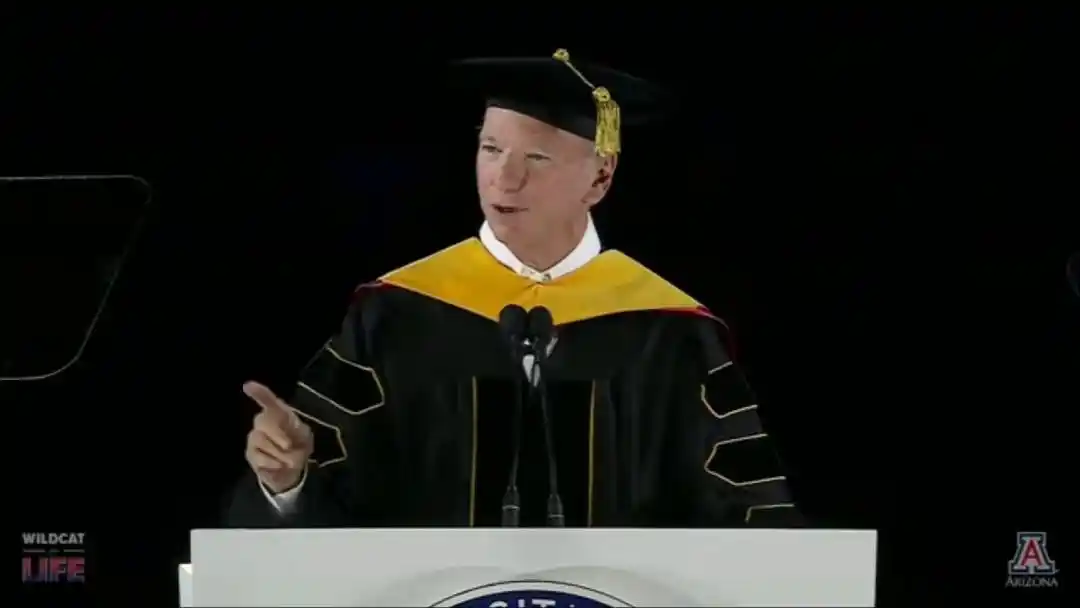
Unsurprisingly, the video was uploaded online, and the unfortunate Schmidt suffered secondary damage. On social media platforms like X and others, a large number of people criticized him, calling him too evil, saying he wanted to be a slave owner, and even accusing Schmidt of being anti-human.
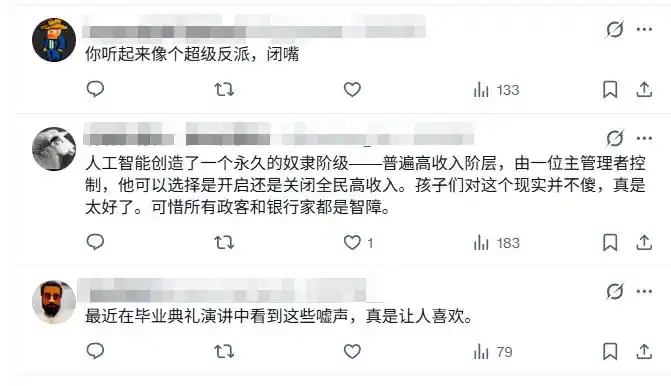
American netizens who love sarcasm also posted a bunch of memes mocking him, basically implying that Schmidt, as a capitalist, wants to squeeze dry these future wage laborers.
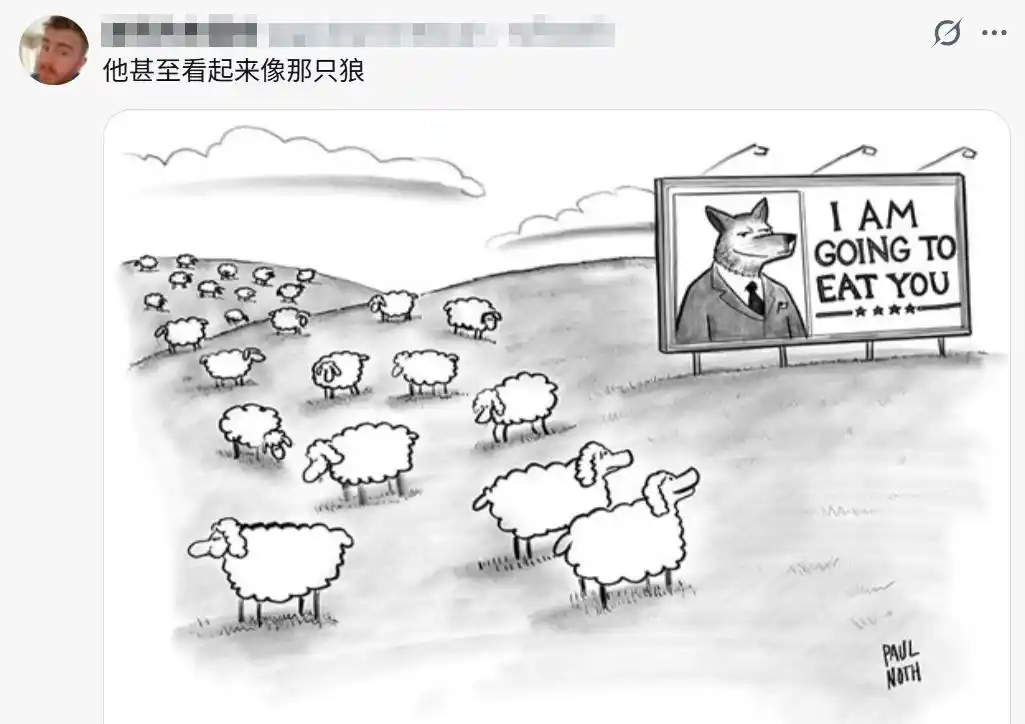
As a tech industry big shot, talking to young people about the importance of AI—how did that become a heinous crime?

This touches on something counter-intuitive. Although the U.S. is proudly one of the countries with the most advanced AI technology, many ordinary people deeply dislike this technology, and the anti-AI sentiment is also the strongest in the world.

Yes, you heard that right. A recent large-scale poll by The Economist and YouGov shows that a staggering 70% of Americans believe AI development is currently "too fast," requiring stronger regulation, cautious project analysis, and a pause to wait for the people. Moreover, people are increasingly pessimistic about AI's prospects and long-term social impact. The proportion of respondents holding a pessimistic view is as high as 51%, with another 24% unsure. Only 25% are truly optimistic.

Another polling organization, Gallup, revealed in a March poll a phenomenon that has alarmed all AI giants: Now 71% of Americans oppose building AI data centers in their local communities, with 48% strongly opposing, making them widely disliked. The most ironic part is that this proportion even exceeds those who oppose building nuclear power plants locally. When faced with the risk of a Fukushima-like disaster versus a data center, people would rather choose the former.

(Gallup)

American aversion and resistance to AI isn't just online talk. It has now rapidly developed to the real-life, offline stage.

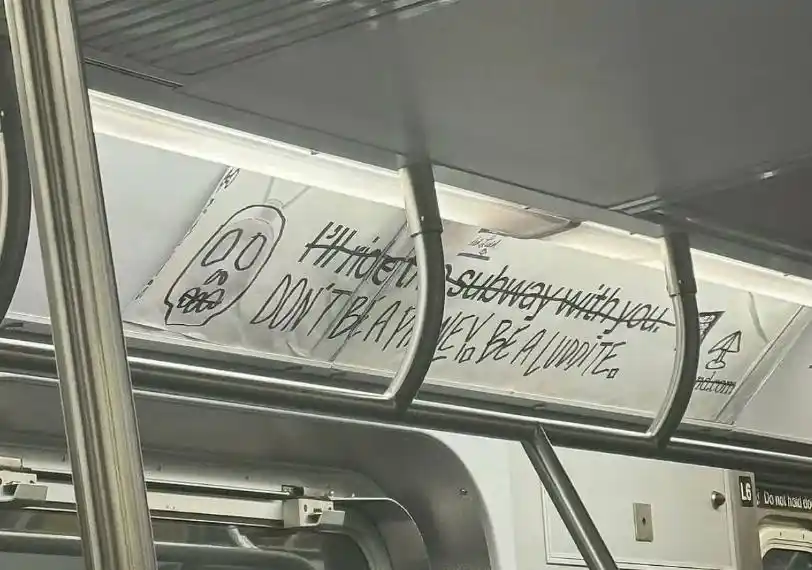
Late last year, the American AI startup Friend spent over a million dollars placing large ads in the New York subway to promote their wearable AI companion pendant. But they soon discovered their ads were vandalized with graffiti, covered in various mocking words. Since the brand is called Friend, opponents directly added, "AI is not your friend."

Besides witty additions, there were threatening messages referencing past scandals, like writing "AI suggested suicide"; sarcastic ones saying "AI friends can't shower with you, they're not waterproof"; and random scribbles, directly turning the product pendant into a skull. The wildly different styles clearly came from different people. A million dollars in ad money ended up as an anti-AI message board.
But Friend is considered lucky—at least they weren't confronted directly. Previously, Silicon Valley has seen multiple anti-AI protests and demonstrations. Participants, holding high banners with slogans like "Stop the AI Race" and "Pause AI," marched in large numbers towards the headquarters of these tech companies to give them a hard time.

Photos of big shots like Elon Musk and Sam Altman were also tagged with "traitor" labels and paraded through bustling areas, which was very humiliating.

But for these big shots, being publicly shamed isn't the worst. In more remote areas, people's resistance to data centers is what's truly deadly.

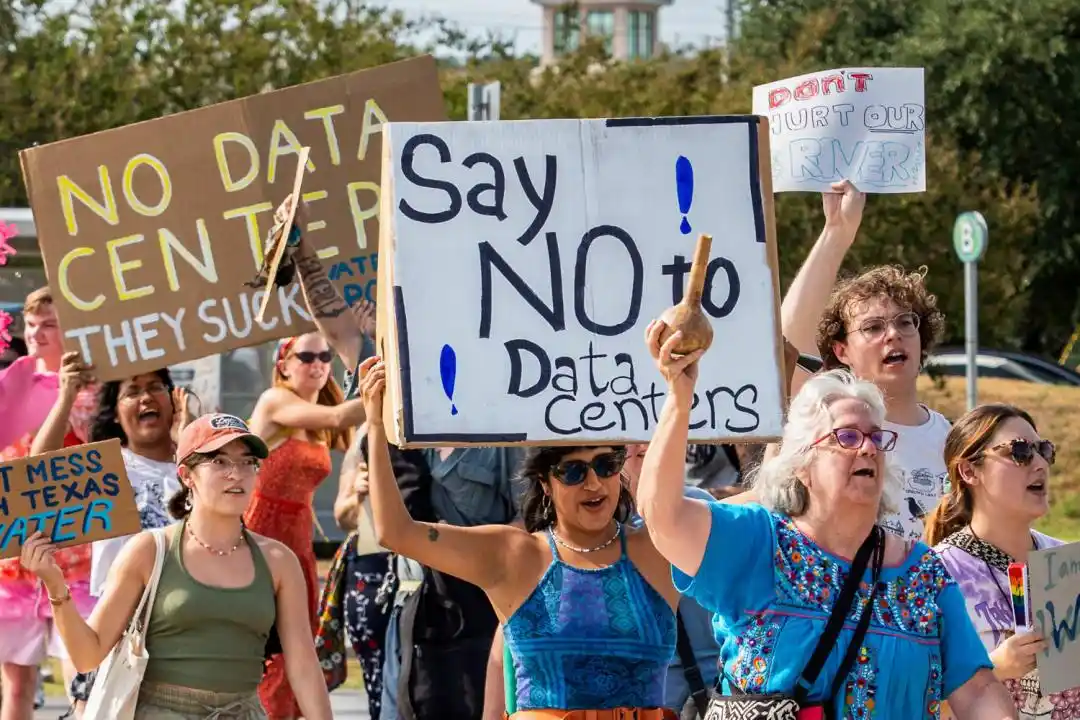
Virginia, Pennsylvania, North Carolina, and several other states have all seen local residents obstructing data center construction. They not only held signs pressuring local government offices but also continuously harassed construction sites and workers. Last year, at least 48 data center projects were delayed or canceled due to local resident protests, involving a total investment of $156 billion. In the first quarter of 2026, a record-breaking 20 data center projects were canceled for the same reason.

Even if local officials like Commissioner Smith try to push data center projects despite pressure, it's hard to succeed because the public will vote you out. In April 2026, residents of Festus, Missouri, directly voted to recall half of the city council members because the council approved an AI data center project. That's how tough they are.
Those who frequently use AI can probably feel that popular large models like Claude and ChatGPT have long faced insufficient computing power, often experiencing queues, crashes, and sometimes directly limiting user usage. Even paying for a PRO membership only slightly increases the quota, far from unlimited output freedom. That's why American tech giants are building data centers everywhere to fill the gap. Now, with inefficient construction, equipment shortages, and resident resistance, how can they expand computing power?

What worries American media more is that protest activities are showing a trend of extremization and gradually turning violent.

In April this year, two security incidents targeting OpenAI occurred in San Francisco. Someone threw a Molotov cocktail at CEO Sam Altman's private residence. Less than an hour later, the same person appeared outside OpenAI headquarters, openly threatening to burn down the building. Fortunately, they were subdued by police. Altman himself was terrified, directly posting a photo of his children as a shield, "I don't care what you think of me, my family is inside!"

Indianapolis City Councilor Ron Gibson also became a target. He was recently approved an AI data center project and was fiercely condemned by local residents. His residence was even shot at, with the suspect firing 13 shots at the front door. Then, they left a note under the doormat saying, "No data center."

We usually only focus on the speed of American AI development, never expecting that hatred for AI has also quietly intensified in the shadows, spreading like wildfire.

II. Ten Thousand Reasons to Hate AI

One crucial reason Americans hate AI is the fear that AI will take jobs.

Even before AI became popular, Americans generally distrusted tech billionaires because they monopolized and manipulated the internet, constantly amassing wealth. Conspiracy theories like Bill Gates controlling humanity with vaccines or Mark Zuckerberg being a lizard person in disguise are classics. Now that these conspiracy theory protagonists have brought out AI, people instinctively think they must have ulterior motives. Nearly 3/4 of Americans expect AI to significantly reduce employment, and about 65% of the public don't believe the economic benefits created by AI will benefit everyone—only making the bosses richer.
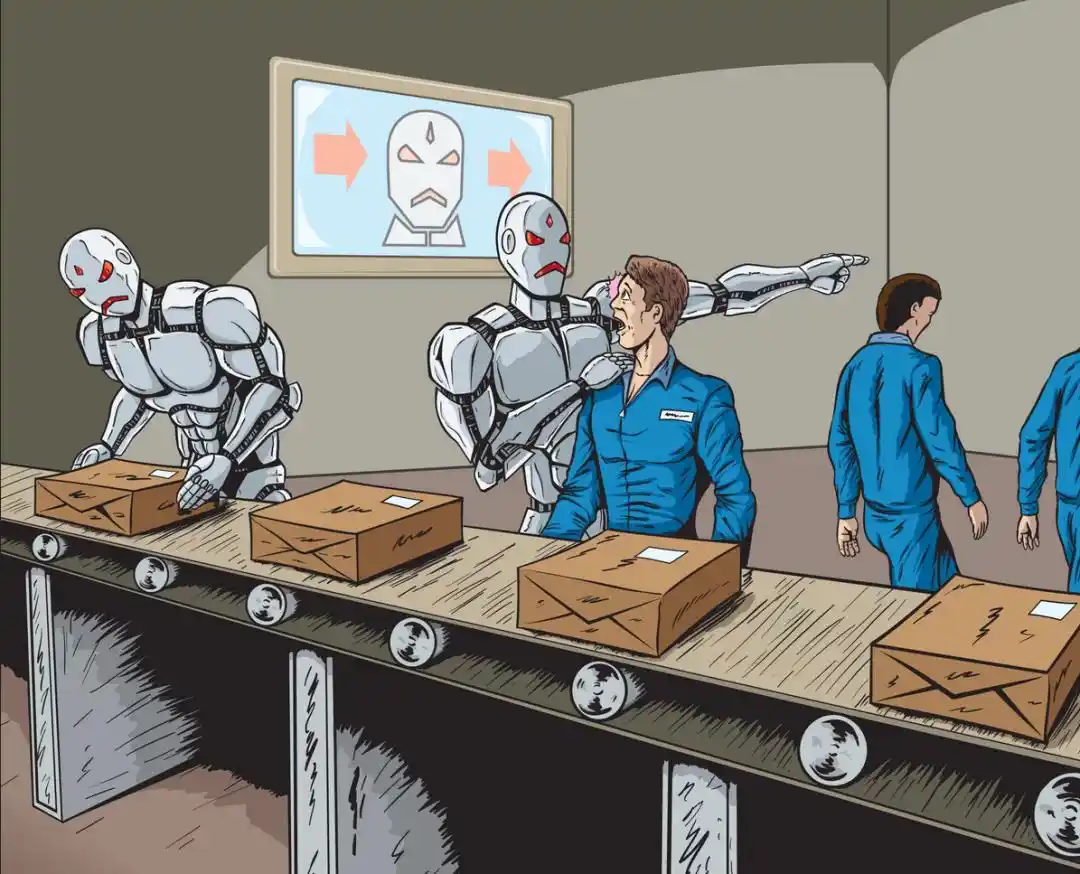
Looking at various layoff news, their suspicions aren't wrong. For example, after Dell introduced AI, it massively cut non-technical departments like sales, laying off 12,500 people over time. A commercial software company, Salesforce, laid off 4,000 customer service employees at once due to AI automation. In 2026, the well-known fintech company Block laid off nearly 40% of its staff, with the boss openly promoting that using AI tools allows small teams to achieve higher efficiency, so there's no need to keep so many people.

Hollywood started using AI to write scripts several years ago, trying to cut screenwriters' pay, which led to major strikes.

In the eyes of ordinary Americans, the current AI business logic is brutal. The efficiency gains it brings reduce jobs, achieving so-called cost reduction and efficiency improvement, concentrating wealth in the hands of a few tech giants while the public bears the cost—jobs "optimized," incomes lowered.
While AI's prosperity has also created some new computer engineering jobs and brought a long-awaited boom to the construction industry through large-scale infrastructure, from the netizens' perspective, it's still causing some jobs to disappear, people losing their livelihoods—it has original sin. Especially for college students, AI has impacted many white-collar jobs. In 2026, the unemployment rate for American college graduates climbed to 5.6%, the highest post-pandemic graduation season for employment pressure.

Against this backdrop, the "high EQ" Schmidt came asking for trouble. He said to the extremely anxious students: "Your generation has this fear that the future is already written, that machines are coming, jobs are disappearing, the climate is collapsing, politics are dividing, and you've inherited a mess you didn't create..." At this point, the audience was already getting restless. Coupled with his later advice for students to embrace AI, it was a complete disaster. The truth really hurts.

Thinking about a hopeless future and unpaid student loans, it was polite of the graduates not to go up and punch him.

But Schmidt did mention climate, and coincidentally, that's another reason Americans, especially the white left, dislike AI.

To meet the enormous 24/7 power demands of AI data centers, coal and natural gas power plants in many parts of the U.S. have been forced to delay retirement or even increase generation, directly causing carbon emissions to soar. Carbon neutrality? That can only be a dream. This led over 200 environmental groups across the U.S. to launch a joint action in February, demanding the government suspend approval of new data centers and harshly criticizing tech giants for ignoring climate change.

Many of these are familiar radical environmental groups, like "Greenpeace" and "Friends of the Earth"... it's like an NGO export-import business.

Of course, many Americans don't care about human survival, but they must care about their hometowns.

As AI enters the "computing infrastructure" phase of competing with large models, the load on the power grid and the consumption of cooling water by super data centers have expanded rapidly. This crazy absorption of macro-industrial and energy resources directly touches the survival bottom line of local communities. The most obvious change is that electricity bills are rising quickly. The following price increase map from Fox News shows that from 2024 to mid-2025, only five states didn't see average electricity price increases. It's estimated that in the next three years, AI expansion will add at least $23 billion in electricity costs to ordinary American households.

(Fox News)

But, tech giants using electricity—what does that have to do with household users?

This relates to America's magical cost-sharing mechanism. To meet the insane electricity demands of data centers, power companies must invest heavily in expanding and upgrading the grid and building new power plants. This infrastructure upgrade cost is recovered through electricity price increases, meaning it's directly shared among all end-users. Essentially, everyone pays for AI.

The situation with water resources is similar. Data centers maintaining chip cooling require vast amounts of water, and it must be clean water. In some data centers using "evaporative cooling" systems, millions of gallons of water can evaporate. This not only requires water supply companies to massively upgrade water treatment and supply pipeline facilities, driving up residents' water prices, but in some inherently water-scarce Midwest states and counties, it also causes agricultural irrigation stress.

Local residents also worry about the chain effects of data centers on the environment. Cooling systems must forcibly expel waste heat from chips into the external atmosphere, significantly raising surface temperatures in surrounding areas, affecting up to 10 kilometers or more. For example, around AI data centers in Silicon Valley, surface temperatures are 9°C higher than other areas. The destruction of ecosystems and impact on plants and animals aside, how are nearby residents supposed to live in such heat during summer?

Now you understand why Americans would rather have a nuclear power plant than a data center. Nuclear power only affects life during an accident, but a data center next door is a daily nuisance, not to mention worrying about utility bills.

Additionally, Americans have two very realistic concerns. One is worry that AI affects their democracy. First, AI's internal workings are a black box; no one can clearly explain how its responses are generated. Even its own engineers sometimes can't figure it out. Many netizens worry AI has hidden biases and can create various fabricated information, with the ability to change public opinion and even influence elections. After all, many people's fact-checking method is typing in the comments, "@grok, is this true?"...

Speaking of this, Mr. Musk has to take the blame again. After buying X (formerly Twitter), he helped Trump gain momentum on social media and reposted AI-generated spoof videos of Harris and Biden. It's hard for Americans not to be suspicious.

The other concern is investments and pensions. Economically, AI has become the ultimate hot topic in capital markets. Even if you don't believe in AI, the fate of your public pensions and retirement accounts now depends on AI's prosperity. The government is also using large amounts of funds to subsidize related companies. About 30% of the S&P 500 index consists of six companies—Apple, Meta, Alphabet, Microsoft, Nvidia, and Amazon—all betting their future on AI applications. Moreover, the data center infrastructure boom has boosted the performance of equipment manufacturers like Caterpillar.

Tech stocks rising is great for now, but if artificial intelligence ultimately proves to be a bubble, it could trigger a massive economic recession in the U.S., bankrupting countless families and pushing them over the edge.

III. Trump's Dilemma

The development of AI is inherently an extremely complex technological issue, involving employment, environment, energy, finance, and many other aspects—a tangled mess.

The most ridiculous part is that in the U.S., AI has become a political issue, directly related to whether Trump's position is secure and could even become the trigger for another MAGA civil war.
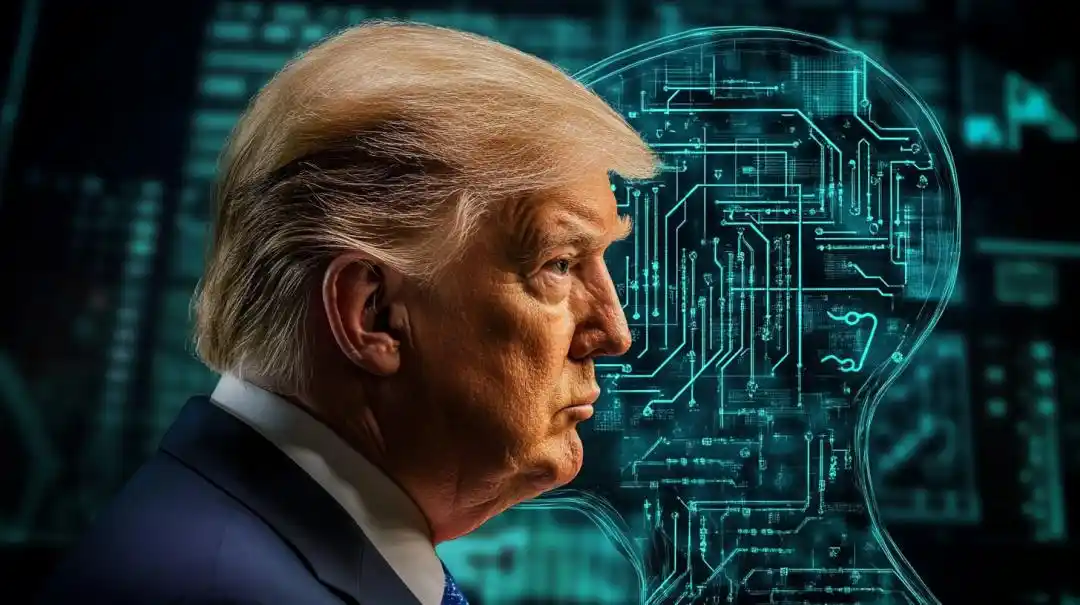
Remember? On January 20, 2025, inauguration day, Trump, with a stroke of his pen, revoked a bunch of executive orders left by the Biden administration, including one called "Executive Order on the Safe, Secure, and Trustworthy Development and Use of Artificial Intelligence," which aimed to strengthen AI regulation and scrutiny.

He replaced it with his own new executive order, "Removing Barriers to American AI Leadership," demanding that "innovation and competitiveness" be prioritized, comprehensively eliminating regulations hindering AI development. Subsequently, he significantly compressed state-level AI project approval and regulatory authority, centralizing it all at the federal level to ensure efficient project operation and outpace China.

This was undoubtedly suggested by the Silicon Valley faction within MAGA, as they are all investing in AI. Removing regulations would allow them to completely let loose.

The Silicon Valley faction's reasoning: Forget about ethics, morality, or employment crises. AI genuinely boosts productivity. If we don't do it, China will. America's superpower status is already precarious, manufacturing is a mess, technology is constantly being overtaken. If we lose to China on this track as well, better days are ahead! AI National Salvation Plan, activate!

This view, and the anti-AI view, are not inherently wrong—they just look at the issue from different angles (and sit in different positions).

But political discussions are never just about right or wrong; they also involve factions.

Many in the Democratic Party want to regulate AI, as their base includes many young graduates and white leftists concerned about climate change. On the Republican side, the far-right MAGA faction doesn't get along with the Silicon Valley faction, having huge disagreements on tariffs, immigration, etc., each thinking the other is a treacherous minister around Trump, constantly thinking of "purging the court."

Now that AI is causing public outrage, they see an opportunity to defeat their opponents.

In Congress, Democrats have introduced the "Safeguarding and Upholding Americans' Determinations on Responsible Artificial Intelligence Laws and Standards Act"—you don't need to remember this long, convoluted name. Just know it aims to overturn Trump's previous executive order and once again strengthen state-level regulatory authority over AI. The bill is currently in the review stage.

The Maine State Legislature, led by Democrats, passed the nation's first bill suspending the construction of new large data centers. The ban will last until the end of 2027 to mitigate the impact of rising water and electricity prices within the state. Several blue states are now considering similar bills.

Some Democratic politicians have even personally joined the anti-AI movement, standing with protesters in front of the media, condemning tech giants for being inhumane, first enjoying the wave of attention. Democrats who love social media have also started podcasts targeting rural voters, preaching the dangers of data centers, trying to shake Trump's solid support base.
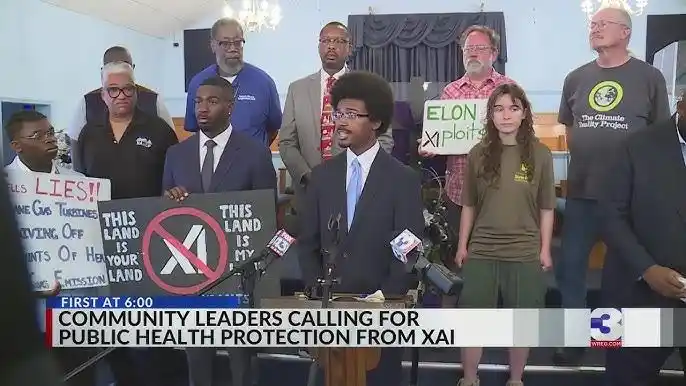
As for the far-right MAGA, its leader Steve Bannon has repeatedly attacked AI and the tech giants behind it on his show, inciting listeners to resist data center projects in their hometowns. The video titles are alarmingly sensational: "Stop AI from Stealing Our Humanity" and "Use an Iron Fist Like Nuclear Weapons to Control AI." Just a few days ago, he gathered over 60 die-hard MAGA supporters to write a joint letter to the White House, urging Trump to issue a mandatory order requiring all AI models to undergo government review and testing before release to ensure they pose no danger to humanity.

The more abstract part is that these two groups, once mortal enemies, have now formed a temporary alliance on the AI issue. Maine's ban received support from local lawmakers of both parties. Laws blocking data center construction in other places are mostly the same. The white left goes up and says, "What about the birds? What about the fish?" The redneck goes up and says, "The cost of living is too high, how am I supposed to live?" Different methods, same goal.

Some scholars studying politics marvel that in this divisive era, where Americans can argue over watching TV or choosing a car, they can actually agree on the data center issue—and agree to oppose it. It's truly both laughable and ironic.
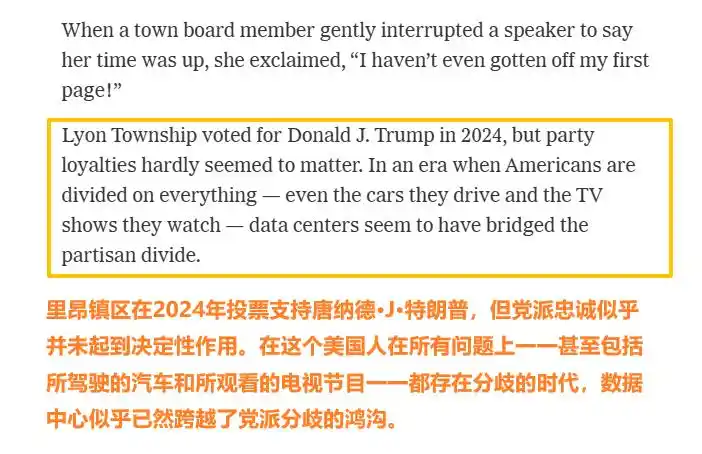
(The New York Times)

Who's most panicked about this situation? No need to say more.

If the situation continues, Trump may be forced to choose between "donors" and "voter base." Tech giants needing AI expansion versus traditional rednecks opposing AI invading their homes—he can only choose one. Choosing the former could lead to a major defeat in the midterm elections; choosing the latter would lose the support of the Silicon Valley right and could cause the U.S. to gradually fall behind in the AI race.

This is a dilemma Trump must solve.

This article is from the WeChat public account "Cool Play Lab," author: Cool Play Lab

Domande pertinenti

QAccording to the article, what percentage of Americans believe AI development is happening 'too quickly'?

AAccording to an Economist/YouGov poll cited in the article, 70% of Americans believe AI development is happening 'too quickly'.

QWhat are some of the main reasons Americans are opposed to AI development, as outlined in the text?

AThe main reasons for opposition include fears of job displacement, increased utility costs for residents, environmental concerns (water use, heat emissions, carbon footprint), distrust of tech billionaires, and concerns about AI's impact on democracy and the potential for an economic bubble.

QWhat specific actions have American citizens taken to protest against AI, beyond online criticism?

AActions have included booing a pro-AI speaker at a graduation, vandalizing AI company advertisements, organizing street protests and demonstrations, lobbying and protesting against local data center projects (leading to cancellations), and in extreme cases, violent acts like arson and gunfire targeting AI executives and politicians.

QHow has the AI issue become a political problem for Donald Trump, according to the article?

AThe AI issue has created a dilemma for Trump, forcing him to potentially choose between his 'donors' (the pro-AI Silicon Valley faction of the MAGA movement) and his 'voter base' (traditional supporters who oppose local data centers due to cost and lifestyle impacts). This split threatens his political support and could influence elections.

QWhat unusual political alignment has formed regarding opposition to AI data centers?

AAn unusual, temporary alliance has formed between Democrats (concerned about climate and young voters' job prospects) and the far-right faction of the MAGA movement (concerned about rising living costs and community impact). They have found common ground in opposing local data center projects.

Letture associate

Codex Goal Mode Usage Guide: How to Make AI Continuously Pursue a Specific Objective

"Codex Goal Mode: How to Make AI Work Continuously Toward a Specific Goal" OpenAI's Codex "goal mode" (/goal) transforms the AI from a reactive code assistant into a proactive execution agent capable of working autonomously for hours or even days to achieve a defined objective. To maximize its effectiveness, follow these key principles: 1. **Define Clear, Verifiable Exit Criteria:** The goal prompt should be a concise, measurable success condition, not a lengthy specification. Use quantifiable metrics like "reduce build time by 30%" or "achieve 100% test parity." 2. **Provide Initial Guidance and Tools:** Direct Codex toward likely problem areas and specify available tools (e.g., browsers, testing environments) to prevent it from exploring unproductive paths. 3. **Enable Progress Measurement:** Equip Codex with ways to track advancement, such as creating comparison tools for visual tasks or evaluation sets, ensuring it can gauge its own progress. 4. **Use a Realistic Execution Environment:** For tasks like performance optimization, provide access to environments that closely mimic production (e.g., similar configs, databases) to yield valid results. 5. **Be Cautious with Visual Goals:** Avoid vague "pixel-perfect" instructions. Instead, supplement visual references with functional checklists or design system specifications to prevent Codex from obsessing over minor details. 6. **Implement Progress Tracking:** For long-running tasks, have Codex commit code to draft PRs, update progress documents, or send Slack updates to maintain visibility into its work. 7. **Review and Consolidate Results:** Once the goal is met, instruct Codex to review its work, clean up ineffective experimental code, and reflect on what strategies succeeded or failed. Ultimately, using goal mode shifts the developer's role from writing prompts to managing a persistent engineering agent—defining objectives, establishing metrics, configuring environments, and conducting final reviews.

marsbit4 min fa

Codex Goal Mode Usage Guide: How to Make AI Continuously Pursue a Specific Objective

marsbit4 min fa

From Ethereum to AI's 'CROPS': What Exactly Is This 'Slow Variable' That Vitalik Has Repeatedly Emphasized?

Recently, Vitalik Buterin has frequently emphasized the concept of "CROPS," first outlined in the Ethereum Foundation's March mandate as core principles guiding its focus: Censorship Resistance, Capture Resistance, Open Source, Privacy, and Security. CROPS represents Ethereum's commitment to providing foundational capabilities for user sovereignty—enabling asset ownership, identity expression, and coordination without reliance on centralized platforms or surrendering ultimate control. This framework is gaining new urgency with the rise of AI, particularly AI agents managing digital assets and automating transactions. While AI offers convenience, it risks centralizing user data, intent, and control if dependent on opaque, centralized services. Vitalik argues for "CROPS AI"—AI that is open, privacy-preserving, secure, and capable of local execution to maintain user agency. He highlights convergence between "CROPS Ethereum access layers" and "CROPS AI," such as using zero-knowledge proofs for private remote LLM calls and Ethereum RPC reads, ensuring users can access services without exposing sensitive information. Ultimately, CROPS is not just an abstract ideal but a practical guide for Ethereum's development and AI integration. It addresses the critical long-term question: as digital systems grow more powerful, how can users retain control over their privacy, assets, and autonomy? In an AI-driven era, these principles may define Ethereum's enduring value—prioritizing verifiable, secure, and user-centric design over short-term optimizations like speed and cost alone.

marsbit9 min fa

From Ethereum to AI's 'CROPS': What Exactly Is This 'Slow Variable' That Vitalik Has Repeatedly Emphasized?

marsbit9 min fa

Trading

Spot
Futures

Articoli Popolari

Cosa è GROK AI

Grok AI: Rivoluzionare la Tecnologia Conversazionale nell'Era Web3 Introduzione Nel panorama in rapida evoluzione dell'intelligenza artificiale, Grok AI si distingue come un progetto notevole che collega i domini della tecnologia avanzata e dell'interazione con l'utente. Sviluppato da xAI, un'azienda guidata dal rinomato imprenditore Elon Musk, Grok AI cerca di ridefinire il modo in cui interagiamo con l'intelligenza artificiale. Mentre il movimento Web3 continua a prosperare, Grok AI mira a sfruttare il potere dell'IA conversazionale per rispondere a query complesse, offrendo agli utenti un'esperienza che è non solo informativa ma anche divertente. Cos'è Grok AI? Grok AI è un sofisticato chatbot di intelligenza artificiale conversazionale progettato per interagire dinamicamente con gli utenti. A differenza di molti sistemi di intelligenza artificiale tradizionali, Grok AI abbraccia un'ampia gamma di domande, comprese quelle tipicamente considerate inappropriate o al di fuori delle risposte standard. Gli obiettivi principali del progetto includono: Ragionamento Affidabile: Grok AI enfatizza il ragionamento di buon senso per fornire risposte logiche basate sulla comprensione contestuale. Supervisione Scalabile: L'integrazione dell'assistenza degli strumenti garantisce che le interazioni degli utenti siano sia monitorate che ottimizzate per la qualità. Verifica Formale: La sicurezza è fondamentale; Grok AI incorpora metodi di verifica formale per migliorare l'affidabilità delle sue uscite. Comprensione del Lungo Contesto: Il modello di IA eccelle nel trattenere e richiamare una vasta storia di conversazione, facilitando discussioni significative e consapevoli del contesto. Robustezza Adversariale: Concentrandosi sul miglioramento delle sue difese contro input manipolati o malevoli, Grok AI mira a mantenere l'integrità delle interazioni degli utenti. In sostanza, Grok AI non è solo un dispositivo di recupero informazioni; è un partner conversazionale immersivo che incoraggia un dialogo dinamico. Creatore di Grok AI Il cervello dietro Grok AI non è altri che Elon Musk, un individuo sinonimo di innovazione in vari campi, tra cui automotive, viaggi spaziali e tecnologia. Sotto l'egida di xAI, un'azienda focalizzata sull'avanzamento della tecnologia AI in modi benefici, la visione di Musk mira a rimodellare la comprensione delle interazioni con l'IA. La leadership e l'etica fondamentale sono profondamente influenzate dall'impegno di Musk nel superare i confini tecnologici. Investitori di Grok AI Sebbene i dettagli specifici riguardanti gli investitori che sostengono Grok AI rimangano limitati, è pubblicamente riconosciuto che xAI, l'incubatore del progetto, è fondato e supportato principalmente dallo stesso Elon Musk. Le precedenti imprese e partecipazioni di Musk forniscono un robusto sostegno, rafforzando ulteriormente la credibilità e il potenziale di crescita di Grok AI. Tuttavia, al momento, le informazioni riguardanti ulteriori fondazioni di investimento o organizzazioni che supportano Grok AI non sono facilmente accessibili, segnando un'area per potenziali esplorazioni future. Come Funziona Grok AI? Le meccaniche operative di Grok AI sono innovative quanto il suo framework concettuale. Il progetto integra diverse tecnologie all'avanguardia che facilitano le sue funzionalità uniche: Infrastruttura Robusta: Grok AI è costruito utilizzando Kubernetes per l'orchestrazione dei container, Rust per prestazioni e sicurezza, e JAX per il calcolo numerico ad alte prestazioni. Questo trio garantisce che il chatbot operi in modo efficiente, si scaldi efficacemente e serva gli utenti prontamente. Accesso alla Conoscenza in Tempo Reale: Una delle caratteristiche distintive di Grok AI è la sua capacità di attingere a dati in tempo reale attraverso la piattaforma X—precedentemente nota come Twitter. Questa capacità consente all'IA di accedere alle informazioni più recenti, permettendole di fornire risposte e raccomandazioni tempestive che altri modelli di IA potrebbero perdere. Due Modalità di Interazione: Grok AI offre agli utenti la scelta tra “Modalità Divertente” e “Modalità Normale”. La Modalità Divertente consente uno stile di interazione più giocoso e umoristico, mentre la Modalità Normale si concentra sulla fornitura di risposte precise e accurate. Questa versatilità garantisce un'esperienza su misura che soddisfa varie preferenze degli utenti. In sostanza, Grok AI sposa prestazioni con coinvolgimento, creando un'esperienza che è sia arricchente che divertente. Cronologia di Grok AI Il viaggio di Grok AI è segnato da traguardi fondamentali che riflettono le sue fasi di sviluppo e distribuzione: Sviluppo Iniziale: La fase fondamentale di Grok AI si è svolta in circa due mesi, durante i quali sono stati condotti l'addestramento iniziale e il perfezionamento del modello. Rilascio Beta di Grok-2: In un significativo avanzamento, è stata annunciata la beta di Grok-2. Questo rilascio ha introdotto due versioni del chatbot—Grok-2 e Grok-2 mini—ognuna dotata delle capacità per chattare, programmare e ragionare. Accesso Pubblico: Dopo lo sviluppo beta, Grok AI è diventato disponibile per gli utenti della piattaforma X. Coloro che hanno account verificati tramite un numero di telefono e attivi per almeno sette giorni possono accedere a una versione limitata, rendendo la tecnologia disponibile a un pubblico più ampio. Questa cronologia racchiude la crescita sistematica di Grok AI dall'inizio all'impegno pubblico, enfatizzando il suo impegno per il miglioramento continuo e l'interazione con gli utenti. Caratteristiche Chiave di Grok AI Grok AI comprende diverse caratteristiche chiave che contribuiscono alla sua identità innovativa: Integrazione della Conoscenza in Tempo Reale: L'accesso a informazioni attuali e rilevanti differenzia Grok AI da molti modelli statici, consentendo un'esperienza utente coinvolgente e accurata. Stili di Interazione Versatili: Offrendo modalità di interazione distinte, Grok AI soddisfa varie preferenze degli utenti, invitando alla creatività e alla personalizzazione nella conversazione con l'IA. Avanzata Struttura Tecnologica: L'utilizzo di Kubernetes, Rust e JAX fornisce al progetto un solido framework per garantire affidabilità e prestazioni ottimali. Considerazione del Discorso Etico: L'inclusione di una funzione di generazione di immagini mette in mostra lo spirito innovativo del progetto. Tuttavia, solleva anche considerazioni etiche riguardanti il copyright e la rappresentazione rispettosa di figure riconoscibili—una discussione in corso all'interno della comunità AI. Conclusione Come entità pionieristica nel campo dell'IA conversazionale, Grok AI incarna il potenziale per esperienze utente trasformative nell'era digitale. Sviluppato da xAI e guidato dall'approccio visionario di Elon Musk, Grok AI integra conoscenze in tempo reale con capacità di interazione avanzate. Si sforza di spingere i confini di ciò che l'intelligenza artificiale può realizzare, mantenendo un focus su considerazioni etiche e sicurezza degli utenti. Grok AI non solo incarna il progresso tecnologico, ma rappresenta anche un nuovo paradigma conversazionale nel panorama Web3, promettendo di coinvolgere gli utenti con sia conoscenze esperte che interazioni giocose. Man mano che il progetto continua a evolversi, si erge come testimonianza di ciò che l'incrocio tra tecnologia, creatività e interazione simile a quella umana può realizzare.

485 Totale visualizzazioniPubblicato il 2024.12.26Aggiornato il 2024.12.26

Cosa è GROK AI

Cosa è ERC AI

Euruka Tech: Una Panoramica di $erc ai e delle sue Ambizioni in Web3 Introduzione Nel panorama in rapida evoluzione della tecnologia blockchain e delle applicazioni decentralizzate, nuovi progetti emergono frequentemente, ciascuno con obiettivi e metodologie uniche. Uno di questi progetti è Euruka Tech, che opera nel vasto dominio delle criptovalute e del Web3. L'obiettivo principale di Euruka Tech, in particolare del suo token $erc ai, è presentare soluzioni innovative progettate per sfruttare le crescenti capacità della tecnologia decentralizzata. Questo articolo si propone di fornire una panoramica completa di Euruka Tech, un'esplorazione dei suoi obiettivi, della funzionalità, dell'identità del suo creatore, dei potenziali investitori e della sua importanza nel contesto più ampio del Web3. Cos'è Euruka Tech, $erc ai? Euruka Tech è caratterizzato come un progetto che sfrutta gli strumenti e le funzionalità offerte dall'ambiente Web3, concentrandosi sull'integrazione dell'intelligenza artificiale nelle sue operazioni. Sebbene i dettagli specifici sul framework del progetto siano piuttosto sfuggenti, è progettato per migliorare l'engagement degli utenti e automatizzare i processi nello spazio crypto. Il progetto mira a creare un ecosistema decentralizzato che non solo faciliti le transazioni, ma incorpori anche funzionalità predittive attraverso l'intelligenza artificiale, da cui il nome del suo token, $erc ai. L'obiettivo è fornire una piattaforma intuitiva che faciliti interazioni più intelligenti e un'elaborazione delle transazioni più efficiente all'interno della crescente sfera del Web3. Chi è il Creatore di Euruka Tech, $erc ai? Attualmente, le informazioni riguardanti il creatore o il team fondatore di Euruka Tech rimangono non specificate e piuttosto opache. Questa assenza di dati solleva preoccupazioni, poiché la conoscenza del background del team è spesso essenziale per stabilire credibilità nel settore blockchain. Pertanto, abbiamo classificato queste informazioni come sconosciute fino a quando dettagli concreti non saranno resi disponibili nel dominio pubblico. Chi sono gli Investitori di Euruka Tech, $erc ai? Allo stesso modo, l'identificazione degli investitori o delle organizzazioni di supporto per il progetto Euruka Tech non è prontamente fornita attraverso la ricerca disponibile. Un aspetto cruciale per i potenziali stakeholder o utenti che considerano di impegnarsi con Euruka Tech è la garanzia che deriva da partnership finanziarie consolidate o dal supporto di società di investimento rispettabili. Senza divulgazioni sulle affiliazioni di investimento, è difficile trarre conclusioni complete sulla sicurezza finanziaria o sulla longevità del progetto. In linea con le informazioni trovate, anche questa sezione rimane allo stato di sconosciuto. Come funziona Euruka Tech, $erc ai? Nonostante la mancanza di specifiche tecniche dettagliate per Euruka Tech, è essenziale considerare le sue ambizioni innovative. Il progetto cerca di sfruttare la potenza computazionale dell'intelligenza artificiale per automatizzare e migliorare l'esperienza dell'utente all'interno dell'ambiente delle criptovalute. Integrando l'IA con la tecnologia blockchain, Euruka Tech mira a fornire funzionalità come operazioni automatizzate, valutazioni del rischio e interfacce utente personalizzate. L'essenza innovativa di Euruka Tech risiede nel suo obiettivo di creare una connessione fluida tra gli utenti e le vaste possibilità presentate dalle reti decentralizzate. Attraverso l'utilizzo di algoritmi di apprendimento automatico e IA, mira a ridurre le sfide degli utenti alle prime armi e semplificare le esperienze transazionali all'interno del framework Web3. Questa simbiosi tra IA e blockchain sottolinea l'importanza del token $erc ai, fungendo da ponte tra le interfacce utente tradizionali e le avanzate capacità delle tecnologie decentralizzate. Cronologia di Euruka Tech, $erc ai Sfortunatamente, a causa delle limitate informazioni disponibili riguardo a Euruka Tech, non siamo in grado di presentare una cronologia dettagliata dei principali sviluppi o traguardi nel percorso del progetto. Questa cronologia, tipicamente preziosa per tracciare l'evoluzione di un progetto e comprendere la sua traiettoria di crescita, non è attualmente disponibile. Man mano che le informazioni su eventi notevoli, partnership o aggiunte funzionali diventano evidenti, gli aggiornamenti miglioreranno sicuramente la visibilità di Euruka Tech nella sfera crypto. Chiarimento su Altri Progetti “Eureka” È importante sottolineare che più progetti e aziende condividono una nomenclatura simile con “Eureka.” La ricerca ha identificato iniziative come un agente IA della NVIDIA Research, che si concentra sull'insegnamento ai robot di compiti complessi utilizzando metodi generativi, così come Eureka Labs ed Eureka AI, che migliorano l'esperienza utente nell'istruzione e nell'analisi del servizio clienti, rispettivamente. Tuttavia, questi progetti sono distinti da Euruka Tech e non dovrebbero essere confusi con i suoi obiettivi o funzionalità. Conclusione Euruka Tech, insieme al suo token $erc ai, rappresenta un attore promettente ma attualmente oscuro nel panorama del Web3. Sebbene i dettagli sul suo creatore e sugli investitori rimangano non divulgati, l'ambizione centrale di combinare intelligenza artificiale e tecnologia blockchain si erge come un punto focale di interesse. Gli approcci unici del progetto nel promuovere l'engagement degli utenti attraverso l'automazione avanzata potrebbero distinguerlo mentre l'ecosistema Web3 progredisce. Con l'evoluzione continua del mercato crypto, gli stakeholder dovrebbero tenere d'occhio gli sviluppi riguardanti Euruka Tech, poiché lo sviluppo di innovazioni documentate, partnership o una roadmap definita potrebbe presentare opportunità significative nel prossimo futuro. Così com'è, attendiamo ulteriori approfondimenti sostanziali che potrebbero svelare il potenziale di Euruka Tech e la sua posizione nel competitivo panorama crypto.

503 Totale visualizzazioniPubblicato il 2025.01.02Aggiornato il 2025.01.02

Cosa è ERC AI

Cosa è DUOLINGO AI

DUOLINGO AI: Integrare l'apprendimento delle lingue con Web3 e innovazione AI In un'era in cui la tecnologia rimodella l'istruzione, l'integrazione dell'intelligenza artificiale (AI) e delle reti blockchain annuncia una nuova frontiera per l'apprendimento delle lingue. Entra in scena DUOLINGO AI e la sua criptovaluta associata, $DUOLINGO AI. Questo progetto aspira a fondere la potenza educativa delle principali piattaforme di apprendimento delle lingue con i benefici della tecnologia decentralizzata Web3. Questo articolo esplora gli aspetti chiave di DUOLINGO AI, esaminando i suoi obiettivi, il framework tecnologico, lo sviluppo storico e il potenziale futuro, mantenendo chiarezza tra la risorsa educativa originale e questa iniziativa indipendente di criptovaluta. Panoramica di DUOLINGO AI Alla sua base, DUOLINGO AI cerca di stabilire un ambiente decentralizzato in cui gli studenti possono guadagnare ricompense crittografiche per il raggiungimento di traguardi educativi nella competenza linguistica. Applicando smart contracts, il progetto mira ad automatizzare i processi di verifica delle competenze e le allocazioni di token, aderendo ai principi di Web3 che enfatizzano la trasparenza e la proprietà da parte degli utenti. Il modello si discosta dagli approcci tradizionali all'acquisizione linguistica, facendo forte affidamento su una struttura di governance guidata dalla comunità, che consente ai detentori di token di suggerire miglioramenti ai contenuti dei corsi e alle distribuzioni delle ricompense. Alcuni degli obiettivi notevoli di DUOLINGO AI includono: Apprendimento Gamificato: Il progetto integra traguardi blockchain e token non fungibili (NFT) per rappresentare i livelli di competenza linguistica, promuovendo la motivazione attraverso ricompense digitali coinvolgenti. Creazione di Contenuti Decentralizzati: Apre opportunità per educatori e appassionati di lingue di contribuire con i propri corsi, facilitando un modello di condivisione dei ricavi che beneficia tutti i collaboratori. Personalizzazione Guidata dall'AI: Utilizzando modelli avanzati di machine learning, DUOLINGO AI personalizza le lezioni per adattarsi ai progressi individuali, simile alle funzionalità adattive presenti nelle piattaforme consolidate. Creatori del Progetto e Governance A partire da aprile 2025, il team dietro $DUOLINGO AI rimane pseudonimo, una pratica comune nel panorama decentralizzato delle criptovalute. Questa anonimato è inteso a promuovere la crescita collettiva e il coinvolgimento degli stakeholder piuttosto che concentrarsi su sviluppatori individuali. Lo smart contract distribuito sulla blockchain di Solana annota l'indirizzo del wallet dello sviluppatore, che segna l'impegno verso la trasparenza riguardo alle transazioni, nonostante l'identità dei creatori sia sconosciuta. Secondo la sua roadmap, DUOLINGO AI mira a evolversi in un'Organizzazione Autonoma Decentralizzata (DAO). Questa struttura di governance consente ai detentori di token di votare su questioni critiche come l'implementazione di funzionalità e le allocazioni del tesoro. Questo modello si allinea con l'etica dell'empowerment della comunità presente in varie applicazioni decentralizzate, enfatizzando l'importanza del processo decisionale collettivo. Investitori e Partnership Strategiche Attualmente, non ci sono investitori istituzionali o capitalisti di rischio identificabili pubblicamente legati a $DUOLINGO AI. Invece, la liquidità del progetto proviene principalmente da scambi decentralizzati (DEX), segnando un netto contrasto con le strategie di finanziamento delle aziende tradizionali di tecnologia educativa. Questo modello di base indica un approccio guidato dalla comunità, riflettendo l'impegno del progetto verso la decentralizzazione. Nel suo whitepaper, DUOLINGO AI menziona la formazione di collaborazioni con “piattaforme educative blockchain” non specificate, mirate ad arricchire la sua offerta di corsi. Sebbene partnership specifiche non siano ancora state divulgate, questi sforzi collaborativi suggeriscono una strategia per mescolare innovazione blockchain con iniziative educative, ampliando l'accesso e il coinvolgimento degli utenti attraverso diverse vie di apprendimento. Architettura Tecnologica Integrazione AI DUOLINGO AI incorpora due componenti principali guidate dall'AI per migliorare la sua offerta educativa: Motore di Apprendimento Adattivo: Questo sofisticato motore apprende dalle interazioni degli utenti, simile ai modelli proprietari delle principali piattaforme educative. Regola dinamicamente la difficoltà delle lezioni per affrontare le sfide specifiche degli studenti, rinforzando le aree deboli attraverso esercizi mirati. Agenti Conversazionali: Utilizzando chatbot alimentati da GPT-4, DUOLINGO AI offre una piattaforma per gli utenti per impegnarsi in conversazioni simulate, promuovendo un'esperienza di apprendimento linguistico più interattiva e pratica. Infrastruttura Blockchain Costruito sulla blockchain di Solana, $DUOLINGO AI utilizza un framework tecnologico completo che include: Smart Contracts per la Verifica delle Competenze: Questa funzionalità assegna automaticamente token agli utenti che superano con successo i test di competenza, rinforzando la struttura di incentivi per risultati di apprendimento genuini. Badge NFT: Questi token digitali significano vari traguardi che gli studenti raggiungono, come completare una sezione del loro corso o padroneggiare competenze specifiche, consentendo loro di scambiare o mostrare digitalmente i loro successi. Governance DAO: I membri della comunità dotati di token possono partecipare alla governance votando su proposte chiave, facilitando una cultura partecipativa che incoraggia l'innovazione nell'offerta di corsi e nelle funzionalità della piattaforma. Cronologia Storica 2022–2023: Concettualizzazione I lavori per DUOLINGO AI iniziano con la creazione di un whitepaper, evidenziando la sinergia tra i progressi dell'AI nell'apprendimento delle lingue e il potenziale decentralizzato della tecnologia blockchain. 2024: Lancio Beta Un lancio beta limitato introduce offerte in lingue popolari, premiando i primi utenti con incentivi in token come parte della strategia di coinvolgimento della comunità del progetto. 2025: Transizione DAO Ad aprile, avviene un lancio completo della mainnet con la circolazione di token, stimolando discussioni nella comunità riguardo a possibili espansioni nelle lingue asiatiche e ad altri sviluppi dei corsi. Sfide e Direzioni Future Ostacoli Tecnici Nonostante i suoi obiettivi ambiziosi, DUOLINGO AI affronta sfide significative. La scalabilità rimane una preoccupazione costante, in particolare nel bilanciare i costi associati all'elaborazione dell'AI e nel mantenere una rete decentralizzata reattiva. Inoltre, garantire la creazione e la moderazione di contenuti di qualità in un'offerta decentralizzata presenta complessità nel mantenere standard educativi. Opportunità Strategiche Guardando al futuro, DUOLINGO AI ha il potenziale per sfruttare partnership di micro-credentialing con istituzioni accademiche, fornendo validazioni verificate dalla blockchain delle competenze linguistiche. Inoltre, l'espansione cross-chain potrebbe consentire al progetto di attingere a basi utenti più ampie e a ulteriori ecosistemi blockchain, migliorando la sua interoperabilità e portata. Conclusione DUOLINGO AI rappresenta una fusione innovativa di intelligenza artificiale e tecnologia blockchain, presentando un'alternativa focalizzata sulla comunità ai sistemi tradizionali di apprendimento delle lingue. Sebbene il suo sviluppo pseudonimo e il modello economico emergente comportino alcuni rischi, l'impegno del progetto verso l'apprendimento gamificato, l'istruzione personalizzata e la governance decentralizzata illumina un percorso per la tecnologia educativa nel regno di Web3. Man mano che l'AI continua a progredire e l'ecosistema blockchain evolve, iniziative come DUOLINGO AI potrebbero ridefinire il modo in cui gli utenti interagiscono con l'istruzione linguistica, potenziando le comunità e premiando il coinvolgimento attraverso meccanismi di apprendimento innovativi.

460 Totale visualizzazioniPubblicato il 2025.04.11Aggiornato il 2025.04.11

Cosa è DUOLINGO AI

Discussioni

Benvenuto nella Community HTX. Qui puoi rimanere informato sugli ultimi sviluppi della piattaforma e accedere ad approfondimenti esperti sul mercato. Le opinioni degli utenti sul prezzo di AI AI sono presentate come di seguito.

活动图片