‘Seems bearish’ – Circle slides 17% as Open USD enters the stablecoin race

ambcryptoPubblicato 2026-07-01Pubblicato ultima volta 2026-07-01

Introduzione

Circle's stock (CRCL) plunged 17.5% on June 30, its largest daily drop since March. This sharp decline was triggered by the announcement of a new stablecoin competitor, Open USD (OUSD), backed by a consortium of 140 firms including Visa, Mastercard, and BlackRock. The market reacted bearishly on concerns that OUSD, targeting enterprise treasury and merchant payments, could challenge the market share dominance of Circle's USDC and Tether's USDT. Analysts noted the move could pressure Circle's revenue-sharing agreements and distribution. While Circle's market share had recently grown to 24%, the rise of new competitors like OUSD introduces uncertainty. Despite the sell-off, analysts maintain a consensus price target of $120 for CRCL, implying significant upside.

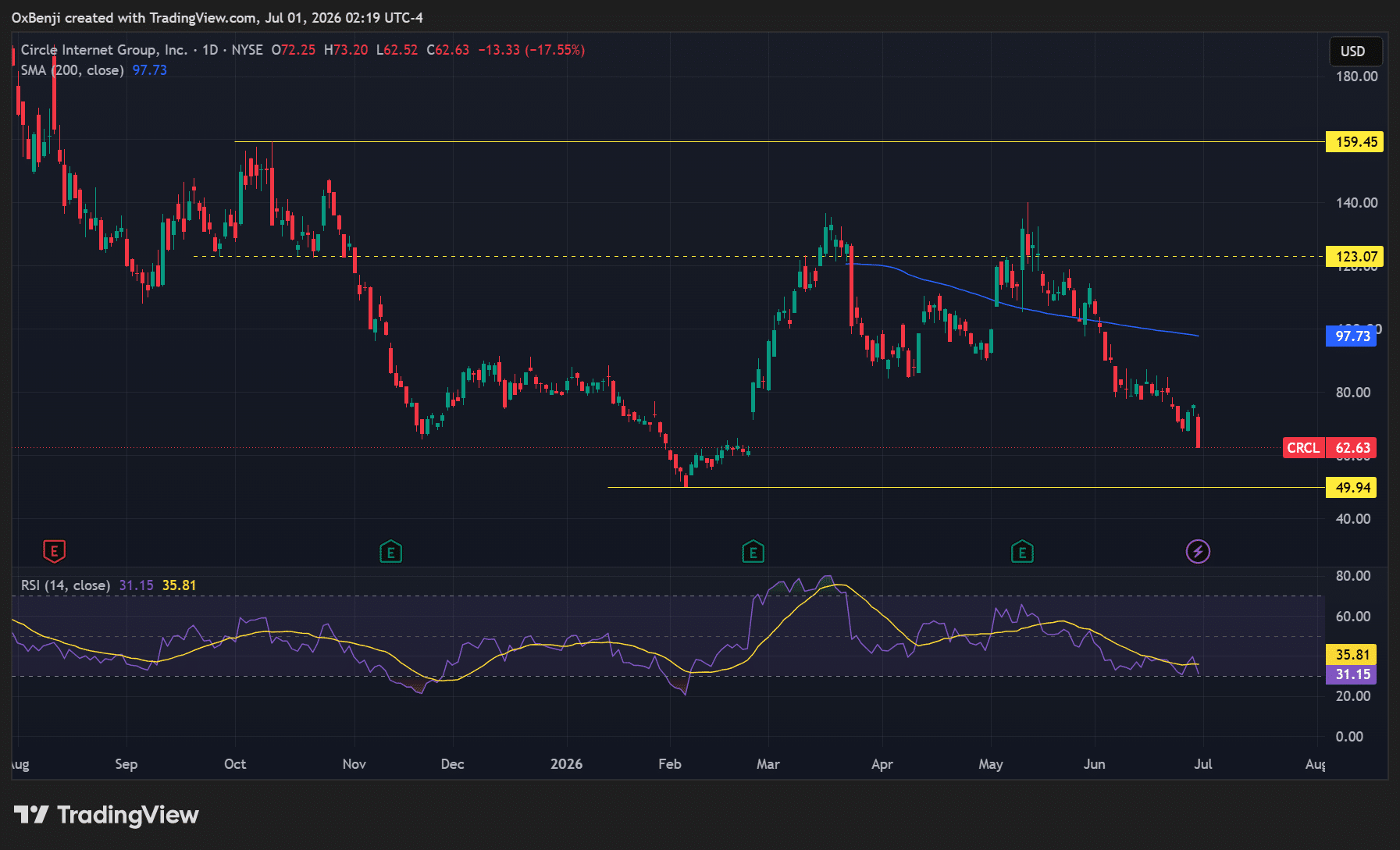
Circle’s stock, CRCL, dumped 17.5% to $62.63 on the 30th of June, marking the largest daily loss since March. It’s worth noting that in March, the stock fell 20% following a draft proposal to ban stablecoin yield on idle balance.

This raised concerns about likely limited USDC adoption and the potential impact on the second-largest stablecoin issuer’s revenue outlook if the proposal were enacted. The dip on the 30th of June, however, was driven by a new rival in the stablecoin space.
Source: Circle stock price performance, TradingView

Will Open USD challenge Circle, Tether’s dominance?

A consortium of 140 firms, including traditional cross-border payment players such as Visa, Mastercard, BlackRock and Google, launched a new stablecoin, Open USD (OUSD). According to the coalition, reserve earnings will be shared among partners, with zero transfer fees.

The target for OUSD? Enterprise treasury management and merchant payments. While not entirely focused on retail, the two segments are also eyed by both Tether’s USDT and Circle’s USDC.

The new stablecoin will be offered later in the year, and Circle’s stock reaction suggested the market share dominance could be challenged. In fact, Matthew Sigel, head of digital research at asset manager VanEck, echoed this stance as the stock dumped on Tuesday.

$CRCL -13% as Stripe, Coinbase and BlackRock back rival stablecoin ‘Open USD’

Sam Ruskin, an investment associate at crypto-focused venture firm Reciprocal Ventures, also reinforced Sigel’s outlook. He added,

This will either force Circle to continue their revenue share agreements, find new distributors for USDC (although nearly everyone interested in stablecoins today is backing OUSD). Whatever way you cut it, this seems bearish for Circle.

There has been increased competition in the stablecoin market after the GENIUS Act passage in 2025. In fact, over the same period, Tether’s USDT still holds dominance, but its market share shrank from 62% to 59%.
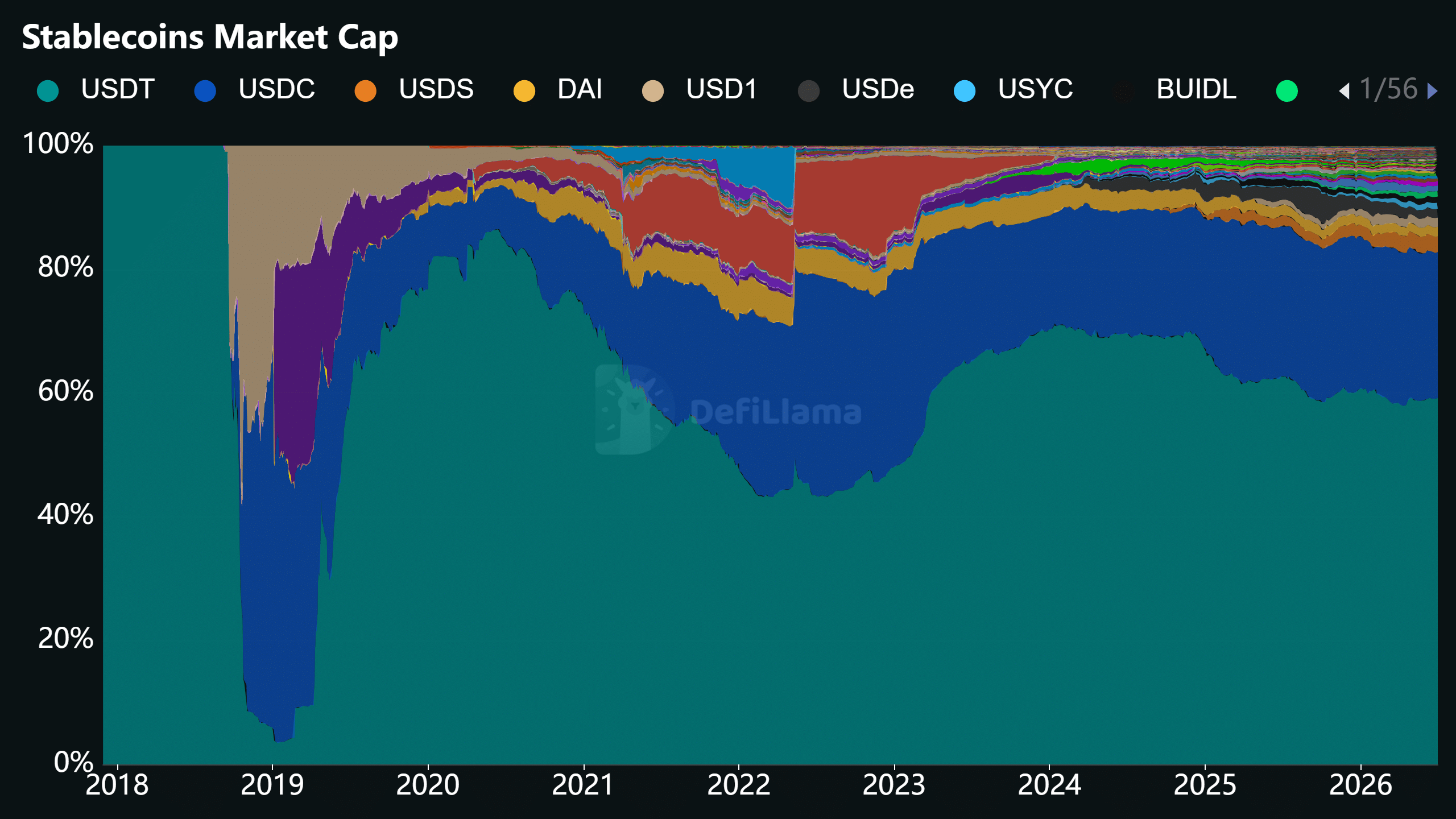
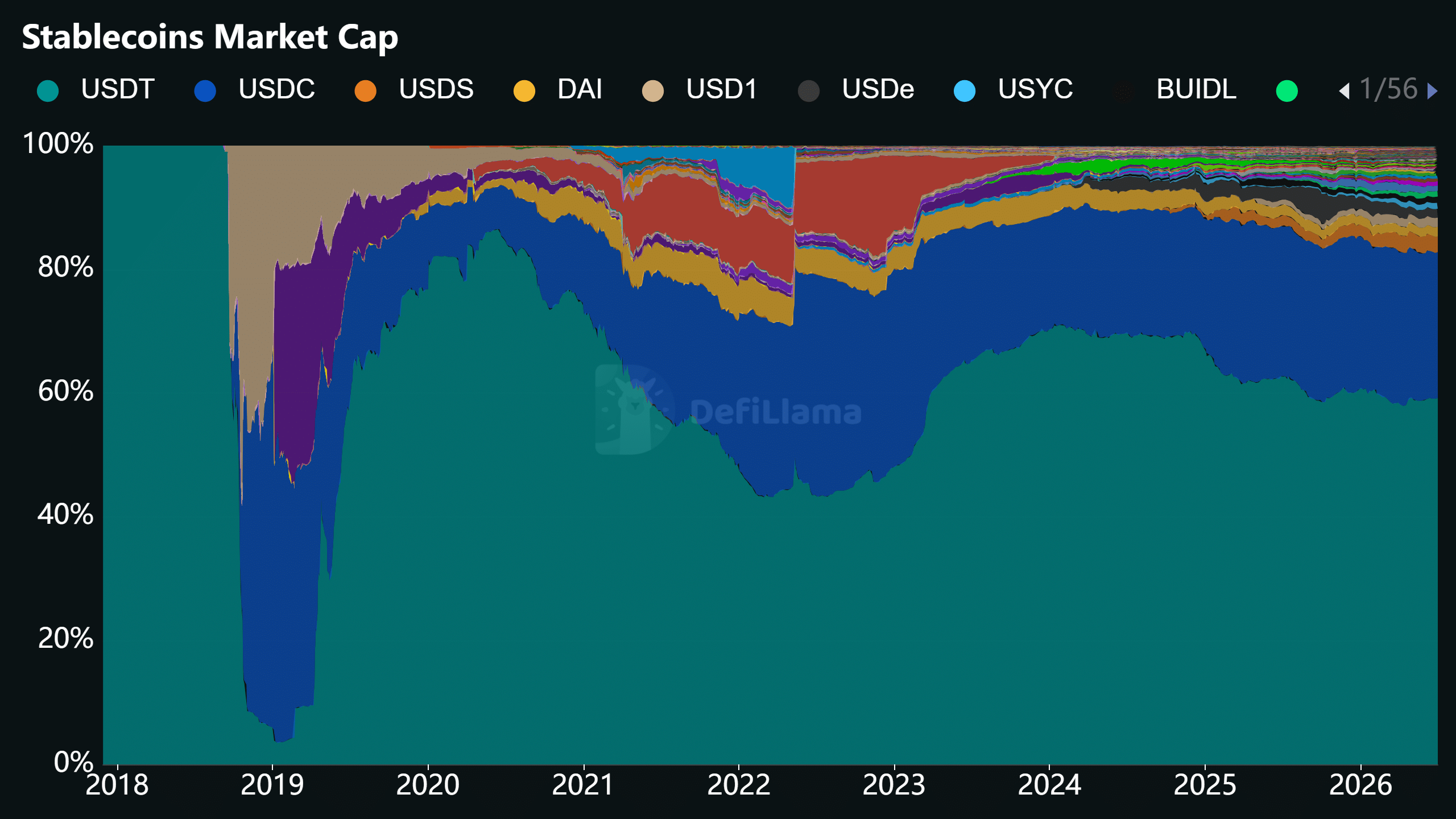
Source: DeFiLlama

On the other hand, Circle’s market share rose from 19% to 25% before easing slightly to 24% in 2026. Whether new competitors will erode that share remains uncertain. Even so, analysts remain bullish on the stock, with a consensus price target of $120, implying roughly 91% upside from current levels.
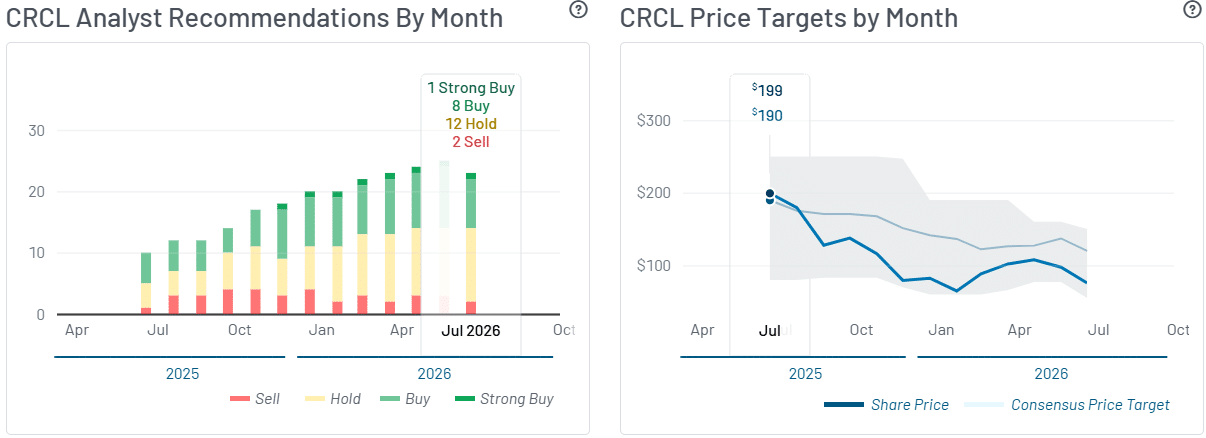
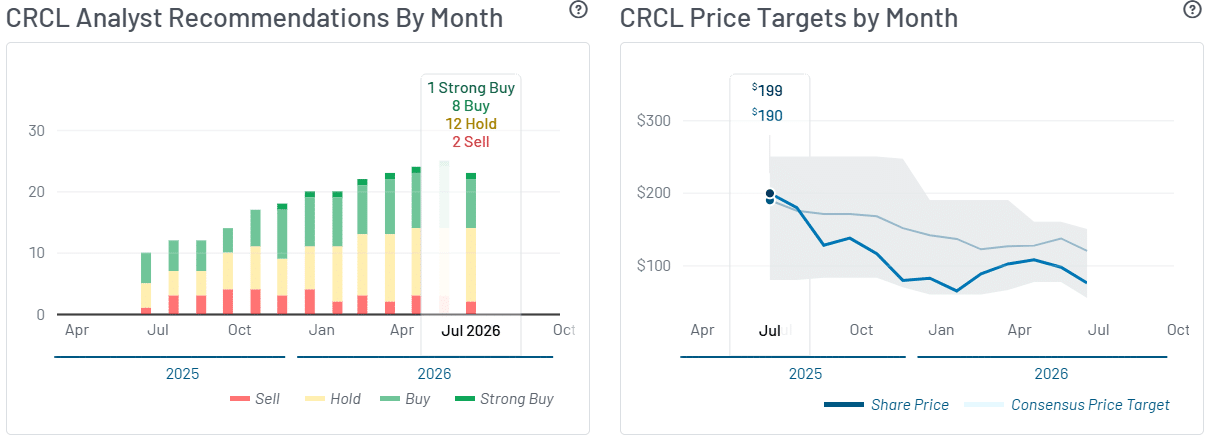
Source: MarketBeat

Final Summary

  • Circle stock, CRCL, saw a massive loss of 17.5% on Tuesday
  • The bearish move followed a new rival, Open USD, backed by Visa and 140 other partners.

Domande pertinenti

QWhy did Circle's stock price drop 17.5% on June 30th?

ACircle's stock price dropped primarily due to the announcement of a new rival stablecoin called Open USD (OUSD), which is backed by a consortium of 140 firms including Visa and Mastercard, posing a potential threat to Circle's market share.

QWhat is Open USD (OUSD) and who is behind it?

AOpen USD (OUSD) is a new stablecoin launched by a consortium of 140 firms, including traditional payment companies like Visa, Mastercard, as well as BlackRock and Google. It aims to target enterprise treasury management and merchant payments.

QWhat was the market reaction to the launch of Open USD, according to analysts mentioned?

AAnalysts like Matthew Sigel and Sam Ruskin viewed the launch as bearish for Circle. They believe it will challenge Circle's market dominance, potentially forcing Circle to renegotiate revenue share agreements or find new distributors, as many interested parties are backing OUSD.

QHow has the stablecoin market share changed for Tether and Circle recently?

AFollowing the GENIUS Act passage in 2025, Tether's USDT dominance shrank from 62% to 59%. Circle's USDC market share initially rose from 19% to 25% but has since eased slightly to 24% in 2026.

QWhat is the consensus price target for Circle's stock (CRCL) despite the recent drop?

AAnalysts remain bullish on Circle's stock with a consensus price target of $120, which implies roughly a 91% upside from its price level at the time of the article.

Letture associate

The Largest Upgrade Since The Merge? How Glamsterdam Will Affect Ethereum and Regular Users?

The upcoming Glamsterdam upgrade, scheduled for late 2026, is considered Ethereum's most significant change since The Merge. It focuses on fundamentally restructuring Ethereum's block production, transaction execution, and gas pricing to enable major scalability improvements while preserving decentralization. The upgrade centers on three key innovations: * **Enshrined PBS (ePBS)**: Moves the Proposer-Builder Separation mechanism into the protocol's core, eliminating reliance on external relays. This reorganizes the block pipeline, extending the time window for processing execution payloads, which is crucial for safely increasing block capacity. * **Block-Level Access Lists (BALs)**: Attaches a "map" to each block, declaring in advance which state data its transactions will access. This enables potential parallel transaction processing and faster node synchronization, breaking a key performance bottleneck. * **Gas Repricing**: Introduces a more accurate resource pricing model by separating computation costs from state storage costs. This discourages uncontrolled state growth by making operations that create permanent data (like new accounts) more accurately reflect their long-term network burden. Together, these changes aim to solve the core challenges of increasing Ethereum's throughput (e.g., raising the Gas Limit) without overburdening node hardware or increasing centralization risks. They prepare the infrastructure for higher capacity, targeting a credible post-upgrade capacity of up to 200 million Gas. For users, the impact will be nuanced: * General transaction fees may become lower and more stable as block space increases. * Simple transfers could see cost reductions, while state-intensive operations (like contract deployment) may become relatively more expensive due to the new gas model. * Gas fee estimations by wallets will become more accurate. * L2 networks could benefit long-term from increased data blob capacity. * Standardized logs for all ETH transfers (EIP-7708) will improve tracking for wallets and exchanges. Ultimately, Glamsterdam represents a foundational shift, not a simple block size increase. It seeks to expand Ethereum's capacity by re-engineering its underlying mechanics, maintaining its commitment to decentralization while enabling significant performance gains.

marsbit2 h fa

The Largest Upgrade Since The Merge? How Glamsterdam Will Affect Ethereum and Regular Users?

marsbit2 h fa

Circle CEO Responds to the OUSD Challenge: Stablecoin is a Winner-Takes-All Business, and We Won't Slow Down

In response to questions about the OUSD stablecoin initiative, Circle CEO Jeremy Allaire argues that the stablecoin market is a "winner-take-most" platform business driven by powerful network effects, and Circle has no plans to slow down. He outlines three key drivers behind USDC's dominant position: 1. **Protocol/Software Layer Network Effects**: The value of a stablecoin network grows as more developers and services integrate it, creating compounding utility and user preference. Circle has spent nearly a decade building this ecosystem with USDC, now accelerated by mainstream adoption and enhanced by software stacks like CCTP and Gateway for interoperability. 2. **Liquidity Network Effects**: Liquidity begets more liquidity. USDC has achieved top-tier global liquidity—ranking among the top three digital assets alongside BTC and USDT—through nearly a decade of building deep primary and secondary market access across regions and venues. 3. **Regulatory and Policy Integration**: Establishing a global stablecoin requires deep regulatory engagement, licensing, and compliance across key markets—a significant, long-term investment where Circle is a leader. Allaire cites Artemis data showing USDC facilitated 80% of all dollar stablecoin on-chain transaction volume in Q1 2026, with USDT at 20% and all others negligible. He addresses OUSD's purported advantages: "free" minting/burning is often not sustainable in practice; redistributing all revenue can starve essential infrastructure investment; and large consortium models historically struggle with inefficiency and slow execution, unlike focused strategic partnerships. He reaffirms Circle's strong ongoing partnership with Coinbase on USDC and notes Circle collaborates with dozens of other stablecoin issuers through its expanding platform (Arc, CCTP, CPN, etc.). While welcoming OUSD to the ecosystem, Allaire asserts that Circle's vast, trusted network and continued investment make USDC the foundational digital dollar infrastructure for the world.

链捕手2 h fa

Circle CEO Responds to the OUSD Challenge: Stablecoin is a Winner-Takes-All Business, and We Won't Slow Down

链捕手2 h fa

Q2 Crypto Market Review: Did Bitcoin Rise for 'Nothing'? Did Money Flow to AI and On-Chain?

Q2 2026 Crypto Market Recap: Bitcoin's Gains Erased Amid Shift to AI and On-Chain Activity The second quarter of 2026 saw a significant reversal for the cryptocurrency market. Bitcoin gave back all its April gains, ending Q2 down approximately 11%, while major stock indices posted strong gains. This divergence was driven by a hawkish shift in Fed rate expectations, capital rotation into AI stocks, and weakening liquidity channels into crypto. Key demand pillars deteriorated simultaneously. Spot Bitcoin ETFs recorded net outflows of $4.08 billion for the quarter, with outflows dominating June. Crypto treasury entity Strategy's bitcoin accumulation slowed markedly, and the total stablecoin market cap contracted by ~$4.2 billion. This created a tighter liquidity environment. Exchange data reflected the downturn. Spot trading volumes fell 28% quarter-over-quarter. The market underwent significant deleveraging, with $8.35 billion in long liquidations for BTC and ETH, primarily in late May/early June. Open interest and order book liquidity also declined. Despite the bearish price action, structural developments point to an expanding on-chain ecosystem. These include the rise of tokenized stocks with full legal rights, the growth of RWA (real-world asset) perpetual contracts for trading stocks and commodities 24/7, and the use of crypto markets for price discovery ahead of major events like the SpaceX IPO. On-chain vaults are also emerging as a core layer for institutional capital allocation.

Foresight News2 h fa

Q2 Crypto Market Review: Did Bitcoin Rise for 'Nothing'? Did Money Flow to AI and On-Chain?

Foresight News2 h fa

Trading

Spot
活动图片