More Popular Than SpaceX, Oversubscribed by Over 6586 Times, What's the Meme Power Behind Liuliumei (06658.HK)?

Odaily星球日报Pubblicato 2026-06-15Pubblicato ultima volta 2026-06-15

Introduzione

Titled "More Popular than SpaceX, Over 6586 Times Oversubscribed: What's the Meme Power Behind Liuliumei (06658.HK)?", this article discusses the phenomenon of "stock memefication" through the case of Liuliumei's IPO. The Chinese snack company saw its stock price surge over 190% on its Hong Kong debut, fueled not by fundamentals but largely by a viral meme. Its stock ticker abbreviation "06658.HK" was humorously linked to "LLM" (Large Language Model), coinciding with a rally in AI-related stocks like Zhipu AI. This mirrors a broader trend where stocks gain traction based on internet jokes,谐音梗 (homophonic puns), celebrity mentions, or cultural moments—similar to meme coins in crypto. Examples include Gamestop's 2021 short squeeze, Trump-related stock movements ("川大智胜"), and "孚日股份" (interpreted as "capture Japan"). The article argues global markets are entering an era where attention and social media narratives can drive significant capital flows, blurring lines between traditional finance and meme culture. While offering quick gains, this trend also carries risks like pump-and-dump schemes. Liuliumei's explosive IPO, surpassing even蜜雪冰城's subscription record, exemplifies how meme-driven attention is being converted into market volatility and liquidity in today's fragmented, emotion-driven investment landscape.

Original|Odaily Planet Daily(@OdailyChina)

Author|Wenser(@wenser2010 )

"Are you okay? Okay? Okay? Then eat some Liuliumei!"

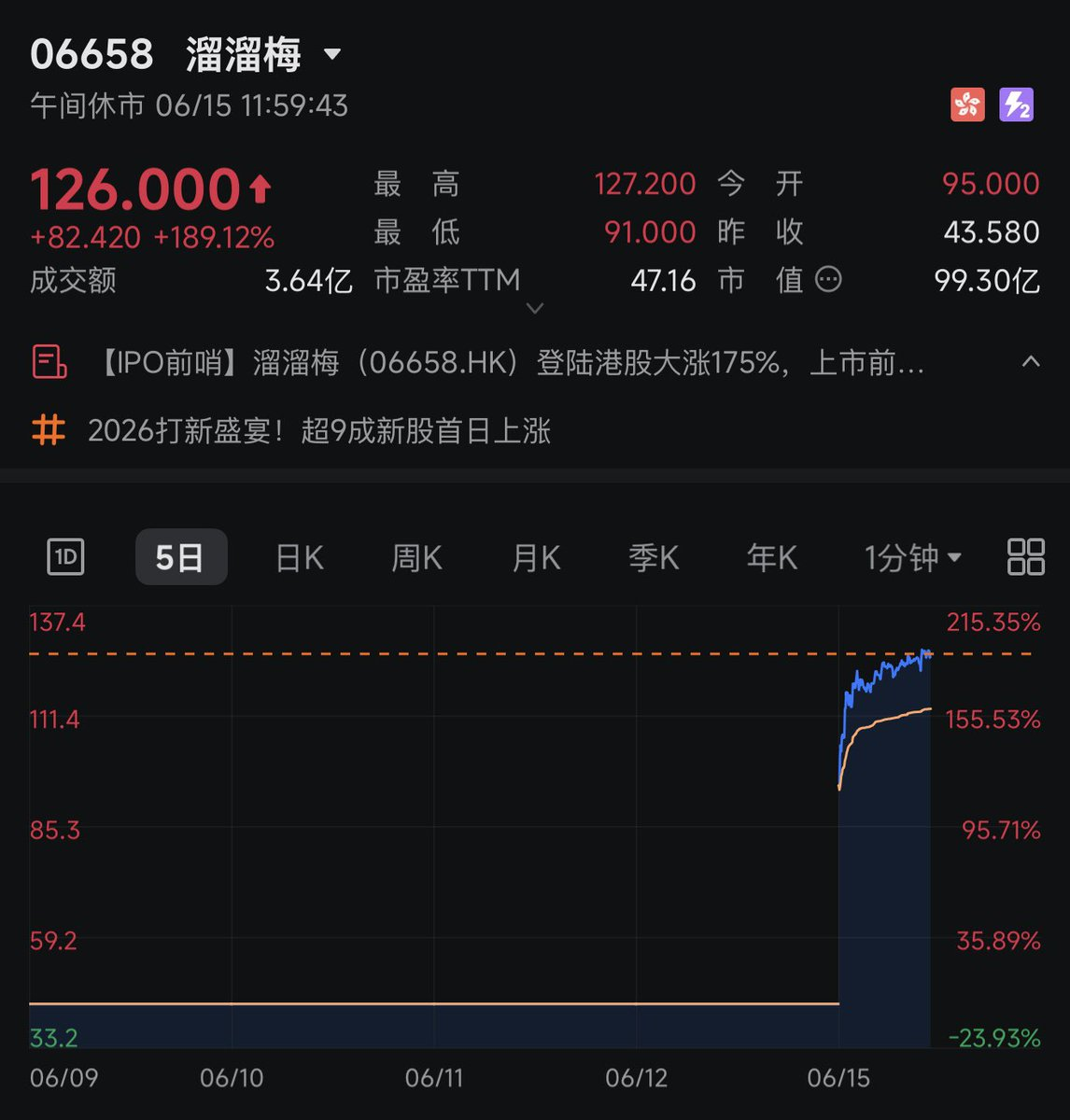
Once upon a time, a brainwashing commercial line from actress Yang Mi brought Liuliumei into thousands of households. Today, after decades of accumulation, the company behind it finally officially listed on the Hong Kong Stock Exchange, becoming the "first stock of plum snacks" on HKEx. It is reported that its issue price was HKD 43.58, the opening price was HKD 95, a surge of approximately 116% from the offering price of HKD 42; the intraday high reached HKD 127.50, an increase of over 190%; it has now pulled back to HKD 125, still up over 186%.

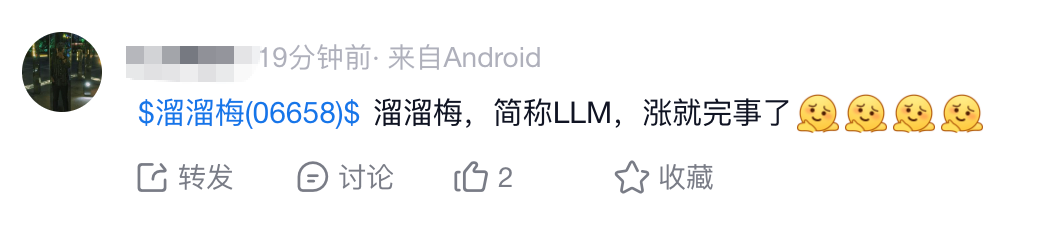
But contrary to many expectations, the stock price surge of Liuliumei (06658.HK) is not a revival of the concepts of "new consumption, new retail, new snacks." Instead, its name initials coincidentally align with the hot topic of "LLM" (Large Language Model), riding on the wave of today's 45% surge in Zhipu AI (02513.HK).

Many call it an "authentic AI Large Language Model stock," attracting countless hot money and capital inflows. Whether acknowledged or not, global stock markets may be entering the "Stock Meme-ification Era."

The New Era of Global Stock Markets: When Stocks Collide with Memes

First, the basics of Liuliumei's IPO: This was Liuliumei's fourth attempt at a capital market listing.

In 2019, its attempt to list on the A-share market failed; in 2025, its two applications to list on HKEx lapsed; it wasn't until May 21 this year, after updating its listing application materials for the third time and changing its main entity name from "Liuliumei Group Co., Ltd." to "Liuliumei Co., Ltd.," that it successfully listed in less than a month. It must be said, sometimes naming can be a mysterious thing.

According to the company's allocation results announcement, the public offering portion of this IPO recorded an oversubscription of approximately 6586.73 times. The final number of shares offered publicly was 1.1465 million, accounting for approximately 10% of the total global offering. There were approximately 180,500 valid applications received, with about 11,465 applications accepted. The ratio of allotment for one lot application was only 1.5%, meaning the one-lot winning rate was as low as 1.5%, indicating extremely fierce competition for subscription. Regarding the international placement, Liuliumei received a subscription of 2.64 times. The final number of international offering shares was 10.3176 million, accounting for 90% of the total offering shares. Comparing this data, the popularity of Liuliumei's IPO has surpassed that of "the first stock of milk tea stores by outlet number" Mixue Ice City, which listed on HKEx in March last year with a public offering oversubscription multiple of 5258.21 times.

In other words, institutions were not optimistic but held 90% of the shares; retail investors were optimistic but only held 10% of the shares. The main driving force behind the opening surge came more from the free market play of "retail investors and market makers dancing together." And this is precisely the power of "Meme stocks"—transforming the attention attracted by memes into buying power in the capital market.

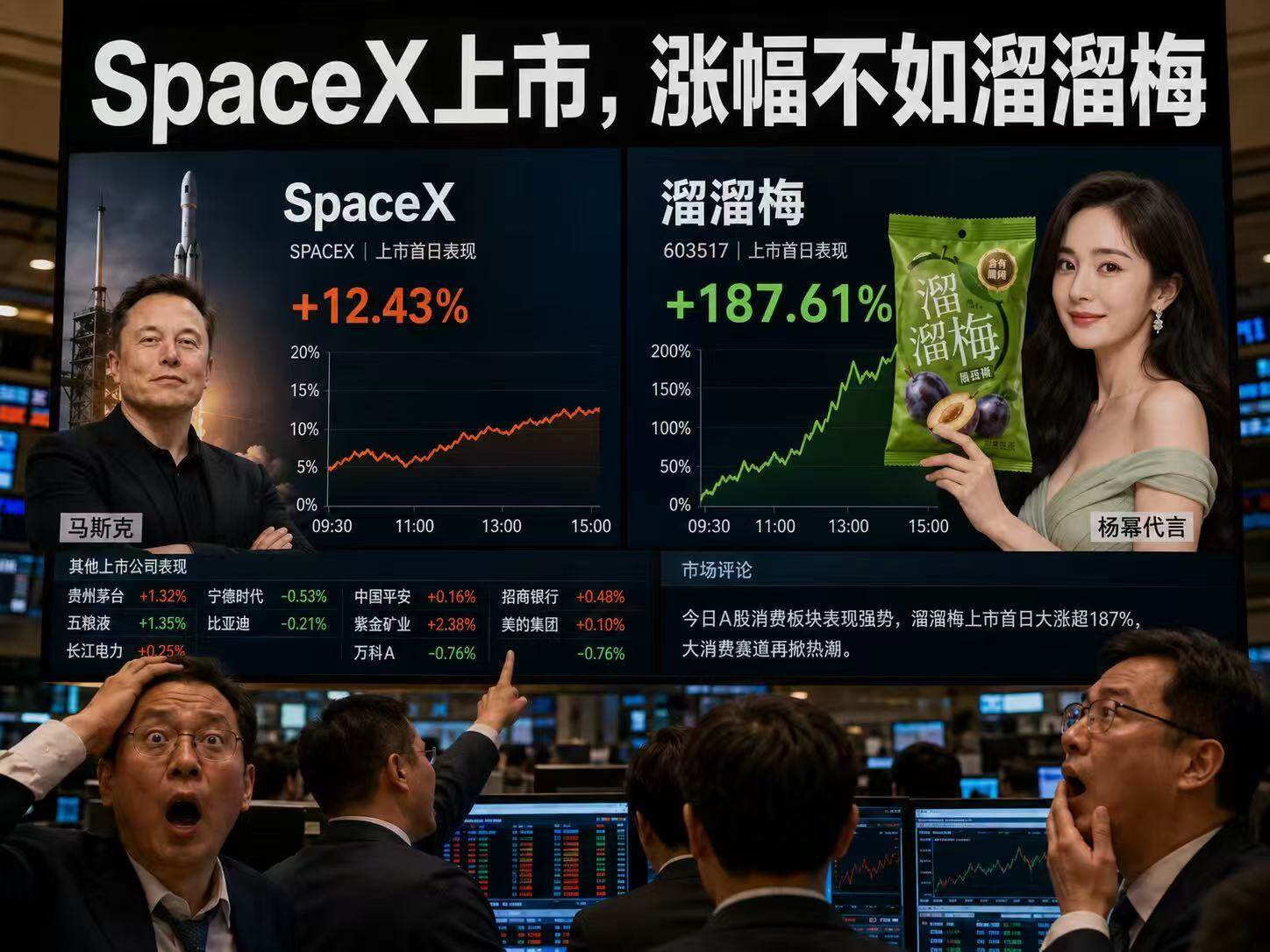
Some netizens even compared Liuliumei's opening performance to SpaceX, finding its market gains far more dazzling.
It is worth mentioning that "Meme stocks" is not a new term that recently appeared; they are an objectively existing category of stocks in major capital markets like the US, Hong Kong, and A-shares. However, the "Stock Meme-ification Era" is undoubtedly the latest trend emerging in the past 1-2 years, and its driving factors are also somewhat related to the crypto market.
The earliest Meme stocks are untraceable, so we'll only discuss some representative individual stock targets in recent years.

2021's Gamestop might be the starting point of Meme stock enlightenment for many in the US market. Led by well-known retail investors like Roaring Kitty, global retail investors united against Wall Street institutional capital, forcing a short squeeze that led many brokerage platforms and exchanges to "pull the plug" to avoid the storm. Recently, rumors of Gamestop acquiring eBay also caused market fluctuations and a temporary surge in its stock price.

Tesla and the recently IPO'd SpaceX have also been viewed as a type of Meme stock because both companies and stocks are strongly associated and deeply bound with the highly topical "world's first trillionaire" Elon Musk. Before the companies' businesses provided strong performance proof, they were considered "narrative-driven companies with sky-high dream valuations."

Before Donald Trump won the US presidential election in 2024, the A-share market had already started moving. "Chuanda Zhisheng" frequently topped platform trending lists and even experienced multiple limit-up days. That year, during Trump's campaign, an assassination attempt left his ear scratched by flying glass from a bullet. Stock "Goertek" (homophone for "cut ear") was also affected and saw a surge during trading.

Last year, when Sino-Japanese diplomatic relations deteriorated, the defense stock "Furi Shares" experienced a dramatic stock price surge due to the patriotic homophone pun "capturing Japan" (孚日 sounds like 'capture Japan'), pulling up for eight consecutive trading days, with cumulative gains exceeding 100%, becoming one of the short-term "monster stocks" in the A-share market.

In today's capital markets, similar to the crypto market with its fragmented attention and concentrated emotions, individual stock targets and sector themes that can spark the widest discussion and attention have become "attention foci" that stir up funds and liquidity.
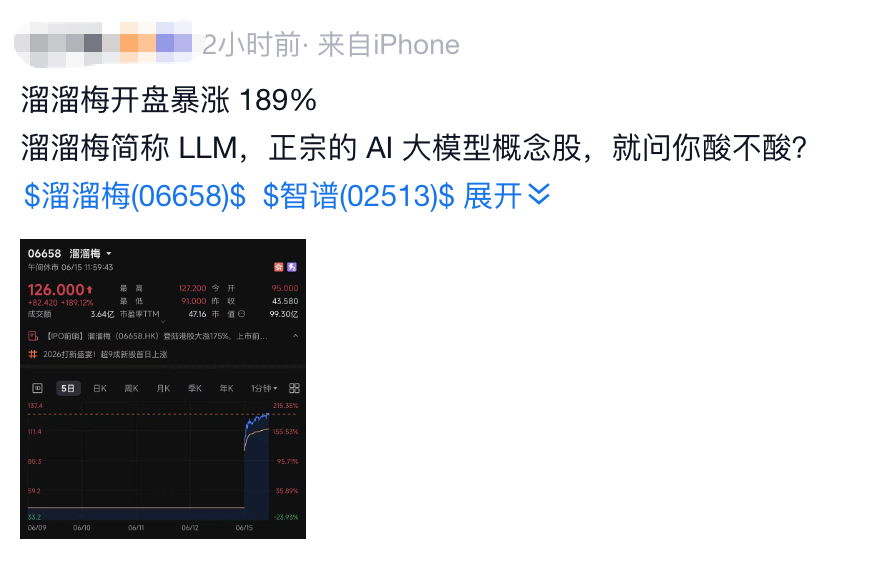
Liuliumei's surge is also a prime example of the "Stock Meme-ification" era.

The Stock Meme-ification Era Begins: Homophone Puns, Abbreviations, AI Era Dividends

As the valuations of OpenAI and Anthropic rise close to the trillion-dollar scale, companies and stocks related to the AI industry chain—such as optics, communications, materials, and computing power—have successively entered an explosive growth period:

  • NVIDIA became the first listed company with a market cap exceeding $5 trillion;
  • Micron, SanDisk, etc., saw their stock prices break new highs consecutively, with institutions raising their bullish price targets;
  • The stock price fluctuations of SK Hynix and Samsung Electronics dictate the rises and falls of South Korea's KOSPI index;
  • A single statement from Nvidia's founder about "seeing Marvell as a future trillion-dollar giant" caused Marvell (MRVL) stock to rise accordingly;
  • Innolight (Zhongji Xuchuang) mentioned by the new stock god Serenity was misread due to translation issues as "Inno Laser," causing the latter's stock price to surge 10% due to an influx of 300 million hot money.

In the great tide of the "Stock Meme-ification" era, being associated with AI,蹭上 (catching the heat) of "large language models," having homophones with popular targets, or receiving mentions from celebrities have all become reasons for market attention and the best stage for the simultaneous influx of attention and capital.
"Trump concept stocks," "US stock government concept stocks," "TACO-style trading beneficiary targets," etc., are also manifestations of this industry trend. This is precisely the common play in the "attention-intensive industry" highly advocated by the crypto market—the Meme coin sector.

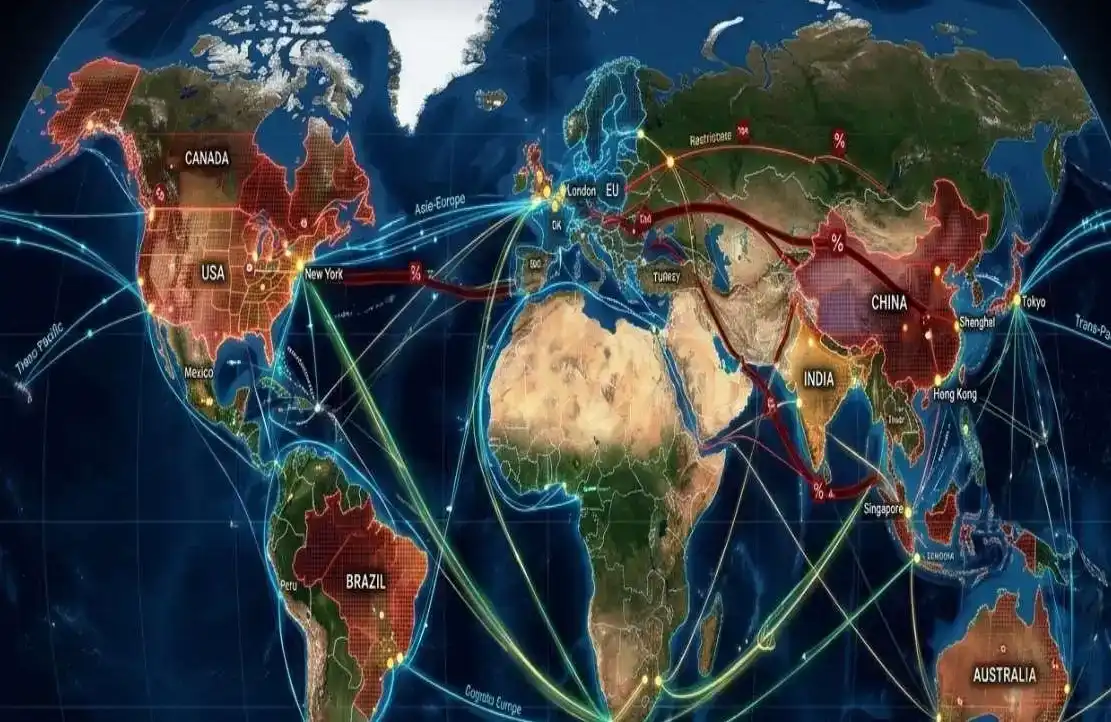
However, the capital markets are different now, the market rules are different, and the scale of funds and liquidity is also incomparable to the crypto market. After all, compared to the trading scale of the US, Hong Kong, A-share, and Japan/South Korea stock markets, the crypto market's total size of less than $3 trillion looks somewhat pitiful.

SpaceX, upon listing, immediately jumped into the top 10 of global major asset rankings. In contrast, BTC has fallen to the 17th position on that list. It must be said, numerical comparisons always look this cruel—over a decade of diligent development in the crypto industry is worth less than the market cap of one company's IPO.

Now, the emergence and increase of Meme stocks may have become an industry trend. The earlier incident where Joyoung Company produced corresponding products and saw its stock price rise due to the viral meme "North-South Mung Beans Hachimi" already illustrates one thing: for the younger generation and investor groups in today's society, investment targets that can trigger emotional fluctuations, attract market attention, and stir liquidity are more worthy of buying.

Even if this fleeting chasing sentiment is just a momentary frenzy, for most people, if you can't beat them, join them is the better choice. Of course, objectively speaking, the emergence of Meme stocks does not mean one-sided benefits, such as wealth creation effects or industry booms. Sometimes, this process is accompanied by negative phenomena like pump-and-dump schemes, one-sided harvesting, and emotional marketing.

Just like Liuliumei's opening surge, some angrily criticize it as a "pump to dump" scheme; others analyze that perhaps it's because Liuliumei joined the "Stock Connect" program, allowing A-share market funds to buy in, that pushed its stock price up. The truth and reasons are certainly multidimensional and chaotic. For us, perhaps all we can do is go with the flow of this era and find our own path to prosperity.

Domande pertinenti

QAccording to the article, what is the main reason behind the surge in Liuliumei's stock price on its IPO day?

AThe main reason is that its stock ticker abbreviation 'LLM' coincidentally matches the acronym for 'Large Language Model', allowing it to ride the hype of the AI and LLM trend, making it a so-called 'Meme stock'.

QHow does the article describe the level of oversubscription for Liuliumei's IPO public offering?

AThe article states that the IPO's public offering portion was oversubscribed by approximately 6586.73 times, indicating extremely high retail investor demand.

QWhat comparison does the article make to illustrate the concept of 'Meme stocks' besides Liuliumei?

AThe article mentions several examples: GameStop in 2021, Tesla and SpaceX associated with Elon Musk, '川大智胜' and '歌尔股份' in the A-share market related to Donald Trump events, and '孚日股份' due to a patriotic homophonic pun.

QWhat is the article's view on the relationship between the rise of 'Meme stocks' and the cryptocurrency market?

AThe article suggests that the trend of 'stock Meme-ization' is partly influenced by the cryptocurrency market, which pioneered the 'attention-intensive' model of meme coins. However, it notes that traditional stock markets have vastly larger capital scales than the crypto market.

QWhat potential risks or negative aspects does the article associate with the 'Meme stock' phenomenon?

AThe article points out that the Meme stock trend is not without downsides. It can be accompanied by negative phenomena such as 'pump and dump' schemes, one-sided harvesting of retail investors, and emotional marketing, rather than representing genuine value creation or industry growth.

Letture associate

Apple Also Has to Pay Rent Now

Apple Pays Rent Too: The Two-Way Flow of "Traffic Tax" and "AI Capability Rent" Between Tech Giants For over two decades, Google has paid Apple an estimated $20 billion annually to remain the default search engine on Safari, a "traffic tax" for a critical user entry point. However, in 2026, the direction of this cash flow partially reversed. Apple agreed to pay Google roughly $1 billion per year to license its Gemini AI models, as Apple's own models reportedly struggled with complex tasks. This creates a unique dynamic: Apple acts as the "landlord" in the established search ecosystem, collecting rent from Google for access. Simultaneously, in the emerging AI arena, Apple becomes the "tenant," paying Google for access to cutting-edge AI capabilities it cannot currently match internally. While Apple claims its new models are "distilled" from Gemini outputs and contain "not a drop" of Google's original code, core dependencies remain. Its knowledge base is refined using Gemini's outputs, and its most powerful cloud model runs on Google's infrastructure. Apple has structured the deal as non-exclusive, allowing it to theoretically switch AI suppliers—a hedge against over-reliance. The future hinges on whether advanced AI models become a commodity (cheap and abundant) or remain a concentrated, scarce resource (expensive and controlled by few). Apple is betting on the former, leveraging its massive device ecosystem to be a powerful, choosy customer. If the latter proves true, its bargaining power could erode. This power dynamic is extending to developers. Apple, Google, and WeChat are all pushing for apps to expose their core functions as standardized "actions" or "intents" that their respective AI assistants (Siri, Gemini, WeChat AI) can directly call. The new scarce resource is no longer just app store visibility, but "being selected by the AI." The currency of "rent" has changed from a 30% revenue share to ceding control over how users interact with an app's functions.

marsbit45 min fa

Apple Also Has to Pay Rent Now

marsbit45 min fa

Missed the SpaceX IPO? WEEX's "First Trade Protection" Lets You Experience US Stock Trading Risk-Free.

With the excitement around SpaceX's recent public listing reigniting interest in the US stock market, Chinese investors face significant challenges accessing compliant and convenient trading channels following regulatory actions against major online brokers. This article explores the available options, highlighting their risks and limitations. Traditional paths for US stock investments remain problematic. Qualified Domestic Institutional Investor (QDII) and Listed Open-Ended Fund (LOF) products, while compliant, suffer from high fees, significant purchase premiums, and a very limited selection of assets. Small, unregulated offshore brokers pose substantial risks, including potential insolvency. While secure, VIP accounts at banks in Hong Kong or Singapore require high minimum deposits (often 1-2 million RMB) and in-person visits, placing them out of reach for most retail investors. The article positions cryptocurrency exchanges, specifically their TradFi (traditional finance on-chain) offerings, as a compelling alternative. Platforms like WEEX are noted for providing access to a wide range of US stocks and ETFs, including SpaceX (SPCXON), through tokenized assets. This method offers advantages such as a single account for both crypto and traditional assets, USDT-based settlement avoiding fiat complexities, flexible leverage, and robust risk management. To attract users, WEEX is promoting a "First Trade Guarantee" campaign. Running from June 15 to July 8 (UTC+8), it features a $30,000 prize pool. Users who trade $500 worth of US stock contracts can qualify for a guarantee on their first eligible trade: 100% loss coverage up to $30 or a 20% bonus on profits up to $30. The campaign is presented as a low-risk opportunity for both crypto natives and traditional investors to experience US stock trading.

marsbit46 min fa

Missed the SpaceX IPO? WEEX's "First Trade Protection" Lets You Experience US Stock Trading Risk-Free.

marsbit46 min fa

How Difficult is Chip Making? A Division Error Costs 475 Million Dollars

How Hard Is It to Make a Chip? A Division Error Cost $475 Million Chip expert Shi Kan, a researcher at the Chinese Academy of Sciences and a popular tech creator, explains the immense challenges of chip development. Chips are foundational to modern technology, but their creation is extraordinarily difficult. The journey from sand to a functional chip involves complex design and manufacturing, but a critical bottleneck is verification—ensuring the design works flawlessly before costly production. A single, undetected bug can have catastrophic consequences, as illustrated by the infamous 1994 Intel Pentium FDIV bug. A flaw in the floating-point division unit forced a recall costing $475 million. Unlike software, chips cannot be easily patched after manufacture, making "first-time success" paramount. However, industry surveys show only 24% of chip projects achieve this; over three-quarters require at least one costly re-spin due to design flaws. Verification has thus become the dominant phase, consuming up to 70% of the design cycle. The core challenge is a "verification impossible triangle" between high performance, good debuggability, and low cost. Exhaustively verifying a modern CPU core could take 15,000 years with software simulation, or 30 years with advanced hardware emulation—timeframes utterly impractical for development. Despite being essential, verification is often seen as unglamorous "dirty work," receiving less academic attention than fields like AI. Shi and his team are tackling this by developing an agile verification research framework called ENCORE, based on FPGA technology, to improve verification efficiency and debug capability. Beyond research, Shi engages in public science communication through long-form video content, aiming to demystify chip technology, AI, and computer science. He argues for the value of pursuing "hard and long-term" endeavors, whether in the meticulous world of chip verification or in creating substantive educational content, believing such sustained effort is likely the right path forward.

marsbit56 min fa

How Difficult is Chip Making? A Division Error Costs 475 Million Dollars

marsbit56 min fa

Trading

Spot
Futures

Articoli Popolari

Cosa è MEME 2.0

Memecoin 2.0: L'Ascesa di $MEME 2.0 nel Mondo delle Criptovalute Introduzione Nel panorama in continua evoluzione delle criptovalute, è emerso un nuovo contendente. Memecoin 2.0, simboleggiato come $MEME 2.0, porta il concetto di meme coin a un livello emozionante. Come prodotto derivato dal Memecoin originale, questo progetto ha catturato l'attenzione della comunità crypto spostando il focus da incentivi finanziari tipici a un'esperienza coinvolgente e divertente. Operando sulla blockchain di Ethereum, Memecoin 2.0 ridefinisce audacemente l'impegno della comunità nella sfera crypto. Che cos'è Memecoin 2.0, $MEME 2.0? Alla base, Memecoin 2.0 è un progetto di criptovaluta che dà priorità allo spirito di comunità e al divertimento associato alla cultura meme. A differenza delle criptovalute convenzionali, che si concentrano su casi d'uso pratici e benefici tangibili, Memecoin 2.0 si distingue abbracciando il lato più leggero della moneta digitale. Il progetto esiste senza promesse di utilità, una roadmap strutturata o ritorni finanziari, concentrandosi invece sulla creazione di una comunità vibrante incentrata sui meme e sul divertimento condiviso. Facendo così, attinge alla crescente tendenza della cultura meme nello spazio online, rendendola un giocatore unico nel mondo degli asset digitali. Creatore di Memecoin 2.0, $MEME 2.0 Nonostante ricerche approfondite sulle origini di Memecoin 2.0, l'identità esplicita del suo creatore rimane sconosciuta. Questa anonimità non è rara nella comunità crypto, dove molti progetti sono guidati da individui o gruppi che preferiscono rimanere dietro le quinte. La mancanza di informazioni pubblicamente disponibili sul creatore potrebbe essere vista come una mossa strategica, mettendo in evidenza l'impegno della comunità piuttosto che la notorietà individuale all'interno dello spazio. Investitori di Memecoin 2.0, $MEME 2.0 Le informazioni riguardanti gli investitori o il supporto finanziario per Memecoin 2.0 sono scarse. Questa assenza di dettagli potrebbe suggerire che il progetto sia autofinanziato o che il suo focus sulla comunità piuttosto che sulle strutture d'investimento tradizionali abbia attratto un tipo diverso di sostenitore. Poiché il mondo delle meme coin coinvolge tipicamente un maggior coinvolgimento di base piuttosto che investimenti istituzionali, questo approccio si allinea con l'etica dei progetti guidati dalla comunità. Come funziona Memecoin 2.0, $MEME 2.0? Memecoin 2.0 opera interamente sulla blockchain di Ethereum, capitalizzando le sue robuste caratteristiche di sicurezza e scalabilità. Sfruttando i punti di forza di Ethereum, Memecoin 2.0 può offrire un ambiente sicuro per le interazioni degli utenti garantendo che le transazioni siano sia efficienti che convenienti. Uno degli attributi unici di Memecoin 2.0 risiede nella sua struttura guidata dalla comunità. Il valore e la popolarità del token $MEME 2.0 derivano dalla partecipazione attiva dei suoi utenti, piuttosto che dalla utilità intrinseca. Questo design rinforza il focus del progetto sull'aspetto dell'intrattenimento delle criptovalute, implicando che la risata e l'impegno della comunità siano le vere monete che guidano il suo successo. Inoltre, il progetto si inserisce all'interno dell'ecosistema più ampio delle meme coin, dove il valore di ciascuna meme coin oscilla in base alla cultura, alle tendenze e all'impegno della comunità piuttosto che ai principi economici tradizionali. Cronologia di Memecoin 2.0, $MEME 2.0 Per comprendere meglio l'evoluzione e le pietre miliari di Memecoin 2.0, ecco una cronologia che evidenzia eventi significativi nella sua storia: 2024: L'inizio di Memecoin 2.0 è riconosciuto come un ramo del Memecoin originale, affermandosi all'interno del contesto fiorente delle meme coin mentre opera sulla blockchain di Ethereum. 13 luglio 2024: Memecoin 2.0 si posiziona ufficialmente come una meme coin incentrata sulla comunità sulla rete Ethereum, enfatizzando il suo approccio centrato sull'intrattenimento che invita gli utenti a impegnarsi e partecipare alla sua crescita. Punti Chiave su Memecoin 2.0, $MEME 2.0 Diverse caratteristiche critiche definiscono Memecoin 2.0: Approccio Centrico alla Comunità: La missione principale di Memecoin 2.0 è creare un'esperienza comunitaria divertente e coinvolgente, capitalizzando il piacere collettivo derivante dalla cultura memetica. Costruita su Ethereum: Operare sulla blockchain di Ethereum fornisce al progetto un'infrastruttura essenziale che garantisce sicurezza e scalabilità. Mancanza di Utilità o Roadmap: In una marcata deviazione dalle criptovalute tradizionali, Memecoin 2.0 non promette alcuna caratteristica utilitaria o ritorni finanziari, riaffermando il suo impegno per il coinvolgimento della comunità e l'impegno sociale. Focus sulla Cultura Memetica: Abbracciando gli aspetti umoristici e culturali del fenomeno meme, Memecoin 2.0 offre una piattaforma per gli utenti per interagire con la crypto offline e online. Ulteriore Contesto: L'Importanza delle Meme Coin Le meme coin sono emerse come una classe distinta di criptovaluta, spesso guidata dall'umorismo e da un approccio spensierato al trading. Queste monete generalmente mancano di significative utilità o roadmap di sviluppo, attirando gli utenti con la promessa di divertimento, interazione comunitaria e rilevanza culturale. Nel panorama del più ampio ecosistema crypto, le meme coin rianimano l'importanza dell'impegno della comunità, opponendosi ad approcci esclusivamente orientati al profitto. Progetti come Memecoin 2.0 danno il via a un'era in cui l'intrattenimento può armonizzarsi con le aspirazioni finanziarie, trasformando la blockchain in un parco giochi per la creatività e l'interazione sociale. Conclusione Memecoin 2.0, o $MEME 2.0, incarna una nuova ondata di criptovaluta che dà priorità all'impegno della comunità rispetto a rigidi strutture finanziarie. Con un focus sull'umorismo e l'interazione sociale, capitalizza sulla fascinazione circondante la cultura meme. Operando sulla blockchain di Ethereum, Memecoin 2.0 sfrutta le capacità della tecnologia mantenendo fermo il suo impegno per il valore ricreativo della valuta digitale. Mentre lo spazio delle criptovalute continua a evolversi, Memecoin 2.0 serve come testimonianza della nozione che il futuro degli asset digitali potrebbe ben dipendere da esperienze condivise, risate e solidi legami comunitari. Nel mondo imprevedibile delle crypto, forse la gioia può essere altrettanto preziosa quanto il guadagno finanziario tradizionale.

93 Totale visualizzazioniPubblicato il 2024.04.04Aggiornato il 2024.12.03

Cosa è MEME 2.0

Come comprare MEME

Benvenuto in HTX.com! Abbiamo reso l'acquisto di Memeland (MEME) semplice e conveniente. Segui la nostra guida passo passo per intraprendere il tuo viaggio nel mondo delle criptovalute.Step 1: Crea il tuo Account HTXUsa la tua email o numero di telefono per registrarti il tuo account gratuito su HTX. Vivi un'esperienza facile e sblocca tutte le funzionalità,Crea il mio accountStep 2: Vai in Acquista crypto e seleziona il tuo metodo di pagamentoCarta di credito/debito: utilizza la tua Visa o Mastercard per acquistare immediatamente MemelandMEME.Bilancio: Usa i fondi dal bilancio del tuo account HTX per fare trading senza problemi.Terze parti: abbiamo aggiunto metodi di pagamento molto utilizzati come Google Pay e Apple Pay per maggiore comodità.P2P: Fai trading direttamente con altri utenti HTX.Over-the-Counter (OTC): Offriamo servizi su misura e tassi di cambio competitivi per i trader.Step 3: Conserva Memeland (MEME)Dopo aver acquistato Memeland (MEME), conserva nel tuo account HTX. In alternativa, puoi inviare tramite trasferimento blockchain o scambiare per altre criptovalute.Step 4: Scambia Memeland (MEME)Scambia facilmente Memeland (MEME) nel mercato spot di HTX. Accedi al tuo account, seleziona la tua coppia di trading, esegui le tue operazioni e monitora in tempo reale. Offriamo un'esperienza user-friendly sia per chi ha appena iniziato che per i trader più esperti.

296 Totale visualizzazioniPubblicato il 2024.12.12Aggiornato il 2026.06.02

Come comprare MEME

Discussioni

Benvenuto nella Community HTX. Qui puoi rimanere informato sugli ultimi sviluppi della piattaforma e accedere ad approfondimenti esperti sul mercato. Le opinioni degli utenti sul prezzo di MEME MEME sono presentate come di seguito.

活动图片