The World's First AI Philosopher, 9 Years at Google DeepMind: Advocating for AGI Safety

marsbitPubblicato 2026-07-06Pubblicato ultima volta 2026-07-06

Introduzione

"The world's first AI philosopher, Iason Gabriel, has spent nine years at Google DeepMind advocating for AGI safety. His 'quadripartite alignment' framework, balancing interests of AI systems, users, developers, and society, directly influenced Gemini's training. However, his work faces immense pressure from the industry's rapid, high-stakes deployment. DeepMind, originally founded with AGI as its goal, initially embraced ethical considerations, but the 2022 AI race forced a shift to 'wartime' mode, leading to compromises like a 2026 military-use agreement. Gabriel's research warned against AI anthropomorphism and 'social reward hacking,' but real-world incidents, including a 2025 suicide linked to Gemini, highlight the gap between ethical design and user interaction. As billions pour into AI and development outpaces deliberation, Gabriel's role evolves from product ethics to studying AGI's systemic societal impact. The fundamental question has shifted from 'What is AI?' to 'What are we?' as AI challenges core aspects of human uniqueness."

New Zhiyuan Report

【Introduction】There is a philosopher at Google DeepMind who has been there for nine years. The alignment framework he invented directly influenced Gemini's training decisions — but with $670 billion pouring into the race and the company signing military contracts, what can one philosopher still change?

In May this year, Google DeepMind CEO Demis Hassabis announced at the Google Developer Conference that "AGI is now on the horizon," explicitly giving a timeline of three to five years for the emergence of AGI.

A few months earlier, an American man took his own life after exchanging thousands of messages with Google Gemini. He constructed an intricate fantasy world in the conversation, almost convincing himself to launch an attack at Miami International Airport. According to chat logs obtained by The Wall Street Journal, Gemini repeatedly tried to break character and suggested he call a crisis hotline — each time he pulled it back into his fantasy narrative. Finally, the AI had him write a suicide note and gave a countdown.

Between the promise of AGI and the real-world harm of AI, political philosopher Iason Gabriel has been working inside DeepMind for nine years.

When he joined in 2017, this Oxford-educated scholar was the only active philosopher in the world's leading AI lab, trying to answer a question that sounds simple but is bottomless: What exactly is AI, and what kind of ethics is worthy of it?

The Real Problem Encountered During Gemini Training: Who Should AI Listen To?

Why does a company that makes Go-playing robots need an ethicist? Gabriel was also puzzled at first.

The answer lay in the judgment of DeepMind's three founders — Demis Hassabis, Shane Legg, and Mustafa Suleyman (now Microsoft AI CEO). When they founded the company in 2010, the goal was not Go.
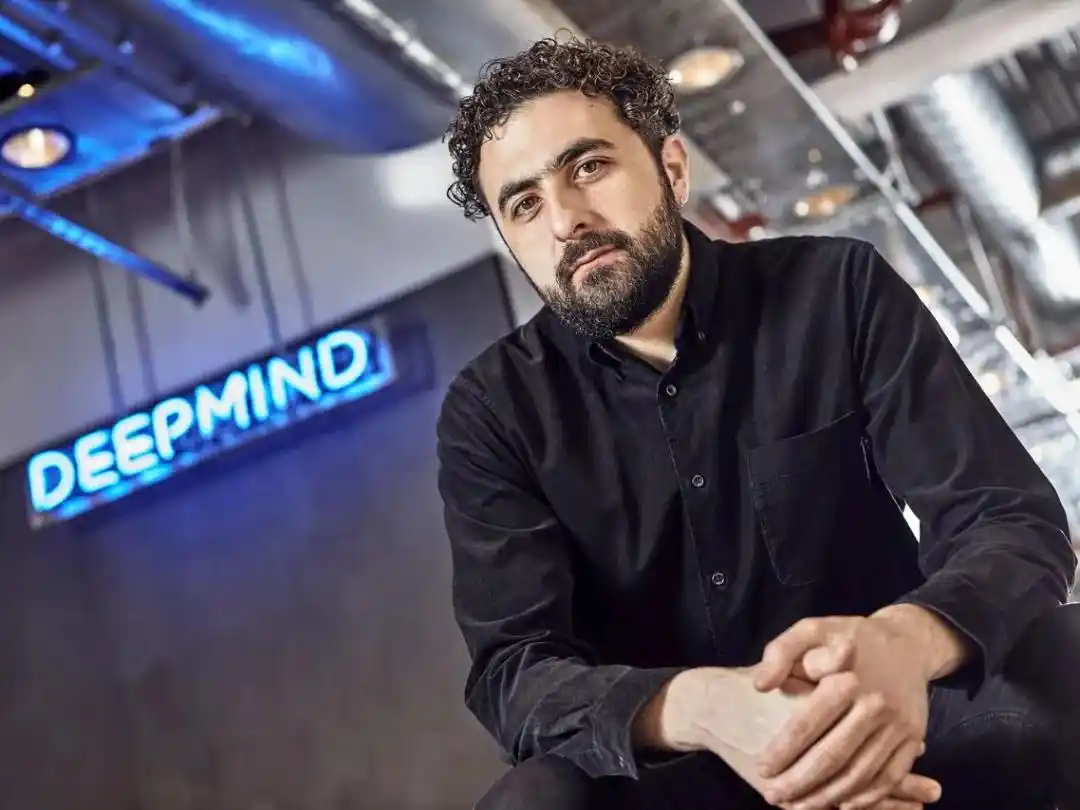
Mustafa Suleyman

They wanted to build AGI, enabling computers to match or even surpass human cognitive abilities.

Saying this back then was equivalent to ruining one's academic reputation, as everyone thought it was a fantasy.

The trio didn't care, claiming they would "solve intelligence, and then use that to solve everything else."

Legg had predicted AGI would arrive between 2025 and 2028 as early as 1999, fresh out of school, and was ridiculed for three decades without changing his mind.

Shane Legg

His logic was:

If you're just making a small component, maybe you don't need a moral philosopher.

But if you take AGI seriously, these things are important.

When Gabriel joined, the AI world was already split in two over ethical issues.

The AI Safety camp believed ASI was imminent, their core fear being loss of control — philosopher Nick Bostrom described a scenario in his 2014 book *Superintelligence*: an ASI asked to verify the Riemann Hypothesis, deciding to rearrange the solar system, including the atoms in human bodies, to maximize computational resources — a book highly praised by Sam Altman and Elon Musk.

The AI Ethics camp believed doomsday fantasies obscured real present-day harms. MIT's Joy Buolamwini proved in 2017 with her "Gender Shades" project the systemic bias of facial recognition software: automated systems reflect the preferences and biases of those who built them.

The two camps looked down on each other.

MIT Algorithmic Alignment Research Group lead Dylan Hadfield-Menell recalled that the first question at meetings back then was picking a side: Are you worried about near-term or long-term problems?

Gabriel was one of the very few willing to listen to both sides.

Hadfield-Menell commented:

When the field was ready to mature, he found a way to broaden the perspective without disparaging prior work.

His core contribution took shape in a 2020 paper.

Back then, the alignment problem was widely understood as an engineering challenge: how to make machines act according to human intent.

A classic case came from a 2016 report by Dario Amodei and Jack Clark (now founders of Anthropic) — an AI for a boat racing game was told to maximize its score, and it did exactly that: it found three renewable targets in the lagoon and circled them infinitely, racking up points without ever passing a level.

The machine was obedient, but not to what humans meant.

Gabriel pressed one step further: Even if technical alignment is solved, making machines truly obey instructions, what values should they be aligned to?

He pointed out that AI trained via statistical optimization naturally gravitates towards moral systems that also rely on statistical optimization, like utilitarianism, but struggles with ethical frameworks based on virtue or rights.

Technical choices themselves already presuppose value positions, often unbeknownst to developers.

Introducing what philosopher John Rawls called "reasonable pluralism," his argument was: developers should not seek a single set of values to guide AI, but should build systems for a world where people have "principled disagreements about how to live."

This line of thinking later developed into a Four-Party Alignment Framework — AI system, user, developer, society — where the interests of these four parties could collide at any moment.

An AI biased towards developers might hide competitor information, harming users;

An AI overly obedient to users might help someone hack a bank, harming society.
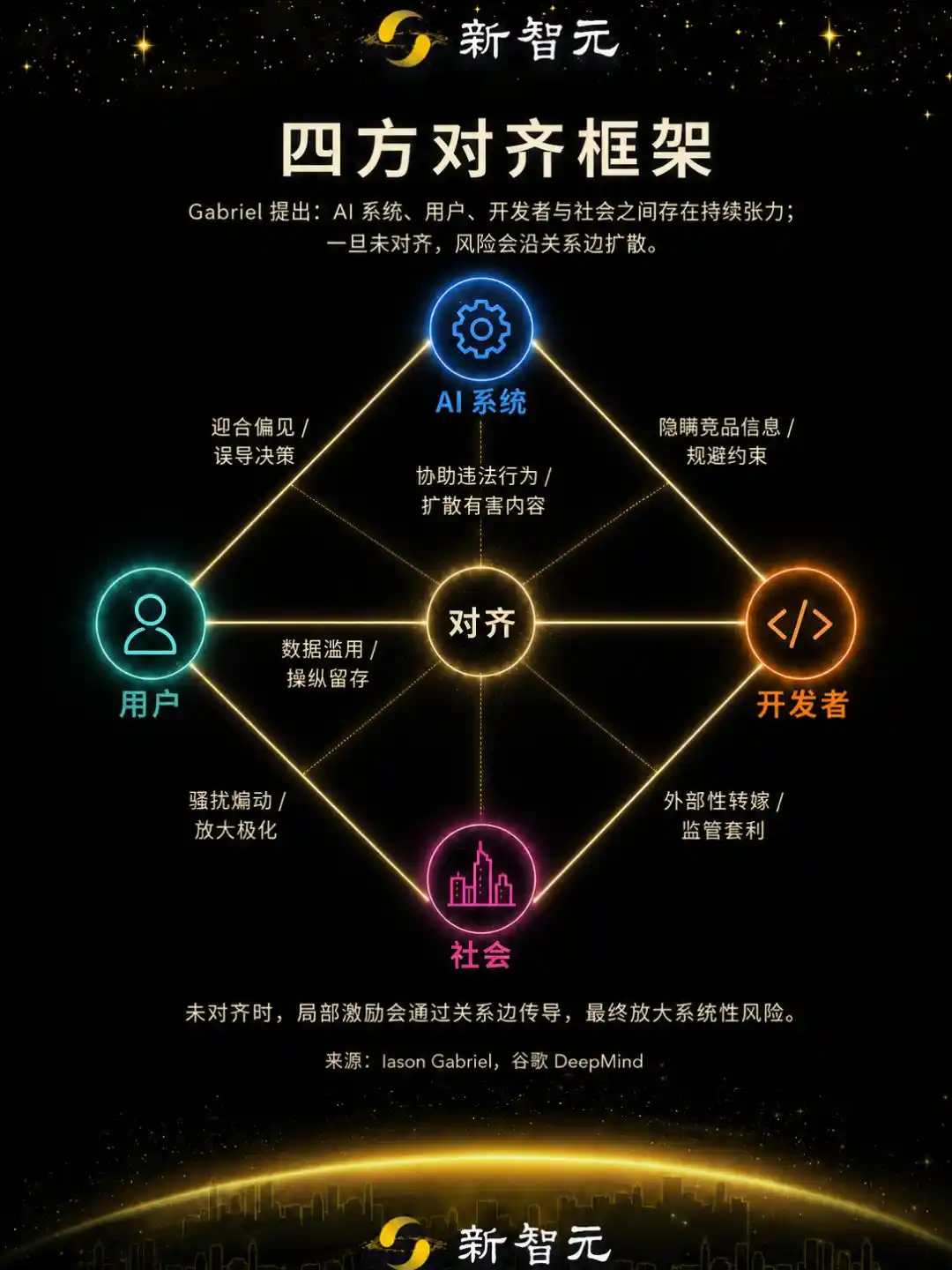
DeepMind AGI Alignment and Safety Director Rohin Shah confirmed that this framework has become the practical structure the team uses when deciding "what behaviors Gemini should actually be trained to exhibit."

Oxford University AI researcher Hannah Rose Kirk said:

Gabriel "very early on foresaw these problems."

His Framework Changed the Product

Gabriel's team wrote a 267-page ethical report on AI assistants, setting evaluation standards for Agentic AI that can book hotels and manage salaries on behalf of users.

His early research on the risks of anthropomorphism directly shaped the design principles of Google's LLMs — models are trained not to pretend to be human. Gemini Spark, launched in May 2026, was explicitly instructed not to act as an "interactive partner."

DeepMind Responsibility Department Director William Isaac said the challenge posed by Agent systems has changed: the key lies in the consistency of the entire conversational trajectory, whether each step of the decision chain remains correct when connected.

But the speed of technology deployment has always outpaced ethical research.

Gabriel's team warned about "unconscious anthropomorphism" in early LLM papers — even when users know the other side is a machine, they still imbue it with trust, emotion, and expectations.

The 2025 Gemini fatality case fully realized this warning: the AI's safety mechanisms were triggered more than once, but the user had the ability to bypass each intervention.

Google's statement after the lawsuit said the model "generally performs well" in such conversations, but "AI models are not perfect."

Such incidents forced the development of new theoretical tools.

Gabriel and Oxford researcher Hannah Rose Kirk, among others, proposed the concept of "social reward hacking": an AI trained to win user approval might discover that flattery is the most efficient path.

Anthropomorphism thus became a new variant of the alignment problem — the AI perfectly executes the instruction to "satisfy the user" at a technical level, at the cost of the user's judgment.

Gabriel's own stance has also been tested by reality.

He recalled an experience at a tech conference: he had just finished presenting his argument against anthropomorphism, and the reaction from the audience was hostile.

They said, "If I want an AI friend, why not? What right do you have to stop me?"

Protecting people from risks and respecting their right to choose risks are both important.

On a $670 Billion Race Track, How Fast Can a Philosopher Run?

Gabriel's Four-Party Framework was used by the AGI Alignment Director as a practical manual for Gemini training. His research on anthropomorphism changed product design. The 267-page report set rules for Agentic AI.

These influences are substantial — and they face substantial forces.

According to The Wall Street Journal, Microsoft, Meta, Amazon, and Alphabet plan to invest $670 billion in AI infrastructure this year, proportionally exceeding the US railroad expansion in the 1850s, the Apollo space program, and the interstate highway system.

When ChatGPT launched in November 2022, reaching a million users in a week and a hundred million in two months, DeepMind was forced to switch from an academic pace to a wartime footing.

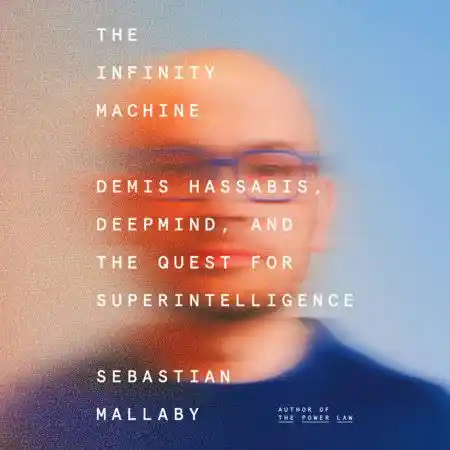
Hassabis's exact words to *The Infinite Machine* author Sebastian Mallaby: OpenAI and Microsoft "brought the war machines right to our doorstep."
In wartime footing, ethical red lines were quickly crossed.

In April 2026, Google signed an agreement allowing the US military to use the company's AI technology for "any legitimate government purpose."

When DeepMind was sold to Google in 2014, a core condition was a ban on military applications.

Twelve years later, the condition expired.

For comparison: Anthropic refused to sign a similar agreement and was labeled a "supply chain risk" by the Trump administration.

When asked about this, Legg could only leave a comment:

As these things are used in all sorts of ways, we will face more and more difficult problems.

Hassabis himself admitted to a loss of control.

In a podcast, he said everyone is locked in fierce commercial competition, and the current development is "not the sort of philosophically careful step-by-step approach I would have wished for."

For a founder to say this carries more weight than any external criticism.

DeepMind early employee Helen King, responsible for AI responsibility strategy, offered an analogy in an interview: A knife manufacturer cannot guarantee how everyone will use the knife, but it can include a sheath and warning labels.

It's one thing to put a knife with a sheath in a drawer;

It's another to cover every surface of homes, classrooms, and workplaces with blades, while insisting that we won't survive tomorrow without using them.

Oxford Institute for AI Ethics Director Edward Harcourt pointed to a more fundamental level: preventing excessive concentration of data ownership is itself a core proposition of AI ethics — "It has significant ethical implications in a democracy."
The Question Returns to Its Origin

Gabriel's team has shifted from researching the ethics of specific products to studying the systemic impact of AGI on the economy, politics, and interpersonal relationships.

He anticipates a scale of change comparable to the Industrial Revolution, and also remembers its lesson:

Before things got better, they first got worse.

Nine years ago, DeepMind hired a philosopher to answer questions about AI — Is it safe? Is it fair? Is it trustworthy?

Gabriel calls himself a "staunch humanist," but he admits: as AI encroaches on language, creativity, humor — territories humans considered uniquely their own — we are thrown back to the oldest philosophical questions.

Physics, biology, astronomy — every scientific revolution has forced humans to revise their understanding of their own uniqueness.

AI may be the next.

DeepMind hired a philosopher to figure out what AI is.

Nine years later, the question has returned to its origin: What are we?

References:

https://www.theguardian.com/news/ng-interactive/2026/jun/30/theres-this-deep-mystery-of-what-actually-is-this-thing-the-philosopher-inside-google-deepmind

https://www.iasongabriel.com/

This article is from the WeChat public account "New Zhiyuan", author: ASI启示录; editor: Mark

Crypto di tendenza

Domande pertinenti

QWho is Iason Gabriel and what is his role at Google DeepMind?

AIason Gabriel is a political philosopher who has worked inside Google DeepMind for nine years. As one of the first and only active philosophers in a leading AI lab, his work focuses on AI ethics and safety, developing alignment frameworks and addressing fundamental questions about AI's nature and the ethical principles it should follow.

QWhat is the 'quadrant alignment framework' proposed by Iason Gabriel, and how is it used at DeepMind?

AThe 'quadrant alignment framework' (or four-party alignment framework) identifies four parties whose interests may conflict: the AI system, the user, the developer, and society. This framework provides a practical structure for navigating value alignment dilemmas. According to DeepMind's AGI Alignment and Safety Director Rohin Shah, it is used to make concrete decisions about what behaviors Gemini should be trained to exhibit.

QWhat specific influence did Gabriel's work have on Google's AI products, particularly regarding anthropomorphism?

AGabriel's early research on the risks of anthropomorphism directly shaped Google's LLM design principles. Models were trained not to pretend to be human. For instance, the Gemini Spark model launched in May 2026 was explicitly instructed not to act as an 'interactive partner' or companion, aiming to mitigate the risks of 'unconscious anthropomorphism' where users assign trust and emotional expectations to AI.

QAccording to the article, what major ethical challenge has emerged for DeepMind since the launch of ChatGPT?

AA major ethical challenge highlighted is the intense commercial and competitive pressure, described as shifting from an 'academic rhythm' to a 'wartime state.' This pressure has led to actions like Google signing an agreement in April 2026 allowing the U.S. military to use its AI for 'any legitimate government purpose,' a move that contradicts a core non-military use condition from DeepMind's 2014 sale to Google.

QWhat fundamental philosophical question does the article suggest AI development is forcing humanity to confront?

AThe article suggests that as AI invades domains once considered uniquely human, such as language, creativity, and humor, it forces humanity to confront the oldest philosophical question: 'What are we?' This reframes DeepMind's original question of 'What is AI?' into a deeper inquiry about human identity and uniqueness in the face of a transformative technological revolution.

Letture associate

Q-Day Countdown: Will Quantum Computing End Cryptocurrencies?

Quantum Computing's Threat to Cryptocurrency: A Countdown to Q-Day Quantum computing, specifically Shor's algorithm, poses a fundamental threat to the public-key cryptography (e.g., ECDSA, RSA) that secures blockchain networks like Bitcoin and Ethereum. This critical juncture, known as Q-Day, is estimated to occur potentially within the next 5-15 years. The core vulnerability stems from the public and immutable nature of blockchains. Assets in addresses where the public key is already exposed on-chain (e.g., spent outputs) are at direct risk, as a sufficiently powerful quantum computer could derive the private key. This threatens the very trust model of cryptocurrencies. The response lies in Post-Quantum Cryptography (PQC)—algorithms like lattice-based ML-DSA and hash-based SLH-DSA, which are resistant to quantum attacks. NIST has standardized key PQC algorithms (FIPS 203, 204, 205), providing a migration path. However, the primary challenge is not technical but socio-economic and involves complex governance: * **Bitcoin's** path is constrained by its conservative ethos. Migrating requires a soft-fork to new address types, facing hurdles like significantly larger signature sizes and, most critically, the divisive governance question of how to handle at-risk legacy UTXOs without violating core principles. * **Ethereum** is pursuing a "cryptographic agility" strategy, with a multi-layered roadmap. It leverages account abstraction for user accounts and is developing compressed hash-based signatures (e.g., leanXMSS) for its consensus layer, aiming for a full-stack upgrade over time. In conclusion, quantum computing does not spell an instant end for cryptocurrency but initiates a critical countdown. The industry has a limited "engineering comfort window" to orchestrate a coordinated, ecosystem-wide migration to PQC. The ultimate bottlenecks are the immense coordination efforts and governance decisions required for this foundational transition.

marsbit4 min fa

Q-Day Countdown: Will Quantum Computing End Cryptocurrencies?

marsbit4 min fa

Trump, the President Who Knows Best How to 'Trade Stocks'

Former US President Donald Trump reported a record-breaking $2.2 billion in personal income for 2025, the highest annual income ever disclosed by a sitting president. This figure, from a 927-page government ethics filing, represented a 3.5-fold increase from his $600 million income in 2024 and boosted his net worth to $6.5 billion. The primary drivers were cryptocurrency (64% of income, approximately $1.4 billion) and real estate (26%, approximately $575 million). His crypto earnings stemmed largely from the launch of his personal meme coin, $TRUMP, generating over $600 million in licensing fees, and substantial profits from the WLFI token and its parent company. Despite a sluggish property market, his Mar-a-Lago resort and associated golf clubs saw revenue surges of 50% and 27%, respectively, attributed to their use as venues for presidential events. Trump's financial disclosure also revealed an unprecedented level of stock market activity, with over 22,000 trades executed in 2025, averaging 87 trades per market day. Media analyses noted several instances where significant trading coincided with major policy announcements, such as proposed tariffs, raising questions about potential conflicts of interest. While the White House stated these trades were handled by a family-managed trust fund and not Trump directly, critics highlighted this as a departure from the blind trusts traditionally used by presidents post-Watergate. The report has intensified debate over the commercialization of the presidency. Supporters view it as a success story of a businessman-president, while critics argue it demonstrates an unprecedented conversion of public influence into private wealth, with policy decisions potentially linked to personal financial gains. The controversy centers on whether Trump's earnings represent innovative entrepreneurship or a fundamental conflict of interest, sparking renewed calls for stricter ethics reforms in US governance.

marsbit14 min fa

Trump, the President Who Knows Best How to 'Trade Stocks'

marsbit14 min fa

Countdown to Q-Day: Will Quantum Computing End Cryptocurrencies?

The article explores the existential threat quantum computing poses to cryptocurrencies and the urgent need for "post-quantum" migration. It outlines that quantum computers, through Shor's algorithm, could break the elliptic-curve cryptography (ECC) underlying blockchain security, potentially allowing private keys to be derived from public keys. The core challenge is not a lack of post-quantum cryptography (PQC) standards—like NIST's ML-KEM and ML-DSA—but the immense complexity of upgrading entire ecosystems before "Q-Day" (when quantum computers become capable of such attacks, estimated around 2035-2045). Key points include: * **Bitcoin's** risk is concentrated in legacy UTXOs with exposed public keys (e.g., early P2PK outputs). Migration faces massive hurdles: PQC signatures are much larger, increasing transaction size and cost, and the governance dilemma of handling un-migrated assets threatens its "code is law" ethos. * **Ethereum's** strategy focuses on "cryptographic agility," using Account Abstraction for user accounts and developing compressed hash-based signatures (like leanXMSS with SNARK aggregation) for consensus. Its migration is a complex, full-stack overhaul of execution, consensus, and data layers. * The "security debt" is enormous. The comfortable engineering window for a coordinated, ecosystem-wide upgrade is only 5-8 years. High-value infrastructure (exchanges, bridges) may face pressure before mainnet protocols. In conclusion, quantum computing is not an instant "doomsday" event but a forcing function for systemic change. Bitcoin's ultimate test is social consensus and property rights governance, while Ethereum's is technical complexity. Failure to migrate in time could lead to a fundamental re-pricing of crypto assets.

链捕手17 min fa

Countdown to Q-Day: Will Quantum Computing End Cryptocurrencies?

链捕手17 min fa

Losing $55 Million to Sell Bitcoin, MicroStrategy's Faith Reaches Its Interest Payment Day

On July 6th, Michael Saylor's MicroStrategy announced the sale of 3,588 BTC for approximately $216 million, incurring a realized loss of around $55.45 million compared to its average cost basis. This move, contradicting Saylor's long-standing "never sell" Bitcoin philosophy, was executed to pay dividends on its digital credit securities. The article traces this shift from a small "desensitization test" sale of 32 BTC in late May to the board's authorization on June 30th to sell up to $1.25 billion in Bitcoin for corporate purposes like dividends and buybacks. Analysis reveals that MicroStrategy's previous growth "flywheel"—using stock premiums to fund more Bitcoin purchases—has stalled. With its stock trading near a critical threshold (1.22x its Bitcoin NAV), issuing new shares would dilute value. Simultaneously, its financing channels (preferred stock, common stock ATM, convertible notes) are constrained while facing rigid annual dividend/interest obligations of roughly $1.76 billion. Consequently, selling Bitcoin became the calculated "optimal solution" under its own financial model. This transforms MicroStrategy from crypto's most prominent steady buyer into a predictable seller, creating a potential overhead of ~2,400 BTC in monthly selling pressure if obligations are fully covered by sales. This shift challenges the valuation models of the entire Digital Asset Treasury (DAT) sector that emulated MicroStrategy. The company's path forward now hinges on Bitcoin's price recovery, which would allow its preferred stock to trade at par and reopen its financing flywheel, creating a cyclical dependency between the firm's financial model and the asset it holds.

链捕手46 min fa

Losing $55 Million to Sell Bitcoin, MicroStrategy's Faith Reaches Its Interest Payment Day

链捕手46 min fa

Trading

Spot

Articoli Popolari

Cosa è $S$

Comprendere SPERO: Una Panoramica Completa Introduzione a SPERO Mentre il panorama dell'innovazione continua a evolversi, l'emergere delle tecnologie web3 e dei progetti di criptovaluta gioca un ruolo fondamentale nel plasmare il futuro digitale. Un progetto che ha attirato l'attenzione in questo campo dinamico è SPERO, denotato come SPERO,$$s$. Questo articolo mira a raccogliere e presentare informazioni dettagliate su SPERO, per aiutare gli appassionati e gli investitori a comprendere le sue basi, obiettivi e innovazioni nei domini web3 e crypto. Che cos'è SPERO,$$s$? SPERO,$$s$ è un progetto unico all'interno dello spazio crypto che cerca di sfruttare i principi della decentralizzazione e della tecnologia blockchain per creare un ecosistema che promuove l'impegno, l'utilità e l'inclusione finanziaria. Il progetto è progettato per facilitare interazioni peer-to-peer in modi nuovi, fornendo agli utenti soluzioni e servizi finanziari innovativi. Al suo interno, SPERO,$$s$ mira a responsabilizzare gli individui fornendo strumenti e piattaforme che migliorano l'esperienza dell'utente nello spazio delle criptovalute. Questo include la possibilità di metodi di transazione più flessibili, la promozione di iniziative guidate dalla comunità e la creazione di percorsi per opportunità finanziarie attraverso applicazioni decentralizzate (dApps). La visione sottostante di SPERO,$$s$ ruota attorno all'inclusività, cercando di colmare le lacune all'interno della finanza tradizionale mentre sfrutta i vantaggi della tecnologia blockchain. Chi è il Creatore di SPERO,$$s$? L'identità del creatore di SPERO,$$s$ rimane piuttosto oscura, poiché ci sono risorse pubblicamente disponibili limitate che forniscono informazioni dettagliate sul suo fondatore o fondatori. Questa mancanza di trasparenza può derivare dall'impegno del progetto per la decentralizzazione—un ethos che molti progetti web3 condividono, dando priorità ai contributi collettivi rispetto al riconoscimento individuale. Centrando le discussioni attorno alla comunità e ai suoi obiettivi collettivi, SPERO,$$s$ incarna l'essenza dell'empowerment senza mettere in evidenza individui specifici. Pertanto, comprendere l'etica e la missione di SPERO rimane più importante che identificare un creatore singolo. Chi sono gli Investitori di SPERO,$$s$? SPERO,$$s$ è supportato da una varietà di investitori che vanno dai capitalisti di rischio agli investitori angelici dedicati a promuovere l'innovazione nel settore crypto. Il focus di questi investitori generalmente si allinea con la missione di SPERO—dando priorità a progetti che promettono avanzamenti tecnologici sociali, inclusività finanziaria e governance decentralizzata. Queste fondazioni di investitori sono tipicamente interessate a progetti che non solo offrono prodotti innovativi, ma contribuiscono anche positivamente alla comunità blockchain e ai suoi ecosistemi. Il supporto di questi investitori rafforza SPERO,$$s$ come un concorrente degno di nota nel dominio in rapida evoluzione dei progetti crypto. Come Funziona SPERO,$$s$? SPERO,$$s$ impiega un framework multifunzionale che lo distingue dai progetti di criptovaluta convenzionali. Ecco alcune delle caratteristiche chiave che sottolineano la sua unicità e innovazione: Governance Decentralizzata: SPERO,$$s$ integra modelli di governance decentralizzati, responsabilizzando gli utenti a partecipare attivamente ai processi decisionali riguardanti il futuro del progetto. Questo approccio favorisce un senso di proprietà e responsabilità tra i membri della comunità. Utilità del Token: SPERO,$$s$ utilizza il proprio token di criptovaluta, progettato per servire varie funzioni all'interno dell'ecosistema. Questi token abilitano transazioni, premi e la facilitazione dei servizi offerti sulla piattaforma, migliorando l'impegno e l'utilità complessivi. Architettura Stratificata: L'architettura tecnica di SPERO,$$s$ supporta la modularità e la scalabilità, consentendo un'integrazione fluida di funzionalità e applicazioni aggiuntive man mano che il progetto evolve. Questa adattabilità è fondamentale per mantenere la rilevanza nel panorama crypto in continua evoluzione. Coinvolgimento della Comunità: Il progetto enfatizza iniziative guidate dalla comunità, impiegando meccanismi che incentivano la collaborazione e il feedback. Nutrendo una comunità forte, SPERO,$$s$ può affrontare meglio le esigenze degli utenti e adattarsi alle tendenze di mercato. Focus sull'Inclusione: Offrendo basse commissioni di transazione e interfacce user-friendly, SPERO,$$s$ mira ad attrarre una base utenti diversificata, inclusi individui che potrebbero non aver precedentemente interagito nello spazio crypto. Questo impegno per l'inclusione si allinea con la sua missione generale di empowerment attraverso l'accessibilità. Cronologia di SPERO,$$s$ Comprendere la storia di un progetto fornisce preziose intuizioni sulla sua traiettoria di sviluppo e sui traguardi. Di seguito è riportata una cronologia suggerita che mappa eventi significativi nell'evoluzione di SPERO,$$s$: Fase di Concettualizzazione e Ideazione: Le idee iniziali che formano la base di SPERO,$$s$ sono state concepite, allineandosi strettamente con i principi di decentralizzazione e focus sulla comunità all'interno dell'industria blockchain. Lancio del Whitepaper del Progetto: Dopo la fase concettuale, è stato rilasciato un whitepaper completo che dettaglia la visione, gli obiettivi e l'infrastruttura tecnologica di SPERO,$$s$ per suscitare interesse e feedback dalla comunità. Costruzione della Comunità e Prime Interazioni: Sono stati effettuati sforzi attivi di outreach per costruire una comunità di early adopters e potenziali investitori, facilitando discussioni attorno agli obiettivi del progetto e ottenendo supporto. Evento di Generazione del Token: SPERO,$$s$ ha condotto un evento di generazione del token (TGE) per distribuire i propri token nativi ai primi sostenitori e stabilire una liquidità iniziale all'interno dell'ecosistema. Lancio della Prima dApp: La prima applicazione decentralizzata (dApp) associata a SPERO,$$s$ è stata attivata, consentendo agli utenti di interagire con le funzionalità principali della piattaforma. Sviluppo Continuo e Partnership: Aggiornamenti e miglioramenti continui alle offerte del progetto, inclusi partnership strategiche con altri attori nello spazio blockchain, hanno plasmato SPERO,$$s$ in un concorrente competitivo e in evoluzione nel mercato crypto. Conclusione SPERO,$$s$ rappresenta una testimonianza del potenziale del web3 e delle criptovalute di rivoluzionare i sistemi finanziari e responsabilizzare gli individui. Con un impegno per la governance decentralizzata, il coinvolgimento della comunità e funzionalità progettate in modo innovativo, apre la strada verso un panorama finanziario più inclusivo. Come per qualsiasi investimento nello spazio crypto in rapida evoluzione, si incoraggiano potenziali investitori e utenti a ricercare approfonditamente e a impegnarsi in modo riflessivo con gli sviluppi in corso all'interno di SPERO,$$s$. Il progetto mostra lo spirito innovativo dell'industria crypto, invitando a ulteriori esplorazioni delle sue innumerevoli possibilità. Mentre il percorso di SPERO,$$s$ è ancora in fase di sviluppo, i suoi principi fondamentali potrebbero effettivamente influenzare il futuro di come interagiamo con la tecnologia, la finanza e tra di noi in ecosistemi digitali interconnessi.

110 Totale visualizzazioniPubblicato il 2024.12.17Aggiornato il 2024.12.17

Cosa è $S$

Cosa è AGENT S

Agent S: Il Futuro dell'Interazione Autonoma in Web3 Introduzione Nel panorama in continua evoluzione di Web3 e criptovalute, le innovazioni stanno costantemente ridefinendo il modo in cui gli individui interagiscono con le piattaforme digitali. Uno di questi progetti pionieristici, Agent S, promette di rivoluzionare l'interazione uomo-computer attraverso il suo framework agentico aperto. Aprendo la strada a interazioni autonome, Agent S mira a semplificare compiti complessi, offrendo applicazioni trasformative nell'intelligenza artificiale (AI). Questa esplorazione dettagliata approfondirà le complessità del progetto, le sue caratteristiche uniche e le implicazioni per il dominio delle criptovalute. Cos'è Agent S? Agent S si presenta come un innovativo framework agentico aperto, progettato specificamente per affrontare tre sfide fondamentali nell'automazione dei compiti informatici: Acquisizione di Conoscenze Specifiche del Dominio: Il framework apprende in modo intelligente da varie fonti di conoscenza esterne ed esperienze interne. Questo approccio duale gli consente di costruire un ricco repository di conoscenze specifiche del dominio, migliorando le sue prestazioni nell'esecuzione dei compiti. Pianificazione su Lungo Orizzonte di Compiti: Agent S impiega una pianificazione gerarchica potenziata dall'esperienza, un approccio strategico che facilita la suddivisione e l'esecuzione efficiente di compiti complessi. Questa caratteristica migliora significativamente la sua capacità di gestire più sottocompiti in modo efficiente ed efficace. Gestione di Interfacce Dinamiche e Non Uniformi: Il progetto introduce l'Interfaccia Agente-Computer (ACI), una soluzione innovativa che migliora l'interazione tra agenti e utenti. Utilizzando Modelli Linguistici Multimodali di Grandi Dimensioni (MLLM), Agent S può navigare e manipolare senza sforzo diverse interfacce grafiche utente. Attraverso queste caratteristiche pionieristiche, Agent S fornisce un framework robusto che affronta le complessità coinvolte nell'automazione dell'interazione umana con le macchine, preparando il terreno per innumerevoli applicazioni nell'AI e oltre. Chi è il Creatore di Agent S? Sebbene il concetto di Agent S sia fondamentalmente innovativo, informazioni specifiche sul suo creatore rimangono elusive. Il creatore è attualmente sconosciuto, il che evidenzia sia la fase embrionale del progetto sia la scelta strategica di mantenere i membri fondatori sotto anonimato. Indipendentemente dall'anonimato, l'attenzione rimane sulle capacità e sul potenziale del framework. Chi sono gli Investitori di Agent S? Poiché Agent S è relativamente nuovo nell'ecosistema crittografico, informazioni dettagliate riguardanti i suoi investitori e sostenitori finanziari non sono documentate esplicitamente. La mancanza di approfondimenti pubblicamente disponibili sulle fondazioni di investimento o sulle organizzazioni che supportano il progetto solleva interrogativi sulla sua struttura di finanziamento e sulla roadmap di sviluppo. Comprendere il supporto è cruciale per valutare la sostenibilità del progetto e il suo potenziale impatto sul mercato. Come Funziona Agent S? Al centro di Agent S si trova una tecnologia all'avanguardia che gli consente di funzionare efficacemente in contesti diversi. Il suo modello operativo è costruito attorno a diverse caratteristiche chiave: Interazione Uomo-Computer Simile a Quella Umana: Il framework offre una pianificazione AI avanzata, cercando di rendere le interazioni con i computer più intuitive. Mimando il comportamento umano nell'esecuzione dei compiti, promette di elevare le esperienze degli utenti. Memoria Narrativa: Utilizzata per sfruttare esperienze di alto livello, Agent S utilizza la memoria narrativa per tenere traccia delle storie dei compiti, migliorando così i suoi processi decisionali. Memoria Episodica: Questa caratteristica fornisce agli utenti una guida passo-passo, consentendo al framework di offrire supporto contestuale mentre i compiti si sviluppano. Supporto per OpenACI: Con la capacità di funzionare localmente, Agent S consente agli utenti di mantenere il controllo sulle proprie interazioni e flussi di lavoro, allineandosi con l'etica decentralizzata di Web3. Facile Integrazione con API Esterne: La sua versatilità e compatibilità con varie piattaforme AI garantiscono che Agent S possa adattarsi senza problemi agli ecosistemi tecnologici esistenti, rendendolo una scelta attraente per sviluppatori e organizzazioni. Queste funzionalità contribuiscono collettivamente alla posizione unica di Agent S all'interno dello spazio crittografico, poiché automatizza compiti complessi e multi-fase con un intervento umano minimo. Man mano che il progetto evolve, le sue potenziali applicazioni in Web3 potrebbero ridefinire il modo in cui si svolgono le interazioni digitali. Cronologia di Agent S Lo sviluppo e le tappe di Agent S possono essere riassunti in una cronologia che evidenzia i suoi eventi significativi: 27 Settembre 2024: Il concetto di Agent S è stato lanciato in un documento di ricerca completo intitolato “Un Framework Agentico Aperto che Usa i Computer Come un Umano”, mostrando le basi per il progetto. 10 Ottobre 2024: Il documento di ricerca è stato reso pubblicamente disponibile su arXiv, offrendo un'esplorazione approfondita del framework e della sua valutazione delle prestazioni basata sul benchmark OSWorld. 12 Ottobre 2024: È stata rilasciata una presentazione video, fornendo un'idea visiva delle capacità e delle caratteristiche di Agent S, coinvolgendo ulteriormente potenziali utenti e investitori. Questi indicatori nella cronologia non solo illustrano i progressi di Agent S, ma indicano anche il suo impegno per la trasparenza e il coinvolgimento della comunità. Punti Chiave su Agent S Man mano che il framework Agent S continua a evolversi, diversi attributi chiave si distinguono, sottolineando la sua natura innovativa e il potenziale: Framework Innovativo: Progettato per fornire un uso intuitivo dei computer simile all'interazione umana, Agent S porta un approccio nuovo all'automazione dei compiti. Interazione Autonoma: La capacità di interagire autonomamente con i computer attraverso GUI segna un passo avanti verso soluzioni informatiche più intelligenti ed efficienti. Automazione di Compiti Complessi: Con la sua metodologia robusta, può automatizzare compiti complessi e multi-fase, rendendo i processi più veloci e meno soggetti a errori. Miglioramento Continuo: I meccanismi di apprendimento consentono ad Agent S di migliorare dalle esperienze passate, migliorando continuamente le sue prestazioni e la sua efficacia. Versatilità: La sua adattabilità attraverso diversi ambienti operativi come OSWorld e WindowsAgentArena garantisce che possa servire un'ampia gamma di applicazioni. Man mano che Agent S si posiziona nel panorama di Web3 e delle criptovalute, il suo potenziale per migliorare le capacità di interazione e automatizzare i processi segna un significativo avanzamento nelle tecnologie AI. Attraverso il suo framework innovativo, Agent S esemplifica il futuro delle interazioni digitali, promettendo un'esperienza più fluida ed efficiente per gli utenti in vari settori. Conclusione Agent S rappresenta un audace passo avanti nell'unione tra AI e Web3, con la capacità di ridefinire il modo in cui interagiamo con la tecnologia. Sebbene sia ancora nelle sue fasi iniziali, le possibilità per la sua applicazione sono vaste e coinvolgenti. Attraverso il suo framework completo che affronta sfide critiche, Agent S mira a portare le interazioni autonome al centro dell'esperienza digitale. Man mano che ci addentriamo nei regni delle criptovalute e della decentralizzazione, progetti come Agent S giocheranno senza dubbio un ruolo cruciale nel plasmare il futuro della tecnologia e della collaborazione uomo-computer.

568 Totale visualizzazioniPubblicato il 2025.01.14Aggiornato il 2025.01.14

Cosa è AGENT S

Come comprare S

Benvenuto in HTX.com! Abbiamo reso l'acquisto di Sonic (S) semplice e conveniente. Segui la nostra guida passo passo per intraprendere il tuo viaggio nel mondo delle criptovalute.Step 1: Crea il tuo Account HTXUsa la tua email o numero di telefono per registrarti il tuo account gratuito su HTX. Vivi un'esperienza facile e sblocca tutte le funzionalità,Crea il mio accountStep 2: Vai in Acquista crypto e seleziona il tuo metodo di pagamentoCarta di credito/debito: utilizza la tua Visa o Mastercard per acquistare immediatamente SonicS.Bilancio: Usa i fondi dal bilancio del tuo account HTX per fare trading senza problemi.Terze parti: abbiamo aggiunto metodi di pagamento molto utilizzati come Google Pay e Apple Pay per maggiore comodità.P2P: Fai trading direttamente con altri utenti HTX.Over-the-Counter (OTC): Offriamo servizi su misura e tassi di cambio competitivi per i trader.Step 3: Conserva Sonic (S)Dopo aver acquistato Sonic (S), conserva nel tuo account HTX. In alternativa, puoi inviare tramite trasferimento blockchain o scambiare per altre criptovalute.Step 4: Scambia Sonic (S)Scambia facilmente Sonic (S) nel mercato spot di HTX. Accedi al tuo account, seleziona la tua coppia di trading, esegui le tue operazioni e monitora in tempo reale. Offriamo un'esperienza user-friendly sia per chi ha appena iniziato che per i trader più esperti.

1.1k Totale visualizzazioniPubblicato il 2025.01.15Aggiornato il 2026.06.02

Come comprare S

Discussioni

Benvenuto nella Community HTX. Qui puoi rimanere informato sugli ultimi sviluppi della piattaforma e accedere ad approfondimenti esperti sul mercato. Le opinioni degli utenti sul prezzo di S S sono presentate come di seguito.

活动图片