Original Text: Li Yuning, Meiri Renwu
In the first half of 2026, an epic bull market tied to the chip industry swept through South Korea. The KOSPI index doubled within six months, with Samsung Electronics and SK Hynix at the core of the rally, completely rewriting the life trajectories of countless ordinary South Koreans.
South Korea's total population is just over 50 million, yet the number of securities accounts has surpassed 105 million. On average, each person holds two stock accounts. The fervor for stock trading among the public has reached unprecedented heights, with borrowing to invest hitting new records and the attendant risks intensifying.
People who once focused solely on work and life have now entered the market. Some have quit their jobs to trade full-time, while others monitor the markets obsessively at their desks or during their commutes. Stocks have transformed from mere investments into topics that dictate one's fate, a common subject of conversation. Countless young South Koreans view the stock market as a final chance to break through their current circumstances and turn their lives around, driven by a fear of being left behind by the times.
This article, from the perspective of a Chinese person living in South Korea, interviews ordinary investors of different backgrounds. Looking beyond the frenzied surface of the stock market, it interprets the survival anxieties, class predicaments behind South Korean youth's deep involvement in this bull market, and the latent societal concerns underlying this nationwide speculative fever. Enjoy:
Li Yuning is a Chinese woman living in Seoul. In 2022, she quit her job in China to study Korean in South Korea and pursue a PhD. After graduation, she stayed to work at a research institute. For a long time, her life was far removed from the stock market: checking emails in the morning, writing reports during the day, and having dinner with friends in the evening.
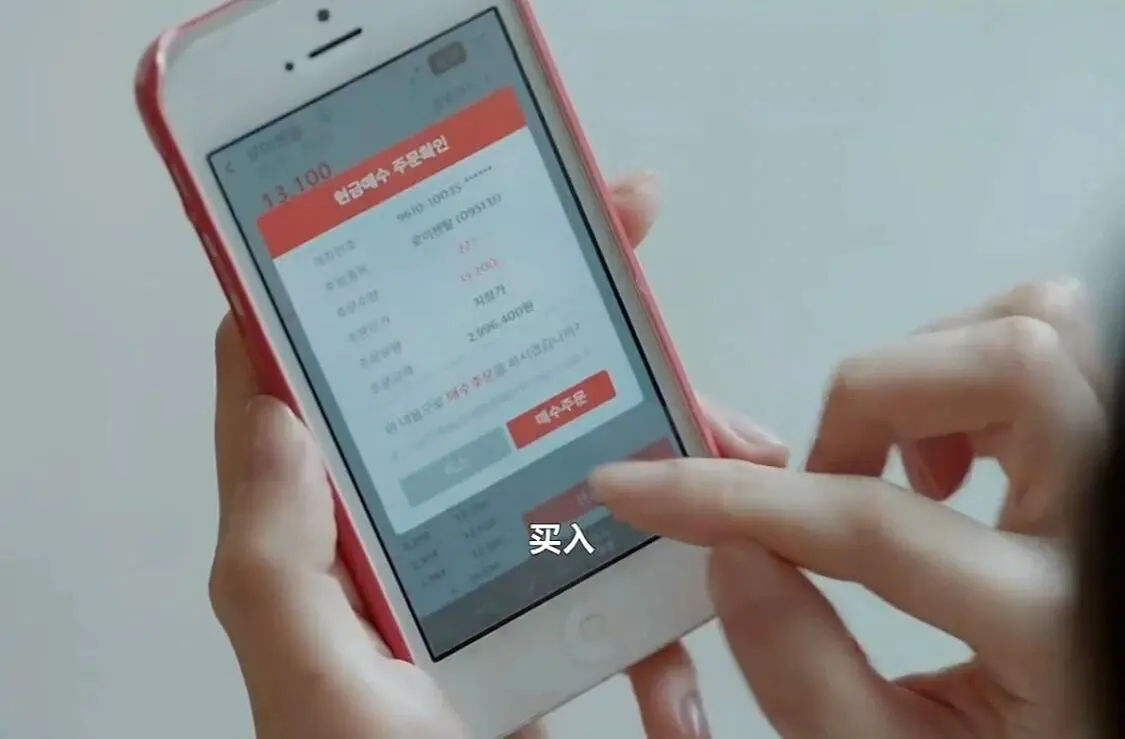
It wasn't until the beginning of this year that she finally opened her first Korean stock trading account. Identity verification, account linking, and trading agreements popped up on her phone screen one after another. The red and blue numbers that followed became the code that has 'dominated' the fate of South Koreans over the past six months.
This rare bull market since the start of this year has been called an epic rally that deeply binds South Korea's national destiny to the semiconductor cycle. The KOSPI (Korea Composite Stock Price Index) completed a doubling leap from the 4000-point range to the 8000-point range within six months, with nearly 80% of the gains contributed by just two companies: Samsung Electronics and SK Hynix.
Especially since this spring, friends have started frequently discussing Samsung Electronics, SK Hynix, and US market closings. Before, they talked about stocks like it was a technical skill; later, they talked about them like they were discussing fate. Some people took leave to watch the markets, others refreshed their accounts in the bathroom, and some even quit their jobs because of KOSPI's rise to become full-time investors at home. They no longer said they were unemployed; instead, they said they had finally 'escaped their salary.'
One of Li Yuning's friends originally worked in project management at a trading company in Gangnam. Last year, she was complaining about a small year-end bonus. A few days ago, she suddenly posted a picture of a sports car's steering wheel in a group chat with just one line: "하닉이 사준 차." (The car Hynix bought for me). A hidden form of comparison was laid bare on the table: Why can someone, working the same hours, pulling the same overtime, leave years of someone else's salary in the dust with just a few purchases?
Yet few seriously discuss the flip side of the bull market. Data shows the number of South Korean securities accounts has reached about 105 million, while the total population is just over 50 million. In today's South Korea, a person might not have a house or children, but on average, they have 2 stock trading accounts.
Thus, the stock market has forcefully entered the lives of ordinary people ahead of schedule. But when the money comes from loans, mortgages, parents' retirement savings, or children's education funds, a loss is no longer just shrinking numbers. It becomes sleepless nights, unanswered phone calls, and a body that sits at the office the next day unable to work.
In December 2025, in Yongin, a man in his 40s died after telling his family he 'lost 200 million won in stocks.' His 9-year-old son was also found dead. This is not just a sensational story. For many ordinary people, stocks were never just numbers on a screen. They are connected to debt, marriage, parents' nest eggs, and determine whether a person can still believe in themselves.
Li Yuning is both an observer and a participant. She was swept into this stock market frenzy and also gained insight into the mental state and generational portrait of South Korean youth behind the market. She specifically met with her South Korean friends to talk about how this bull market is currently repricing the lives of ordinary people.
"Young 'ants' are putting their limited chips on the table, as if this is the last chance to turn their fortunes around. After all, things can't get much worse."
The following is her account:
01 A Nation of Stock Traders
To wake up early to watch the market, South Koreans have further 'evolved' their sleep away. The South Korean morning, which used to start with checking the weather, now begins with opening a stock trading app.
This is a bull market that makes ordinary people stake their 'fate.' As of early June, the KOSPI index's year-to-date gain exceeded 108%, surpassing the Nasdaq 100's gain during the 1999 internet bubble and even South Korea's historical peak during the industrial boom of the late 1980s. The total market capitalization of listed South Korean companies surged by 86% this year to around $5 trillion, making it the world's sixth-largest stock market.
By early May, the number of South Korean securities accounts had already exceeded 105 million, more than double the total population. On May 27th, the Korea Exchange launched its first-ever single-stock leveraged ETFs, initially tracking the two core Korean tech stocks: Samsung Electronics and SK Hynix. These products carry high leverage risks, so regulators mandated that buyers must first complete an online 'risk' education course. On the day the ETFs were launched, the educational website crashed briefly under the traffic. Thus, through Samsung and Hynix, the stock market barged into the commutes, lunch breaks, group chats, and family ledgers of ordinary people.
Minji is one of the young people who opened an account during this frenzy. I met Minji during a part-time job. She is 29, from Gyeongsangbuk-do. That region is somewhat like South Korea's 'old industrial northeast': factories, ports, silent parents, and fewer and fewer young people. After graduation, she came to Seoul to work as a planner at an advertising agency. The job sounds decent, but after insurance and taxes, she takes home only 2.8 million won per month (about 13,000 RMB). After rent, transportation, food, and phone bills, the remaining money is blown away by the wind.
She lives in Sillim-dong, a place reminiscent of Beijing's Tiantongyuan, packed with office workers, civil service exam takers, convenience store night-shift workers, and recent graduates. The cheapest housing in South Korea is called 'banjiha' (semi-basement)—damp, dark, and at risk of flooding during the rainy season. Minji has climbed from a banjiha to above ground, living in a small studio costing around 600,000 won per month (about 3,000 RMB), with a key money deposit (jeonse) of 10 million won (about 50,000 RMB). The room isn't big, but it has a window, light, and the illusion that 'at least I'm still moving up.'
If nothing unexpected happens, Minji would endure a few years at the ad agency, with her salary slowly increasing; then marry an ordinary office worker, pooling savings, parental support, and bank loans to move to an apartment on the outskirts of Seoul or in a new city in Gyeonggi-do. It seems she has finally moved from the provinces to Seoul, from a semi-basement to above ground, from monthly rent to owning an apartment. But in essence, it's just exchanging rent to a landlord when young for mortgage interest to a bank in middle age. The so-called stability is just a more respectable name for insecurity.
It was precisely when this path seemed to be narrowing that the stock market barged into her life. It is dangerous, yet it seems more like an exit than the life dictated by salary and rent. When the Seoul Subway Line 2 pulls into Sillim Station, she gets pushed onto the train by the crowd. Before, on the train, she would first check KakaoTalk (South Korea's 'WeChat'); now, she opens her stock trading app first. When she first bought just two shares, she felt a little embarrassed, as if she was imitating others getting rich. But compared to the fear of losing money, she is more afraid that years from now, when people talk about this semiconductor bull market, she will have to say again, like she did about missing the property boom, the cryptocurrency bubble, or the AI-driven U.S. stock rally led by Nvidia: "I didn't buy back then."
Compared to single white-collar workers with only themselves to worry about, families are often more cautious when it comes to stock trading.
Junho is the boyfriend of a senior I knew from university, aged 33. They have been out of school for three years but still haven't married. He commutes daily from Incheon to Yeouido for work; his salary isn't low. He keeps an Excel spreadsheet with his saved jeonse deposit, wedding budget, and his parents' medical emergency fund. In South Korea, an ordinary wedding, with venue, banquet, wedding dress, and makeup, easily costs around 30 million won (about 150,000 RMB). Add the jeonse deposit for a newlywed home, and marriage immediately becomes a ledger of hundreds of millions of won. Junho wants to get married, but that spreadsheet isn't filled out yet. He used to believe that as long as he filled it in cell by cell, life would move forward. But after this bull market arrived, he felt for the first time that the spreadsheet calculations were too slow. He only dipped his toes in with a small amount because the stock price was already high when he entered.
"Is it too late now?" is the "FOMO" (Fear of Missing Out) sentiment hanging over ordinary South Koreans. Eunju, the receptionist at a dermatology clinic I frequent, quit her job after her child was born. In her moms' chat group, topics that used to be about English academies and pediatricians have recently turned entirely to stocks. Eunju is also itching to get in, but she thinks first of the family ledger. That money seems to be in the account, but its position has long been assigned to the lives of her child, husband, and parents. She hesitates to take the plunge.
Among all my friends, Su-kyu has been the most elated during this bull market. As an experienced investor, he is the type who long ago made the stock market a second life, watching financial news on the treadmill and opening his trading app after finishing his workout. Since this recent semiconductor bull market began, he often semi-jokingly messages me: "Made 20 million won today across three accounts (about 90,000 RMB), I'll treat you to Korean BBQ tonight." Sometimes he says: "Lost a Ferrari today." This sounds exaggerated, but it's like a new language in this bull market: talking about losses in terms of sports cars also means he has regained the right to speak in a certain way.
His father's and sister's funds are also given to him to invest. This is not just Su-kyu's story. In this Korean bull market, more and more young people are not only using their own savings but also borrowing family funds to buy stocks, and even directly taking loans from securities firms to enter the market. Korean media cited statistics from the Korea Financial Investment Association showing that as of April this year, the daily average scale of 'borrowing to invest' had risen to about 33.8 trillion won, hitting a monthly historical high. By May 21st, the overall margin trading balance in South Korea had climbed to 36 trillion won. What's rising is the stock price; what's being staked is ordinary people's prematurely tapped credit and future.
These madly rushing South Korean retail investors are called 'ants,' with young retail investors called 'youth ants.' This term carries a subtle sense of fate. Ants are too small, they can only crawl close to the ground, carrying a bit of capital, judgment, and luck within the huge financial market. Yet, they still surge into this army one after another. Not because they all believe they can beat the market, but because they know staying put is equally dangerous.
02 The Bull Market is Widening Wealth and Class Gaps in South Korea
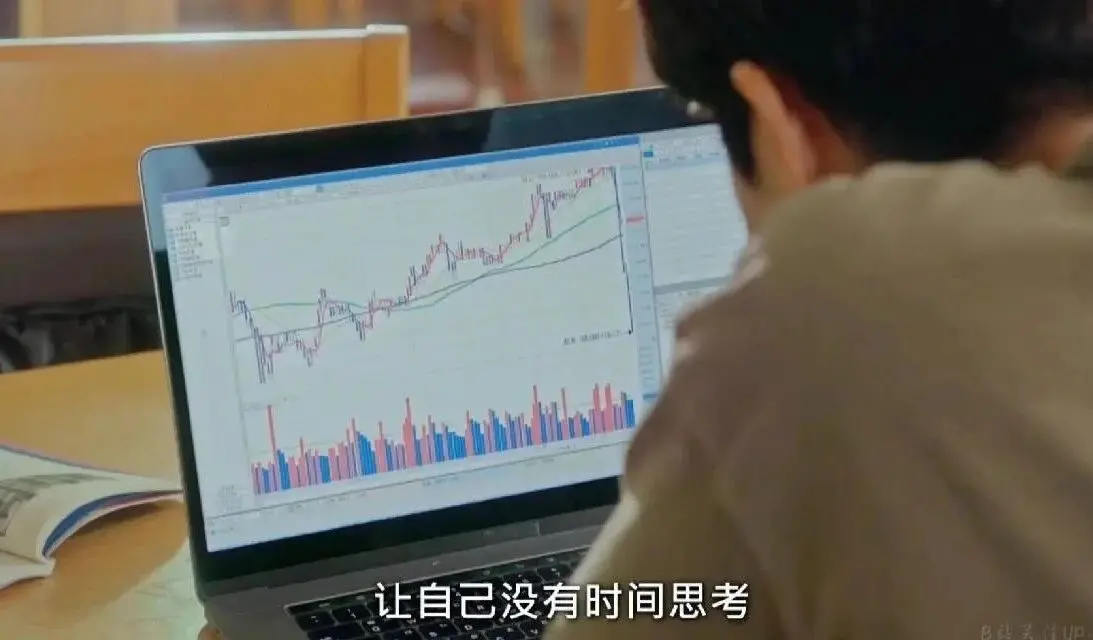
No one admits at the outset that they bought stocks because they were afraid of being left behind by the times. They'll say they're just trying a little; they'll say everyone is watching Samsung and Hynix, and it would be strange not to. But in the end, what truly weighs on their minds often isn't greed, but a sense of absence.
This is how Minji started buying stocks. She doesn't understand financial reports or can't clearly explain semiconductor cycles. She just knows HBM (High Bandwidth Memory) is hot, SK Hynix is rising fast, and everyone in the group is saying 'it's not too late.' One night, she met a university friend in Hongdae. As soon as the friend sat down, she opened her stock trading app to show Minji, saying the Hynix stock she bought last year had already risen a lot. The friend said it lightly: "Just bought a little randomly, didn't expect it to go up like this." Minji also smiled and said, "That's great." On the way home that day, she stood by the subway door, looking at her reflection in the glass. She suddenly felt very tired. Not because her friend made money, but because of the tone of that 'bought a little randomly.' For some people, 'random' is another person's 'too late.'
In South Korea's workplaces, 'salary poverty' is becoming a topic. 'Lately, it's not people who are working, it's stocks that are working.' 'Labor income has become a beggar in the bull market.' Even without fantasies of overnight riches, ordinary people saving money step by step from their salaries have also become 'pitiable.'
Junho realizes the life order he's been diligently building is being challenged. He's still trying hard to live, yet suddenly feels poor. This 'suddenly feeling poor' isn't about actually going bankrupt, but the frame of reference has changed. His girlfriend sometimes says: "You should learn about investing too. Others bought Hynix and earned a whole deposit in a few months." Before, Junho compared himself to others based on salary, position, and years of experience; now, he is forced to compare holdings, entry timing, and account returns.
The stay-at-home mom Eunju hasn't truly entered the market, so she hasn't suffered actual losses, yet she gradually feels a gap opening up with others. Once, someone in the moms' chat group said that after making money in stocks, she was planning to switch her child to a more expensive English academy. Eunju's child is still at the current ordinary cram school. The teacher is very responsible, grades homework carefully. But when the moms' group mentions the teacher, they always lightly add: "The person is responsible, it's just their academic background is ordinary." In the South Korean education market, whether a teacher is a graduate of SKY (an acronym for Seoul National University, Korea University, and Yonsei University), has overseas experience, or speaks with a 'native speaker' accent all become price tags in parents' eyes. And the bull market has widened the distance between children who were once at the same starting line.
The stock market itself is a metaphor for social circles. Su-kyu understands better than anyone that in South Korea, trading stocks sometimes isn't just about opening an app and placing an order. It also involves joining groups, reading reports, maintaining relationships, treating to meals, giving gifts, and even learning to discern at the dinner table which words are genuine information and which are just someone wanting you to take over their position.
A few years ago, he was just a small fish in a Kakao Finance group. The group name was 'Market Study Room,' sounding like an ordinary study group, but it was actually more like a small-scale class club: former securities firm employees, asset managers, seasoned investors, and a few people like himself trying to climb up.
Every morning at 8:30, the group would become active. Some posted U.S. market closes, some posted institutional reports, some screenshot foreign investment flows. Whoever made accurate calls, got information quickly, or still had capital had a voice. Whoever kept losing money, whose messages went unanswered, would eventually fade away and 'be' removed from the group. Many such trading groups operate, filter, and narrow in South Korea, much like the continual narrowing of upward social mobility.
Su-kyu being looked after by a 'finance hyung' (older brother/friend) wasn't due to a single call but from long-term relationship maintenance. He would often visit seniors in different cities, book restaurants, ask Chinese friends to bring Maotai liquor. When the market was good, dinners were like information exchanges; when the market was bad, dinners were like relationship insurance. Before, when Su-kyu's Mercedes-Benz was parked in front of a Japanese restaurant, his Rolex peeking out from his cuff, and the finance hyung got into the passenger seat, he would have the illusion: he was finally seen by this circle. In such circles, money isn't just capital; it's also a voice. When an account still has weight, jokes get responses, opinions get heard; when an account lightens, the person also becomes lighter.
The bull market has produced many sensational stories: screenshots of gains, quitting jobs, sports car photos. People seem to finally hold their heads high, boldly announcing they want to sever ties with their formerly humbly managed lives, to transform from 'people who work jobs' to 'people who choose their lives.'
Some South Koreans I know, after making money in the stock market, have indeed quit their jobs, even including some who handed in their civil servant IDs. The basic salary for a junior South Korean civil servant is around 2.13 million won (about 10,000 RMB), even lower than the 2026 standard minimum monthly wage. The so-called 'iron rice bowl,' in the face of Seoul's rent, cost of living, and class anxiety, is often just a bowl that won't shatter but also can't hold enough rice. So, the sudden extra sum in their account isn't just profit for them; it's a ticket to escape their original track. Some trade full-time; some went to Vietnam with money earned from stocks to start a new life.
03 The Class Illusion Exposed by the Bull Market: Opportunity is Not Equal for All
If you only look at the accounts, the South Korean bull market seems like an opportunity; if you look at the lives behind the accounts, it's more like a stress test. Stocks begin to re-examine everyone's life: salary, debt, children, parents, housing, and marriage are all laid back on the table for reassessment.
In 2022, after the previous metaverse bubble in South Korea burst, Su-kyu also sold his Mercedes to repay loans. The day he sold the car, he washed it spotlessly, even beating the floor mats a few times. After the deal was done, he took the subway home alone. That day, he realized for the first time that asset decline isn't an abstract term. It becomes concrete to the point where you can no longer drive to meet friends, can no longer casually treat others to meals.
But even at his lowest point, he didn't sell that Rolex. He locked it in a small safe, next to a few loan documents. "If I sold it, it would mean admitting that that upward-moving life never truly belonged to me."
Fortunately, in this bull market, with his family providing a safety net, Su-kyu turned things around. His father helped settle some high-interest debt and gave him another sum of money. With three family accounts combined, Su-kyu regained the capital to re-enter the market and the confidence to sit back at the dinner table.
The stock market creates an 'illusion' of class mobility for ordinary people. A friend of a friend, Sung-min, works at an auto parts company near Ulsan; his wife is an elementary school teacher. He made some money in this rally. At first, when his wife saw the profit screenshots, she said: "In that case, let's take an overseas trip?" Sung-min immediately replied: "No, I haven't sold yet, and there's tax to consider, plus we need to think about parents' insurance premiums."
In South Korea, even when money is earned, it's hard for it to truly belong to oneself. For a 1 billion won apartment (about 4.47 million RMB), you first pay nearly 30 million won (about 150,000 RMB) in acquisition tax upon purchase; then annual property taxes, loan interest, and maintenance fees follow. Parents' medical insurance, long-term care insurance cost another 400,000-500,000 won per month. So that profit seems to be in the account, but it's already earmarked for housing, parents, and future children. The only indulgence Sung-min dared was upgrading his 10,000 won lunchtime soup (about 45 RMB) to a 12,000 won one (about 54 RMB).
Their vision of when they can finally have children is also constantly being upgraded. Initially, they just wanted to save enough for a decent jeonse apartment (a housing system in South Korea between buying and renting, using a large lump-sum deposit for 'free' occupancy for a period; in Seoul, a small jeonse deposit is roughly 100-300 million won, about 450,000-1.34 million RMB, while an ordinary apartment often starts at 600 million won, about 2.68 million RMB). Later, it became moving to a good neighborhood (dong), a branded apartment complex. Later still, it was about children attending good kindergartens, English academies, ideally entering the elite education track all the way, even studying abroad.
In South Korea, a child's starting point isn't the delivery room, but which neighborhood (dong) and which apartment building their parents live in. Where a child lives often determines from what age they are sent onto which track.
The semiconductor bull market also illuminates an even more detailed social hierarchy.
Tae-hoon is a student I tutor in Chinese. He works in equipment maintenance at a Hynix semiconductor partner company (upstream/downstream cooperative firm) in Cheongju but is not a regular employee of SK Hynix. That dark work uniform, which used to just get dusty daily, recently acquired a different kind of value. On South Korean second-hand platforms, SK Hynix jackets are labeled 'Best Dating Outfit.'
Tae-hoon also attended a matchmaking meeting arranged by his parents. The other party, hearing he worked in a semiconductor-related company, quickly asked: "Is it with Hynix?" He paused and said: "It's a partner company, not a direct employee." The other person smiled and said: "But the semiconductor industry is doing well these days, right?" It seems the South Korean semiconductor bull market has illuminated the entire industry, but the benefits aren't distributed equally. Some are at the center of the chaebols, some are in partner companies; some receive huge performance bonuses, others just work more overtime; some see their company logo appreciate in the marriage market, others are merely brushed by the edge of this frenzy.
This is also the root of why many South Korean young people are feeling increasingly tense: normal upward mobility channels are narrowing, while asset markets seem like one of the few doors not yet completely closed. It's dangerous behind the door, but more and more people are left outside.
The most enchanting aspect of a bull market is that it makes people believe social class can be rewritten with a single purchase. The most brutal aspect of a bull market is that when the downturn comes, it immediately makes class distinctions reappear.
On May 20th, the South Korean market began experiencing severe volatility. The bull market, which just days before felt like a festival, suddenly showed another face. The KOSPI surface only fell 0.86%, but over twenty industry sectors fell across the board, with the number of declining stocks about nine times that of advancing ones; foreign investors net sold about 2.95 trillion won in a single day. During the day, people could still call it a correction, foreigners shaking out weak hands; by late night, the explanations gradually quieted down.
On the night of the market turbulence, Su-kyu had dinner with a finance hyung at a Japanese restaurant in Gangnam. Before meeting such people, he would drive his Mercedes, his Rolex peeking from his cuff. Later, after selling the Mercedes, he drove a second-hand Kia. The old steering wheel, worn seat, paired with that watch felt mismatched, so that day he didn't wear it.
The finance hyung arrived on time. When the wine was poured for the second time, the other asked him: "What's your take on semiconductors lately?" Su-kyu picked up a small piece of sashimi, his chopsticks pausing mid-air. Before, he would have immediately replied, afraid that being half a second late would mean being forgotten by this table. But this time, he wasn't in a hurry. He dipped the fish into wasabi soy sauce, ate it, then put down his chopsticks.
After having money back in his account, even his silence felt different.
He looked up and said: "Hyung, this time I only plan to buy in batches. If I mess around again, I'll die." At the end of the dinner, the finance hyung patted his shoulder and said: "Su-kyu, you seem to be doing well this time."
Those truly hit are the ones who staked everything and can never recover. Su-kyu's friend Dong-hyuk is one of them. He used to be a marketing manager at a large company, living with his wife in a Gangnam apartment, driving an imported car, buying Korean beef at the supermarket on weekends. Back then, he also spoke in Kakao Finance groups; people called him 'Dong-hyuk hyung.' This 'hyung' is common in South Korea but carries weight. It implies experience, money, judgment, and that others are willing to listen to him.
When the metaverse craze took off, he believed he had caught the next generation of the internet. At first, he only bought small amounts, then bought more and more. Each loss made him want to prove even more that his initial choice wasn't wrong. He used credit loans and also stock collateral loans. His wife warned him: "Isn't this too risky?" He said: "If I miss this cycle, I'll regret it for a lifetime."
Later, he truly regretted it. The day he sold the Gangnam apartment, the agent, contract, bank, repayment—everything proceeded like a process. His wife stood in the now-empty living room, looking at the hooks still barely stuck on the wall, and asked him: "How did we end up here?" He couldn't answer. Finally, his wife said: "More than you losing money, what I can't bear is you refusing to face reality."
Now, years later, another bull market has arrived. The person who once explained market trends at the dinner table can now only deliver takeout to those offices discussing trends. In the old trading group, someone semi-jokingly calls him 'delivery hyung.' The 'hyung' suffix remains, but the respect has been hollowed out.
This is the most unequal aspect of a bull market. On the surface, everyone can download a trading app, everyone can open an account. But the people who can truly bear the risk of opportunity have never been everyone.
Sometimes, I also see myself in such contrasts. I ride the same subway, eat similarly priced soup, and have also watched the red and blue jumping numbers in my trading app on similar nights. My anxiety just takes a different shape; it's not a mortgage or debt, but another kind of uncertainty: Where should I stay? Where is my future?
Sometimes, my South Korean friends ask me, isn't it also very competitive over there? When talking about China, they sometimes sound a bit envious, saying your market is big, there are still many opportunities; sometimes they add: "But you must also have it tough, right?" Perhaps they just want to confirm whether their exhaustion is an isolated failure or a common plight this generation has reached.
It's also hard for me to separate myself, because young Chinese people also break down their lives into individual beads: job, rent, parents, marriage, buying a home, children. Each bead alone doesn't seem too heavy, but once placed on that transparent template, you realize the pattern has long been predetermined. You think you are slowly piecing together a life, but you are actually carefully not misplacing a single bead.
I increasingly feel that South Korean young people's 'lying flat' is never about lacking desire. On the contrary, it's that their desires have been disciplined into silence. They no longer appear as bold declarations but are shrunken into bills. And the bull market is glaring because it briefly makes people forget this spreadsheet. It's direct, crude, tempting. Buy today, rise tomorrow; the account immediately tells you: have you been seen by the times?
But behind this spreadsheet is a body that has endured for too long. The sudden resumption of a heartbeat causes a blip on the screen. But that blip isn't recovery. When the market quiets down, South Korean young people must still return to their original lives, continuing to face that medical chart.
That medical chart doesn't bear just one person's name. In 2025, South Korea's household net worth Gini coefficient rose to 0.625, with the wealthiest 10% of households holding nearly half of the national net worth; non-regular workers' wages were only about 65% of regular workers'. South Korean society isn't moving forward together; some move farther away on assets, while others have their labor income pre-divided into grades. The poor feel they can't get in, the middle class fears falling out. But the ceiling formed by the chaebols remains impenetrable.
Later, I understood: the bull market has replaced the weather for South Koreans not because people no longer care about rain. Rain falls on everyone, but a bull market does not.
Subway Line 2 arrives at the station as usual. Some look up at the weather, others look down at Samsung and Hynix. The doors open, then close. Some squeeze in, others are left outside.
(All names in the article are pseudonyms)