Robinhood, the First Stock in the Predictive Market Concept

marsbitPubblicato 2026-06-16Pubblicato ultima volta 2026-06-16

Introduzione

The online brokerage Robinhood, which previously partnered with prediction market platform Kalshi to offer event contract trading to its users, is now becoming a direct competitor. This shift began after Robinhood, through a joint venture, acquired and rebranded a CFTC-regulated exchange (now Rothera Exchange). Robinhood's motivation stems from the rapid growth of prediction markets on its platform, which significantly boosted its "other transaction revenue." Recognizing that its vast retail user base is the most critical asset, Robinhood aims to capture more value by routing orders to its own exchange instead of sharing fees with Kalshi. It strategically launched its Rothera platform during the high-traffic 2026 FIFA World Cup, successfully processing tens of millions of contracts in its initial days. This move signals a pivotal power shift in the prediction market industry: control over user distribution and access is emerging as a more decisive advantage than the underlying market infrastructure itself. The future competition may increasingly revolve around which platforms control the major user gateways.

Author: Azuma, Odaily Planet Daily

The battle of the World Cup has begun, and the total trading volume of the predictive market continues to hit new highs. However, as the industry leader, Kalshi might not be in the best mood right now.

The reason is not due to fluctuations in Kalshi's own business data, but because Kalshi now "suddenly" faces another formidable rival besides Polymarket, and this opponent was once its most important ally.
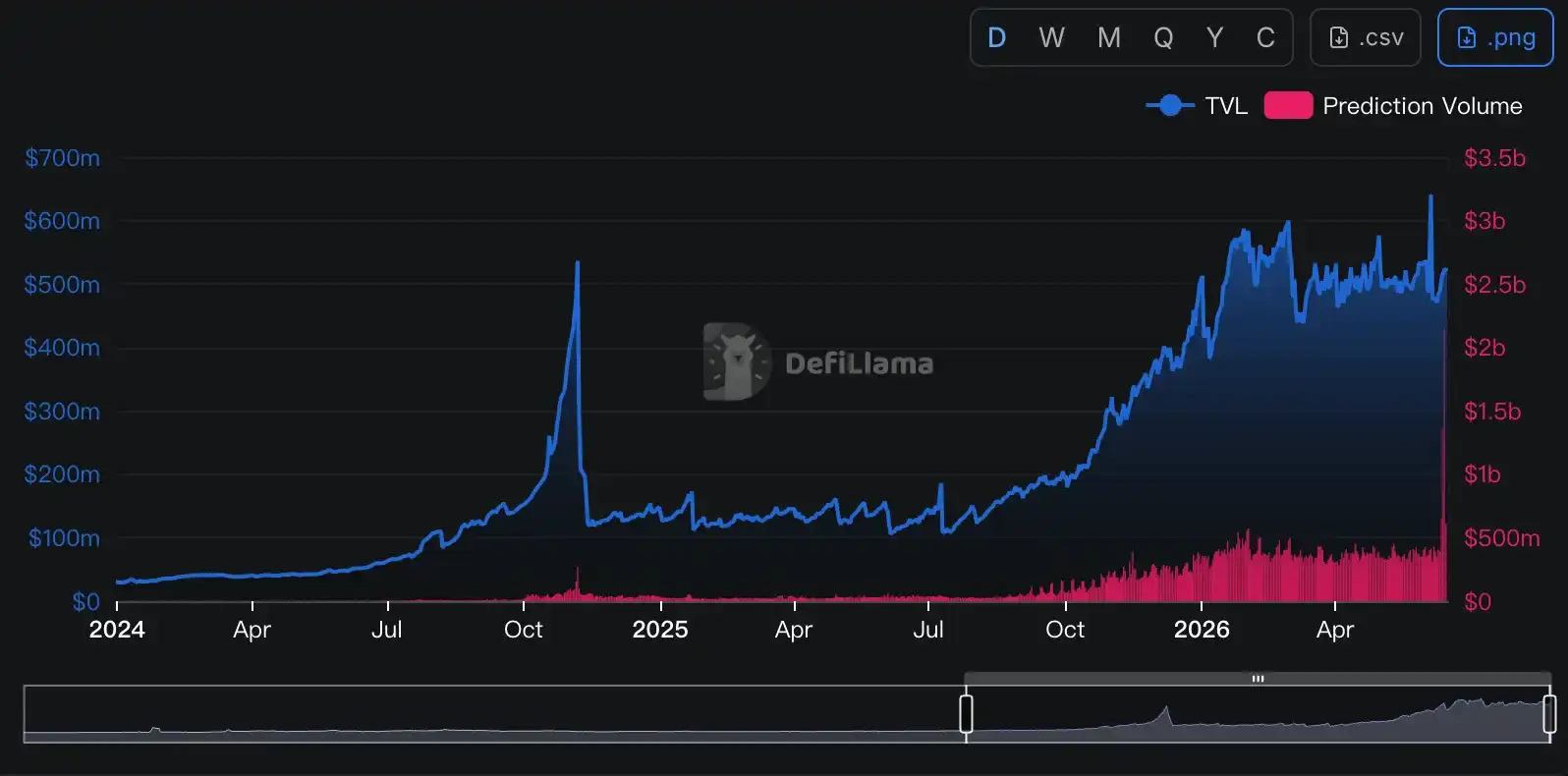
  • Odaily Note: Data sourced from Defillama.

Kalshi's Most Important Traffic Channel — Robinhood

Rewind to March 2025. At that time, Kalshi announced a partnership with the US online broker Robinhood, where the latter would use Kalshi's services to offer its users predictive market trading, allowing them to place bets on events like politics, economics, and sports.

From a business model perspective, this was a typical case of "mutual benefit" — Robinhood, responsible for user access and transaction distribution, could directly use Kalshi's mature product; Kalshi, responsible for the underlying market, matching, clearing, and regulatory compliance systems, could reach Robinhood's massive retail user pool.

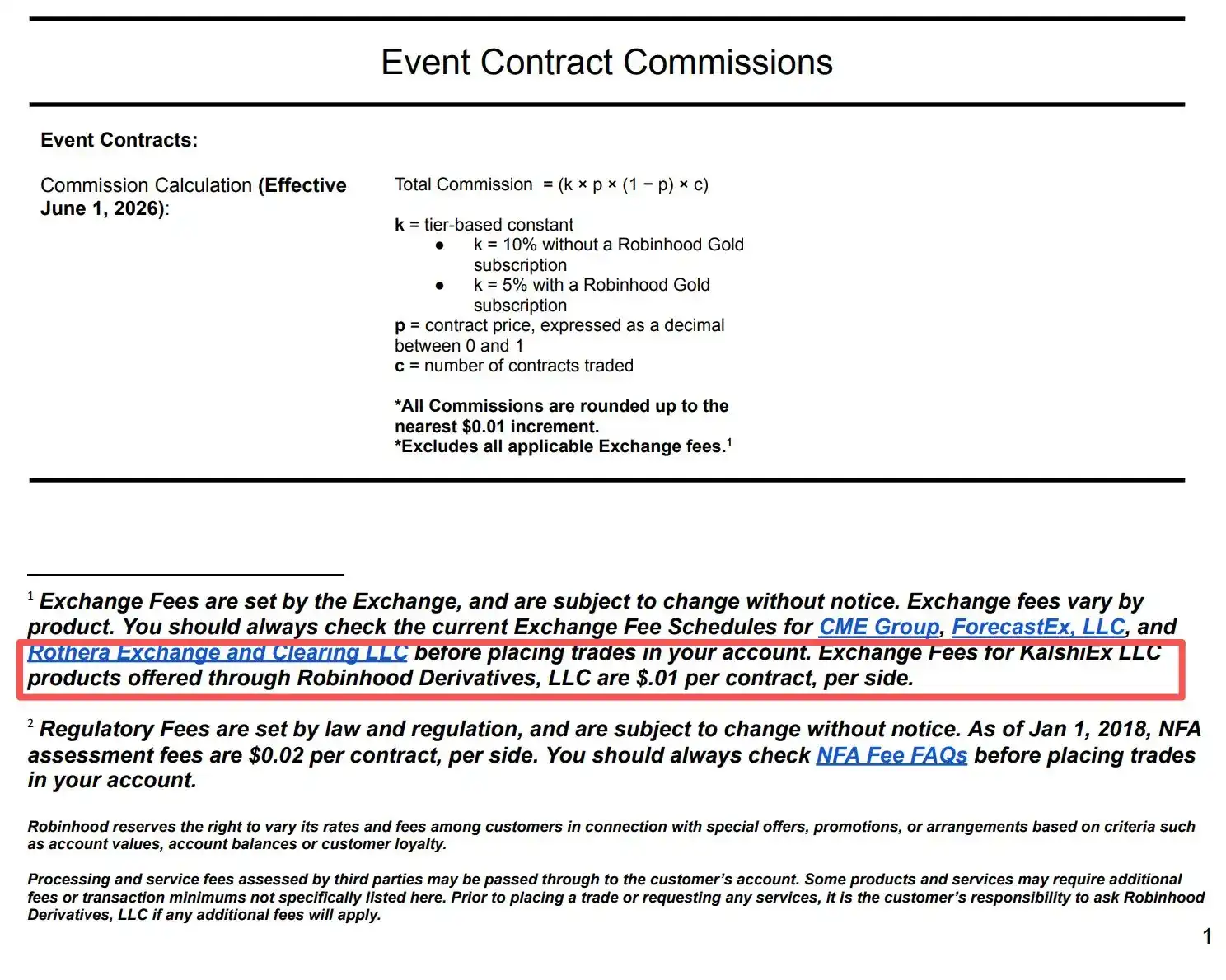
The subsequent story proved the "win-win" outcome of this partnership. Through Robinhood's channel distribution, Kalshi indirectly gained massive users and transaction volume. Piper Sandler analysts once estimated that "trading volume completed through Robinhood's channel accounted for about 25%-35% of Kalshi's total trading volume." These orders ultimately translated into revenue for both parties — Robinhood would independently charge for all Kalshi event contracts traded through its channel, a fixed fee of $0.01 per contract per direction, and then share the revenue with Kalshi (the specific proportion was not disclosed).
The Q1 financial report disclosed at the end of April showed that Robinhood facilitated the trading of 8.8 billion event contracts in Q1, driving "other trading revenue" to grow by 320% year-on-year, reaching $147 million. The predictive market has become the brightest new growth engine in Robinhood's product line.

However, recently, this relationship has undergone some subtle changes.

Robinhood's Ambition: Taking Back the Cake Shared with Kalshi

As internet history has proven countless times, when a channel gains enough leverage, it is no longer content with being just a channel. Robinhood is no exception.

Although the partnership with Kalshi also brought substantial revenue to Robinhood, as the predictive market became one of the fastest-growing new businesses on the platform, Robinhood was no longer satisfied with the current revenue-sharing arrangement.

In their cooperation model, Kalshi was responsible for providing the market and infrastructure, while Robinhood was responsible for providing users and order flow. However, as the partnership deepened, Robinhood gradually realized that what is truly scarce might not be the market itself, but the user access it firmly controls. After all, for most Robinhood users, they don't care whether their orders are ultimately executed on Kalshi or another platform — users only see a trading entry within the Robinhood app, not the underlying infrastructure provider.

In other words, Robinhood always held one of the most critical resources for the predictive market — distribution power. If the users belong to Robinhood, why should the order flow go to someone else?

In fact, just as Robinhood was quickly validating the demand for predictive markets through Kalshi, a Plan B was quietly launched shortly thereafter.

In November 2025, Robinhood announced the formation of a joint venture with Wall Street quantitative trading giant Susquehanna and planned to acquire the CFTC-regulated derivatives exchange MIAXdx. According to the official statement, this joint venture would operate an independent futures and derivatives exchange and clearing organization in the future, with predictive markets being one of its key focus areas. At the time, the outside world largely viewed it as an infrastructure investment. However, as more information was disclosed later, people gradually realized Robinhood's goal was far beyond just finding a new partner for predictive markets.

In January 2026, the transaction was completed. Robinhood and Susquehanna gained 90% control of MIAXdx, simultaneously acquiring a complete CFTC regulatory framework, including Designated Contract Market (DCM) and Derivatives Clearing Organization (DCO) licenses. Subsequently, MIAXdx was renamed Rothera Exchange, and its clearing organization was renamed Rothera Clearing.

At this point, Robinhood possessed the core elements needed to independently operate a predictive market, lacking only a mature product comparable to Kalshi. However, for Robinhood, with its rich experience in internet product development, this was evidently not a difficult task.

Rothera's Opportunity: The World Cup

In June 2026, after about half a year of accelerated development, the Rothera product gradually took shape, and Robinhood finally made the move that was almost destined to happen — gradually shifting the orders that originally flowed to Kalshi into its own controlled system.

Robinhood specifically chose an ideal launch battleground for Rothera — the World Cup. For predictive markets, the World Cup is undoubtedly one of the most high-traffic trading themes. Whether it's match outcomes, advancement results, or champion predictions, related markets can attract a large number of new users to trade in a short period. For the newly launched Rothera platform, there is no better scenario for a cold start than the World Cup.

According to Robinhood's official disclosure, during this World Cup with a total of 104 matches, some event contracts will be directed to Rothera for matching and clearing, including markets for single World Cup match results, the ultimate World Cup champion, total goals in a single match, and others. Compared to the previous model that relied entirely on Kalshi, this marks the first time Robinhood has introduced predictive market orders into its own trading system on a large scale.
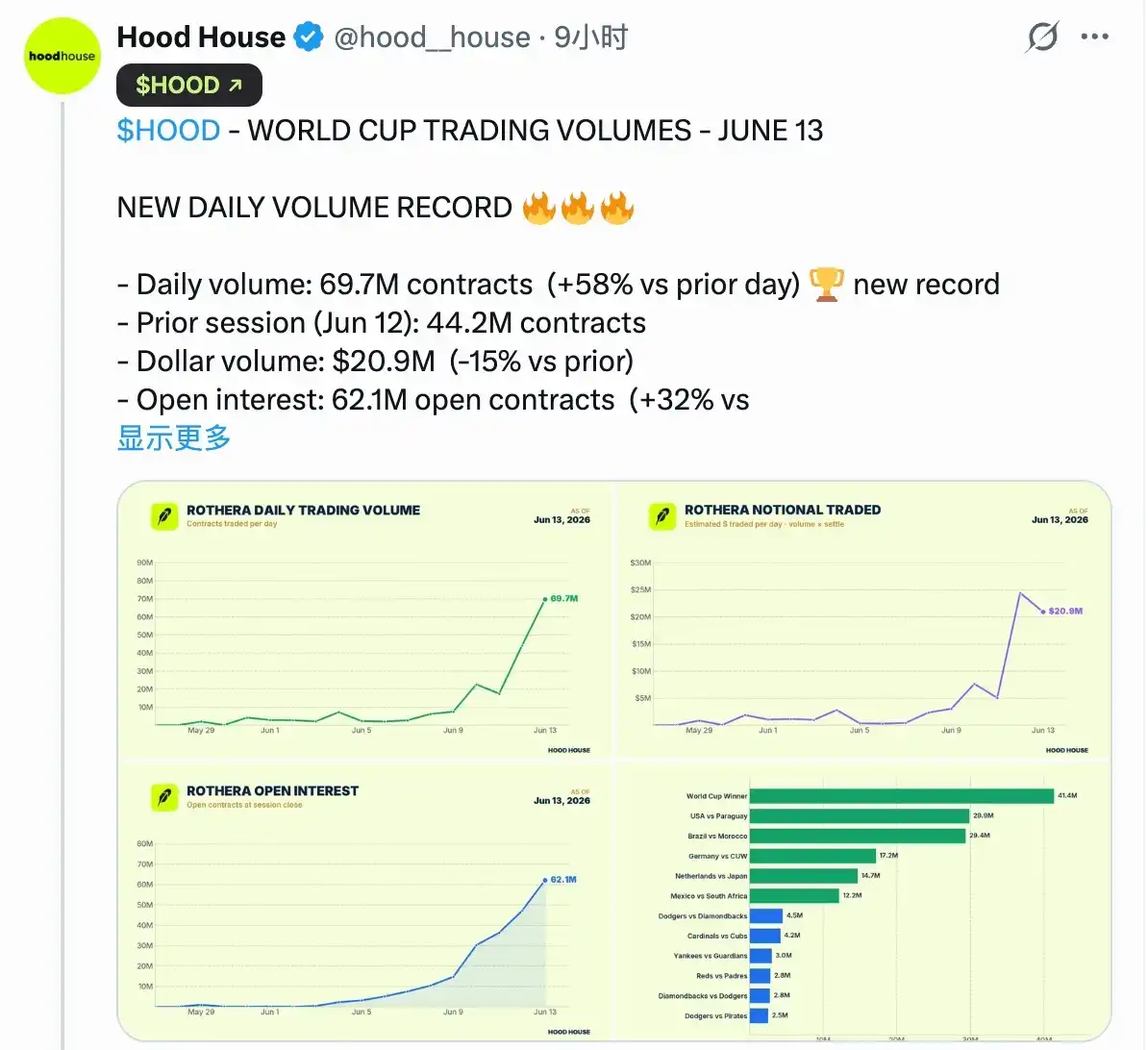
Judging by the results, Rothera clearly seized this opportunity. According to data disclosed by Hood House, an investment research media tracking Robinhood's activities, on June 12, Rothera completed 44.2 million contract trades, corresponding to a dollar trading volume of approximately $24.4 million; on June 13, Rothera completed 69.7 million contract trades, corresponding to a dollar trading volume of approximately $20.9 million... Although these figures still lag behind Kalshi's popular markets, which often involve hundreds of millions of dollars, considering that Rothera has literally just launched a few days ago, this performance is sufficiently successful.

For both Robinhood and Kalshi, this signifies that the balance of their cooperation has begun to tilt. From Robinhood's perspective, the transaction fee revenue that previously had to be shared with Kalshi can now be kept more within its own ecosystem. From Kalshi's perspective, this means that one of its most important growth engines has begun to show signs of weakening.

And the World Cup is clearly just the beginning of Rothera's encroachment on Kalshi. Looking further into the future, Robinhood will inevitably expand Rothera's coverage to more sporting events, as well as economic and political themes. Those orders that originally flowed to Kalshi will be intercepted one by one by Rothera.

Since Robinhood and Kalshi have never publicly disclosed their revenue-sharing ratio (some reports say 50%:50%, but no official information is available), we cannot know the exact monetary value of this interception. However, considering that Robinhood alone generated $147 million in predictive market-related revenue in Q1, and the Q2 World Cup and the more distant mid-term elections will likely bring even larger-scale trading activities, calculated on an annual basis, the value of this interception could reach several billion dollars.

Who Controls Distribution, Controls Everything

The drama of Robinhood and Kalshi moving from allies to opponents once again illustrates a logic repeatedly proven in the internet market — products are easy to build, but traffic is hard to find; whoever controls distribution controls everything.

Over the past few years, the market generally believed that Kalshi's core moat came from regulatory licenses, exchange qualifications, and clearing capabilities. Therefore, whether it was brokers like Robinhood or various media, communities, and traffic platforms, they were essentially just Kalshi's channel partners and traffic inlets. However, the emergence of Rothera proves one thing: in today's landscape of severe product homogenization, the product itself might not be the most critical element. What is truly scarce is always the user.

Where the users are, the liquidity is; where the liquidity is, the market will be. When Robinhood controls the access to tens of millions of retail users, it has the full capability to direct these users to any trading venue. For users, they don't care whether their orders are ultimately executed on Kalshi or Rothera. As long as the experience doesn't significantly differ, it doesn't matter who is matching or clearing behind the scenes.

If the theme of the predictive market industry in the past few years was the market battle between Polymarket and Kalshi, then the theme for the coming years might become a channel war. Robinhood incubating Rothera is essentially a reverse integration initiated by the channel side towards the market layer. As more and more platforms with traffic inlets begin to realize the strategic value of predictive markets, similar stories are highly likely to continue occurring. Whether it's exchanges, brokers, social platforms, or media platforms, they could all become new predictive market entry points.

And when inlets start to control the market, and channels begin to have pricing power, the ultimate winner in the predictive market industry might no longer be the platform responsible for order matching, but the one closest to the user and most capable of controlling distribution.

This was true in the internet era and the mobile internet era. This time, there's no exception either.


Domande pertinenti

QAccording to the article, why did Robinhood partner with Kalshi initially?

ARobinhood partnered with Kalshi in March 2025 to leverage Kalshi's established product and regulatory infrastructure to offer prediction market trading services to its users. This allowed Robinhood to enter the prediction market quickly while Kalshi gained access to Robinhood's large retail user base.

QWhat is the core reason Robinhood decided to develop its own prediction market platform, Rothera Exchange?

AThe core reason is that Robinhood realized it controlled the most critical resource: the user distribution channel. Since users only interacted through the Robinhood app and didn't care about the backend infrastructure, Robinhood saw an opportunity to capture more revenue by diverting orders from Kalshi to its own controlled platform, thereby keeping more of the transaction fees.

QWhat event did Robinhood choose to launch Rothera Exchange, and why was it strategic?

ARobinhood strategically chose the 2026 FIFA World Cup to launch Rothera Exchange. The World Cup is a major event that generates high trading volume and attracts many new users to prediction markets, making it an ideal scenario for the platform's initial growth and market penetration.

QHow significant was the volume of prediction market trades for Robinhood in Q1 of 2026 according to the article?

AAccording to the article, Robinhood's Q1 2026 earnings report showed it facilitated 8.8 billion event contracts, driving a 320% year-over-year growth in 'other transaction revenue' to $147 million. This made prediction markets the fastest-growing new business line for Robinhood at the time.

QWhat broader industry shift does the article suggest is occurring with the rise of Rothera and similar moves by other platforms?

AThe article suggests the industry is shifting from a market-centric competition (like between Polymarket and Kalshi) to a 'channel war' or 'distribution war.' Platforms with large user bases and distribution power (like Robinhood, brokerages, social media) are recognizing the value of prediction markets and may integrate or build their own, challenging the dominance of pure infrastructure providers.

Letture associate

7 Key Questions Regarding 'DeepSeek Completes Over 50 Billion Yuan in Financing'

DeepSeek, the prominent Chinese AI company, has reportedly completed its first external funding round, raising over 50 billion RMB (approximately $6.9 billion USD), according to foreign media reports. This financing values the company at over $50 billion USD, a significant increase from a $10 billion valuation when the round began in April 2026. Founder Liang Wenfeng personally contributed 20 billion RMB, with other investors including Tencent, CATL (Contemporary Amperex Technology), JD.com, NetEase, and IDG Capital. Notably, the National Artificial Intelligence Industry Investment Fund also participated with a direct investment of 1 billion RMB. The funding round is distinctive for its structure. Most investors' capital is channeled into a limited partnership controlled by CEO Liang Wenfeng, rather than directly into DeepSeek. These investors face a five-year lock-up period, have no voting rights, but receive priority financial information and future investment rights. This arrangement is seen as a measure to ensure Liang's absolute control over the company's direction, aligning with its stated principles of prioritizing groundbreaking AGI (Artificial General Intelligence) research over short-term profitability. The report highlights strategic reasons for key investors. Tencent's involvement is viewed as a strategic alignment, building on existing collaborations. CATL's investment is linked to the critical energy and power infrastructure needed for AI data centers, a key growth area for the battery giant. The participation of a state-backed fund underscores the national strategic importance of AI development. Post-funding, DeepSeek is expected to accelerate infrastructure development, including building its own data centers, hire more talent, and release new model versions with enhanced capabilities like image and audio support. While this marks a major step, the company's long-term journey towards AGI remains a challenging path that will require balancing its foundational ideals with the expectations of its new investors.

marsbit26 min fa

7 Key Questions Regarding 'DeepSeek Completes Over 50 Billion Yuan in Financing'

marsbit26 min fa

The World Cup is Here: The Battle for Entry into Prediction Markets Has Begun

The 2026 FIFA World Cup has begun, and alongside the on-field competition, a new off-field battleground is emerging: prediction markets. These blockchain-based platforms, which convert crowd wisdom into tradable probabilities, are gaining significant traction. However, their complexity—involving wallets, gas fees, and smart contracts—has historically limited participation to crypto-native users. Centralized exchanges (CEXs), like Gate, are tackling this adoption barrier. By integrating with leading prediction market protocol Polymarket, Gate simplifies the user experience. Users can participate directly with their exchange account and USDT, bypassing complex Web3 steps. Gate offers a streamlined "Prediction Mode" for casual users and a professional "Trading Mode" with advanced tools. Key features include two-way trading (allowing users to buy or sell positions before event resolution), support for diverse markets (sports, crypto, macroeconomics), and a suite of information tools like a "Smart Money" leaderboard, wallet tracking, and AI-powered insights. For the World Cup, Gate launched a dedicated hub aggregating schedules, standings, and relevant markets. This allows fans to seamlessly follow games and trade on outcomes, transforming passive viewing into active participation where they can monetize their predictions and trade on shifting consensus throughout a match. The article argues that prediction markets have proven their value in event forecasting. The next challenge is mass adoption. The competition is shifting from building effective protocols to creating accessible user entry points. By lowering technical barriers and building a complete ecosystem for information and trading, platforms like Gate aim to transition prediction markets from a niche crypto tool to a mainstream platform for expressing and trading on collective intelligence.

Odaily星球日报36 min fa

The World Cup is Here: The Battle for Entry into Prediction Markets Has Begun

Odaily星球日报36 min fa

Spain Held to a Draw by Cape Verde, Jucom Prediction Market Witnesses Historic Upset

In a major upset at the 2026 FIFA World Cup, tournament favorites Spain were held to a surprising 0-0 draw by debutants Cape Verde in their Group H opener on June 16, Beijing time. Despite dominating possession (74%) and recording 27 shots with an expected goals figure of 2.16, Spain failed to break down a resilient Cape Verde defense, with their 40-year-old goalkeeper Vozinha making 7 saves to earn Man of the Match. Pre-match predictions on the Jucom prediction market had heavily favored Spain, assigning them a 92% win probability. The actual result, a goalless draw, triggered significant volatility across related prediction markets. This outcome forces a market-wide reassessment of several key probabilities, including Spain's likelihood of winning the group and the tournament itself, while Cape Verde's previously near-zero chance of advancing is now being re-evaluated. The event highlights both the efficiency and the inherent limitations of prediction markets. While prices aggregate known information, football's low-scoring, high-variance nature means unquantifiable in-game factors can lead to unlikely results. The core value of such markets lies not in perfect foresight but in their ability to dynamically reflect how new information is incorporated into collective expectations. Platforms like Jucom, which track outcomes from single matches to the final champion, provide a real-time lens into how global consensus evolves with each game.

链捕手40 min fa

Spain Held to a Draw by Cape Verde, Jucom Prediction Market Witnesses Historic Upset

链捕手40 min fa

Trading

Spot
Futures

Articoli Popolari

Come comprare T

Benvenuto in HTX.com! Abbiamo reso l'acquisto di Threshold Network Token (T) semplice e conveniente. Segui la nostra guida passo passo per intraprendere il tuo viaggio nel mondo delle criptovalute.Step 1: Crea il tuo Account HTXUsa la tua email o numero di telefono per registrarti il tuo account gratuito su HTX. Vivi un'esperienza facile e sblocca tutte le funzionalità,Crea il mio accountStep 2: Vai in Acquista crypto e seleziona il tuo metodo di pagamentoCarta di credito/debito: utilizza la tua Visa o Mastercard per acquistare immediatamente Threshold Network TokenT.Bilancio: Usa i fondi dal bilancio del tuo account HTX per fare trading senza problemi.Terze parti: abbiamo aggiunto metodi di pagamento molto utilizzati come Google Pay e Apple Pay per maggiore comodità.P2P: Fai trading direttamente con altri utenti HTX.Over-the-Counter (OTC): Offriamo servizi su misura e tassi di cambio competitivi per i trader.Step 3: Conserva Threshold Network Token (T)Dopo aver acquistato Threshold Network Token (T), conserva nel tuo account HTX. In alternativa, puoi inviare tramite trasferimento blockchain o scambiare per altre criptovalute.Step 4: Scambia Threshold Network Token (T)Scambia facilmente Threshold Network Token (T) nel mercato spot di HTX. Accedi al tuo account, seleziona la tua coppia di trading, esegui le tue operazioni e monitora in tempo reale. Offriamo un'esperienza user-friendly sia per chi ha appena iniziato che per i trader più esperti.

414 Totale visualizzazioniPubblicato il 2024.12.10Aggiornato il 2026.06.02

Come comprare T

Discussioni

Benvenuto nella Community HTX. Qui puoi rimanere informato sugli ultimi sviluppi della piattaforma e accedere ad approfondimenti esperti sul mercato. Le opinioni degli utenti sul prezzo di T T sono presentate come di seguito.

活动图片