He Xiaopeng Breaks Unitree's Record

marsbitPubblicato 2026-08-25Pubblicato ultima volta 2026-08-25

Introduzione

He Xiaopeng Breaks Unitree's Record: Xiaopeng Group's Humanoid Robot Arm Valued at $6.3 Billion In a landmark deal mirroring Unitree's recent listing, Xiaopeng Group has announced the completion of the first private equity financing round for its humanoid robotics business, led by IDG Capital. The funding round raised over $900 million (approximately 6.5 billion RMB), resulting in a post-investment valuation exceeding $6.3 billion (approximately 43 billion RMB). This surpasses the total funds raised by Unitree Technology in its recent IPO. He Xiaopeng, founder of XPeng Motors, is personally leading the robotics venture as its CEO. Established in 2020, the company has quickly become a super unicorn. Its latest robot model, IRON, debuted in late 2025 with a highly realistic, human-proportioned design and the ability to perform complex movements like a "catwalk," sparking significant online attention. The round saw participation from IDG Capital, Gaorong Capital, and strategic investors Tencent and Alibaba. He Xiaopeng stated that Xiaopeng IRON is on the cusp of mass production, with plans for commercial deployment starting from XPeng's own stores and campuses by the end of 2026, followed by official market launch in 2027. He believes each IRON robot's lifetime revenue and profit contribution will significantly exceed that of the current automotive business per vehicle. This development comes amidst a heated race in China's embodied AI sector, following Unitree's recent list...

This scene rivals Unitree's listing—

It has been learned by Investing Frontier that XPeng Group has officially announced that its humanoid robotics business has signed equity financing agreements with multiple investors. The round is led by IDG Capital, with participation from Gaorong Capital, and also secured support from strategic investors Tencent and Alibaba.

It is worth mentioning that this round marks the first financing for XPeng's robotics business. The financing amount exceeds $9 billion (approximately ¥65 billion), with a post-investment valuation exceeding $63 billion (approximately ¥430 billion). This single-handedly sets a new record for the largest single round of private equity financing in China's embodied AI industry. In comparison, Unitree Technology's final IPO fundraising total was approximately ¥60.99 billion.

This time, He Xiaopeng is personally taking the helm—he is not only the founder of XPeng Motors but is also currently the CEO of XPeng's robotics business. Under his leadership, XPeng's humanoid robotics started in 2020 and has already become a super unicorn with its first financing round.

The timing is quite delicate—just days ago, Unitree Technology debuted on the STAR Market as the "first humanoid robotics stock." A major battle in China's embodied AI sector is unfolding.

¥430 Billion Valuation, Breaking the Record

Alibaba and Tencent Have Arrived

More investment details have emerged.

XPeng Group's announcement shows that the transaction entity, Pxing, has a pre-money valuation of $50 billion and a post-money valuation of $63 billion. Among them, a wholly-owned subsidiary of XPeng Group intends to invest $200 million to subscribe for 98.6752 million Series A preferred shares; investors including IDG Capital, Gaorong Capital, Alibaba, and Tencent intend to invest a total of $600 million to subscribe for 296 million Series A preferred shares; the management subscription party, an affiliated entity wholly controlled by He Xiaopeng and Gu Hongdi, intends to invest a total of $100 million to subscribe for 49.3376 million ordinary shares.

For the four external investors, this investment in XPeng Robotics represents one of the largest single disclosed investments each has made in the embodied AI field: IDG Capital invested ¥2.1 billion, while Gaorong Capital, Alibaba, and Tencent each invested ¥720 million.
The announcement also indicates that Pxing can issue additional Series A preferred shares to extra investors within four months of signing the share purchase agreement, raising up to $15 million.

According to the announcement, while introducing this round of financing, XPeng Group and Pxing will implement and complete the Pxing spin-off plan within an agreed period. This involves transferring certain business assets, intellectual property, and personnel related to the robotics business, which are not yet held by Pxing, to Pxing.

Furthermore, the timeline for the capitalization of XPeng's robotics business is becoming clearer. The announcement discloses that if Pxing fails to complete a qualified IPO within seven years after the initial investment closing, investors have the right, under certain conditions, to require Pxing, its significant subsidiaries, or XPeng Group to redeem the relevant shares.

XPeng Group stated in the announcement that this round of financing allows the value of Pxing and the robotics business to be better reflected, attracts robotics-specialized capital distinct from automotive business investors, alleviates the financial burden on XPeng Group with substantial funds, and the participation of renowned international institutional investors will enhance Pxing's image among potential customers, suppliers, and strategic partners.

From IDG Capital's perspective, XPeng's humanoid robot represents the leading level of China's humanoid robotics industry and possesses the capability to compete globally with leading overseas enterprises. XPeng has achieved a full-stack proprietary layout covering edge AI chips, physical AI large models, and complete hardware, boasting industry-leading edge computing power, training computing power, and a high-quality data closed-loop system. Additionally, the robotics business can generate significant strategic synergies with the smart car and autonomous driving businesses. "We believe that with its advantages across the entire chain from core technology R&D and mass production to globalization, XPeng will become a leading enterprise driving the industry towards the large-scale application stage."

Gaorong Capital similarly stated that humanoid robots are transitioning from demonstrating mobility capabilities to achieving stable mass production and creating value in real-world scenarios. XPeng IRON, with its highly anthropomorphic product form and automotive-grade safety standards, enters real commercial scenarios, serving both as an interactive medium close to humans and a crucial entry point for acquiring real-world data. It holds the potential to drive the continuous operation of the 'mass production—data—model—application' flywheel. "XPeng is systematically transferring the full-stack R&D capabilities, supply chain, and manufacturing system accumulated over more than a decade in smart electric vehicles to robotics, laying a solid foundation for the industrialization of humanoid robots."

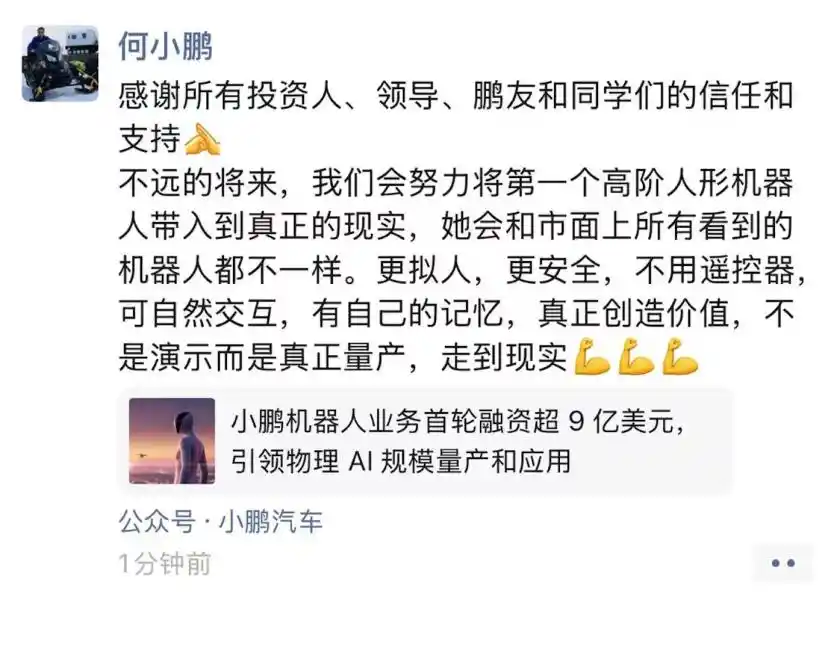
After leading XPeng's humanoid robotics to this milestone, He Xiaopeng expressed profound emotions. He wrote on his WeChat Moments, "In the not-too-distant future, we will strive to bring the first advanced humanoid robot into reality. She will be different from all the robots currently seen on the market."
He Xiaopeng Personally Takes Charge

Robot Capable of Catwalk to be Mass-Produced This Year

XPeng's foray into robotics started much earlier than the public imagined.

It is reported that He Xiaopeng's interest in robotics began as early as 2016. He conducted serious annual research into the robotics direction and once had a long conversation with Wang Xingxing, founder of Unitree.

It wasn't until 2020 that He Xiaopeng decided to act. Introduced by Xiaomi founder Lei Jun, he acquired "Dogotix" founded by Zhao Tongyang and established "Pxing Intelligence" to explore XPeng's robotics business. Later, in September 2023, XPeng Motors acquired the remaining 74.82% stake in Pxing Intelligence for $98.96 million, making Pxing an official robotics division of XPeng Motors. In October of the same year, XPeng's first bipedal humanoid robot, the PX5, was unveiled.

Why such dedication to robotics development? He Xiaopeng has repeatedly emphasized publicly that the greatest value of AI lies in "changing the physical world." In his view, smart electric vehicles are the precursor to robots. Autonomous driving technology solves "minor brain problems" like "movement and balance," accumulating crucial experience for humanoid robots.

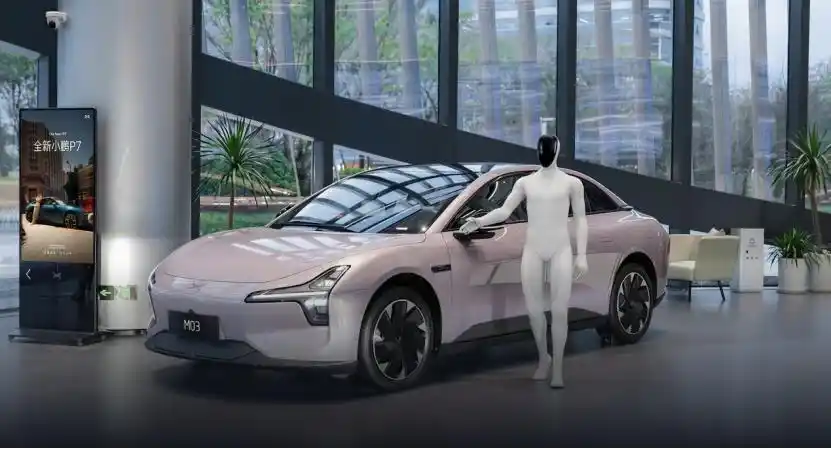
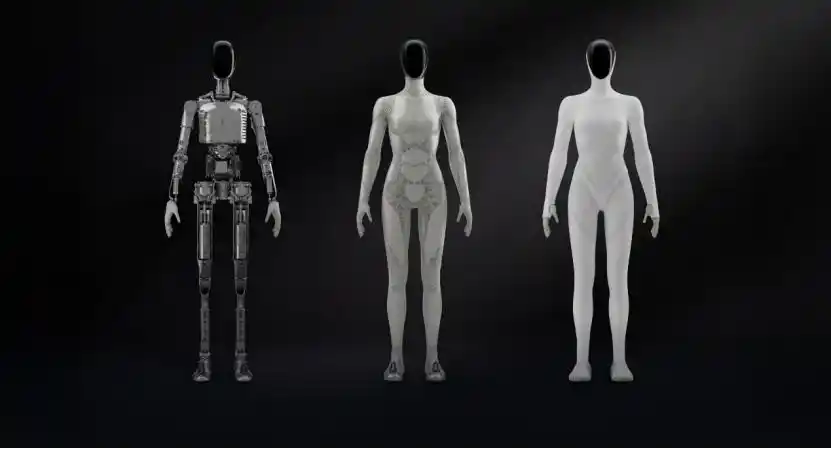
The moment that truly captivated the entire internet occurred at the XPeng Tech Day in November 2025, where the new generation humanoid robot IRON was officially unveiled. Designed with a 1:1 human proportion, it was capable of a catwalk-style walking posture, sparking widespread online discussion. Some netizens even suspected "a real person was hidden inside."

In terms of hardware, the XPeng IRON boasts industry-leading anthropomorphic posture and design, featuring the first full-coverage flexible lattice structure that balances aesthetics and safety. It has 76 degrees of freedom overall, with 21 degrees of freedom in a single hand. Furthermore, XPeng Robotics has independently designed and developed an AI-native hardware platform and all core components for embodied intelligence, including chips, controllers, motion modules, and dexterous hands. Leveraging its established smart electric vehicle R&D and manufacturing system, it aims to achieve automotive-grade quality and large-scale mass production and delivery capabilities.

In terms of intelligence, the XPeng IRON is equipped with three Turing AI chips, delivering an effective computing power of up to 2250 TOPS. The XPeng Physical AI large model is successfully deployed on the edge, enabling it to autonomously complete complex work tasks without remote operation, while ensuring low-latency inference and data security.
Entering 2026, XPeng Robotics accelerated its industrialization pace. In February, the company began constructing the industry's first full-chain mass production base for humanoid robots. In June, He Xiaopeng announced that in addition to serving as Group CEO, he would personally take on the role of CEO for the robotics business. He stated candidly that the XPeng humanoid robot IRON is standing on the threshold of mass production and delivery, comparable to the stage XPeng Motors was at eight years ago, just before completing the launch of its first car, the G3.

According to plan, the XPeng IRON will enter the mass production phase by the end of 2026, starting its commercial application in XPeng's stores and campuses, and will be officially launched and delivered to markets in China and overseas in 2027.

It is worth noting that Pxing remains in a phase of continuous investment, reporting net losses of ¥87 million in 2024 and ¥369 million in 2025. As of the end of March 2026, its net liabilities were approximately ¥447 million, and it has yet to disclose scaled product revenue or external orders.

However, He Xiaopeng remains confident. He stated during the earnings call that the technological barriers for high-level general-purpose robots are extremely high, and high-quality supply is scarce. Therefore, the revenue and gross profit contribution throughout the lifecycle of each IRON unit, including hardware sales and sustained revenue from software AI model capability upgrades, will be significantly higher than the current average selling price and gross profit per vehicle in the automotive business.

Interestingly, He Xiaopeng holds another super unicorn—XPeng AeroHT. Also founded in 2020, XPeng AeroHT focuses on the R&D of intelligent electric flying cars. According to He Xiaopeng, XPeng AeroHT's global orders for the Land Aircraft Carrier have reached 7,000 units, and it has the potential to set a world record for annual sales of manned flying vehicles.

In March this year, XPeng AeroHT completed a new round of equity financing of nearly $200 million, with investors including Hillhouse Ventures, Sequoia Capital China, Gaorong Capital, and Fortune Capital. This brings XPeng AeroHT's total historical equity financing to approximately $1 billion.

During this period, Bloomberg reported that XPeng AeroHT was working with J.P. Morgan and Morgan Stanley on its IPO preparations. XPeng AeroHT responded at the time, emphasizing its current focus on product R&D and mass production delivery, with no other information to share.

It seems likely that He Xiaopeng will once again stand on the stage for an IPO bell-ringing ceremony.

Automakers Jumping In Collectively

Life-and-Death Battle for Chinese Robots Begins

The real elimination race has begun.

Last week, Unitree Technology officially listed on the Shanghai Stock Exchange's STAR Market, becoming the "first humanoid robotics stock" on the A-share market, with its market capitalization briefly reaching nearly ¥450 billion on the first day.

However, Unitree's stock price began to decline the next trading day, and its latest market cap has fallen below ¥250 billion. This "rollercoaster" performance completely shattered the last layer of window dressing in the embodied AI track: before this, startups could rely on technical demonstrations and conceptual proposals to secure financing; after this, the capital market wants to see revenue, mass production, and a commercialization path.

This means the window of opportunity for humanoid robotics startups is rapidly narrowing. For automotive giants, however, this has become the best time to collectively enter the field.

Among them, Tesla is undoubtedly the most aggressive player. Tesla Vice President Tao Lin publicly stated that the Optimus humanoid robot will officially commence large-scale mass production by the end of 2026, with the Fremont factory's long-term annual capacity target set at 1 million units. To this end, the former Model S/X production line at the factory has been converted into an exclusive Optimus production line, scheduled to officially start production in July-August.

Turning our perspective back to China—in February this year, GAC Group officially incubated the humanoid robotics company Huilun Technology and unveiled its fourth-generation robot, the GoMate Mini. Then, in mid-August, Huilun Technology announced the completion of over ¥100 million in financing, jointly invested by CRRC Guochuang Fund, CMB International, Sichuan Science and Technology Innovation, and other institutions.

Such cases are emerging: at the end of March, Changan established Tianshu Intelligent Robotics Company, launching the humanoid robot prototype "Xiao'an"; Li Auto revealed during its Q1 earnings call that its humanoid robot product has been approved for R&D; BYD's commercial service humanoid robot "Xiao Di" was announced in August at the "Di Space" in Zhengzhou; at the same time, news emerged that Chery Automobile's Mojia Robot had started IPO preparations; and at the recently concluded 2026 World Robot Conference, FAW Group, Dongfeng Motor, and Xiaomi Group all showcased their new generation humanoid robots......

Li Xiang, founder of Li Auto, once judged, "In the next 3-5 years, competition in the mid-to-high-end smart car sector will essentially be competition in embodied intelligence. From a market structure perspective, whether it's automakers with initial revenues reaching the hundred-billion-yuan level or larger-scale auto manufacturers, they will all enter the embodied intelligent robotics track."

Previously, a founder of an embodied AI unicorn candidly stated in a conversation with Investing Frontier, "Embodied companies are worried about automakers entering the field because they have ready-made technology and production lines. It's essentially a dimensional reduction strike."

The reason for this concern is self-evident. For startups, the current market landscape seems somewhat suffocating. The competitors they face are no longer peers on the same starting line but automotive giants with cash reserves of tens of billions, complete supply chain systems, large-scale manufacturing capabilities, and global sales networks.

After all, there is significant overlap in the technological systems of automobiles and robots, and this technological homology provides an inherent advantage for automakers. The proprietary chips, large models, perception systems, control systems, and operating systems required for smart cars also form the core technological foundation for general-purpose humanoid robots. Technological capabilities validated in mass-produced vehicles can be directly advanced to humanoid robots.

More importantly, the industrialization capabilities of the automotive industry provide crucial support for robot mass production. The large-scale manufacturing experience, supply chain management systems, and quality control standards from smart cars can be directly applied to robot production.

Thus, automakers don't need to start from scratch when making robots, and car factories themselves are ideal testing and deployment scenarios for humanoid robots.

At present, the final outcome of this elimination race remains unpredictable, but one thing is certain: every player on the track has no way back.

This article is from the WeChat public account "Investing Frontier" (ID: pedaily2012), author: Liu Bo.


Crypto di tendenza

Domande pertinenti

QWhat record did Xiaopeng Group's humanoid robot business break in the first round of financing?

AXiaopeng's robot business broke the single-round private equity financing record in China's embodied AI industry, raising over $9 billion with a post-investment valuation exceeding $6.3 billion, surpassing Unitree's total IPO fundraising amount.

QWhich major investors participated in Xiaopeng's robot business financing round led by IDG Capital?

AIDG Capital led the round, with GSR Ventures participating and Tencent and Alibaba providing strategic investment.

QWhat is the name of Xiaopeng's next-generation humanoid robot, and what was a notable feature that sparked online discussion?

AXiaopeng's robot is named IRON. Its debut in November 2025, featuring a cat-walk gait so lifelike it led some netizens to suspect a human was inside the suit, sparked widespread online discussion.

QAccording to the article, why are major automakers like Tesla, Xiaopeng, and others entering the humanoid robot field?

AAutomakers are entering the field because technologies for smart cars (like self-driving chips, AI models, and control systems) overlap significantly with those needed for humanoid robots. They also possess massive manufacturing, supply chain, and industrialization capabilities that can be directly applied to robot production, giving them a potential advantage over startups.

QWhat is the capital market's changing demand for humanoid robot companies, as indicated by Unitree's post-IPO stock performance?

AUnitree's volatile stock performance after its IPO indicates the capital market is shifting its focus from technical demonstrations and concepts to demanding tangible results like revenue, mass production plans, and clear commercialization paths.

Letture associate

BTC Returns to $80,000, Crypto-Related Stocks Finally Stand Tall

Bitcoin Breaches $80,000 Mark, Boosting Crypto-Related Stocks With the crypto market heating up, Bitcoin has surged back above the $80,000 level after more than a hundred days, posting nearly a 30% gain in a week. This rally has ignited bullish sentiment across the board. Concurrently, crypto-related stocks, which had been experiencing a months-long slump, are staging a powerful comeback, led by key players in digital asset treasuries, exchanges, and trading platforms. Many of these stocks have seen substantial rebounds from their recent lows. Leading the charge is MicroStrategy (MSTR), a major Bitcoin treasury company, whose stock has rebounded nearly 50% from its 52-week low. Close behind is Bitmine (BMNR), the largest public Ethereum treasury, with a staggering 88.6% rebound. Other notable performers include the stablecoin issuer Circle (CRCL), up 75.5%, and the Ethereum-focused company Sharplink (SBET), up 83.7%. While the "crypto market proxy" Coinbase (COIN) has rebounded 29%, its unique position has faced some dilution from new market entrants. Robinhood (HOOD), bolstered by strong Q2 earnings and its expanding crypto ecosystem, has risen 63.2%. The exchange Bullish (BLSH) is up 45.8%. Perhaps the most dramatic rebound belongs to Hyperliquid Strategies (PURR), linked to the Hyperliquid ecosystem, which has skyrocketed over 254% from its low. The analysis highlights that most of these stocks hit their lows around late June, marking a market bottom. It emphasizes the strategy of focusing on leading companies and notes that while the rebound is strong, many stocks remain significantly below their yearly highs. Ultimately, these public companies serve as leveraged proxies for underlying crypto assets like Bitcoin and Ethereum in the current market upswing.

Odaily星球日报6 min fa

BTC Returns to $80,000, Crypto-Related Stocks Finally Stand Tall

Odaily星球日报6 min fa

AI Starts Acting as Humans' AI Intermediary, Token Usage Already 5.2 Times That of Humans

On February 6, 2026, human usage of AI tokens was surpassed by AI agents for the first time on the platform OpenRouter. In just six months, this gap widened to a factor of 5.2. OpenRouter estimates that by August 10, 2026, Agent-class token consumption soared 14-fold to 7.3 trillion, while human usage grew to 1.4 trillion, a 2.8-fold increase. OpenRouter, a major model gateway handling about 1% of global inference volume, distinguishes between human and agent traffic by analyzing user behavior patterns (e.g., frequency of tool calls, response intervals) rather than identity. The dramatic divergence stems from fundamentally different usage patterns. Human interaction is typically short, involving a prompt and a response. In contrast, AI agents operate autonomously on complex tasks—reading files, calling tools, iterating outputs—generating thousands of tokens from a single initial prompt. This shift to autonomous, multi-turn operation unlocks massive scale. While agents benefit from cheaper cached tokens (constituting nearly 70% of an average request), the sheer volume explosion still drives costs sharply higher. Estimates show the cost per customer service interaction could rise 30-fold by 2026, and agentic AI could increase total token consumption 24-fold by 2030. Companies like Uber have already exhausted annual AI budgets within months. The critical differentiator is not the choice of AI model but its integration into actionable workflows. Top-tier companies see users generating 8.3x more tokens than average, largely due to higher adoption of plugins and reusable skills, which reduce redundant work. However, this surge in automated activity raises a crucial oversight issue. Many agent tasks still require human approval, but monitoring capacity hasn't scaled with usage, leading to incidents like unnoticed deletions. The key challenge is no longer whether to use AI, but establishing who verifies its work, makes final decisions, and takes responsibility. The real scarcity is shifting from execution to validation and judgment.

marsbit11 min fa

AI Starts Acting as Humans' AI Intermediary, Token Usage Already 5.2 Times That of Humans

marsbit11 min fa

Trading

Spot

Articoli Popolari

Cosa è $S$

Comprendere SPERO: Una Panoramica Completa Introduzione a SPERO Mentre il panorama dell'innovazione continua a evolversi, l'emergere delle tecnologie web3 e dei progetti di criptovaluta gioca un ruolo fondamentale nel plasmare il futuro digitale. Un progetto che ha attirato l'attenzione in questo campo dinamico è SPERO, denotato come SPERO,$$s$. Questo articolo mira a raccogliere e presentare informazioni dettagliate su SPERO, per aiutare gli appassionati e gli investitori a comprendere le sue basi, obiettivi e innovazioni nei domini web3 e crypto. Che cos'è SPERO,$$s$? SPERO,$$s$ è un progetto unico all'interno dello spazio crypto che cerca di sfruttare i principi della decentralizzazione e della tecnologia blockchain per creare un ecosistema che promuove l'impegno, l'utilità e l'inclusione finanziaria. Il progetto è progettato per facilitare interazioni peer-to-peer in modi nuovi, fornendo agli utenti soluzioni e servizi finanziari innovativi. Al suo interno, SPERO,$$s$ mira a responsabilizzare gli individui fornendo strumenti e piattaforme che migliorano l'esperienza dell'utente nello spazio delle criptovalute. Questo include la possibilità di metodi di transazione più flessibili, la promozione di iniziative guidate dalla comunità e la creazione di percorsi per opportunità finanziarie attraverso applicazioni decentralizzate (dApps). La visione sottostante di SPERO,$$s$ ruota attorno all'inclusività, cercando di colmare le lacune all'interno della finanza tradizionale mentre sfrutta i vantaggi della tecnologia blockchain. Chi è il Creatore di SPERO,$$s$? L'identità del creatore di SPERO,$$s$ rimane piuttosto oscura, poiché ci sono risorse pubblicamente disponibili limitate che forniscono informazioni dettagliate sul suo fondatore o fondatori. Questa mancanza di trasparenza può derivare dall'impegno del progetto per la decentralizzazione—un ethos che molti progetti web3 condividono, dando priorità ai contributi collettivi rispetto al riconoscimento individuale. Centrando le discussioni attorno alla comunità e ai suoi obiettivi collettivi, SPERO,$$s$ incarna l'essenza dell'empowerment senza mettere in evidenza individui specifici. Pertanto, comprendere l'etica e la missione di SPERO rimane più importante che identificare un creatore singolo. Chi sono gli Investitori di SPERO,$$s$? SPERO,$$s$ è supportato da una varietà di investitori che vanno dai capitalisti di rischio agli investitori angelici dedicati a promuovere l'innovazione nel settore crypto. Il focus di questi investitori generalmente si allinea con la missione di SPERO—dando priorità a progetti che promettono avanzamenti tecnologici sociali, inclusività finanziaria e governance decentralizzata. Queste fondazioni di investitori sono tipicamente interessate a progetti che non solo offrono prodotti innovativi, ma contribuiscono anche positivamente alla comunità blockchain e ai suoi ecosistemi. Il supporto di questi investitori rafforza SPERO,$$s$ come un concorrente degno di nota nel dominio in rapida evoluzione dei progetti crypto. Come Funziona SPERO,$$s$? SPERO,$$s$ impiega un framework multifunzionale che lo distingue dai progetti di criptovaluta convenzionali. Ecco alcune delle caratteristiche chiave che sottolineano la sua unicità e innovazione: Governance Decentralizzata: SPERO,$$s$ integra modelli di governance decentralizzati, responsabilizzando gli utenti a partecipare attivamente ai processi decisionali riguardanti il futuro del progetto. Questo approccio favorisce un senso di proprietà e responsabilità tra i membri della comunità. Utilità del Token: SPERO,$$s$ utilizza il proprio token di criptovaluta, progettato per servire varie funzioni all'interno dell'ecosistema. Questi token abilitano transazioni, premi e la facilitazione dei servizi offerti sulla piattaforma, migliorando l'impegno e l'utilità complessivi. Architettura Stratificata: L'architettura tecnica di SPERO,$$s$ supporta la modularità e la scalabilità, consentendo un'integrazione fluida di funzionalità e applicazioni aggiuntive man mano che il progetto evolve. Questa adattabilità è fondamentale per mantenere la rilevanza nel panorama crypto in continua evoluzione. Coinvolgimento della Comunità: Il progetto enfatizza iniziative guidate dalla comunità, impiegando meccanismi che incentivano la collaborazione e il feedback. Nutrendo una comunità forte, SPERO,$$s$ può affrontare meglio le esigenze degli utenti e adattarsi alle tendenze di mercato. Focus sull'Inclusione: Offrendo basse commissioni di transazione e interfacce user-friendly, SPERO,$$s$ mira ad attrarre una base utenti diversificata, inclusi individui che potrebbero non aver precedentemente interagito nello spazio crypto. Questo impegno per l'inclusione si allinea con la sua missione generale di empowerment attraverso l'accessibilità. Cronologia di SPERO,$$s$ Comprendere la storia di un progetto fornisce preziose intuizioni sulla sua traiettoria di sviluppo e sui traguardi. Di seguito è riportata una cronologia suggerita che mappa eventi significativi nell'evoluzione di SPERO,$$s$: Fase di Concettualizzazione e Ideazione: Le idee iniziali che formano la base di SPERO,$$s$ sono state concepite, allineandosi strettamente con i principi di decentralizzazione e focus sulla comunità all'interno dell'industria blockchain. Lancio del Whitepaper del Progetto: Dopo la fase concettuale, è stato rilasciato un whitepaper completo che dettaglia la visione, gli obiettivi e l'infrastruttura tecnologica di SPERO,$$s$ per suscitare interesse e feedback dalla comunità. Costruzione della Comunità e Prime Interazioni: Sono stati effettuati sforzi attivi di outreach per costruire una comunità di early adopters e potenziali investitori, facilitando discussioni attorno agli obiettivi del progetto e ottenendo supporto. Evento di Generazione del Token: SPERO,$$s$ ha condotto un evento di generazione del token (TGE) per distribuire i propri token nativi ai primi sostenitori e stabilire una liquidità iniziale all'interno dell'ecosistema. Lancio della Prima dApp: La prima applicazione decentralizzata (dApp) associata a SPERO,$$s$ è stata attivata, consentendo agli utenti di interagire con le funzionalità principali della piattaforma. Sviluppo Continuo e Partnership: Aggiornamenti e miglioramenti continui alle offerte del progetto, inclusi partnership strategiche con altri attori nello spazio blockchain, hanno plasmato SPERO,$$s$ in un concorrente competitivo e in evoluzione nel mercato crypto. Conclusione SPERO,$$s$ rappresenta una testimonianza del potenziale del web3 e delle criptovalute di rivoluzionare i sistemi finanziari e responsabilizzare gli individui. Con un impegno per la governance decentralizzata, il coinvolgimento della comunità e funzionalità progettate in modo innovativo, apre la strada verso un panorama finanziario più inclusivo. Come per qualsiasi investimento nello spazio crypto in rapida evoluzione, si incoraggiano potenziali investitori e utenti a ricercare approfonditamente e a impegnarsi in modo riflessivo con gli sviluppi in corso all'interno di SPERO,$$s$. Il progetto mostra lo spirito innovativo dell'industria crypto, invitando a ulteriori esplorazioni delle sue innumerevoli possibilità. Mentre il percorso di SPERO,$$s$ è ancora in fase di sviluppo, i suoi principi fondamentali potrebbero effettivamente influenzare il futuro di come interagiamo con la tecnologia, la finanza e tra di noi in ecosistemi digitali interconnessi.

451 Totale visualizzazioniPubblicato il 2024.12.17Aggiornato il 2024.12.17

Cosa è $S$

Cosa è AGENT S

Agent S: Il Futuro dell'Interazione Autonoma in Web3 Introduzione Nel panorama in continua evoluzione di Web3 e criptovalute, le innovazioni stanno costantemente ridefinendo il modo in cui gli individui interagiscono con le piattaforme digitali. Uno di questi progetti pionieristici, Agent S, promette di rivoluzionare l'interazione uomo-computer attraverso il suo framework agentico aperto. Aprendo la strada a interazioni autonome, Agent S mira a semplificare compiti complessi, offrendo applicazioni trasformative nell'intelligenza artificiale (AI). Questa esplorazione dettagliata approfondirà le complessità del progetto, le sue caratteristiche uniche e le implicazioni per il dominio delle criptovalute. Cos'è Agent S? Agent S si presenta come un innovativo framework agentico aperto, progettato specificamente per affrontare tre sfide fondamentali nell'automazione dei compiti informatici: Acquisizione di Conoscenze Specifiche del Dominio: Il framework apprende in modo intelligente da varie fonti di conoscenza esterne ed esperienze interne. Questo approccio duale gli consente di costruire un ricco repository di conoscenze specifiche del dominio, migliorando le sue prestazioni nell'esecuzione dei compiti. Pianificazione su Lungo Orizzonte di Compiti: Agent S impiega una pianificazione gerarchica potenziata dall'esperienza, un approccio strategico che facilita la suddivisione e l'esecuzione efficiente di compiti complessi. Questa caratteristica migliora significativamente la sua capacità di gestire più sottocompiti in modo efficiente ed efficace. Gestione di Interfacce Dinamiche e Non Uniformi: Il progetto introduce l'Interfaccia Agente-Computer (ACI), una soluzione innovativa che migliora l'interazione tra agenti e utenti. Utilizzando Modelli Linguistici Multimodali di Grandi Dimensioni (MLLM), Agent S può navigare e manipolare senza sforzo diverse interfacce grafiche utente. Attraverso queste caratteristiche pionieristiche, Agent S fornisce un framework robusto che affronta le complessità coinvolte nell'automazione dell'interazione umana con le macchine, preparando il terreno per innumerevoli applicazioni nell'AI e oltre. Chi è il Creatore di Agent S? Sebbene il concetto di Agent S sia fondamentalmente innovativo, informazioni specifiche sul suo creatore rimangono elusive. Il creatore è attualmente sconosciuto, il che evidenzia sia la fase embrionale del progetto sia la scelta strategica di mantenere i membri fondatori sotto anonimato. Indipendentemente dall'anonimato, l'attenzione rimane sulle capacità e sul potenziale del framework. Chi sono gli Investitori di Agent S? Poiché Agent S è relativamente nuovo nell'ecosistema crittografico, informazioni dettagliate riguardanti i suoi investitori e sostenitori finanziari non sono documentate esplicitamente. La mancanza di approfondimenti pubblicamente disponibili sulle fondazioni di investimento o sulle organizzazioni che supportano il progetto solleva interrogativi sulla sua struttura di finanziamento e sulla roadmap di sviluppo. Comprendere il supporto è cruciale per valutare la sostenibilità del progetto e il suo potenziale impatto sul mercato. Come Funziona Agent S? Al centro di Agent S si trova una tecnologia all'avanguardia che gli consente di funzionare efficacemente in contesti diversi. Il suo modello operativo è costruito attorno a diverse caratteristiche chiave: Interazione Uomo-Computer Simile a Quella Umana: Il framework offre una pianificazione AI avanzata, cercando di rendere le interazioni con i computer più intuitive. Mimando il comportamento umano nell'esecuzione dei compiti, promette di elevare le esperienze degli utenti. Memoria Narrativa: Utilizzata per sfruttare esperienze di alto livello, Agent S utilizza la memoria narrativa per tenere traccia delle storie dei compiti, migliorando così i suoi processi decisionali. Memoria Episodica: Questa caratteristica fornisce agli utenti una guida passo-passo, consentendo al framework di offrire supporto contestuale mentre i compiti si sviluppano. Supporto per OpenACI: Con la capacità di funzionare localmente, Agent S consente agli utenti di mantenere il controllo sulle proprie interazioni e flussi di lavoro, allineandosi con l'etica decentralizzata di Web3. Facile Integrazione con API Esterne: La sua versatilità e compatibilità con varie piattaforme AI garantiscono che Agent S possa adattarsi senza problemi agli ecosistemi tecnologici esistenti, rendendolo una scelta attraente per sviluppatori e organizzazioni. Queste funzionalità contribuiscono collettivamente alla posizione unica di Agent S all'interno dello spazio crittografico, poiché automatizza compiti complessi e multi-fase con un intervento umano minimo. Man mano che il progetto evolve, le sue potenziali applicazioni in Web3 potrebbero ridefinire il modo in cui si svolgono le interazioni digitali. Cronologia di Agent S Lo sviluppo e le tappe di Agent S possono essere riassunti in una cronologia che evidenzia i suoi eventi significativi: 27 Settembre 2024: Il concetto di Agent S è stato lanciato in un documento di ricerca completo intitolato “Un Framework Agentico Aperto che Usa i Computer Come un Umano”, mostrando le basi per il progetto. 10 Ottobre 2024: Il documento di ricerca è stato reso pubblicamente disponibile su arXiv, offrendo un'esplorazione approfondita del framework e della sua valutazione delle prestazioni basata sul benchmark OSWorld. 12 Ottobre 2024: È stata rilasciata una presentazione video, fornendo un'idea visiva delle capacità e delle caratteristiche di Agent S, coinvolgendo ulteriormente potenziali utenti e investitori. Questi indicatori nella cronologia non solo illustrano i progressi di Agent S, ma indicano anche il suo impegno per la trasparenza e il coinvolgimento della comunità. Punti Chiave su Agent S Man mano che il framework Agent S continua a evolversi, diversi attributi chiave si distinguono, sottolineando la sua natura innovativa e il potenziale: Framework Innovativo: Progettato per fornire un uso intuitivo dei computer simile all'interazione umana, Agent S porta un approccio nuovo all'automazione dei compiti. Interazione Autonoma: La capacità di interagire autonomamente con i computer attraverso GUI segna un passo avanti verso soluzioni informatiche più intelligenti ed efficienti. Automazione di Compiti Complessi: Con la sua metodologia robusta, può automatizzare compiti complessi e multi-fase, rendendo i processi più veloci e meno soggetti a errori. Miglioramento Continuo: I meccanismi di apprendimento consentono ad Agent S di migliorare dalle esperienze passate, migliorando continuamente le sue prestazioni e la sua efficacia. Versatilità: La sua adattabilità attraverso diversi ambienti operativi come OSWorld e WindowsAgentArena garantisce che possa servire un'ampia gamma di applicazioni. Man mano che Agent S si posiziona nel panorama di Web3 e delle criptovalute, il suo potenziale per migliorare le capacità di interazione e automatizzare i processi segna un significativo avanzamento nelle tecnologie AI. Attraverso il suo framework innovativo, Agent S esemplifica il futuro delle interazioni digitali, promettendo un'esperienza più fluida ed efficiente per gli utenti in vari settori. Conclusione Agent S rappresenta un audace passo avanti nell'unione tra AI e Web3, con la capacità di ridefinire il modo in cui interagiamo con la tecnologia. Sebbene sia ancora nelle sue fasi iniziali, le possibilità per la sua applicazione sono vaste e coinvolgenti. Attraverso il suo framework completo che affronta sfide critiche, Agent S mira a portare le interazioni autonome al centro dell'esperienza digitale. Man mano che ci addentriamo nei regni delle criptovalute e della decentralizzazione, progetti come Agent S giocheranno senza dubbio un ruolo cruciale nel plasmare il futuro della tecnologia e della collaborazione uomo-computer.

875 Totale visualizzazioniPubblicato il 2025.01.14Aggiornato il 2025.01.14

Cosa è AGENT S

Come comprare S

Benvenuto in HTX.com! Abbiamo reso l'acquisto di Sonic (S) semplice e conveniente. Segui la nostra guida passo passo per intraprendere il tuo viaggio nel mondo delle criptovalute.Step 1: Crea il tuo Account HTXUsa la tua email o numero di telefono per registrarti il tuo account gratuito su HTX. Vivi un'esperienza facile e sblocca tutte le funzionalità,Crea il mio accountStep 2: Vai in Acquista crypto e seleziona il tuo metodo di pagamentoCarta di credito/debito: utilizza la tua Visa o Mastercard per acquistare immediatamente SonicS.Bilancio: Usa i fondi dal bilancio del tuo account HTX per fare trading senza problemi.Terze parti: abbiamo aggiunto metodi di pagamento molto utilizzati come Google Pay e Apple Pay per maggiore comodità.P2P: Fai trading direttamente con altri utenti HTX.Over-the-Counter (OTC): Offriamo servizi su misura e tassi di cambio competitivi per i trader.Step 3: Conserva Sonic (S)Dopo aver acquistato Sonic (S), conserva nel tuo account HTX. In alternativa, puoi inviare tramite trasferimento blockchain o scambiare per altre criptovalute.Step 4: Scambia Sonic (S)Scambia facilmente Sonic (S) nel mercato spot di HTX. Accedi al tuo account, seleziona la tua coppia di trading, esegui le tue operazioni e monitora in tempo reale. Offriamo un'esperienza user-friendly sia per chi ha appena iniziato che per i trader più esperti.

1.7k Totale visualizzazioniPubblicato il 2025.01.15Aggiornato il 2026.06.02

Come comprare S

Discussioni

Benvenuto nella Community HTX. Qui puoi rimanere informato sugli ultimi sviluppi della piattaforma e accedere ad approfondimenti esperti sul mercato. Le opinioni degli utenti sul prezzo di S S sono presentate come di seguito.

活动图片