Monkey-Selling Lifeline Finally Turns Fortunes: Machi Big Brother Turns $150k Into $12.72 Million In Three Days

marsbitPubblicato 2026-08-25Pubblicato ultima volta 2026-08-25

Introduzione

Machi Big Brother, a prominent crypto whale, has staged a dramatic comeback. After ten months of significant losses, he turned a $150,000 capital into $12.72 million in just three days during last week's market rally. This 84x gain was achieved through aggressive "rolling" strategies on the Hyperliquid platform, where unrealized profits are continuously used as collateral to increase leveraged long positions. His current portfolio holds $100.7 million in assets backing $123.72 million in open long positions, primarily in ETH, with an overall leverage of approximately 13.1x. However, this massive position is highly precarious; a roughly 10% drop in ETH's price to $2,229 would trigger automatic liquidation, wiping out his recent profits. His trading history is marked by high leverage, frequent liquidations, and poor risk management, having been liquidated 71 times in a single month in 2025. To fund these risky trades and meet margin calls in recent months, he has been selling his NFT holdings, including Bored Ape Yacht Club (BAYC) assets, at substantial losses—a move the community dubbed "selling monkeys to stay alive." Despite the recent windfall, his cumulative losses remain high, and his high-risk strategy leaves him vulnerable to sudden market reversals.

As the tide of market recovery rolls in, the undercurrents on-chain have long churned up stormy seas. Machi Big Brother has once again become the protagonist in the on-chain arena of public opinion.

Over the past ten months, this crypto whale has been repeatedly submerged by each wave surge, with a persistent record of losses like a heavy report card. But in last week's one-sided market movement, starting with $150,000 in capital, he rolled a leveraged long position into $12.72 million within three days, netting a single-trade profit of $12.5 million, an 84x return on his principal.

As of 18:00 on August 24th, the total assets in the Hyperliquid account machibigbrother.eth stood at $10.07 million, supporting a massive long position worth $124 million. Leverage hangs by a thread, positions weigh like a heavy hammer—the paper gains and losses of this single individual are precisely a concentrated snapshot of current market sentiment, liquidity battles, and risk appetite. On-chain numbers do not lie, inscribing both frenzy and calm within the holdings data.
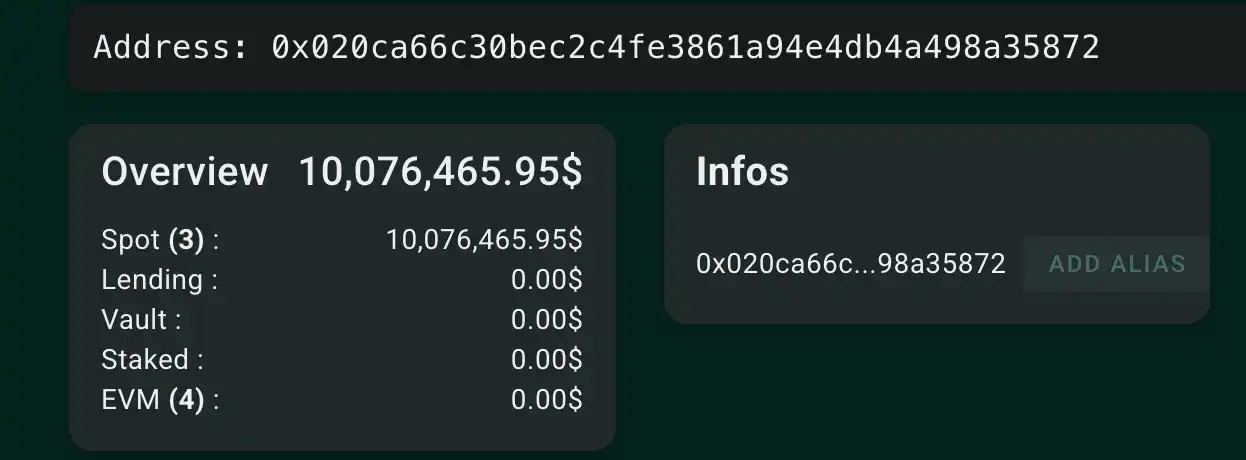
Current Positions: $10 Million Supporting $133 Million

Analysts differ slightly in their accounts. According to analyst Yu Jin's data, Machi Big Brother had accumulated losses of $35 million from long ETH positions over the past 10 months, which narrowed to approximately $24 million after this profitable trade.

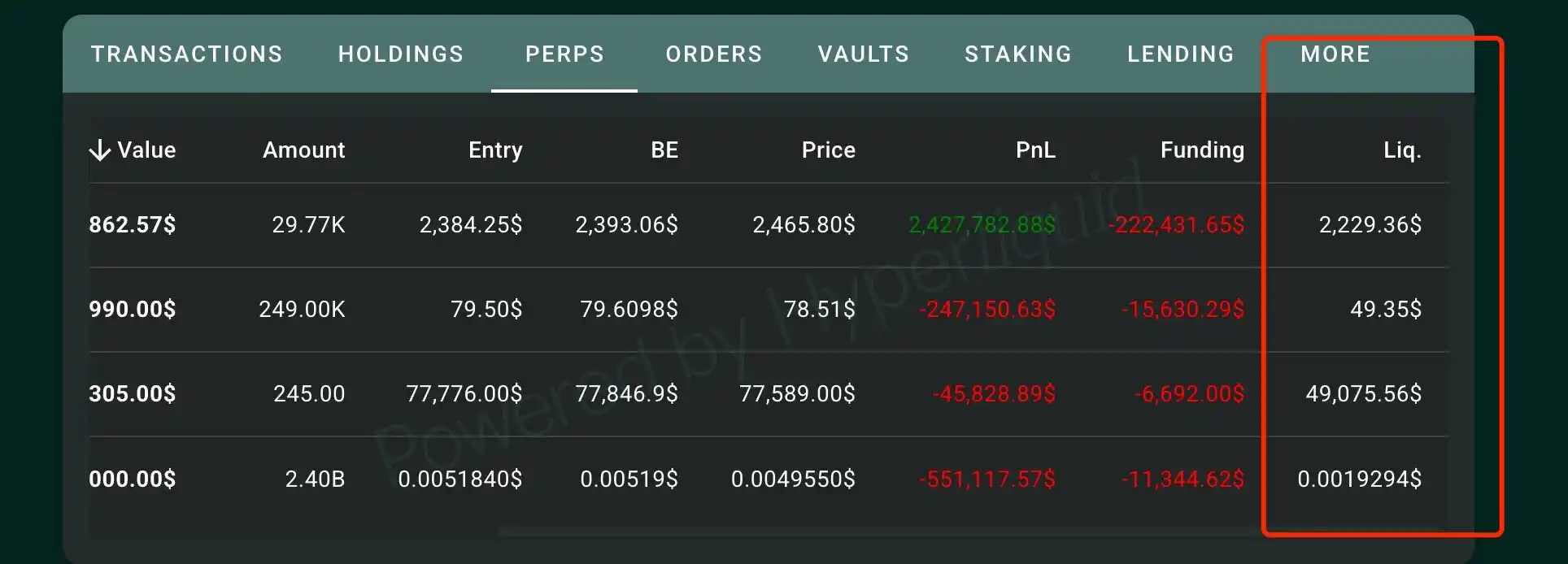
A clearer picture of his current position composition can be seen from HypurrScan's real-time on-chain data (data retrieved at 18:00, August 24th, 2026):

__IMG_1__

The four positions total $123.72 million, showing an overall unrealized profit of approximately $1.435 million at current prices. But breaking it down: the HYPE, BTC, and PUMP positions are all below their break-even prices. Only the ETH position remains 2.9% above its break-even price. Essentially, all profits are being propped up by the single ETH trade (unrealized profit ~$2.36 million), while the other three combined show an unrealized loss of $920,000.

Furthermore, to maintain these four long positions, he has already paid cumulative funding fees of approximately $256,000—this is the holding cost for perpetual contracts, deducted every hour regardless of price movement; the longer the position is held, the more is deducted.

The most critical factor is the 'liquidation price.' Once the price hits this level, the system will automatically sell his position to stop losses without his consent. The tightest among the four is ETH—$2,229, roughly 10% below the current price. And the ETH position alone constitutes 59% of his total portfolio, making it the entire account's line of death.

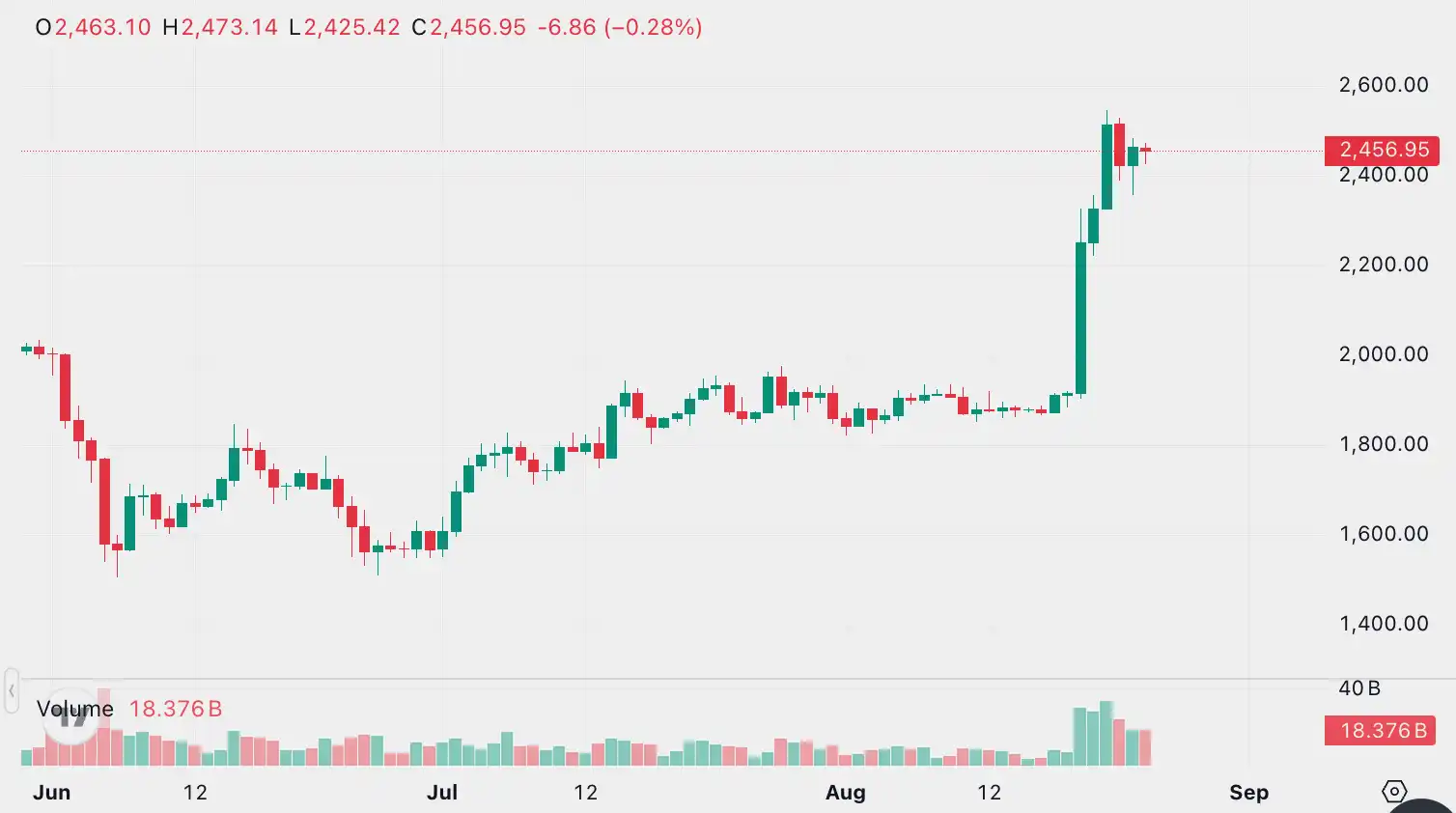
In terms of leverage ratio: $9.44 million in equity is supporting a $123.72 million position, resulting in an overall leverage of approximately 13.1x. This means if ETH drops from $2,463 to $2,229, a $234 decline, the $12.5 million profit made over these 3 days, along with the initial capital, would be wiped out.
Strategy Unchanged, Risks Persist

It is important to note that Machi Big Brother's profit this time was achieved through continuous 'position rolling.' 'Rolling a position' refers to opening a leveraged position and, instead of withdrawing unrealized profits, using those profits directly as additional margin to automatically support a larger position; if the price rises further, the position expands again, compounding in this manner.

Its mathematical characteristic is exponential gains when winning, but a total loss when losing. Because each increase in position size is built upon the unrealized profits of the previous one, a market reversal doesn't just erase the principal but simultaneously wipes out all the rolled-up profits. Turning $150k into $11.15 million requires getting it right several times in a row; turning $11.15 million back to $150k, theoretically, requires only one wrong move.

Last week's ETH rebound from the bottom provided the ideal environment for this structure: one-sided, continuous, and without pullbacks.
Although this operation resulted in $11 million in unrealized profits, one must not forget that as the 'on-chain liquidation champion,' Machi Big Brother has repeatedly seen massive profits rapidly turn into huge losses. In mid-September 2025, his account value peaked near $60 million (unrealized profit over $44–45 million). Subsequently, during the market crash on October 11th, multiple long positions including XPL and ETH were liquidated, turning a profit of approximately $15 million into a loss exceeding $11 million—profits evaporated swiftly.

His trading style is characterized by high leverage (often 25x–40x), extreme bullish bias, high win rate but extremely poor risk/reward ratio, and adding margin/averaging down instead of cutting losses during downturns. This leads to 'small wins, huge losses' and frequent liquidations.

In November 2025, Lookonchain monitored him being forcibly liquidated 71 times in a single month on Hyperliquid, ranking first across the network.

Currently, he still carries significant cumulative historical losses, and his fundamental issues with trading discipline remain unchanged. On-chain data is public and transparent, but volatility is intense.

The Two Weeks of Selling Apes to Add Margin

A highlight of this story is the halo effect Machi Big Brother himself carries, while another highlight is the narrative of a small capital base gambling for a massive position. But rewinding two weeks prior, he was selling off Bored Ape Yacht Club (BAYC) NFTs one by one:

August 5th: Sold BAYC #5670 for 9 ETH—the purchase cost over three years ago was 84.99 ETH, resulting in an 89.4% loss.

August 13th: Sold BAYC #5715 for 8.3 ETH, approximately $15,500; the original cost was 34.17 ETH, around $64,600, resulting in a 75.7% loss.

This was his routine for the first half of August.

The fire sale of BAYCs can be traced back even earlier. According to another Lookonchain statistic, he sold 34 BAYCs at a loss in June, obtaining about 326 ETH, but incurring an overall loss of approximately 399 ETH. The primary purpose was to add margin for his high-leverage ETH long positions on Hyperliquid, to avoid or delay liquidation. This led the community to joke that he was 'using monkeys for a lifeline.'

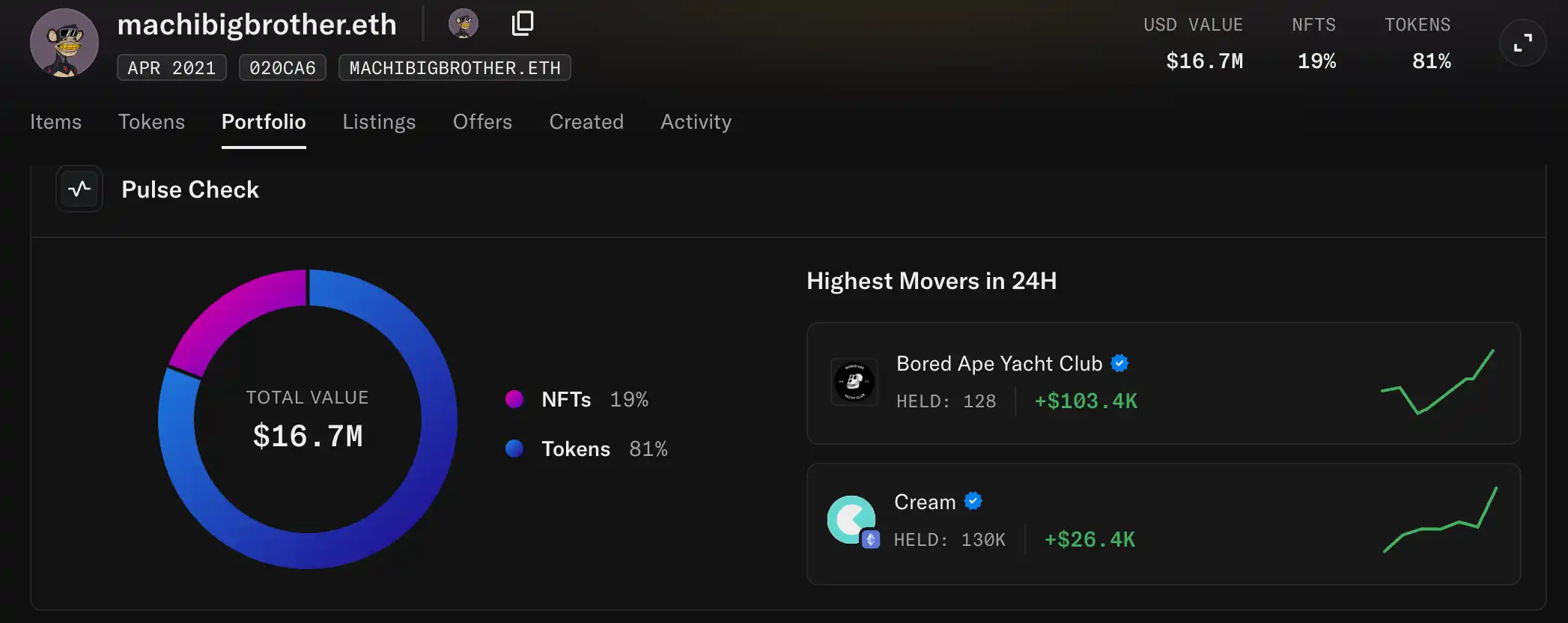
As of writing, according to OpenSea data, his NFT portfolio consists of 4,357 items, but the NFT portion's value has dwindled to only $3.17 million. This includes 128 BAYCs (~$2.5 million) and 102 MAYCs (~$288,000). In contrast, at his peak, he held a heavy position of over three hundred BAYCs.
Domande pertinenti

QWho is the main subject of the article, and what is his notable recent financial achievement?

AThe main subject is Machi Big Brother, a crypto whale. His notable recent achievement is turning a $150,000 principal into $12.72 million within three days through extreme leverage trading, an 84x return.

QWhat is the current situation of Machi Big Brother's portfolio on Hyperliquid as described in the article?

AAs of the snapshot, his account held about $10.07 million in total assets, but it was supporting a massive long position of $124 million. His overall leverage was approximately 13.1x. His main risk is the ETH position, which constitutes 59% of his total holdings and has a liquidation price around $2,229, about 10% below the current price.

QWhat is the trading strategy that Machi Big Brother used to achieve the recent $12.5 million profit, and what are its key risks?

AHe used a 'rolling' strategy. This means he didn't withdraw profits but used them as added margin to increase his position size, creating a compounding effect. The key risk is that while profits can grow exponentially during a sustained trend, the entire accumulated profit and principal can be wiped out in a single market reversal.

QWhy did Machi Big Brother sell a significant number of his Bored Ape Yacht Club (BAYC) NFTs in the months leading up to his recent trade?

AHe sold his BAYC NFTs at a loss to raise capital. The primary purpose was to add margin to his highly leveraged long positions on ETH on Hyperliquid, aiming to avoid or delay liquidation (forced selling) of those positions.

QAccording to the article, what is a characteristic pattern of Machi Big Brother's long-term trading history despite his recent success?

AHis long-term trading history is characterized by high leverage, consistent bias towards long positions, high frequency of winning trades but poor risk-to-reward ratio, and a pattern of adding more funds during losses instead of cutting losses. This has led to him being frequently liquidated and accumulating significant overall losses over time, earning him titles like 'on-chain liquidation champion'.

Letture associate

BTC Returns to $80,000, Crypto-Related Stocks Finally Stand Tall

Bitcoin Breaches $80,000 Mark, Boosting Crypto-Related Stocks With the crypto market heating up, Bitcoin has surged back above the $80,000 level after more than a hundred days, posting nearly a 30% gain in a week. This rally has ignited bullish sentiment across the board. Concurrently, crypto-related stocks, which had been experiencing a months-long slump, are staging a powerful comeback, led by key players in digital asset treasuries, exchanges, and trading platforms. Many of these stocks have seen substantial rebounds from their recent lows. Leading the charge is MicroStrategy (MSTR), a major Bitcoin treasury company, whose stock has rebounded nearly 50% from its 52-week low. Close behind is Bitmine (BMNR), the largest public Ethereum treasury, with a staggering 88.6% rebound. Other notable performers include the stablecoin issuer Circle (CRCL), up 75.5%, and the Ethereum-focused company Sharplink (SBET), up 83.7%. While the "crypto market proxy" Coinbase (COIN) has rebounded 29%, its unique position has faced some dilution from new market entrants. Robinhood (HOOD), bolstered by strong Q2 earnings and its expanding crypto ecosystem, has risen 63.2%. The exchange Bullish (BLSH) is up 45.8%. Perhaps the most dramatic rebound belongs to Hyperliquid Strategies (PURR), linked to the Hyperliquid ecosystem, which has skyrocketed over 254% from its low. The analysis highlights that most of these stocks hit their lows around late June, marking a market bottom. It emphasizes the strategy of focusing on leading companies and notes that while the rebound is strong, many stocks remain significantly below their yearly highs. Ultimately, these public companies serve as leveraged proxies for underlying crypto assets like Bitcoin and Ethereum in the current market upswing.

Odaily星球日报6 min fa

BTC Returns to $80,000, Crypto-Related Stocks Finally Stand Tall

Odaily星球日报6 min fa

AI Starts Acting as Humans' AI Intermediary, Token Usage Already 5.2 Times That of Humans

On February 6, 2026, human usage of AI tokens was surpassed by AI agents for the first time on the platform OpenRouter. In just six months, this gap widened to a factor of 5.2. OpenRouter estimates that by August 10, 2026, Agent-class token consumption soared 14-fold to 7.3 trillion, while human usage grew to 1.4 trillion, a 2.8-fold increase. OpenRouter, a major model gateway handling about 1% of global inference volume, distinguishes between human and agent traffic by analyzing user behavior patterns (e.g., frequency of tool calls, response intervals) rather than identity. The dramatic divergence stems from fundamentally different usage patterns. Human interaction is typically short, involving a prompt and a response. In contrast, AI agents operate autonomously on complex tasks—reading files, calling tools, iterating outputs—generating thousands of tokens from a single initial prompt. This shift to autonomous, multi-turn operation unlocks massive scale. While agents benefit from cheaper cached tokens (constituting nearly 70% of an average request), the sheer volume explosion still drives costs sharply higher. Estimates show the cost per customer service interaction could rise 30-fold by 2026, and agentic AI could increase total token consumption 24-fold by 2030. Companies like Uber have already exhausted annual AI budgets within months. The critical differentiator is not the choice of AI model but its integration into actionable workflows. Top-tier companies see users generating 8.3x more tokens than average, largely due to higher adoption of plugins and reusable skills, which reduce redundant work. However, this surge in automated activity raises a crucial oversight issue. Many agent tasks still require human approval, but monitoring capacity hasn't scaled with usage, leading to incidents like unnoticed deletions. The key challenge is no longer whether to use AI, but establishing who verifies its work, makes final decisions, and takes responsibility. The real scarcity is shifting from execution to validation and judgment.

marsbit11 min fa

AI Starts Acting as Humans' AI Intermediary, Token Usage Already 5.2 Times That of Humans

marsbit11 min fa

Trading

Spot
活动图片