Is it still too early to project a bullish Q2 for the crypto market?
The discussion is certainly worth exploring, especially when we consider historical trends. Looking back at the 2025 cycle, Q2 clearly emerged as the most bullish quarter of the year.
During this period, the total crypto market cap increased by 23.4%, which translated into roughly $640 billion in fresh inflows.
Bitcoin [BTC] mirrored this momentum, closing the quarter up 30% and achieving the highest ROI of the year.
However, the main takeaway? This surge followed BTC’s roughly 12% correction in Q1, and the market has already outpaced that pullback with this year’s roughly 20% drop so far, showing how quickly it can rebound and adapt.
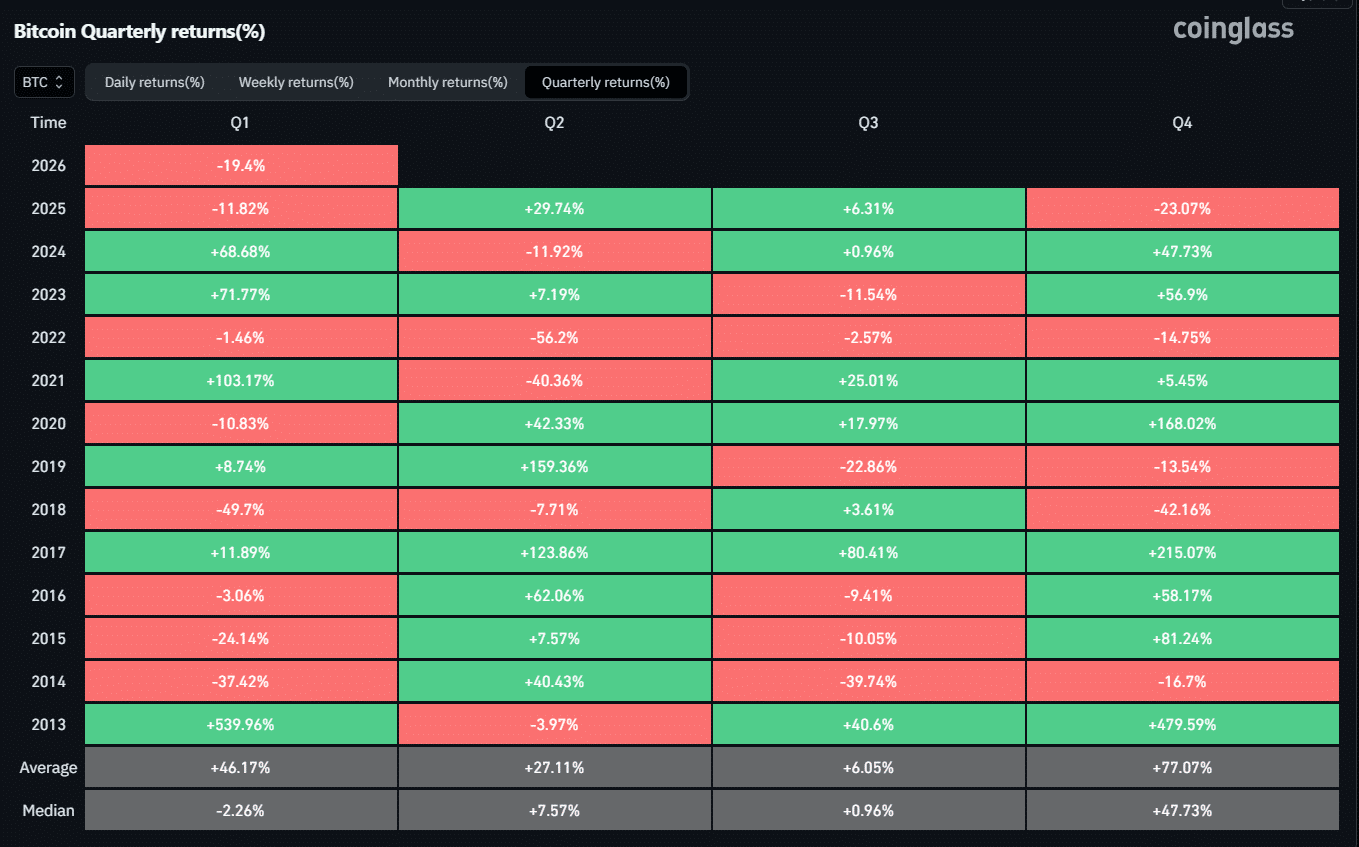
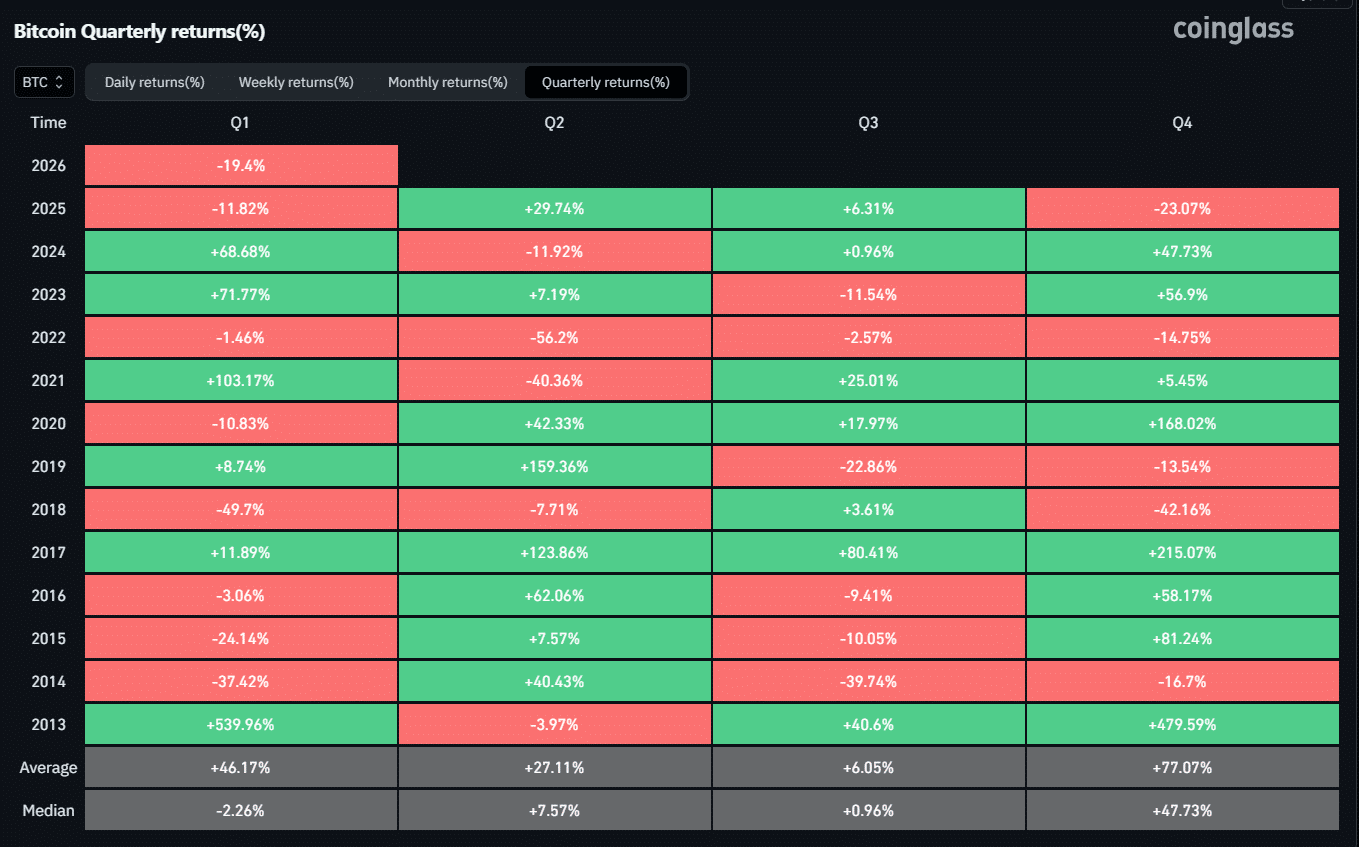
Against this backdrop, we cannot dismiss the possibility of a repeat run for crypto as overly optimistic.
In fact, it becomes even more compelling when we consider how the market has so far shrugged off the FUD stemming from the West Asia crisis, despite surging oil prices. Meanwhile, traditional safe havens have been under pressure, with gold posting nearly twice the weekly losses of Bitcoin.
Taken together, this suggests that the crypto market could be setting the stage for another strong rally. However, when we step back and look at the bigger picture, the total crypto market cap is still down roughly 18%, a stark contrast to the S&P 500’s 3.23% quarterly decline.
Naturally, the key question becomes: Can crypto’s relative strength hold up against a double-digit pullback and still power a bullish Q2?
The crypto market faces a real-world test
The crypto market stumbled on fresh macro data, sparking another wave of risk-off activity.
As AMBCrypto flagged, the latest PPI report came in hotter than expected, showing that inflation concerns continue to keep the Federal Reserve hawkish on interest rates. Still, the market had mostly priced this in, with nearly 99% expecting rates to remain unchanged.
And yet, crypto closed the session down 3.24%, reminding investors that even priced-in data can shake sentiment.
This naturally puts the spotlight on recent prediction market data, which highlights that the probability of U.S. President Donald Trump being impeached before 2028 has risen to 72%, trending steadily higher over the past few months.
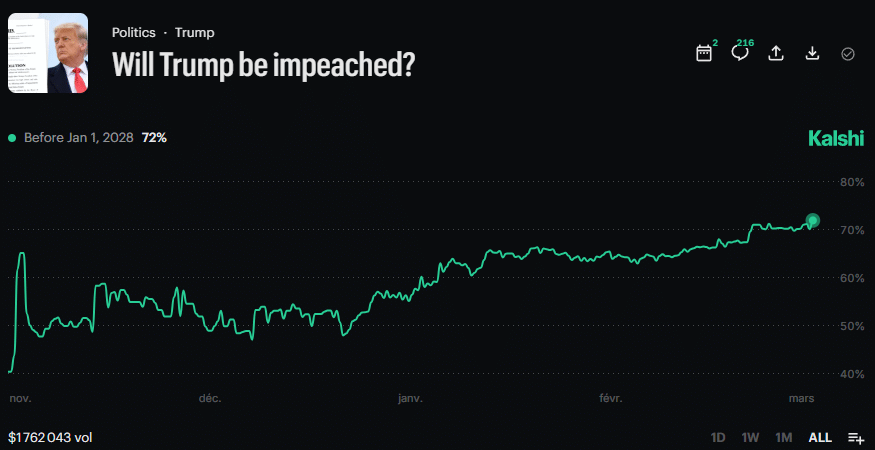
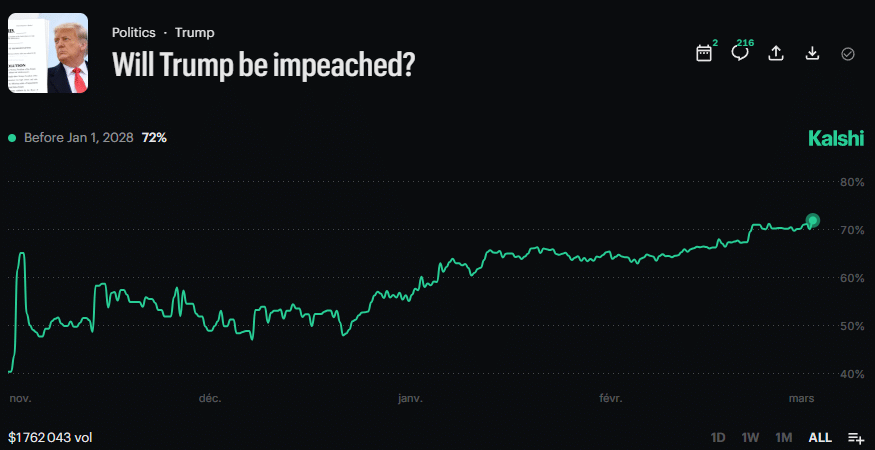
Most importantly, this isn’t a one-off signal. The data also reflects a weakening U.S. economy across multiple sectors, from unemployment to GDP, underscoring that the impeachment prediction is supported by broader economic trends.
In this context, the recent PPI report represents just one piece of a much larger picture, highlighting ongoing inflation pressures and the challenges policymakers face. Against this backdrop, it’s no surprise that the market reacted.
After Israel struck Iran’s critical energy infrastructure, crypto lost billions, with Bitcoin falling more than 2%. This shows that real-world events are starting to feed into investor sentiment, testing the crypto market’s recent resilience.
This in turn makes the odds of a bullish Q2 highly unlikely, as macro FUD now plays a larger role in shaping investor expectations than it did earlier this year.
Final Summary
- Historical trends suggest Q2 could be bullish, as BTC and the overall crypto market have rebounded strongly after Q1 pullbacks.
- Macro and geopolitical risks are beginning to influence investor sentiment, making a repeat Q2 rally far from guaranteed.