Author: Balder
Compiled by: TechFlow Deep Tide
Deep Tide TechFlow Introduction: A lawsuit where the potential fine spans five orders of magnitude and rests solely in the hands of a judge is causing Meta's market value to steadily bleed during the trial. The author isn't suggesting you chase lottery-ticket options on the ruling day. Instead, they dismantle why such strategies fail and point out what might be genuinely mispriced: Meta's earnings multiple and its advertising machine. For investors focused on tail risks and event-driven plays in tech giants, this piece offers a cooler, data-driven perspective.
Tuesday morning, Oakland. A California state lawyer stood before eight jurors and said two words to Meta:
“Profits won.”
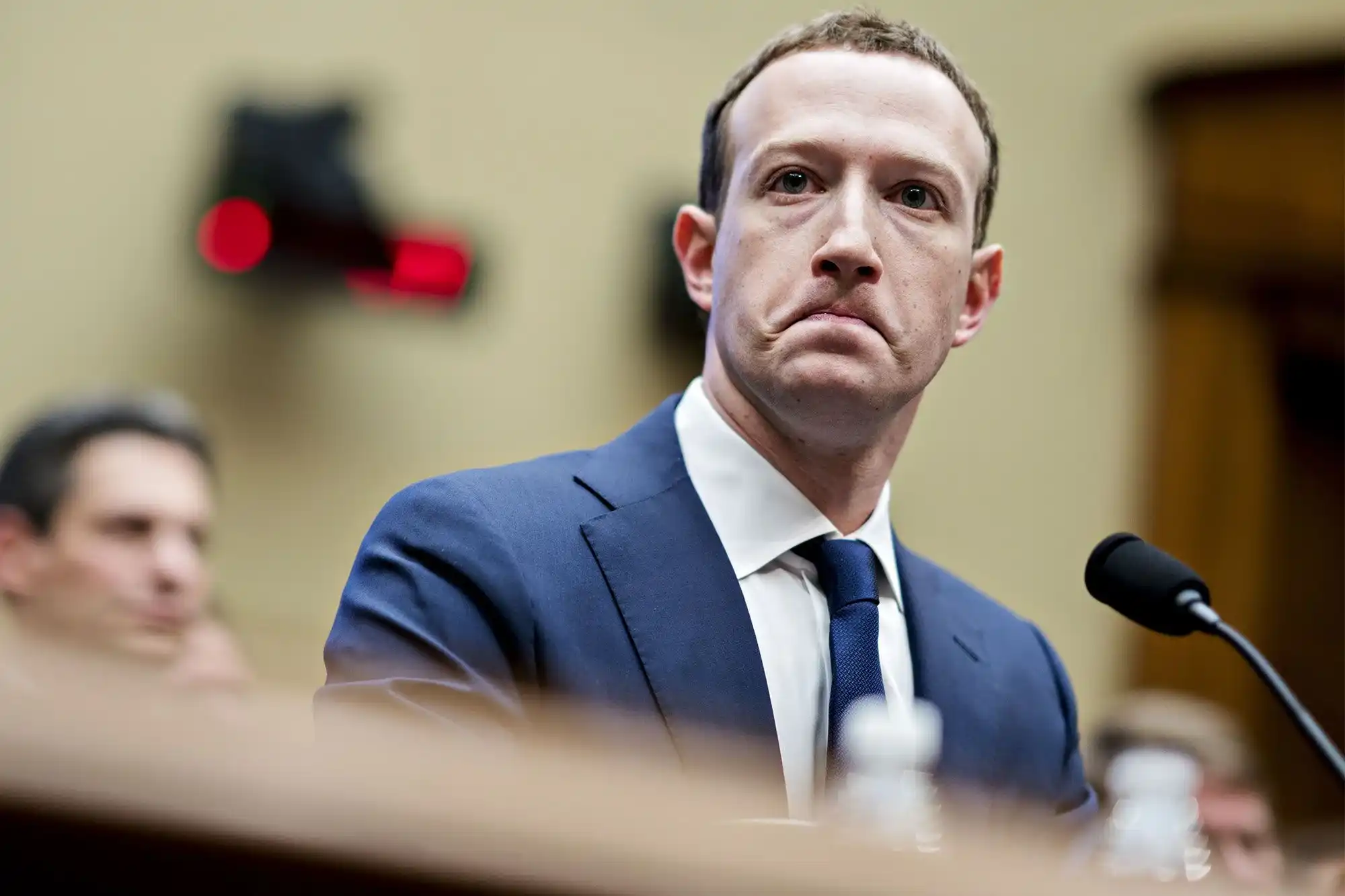
Behind those two words lies the largest fine ever sought in U.S. consumer protection history: up to $1.4 trillion.
Meta's counter-offer is $4 million.
That's a five-order-of-magnitude gap. It represents the largest valuation uncertainty hanging over any mega-cap stock on the planet right now. It will be resolved by one person, in one document, on one date that no one will announce.
The tape already tells a story
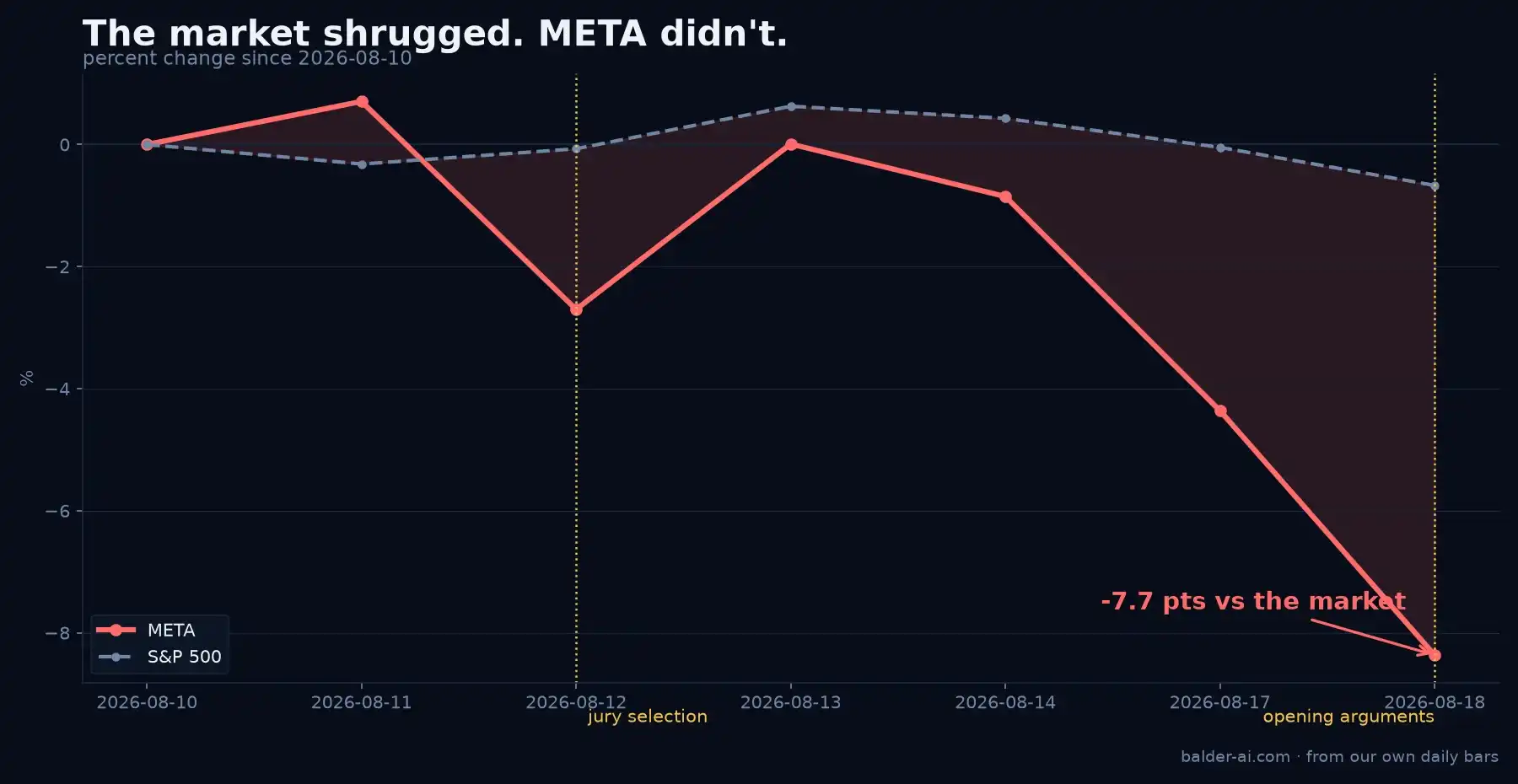
META vs. S&P 500 performance since jury selection
Since the last closing price before jury selection: META −8.4%. S&P 500 −0.7%.
This isn't a tech sell-off, nor is it rate volatility. Adjusting for the broader market, you see roughly 8 percentage points of pure, company-specific bleed—about $110 billion of value walking out the door over five trading sessions.
The market is voting. It just hasn't decided on the amount yet.
What's really being decided
State of California et al. v. Meta Platforms, Inc. (Case No. 4:23-cv-05448-YGR), part of MDL 3047, is being heard by Judge Yvonne Gonzalez Rogers in the U.S. District Court for the Northern District of California.
Four states filed under consumer protection laws. Twenty-nine more joined with federal child privacy claims. The allegation in one sentence: Instagram was designed to be addictive to minors, and Meta said one thing in public and another in private.
Here’s a detail almost no one has noticed.
This is an advisory jury. Those eight people aren't deciding the case. They only answer factual questions. Gonzalez Rogers decides liability and sets the amount herself.
Think about what that excludes. Normally, the market would wait for the jury verdict and price accordingly—that's a readable anchor. There’s no verdict anchor here. Just one judge, a blank space between $4 million and $1.4 trillion, and her signature.
She has already dismissed both ends: $4 million “wouldn't be a slap on the wrist,” and the trillion-dollar ask could seem unreasonable to the jury. The states' own lawyers have since floated that $200 billion might be more likely.
So the question isn't “will there be a fine.” The question is where it lands on a five-order-of-magnitude scale. And that document has only one reader.
The Google trade, and why only half of it fits
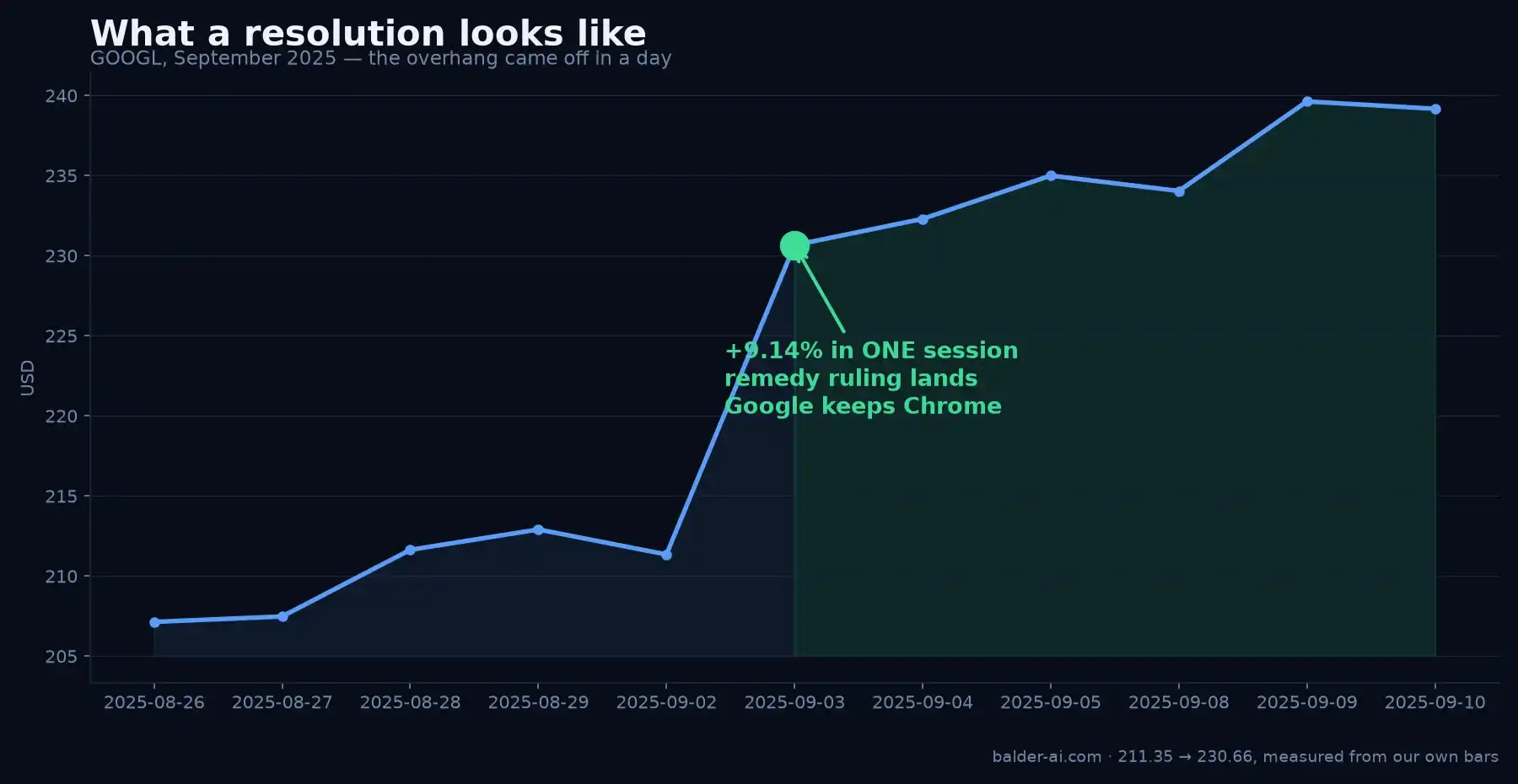
GOOGL, September 2025
September 3, 2025. Alphabet closed up 9.14% in a single day—in our charting, from $211.35 to $230.66. About $234 billion in market cap came back in one session because Judge Mehta's remedies ruling let Google keep Chrome. The feared outcome was taken off the table; the overhang cleared in one go.
That's the pattern. For a mega-cap stock under a legal shadow, the resolution itself is the event—not the testimony, not the closing arguments. It's the filing.
Now let me argue against my own analogy, because it fails in three places:
The posture is different. Mehta was ruling on remedies after liability was already decided. Oakland will decide liability and penalty together. The door is wider, and it swings both ways.
A settlement won't produce a number. Snap settled. TikTok settled during jury selection. Both were confidential. If Meta settles, you get a headline and a shrug, not a 9% up day.
It's not symmetrical. Google went up because the outcome was more lenient than the market had priced. A fine that comes in above the priced level shoves violently the other way.
I'm not telling you which way it will go. No one knows—probably including the judge herself.
So, about that 100x
Everyone wants to buy an expiring call on the ruling day, catch the move, and retire. Let me do this math out loud, because it's more interesting than the fantasy.
A six-week trial is about 30 trading days. The ruling lands on only one of them. And that date isn't announced.
Buying one lottery ticket every day and waiting:
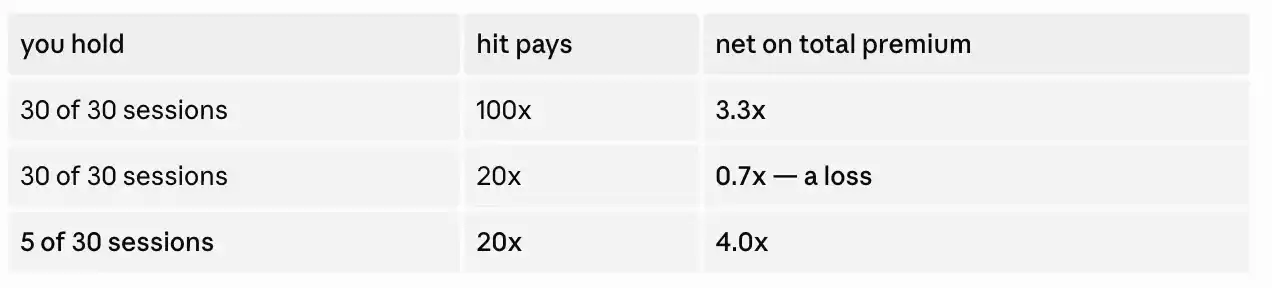
Contrast the last row with the first two.
Five well-chosen days, hitting 20x each, beats thirty days of buying, hitting 100x each.
The size of the payoff almost doesn't matter. The wrong days you have to carry are everything. And the “shotgun and pray” approach dies in two ways even if you're right about the direction. The ruling lands after the close or before the open, so your 0DTE option might expire the day before the move. Also, implied volatility facing a known pending event is already bid up. You're buying lottery tickets at retail.
Options on binary legal events mostly expire worthless. If you can't afford to lose the premium, this isn't a trade; it's a donation.
Why you don't actually need the ruling
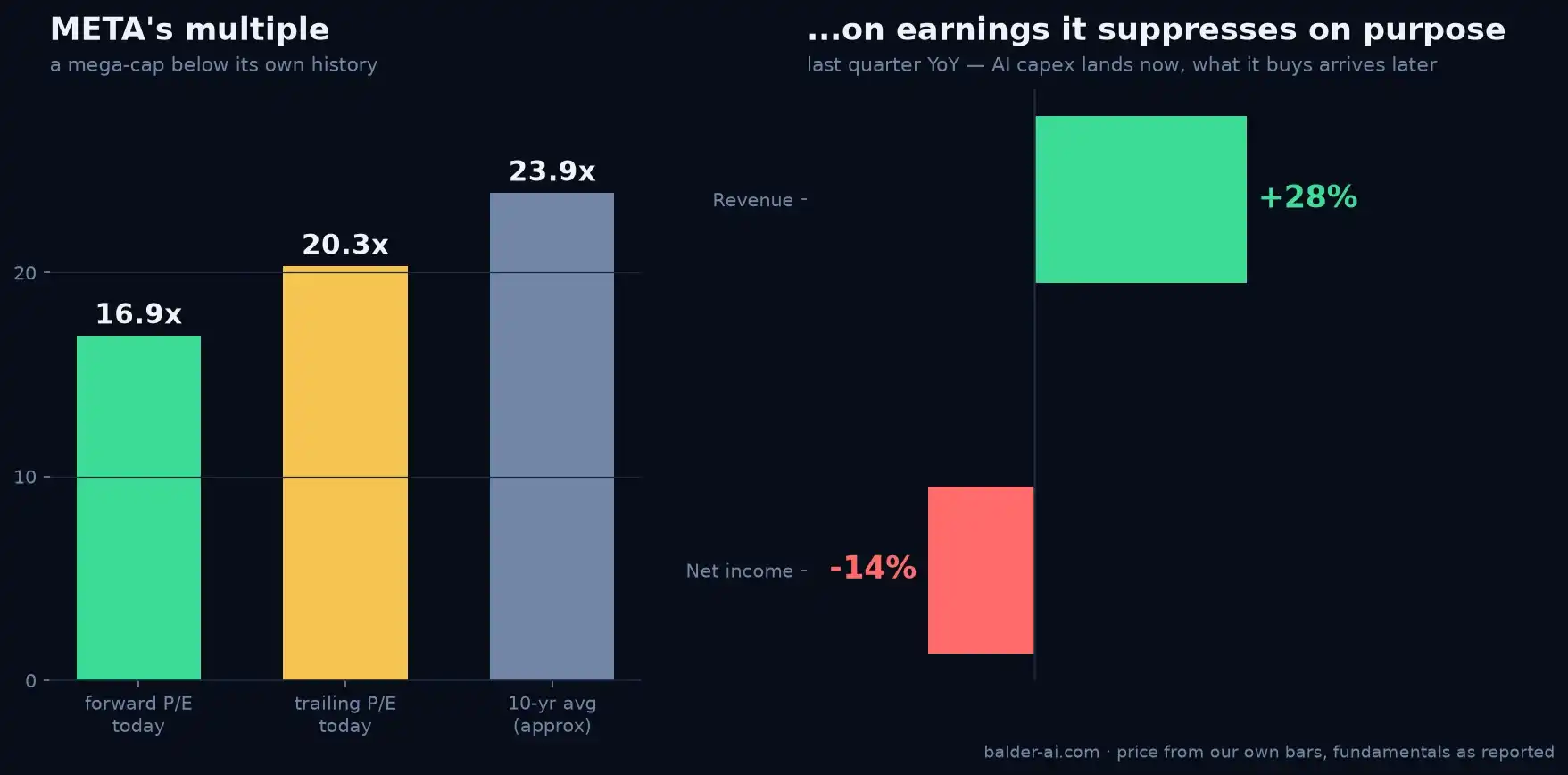
META's valuation multiple, and the earnings it's depressing
As of Monday's close, META traded at about 16.9x forward earnings, below its own ten-year average—and the trial has taken another 9% off since jury selection.
Now look at what those earnings are. Last quarter: revenue +28%, net income −14%.
Top line compounding, bottom line going backward because Meta is spending heavily on AI infrastructure and models. Capex hits the P&L now; the things it buys arrive later. So this 17x isn't 17x on harvested earnings. It's 17x on artificially depressed earnings. If those investments yield any return, the real multiple is even lower.
And the scariest-sounding outcome is less scary than it sounds.
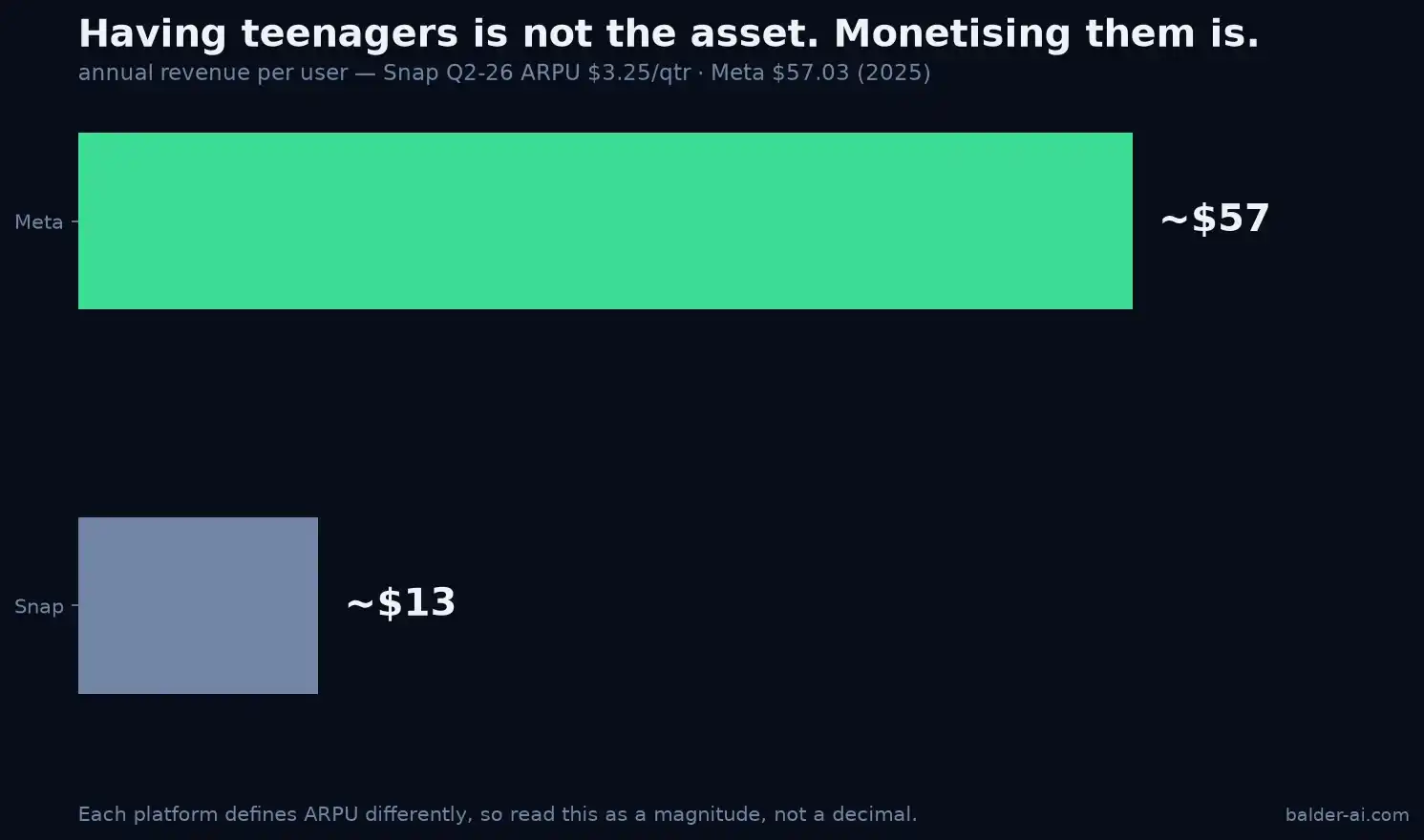
Owning teens isn't the asset
Suppose the court orders Meta to stop collecting data from users under 18 and rebuild the teen experience. How bad is that?
Snap owns those teens. Has for a decade. Snap's average revenue per user last quarter was $3.25—about $13 a year. Meta's figure is around $57. Snap spends nearly half what Meta does per daily active user and earns one-fifth the revenue per user.
Owning teens isn't the asset. The machine that turns attention into advertiser dollars is the asset. Teens are also the least valuable reach users—lowest revenue, lowest purchase intent.
So the cost to the short thesis is compliance, engineering, and some engagement. Not fatal for an advertising system serving ten million advertisers who have no comparable alternative.
This changes the nature of the trade.
A 1DTE call is a pure timing bet with no floor.
Owning a stock at 17x on depressed earnings,
means the ruling becomes a free option attached to the business—
it could revalue you in one session,
and costs nothing to hold if it doesn't.
These two aren't the same trade. One has a floor.
How I'm actually running this
One small thing illustrates everything.
I'm also tracking the Google ad tech remedies case before Judge Brinkema—
liability decided, only remedies left.
Every article says the ruling is expected “early 2026.”
I checked the docket: the last substantive filing was in June.
Since then, all routine procedural filings.
The ruling isn't out.
If you just read the news, you'd have been waiting since spring.
That's the difference between reading reports and reading the source.
But there's a problem with reading the source.
These two cases combined have 5,834 filings.
The Meta docket alone has 3,893, and court days mostly add more.
No human can read that.
No one sits down every morning,
scans every exhibit list, every interim appearance motion, every trial transcript across a dozen cases,
just to find the four that matter.
So I don't read. An agent loop reads.
That's the entire reason this workbench exists.
Every filing is read and classified the moment it's submitted—
is this routine procedure, or a key event?
A model turns four hundred words of legal boilerplate into one line of plain English,
and judges whether it changes anything.
“Scheduling order” and “Minute Entry: Jury Trial began August 18, 2026”
are not the same kind of event as an attorney withdrawal,
and a machine can tell at 3 a.m. and doesn't get bored.
Alongside that, a command-line tool.
Point it at any case, get live status in seconds—
what was filed, by whom, when,
and what's changed since I last looked.
That's how I know the Brinkema docket is quiet,
while every article says a ruling is imminent.
One command, not an afternoon.
Around that core, the methods I'm running and stress-testing:
Date estimation.
An unscheduled ruling isn't unknowable—it's a probability distribution.
Judges have patterns; cases have rhythms.
Recall the math: narrow thirty candidate days to five,
and mediocre returns become good returns.
Date estimation is this trade.
Prediction markets.
Before the FTC's antitrust case against Meta closed,
Polymarket priced an FTC win at nearly 12%.
Meta won—correct, public, ahead of time, and with a number.
I watch if these odds match what the stock is discounting
(when they diverge, one is wrong, and the gap is a position),
and if they move before any public filing.
Courts leak.
I'm not alleging anything improper;
conviction expectations show as price before news,
and that's free to see.
Insider filings.
Form 4 open market buys—executives spending personal cash—
and 13D holdings, scraped from EDGAR twice daily.
Grants and planned sales say nothing.
Cash buys during a trial do.
Options positioning.
Where implied volatility is being bought across expiries
tells you which dates the market thinks are important.
When that doesn't match my date estimates,
that's the interesting part.
Some of these won't survive reality—most research doesn't.
I'll publish what works and what fails,
just like I publish losing trades.
What you get
The live tracker is public: balder-ai.com/events—
cases, what each side is asking for,
and how the stock has moved since the open,
vs. the S&P 500, so you can see what isn't the market.
Full trade record, winners and losers, at balder-ai.com/record.
Each position is posted on entry and exit,
which is why it can't be edited after.
Members get plain-language case details,
my early estimates for when the ruling comes and what it says,
and alerts the moment important filings drop—
not a summary the next morning.
These two cases are just the start.
I'm building a pipeline of dated catalysts:
court decisions with rulings pending,
regulatory decisions with announced effective dates,
trial outcomes on the calendar,
contracts that land as filings.
The rule I set for myself—
if it doesn't have a date, a source I can verify, a bounded set of outcomes,
then it's not a catalyst; it's a story.
The number everyone cites is $1.4 trillion.
The number that actually matters is the one no one can see yet.
I'll read the docket every day until it appears.
balder-ai.com
Balder's Fable Picks · Dragon Qi List—each position posted on entry and exit.
Not investment advice.