A Company Once on the Brink of Bankruptcy Just Surpassed Bitcoin in Market Cap

链捕手Pubblicato 2026-06-22Pubblicato ultima volta 2026-06-22

Introduzione

On June 22nd, driven by rising stock prices, SK Hynix’s market capitalization reached $1.35 trillion, surpassing Bitcoin's total market cap of approximately $1.29 trillion. This temporarily made it South Korea's highest-valued company. The core driver of this surge is HBM (High Bandwidth Memory), for which SK Hynix is the primary supplier to NVIDIA, holding over 60% market share. AI's demand for high memory bandwidth has translated into immense profitability, with SK Hynix reporting a 72% operating profit margin in Q1. The company's success follows a 13-year bet on HBM technology, beginning in 2009. It nearly failed after the 2001 dot-com bubble, was acquired by SK Group in 2012, and was subsequently recapitalized to continue its long-term HBM development. The article contrasts this with the Crypto AI narrative. Capital currently favors AI infrastructure players like SK Hynix due to "real orders, physical barriers, and quantifiable profit margins." In comparison, Crypto AI projects, promising decentralized compute and data markets, remain largely conceptual with limited tangible progress. Examples include Bittensor, whose core mechanisms are still under development, and Bitcoin miners transitioning to AI, who face significant funding gaps and execution challenges. The piece cites analysis suggesting the AI sector has absorbed nearly all new market liquidity since 2022, leaving little for crypto. It concludes that the current AI infrastructure红利 is captured by entities wit...

Author: Zhou, ChainCatcher

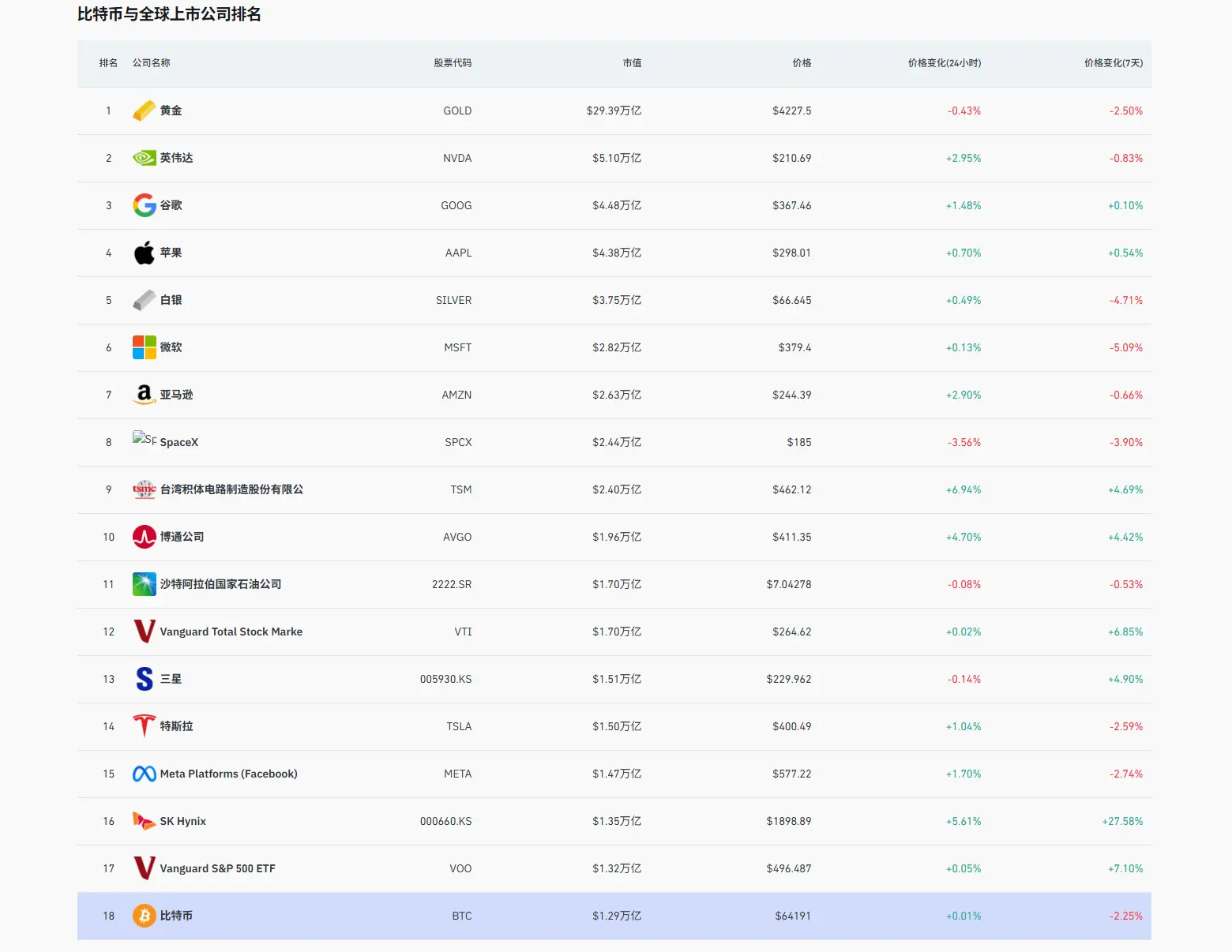
On June 22, a rise in SK hynix's stock price propelled its market capitalization to 1.35 trillion US dollars, surpassing Bitcoin's total market cap of approximately 1.29 trillion US dollars. It temporarily overtook Samsung Electronics during intraday trading to become the highest-valued company in South Korea.

According to Coinglass data, in the global asset rankings, SK hynix has risen to 16th place, while Bitcoin has slipped to 18th.
HBM, and a 13-Year Bet

The core driver behind SK hynix's recent surge is HBM (High Bandwidth Memory). AI training and inference have extremely high demands on memory bandwidth, and SK hynix is the primary HBM supplier for NVIDIA, holding a market share of over 60%.

Earnings report data shows that SK hynix's Q1 revenue was 52.58 trillion KRW, with an operating profit of 37.61 trillion KRW, resulting in a profit margin of 72%. Analysts currently have a consensus for SK hynix's Q2 operating profit in the range of 62 to 65 trillion KRW, with optimistic predictions from some brokerages already revised upward to over 68 trillion KRW.

In early April this year, most market expectations for Q2 were still around 50 trillion KRW. Subsequently, with the continued strength of memory prices, brokerages have generally made significant upward revisions. Management stated during the earnings call that the structural memory shortage driven by artificial intelligence will persist for at least several years and plans to significantly increase capital expenditure to expand advanced capacity.

Reportedly, SK hynix began betting on HBM technology back in 2009, a time when market attention on this complex and initially low-demand technology was virtually non-existent. From the first generation of HBM to HBM3E, this all-or-nothing gamble lasted nearly 13 years, only reaching its crowning moment with the emergence of ChatGPT.
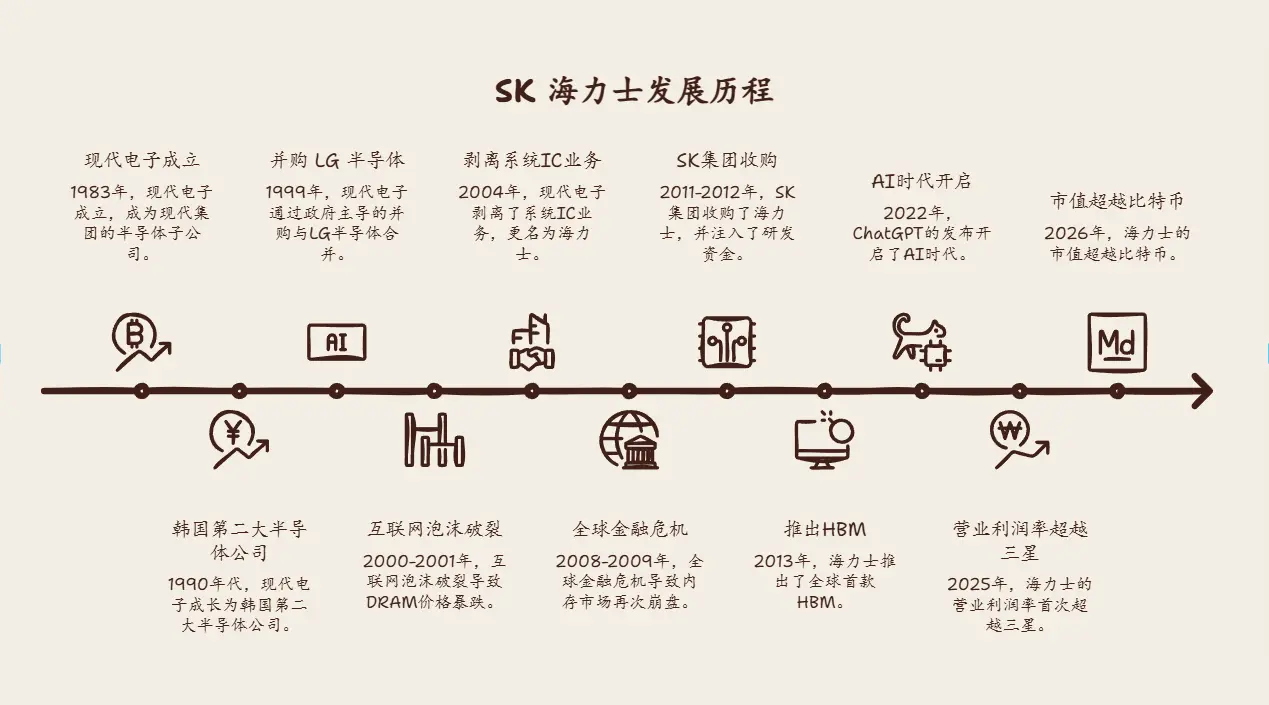
Image source: AI Generated

SK hynix's journey to this point was not without a crucial external intervention. After the dot-com bubble burst in 2001, Hynix was mired in a debt crisis, its stock price once falling to junk levels. It even negotiated a sale with Micron Technology, which ultimately failed. For the following decade, the company remained under creditor control.

In 2012, SK Group Chairman Chey Tae-won, overriding opposition from the board, used its investment holding subsidiary SK Square to acquire it for approximately 3 billion US dollars. It was renamed SK hynix and infused with substantial R&D funding. It was this investment that allowed the company to continue developing the then-niche HBM technology. Currently, SK Square holds about a 20% stake in SK hynix, making it the largest single shareholder.

It is worth noting that SK Square itself once attempted to enter the crypto market. In 2021, it acquired a 35% stake in the Korean cryptocurrency exchange Korbit for about 90 billion KRW and planned to issue its own token, SK Coin. According to public reports, following the sharp market downturn after the Terra/LUNA crash in 2022, the SK Coin issuance plan was shelved, with no substantial progress since.

Reuters, citing informed sources, reported that SK hynix plans to list on the Nasdaq as early as August this year. This move would lower transaction barriers for US institutional and passive funds, potentially attracting further capital inflows. NVIDIA CEO Jensen Huang recently stated that NVIDIA's collaboration with SK hynix could bring South Korea commercial opportunities worth hundreds of billions of dollars in the future.

Why Capital is Buying: The Mirror of Crypto AI

In this wave of AI, the market is more willing to pay a premium for segments with actual orders and visible supply bottlenecks. Assets directly involved in the AI supply side—computing power, memory, and electricity—have received priority allocation due to their quantifiable revenue and verifiable barriers.

HBM production capacity is highly concentrated in the hands of just three players: SK hynix, Samsung, and Micron, with expansion cycles lasting 2 to 3 years. This scarcity at the physical level is not constructed by narratives; it is locked in by capacity cycles and technological barriers. The valuation logic of the memory industry is also shifting from "cyclical stocks" to "growth stocks."

SK hynix's market cap surpassing Bitcoin is a public statement by the capital markets about two types of scarcity. Given that such high barriers have already formed at the physical layer, the situation of Crypto AI is also worth re-examining.

The Crypto AI sector has been telling a story for the past two years: decentralized computing power will reshape AI infrastructure, and open networks will surpass closed corporate data centers. The potential of this direction is real, but standing before the market cap figure of SK hynix today, there are some realities worth confronting directly.

The IC3 report, a joint publication by Cornell University and 12 other universities, points out that the integration of Crypto and AI remains in its early stages, with the hype surrounding this intersection having already overshadowed actual progress. Decentralized computing, data markets, and governance largely remain at the conceptual stage.

At the project level, taking Bittensor, one of the most representative projects in the Crypto AI sector, as an example, its token TAO has fallen 20% over the past three months. Bittensor co-founder const posted on X, stating that the project's economic incentive layer is still dominated by the core team. They choose to prioritize rapid iteration at the cost of maintaining centralization, estimating it will take another year and a half to complete the core mechanism construction. In other words, their underlying mechanisms are still being patched.

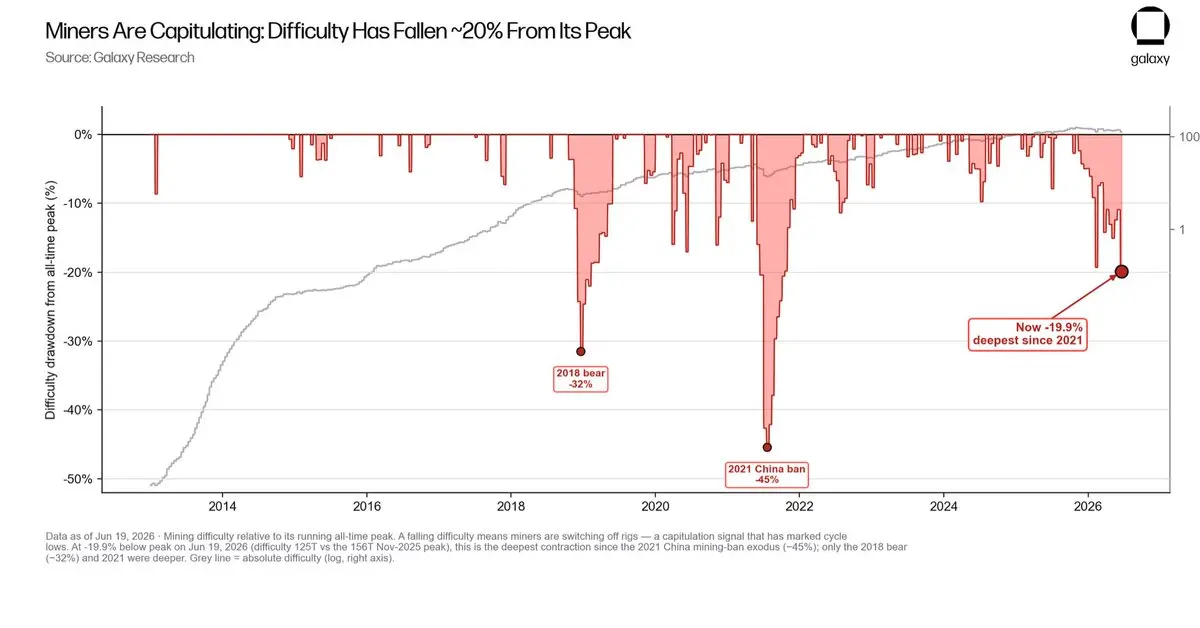
Crypto mining companies, which are closer to the hardware layer, are also in a tough spot. According to Galaxy Research data, Bitcoin miners are entering a "capitulation period." The current network mining difficulty has fallen more than 20% from its historical high, marking the largest decline since China's crackdown on Bitcoin mining in 2021, with some miners continuously exiting the network or shutting down equipment.
In pursuit of transformation, mining companies like Core Scientific, TeraWulf, and Hut 8 have announced entries into the AI and high-performance computing fields. However, according to a VanEck report, this transformation faces a short-term funding gap of approximately 50 billion US dollars, with long-term capital needs around 2.21 trillion US dollars. Furthermore, the industry has currently delivered only about 25% of the leased AI capacity—companies missing construction milestones are already facing investor downgrades.

The IC3 report by Cornell University and others mentions that the integration of Crypto and AI remains in its early stages, with hype overshadowing progress. Decentralized computing, data markets, and governance largely remain conceptual.

In terms of capital, Arthur Hayes pointed out in his recent article "Reality Test" that since ChatGPT's release in 2022, the AI industry has issued approximately 1.5 trillion US dollars in debt, roughly equivalent to the increase in the US M2 money supply during the same period—AI has almost absorbed all the new liquidity, leaving Bitcoin no opportunity. Hayes argues this is not a logic of "funds flowing back to crypto if AI falls." The upcoming massive IPOs of Anthropic and OpenAI will further syphon market funds. Once the AI bubble bursts, bank credit contraction will simultaneously tighten liquidity, and Bitcoin will be sold off along with AI.

Since the second half of last year, many traders previously active in the crypto market have shifted their attention to US and South Korean stocks, chasing the AI hardware trend. The logic behind capital flowing into AI infrastructure is simple and brutal: real orders, physical barriers, quantifiable profit margins.

This certainty is the fundamental reason why capital is willing to pay a high premium today, and it is precisely this kind of certainty that the AI narrative in the crypto market lacks.

In other words, the dividends of AI infrastructure are currently more inclined to be captured by entities with technological barriers and real supply capabilities. Crypto networks need to more clearly define their position in this value chain during this process.


Crypto di tendenza

Domande pertinenti

QWhat is the main reason for SK Hynix's recent surge in market capitalization surpassing Bitcoin's?

AThe main driver is its dominance in the production of HBM (High Bandwidth Memory), a critical component for AI training and inference. SK Hynix is the primary supplier to NVIDIA, holding over 60% market share.

QHow did SK Group's investment in 2012 impact the future of SK Hynix?

ASK Group's acquisition of Hynix in 2012 for about $3 billion, renaming it SK Hynix, provided crucial capital that allowed the company to continue investing in the then-niche HBM technology, which became central to the AI boom.

QWhat challenge does the article highlight for the Crypto AI sector when compared to traditional AI infrastructure companies like SK Hynix?

AThe article highlights that Crypto AI projects lack the 'determinism' or certainty that capital seeks—such as verifiable physical barriers, real orders, and quantifiable profits—which traditional AI hardware suppliers like SK Hynix possess.

QAccording to the article, what is the current state of the transition for many Bitcoin mining companies into AI?

AMany mining companies are announcing transitions into AI and high-performance computing, but they face a significant short-term funding gap (estimated at around $500 billion) and have only delivered about 25% of their leased AI capacity, with some facing investor downgrades.

QWhat argument does Arthur Hayes make about the relationship between AI funding and the cryptocurrency market?

AArthur Hayes argues that since ChatGPT's launch, the AI sector has absorbed nearly all new liquidity (issuing about $1.5 trillion in debt), leaving little for Bitcoin. He contends that if the AI bubble bursts, a resulting credit contraction would lead to Bitcoin being sold off alongside AI assets, not benefiting from a capital inflow.

Letture associate

Report Interpretation: J.P. Morgan Details Micron's Pre-Earnings Sentiment, Current Hardware Sector Dynamics

Morgan Stanley analyst Joshua Meyers' report (June 21, 2026) highlights key trends in the hardware and semiconductor sector ahead of Micron's earnings. The core takeaways are: 1. **Micron & Memory:** Memory remains a high-conviction long theme, driven by strong AI demand and rising ASPs. However, investor focus is shifting to the sustainability of Micron's >80% gross margins and the specifics of potential new long-term supply agreements (SCAs). 2. **Hardware Supply Chain:** AI-related demand for servers, networking, and storage remains robust, but company performance is diverging. Celestica (CLS) shows improved margin confidence, Western Digital and Seagate benefit from pricing, Fabrinet (FN) sees predictable AI optics growth, and Teradyne (TER) anticipates a new Google customer. 3. **AI Capex & WFE Forecasts:** JPMorgan increased its Wafer Fab Equipment (WFE) market growth forecasts to 28% in 2026 and 29% in 2027. AI infrastructure financing is evolving, with higher project-level debt reducing constraints on capex expansion. The report signals that while the AI-driven hardware cycle is strong, the market is entering a phase focused on execution verification (e.g., Micron's SCA details, Fabrinet's ramp with Amazon) and valuation sustainability. Key near-term signals include Micron's guidance, Arista Networks' outlook, and the pace of demand normalization post potential tariff-related pull-ins.

marsbit3 h fa

Report Interpretation: J.P. Morgan Details Micron's Pre-Earnings Sentiment, Current Hardware Sector Dynamics

marsbit3 h fa

Research Report Analysis: The Fed's New Chair's Debut – New Leader, But Same Script?

Report Analysis: Federal Reserve's New Chair Debut – A New Captain, But the Same Script? Morgan Stanley's chief global economist Seth B. Carpenter analyzes the first FOMC meeting under new Fed Chair Kevin Warsh in a June 21 report. Warsh deliberately avoided providing forward guidance on interest rates, aligning with his philosophy. However, market expectations for a rate hike this year were reinforced. Key signals lie elsewhere: inflation may fall more than expected, and quantitative tightening (QT) could be more aggressive than anticipated. The FOMC's "dot plot" suggests only one rate hike in 2026. Carpenter argues that if inflation undershoots forecasts, the logic for even a single hike weakens, especially as projections indicate potential rate cuts in 2027. On QT, Warsh's stance is clear. Carpenter notes that measures like halving the Treasury's account balance could shrink the Fed's balance sheet by around $500 billion with minimal market impact. Combined with adjustments to reserve interest and liquidity rules, the ultimate QT scale may exceed expectations, though its market effect might be less disruptive unless the Fed actively sells Mortgage-Backed Securities (MBS). While Warsh initiated a review of the Fed's policy framework, the 2% inflation target remains intact for now. The report concludes that the market may be overestimating the significance of reduced forward guidance and the near-term rate hike risk, while potentially underestimating the scope and manageable nature of the coming balance sheet reduction. The key debates will hinge on upcoming core PCE data, the specifics of the QT path, and the framework review's findings.

marsbit3 h fa

Research Report Analysis: The Fed's New Chair's Debut – New Leader, But Same Script?

marsbit3 h fa

Critical Game Week: BTC Retracement Confirmation vs. HYPE Support Battle | Guest Analysis

This weekly analysis outlines a critical juncture for BTC and HYPE markets, focusing on key price level confirmations. **BTC Analysis:** BTC is at a pivotal point after a five-wave rally from the June 5th low of $59,100. The price has broken below a short-term rising channel's lower boundary, with the current move seen as a pullback to test this breakdown. Failure to reclaim this level could lead to a retest of the $59,000-$60,000 support zone. The core scenario hinges on this channel retest outcome. * **Key Levels:** Resistance at $64,500-$65,000 (channel boundary) and $69,500-$70,500. Support at $59,000-$60,000 and $55,000. * **Strategy:** A core bearish stance is maintained (20% short from last week), with short-term plans for tactical trades. Three detailed contingency plans (A/B/C) are provided for short positions on resistance tests or breakdowns, emphasizing strict stop-loss discipline. **HYPE Analysis:** HYPE shows strong momentum but is currently in a corrective phase after hitting a new high of $76.94. The price is retesting the crucial $64-$66 support area. * **Key Levels:** Resistance near $77 and $80-$82. Support at $64-$66 and $52-$54. * **Strategy:** The short-term approach is "buy on dips, avoid chasing rallies." A long position is considered only if clear stabilization signals appear at the $64-$66 or deeper $52-$54 support zones, with tight risk controls. **General Risk Management:** A standardized trailing stop-loss protocol is emphasized: set initial stop, breakeven at +1% profit, then trail stops upward to lock in gains. *Disclaimer: All analysis is presented as a personal trading framework, not investment advice. Market conditions are complex and require dynamic adjustment.*

marsbit3 h fa

Critical Game Week: BTC Retracement Confirmation vs. HYPE Support Battle | Guest Analysis

marsbit3 h fa

Research Report Interpretation: Citi Attends AWS Summit, Bullish on Cloud Business Acceleration but Data Governance Remains Key Variable

Citi analyst Tyler Radke's team attended the AWS New York Summit (June 17-18), engaging with over 10 clients and partners. In a June 19 report, they highlighted the summit's focus on scaling agent AI for enterprise deployment. Citi maintains a "Buy" rating on Amazon, forecasting AWS revenue growth to accelerate to 37% in FY27 from 30% in FY26, noting this estimate may be conservative. Key takeaways: 1. **AWS Strategy Shift:** AWS is moving from proof-of-concepts to scalable deployment. New offerings like AWS Context (building enterprise knowledge graphs), Amazon Quick (cross-application AI assistant), and security tool Continuum address core enterprise pain points for AI adoption. 2. **Data Infrastructure Beneficiaries:** Data infrastructure companies like Snowflake, Elastic, Oracle, and ClickHouse are seen as direct beneficiaries of scaling AI workloads, as evidenced by strong growth and use cases presented. 3. **Critical Role of Data Governance:** As AI agents scale from hundreds to thousands, effective data governance becomes the key variable for deploying AI in core business processes. AWS Context represents AWS's strategic extension from providing compute/models to offering a data governance infrastructure layer. The report emphasizes that without solving data governance, AI will remain confined to pilot projects. The investment thesis focuses on AWS revenue acceleration and data infrastructure vendors' growth, while monitoring signals like AWS's quarterly revenue growth, Bedrock AgentCore task volume, and pricing impacts on companies like Elastic.

marsbit3 h fa

Research Report Interpretation: Citi Attends AWS Summit, Bullish on Cloud Business Acceleration but Data Governance Remains Key Variable

marsbit3 h fa

Trading

Spot
Futures

Articoli Popolari

Cosa è BITCOIN

Comprendere HarryPotterObamaSonic10Inu (ERC-20) e la sua posizione nel mondo delle criptovalute Negli ultimi anni, il mercato delle criptovalute ha assistito a un aumento della popolarità delle meme coin, catturando l'interesse non solo dei trader, ma anche di coloro che cercano coinvolgimento comunitario e valore di intrattenimento. Tra questi token unici c'è HarryPotterObamaSonic10Inu (ERC-20), un progetto intrigante che mescola riferimenti culturali nel tessuto delle criptovalute. Questo articolo esplora gli aspetti chiave di HarryPotterObamaSonic10Inu, analizzando i suoi meccanismi, l'etica guidata dalla comunità e il suo coinvolgimento con il panorama crittografico più ampio. Che cos'è HarryPotterObamaSonic10Inu (ERC-20)? Come suggerisce il suo nome, HarryPotterObamaSonic10Inu è una meme coin costruita sulla blockchain di Ethereum, classificata secondo lo standard ERC-20. A differenza delle criptovalute tradizionali che possono enfatizzare l'utilità pratica o il potenziale investimento, questo token prospera grazie al valore di intrattenimento e alla forza della sua comunità. Il progetto mira a creare un ambiente in cui gli utenti coinvolti possono riunirsi, condividere idee e partecipare ad attività ispirate a diversi fenomeni culturali. Una caratteristica notevole di HarryPotterObamaSonic10Inu è la zero tassa sulle transazioni. Questo elemento allettante tende a incoraggiare il trading e il coinvolgimento della comunità, privo di costi aggiuntivi che possono scoraggiare i trader di piccole dimensioni. L'offerta totale della moneta è fissata a un miliardo di token, un numero che segna la sua intenzione di mantenere una circolazione sostanziale all'interno della comunità. Creatore di HarryPotterObamaSonic10Inu (ERC-20) Le origini di HarryPotterObamaSonic10Inu sono avvolte in un certo mistero; i dettagli sul creatore rimangono sconosciuti. Lo sviluppo di questo token non presenta un team identificabile o un piano esplicito, cosa non rara nel settore delle meme coin. Invece, il progetto è emerso organicamente, con il suo progresso fortemente dipendente dall'entusiasmo e dalla partecipazione della sua comunità. Investitori di HarryPotterObamaSonic10Inu (ERC-20) Per quanto riguarda investimenti esterni e finanziamenti, HarryPotterObamaSonic10Inu rimane ambiguo. Il token non elenca alcuna fondazione di investimento conosciuta o un sostegno organizzativo significativo. Invece, la linfa vitale del progetto è la sua comunità di base, che informa la sua crescita e sostenibilità attraverso azioni collettive e coinvolgimento nello spazio crittografico. Come funziona HarryPotterObamaSonic10Inu (ERC-20)? In quanto meme coin, HarryPotterObamaSonic10Inu opera principalmente al di fuori delle strutture tradizionali che governano spesso il valore degli asset. Ci sono diversi aspetti distintivi che definiscono il funzionamento del progetto: Transazioni senza tasse: Senza costi fiscali sulle transazioni, gli utenti possono comprare e vendere liberamente il token senza preoccuparsi di costi nascosti. Coinvolgimento della comunità: Il progetto prospera sull'interazione della comunità, sfruttando le piattaforme social per creare entusiasmo e facilitare il coinvolgimento. Discussioni, condivisione di contenuti e coinvolgimento sono elementi cruciali che aiutano ad espandere la sua portata e a favorire la lealtà tra i sostenitori. Nessuna utilità pratica: Va notato che HarryPotterObamaSonic10Inu non offre un'utilità concreta all'interno dell'ecosistema finanziario. Piuttosto, è classificato come un token principalmente per attività di intrattenimento e comunitarie. Riferimento culturale: Il token incorpora astutamente elementi della cultura pop per attirare interesse, collegandosi a appassionati di meme e seguaci delle criptovalute. HarryPotterObamaSonic10Inu esemplifica come le meme coin operino in modo diverso rispetto ai progetti di criptovalute più tradizionali, entrando nel mercato come costrutti sociali innovativi piuttosto che come asset utilitari. Cronologia di HarryPotterObamaSonic10Inu (ERC-20) La storia di HarryPotterObamaSonic10Inu è segnata da diversi traguardi notevoli: Creazione: Il token è emerso da un meme virale, catturando l'immaginazione di molti appassionati di criptovalute. Le date di creazione specifiche non sono disponibili, sottolineando la sua crescita organica. Inserimento negli scambi: HarryPotterObamaSonic10Inu ha fatto il suo ingresso in vari scambi, consentendo un accesso e un trading più facili da parte della comunità. Iniziative di coinvolgimento della comunità: Attività in corso volte a migliorare l'interazione della comunità, comprese gare, campagne sui social media e generazione di contenuti da parte di fan e sostenitori. Piani di espansione futura: La tabella di marcia del progetto include il lancio di una collezione NFT, merchandising e un sito di eCommerce relativo ai suoi temi culturali, coinvolgendo ulteriormente la comunità e cercando di aggiungere più dimensioni al suo ecosistema. Punti chiave su HarryPotterObamaSonic10Inu (ERC-20) Natura guidata dalla comunità: Il progetto dà priorità al contributo collettivo e alla creatività, garantendo che il coinvolgimento degli utenti sia al centro del suo sviluppo. Classificazione come meme coin: Rappresenta l'epitome delle criptovalute basate sull'intrattenimento, distinguendosi dai veicoli d'investimento tradizionali. Nessuna affiliazione diretta con Bitcoin: Nonostante la somiglianza nel nome del ticker, HarryPotterObamaSonic10Inu è distintivo e non ha alcuna relazione con Bitcoin o altre criptovalute consolidate. Focus sulla collaborazione: HarryPotterObamaSonic10Inu è progettato per creare uno spazio per la collaborazione e la condivisione di storie tra i suoi detentori, fornendo un canale per la creatività e il legame comunitario. Prospettive future: L'ambizione di espandersi oltre il suo presupposto iniziale verso NFT e merchandising delinea un percorso per il progetto per potenzialmente entrare in strade più mainstream all'interno della cultura digitale. Poiché le meme coin continuano a catturare l'immaginazione della comunità crittografica, HarryPotterObamaSonic10Inu (ERC-20) si distingue per i suoi legami culturali e il suo approccio centrato sulla comunità. Anche se potrebbe non adattarsi al modello tipico di un token orientato all'utilità, la sua essenza risiede nella gioia e nella camaraderia coltivate tra i suoi sostenitori, evidenziando la natura in evoluzione delle criptovalute in un'epoca sempre più digitale. Con la continuazione dello sviluppo del progetto, sarà importante osservare come le dinamiche della comunità influenzano la sua traiettoria nel panorama in continuo cambiamento della tecnologia blockchain.

1.7k Totale visualizzazioniPubblicato il 2024.04.01Aggiornato il 2024.12.03

Cosa è BITCOIN

Come comprare BTC

Benvenuto in HTX.com! Abbiamo reso l'acquisto di Bitcoin (BTC) semplice e conveniente. Segui la nostra guida passo passo per intraprendere il tuo viaggio nel mondo delle criptovalute.Step 1: Crea il tuo Account HTXUsa la tua email o numero di telefono per registrarti il tuo account gratuito su HTX. Vivi un'esperienza facile e sblocca tutte le funzionalità,Crea il mio accountStep 2: Vai in Acquista crypto e seleziona il tuo metodo di pagamentoCarta di credito/debito: utilizza la tua Visa o Mastercard per acquistare immediatamente BitcoinBTC.Bilancio: Usa i fondi dal bilancio del tuo account HTX per fare trading senza problemi.Terze parti: abbiamo aggiunto metodi di pagamento molto utilizzati come Google Pay e Apple Pay per maggiore comodità.P2P: Fai trading direttamente con altri utenti HTX.Over-the-Counter (OTC): Offriamo servizi su misura e tassi di cambio competitivi per i trader.Step 3: Conserva Bitcoin (BTC)Dopo aver acquistato Bitcoin (BTC), conserva nel tuo account HTX. In alternativa, puoi inviare tramite trasferimento blockchain o scambiare per altre criptovalute.Step 4: Scambia Bitcoin (BTC)Scambia facilmente Bitcoin (BTC) nel mercato spot di HTX. Accedi al tuo account, seleziona la tua coppia di trading, esegui le tue operazioni e monitora in tempo reale. Offriamo un'esperienza user-friendly sia per chi ha appena iniziato che per i trader più esperti.

4.0k Totale visualizzazioniPubblicato il 2024.12.12Aggiornato il 2026.06.02

Come comprare BTC

Cosa è $BITCOIN

ORO DIGITALE ($BITCOIN): Un'Analisi Completa Introduzione all'ORO DIGITALE ($BITCOIN) L'ORO DIGITALE ($BITCOIN) è un progetto basato su blockchain che opera sulla rete Solana, con l'obiettivo di combinare le caratteristiche dei metalli preziosi tradizionali con l'innovazione delle tecnologie decentralizzate. Sebbene condivida un nome con Bitcoin, spesso definito “oro digitale” a causa della sua percezione come riserva di valore, l'ORO DIGITALE è un token separato progettato per creare un ecosistema unico all'interno del panorama Web3. Il suo obiettivo è posizionarsi come un asset digitale alternativo valido, anche se i dettagli riguardanti le sue applicazioni e funzionalità sono ancora in fase di sviluppo. Cos'è l'ORO DIGITALE ($BITCOIN)? L'ORO DIGITALE ($BITCOIN) è un token di criptovaluta esplicitamente progettato per l'uso sulla blockchain di Solana. A differenza di Bitcoin, che fornisce un ruolo di stoccaggio di valore ampiamente riconosciuto, questo token sembra concentrarsi su applicazioni e caratteristiche più ampie. Aspetti notevoli includono: Infrastruttura Blockchain: Il token è costruito sulla blockchain di Solana, nota per la sua capacità di gestire transazioni ad alta velocità e a basso costo. Dinamiche di Offerta: L'ORO DIGITALE ha un'offerta massima fissata a 100 quadrilioni di token (100P $BITCOIN), sebbene i dettagli riguardanti la sua offerta circolante siano attualmente non divulgati. Utilità: Sebbene le funzionalità precise non siano esplicitamente delineate, ci sono indicazioni che il token potrebbe essere utilizzato per varie applicazioni, potenzialmente coinvolgendo applicazioni decentralizzate (dApp) o strategie di tokenizzazione degli asset. Chi è il Creatore dell'ORO DIGITALE ($BITCOIN)? Attualmente, l'identità dei creatori e del team di sviluppo dietro l'ORO DIGITALE ($BITCOIN) rimane sconosciuta. Questa situazione è tipica tra molti progetti innovativi nel settore blockchain, in particolare quelli allineati con la finanza decentralizzata e i fenomeni delle meme coin. Sebbene tale anonimato possa favorire una cultura guidata dalla comunità, intensifica le preoccupazioni riguardo alla governance e alla responsabilità. Chi sono gli Investitori dell'ORO DIGITALE ($BITCOIN)? Le informazioni disponibili indicano che l'ORO DIGITALE ($BITCOIN) non ha alcun sostenitore istituzionale noto o investimenti di venture capital prominenti. Il progetto sembra operare su un modello peer-to-peer incentrato sul supporto e sull'adozione della comunità piuttosto che su percorsi di finanziamento tradizionali. La sua attività e liquidità si trovano principalmente su exchange decentralizzati (DEX), come PumpSwap, piuttosto che su piattaforme di trading centralizzate consolidate, evidenziando ulteriormente il suo approccio di base. Come Funziona l'ORO DIGITALE ($BITCOIN) Le meccaniche operative dell'ORO DIGITALE ($BITCOIN) possono essere elaborate in base al suo design blockchain e alle caratteristiche della rete: Meccanismo di Consenso: Sfruttando il proof-of-history (PoH) unico di Solana combinato con un modello di proof-of-stake (PoS), il progetto garantisce una validazione efficiente delle transazioni contribuendo all'alta performance della rete. Tokenomics: Sebbene meccanismi deflazionistici specifici non siano stati dettagliati ampiamente, l'ampia offerta massima di token implica che potrebbe soddisfare microtransazioni o casi d'uso di nicchia che devono ancora essere definiti. Interoperabilità: Esiste il potenziale per l'integrazione con l'ecosistema più ampio di Solana, inclusi vari piattaforme di finanza decentralizzata (DeFi). Tuttavia, i dettagli riguardanti integrazioni specifiche rimangono non specificati. Cronologia degli Eventi Chiave Ecco una cronologia che evidenzia traguardi significativi riguardanti l'ORO DIGITALE ($BITCOIN): 2023: Il dispiegamento iniziale del token avviene sulla blockchain di Solana, contrassegnato dal suo indirizzo di contratto. 2024: L'ORO DIGITALE guadagna visibilità poiché diventa disponibile per il trading su exchange decentralizzati come PumpSwap, consentendo agli utenti di scambiarlo contro SOL. 2025: Il progetto assiste a un'attività di trading sporadica e a un potenziale interesse per impegni guidati dalla comunità, sebbene non siano state documentate partnership significative o avanzamenti tecnici fino ad ora. Analisi Critica Punti di Forza Scalabilità: L'infrastruttura sottostante di Solana supporta alti volumi di transazioni, il che potrebbe migliorare l'utilità di $BITCOIN in vari scenari di transazione. Accessibilità: Il potenziale basso prezzo di trading per token potrebbe attrarre investitori al dettaglio, facilitando una partecipazione più ampia grazie a opportunità di proprietà frazionata. Rischi Mancanza di Trasparenza: L'assenza di sostenitori, sviluppatori o di un processo di audit pubblicamente noti potrebbe generare scetticismo riguardo alla sostenibilità e all'affidabilità del progetto. Volatilità del Mercato: L'attività di trading è fortemente dipendente dal comportamento speculativo, il che può comportare una significativa volatilità dei prezzi e incertezze per gli investitori. Conclusione L'ORO DIGITALE ($BITCOIN) emerge come un progetto intrigante ma ambiguo all'interno dell'evolvente ecosistema di Solana. Sebbene tenti di sfruttare la narrativa dell'“oro digitale”, la sua partenza dal ruolo consolidato di Bitcoin come riserva di valore sottolinea la necessità di una chiara differenziazione della sua utilità e struttura di governance. L'accettazione e l'adozione future dipenderanno probabilmente dall'affrontare l'attuale opacità e dalla definizione più esplicita delle sue strategie operative ed economiche. Nota: Questo rapporto comprende informazioni sintetizzate disponibili a ottobre 2023, e potrebbero essersi verificati sviluppi oltre il periodo di ricerca.

103 Totale visualizzazioniPubblicato il 2025.05.13Aggiornato il 2025.05.13

Cosa è $BITCOIN

Discussioni

Benvenuto nella Community HTX. Qui puoi rimanere informato sugli ultimi sviluppi della piattaforma e accedere ad approfondimenti esperti sul mercato. Le opinioni degli utenti sul prezzo di BTC BTC sono presentate come di seguito.

活动图片