Which Crypto Sectors Have Been 'Eaten' by AI Agents?

marsbitPubblicato 2026-06-22Pubblicato ultima volta 2026-06-22

Introduzione

The article examines the transformative impact of AI Agents on the cryptocurrency landscape, highlighting how specific sectors are becoming increasingly dominated by automated systems. Key "agent-eaten" sectors include derivatives trading (perpetuals), where AI agents demonstrate significantly higher survival and performance rates than human traders; MEV and arbitrage trading, which are almost entirely automated; yield optimization, with over two-thirds of new DeFi protocols incorporating AI agents; and spot trading/portfolio management, where agents drive a growing share of DEX volume. "Battleground" sectors like prediction markets and DeFi lending show a mix, with agents excelling in short-term/arbitrage activities but humans retaining an edge in longer-term, nuanced decisions. Sectors still primarily "human-led" include stablecoin payments/remittances (driven by real-world economic activity) and wallets, where human oversight for approvals and security remains critical. As AI agent activity grows, the article emphasizes the rising importance of human-agent verification layers (e.g., World/AgentKit, t54, Self Protocol) to ensure trust, accountability, and control in an increasingly agentic economy. The conclusion is that while AI agents dominate in speed and optimization-focused areas, human judgment, trust, and real-world context remain essential in value-creating layers like payments and identity.

Written by: blocmates.

Compiled by: AididiaoJP, Foresight News

If you, like us, have been inextricably tied to this industry over the past few years, you've likely felt a palpable shift in the atmosphere.

Things feel less exhilarating, and the only thing capturing attention seems to be concepts involving two words—AI and Agent.

The prevailing consensus is that the industry is being heavily optimized to serve AI Agents, leading to the marginalization of products still struggling to survive on direct human interaction or the "human layer."

Consequently, from a human perspective, the industry might seem somewhat stagnant, but the on-chain environment remains vibrant and teeming with life on a new layer (the Agentic layer), one that humans are technically incapable of directly intervening in.
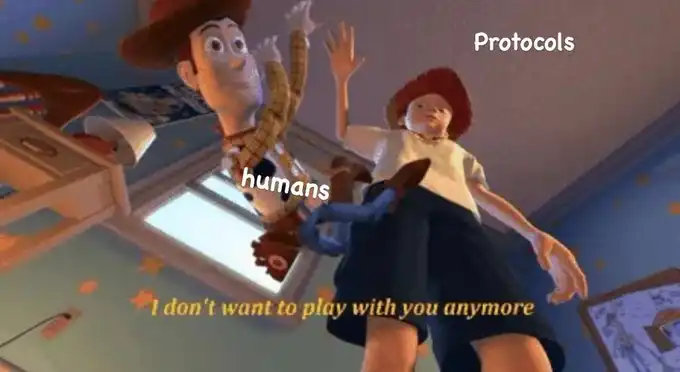
Efficiency is driving more users towards AI-led interactions. Platforms originally designed for human clicks and operations are now being optimized for "non-human" service.

Major players like Uniswap Labs already launched 7 open-source "Skills" for AI Agents back in February. These tools enable autonomous AI coding agents (e.g., within Claude, Cursor, or other agent frameworks) to interact directly and reliably with the Uniswap protocol on-chain.

However, contrary to the "AI Agents will eat everything" narrative flying across timelines, a closer look reveals a slightly different story—the growth in Agent activity is more sector-specific than industry-wide.

We decided to dig deeper to see which sectors have already been "eaten" and which remain on the menu.

Our goal: to understand if the human layer in crypto is truly dying, and to explore solutions built on top of this new crypto layer to ensure control isn't lost.

Sectors Dominated by AI Agents
In specific sectors, we observe that AI Agent-driven activity is highly active, while direct human interaction is declining. Here are a few examples:

Derivatives Trading (Perpetuals)

The perpetuals market is crypto's clearest example of a robot-dominated liquid market. Speed, pattern recognition, and 24/7 execution are things machines do better than humans. No one would argue that humans should manually do trade frontrunning.

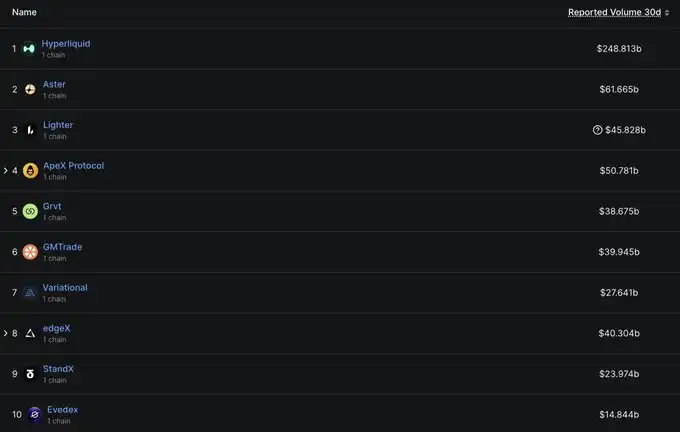
The top 10 perpetual protocols generated approximately $592 billion in volume over the past 30 days, with Hyperliquid alone accounting for $248.8 billion, followed by Aster ($61.6 billion).
Aster's "Human vs. AI" live trading contest over two weeks under highly volatile conditions is a clear illustration: 43% of human participants were liquidated, while all 30 AI Agents completed the contest with zero liquidations—a 100% survival rate.
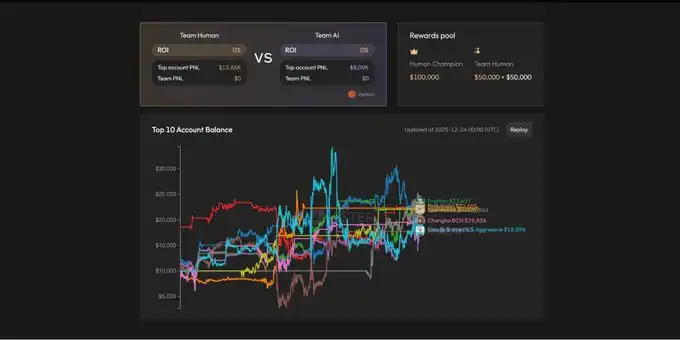
The overall ROI for human trading teams was -32.22%, while AI Agents limited total losses to around $13,000, with an overall ROI of -4.48%.

Arbitrage Trading (MEV)

This is the most absolute robot-dominated case in crypto because there simply are no profitable human MEV operators at scale.

The MEV ecosystem across networks has evolved into a highly competitive automated trading industry, with specialized bots and infrastructure tools scanning blockchain mempools.
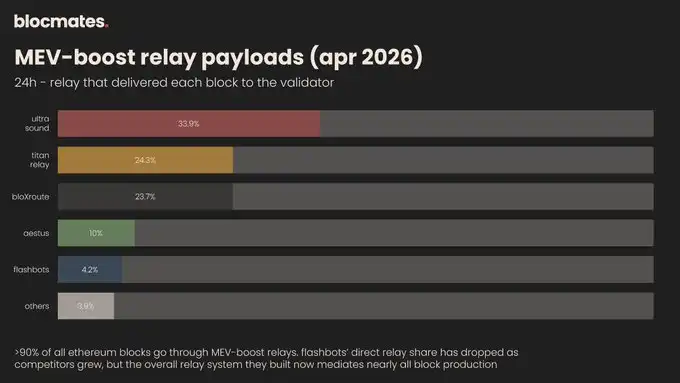
In 2025, sandwich attacks accounted for 51.56% ($289.76 million) of total MEV transaction value. On Solana, sandwich bots captured 1.7% to 5.4% (avg. 2.9%) of total daily volume, executing $3.85 billion in sandwich trades across over 3.9 million bundles.

A single bot accounted for 42% of all sandwich volume, executing over $1.6 billion in trades in the last 30 days.

This also extends to DeFi protocols. The entire liquidation lifecycle—monitoring, triggering, and execution—is handled by permissionless bots.

While this existed before the AI Agent hype, the entire process is now significantly automated by Agents as the DeFAI category continues to grow.

Yield Optimization

This category is Agent-first by default. Data shows that 68% of new DeFi protocols launched in Q1 2026 contain at least one autonomous AI Agent for trading, liquidity management, and risk monitoring.

Compared to data from 12 months ago, we see a 15% rise in AI Agent adoption within the yield space.

On platforms like Giza and ZyFAI, AI Agent performance continues to excel—the latter achieving +73.42% excess yield performance over static strategies.

Giza recorded over 800,000 autonomous transactions with an AUM peaking at $40 million.

Beyond Giza and ZyFAI, there are more projects in this category; we've covered some, and others we'd be happy to cover in-depth upon request and further review—including:

Arrakis, Reflect, AFI, Lulo, Sail, Almanak, Surf, Infinit, AXAL, Superform, DeFi Saver, Kamino, Mamo, HeyAnon, among others.

Updates from leading projects like Pendle (including deploying MCP connectors and building Skills to enable Pendle to integrate easily with both crypto-native and non-native AI Agents) also prove that the yield industry is rapidly tilting towards Agent-first interactions.

Spot Trading & Portfolio Optimization

Automated trading bots are currently estimated to account for 65% of global crypto trading volume. In early 2026, daily active AI Agents on-chain reached 250,000, growing over 400% from 2025.

Specifically on Solana, AI Agents generated $31 billion in DEX volume in 2025, constituting roughly 2% of total DEX volume ($1.5 trillion).

We see an increase in Agent-driven spot trading, including memecoin trading across networks.

Users increasingly rely on Agent-first infrastructure for token launches, trading, and portfolio management, driving the popularity of platforms like Virtuals, Bankr, Glider, Surf, Symphony, etc.

Battleground Sectors (Agent & Human Activity Coexist)

Prediction Markets

Polymarket is crypto's most granular testing ground for AI vs. Humans, and the data is hard to refute. We've all seen posts bragging about making millions on prediction markets using Agents.

However, on a base of 10,582 active traders, 880 bots (8.3% of accounts) averaged a profit of $119,156, while humans averaged $12,671—a per-capita gap of 9.4x.

Agents achieved a 66.4% profit rate, while humans achieved 45.3%. Arbitrage windows compressed from 12.3 seconds in 2024 to 2.7 seconds in 2026, with bots executing sub-100ms captures taking 73% of all arbitrage profits.

AI-driven Agents now account for roughly 18% of total prediction market volume, with over 30% of Polymarket wallets already using AI Agents.

However, the nuance lies in this: For markets lasting weeks or months, the gap shrinks dramatically—humans actually perform better in certain categories.

Bots have proven poor at handling change, so they get confused when fundamental dynamics shift. Humans, conversely, adapt.

Thus, what we see is this: The short-term arbitrage game has been taken over by Agents, while the long-term judgment game still belongs to humans.

This extrapolates to a continued balance of Agent activity and human interaction on prediction markets for the foreseeable future, until we possibly have more sentient models capable of the nuanced decision-making humans still dominate.

DeFi Lending

Lending is another clear example of layered automation. As mentioned in the Agent-dominated sectors, liquidation bots are entrenched; however, the vast majority of deposit and borrowing decisions are still made by humans.

Aave leads with $12.4 billion TVL, followed by Morpho ($6.9 billion).
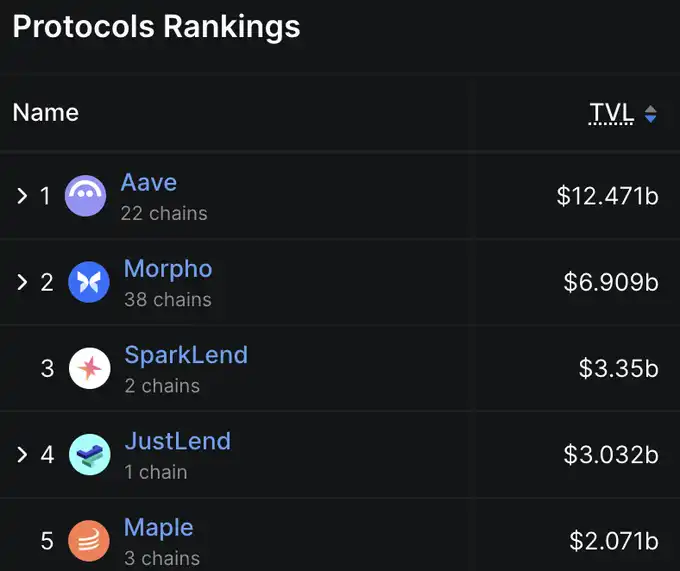
DeFAI Agents have redeployed over $2 billion TVL across lending and yield protocols—an absolute impressive number, but still less than 2% of total DeFi TVL ($130-140 billion).

This clearly indicates that deposit decisions, collateral choices, and risk appetite are still predominantly the human's call. While AI Agents handle the plumbing at the edges, the core remains in human hands.

Human-Dominated Sectors

Stablecoins & Card Payments

As of March 2026, the total stablecoin market cap is approximately $312 billion. Adjusted volume (filtering out bot activity, MEV, and wash trading) reached $28 trillion in real economic activity in 2025. Growing at a 133% CAGR since 2023.

Stablecoin transfers under $250 hit a new high of 5.84 billion in August 2025. We posit these are users sending money to family, paying freelancers, or splitting bills. Over 80% of USD-backed stablecoin transactions occur outside the US, where Agent adoption leads.

Real people in emerging markets use stablecoins for dollar access and economic hedging, making them directly responsible for stablecoin market share. Volume reached $1.78 trillion in February 2026 alone.

Furthermore, the card payment category is booming due to clearer regulations. Products allow users to spend crypto assets anywhere traditional cards are accepted, with funds remaining self-custodied until the moment of purchase.

This sector is roughly only 5% Agent-driven. The rest is people moving money. Unlike bot-dominated sectors, users here often don't know or care they're using crypto. That's precisely the point.

Wallets

Wallets are the last mile between humans and the blockchain, the layer that cannot be fully abstracted away.

While abstraction attempts are underway, the approval process desperately needs human oversight. Someone must sign. Someone must decide whether to trust what's in front of them.

Phantom has over 15 million monthly active users. The entire wallet space is investing in human-centric improvements like human-readable transaction previews, biometric security, and card-based spending.

The best wallets of 2026 have evolved from "seed phrase + string" storage containers to complete financial dashboards.

Enterprise-grade Agent wallets in 2026 include budget limits, whitelists, audit logs, and emergency stops—treating Agents as operators with restricted permissions, not omnipotent signers.

The Human & Agent Verification Layer: The More Agents, The More Important This Becomes

As more and more Agents flood on-chain activity, proving you're human or that an Agent is acting on behalf of a human becomes increasingly valuable.

Several projects are developing along these lines, ensuring we don't get lost in the machine world's matrix.

World & AgentKit

First mention: World (formerly Worldcoin - WLD)—these guys have verified over 17 million users via iris-scanning Orb hardware.

World describes itself as a response to an AI-saturated world—building digital infrastructure that makes being human actually count.

It subsequently launched AgentKit. A toolkit that lets AI Agents carry cryptographic proof that they are backed by a unique human verified via World ID, integrated with Coinbase and Cloudflare's x402 protocol for stablecoin micropayments.

t54

Another project we're watching is t54, building trust and safety infrastructure (often called the "trust layer") for the Agentic economy—a world where autonomous AI Agents handle real tasks like managing funds, making payments, and trading on behalf of individuals or businesses.

Currently, AI Agents moving real money is risky (no verification, no accountability, easy to scam or violate compliance rules).

t54 tackles this with x402-secure, a dedicated trust layer that enhances the x402 protocol for secure AI Agent micropayments. x402-secure provides real-time risk scoring through its Trustline Engine and helps detect scams, including prompt injection, to ensure accountability.

t54 provides these guardrails so institutions and users can actually trust Agents with finances.

Self Protocol

These guys are building a decentralized zk-proof human-Agent binding layer on ERC-8004 (on-chain Agent identity).

Self Protocol uses zk technology to anchor each AI Agent to a verified human owner (human proof) without doxxing or data leaks.

It prevents Sybil attacks, supports self-custody wallets, autonomous actions, and commercial agreements while maintaining human accountability.

Selfclaw has integrated with ecosystems like Celo/Google Cloud, with fee recycling to support verified Agents.

Kite AI

Kite is a foundational L1 (EVM-compatible with Proof of AI consensus) built specifically for the Agentic internet.

It provides Agent Passport (verifiable identity, delegation, programmable spending rules or guardrails), autonomous stablecoin payments, governance, and verification so Agents can authenticate, transact, and collaborate without intermediaries.

Conclusion

Seriously, we're not anti-Agent. The data is clear in trading, MEV, and yield; bots have already won those rooms, and they won't be handing them back.

A head-to-head contest where 43% of humans got liquidated and zero bots got liquidated tells you everything about who owns the speed game.

But the full network data still shows humans are doing most of the work in the vast majority of jobs that actually touch real life—in payments, identity, and verification.

These are the layers that actually create value, that actually generate revenue. They share a common trait: they require judgment, trust, physical presence, or cultural context—things that cannot yet be reduced to an optimization function.

We believe teams shouldn't abandon building for direct human interaction in these areas and sectors entirely.

Agents need humans more than humans do right now. We believe those who understand this, and those building Agent and human proof systems, are worth watching.

Crypto di tendenza

Domande pertinenti

QWhich sectors in crypto are already dominated by AI Agents according to the article?

AAccording to the article, the sectors already dominated by AI Agents include derivatives trading (perpetuals), arbitrage trading (MEV), yield optimization, and spot trading with portfolio optimization.

QIn the context of prediction markets, what is the nuanced difference between AI Agent and human performance?

AIn prediction markets, AI Agents dominate short-term arbitrage games due to speed, achieving a 66.4% win rate versus 45.3% for humans and capturing most profits from sub-100ms executions. However, for markets lasting weeks or months, the gap narrows significantly, and humans often perform better by adapting to shifting fundamental dynamics, a task at which current robots struggle.

QWhat are some examples of sectors where human activity remains dominant, and why?

AHuman activity remains dominant in stablecoin & card payments and wallet management. This is because these sectors involve real-world economic activities like remittances, payments, and spending that require trust, judgment, and physical/cultural context. For wallets, the approval and signing process inherently requires human oversight for security and trust decisions.

QWhat is the purpose of human-Agent verification layers mentioned in the article, and name two projects building them?

AThe purpose of human-Agent verification layers is to provide trust, safety, and accountability in an increasingly agentic economy. They ensure that AI Agents represent verified human interests, prevent Sybil attacks, and enable secure financial actions. Two projects building such layers are t54 (building a trust & safety infrastructure with x402-secure) and Self Protocol (building a decentralized zk-proof human-Agent binding layer on ERC-8004).

QWhat key conclusion does the article draw about the relationship between AI Agents and human activity in crypto?

AThe article concludes that while AI Agents clearly dominate in speed and optimization-driven sectors like trading and MEV, human activity remains crucial in areas requiring judgment, trust, and real-world context, such as payments and identity. It argues that teams should not abandon building for direct human interaction in these areas, as 'Agents currently need humans more than humans need Agents,' and projects that build verification systems for both are key to watch.

Letture associate

Report Interpretation: J.P. Morgan Details Micron's Pre-Earnings Sentiment, Current Hardware Sector Dynamics

Morgan Stanley analyst Joshua Meyers' report (June 21, 2026) highlights key trends in the hardware and semiconductor sector ahead of Micron's earnings. The core takeaways are: 1. **Micron & Memory:** Memory remains a high-conviction long theme, driven by strong AI demand and rising ASPs. However, investor focus is shifting to the sustainability of Micron's >80% gross margins and the specifics of potential new long-term supply agreements (SCAs). 2. **Hardware Supply Chain:** AI-related demand for servers, networking, and storage remains robust, but company performance is diverging. Celestica (CLS) shows improved margin confidence, Western Digital and Seagate benefit from pricing, Fabrinet (FN) sees predictable AI optics growth, and Teradyne (TER) anticipates a new Google customer. 3. **AI Capex & WFE Forecasts:** JPMorgan increased its Wafer Fab Equipment (WFE) market growth forecasts to 28% in 2026 and 29% in 2027. AI infrastructure financing is evolving, with higher project-level debt reducing constraints on capex expansion. The report signals that while the AI-driven hardware cycle is strong, the market is entering a phase focused on execution verification (e.g., Micron's SCA details, Fabrinet's ramp with Amazon) and valuation sustainability. Key near-term signals include Micron's guidance, Arista Networks' outlook, and the pace of demand normalization post potential tariff-related pull-ins.

marsbit3 h fa

Report Interpretation: J.P. Morgan Details Micron's Pre-Earnings Sentiment, Current Hardware Sector Dynamics

marsbit3 h fa

Research Report Analysis: The Fed's New Chair's Debut – New Leader, But Same Script?

Report Analysis: Federal Reserve's New Chair Debut – A New Captain, But the Same Script? Morgan Stanley's chief global economist Seth B. Carpenter analyzes the first FOMC meeting under new Fed Chair Kevin Warsh in a June 21 report. Warsh deliberately avoided providing forward guidance on interest rates, aligning with his philosophy. However, market expectations for a rate hike this year were reinforced. Key signals lie elsewhere: inflation may fall more than expected, and quantitative tightening (QT) could be more aggressive than anticipated. The FOMC's "dot plot" suggests only one rate hike in 2026. Carpenter argues that if inflation undershoots forecasts, the logic for even a single hike weakens, especially as projections indicate potential rate cuts in 2027. On QT, Warsh's stance is clear. Carpenter notes that measures like halving the Treasury's account balance could shrink the Fed's balance sheet by around $500 billion with minimal market impact. Combined with adjustments to reserve interest and liquidity rules, the ultimate QT scale may exceed expectations, though its market effect might be less disruptive unless the Fed actively sells Mortgage-Backed Securities (MBS). While Warsh initiated a review of the Fed's policy framework, the 2% inflation target remains intact for now. The report concludes that the market may be overestimating the significance of reduced forward guidance and the near-term rate hike risk, while potentially underestimating the scope and manageable nature of the coming balance sheet reduction. The key debates will hinge on upcoming core PCE data, the specifics of the QT path, and the framework review's findings.

marsbit3 h fa

Research Report Analysis: The Fed's New Chair's Debut – New Leader, But Same Script?

marsbit3 h fa

Critical Game Week: BTC Retracement Confirmation vs. HYPE Support Battle | Guest Analysis

This weekly analysis outlines a critical juncture for BTC and HYPE markets, focusing on key price level confirmations. **BTC Analysis:** BTC is at a pivotal point after a five-wave rally from the June 5th low of $59,100. The price has broken below a short-term rising channel's lower boundary, with the current move seen as a pullback to test this breakdown. Failure to reclaim this level could lead to a retest of the $59,000-$60,000 support zone. The core scenario hinges on this channel retest outcome. * **Key Levels:** Resistance at $64,500-$65,000 (channel boundary) and $69,500-$70,500. Support at $59,000-$60,000 and $55,000. * **Strategy:** A core bearish stance is maintained (20% short from last week), with short-term plans for tactical trades. Three detailed contingency plans (A/B/C) are provided for short positions on resistance tests or breakdowns, emphasizing strict stop-loss discipline. **HYPE Analysis:** HYPE shows strong momentum but is currently in a corrective phase after hitting a new high of $76.94. The price is retesting the crucial $64-$66 support area. * **Key Levels:** Resistance near $77 and $80-$82. Support at $64-$66 and $52-$54. * **Strategy:** The short-term approach is "buy on dips, avoid chasing rallies." A long position is considered only if clear stabilization signals appear at the $64-$66 or deeper $52-$54 support zones, with tight risk controls. **General Risk Management:** A standardized trailing stop-loss protocol is emphasized: set initial stop, breakeven at +1% profit, then trail stops upward to lock in gains. *Disclaimer: All analysis is presented as a personal trading framework, not investment advice. Market conditions are complex and require dynamic adjustment.*

marsbit3 h fa

Critical Game Week: BTC Retracement Confirmation vs. HYPE Support Battle | Guest Analysis

marsbit3 h fa

Research Report Interpretation: Citi Attends AWS Summit, Bullish on Cloud Business Acceleration but Data Governance Remains Key Variable

Citi analyst Tyler Radke's team attended the AWS New York Summit (June 17-18), engaging with over 10 clients and partners. In a June 19 report, they highlighted the summit's focus on scaling agent AI for enterprise deployment. Citi maintains a "Buy" rating on Amazon, forecasting AWS revenue growth to accelerate to 37% in FY27 from 30% in FY26, noting this estimate may be conservative. Key takeaways: 1. **AWS Strategy Shift:** AWS is moving from proof-of-concepts to scalable deployment. New offerings like AWS Context (building enterprise knowledge graphs), Amazon Quick (cross-application AI assistant), and security tool Continuum address core enterprise pain points for AI adoption. 2. **Data Infrastructure Beneficiaries:** Data infrastructure companies like Snowflake, Elastic, Oracle, and ClickHouse are seen as direct beneficiaries of scaling AI workloads, as evidenced by strong growth and use cases presented. 3. **Critical Role of Data Governance:** As AI agents scale from hundreds to thousands, effective data governance becomes the key variable for deploying AI in core business processes. AWS Context represents AWS's strategic extension from providing compute/models to offering a data governance infrastructure layer. The report emphasizes that without solving data governance, AI will remain confined to pilot projects. The investment thesis focuses on AWS revenue acceleration and data infrastructure vendors' growth, while monitoring signals like AWS's quarterly revenue growth, Bedrock AgentCore task volume, and pricing impacts on companies like Elastic.

marsbit3 h fa

Research Report Interpretation: Citi Attends AWS Summit, Bullish on Cloud Business Acceleration but Data Governance Remains Key Variable

marsbit3 h fa

Trading

Spot
Futures

Articoli Popolari

Cosa è GROK AI

Grok AI: Rivoluzionare la Tecnologia Conversazionale nell'Era Web3 Introduzione Nel panorama in rapida evoluzione dell'intelligenza artificiale, Grok AI si distingue come un progetto notevole che collega i domini della tecnologia avanzata e dell'interazione con l'utente. Sviluppato da xAI, un'azienda guidata dal rinomato imprenditore Elon Musk, Grok AI cerca di ridefinire il modo in cui interagiamo con l'intelligenza artificiale. Mentre il movimento Web3 continua a prosperare, Grok AI mira a sfruttare il potere dell'IA conversazionale per rispondere a query complesse, offrendo agli utenti un'esperienza che è non solo informativa ma anche divertente. Cos'è Grok AI? Grok AI è un sofisticato chatbot di intelligenza artificiale conversazionale progettato per interagire dinamicamente con gli utenti. A differenza di molti sistemi di intelligenza artificiale tradizionali, Grok AI abbraccia un'ampia gamma di domande, comprese quelle tipicamente considerate inappropriate o al di fuori delle risposte standard. Gli obiettivi principali del progetto includono: Ragionamento Affidabile: Grok AI enfatizza il ragionamento di buon senso per fornire risposte logiche basate sulla comprensione contestuale. Supervisione Scalabile: L'integrazione dell'assistenza degli strumenti garantisce che le interazioni degli utenti siano sia monitorate che ottimizzate per la qualità. Verifica Formale: La sicurezza è fondamentale; Grok AI incorpora metodi di verifica formale per migliorare l'affidabilità delle sue uscite. Comprensione del Lungo Contesto: Il modello di IA eccelle nel trattenere e richiamare una vasta storia di conversazione, facilitando discussioni significative e consapevoli del contesto. Robustezza Adversariale: Concentrandosi sul miglioramento delle sue difese contro input manipolati o malevoli, Grok AI mira a mantenere l'integrità delle interazioni degli utenti. In sostanza, Grok AI non è solo un dispositivo di recupero informazioni; è un partner conversazionale immersivo che incoraggia un dialogo dinamico. Creatore di Grok AI Il cervello dietro Grok AI non è altri che Elon Musk, un individuo sinonimo di innovazione in vari campi, tra cui automotive, viaggi spaziali e tecnologia. Sotto l'egida di xAI, un'azienda focalizzata sull'avanzamento della tecnologia AI in modi benefici, la visione di Musk mira a rimodellare la comprensione delle interazioni con l'IA. La leadership e l'etica fondamentale sono profondamente influenzate dall'impegno di Musk nel superare i confini tecnologici. Investitori di Grok AI Sebbene i dettagli specifici riguardanti gli investitori che sostengono Grok AI rimangano limitati, è pubblicamente riconosciuto che xAI, l'incubatore del progetto, è fondato e supportato principalmente dallo stesso Elon Musk. Le precedenti imprese e partecipazioni di Musk forniscono un robusto sostegno, rafforzando ulteriormente la credibilità e il potenziale di crescita di Grok AI. Tuttavia, al momento, le informazioni riguardanti ulteriori fondazioni di investimento o organizzazioni che supportano Grok AI non sono facilmente accessibili, segnando un'area per potenziali esplorazioni future. Come Funziona Grok AI? Le meccaniche operative di Grok AI sono innovative quanto il suo framework concettuale. Il progetto integra diverse tecnologie all'avanguardia che facilitano le sue funzionalità uniche: Infrastruttura Robusta: Grok AI è costruito utilizzando Kubernetes per l'orchestrazione dei container, Rust per prestazioni e sicurezza, e JAX per il calcolo numerico ad alte prestazioni. Questo trio garantisce che il chatbot operi in modo efficiente, si scaldi efficacemente e serva gli utenti prontamente. Accesso alla Conoscenza in Tempo Reale: Una delle caratteristiche distintive di Grok AI è la sua capacità di attingere a dati in tempo reale attraverso la piattaforma X—precedentemente nota come Twitter. Questa capacità consente all'IA di accedere alle informazioni più recenti, permettendole di fornire risposte e raccomandazioni tempestive che altri modelli di IA potrebbero perdere. Due Modalità di Interazione: Grok AI offre agli utenti la scelta tra “Modalità Divertente” e “Modalità Normale”. La Modalità Divertente consente uno stile di interazione più giocoso e umoristico, mentre la Modalità Normale si concentra sulla fornitura di risposte precise e accurate. Questa versatilità garantisce un'esperienza su misura che soddisfa varie preferenze degli utenti. In sostanza, Grok AI sposa prestazioni con coinvolgimento, creando un'esperienza che è sia arricchente che divertente. Cronologia di Grok AI Il viaggio di Grok AI è segnato da traguardi fondamentali che riflettono le sue fasi di sviluppo e distribuzione: Sviluppo Iniziale: La fase fondamentale di Grok AI si è svolta in circa due mesi, durante i quali sono stati condotti l'addestramento iniziale e il perfezionamento del modello. Rilascio Beta di Grok-2: In un significativo avanzamento, è stata annunciata la beta di Grok-2. Questo rilascio ha introdotto due versioni del chatbot—Grok-2 e Grok-2 mini—ognuna dotata delle capacità per chattare, programmare e ragionare. Accesso Pubblico: Dopo lo sviluppo beta, Grok AI è diventato disponibile per gli utenti della piattaforma X. Coloro che hanno account verificati tramite un numero di telefono e attivi per almeno sette giorni possono accedere a una versione limitata, rendendo la tecnologia disponibile a un pubblico più ampio. Questa cronologia racchiude la crescita sistematica di Grok AI dall'inizio all'impegno pubblico, enfatizzando il suo impegno per il miglioramento continuo e l'interazione con gli utenti. Caratteristiche Chiave di Grok AI Grok AI comprende diverse caratteristiche chiave che contribuiscono alla sua identità innovativa: Integrazione della Conoscenza in Tempo Reale: L'accesso a informazioni attuali e rilevanti differenzia Grok AI da molti modelli statici, consentendo un'esperienza utente coinvolgente e accurata. Stili di Interazione Versatili: Offrendo modalità di interazione distinte, Grok AI soddisfa varie preferenze degli utenti, invitando alla creatività e alla personalizzazione nella conversazione con l'IA. Avanzata Struttura Tecnologica: L'utilizzo di Kubernetes, Rust e JAX fornisce al progetto un solido framework per garantire affidabilità e prestazioni ottimali. Considerazione del Discorso Etico: L'inclusione di una funzione di generazione di immagini mette in mostra lo spirito innovativo del progetto. Tuttavia, solleva anche considerazioni etiche riguardanti il copyright e la rappresentazione rispettosa di figure riconoscibili—una discussione in corso all'interno della comunità AI. Conclusione Come entità pionieristica nel campo dell'IA conversazionale, Grok AI incarna il potenziale per esperienze utente trasformative nell'era digitale. Sviluppato da xAI e guidato dall'approccio visionario di Elon Musk, Grok AI integra conoscenze in tempo reale con capacità di interazione avanzate. Si sforza di spingere i confini di ciò che l'intelligenza artificiale può realizzare, mantenendo un focus su considerazioni etiche e sicurezza degli utenti. Grok AI non solo incarna il progresso tecnologico, ma rappresenta anche un nuovo paradigma conversazionale nel panorama Web3, promettendo di coinvolgere gli utenti con sia conoscenze esperte che interazioni giocose. Man mano che il progetto continua a evolversi, si erge come testimonianza di ciò che l'incrocio tra tecnologia, creatività e interazione simile a quella umana può realizzare.

499 Totale visualizzazioniPubblicato il 2024.12.26Aggiornato il 2024.12.26

Cosa è GROK AI

Cosa è ERC AI

Euruka Tech: Una Panoramica di $erc ai e delle sue Ambizioni in Web3 Introduzione Nel panorama in rapida evoluzione della tecnologia blockchain e delle applicazioni decentralizzate, nuovi progetti emergono frequentemente, ciascuno con obiettivi e metodologie uniche. Uno di questi progetti è Euruka Tech, che opera nel vasto dominio delle criptovalute e del Web3. L'obiettivo principale di Euruka Tech, in particolare del suo token $erc ai, è presentare soluzioni innovative progettate per sfruttare le crescenti capacità della tecnologia decentralizzata. Questo articolo si propone di fornire una panoramica completa di Euruka Tech, un'esplorazione dei suoi obiettivi, della funzionalità, dell'identità del suo creatore, dei potenziali investitori e della sua importanza nel contesto più ampio del Web3. Cos'è Euruka Tech, $erc ai? Euruka Tech è caratterizzato come un progetto che sfrutta gli strumenti e le funzionalità offerte dall'ambiente Web3, concentrandosi sull'integrazione dell'intelligenza artificiale nelle sue operazioni. Sebbene i dettagli specifici sul framework del progetto siano piuttosto sfuggenti, è progettato per migliorare l'engagement degli utenti e automatizzare i processi nello spazio crypto. Il progetto mira a creare un ecosistema decentralizzato che non solo faciliti le transazioni, ma incorpori anche funzionalità predittive attraverso l'intelligenza artificiale, da cui il nome del suo token, $erc ai. L'obiettivo è fornire una piattaforma intuitiva che faciliti interazioni più intelligenti e un'elaborazione delle transazioni più efficiente all'interno della crescente sfera del Web3. Chi è il Creatore di Euruka Tech, $erc ai? Attualmente, le informazioni riguardanti il creatore o il team fondatore di Euruka Tech rimangono non specificate e piuttosto opache. Questa assenza di dati solleva preoccupazioni, poiché la conoscenza del background del team è spesso essenziale per stabilire credibilità nel settore blockchain. Pertanto, abbiamo classificato queste informazioni come sconosciute fino a quando dettagli concreti non saranno resi disponibili nel dominio pubblico. Chi sono gli Investitori di Euruka Tech, $erc ai? Allo stesso modo, l'identificazione degli investitori o delle organizzazioni di supporto per il progetto Euruka Tech non è prontamente fornita attraverso la ricerca disponibile. Un aspetto cruciale per i potenziali stakeholder o utenti che considerano di impegnarsi con Euruka Tech è la garanzia che deriva da partnership finanziarie consolidate o dal supporto di società di investimento rispettabili. Senza divulgazioni sulle affiliazioni di investimento, è difficile trarre conclusioni complete sulla sicurezza finanziaria o sulla longevità del progetto. In linea con le informazioni trovate, anche questa sezione rimane allo stato di sconosciuto. Come funziona Euruka Tech, $erc ai? Nonostante la mancanza di specifiche tecniche dettagliate per Euruka Tech, è essenziale considerare le sue ambizioni innovative. Il progetto cerca di sfruttare la potenza computazionale dell'intelligenza artificiale per automatizzare e migliorare l'esperienza dell'utente all'interno dell'ambiente delle criptovalute. Integrando l'IA con la tecnologia blockchain, Euruka Tech mira a fornire funzionalità come operazioni automatizzate, valutazioni del rischio e interfacce utente personalizzate. L'essenza innovativa di Euruka Tech risiede nel suo obiettivo di creare una connessione fluida tra gli utenti e le vaste possibilità presentate dalle reti decentralizzate. Attraverso l'utilizzo di algoritmi di apprendimento automatico e IA, mira a ridurre le sfide degli utenti alle prime armi e semplificare le esperienze transazionali all'interno del framework Web3. Questa simbiosi tra IA e blockchain sottolinea l'importanza del token $erc ai, fungendo da ponte tra le interfacce utente tradizionali e le avanzate capacità delle tecnologie decentralizzate. Cronologia di Euruka Tech, $erc ai Sfortunatamente, a causa delle limitate informazioni disponibili riguardo a Euruka Tech, non siamo in grado di presentare una cronologia dettagliata dei principali sviluppi o traguardi nel percorso del progetto. Questa cronologia, tipicamente preziosa per tracciare l'evoluzione di un progetto e comprendere la sua traiettoria di crescita, non è attualmente disponibile. Man mano che le informazioni su eventi notevoli, partnership o aggiunte funzionali diventano evidenti, gli aggiornamenti miglioreranno sicuramente la visibilità di Euruka Tech nella sfera crypto. Chiarimento su Altri Progetti “Eureka” È importante sottolineare che più progetti e aziende condividono una nomenclatura simile con “Eureka.” La ricerca ha identificato iniziative come un agente IA della NVIDIA Research, che si concentra sull'insegnamento ai robot di compiti complessi utilizzando metodi generativi, così come Eureka Labs ed Eureka AI, che migliorano l'esperienza utente nell'istruzione e nell'analisi del servizio clienti, rispettivamente. Tuttavia, questi progetti sono distinti da Euruka Tech e non dovrebbero essere confusi con i suoi obiettivi o funzionalità. Conclusione Euruka Tech, insieme al suo token $erc ai, rappresenta un attore promettente ma attualmente oscuro nel panorama del Web3. Sebbene i dettagli sul suo creatore e sugli investitori rimangano non divulgati, l'ambizione centrale di combinare intelligenza artificiale e tecnologia blockchain si erge come un punto focale di interesse. Gli approcci unici del progetto nel promuovere l'engagement degli utenti attraverso l'automazione avanzata potrebbero distinguerlo mentre l'ecosistema Web3 progredisce. Con l'evoluzione continua del mercato crypto, gli stakeholder dovrebbero tenere d'occhio gli sviluppi riguardanti Euruka Tech, poiché lo sviluppo di innovazioni documentate, partnership o una roadmap definita potrebbe presentare opportunità significative nel prossimo futuro. Così com'è, attendiamo ulteriori approfondimenti sostanziali che potrebbero svelare il potenziale di Euruka Tech e la sua posizione nel competitivo panorama crypto.

520 Totale visualizzazioniPubblicato il 2025.01.02Aggiornato il 2025.01.02

Cosa è ERC AI

Cosa è DUOLINGO AI

DUOLINGO AI: Integrare l'apprendimento delle lingue con Web3 e innovazione AI In un'era in cui la tecnologia rimodella l'istruzione, l'integrazione dell'intelligenza artificiale (AI) e delle reti blockchain annuncia una nuova frontiera per l'apprendimento delle lingue. Entra in scena DUOLINGO AI e la sua criptovaluta associata, $DUOLINGO AI. Questo progetto aspira a fondere la potenza educativa delle principali piattaforme di apprendimento delle lingue con i benefici della tecnologia decentralizzata Web3. Questo articolo esplora gli aspetti chiave di DUOLINGO AI, esaminando i suoi obiettivi, il framework tecnologico, lo sviluppo storico e il potenziale futuro, mantenendo chiarezza tra la risorsa educativa originale e questa iniziativa indipendente di criptovaluta. Panoramica di DUOLINGO AI Alla sua base, DUOLINGO AI cerca di stabilire un ambiente decentralizzato in cui gli studenti possono guadagnare ricompense crittografiche per il raggiungimento di traguardi educativi nella competenza linguistica. Applicando smart contracts, il progetto mira ad automatizzare i processi di verifica delle competenze e le allocazioni di token, aderendo ai principi di Web3 che enfatizzano la trasparenza e la proprietà da parte degli utenti. Il modello si discosta dagli approcci tradizionali all'acquisizione linguistica, facendo forte affidamento su una struttura di governance guidata dalla comunità, che consente ai detentori di token di suggerire miglioramenti ai contenuti dei corsi e alle distribuzioni delle ricompense. Alcuni degli obiettivi notevoli di DUOLINGO AI includono: Apprendimento Gamificato: Il progetto integra traguardi blockchain e token non fungibili (NFT) per rappresentare i livelli di competenza linguistica, promuovendo la motivazione attraverso ricompense digitali coinvolgenti. Creazione di Contenuti Decentralizzati: Apre opportunità per educatori e appassionati di lingue di contribuire con i propri corsi, facilitando un modello di condivisione dei ricavi che beneficia tutti i collaboratori. Personalizzazione Guidata dall'AI: Utilizzando modelli avanzati di machine learning, DUOLINGO AI personalizza le lezioni per adattarsi ai progressi individuali, simile alle funzionalità adattive presenti nelle piattaforme consolidate. Creatori del Progetto e Governance A partire da aprile 2025, il team dietro $DUOLINGO AI rimane pseudonimo, una pratica comune nel panorama decentralizzato delle criptovalute. Questa anonimato è inteso a promuovere la crescita collettiva e il coinvolgimento degli stakeholder piuttosto che concentrarsi su sviluppatori individuali. Lo smart contract distribuito sulla blockchain di Solana annota l'indirizzo del wallet dello sviluppatore, che segna l'impegno verso la trasparenza riguardo alle transazioni, nonostante l'identità dei creatori sia sconosciuta. Secondo la sua roadmap, DUOLINGO AI mira a evolversi in un'Organizzazione Autonoma Decentralizzata (DAO). Questa struttura di governance consente ai detentori di token di votare su questioni critiche come l'implementazione di funzionalità e le allocazioni del tesoro. Questo modello si allinea con l'etica dell'empowerment della comunità presente in varie applicazioni decentralizzate, enfatizzando l'importanza del processo decisionale collettivo. Investitori e Partnership Strategiche Attualmente, non ci sono investitori istituzionali o capitalisti di rischio identificabili pubblicamente legati a $DUOLINGO AI. Invece, la liquidità del progetto proviene principalmente da scambi decentralizzati (DEX), segnando un netto contrasto con le strategie di finanziamento delle aziende tradizionali di tecnologia educativa. Questo modello di base indica un approccio guidato dalla comunità, riflettendo l'impegno del progetto verso la decentralizzazione. Nel suo whitepaper, DUOLINGO AI menziona la formazione di collaborazioni con “piattaforme educative blockchain” non specificate, mirate ad arricchire la sua offerta di corsi. Sebbene partnership specifiche non siano ancora state divulgate, questi sforzi collaborativi suggeriscono una strategia per mescolare innovazione blockchain con iniziative educative, ampliando l'accesso e il coinvolgimento degli utenti attraverso diverse vie di apprendimento. Architettura Tecnologica Integrazione AI DUOLINGO AI incorpora due componenti principali guidate dall'AI per migliorare la sua offerta educativa: Motore di Apprendimento Adattivo: Questo sofisticato motore apprende dalle interazioni degli utenti, simile ai modelli proprietari delle principali piattaforme educative. Regola dinamicamente la difficoltà delle lezioni per affrontare le sfide specifiche degli studenti, rinforzando le aree deboli attraverso esercizi mirati. Agenti Conversazionali: Utilizzando chatbot alimentati da GPT-4, DUOLINGO AI offre una piattaforma per gli utenti per impegnarsi in conversazioni simulate, promuovendo un'esperienza di apprendimento linguistico più interattiva e pratica. Infrastruttura Blockchain Costruito sulla blockchain di Solana, $DUOLINGO AI utilizza un framework tecnologico completo che include: Smart Contracts per la Verifica delle Competenze: Questa funzionalità assegna automaticamente token agli utenti che superano con successo i test di competenza, rinforzando la struttura di incentivi per risultati di apprendimento genuini. Badge NFT: Questi token digitali significano vari traguardi che gli studenti raggiungono, come completare una sezione del loro corso o padroneggiare competenze specifiche, consentendo loro di scambiare o mostrare digitalmente i loro successi. Governance DAO: I membri della comunità dotati di token possono partecipare alla governance votando su proposte chiave, facilitando una cultura partecipativa che incoraggia l'innovazione nell'offerta di corsi e nelle funzionalità della piattaforma. Cronologia Storica 2022–2023: Concettualizzazione I lavori per DUOLINGO AI iniziano con la creazione di un whitepaper, evidenziando la sinergia tra i progressi dell'AI nell'apprendimento delle lingue e il potenziale decentralizzato della tecnologia blockchain. 2024: Lancio Beta Un lancio beta limitato introduce offerte in lingue popolari, premiando i primi utenti con incentivi in token come parte della strategia di coinvolgimento della comunità del progetto. 2025: Transizione DAO Ad aprile, avviene un lancio completo della mainnet con la circolazione di token, stimolando discussioni nella comunità riguardo a possibili espansioni nelle lingue asiatiche e ad altri sviluppi dei corsi. Sfide e Direzioni Future Ostacoli Tecnici Nonostante i suoi obiettivi ambiziosi, DUOLINGO AI affronta sfide significative. La scalabilità rimane una preoccupazione costante, in particolare nel bilanciare i costi associati all'elaborazione dell'AI e nel mantenere una rete decentralizzata reattiva. Inoltre, garantire la creazione e la moderazione di contenuti di qualità in un'offerta decentralizzata presenta complessità nel mantenere standard educativi. Opportunità Strategiche Guardando al futuro, DUOLINGO AI ha il potenziale per sfruttare partnership di micro-credentialing con istituzioni accademiche, fornendo validazioni verificate dalla blockchain delle competenze linguistiche. Inoltre, l'espansione cross-chain potrebbe consentire al progetto di attingere a basi utenti più ampie e a ulteriori ecosistemi blockchain, migliorando la sua interoperabilità e portata. Conclusione DUOLINGO AI rappresenta una fusione innovativa di intelligenza artificiale e tecnologia blockchain, presentando un'alternativa focalizzata sulla comunità ai sistemi tradizionali di apprendimento delle lingue. Sebbene il suo sviluppo pseudonimo e il modello economico emergente comportino alcuni rischi, l'impegno del progetto verso l'apprendimento gamificato, l'istruzione personalizzata e la governance decentralizzata illumina un percorso per la tecnologia educativa nel regno di Web3. Man mano che l'AI continua a progredire e l'ecosistema blockchain evolve, iniziative come DUOLINGO AI potrebbero ridefinire il modo in cui gli utenti interagiscono con l'istruzione linguistica, potenziando le comunità e premiando il coinvolgimento attraverso meccanismi di apprendimento innovativi.

474 Totale visualizzazioniPubblicato il 2025.04.11Aggiornato il 2025.04.11

Cosa è DUOLINGO AI

Discussioni

Benvenuto nella Community HTX. Qui puoi rimanere informato sugli ultimi sviluppi della piattaforma e accedere ad approfondimenti esperti sul mercato. Le opinioni degli utenti sul prezzo di AI AI sono presentate come di seguito.

活动图片