zkSync Founder 'Personally Fires' Core Team, the Former Ethereum Scaling Star Fully Pivots to Serving Banks

marsbitPubblicato 2026-06-18Pubblicato ultima volta 2026-06-18

Introduzione

zkSync founder Alex Gluchowski announced significant layoffs at Matter Labs, the company behind the Ethereum scaling solution, on June 17. This marks the second round of cuts in two years. The core strategic shift is the company's full focus on Prividium, a "permissioned" privacy blockchain designed specifically for regulated financial institutions like Deutsche Bank and UBS. This move represents a stark pivot from zkSync's original ethos of a public, permissionless network. Gluchowski, a self-described "freedom maximalist," is now steering the project toward a compliant, enterprise-focused model. The community reaction is divided, with many sharply questioning the use of the $458 million in total raised funds, given the ongoing layoffs. The native $ZK token has suffered heavily, trading around $0.019, down approximately 93% from its all-time high. Its value-capture mechanism appears disconnected from Matter Labs' new B2B licensing direction. This strategic turnaround is seen by some as a survival tactic in the highly competitive L2 landscape, where zkSync has faced significant user decline post its 2024 airdrop. The company is now betting on a niche, potentially more profitable market, but at the cost of alienating early supporters who believed in its decentralized promises.

Author: Claude, TechFlow

TechFlow Insight: Alex Gluchowski, founder of Matter Labs, the parent company of zkSync, announced another round of layoffs on June 17. The company is now fully betting on a 'permissioned' privacy chain called Prividium, specifically serving regulated financial institutions.

This is the company's second round of layoffs in two years. A founder who once called himself a 'freedom maximalist' is ultimately steering the project towards compliance, permissions, and banks. The community's reaction is divided, with the most pointed question being: after raising $458 million, where did the money go? The $ZK token is currently priced around $0.019, down approximately 93% from its all-time high.

The story of zkSync is heading in the opposite direction of its original promise.

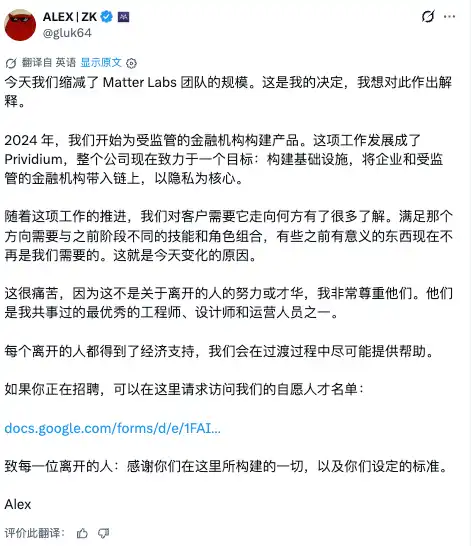
On June 17, Alex Gluchowski, founder and CEO of Matter Labs, posted on platform X, announcing a reduction in the company's team size. "Today we reduced the size of the Matter Labs team. This was my decision, and I wanted to explain it," he wrote at the beginning of the post.

The layoffs included senior engineers, designers, and operations staff, whom Gluchowski called "one of the strongest groups of people I've ever worked with." This is Matter Labs' second round of layoffs since September 2024, with the specific percentage not officially disclosed.

The real focus is not how many were laid off, but what this company has decided to become.
From 'Serving Everyone' to 'Serving Banks', A Complete Strategic Pivot

Gluchowski explained the logic behind the layoffs clearly in his post: the company has been building products for regulated financial institutions since 2024. This work later evolved into Prividium. "The entire company is now focused on one goal: building infrastructure for corporations and regulated financial institutions to go on-chain, with privacy at its core."

What is Prividium?

Simply put, it is a 'permissioned' blockchain, the opposite of the public, permissionless, anyone-can-use chain that zkSync has long championed. Permissioned means only approved institutions can access it; regular users cannot.

Matter Labs' website describes Prividium as an Ethereum platform for financial institutions and fintech companies, currently running pilots with Deutsche Bank and UBS.

The irony of this pivot lies in Gluchowski himself.

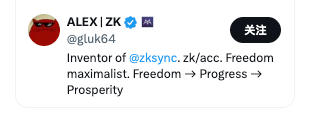
His X bio reads "Freedom maximalist," believing in "Freedom → Progress → Prosperity." zkSync's technology was previously treated by the crypto community as a public good. In 2024, when Matter Labs attempted to trademark "ZK," it faced collective opposition from zero-knowledge researchers and withdrew, arguing that such technology should not be monopolized by any single entity.

Now, this company is actively shifting its focus from a public chain for retail users and developers to a permissioned chain serving licensed banks.
The $458 Million Question, the Community Turns Instantly

Gluchowski probably anticipated the reactions under his post.

Matter Labs has raised approximately $458 million in total funding, backed by well-known institutions like Dragonfly and Blockchain Capital. Its Series C round in 2022 alone raised $200 million. The community's reaction is split. One side expresses excitement about the Prividium direction, while the other side directly questions where the money went. A widely shared comment reads: "Can you explain this? You raised $450 million to develop products. Where is the money? Why are you still fundraising while laying people off?"

This is not the first time Matter Labs has been questioned over layoffs.

In September 2024, the company laid off 16% of its staff, 24 employees, reducing total headcount to 126. At the time, the company repeatedly emphasized that its "financial situation remains strong," and the layoffs were to "stay lean," not due to lack of funds. The wording for both rounds of layoffs is highly similar, citing a "mismatch between team structure and current needs."

The problem is, when a company that has raised nearly half a billion dollars and is still fundraising conducts layoffs twice in two years, the persuasiveness of the "not due to lack of funds" claim gets repeatedly eroded.

$ZK Down 93%, Token Holders Bear the Brunt of the Pivot

The most direct cost of the strategic pivot falls on retail investors in the secondary market.

The $ZK token is currently priced around $0.019, while its all-time high shortly after launch in June 2024 was $0.27, a drop of approximately 93%. For the vast majority of its time since launch, the token has traded below its issuance price. Its current market cap is around $180 million, ranking it outside the top 150 cryptocurrencies.

The token's awkwardness lies in the fact that its value capture logic is disconnected from the company's new direction. Prividium serves banks, following an off-chain business model like "enterprise licensing fees."

A Survival Strategy in the L2 Red Ocean

Zooming out, Matter Labs' pivot is also a snapshot of the intense competition within the entire Ethereum L2 sector.

The Ethereum Layer 2 network space (scaling solutions running on top of the mainnet for faster and cheaper transactions) has seen a flood of players in recent years: Coinbase's Base, Arbitrum, Optimism, Polygon—all vying for the same pool of developers and users. zkSync was once the most active among ZK-based L2s, but after its airdrop in June 2024, users quickly fled. Active addresses dropped from a peak of over 200,000 in July to a 7-day average of around 30,000 by year-end. In a homogeneous, undifferentiated general-purpose track, pivoting to the higher-margin, less crowded niche market of "serving banks" is a commercially understandable decision.

But this decision comes at a cost. It means abandoning some of the earliest believers in the "permissionless, for everyone" narrative—those who held $ZK because of it. Matter Labs has chosen a more realistic and profitable path, at the cost of dismantling the very signpost it once erected.

Gluchowski ended his post by addressing those who left: "Thank you for everything you built here, and for the standard you set."

This sentence could also describe the company itself.

Crypto di tendenza

Domande pertinenti

QWhat major strategic shift did Matter Labs, the parent company of zkSync, announce according to the article?

AMatter Labs announced a complete strategic shift, pivoting its entire company focus from developing the public, permissionless zkSync L2 to building a 'permissioned' privacy-focused blockchain called Prividium, specifically designed to serve regulated financial institutions and banks.

QWhat specific criticism from the community is highlighted regarding Matter Labs' fundraising and recent layoffs?

AThe community strongly criticizes Matter Labs' financial management, questioning the use of the approximately $458 million in total funds it raised. Critics pointedly ask where the money went and why the company is conducting layoffs while reportedly still seeking more funding, casting doubt on the official claim that the layoffs are not due to financial distress.

QHow has the $ZK token performed in the market as of the article's reporting?

AThe $ZK token's price has declined severely. It is trading at approximately $0.019, which represents a drop of about 93% from its all-time high of around $0.27 reached shortly after its launch in June 2024.

QWhat is the core irony or contradiction noted in the article regarding Matter Labs' founder and the new direction?

AThe core irony is that founder Alex Gluchowski, who identifies as a 'Freedom maximalist' and whose project was built on principles of permissionless access and decentralization, is now leading the company towards a compliant, permissioned model that exclusively serves traditional, regulated banks—a direction fundamentally opposed to his stated personal ethos and zkSync's original promises.

QAccording to the article, what is one reason suggested for Matter Labs' strategic pivot to serving banks?

AOne reason suggested is the intense competition and homogenization in the Ethereum L2 (Layer 2) space. Facing a crowded market with players like Arbitrum and Base, zkSync struggled to retain users after its token airdrop. The pivot to the specialized, higher-margin niche of serving regulated financial institutions is presented as a logical, if controversial, business decision to find a less crowded and more profitable market.

Letture associate

Gate Research Institute: Analysis of Chart Patterns and Breakout Trading Strategies

Gate Research Institute: Chart Pattern Analysis and Breakout Trading Strategies Chart patterns are crucial tools in technical analysis for observing market supply and demand shifts, trend continuations, and reversals. This analysis involves a comprehensive evaluation of trend, volume, support/resistance, time cycles, and breakout validity, not just rote pattern recognition. Patterns are broadly categorized into reversal patterns (e.g., Double Tops/Bottoms, Head and Shoulders) and continuation patterns (e.g., Flags, Triangles, Rectangles). An effective breakout, key for trading, requires clear support/resistance, prolonged consolidation, a prevailing trend backdrop, and volume confirmation. However, breakouts are not guaranteed, as false breakouts are common. Risk must be managed through position sizing, stop-loss orders, pullback confirmations, and profit-taking in stages. Key pattern types discussed include: * **Rectangle Patterns:** Indicate market indecision within parallel support and resistance, with breakouts projecting a move equal to the pattern's width. * **Flag & Pennant Patterns:** Short-term continuation patterns following sharp price moves ("flagpoles"). * **Triangle Patterns:** Symmetrical, Ascending (bullish bias), and Descending (bearish bias) triangles, representing consolidation before a directional move. * **Head and Shoulders Patterns:** Major reversal patterns signaling trend exhaustion. The article details breakout trading strategies, defining valid breakouts by price closing beyond a key level with increased volume and minimal immediate re-entry into the prior range. It contrasts range trading with breakout trading and outlines entry methods (immediate entry, pullback entry, scaling in), stop-loss placement (based on pattern failure), and profit-taking techniques (target-based, structure-based, trend-following). It further classifies breakout outcomes: 1. **Valid Breakouts:** Strong, sustained moves in the breakout direction. 2. **Pullback Breakouts:** Price breaks out, retests the breakout level as support/resistance, then resumes the trend—offering a lower-risk entry. 3. **False Breakouts:** Price briefly breaches a level but quickly reverses back into the prior range, a common risk managed by strict stop-losses. Key validation tools for breakouts include volume analysis, the principle of support/resistance role reversal, and momentum indicators like ATR, Moving Averages, Bollinger Bands, and RSI. In conclusion, while chart patterns and breakout analysis provide a structured framework, their effectiveness relies on multiple confirming factors—trend context, volume, and proper risk management. They should be integrated into a broader trading system rather than used as standalone signals.

marsbit10 min fa

Gate Research Institute: Analysis of Chart Patterns and Breakout Trading Strategies

marsbit10 min fa

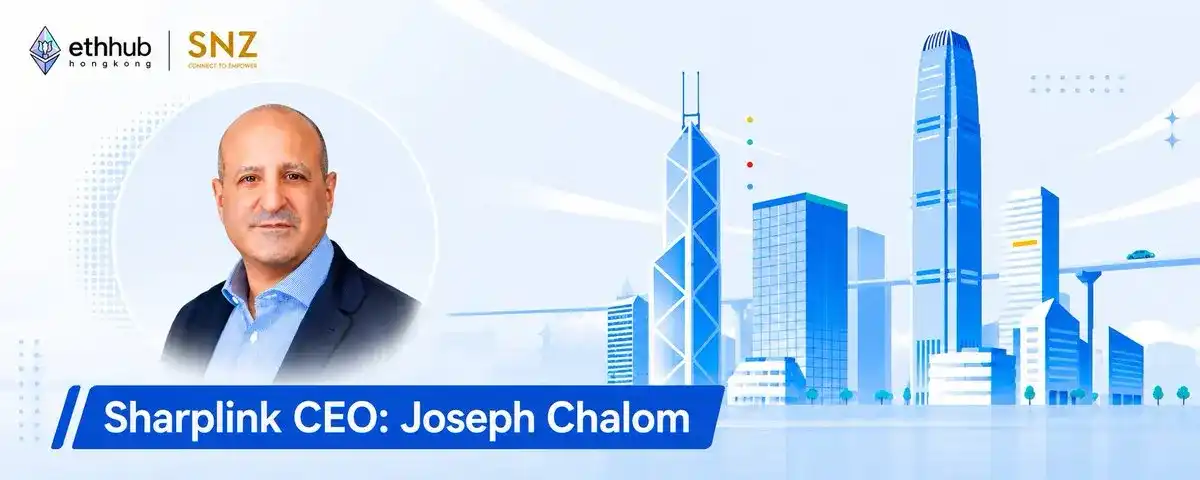
Joseph Chalom: Ethereum is Becoming the "Settlement Layer of Trust" for Global Finance

In a speech titled "The Industrialization of Trust," Sharplink CEO Joseph Chalom (former BlackRock digital assets head) discussed the future transformation of global finance. Drawing from 20 years at BlackRock, where he led the launch of Bitcoin/ETH ETFs and tokenized funds, Chalom highlighted the immense hidden costs of establishing trust in traditional finance—estimated at over $9.3 trillion annually in the US alone due to fragmented systems, multi-day settlements, and countless reconciliations. He argued that Ethereum is emerging as the global financial "settlement layer for trust," with its robust, decentralized infrastructure securing over $300 billion in on-chain assets and most stablecoins and tokenized assets. The future, he stated, will be driven by three accelerating pillars: stablecoins (evolving beyond crypto gateways to become efficient cross-border payment rails), tokenized assets (enabling 24/7 trading and reshaping capital markets), and DeFi (providing automated, accessible financial services). A potential game-changer, Chalom added, is the fourth pillar: "Agentic Finance," where AI agents autonomously execute programmable financial transactions via smart contracts and stablecoins. He envisions individuals soon having AI-powered "CFOs in their pockets" to optimize idle capital and manage tokenized portfolios. This shift, facilitated by Ethereum's trustless settlement, could multiply on-chain transaction volume 1000x within a year, moving finance toward a seamless, digitized future.

marsbit10 min fa

Joseph Chalom: Ethereum is Becoming the "Settlement Layer of Trust" for Global Finance

marsbit10 min fa

STRC Severely Unpegged, What Risks Is the Market Pricing In?

The article analyzes the recent significant de-pegging of Strategy's perpetual preferred stock, STRC, whose price fell to approximately $89, far below its $100 face value. This discount has pushed its simple yield to around 12.9%, creating a paradox. The stock was designed as a high-yield instrument trading near par, and Strategy maintains an 11.5% annual dividend, even recently switching to semi-monthly payments to support the price. The author explores several reasons why the high yield hasn't attracted enough buying pressure to restore the par value. A key factor is potential reverse deleveraging from carry trades, where leveraged investors may be forced to sell due to margin calls as the price falls, creating a self-reinforcing downward spiral. Additionally, the tokenization and integration of STRC into DeFi protocols (like Apyx, Saturn, Pendle) have introduced faster, more transparent, and potentially more volatile price adjustment mechanisms through leverage and yield-splitting products. The emergence of a competing product, Strive's SATA, offering a 13% yield with daily dividends, has also changed the yield benchmark, challenging STRC's unique high-yield narrative. Furthermore, the market is questioning the distinction between Strategy's substantial Bitcoin reserves, which provide long-term balance sheet coverage, and the certainty of stable near-term cash flow for dividends. Ultimately, the price dip represents a stress test for this type of BTC-backed, high-yield financing tool. The future path of STRC depends on whether Strategy acts to reinforce the $100 peg (e.g., by adjusting dividends), whether DeFi-related leverage unwinds further, and how investors ultimately price the risks of leverage, competition, and cash flow uncertainty against the offered yield.

marsbit22 min fa

STRC Severely Unpegged, What Risks Is the Market Pricing In?

marsbit22 min fa

LIT Token Hits Six-Month High: How Long Can the Buyback Flywheel Keep Burning Fuel?

The LIT token of decentralized perpetual exchange Lighter surged to a six-month high above $1.90 on June 18th, with a market cap of $425 million. After a price correction earlier this year, the recent rebound is attributed to its core "buyback flywheel" mechanism. All protocol fee revenue is used for programmatic, hourly market buybacks of LIT. Since its TGE in December 2025, approximately 15 million LIT (6% of circulating supply) has been repurchased for around $21 million. Additional price support comes from the LLP (Lighter Liquidity Pool), where providers must stake LIT worth 10% of their deposited USDC, locking significant token supply. However, challenges persist. Trading volume has declined amidst a sluggish market, with total volume at $1.68 trillion, significantly lower than leading competitor Hyperliquid's $4.37 trillion. While Lighter focuses on perpetual contracts, RWA, and Pre-IPO markets, Hyperliquid has expanded into prediction markets and boasts a U.S. spot ETF, attracting institutional investment and influencer endorsements like from Arthur Hayes. In contrast, LIT currently lacks similar high-profile backing. With 75% of LIT's total 1 billion supply still locked (team and investor tokens begin a 3-year linear unlock in December 2026), there is no immediate unlock selling pressure. The token's future performance hinges on sustaining trading volume growth, successful product iteration, and executing its transparent buyback strategy against a dominant competitor.

Foresight News41 min fa

LIT Token Hits Six-Month High: How Long Can the Buyback Flywheel Keep Burning Fuel?

Foresight News41 min fa

Trading

Spot
Futures

Articoli Popolari

Cosa è ETH 3.0

ETH3.0 e $eth 3.0: Un'Analisi Approfondita del Futuro di Ethereum Introduzione Nel panorama in rapida evoluzione delle criptovalute e della tecnologia blockchain, ETH3.0, spesso indicato come $eth 3.0, è emerso come un argomento di considerevole interesse e speculazione. Il termine comprende due concetti principali che warrantono chiarimenti: Ethereum 3.0: Questo rappresenta un potenziale futuro aggiornamento volto ad aumentare le capacità dell'attuale blockchain di Ethereum, concentrandosi principalmente sul miglioramento della scalabilità e delle prestazioni. ETH3.0 Meme Token: Questo progetto di criptovaluta distinto cerca di sfruttare la blockchain di Ethereum per creare un ecosistema incentrato sui meme, promuovendo il coinvolgimento all'interno della comunità delle criptovalute. Comprendere questi aspetti di ETH3.0 è essenziale non solo per gli appassionati di criptovalute, ma anche per coloro che osservano tendenze tecnologiche più ampie nello spazio digitale. Che cos'è ETH3.0? Ethereum 3.0 Ethereum 3.0 è pubblicizzato come un aggiornamento proposto per la rete Ethereum già stabilita, che è stata la spina dorsale di molte applicazioni decentralizzate (dApps) e contratti smart sin dalla sua nascita. I miglioramenti previsti si concentrano principalmente sulla scalabilità, integrando tecnologie avanzate come lo sharding e le prove a conoscenza zero (zk-proofs). Queste innovazioni tecnologiche mirano a facilitare un numero senza precedenti di transazioni al secondo (TPS), potenzialmente raggiungendo milioni, affrontando così una delle limitazioni più significative della tecnologia blockchain attuale. Il miglioramento non è meramente tecnico, ma anche strategico; è volto a preparare la rete Ethereum per un'adozione e un'utilità diffuse in un futuro contrassegnato da un aumento della domanda di soluzioni decentralizzate. ETH3.0 Meme Token Al contrario di Ethereum 3.0, l'ETH3.0 Meme Token si avventura in un dominio più leggero e giocoso, combinando la cultura dei meme di internet con la dinamica delle criptovalute. Questo progetto consente agli utenti di acquistare, vendere e scambiare meme sulla blockchain di Ethereum, fornendo una piattaforma che promuove il coinvolgimento della comunità attraverso la creatività e interessi condivisi. L'ETH3.0 Meme Token mira a dimostrare come la tecnologia blockchain possa intersecarsi con la cultura digitale, creando casi d'uso che siano sia divertenti che finanziariamente praticabili. Chi è il Creatore di ETH3.0? Ethereum 3.0 L'iniziativa verso Ethereum 3.0 è principalmente propulsa da un consorzio di sviluppatori e ricercatori all'interno della comunità di Ethereum, tra cui Justin Drake. Conosciuto per le sue intuizioni e contributi all'evoluzione di Ethereum, Drake è stato una figura di spicco nelle discussioni riguardanti la transizione di Ethereum verso un nuovo livello di consenso, chiamato “Beam Chain.” Questo approccio collaborativo allo sviluppo significa che Ethereum 3.0 non è il prodotto di un creatore singolo, ma piuttosto una manifestazione di ingegno collettivo focalizzato sul progresso della tecnologia blockchain. ETH3.0 Meme Token I dettagli riguardanti il creatore dell'ETH3.0 Meme Token sono attualmente non rintracciabili. La natura dei token meme conduce spesso a una struttura più decentralizzata e guidata dalla comunità, il che potrebbe spiegare la mancanza di attribuzione specifica. Questo si allinea con l'etica della comunità crypto più ampia, dove l'innovazione spesso nasce da sforzi collaborativi piuttosto che individuali. Chi sono gli Investitori di ETH3.0? Ethereum 3.0 Il supporto per Ethereum 3.0 proviene principalmente dalla Ethereum Foundation insieme a una comunità entusiasta di sviluppatori e investitori. Questa associazione fondamentale fornisce un considerevole grado di legittimità e migliora le prospettive di implementazione di successo poiché sfrutta la fiducia e la credibilità costruite nel corso degli anni di operazioni della rete. Nel clima in rapida evoluzione delle criptovalute, il supporto della comunità gioca un ruolo cruciale nello sviluppo e nell'adozione, posizionando Ethereum 3.0 come un serio contenditore per i futuri progressi della blockchain. ETH3.0 Meme Token Sebbene le fonti attualmente disponibili non forniscano informazioni esplicite riguardo ai fondamenti o alle organizzazioni di investimento che sostengono l'ETH3.0 Meme Token, ciò è indicativo del modello di finanziamento tipico per i token meme, che spesso si basa sul supporto di base e sul coinvolgimento della comunità. Gli investitori in tali progetti sono tipicamente individui motivati dal potenziale per innovazioni guidate dalla comunità e dallo spirito di cooperazione trovato all'interno della comunità crypto. Come Funziona ETH3.0? Ethereum 3.0 Le caratteristiche distintive dell'Ethereum 3.0 risiedono nella sua proposta di implementazione della tecnologia di sharding e zk-proof. Lo sharding è un metodo di partizionamento della blockchain in pezzi più piccoli e gestibili o “shard,” che possono elaborare transazioni in modo concorrente piuttosto che sequenziale. Questa decentralizzazione dell'elaborazione aiuta a prevenire la congestione e garantisce che la rete rimanga reattiva anche sotto un carico pesante. La tecnologia delle prove a conoscenza zero (zk-proof) contribuisce con un ulteriore livello di sofisticazione consentendo la validazione delle transazioni senza rivelare i dati sottostanti coinvolti. Questo aspetto non solo migliora la privacy, ma aumenta anche l'efficienza complessiva della rete. Si parla anche di incorporare una macchina virtuale Ethereum a conoscenza zero (zkEVM) in questo aggiornamento, amplificando ulteriormente le capacità e l'utilità della rete. ETH3.0 Meme Token L'ETH3.0 Meme Token si distingue capitalizzando sulla popolarità della cultura dei meme. Stabilisce un mercato per gli utenti che desiderano partecipare al trading di meme, non solo per divertimento, ma anche per potenziale guadagno economico. Integrando funzioni come lo staking, la fornitura di liquidità e meccanismi di governance, il progetto promuove un ambiente che incentiva l'interazione e la partecipazione della comunità. Offrendo una miscela unica di intrattenimento e opportunità economica, l'ETH3.0 Meme Token mira ad attrarre un pubblico variegato, che va dagli appassionati di crypto ai semplici intenditori di meme. Timeline di ETH3.0 Ethereum 3.0 11 Novembre 2024: Justin Drake accenna al prossimo aggiornamento ETH 3.0, incentrato sui miglioramenti della scalabilità. Questo annuncio segna l'inizio delle discussioni formali riguardo l'architettura futura di Ethereum. 12 Novembre 2024: La proposta attesa per Ethereum 3.0 dovrebbe essere svelata a Devcon a Bangkok, preparando il terreno per un feedback più ampio della comunità e potenziali passi successivi nello sviluppo. ETH3.0 Meme Token 21 Marzo 2024: L'ETH3.0 Meme Token viene ufficialmente elencato su CoinMarketCap, segnando il suo ingresso nel dominio pubblico delle criptovalute e aumentando la visibilità per il suo ecosistema basato sui meme. Punti Chiave In conclusione, Ethereum 3.0 rappresenta una significativa evoluzione all'interno della rete Ethereum, concentrandosi sul superamento delle limitazioni riguardanti scalabilità e prestazioni attraverso tecnologie avanzate. I suoi aggiornamenti proposti riflettono un approccio proattivo alle future esigenze e usabilità. D'altra parte, l'ETH3.0 Meme Token incarna l'essenza della cultura guidata dalla comunità nello spazio delle criptovalute, sfruttando la cultura dei meme per creare piattaforme coinvolgenti che incoraggiano la creatività e la partecipazione degli utenti. Comprendere gli scopi e le funzionalità distinte di ETH3.0 e $eth 3.0 è fondamentale per chiunque sia interessato ai continui sviluppi nello spazio crypto. Con entrambe le iniziative che tracciano percorsi unici, esse sottolineano collettivamente la natura dinamica e multifacetica dell'innovazione blockchain.

178 Totale visualizzazioniPubblicato il 2024.04.04Aggiornato il 2024.12.03

Cosa è ETH 3.0

Cosa è ETHEREUM

HarryPotterTrumpHomerSimpson777Inu: Panoramica di un Progetto Crypto Web3 Introduzione Nel mondo in rapida evoluzione delle criptovalute e della finanza decentralizzata, progetti innovativi emergono frequentemente, catturando l'interesse della comunità degli investitori e degli appassionati di crypto. Uno di questi progetti è HarryPotterTrumpHomerSimpson777Inu, una criptovaluta che si trova all'incrocio tra cultura popolare e tecnologia blockchain. Questo token guidato dalla comunità mescola personaggi e figure politiche ben noti, con l'obiettivo di creare una piattaforma coinvolgente e promuovere un'adozione diffusa. Che cos'è HarryPotterTrumpHomerSimpson777Inu? HarryPotterTrumpHomerSimpson777Inu è un token costruito sulla blockchain di Ethereum, progettato per essere accessibile e divertente per un pubblico diversificato. L'unicità di questo progetto deriva dal suo approccio tematico, che intreccia elementi di fantasia, politica e intrattenimento. Sfruttando il fascino nostalgico di personaggi amati, il progetto cerca di creare un'esperienza di criptovaluta coinvolgente, incoraggiando il coinvolgimento e la partecipazione della comunità. L'obiettivo principale di HarryPotterTrumpHomerSimpson777Inu è stabilire un token che risuoni con gli utenti a livello personale, promuovendo sia il divertimento che il coinvolgimento nell'ambito crypto. Questo branding distintivo mira ad attrarre individui che in precedenza potrebbero non essersi interessati alle criptovalute, facilitando un nuovo punto di ingresso per utenti potenziali. Creatore di HarryPotterTrumpHomerSimpson777Inu L'identità del creatore dietro HarryPotterTrumpHomerSimpson777Inu rimane sconosciuta. Questa non è una pratica rara nel dominio delle criptovalute, dove l'anonimato è spesso preferito dai fondatori come mezzo di protezione della privacy e promozione di un ethos decentralizzato. Questa oscurità non diminuisce il valore del progetto; al contrario, riflette una tendenza più ampia all'interno del settore, dove molti progetti di successo sono emersi da origini anonime. Investitori di HarryPotterTrumpHomerSimpson777Inu Le informazioni pubbliche riguardo agli investitori di HarryPotterTrumpHomerSimpson777Inu sono limitate. La natura del progetto, incentrata sul coinvolgimento della comunità, suggerisce una dipendenza da investimenti di piccole dimensioni da parte di singoli appassionati piuttosto che da sostegni sostanziali da fondazioni di investimento consolidate o corporation. Questo livello di trasparenza nel finanziamento è tipico di molti progetti di criptovaluta guidati dalla comunità, dove il supporto spesso proviene da movimenti di base piuttosto che da investitori istituzionali. Come Funziona HarryPotterTrumpHomerSimpson777Inu? Operando sulla blockchain di Ethereum, HarryPotterTrumpHomerSimpson777Inu sfrutta la sua solida infrastruttura per facilitare transazioni e promuovere interazioni tra gli utenti all'interno della comunità. Ciò che distingue questo progetto è il suo posizionamento tematico: canalizzando il carisma di personaggi iconici provenienti da diversi ambiti culturali, crea un'identità di marca distintiva. Questo approccio non solo attrae gli utenti, ma coltiva anche una comunità fedele attorno al token. Le meccaniche operative del progetto si concentrano sul coinvolgimento della comunità. Adotta un modello decentralizzato che incoraggia la partecipazione, consentendo agli utenti di interagire attraverso vari canali mentre promuovono lo scambio di idee e esperienze. Inoltre, il progetto abbraccia i principi del Web3, privilegiando la sovranità degli utenti e la decentralizzazione, che sono i pilastri del futuro di Internet. Timeline di HarryPotterTrumpHomerSimpson777Inu La storia di HarryPotterTrumpHomerSimpson777Inu è segnata da diversi eventi decisivi: 12 agosto 2023: L'inizio di HarryPotterTrumpHomerSimpson777Inu, segnando il suo ingresso nell'ecosistema delle criptovalute. Fase di Sviluppo: Un periodo focalizzato sulla costruzione di una strategia completa per stimolare la crescita guidata dalla comunità e il coinvolgimento degli utenti. Listing sugli Scambi: Sebbene i dettagli specifici di listing non siano stati divulgati, il progetto è stato reso accessibile su vari scambi di criptovalute, migliorando la sua visibilità nel mercato. Coinvolgimento della Comunità: Sforzi continui per coinvolgere attivamente la comunità, stabilendo canali di dialogo e promuovendo la partecipazione attraverso varie attività, tra cui concorsi, discussioni e votazioni comunitarie. Aspetti Chiave di HarryPotterTrumpHomerSimpson777Inu Focus sulla Comunità Un tratto distintivo di HarryPotterTrumpHomerSimpson777Inu è la sua forte enfasi sul coinvolgimento della comunità. Il progetto incoraggia attivamente gli utenti a partecipare a discussioni, condividere idee e contribuire all'evoluzione del progetto. Questa interazione coltiva un senso di appartenenza e di ownership tra i membri della comunità, essenziale per la sostenibilità a lungo termine del token. Utilizzo della Blockchain di Ethereum La scelta di costruire sulla blockchain di Ethereum consente a HarryPotterTrumpHomerSimpson777Inu di sfruttare le sue caratteristiche di sicurezza ben consolidate e architettura decentralizzata. Questa base garantisce affidabilità per le transazioni e fornisce un framework affidabile su cui sviluppare varie funzionalità. Approccio Tematico Unico Fusione di elementi della cultura pop nella sua identità, HarryPotterTrumpHomerSimpson777Inu crea una narrazione coinvolgente che lo differenzia da altre criptovalute. L'amalgama di personaggi e temi genera riconoscimento e intrigo immediati, rendendo il token relazionabile a un'ampia gamma di utenti potenziali. Anonimato nello Sviluppo Il creatore anonimo del progetto rimane una caratteristica ricorrente in molte iniziative di criptovaluta. Questo aspetto evidenzia un ethos di decentralizzazione, introducendo anche un livello di mistero che potrebbe affascinare un segmento della comunità crypto, attirando l'attenzione sul progetto e invitando l'impegno da parte di utenti che supportano l'idea di un'iniziativa decentralizzata e gestita dalla comunità. Conclusione HarryPotterTrumpHomerSimpson777Inu si presenta come un'aggiunta distintiva al panorama delle criptovalute, combinando il fascino della cultura popolare con le meccaniche innovative della tecnologia blockchain. Sebbene i dettagli riguardanti il creatore e gli investitori specifici rimangano non divulgati, il focus del progetto sulla comunità e il suo approccio tematico lo contraddistinguono come un potenziale attore influente nel contesto del Web3 e delle criptovalute. Man mano che l'ecosistema delle criptovalute continua ad espandersi, iniziative come HarryPotterTrumpHomerSimpson777Inu ci ricordano le molteplici modalità in cui la blockchain può connettere le comunità globali attraverso narrazioni e valori condivisi.

939 Totale visualizzazioniPubblicato il 2024.04.06Aggiornato il 2024.12.03

Cosa è ETHEREUM

Come comprare ETH

Benvenuto in HTX.com! Abbiamo reso l'acquisto di Ethereum (ETH) semplice e conveniente. Segui la nostra guida passo passo per intraprendere il tuo viaggio nel mondo delle criptovalute.Step 1: Crea il tuo Account HTXUsa la tua email o numero di telefono per registrarti il tuo account gratuito su HTX. Vivi un'esperienza facile e sblocca tutte le funzionalità,Crea il mio accountStep 2: Vai in Acquista crypto e seleziona il tuo metodo di pagamentoCarta di credito/debito: utilizza la tua Visa o Mastercard per acquistare immediatamente EthereumETH.Bilancio: Usa i fondi dal bilancio del tuo account HTX per fare trading senza problemi.Terze parti: abbiamo aggiunto metodi di pagamento molto utilizzati come Google Pay e Apple Pay per maggiore comodità.P2P: Fai trading direttamente con altri utenti HTX.Over-the-Counter (OTC): Offriamo servizi su misura e tassi di cambio competitivi per i trader.Step 3: Conserva Ethereum (ETH)Dopo aver acquistato Ethereum (ETH), conserva nel tuo account HTX. In alternativa, puoi inviare tramite trasferimento blockchain o scambiare per altre criptovalute.Step 4: Scambia Ethereum (ETH)Scambia facilmente Ethereum (ETH) nel mercato spot di HTX. Accedi al tuo account, seleziona la tua coppia di trading, esegui le tue operazioni e monitora in tempo reale. Offriamo un'esperienza user-friendly sia per chi ha appena iniziato che per i trader più esperti.

2.9k Totale visualizzazioniPubblicato il 2024.12.10Aggiornato il 2026.06.02

Come comprare ETH

Discussioni

Benvenuto nella Community HTX. Qui puoi rimanere informato sugli ultimi sviluppi della piattaforma e accedere ad approfondimenti esperti sul mercato. Le opinioni degli utenti sul prezzo di ETH ETH sono presentate come di seguito.

活动图片