Data Review: How Much Profit Did Prediction Markets Reap from a Single World Cup?

Odaily星球日报Pubblicato 2026-07-27Pubblicato ultima volta 2026-07-27

Introduzione

**How Much Did the 2026 World Cup Boost Prediction Markets? A Data Review.** The 2026 World Cup provided a major, temporary boost to leading prediction markets, according to an analysis of Kalshi, Polymarket, and predict.fun. During the tournament, total nominal trading volume reached $543.38 billion on Kalshi, $209.88 billion on Polymarket, and $10.92 billion on predict.fun. While Kalshi maintained an overall lead, Polymarket narrowed the gap significantly in World Cup-specific markets. All platforms saw daily trading volumes roughly double or more during the event compared to pre-tournament levels, but activity largely retreated to baseline shortly after the final. Fee revenue also surged. Kalshi's weekly fees peaked at over $100 million in the fourth week, totaling $473.2 million for the tournament. Polymarket's weekly fees stabilized around $20 million, totaling $111.4 million. Predict.fun saw its weekly fee income rise from a pre-tournament $159k to a peak of $755k, with a six-week total of $3.48 million. Post-tournament, daily fee income declined for all three. Analysis of Total Value Locked (TVL) showed Polymarket's deposits remained flat around $4.4-$4.8 billion during the World Cup and later fell, suggesting the event spurred high-frequency trading but not long-term capital commitment. In contrast, predict.fun's TVL saw a clear inflow during the tournament's knockout stages, rising to a peak near $25 million before easing. The data confirms that mega-sports even...

Original | Odaily Planet Daily (@OdailyChina)

Author | Asher (@Asher_ 0210)
The 2026 World Cup has concluded, and prediction markets are undergoing a phased review.

Over the past six weeks, many users engaged in trading predictions on match outcomes, qualification scenarios, and championship winners, adding a layer of real-time interaction to viewing. Now that the tournament is over, Odaily Planet Daily will review the performance of leading prediction market platforms Kalshi, Polymarket, and predict.fun before, during, and after the World Cup from three dimensions: trading volume, fee revenue, and TVL.

World Cup Drove Prediction Market Trading Volume to New Highs, But the Momentum Didn't Last

Kalshi Maintains Lead, Polymarket Narrows Gap, predict.fun Breaks Through with World Cup

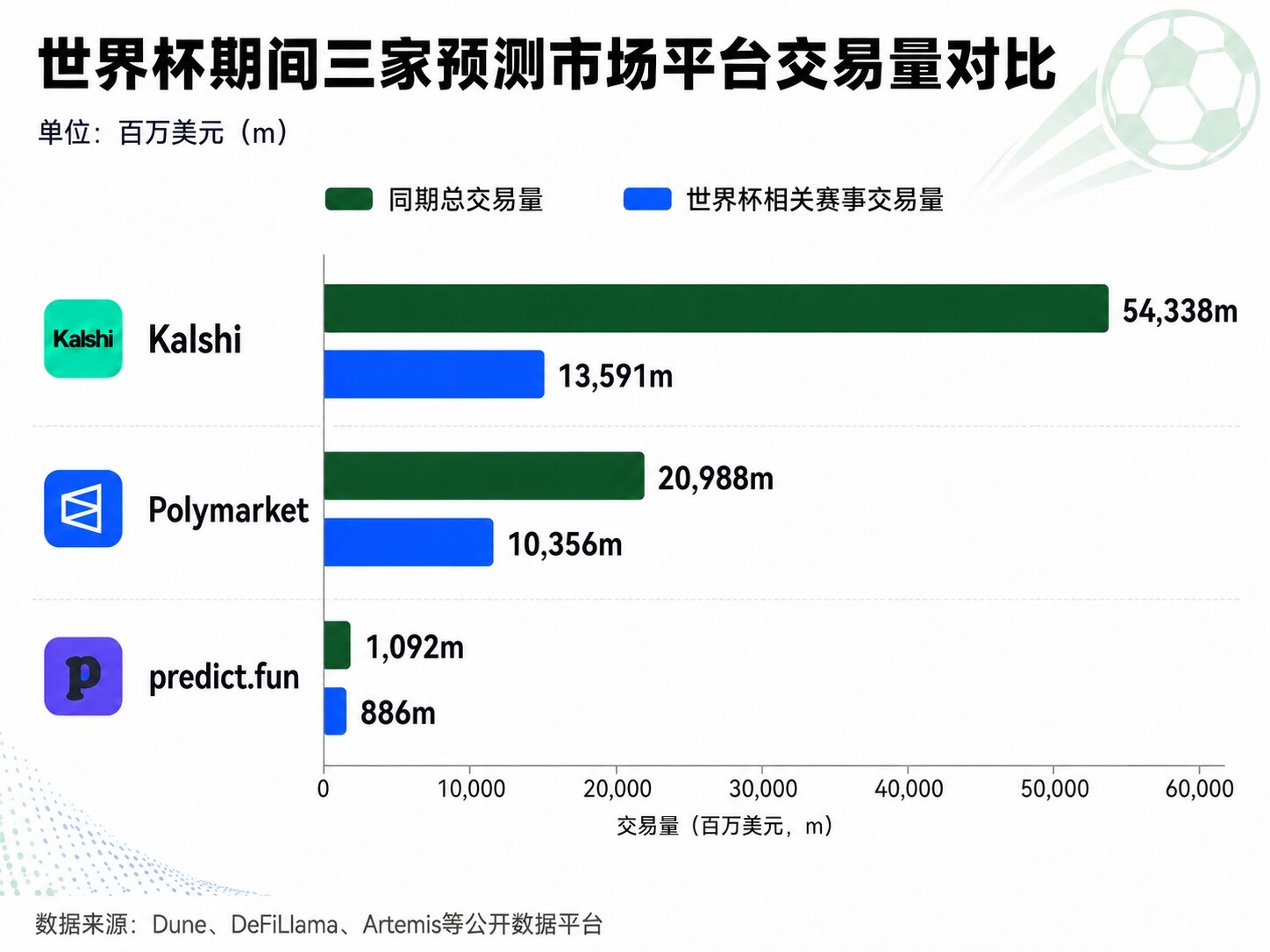
Looking at total platform trading volume during the World Cup period, Kalshi still maintains a clear lead. During the same period, Kalshi's total trading volume reached $54.338 billion, while Polymarket's was $20.988 billion, the former being about 2.6 times the latter. However, considering only World Cup-related events, the gap between the two narrows significantly. Kalshi's related trading volume was $13.591 billion, while Polymarket reached $10.356 billion, the former being only about 1.3 times the latter.(Note: Trading volume discussed in this article is nominal trading volume.)

In the past, Polymarket's representative markets were more concentrated in US elections, cryptocurrency, and geopolitical events. The World Cup further elevated the importance of sports markets on the platform, shifting them from a supplementary category to a core trading segment. Kalshi's advantage lies in its more dispersed trading structure; besides the World Cup, other sports events, politics, and macro markets continue to contribute trading volume, providing more scenarios to sustain activity after the tournament ends.

predict.fun's total platform trading volume during the World Cup reached $1.092 billion, with World Cup-related markets contributing $886 million. Although the overall scale still shows a clear gap compared to Kalshi and Polymarket, for a platform launched just over half a year ago, achieving nearly $900 million in trading volume from this World Cup has made predict.fun one of the most prominent new platforms benefiting from this round of tournament gains.
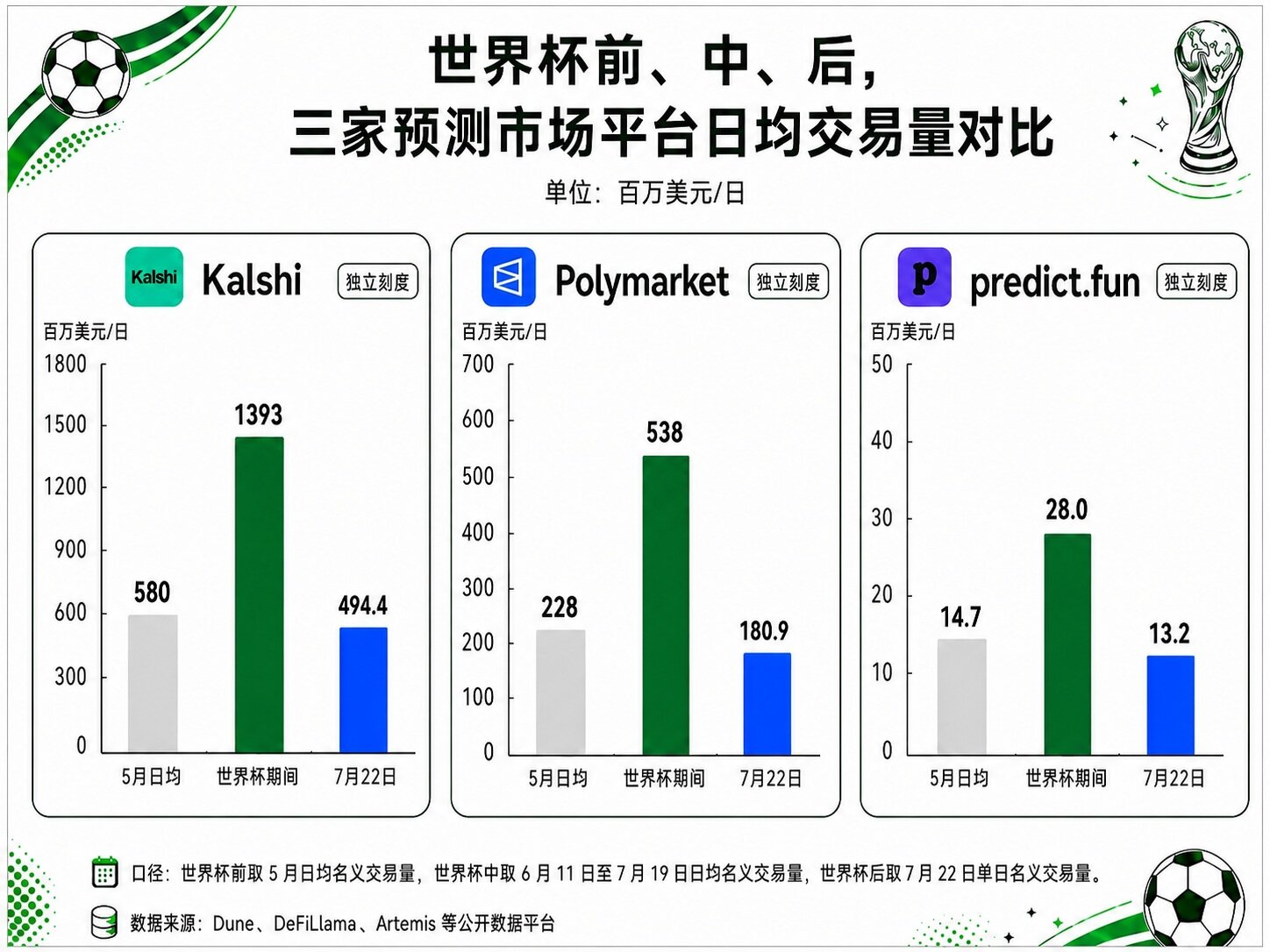
Changes in Average Daily Trading Volume for the Three Prediction Market Platforms Before, During, and After the World Cup

Kalshi's increase in trading volume during the World Cup was the most significant. Its average daily nominal trading volume in May was $580 million, rising to $1.393 billion during the tournament, an increase of about 140%. By July 22nd, trading volume fell back to $494.4 million, already below the May average daily level.

Polymarket's change magnitude was similar to Kalshi's. Its average daily nominal trading volume in May was $228 million, rising to $538 million during the World Cup, an increase of about 136%. By July 22nd, trading volume dropped to $180.9 million, also below pre-tournament levels.

predict.fun had a lower base, but the boost from the World Cup was still clear. Its average daily nominal trading volume in May was $14.7 million, rising to $28 million during the tournament, nearly doubling. By July 22nd, trading volume was $13.2 million, basically returning to pre-tournament levels.

Taking just one day's trading volume after the World Cup for comparison, the growth brought by the World Cup appears more like a concentrated release of event traffic, rather than elevating the platform's daily trading volume to a permanently higher level. Whether it can rise again in the future depends on whether other sports events and non-sports markets can capture the trading demand left after the World Cup.
How Much Fee Revenue Did the World Cup Generate for the Three Prediction Market Platforms?

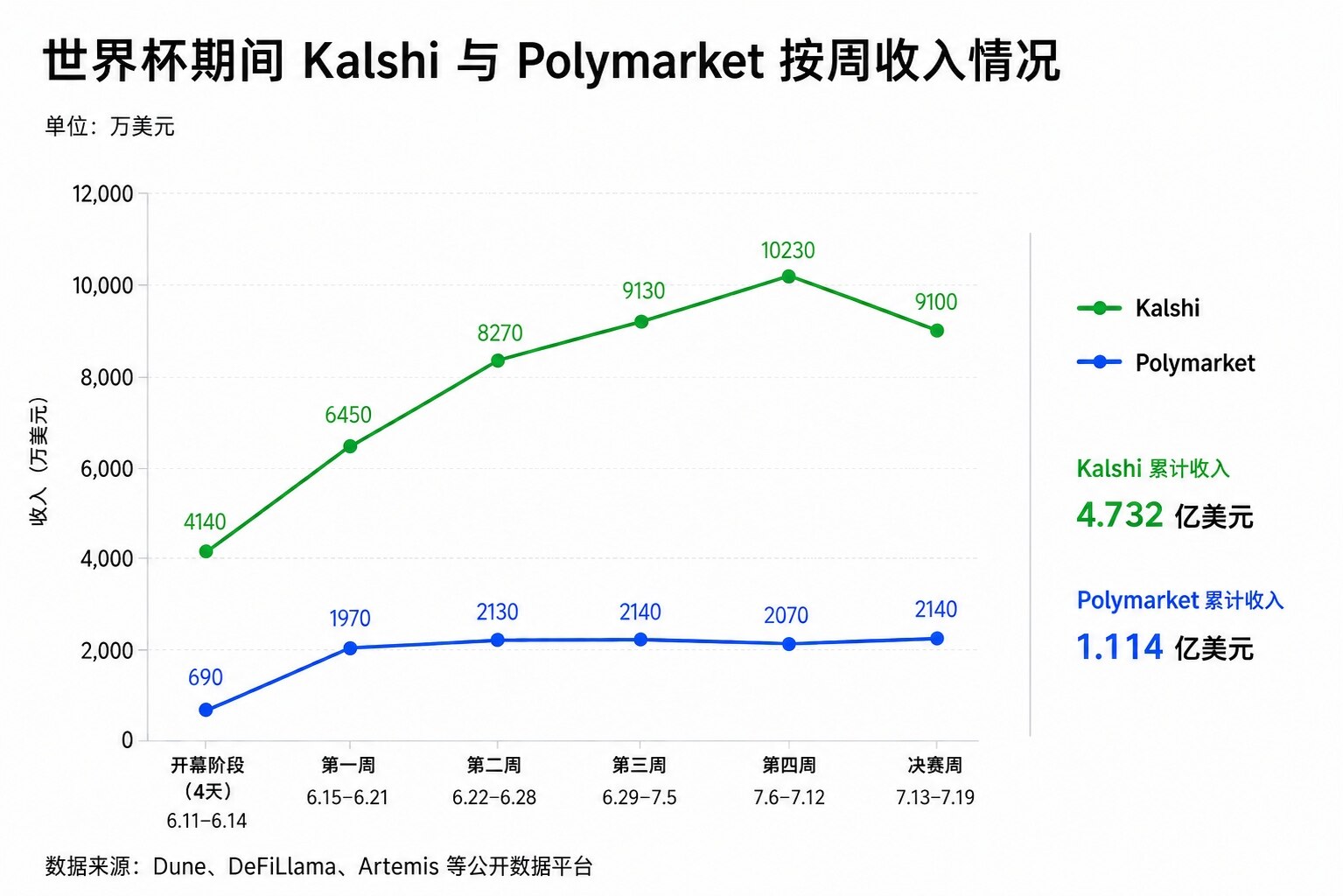
Kalshi's Fee Revenue Rose Continuously as the Tournament Progressed, Exceeding $100 Million in a Single Week in Week 4

Kalshi's fee revenue curve showed a strong overall upward trend. Revenue for the opening four-day period was $41.4 million, rising to $64.5 million in the first week, further increasing to $82.7 million in the second week, reaching $91.3 million in the third week, and rising another step in the fourth week with single-week revenue reaching $102.3 million, the highest point during the entire World Cup period. The final week saw a slight drop to $91 million. Throughout the World Cup, Kalshi's cumulative fee revenue reached $473.2 million.

The World Cup's impact on Kalshi not only brought initial attention at the start but, more importantly, sustained trading heat into the latter stages of the tournament. Single-week revenue exceeding $100 million also means Kalshi not only benefited from World Cup gains in trading volume but also successfully converted this wave of traffic into platform revenue at the monetization level.

Polymarket's Fee Revenue Was More Stable, But Didn't See Accelerated Volume Growth Like Kalshi in the Latter Stages

Polymarket's fee revenue trend was noticeably flatter. Revenue for the opening four-day period was $6.9 million, rising to $19.7 million in the first week. Subsequent weeks two, three, four, and the final week were $21.3 million, $21.4 million, $20.7 million, and $21.4 million respectively. Throughout the World Cup, Polymarket's cumulative fee revenue reached $111.4 million.

Starting from the first week, Polymarket's weekly fee revenue remained largely stable around $20 million. The World Cup did elevate Polymarket's fee revenue to a higher level, but from the second week onward, the platform did not continue to amplify gains as the tournament progressed like Kalshi did, instead operating within a relatively stable range.
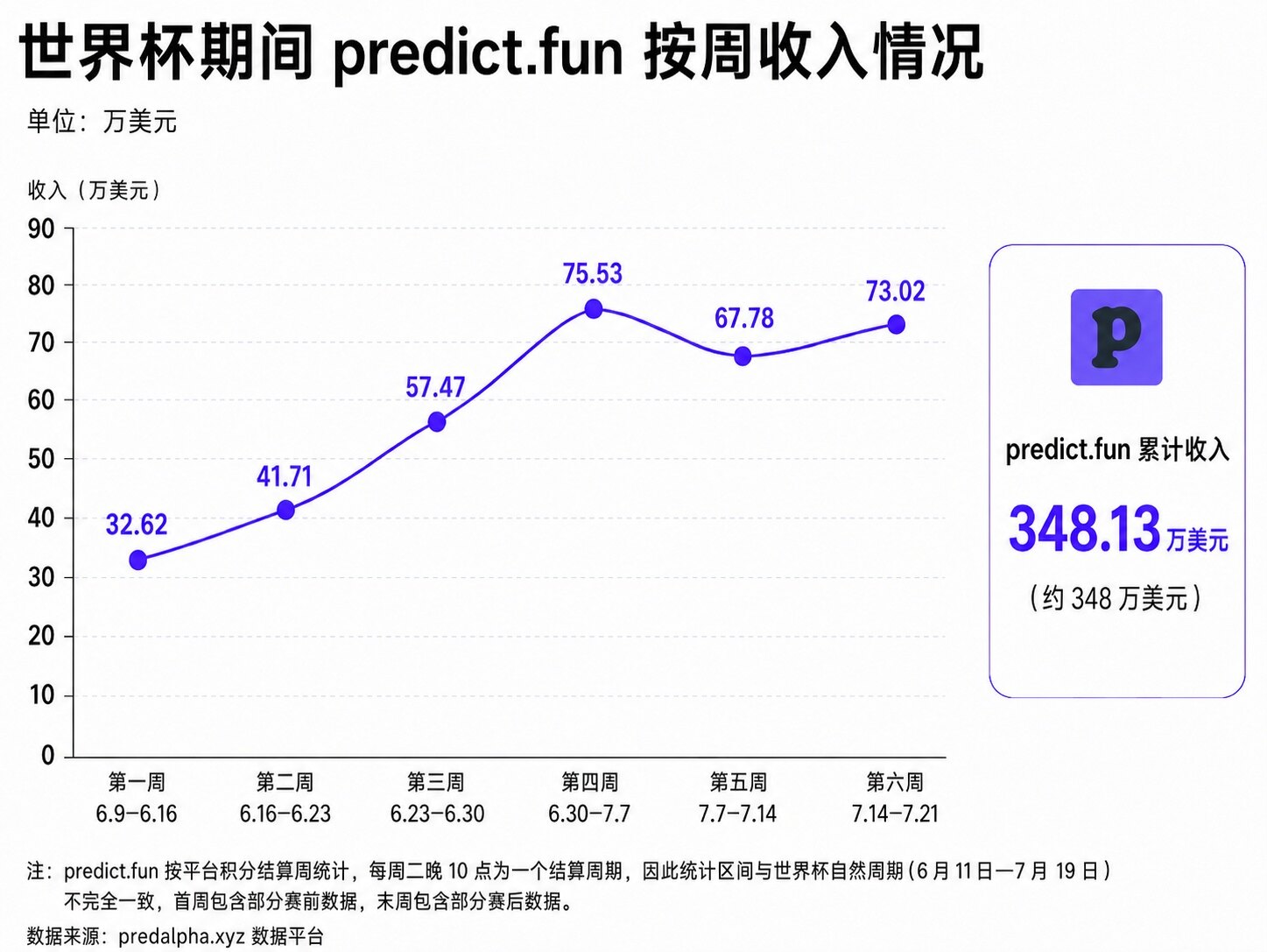
predict.fun's Fee Revenue Gradually Increased as the Tournament Progressed, Cumulative $3.481 Million Over Six Settlement Weeks

predict.fun's fee revenue is counted by platform settlement weeks, switching cycles every Tuesday at 10 PM, so it does not perfectly align with the natural World Cup schedule from June 11th to July 19th. The first settlement week was June 9th to June 16th, including two days of pre-tournament data; the last settlement week was July 14th to July 21st, also incorporating two days of post-tournament data.

Looking at the revenue trend, predict.fun's fee revenue for the first settlement week was $326.2 thousand. It then increased for three consecutive weeks, reaching $755.3 thousand from June 30th to July 7th, setting the single-week high during the World Cup period. The subsequent two weeks recorded $677.8 thousand and $730.2 thousand respectively. Although not setting new highs, these were still significantly higher than early in the tournament. The cumulative fee revenue for the six settlement weeks during the World Cup reached $3.4813 million.

The settlement week before the World Cup, June 2nd to June 9th, predict.fun's fee revenue was only $159.4 thousand. Entering the World Cup period, revenue for the first week rose to $326.2 thousand, an increase of about 105%. Subsequently, most settlement weeks further increased to over $500 thousand. Even though the first and last periods included some pre- and post-tournament data, the World Cup's boost to predict.fun's fee revenue remained significant.
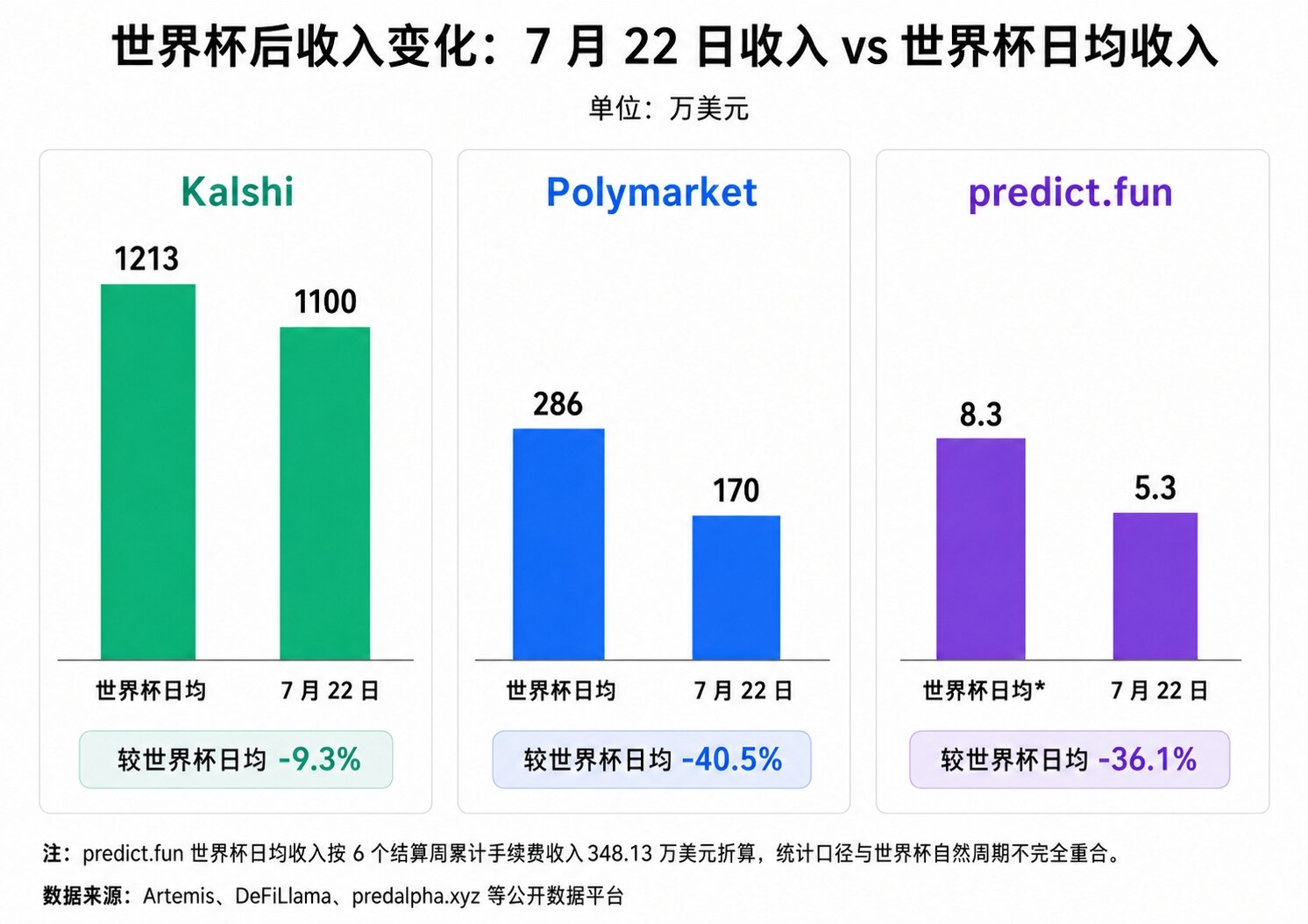
After the World Cup, Fee Revenue Generally Declined Across Platforms, with Kalshi Experiencing the Smallest Drop

Kalshi's average daily fee revenue during the World Cup was $12.13 million, dropping to $11 million on July 22nd, a decrease of 9.3%. Among the three platforms, Kalshi's post-tournament decline was the smallest. Although fee revenue fell from the peak levels during the tournament, it remained close to the World Cup daily average.

Polymarket's drop was more pronounced. Its average daily fee revenue during the World Cup was $2.86 million, dropping to $1.7 million on July 22nd, a decrease of 40.5%. The revenue increment the World Cup brought to Polymarket was relatively concentrated, and as the tournament ended, this increment quickly dissipated.

predict.fun's average daily fee revenue during the World Cup was approximately $83 thousand, dropping to $53 thousand on July 22nd, a decrease of 36.1%, similar in magnitude to Polymarket's decline. Although the statistical method differs slightly from the first two, the post-tournament trend is clear. The World Cup also provided a significant boost to predict.fun's fee revenue, which similarly receded relatively quickly after the event.
World Cup Didn't Elevate Polymarket's TVL, While predict.fun Saw Capital Inflow in the Latter Stages

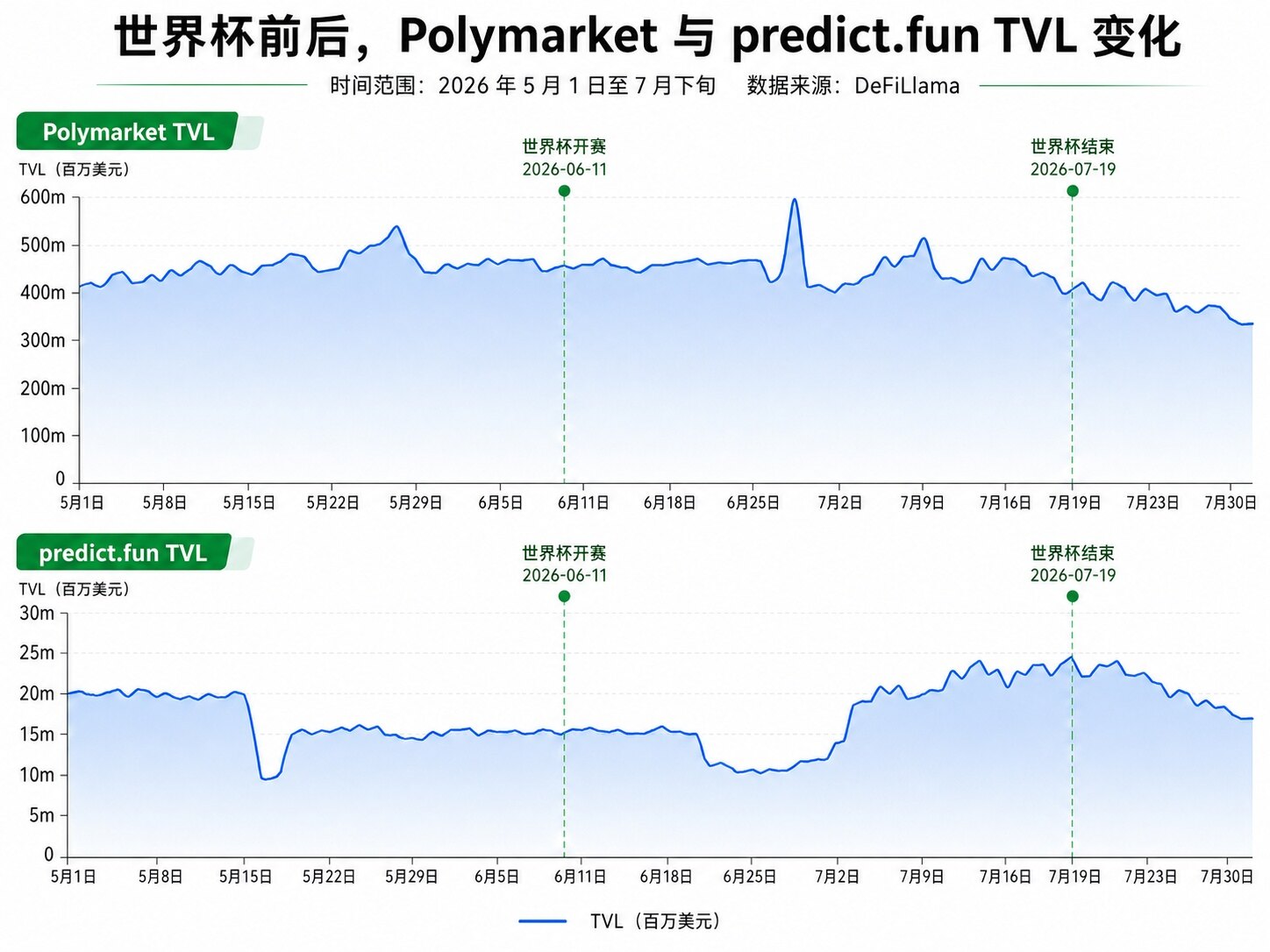
Polymarket's TVL did not rise in sync with trading volume during the World Cup. In early May, the platform's TVL was around $410 million, and for most of the subsequent period, it remained in the range of $440 million to $480 million. After the World Cup began, TVL continued to fluctuate mainly around this level. Although it briefly spiked in late June and early July, it did not form a sustained upward trend.

After mid-July, TVL began to decline noticeably, dropping to around $400 million by the end of the World Cup, and has since fallen further to about $340 million. While trading volume significantly expanded during the tournament, the platform's settled capital did not correspondingly convert into long-term retained funds, indicating that the World Cup brought more high-frequency trading demand rather than simultaneously translating into persistent capital.

predict.fun's trend was more phased. In early May, its TVL was around $20 million. By mid-May, it had dropped to about $10 million, then maintained around $15 million until mid-June. At the start of the World Cup, TVL did not immediately rise. It wasn't until early July that it began to rebound quickly, reaching the $20-25 million range during the latter half of the tournament and hitting a phase high around the end of the World Cup.

After the tournament, TVL gradually declined, currently at about $17 million, but still higher than the low point in late June. Compared to Polymarket, predict.fun's capital changes were more closely linked to the World Cup's progress, especially with more noticeable capital inflows during the knockout stages.

(Note: As Kalshi's TVL data is not available on-chain, this section only discusses Polymarket and predict.fun.)
Summary

The World Cup indeed brought substantial trading volume and fee revenue to prediction markets, but post-tournament data also shows that this growth did not naturally continue. The average daily trading volume and fee revenue for all three platforms declined after the event, and Polymarket's TVL continued to fall. Mega-events can concentrate and amplify trading demand in the short term but may not directly elevate a platform's long-term activity level.

However, the World Cup benefits are not confined to short-term data alone. It at least validated that sports events can provide prediction markets with continuous, high-frequency, short-cycle trading scenarios and helped more users develop the habit of repeated trading across consecutive matches.

The World Cup has ended, but the competition around user retention, market supply, and normalized trading is just beginning.


Crypto di tendenza

Domande pertinenti

QAccording to the article, which prediction market platform achieved the highest total nominal trading volume during the 2026 World Cup?

AKalshi achieved the highest total nominal trading volume during the 2026 World Cup, reaching $54.338 billion.

QWhat was the key difference between Kalshi's and Polymarket's fee income trends during the World Cup, as highlighted in the article?

AKalshi's fee income showed a strong upward trend throughout the tournament, peaking at over $100 million in a single week. In contrast, Polymarket's fee income was more stable, leveling off after an initial rise and not showing the same accelerated growth in the latter stages of the tournament.

QThe article mentions that the post-tournament transaction volume data indicates the World Cup growth did not 'naturally extend'. Which platform's data is used to illustrate a significant drop in daily fee income after the event?

APolymarket is used to illustrate a significant post-tournament drop. Its daily fee income fell from $2.86 million during the tournament to $1.7 million on July 22nd, a drop of 40.5%. Predict.fun also saw a 36.1% drop in daily fee income.

QHow did the Total Value Locked (TVL) on predict.fun change during the World Cup, according to the article's analysis?

APredict.fun's TVL showed a delayed but clear correlation with the World Cup. It did not rise immediately at the start but began a rapid increase in early July, peaking between $20-25 million during the tournament's knockout stages (the latter half). After the event, it gradually declined but remained above its pre-tournament lows.

QWhat positive long-term effect did the article suggest the World Cup had on the prediction market space, beyond just short-term data?

AThe article suggested that the World Cup validated that major sports events can provide high-frequency, short-cycle trading scenarios for prediction markets. It also helped more users develop a habit of repeated trading across consecutive matches, which is beneficial for the industry's long-term growth.

Letture associate

AI is Killing 'Poor People's Entertainment'

AI Is Eliminating 'Entertainment for the Poor' This article discusses the rising cost of video gaming, arguing that AI is making digital entertainment increasingly expensive. It follows the example of a frugal gamer who, accustomed to waiting for discounts and buying second-hand games, now faces a new reality. Video game consoles like the PS5 Pro and Switch 2 are increasing in price post-launch, breaking the traditional pattern of降价 over time. Game prices are also rising, with major titles like GTA 6 launching at $80. Furthermore, the industry is moving towards eliminating physical media, exemplified by Sony's plan to stop PS disc production by 2028. This shift blocks the二手 market, a key cost-saving avenue for players. Even Valve's anticipated affordable Steam Machine launched with a high price and disappointing specs. Manufacturers cite inflation, supply chain issues, and rising development costs, but a core driver is the AI boom. AI data centers now consume semiconductor and memory resources once prioritized for consumer electronics like game consoles. This competition from a more profitable sector drives up hardware costs. Additionally, developing modern AAA games with massive teams over many years is astronomically expensive, pushing publishers towards digital-only distribution and subscription models to secure recurring revenue. The article suggests this trend extends beyond gaming. Video streaming, music platforms, cloud storage, and AI tools are increasingly locked behind complex subscription tiers. While AI promises future benefits, it is currently making digital entertainment and services more costly. The era of progressively cheaper, accessible online entertainment is ending, forcing consumers to pay more upfront for future technological promises.

marsbit45 min fa

AI is Killing 'Poor People's Entertainment'

marsbit45 min fa

The Demise of the Trillion-HKD ETF Myth: SK Hynix Plummets, Hong Kong Switches from 'Double Leverage' to 'Flexible Leverage', South Korea Restricts Leveraged ETF Investments

South Korea's AI-driven bull market has taken a sharp downturn, severely impacting SK Hynix's stock and prompting regulatory tightening in both Hong Kong and South Korea on single-stock leveraged products. The CSOP SK Hynix Daily Leveraged (2x) ETF, once the world's largest single-stock leveraged ETF with over HKD 130 billion in assets, saw its value plummet by over 80% as SK Hynix shares fell nearly 46% from their June peak, erasing more than HKD 100 billion. In response, Hong Kong's Securities and Futures Commission (SFC) revised its regulatory framework. Starting August 3rd, fixed 2x leverage for single-stock leveraged and inverse products will shift to a dynamic "flexible leverage" mechanism, where daily leverage can vary up to a maximum of 2x. This aims to balance market development with investor protection but has sparked debate about changes to the products' core features and potential reduced appeal for risk-seeking investors. Simultaneously, South Korean authorities announced plans to further restrict single-stock leveraged ETFs following two consecutive days of market circuit breakers. Proposed measures include capping individual investors' allocations to such products at 20% of their total financial investment assets, increasing trading costs, and enhancing suitability requirements. The Finance Minister publicly apologized, acknowledging insufficient initial risk assessment. Analysts note that while the long-term fundamentals for South Korean semiconductor firms like SK Hynix remain solid, short-term market volatility is heightened due to concentrated leveraged bets and shifting global risk sentiment. The regulatory moves in both markets signal a clear shift from encouraging innovation towards prioritizing risk control, reminding investors of the amplified risks inherent in leveraged products.

marsbit50 min fa

The Demise of the Trillion-HKD ETF Myth: SK Hynix Plummets, Hong Kong Switches from 'Double Leverage' to 'Flexible Leverage', South Korea Restricts Leveraged ETF Investments

marsbit50 min fa

After the Privatization of the Internet, Silicon Valley Begins Privatizing Human Civilization

"The Privatization of Human Civilization" The article critiques how AI companies like Anthropic are systematically acquiring and digitizing millions of books—sometimes by destroying physical copies—to build proprietary training datasets for models like Claude. While a lawsuit resulted in a settlement, the author argues the deeper issue transcends copyright: it is about the privatization and centralized control of human knowledge and civilization. This process coincides with a powerful Silicon Valley ideology, exemplified by Marc Andreessen's "Techno-Optimist Manifesto" and movements like e/acc (Effective Accelerationism). This worldview frames technological growth and speed as inherently moral, portraying caution, regulation, and public dissent as obstacles to progress. It often envisions intelligence itself, rather than human well-being, as the ultimate goal, potentially sidelining present human concerns. Figures like Peter Thiel and Curtis Yarvin express skepticism towards democratic processes as too slow, suggesting more centralized, founder-led governance is efficient. This logic extends to AI, where a small team within a company defines the model's "constitution"—its rules, values, and definitions of truth and safety—effectively governing how millions understand the world. Thus, the scanned books symbolize a new form of control. Knowledge isn't erased but is ingested into private, opaque systems. The original, decentralized, and contestable nature of books and public knowledge is replaced by a curated, company-controlled output. The public's access to their own cultural heritage becomes mediated by corporate AI, which remembers civilization only in the form its creators dictate. This is not book-burning but a subtler, potentially more complete privatization of human memory and understanding.

marsbit1 h fa

After the Privatization of the Internet, Silicon Valley Begins Privatizing Human Civilization

marsbit1 h fa

Trading

Spot

Articoli Popolari

Come comprare DATA

Benvenuto in HTX.com! Abbiamo reso l'acquisto di DATA Network (DATA) semplice e conveniente. Segui la nostra guida passo passo per intraprendere il tuo viaggio nel mondo delle criptovalute.Step 1: Crea il tuo Account HTXUsa la tua email o numero di telefono per registrarti il tuo account gratuito su HTX. Vivi un'esperienza facile e sblocca tutte le funzionalità,Crea il mio accountStep 2: Vai in Acquista crypto e seleziona il tuo metodo di pagamentoCarta di credito/debito: utilizza la tua Visa o Mastercard per acquistare immediatamente DATA NetworkDATA.Bilancio: Usa i fondi dal bilancio del tuo account HTX per fare trading senza problemi.Terze parti: abbiamo aggiunto metodi di pagamento molto utilizzati come Google Pay e Apple Pay per maggiore comodità.P2P: Fai trading direttamente con altri utenti HTX.Over-the-Counter (OTC): Offriamo servizi su misura e tassi di cambio competitivi per i trader.Step 3: Conserva DATA Network (DATA)Dopo aver acquistato DATA Network (DATA), conserva nel tuo account HTX. In alternativa, puoi inviare tramite trasferimento blockchain o scambiare per altre criptovalute.Step 4: Scambia DATA Network (DATA)Scambia facilmente DATA Network (DATA) nel mercato spot di HTX. Accedi al tuo account, seleziona la tua coppia di trading, esegui le tue operazioni e monitora in tempo reale. Offriamo un'esperienza user-friendly sia per chi ha appena iniziato che per i trader più esperti.

148 Totale visualizzazioniPubblicato il 2026.07.01Aggiornato il 2026.07.01

Come comprare DATA

Discussioni

Benvenuto nella Community HTX. Qui puoi rimanere informato sugli ultimi sviluppi della piattaforma e accedere ad approfondimenti esperti sul mercato. Le opinioni degli utenti sul prezzo di DATA DATA sono presentate come di seguito.

活动图片