Semiconductor Stock Rebound: Is the Technical Correction Over or a Trend Reversal?

marsbitPubblicato 2026-06-24Pubblicato ultima volta 2026-06-24

Introduzione

The core of recent semiconductor stock volatility is not about daily price swings, but rather the market questioning whether AI-driven semiconductor pricing has entered a new phase. Following a sharp sell-off in Korean stocks on June 23rd, led by Samsung and SK Hynix, a subsequent rebound is seen more as a technical positioning adjustment rather than a confirmed trend reversal. The key variable is HBM (High Bandwidth Memory), essential for AI chips. Its supply-demand imbalance granted memory makers significant pricing power. The current market focus is on whether this dynamic remains strong enough to justify elevated valuations. All eyes are on Micron's upcoming earnings report. The critical factor is not whether results meet already high expectations, but whether the company's guidance confirms that AI memory pricing power, order visibility, and future margins are still expanding. Micron's outlook will serve as a crucial test for the broader AI semiconductor chain, including Samsung, SK Hynix, and other infrastructure players. The recent bounce appears to be a pre-earnings positioning repair. For it to evolve into a sustained uptrend, concrete evidence is needed that the AI infrastructure expansion cycle's fundamentals—particularly for high-end memory—remain robust and can continue to surpass elevated market expectations. The risk is that strong demand alone may not be sufficient if future guidance hints at peaking momentum or increasing supply-side pressures.

TL;DR

On June 23, the South Korean stock market experienced severe selling, with the Kospi closing down about 10%, trading suspended for 20 minutes at one point, and Samsung Electronics and SK Hynix both falling over 12%. A day later, according to media reports, Samsung Electronics rebounded by about 8.5% during intraday trading, and sentiment in Asian tech stocks showed some recovery.
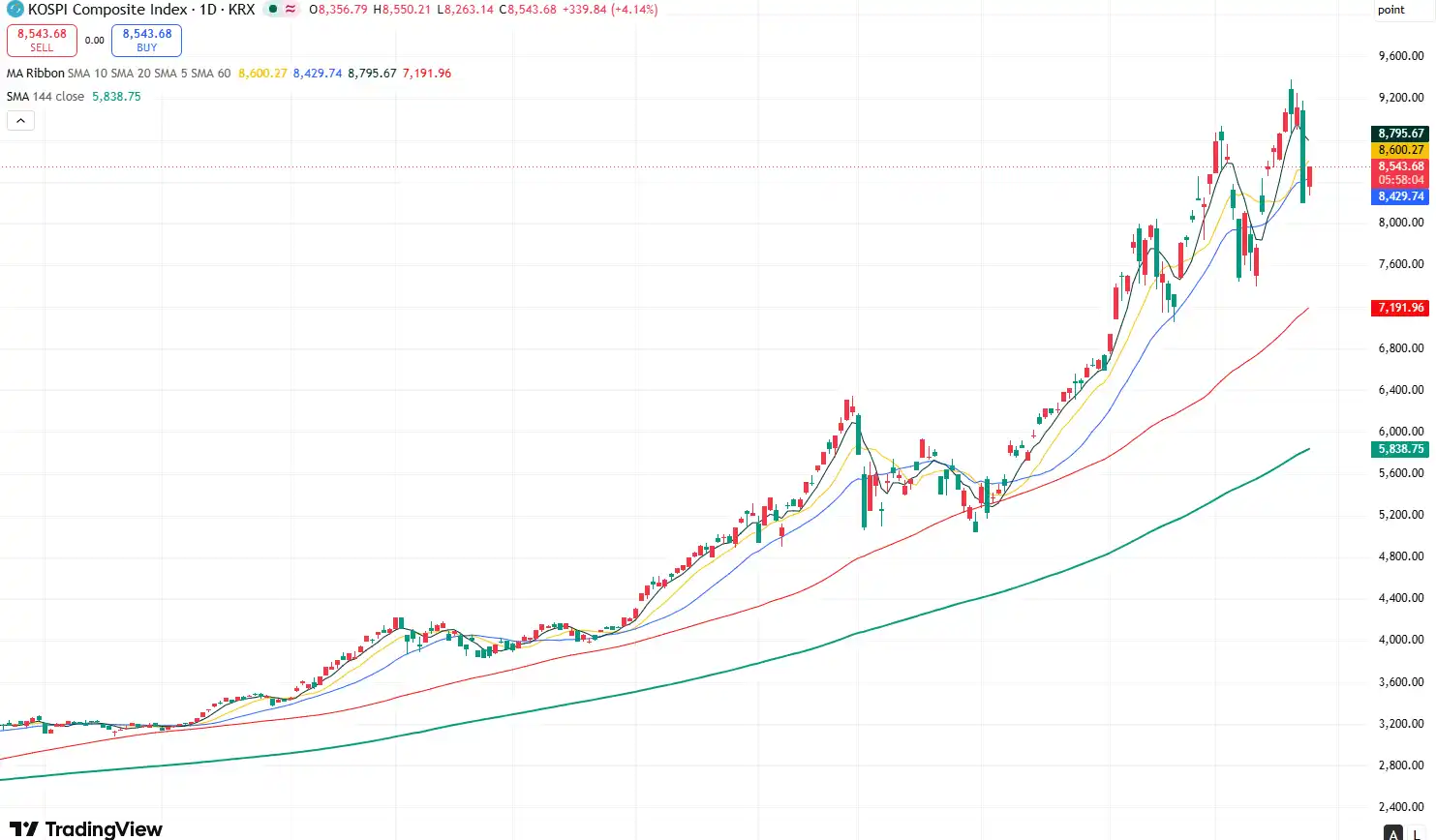
The core of this round of volatility is not the single-day rise and fall, but that semiconductor stocks have entered a new pricing phase after the crowding of AI trades. Over the past year, the expansion of AI infrastructure has linked South Korean memory stocks, U.S. stocks like Micron, NVIDIA, and TSMC on the same chain. As long as AI server expansion continues, high-end memory will remain tight, memory manufacturers' profit expectations will continue to be revised upward, and related semiconductor stocks will still be seen as beneficiaries of the same wave of AI capital expenditure cycle.

What the market now needs to confirm is whether this round of correction is merely a technical release or an early signal of a trend reversal. Samsung's potential shareholder return expectations have provided emotional repair for the Korean market, but a more direct stress test comes from the earnings season, especially from Micron. The company will announce its FY2026 Q3 financial results after the U.S. market closes on June 24, with the conference call scheduled for 14:30 Mountain Time. What investors are looking at is not whether the last quarter was good, but whether the pricing power of AI memory can continue to expand, thereby supporting the valuation of the entire semiconductor chain.

HBM (AI chip high-bandwidth memory) is the core variable in this round of market activity. AI chips need to process massive amounts of data in an extremely short time, regular memory isn't fast enough, making HBM a critical component for high-end GPUs and AI servers. Over the past two years, the supply shortage of HBM has given Micron, Samsung Electronics, and SK Hynix rare pricing power again, making memory stocks one of the most elastic segments in the AI semiconductor trade.

Strong demand has already been heavily traded by the market. Whether the rebound after the plunge can continue does not depend on "whether the AI story is still there," but on whether the semiconductor chain can continue to prove that order visibility, memory prices, subsequent guidance, and profit margins remain sufficiently strong. Micron is one verification point, but what the market truly cares about is whether this AI semiconductor theme can continue to bear the high expectations.

Post-Crash Rebound, More Like Position Repair

This round of volatility first reflects positioning, not a sudden disappearance of demand. Korean tech stocks performed strongly from 2025 to 2026, with AI memory becoming one of the market's most crowded themes. When heavyweight stocks like Samsung Electronics and SK Hynix come under simultaneous pressure, index-level declines can be amplified, and the entire Asian tech sector can easily be repriced in sync.

The selling on June 23 was precisely the concentrated release of this structure. Media reports indicated the Kospi closed down about 10%, with Samsung Electronics and SK Hynix both falling over 12%. For investors, this kind of drop already indicates one problem: AI semiconductor trading is no longer just about fundamentals; it has also become a positioning trade with high concentration and high expectations.

The rebound the next day cannot be directly interpreted as a bottom confirmation either. Samsung Electronics' rise partly stemmed from market expectations for potential shareholder returns. Samsung's previously announced shareholder return policy for 2024-2026 is to return 50% of its three-year free cash flow and maintain a fixed annual dividend of 9.8 trillion Korean Won. If 50% of the three-year free cash flow exceeds the total regular dividend amount, the company will return the balance.

Based on this, the market and media have estimated that if the chip super-cycle significantly boosts free cash flow, Samsung's potential total return or buyback capacity could reach about 90 trillion Korean Won. However, this is not a new buyback plan already announced by the company, merely a projection based on the existing policy framework. It can improve short-term risk appetite but cannot alone prove that AI semiconductor demand has not cooled.

Therefore, the rebound in Korean tech stocks looks more like positioning repair after a plunge, not confirmation that the trend has already turned upward again. For semiconductor stocks, the real issue isn't whether they can rebound, but whether they can find new fundamental support after rebounding. If it's only about shareholder return expectations, short covering, and sentiment repair, the rally may remain at the level of a technical rebound; if earnings reports continue to prove that AI server demand, HBM prices, and the capital expenditure chain are still strengthening, the market will reprice it as a continuation of the trend.

What can cut through the noise of sentiment are the upcoming earnings reports and conference calls. Micron is one of the more direct validators in this round of AI memory trading. It doesn't have Samsung's vast consumer electronics business, and its stock price more centrally reflects the memory cycle and AI server demand. Its earnings and guidance can answer the market's most pressing questions: Are AI server customers still scrambling for memory? Can prices still rise? Will capacity expansion begin to pressure future profit margins?

These questions don't belong only to Micron; they will also affect Samsung Electronics, SK Hynix, and broader AI infrastructure stocks. For the semiconductor stock rebound to upgrade from "technical covering" to "trend continuation," it requires the most sensitive link in the chain to continue providing strong signals.

Micron Needs to Prove Pricing Power Remains

The easiest numbers to see in the earnings report are revenue and EPS, but what's more important this time is whether the pricing logic behind these numbers can continue. For the entire semiconductor sector, Micron's significance lies not in the profitability of a single company, but in its ability to prove that AI memory supply and demand remain in a seller-favorable phase.

Micron's FY2026 Q2 revenue was $23.860 billion, with non-GAAP EPS at $12.20. The company's capital expenditure net for the quarter was $5.0 billion, and adjusted free cash flow was $6.9 billion. The company previously provided FY2026 Q3 guidance of revenue $33.5 billion, plus or minus $750 million, gross margin approximately 81%, non-GAAP EPS of $19.15, plus or minus $0.40.

This set of data explains why the market is willing to assign higher valuations to memory stocks. If HBM is pre-locked by customers and visibility is increased through long-term supply arrangements, memory manufacturers are no longer just traditional cyclical stocks but more like scarce suppliers in the expansion of AI infrastructure. Micron management and market reports have emphasized that HBM supply visibility is high, and high-end memory is transitioning from a common component to a strategic resource in AI capital expenditure.

For average investors, this can be understood as a supply-demand mismatch model. AI companies and cloud providers need to expand data centers, requiring more GPUs. GPUs need more HBM to perform. But HBM capacity expansion is slow, customer qualification cycles are long, and suppliers are concentrated, leading buyers to pre-commit volumes and sellers to gain stronger pricing power.

This is also why memory stocks affect broader semiconductor sentiment. NVIDIA represents AI computing demand, TSMC represents advanced process supply, while Samsung Electronics, SK Hynix, and Micron represent high-end memory constraints. When any of these links show changes in price, orders, or guidance, the market reassesses the pace of AI infrastructure expansion and profit distribution.

The key to Micron's earnings is not "whether this quarter remains strong," as the market already expects it to be strong. The incremental information lies in three areas: whether the Q3 results beat the company's previously high guidance, whether forward-quarter guidance continues to exceed the already elevated market expectations, and whether the shipment schedule for new products like HBM4 proceeds smoothly.

This is also why a good earnings report may not be enough. Over the past few quarters, the basis for AI memory stock gains has been consecutive beats. If Micron only meets expectations, or if the tone of the conference call shifts from supply tightness toward supply-demand balancing, the market may deem that valuation anchors need to be lowered. At that point, pressure wouldn't stay on MU stock alone but could spread to Samsung Electronics, SK Hynix, and other stocks traded as beneficiaries of the AI semiconductor cycle.

Strong Demand Also Brings Low Error Tolerance

Current evidence supports that demand has not yet been disproven, not that the cycle has ended. Micron's HBM supply visibility, strong performance last quarter, and continued expansion of AI infrastructure by cloud providers still point to the memory chain being in a high-activity phase. The rapid rebound in semiconductor stocks also indicates the market hasn't abandoned the AI demand theme.

But investors need to be wary of another layer of risk: strong fundamentals do not mean stock prices have no downside. Especially when valuations have baked in continued beats as the default assumption, the market's definition of bad news becomes harsher. In other words, semiconductor stocks might adjust not because demand disappears, but potentially because demand "doesn't get stronger."

In the past, the core risk for memory stocks was a downward price cycle. Now the risk is more complex. Customers are still ordering, but growth is no longer being revised upward—the stock may adjust first. HBM is still in short supply, but new capacity in 2027 cools price expectations—valuations may also drop first. Micron is still profitable, but rising capital expenditures compress future free cash flow—the market will similarly recalculate cycle quality.

This is precisely the key to judging whether it's a "technical correction ending" or a "trend reversal." A technical correction usually corresponds to release after positioning becomes crowded; as long as earnings and guidance continue to support the original logic, funds may return to the main theme. A trend reversal is different; it means the market begins to doubt future profit revision potential or believes the supply-demand relationship has shifted from extreme tightness toward balance.

The warning from the June 23 plunge lies here. It may not indicate that AI demand has peaked, but it shows the error tolerance of this trade chain has lowered. Foreign capital profit-taking in the Korean market, concentrated index weights, and crowded AI themes mean any signal not strong enough could be amplified into sector-wide volatility.

Samsung's potential shareholder returns should also be understood within this framework. Returning free cash flow benefits shareholders, but only if free cash flow can be sustainably generated. If chip profits continue to be revised upward, large dividends and buybacks will strengthen stock price support. If future capital expenditures intensify and cyclical profits are discounted anew, shareholder return expectations could also be downgraded.

So, this rebound looks more like a verification repair ahead of earnings. What investors are buying back is not certainty, but an option to wait for Micron and other semiconductor companies to provide stronger evidence. Only when fundamentals continue to exceed already high expectations does the rebound have a chance to shift from sentiment repair to trend continuation.

Valuation Anchor Lies in Guidance and 2027 Supply-Demand

After Micron's earnings release, the market's immediate reaction may still be to revenue, EPS, and gross margin, but what determines whether the AI semiconductor trade can continue expanding is management's tone regarding subsequent quarters.

If Q3 results beat guidance and forward guidance is revised upward again, it indicates customer orders, prices, and product mix are still improving, making the Korean tech stock plunge look more like a positioning clearance. Especially the HBM4 shipment schedule—if it proves Micron is increasing its share of high-end products—the market will continue to see it as a beneficiary of tight AI memory supply and also reinforce risk appetite for memory stocks like Samsung Electronics and SK Hynix.

Conversely, if management becomes cautious about 2027 supply-demand or capital expenditure rises faster than profit revisions, investors will reassess the quality of this cycle. The dangerous moment for the memory industry often isn't when demand disappears immediately, but when supply expansion begins to change future price expectations.

The current market's contradiction lies here: AI memory hasn't been disproven, but valuations have begun to demand higher-frequency, clearer evidence. Micron doesn't need to prove AI demand exists; the market already believes that. It needs to prove that demand intensity, supply constraints, and price elasticity are still sufficient to support the already high pricing.

This is also a common problem facing the entire semiconductor sector. NVIDIA, TSMC, memory manufacturers, and Asian tech stocks are all traded on the same AI infrastructure chain. As long as key links in the chain continue to beat expectations, the sector rebound can be interpreted as the correction ending; but if guidance starts turning cautious, or the market finds profit revisions can't keep up with valuations, the rebound may just be a technical repair before a trend weakens.

Until this answer emerges, the rebound in Asian tech stocks can only be seen as repair. For investors holding MU, Samsung Electronics, SK Hynix, and broader AI infrastructure stocks, daily ups and downs are not the main theme. Whether Micron can translate high supply visibility into higher guidance and strong demand into higher profit margins is the validation point for whether this semiconductor trade can continue.

Crypto di tendenza

Domande pertinenti

QWhat is the core issue behind the recent volatility in semiconductor stocks, according to the article?

AThe core issue is not a single day's price movement, but that semiconductor stocks, after becoming a crowded AI trade, have entered a new pricing phase. The market is trying to determine if the recent correction is just a technical release of pressure or an early signal of a trend reversal.

QWhy is Micron's upcoming earnings report considered a crucial test for the AI semiconductor trade?

AMicron's report is a key test because it can validate whether the pricing power for AI memory (especially HBM) can continue to expand, thereby supporting the valuation of the entire semiconductor chain. The market needs to see strong order visibility, memory prices, future guidance, and margins to confirm the trend.

QWhat is HBM, and why is it a central variable in the current semiconductor market rally?

AHBM (High Bandwidth Memory) is high-speed memory for AI chips. It's crucial because AI chips need to process massive data quickly, and regular memory isn't fast enough. HBM's supply shortage over the past two years has given memory makers like Micron, Samsung, and SK Hynix significant pricing power, making them high-leverage plays in the AI semiconductor trade.

QWhy does the article describe the post-crash rebound in South Korean tech stocks as more of a 'positioning repair' rather than a confirmed trend reversal?

AThe rebound is seen as positioning repair because the initial sell-off reflected high concentration and crowded positioning in the AI memory trade. The subsequent bounce was partly driven by expectations of potential shareholder returns from Samsung and short-covering, not necessarily new fundamental evidence of sustained AI demand strength.

QWhat are the two main scenarios the article presents for interpreting the semiconductor stock rebound, and what determines which scenario is correct?

AThe two scenarios are: 1) A technical correction ending, where strong earnings and guidance continue to support the original AI logic. 2) A trend reversal, where the market starts doubting future profit growth or sees the supply-demand balance shifting from extreme tightness towards equilibrium. The key determinant is whether upcoming reports (like Micron's) provide stronger-than-expected evidence on order visibility, pricing, and future guidance.

Letture associate

Stablecoin Salaries: Why Are They Becoming the First Choice for Cross-Border Workers?

Stablecoin Salaries: Why They're Becoming the Top Choice for Global Remote Workers The traditional global salary system carries hidden exchange rate risks for freelancers in countries like India, Argentina, and Turkey who earn in USD but spend in local currencies. When salaries are instantly converted to local currency, workers lose purchasing power if that currency depreciates against the dollar. For instance, an Indian designer converting a $2000 monthly salary to rupees lost over 10% in purchasing power last year due to the rupee's decline. Holding even a portion of income in USD or USD-pegged stablecoins can preserve value. Stablecoins offer a solution by breaking down barriers to holding dollars. Opening foreign USD bank accounts is difficult, and international wire transfers incur high fees (averaging 6.5%) and delays. In contrast, stablecoin transfers are fast and low-cost. Furthermore, many countries with high inflation and depreciating currencies restrict citizens' access to foreign currency. Self-custody stablecoin wallets enable workers to hold dollar-equivalent assets without needing bank approval, bypassing these limits. These wallets integrate multiple functions: they allow users to convert only what's needed for daily expenses into local currency, keep the remainder in stablecoins, connect to on-chain lending or yield products, and even link to payment cards for direct spending. While challenges remain—such as the lack of deposit insurance and evolving regulatory frameworks—the trend is clear. Reports indicate a growing preference for USD or stablecoin payments among freelancers in high-inflation countries. This shift represents a fundamental restructuring of salary functions: payment currency, asset storage, yield generation, spending, and cross-border flow. It offers the freedom and flexibility that are core to money's purpose, signaling a profound change in the global financial landscape.

Foresight News6 min fa

Stablecoin Salaries: Why Are They Becoming the First Choice for Cross-Border Workers?

Foresight News6 min fa

Don't Just Focus on Layoffs, The New Structure of the Ethereum Foundation is More Worthy of Appreciation

The Ethereum Foundation (EF) has undergone a significant organizational restructuring, with the most notable change being a strategic refocusing of its priorities rather than just a 20% staff reduction (approximately 54 people). The new structure clearly prioritizes the Protocol and Access layers, which now comprise the largest teams (57 and 34 people, respectively). This signals EF's intent to concentrate its core resources on fundamental, hard-to-outsource aspects of Ethereum: protocol evolution, security, privacy, client development, and the foundational access layer. Key areas within the Protocol layer, led by an architecture group including Vitalik Buterin and Justin Drake, receive heightened emphasis. These include post-quantum security, zkEVM, formal verification, and long-term roadmap development ("Strawmap"). This reflects a shift towards tackling complex, interdependent challenges like scalability, privacy, and future-proofing the protocol, potentially moving from a pure "redundant security" multi-client model towards more specialized clients aided by AI-assisted formal verification. Financially, EF's budget is being reduced by approximately 40%. The goal is to transition from spending about 15% of its remaining funds annually to a more sustainable 5% rate, akin to a long-term endowment, ensuring its longevity. Concurrently, the restructuring involves pushing certain responsibilities—such as application development, adoption, and ecosystem coordination—to external organizations like EthLabs, the Ethereum Apps Guild, and others. This "multi-node" model aims to increase ecosystem resilience by decentralizing functions beyond the EF, though it introduces new coordination challenges. In essence, the reorganization represents EF consciously narrowing its scope to focus on the hardest, most critical protocol-level problems while fostering a more distributed and sustainable ecosystem structure for Ethereum's future growth.

Foresight News35 min fa

Don't Just Focus on Layoffs, The New Structure of the Ethereum Foundation is More Worthy of Appreciation

Foresight News35 min fa

Report Analysis: What Is Coherent Planning as CPO Booms?

Title: Report Interpretation: What Moves Is Coherent Making Amid the CPO Boom? Summary: JP Morgan analyst Samik Chatterjee reiterates an Overweight rating on Coherent (COHR), citing undervalued growth potential across three core areas: data center optical transceivers, co-packaged optics (CPO) chips, and industrial lasers/thermal management. COHR's 1.6T data center transceivers are in high demand, with pricing remaining firm. The rise of CPO is seen not as a threat but as a catalyst, creating higher demand for sophisticated optical components, an area where COHR holds a competitive edge with its comprehensive portfolio (lasers, isolators, VCSELs, thermoelectric coolers). Each CPO chip offers significantly greater revenue potential than traditional transceivers. Furthermore, its Optical Circuit Switch (OCS) technology targets a potential $4B market with reliability and power advantages. The company is expanding its InP (Indium Phosphide) device capacity fourfold within two years, securing substrate supply and transitioning to more cost-effective 6-inch wafers. As one of only two major suppliers of high-quality pump lasers—currently in severe shortage—COHR can now move up the value chain from components to complete line cards/systems, boosting ASP over tenfold. Gross margin targets (>42%) may be revised upward due to high-end product premiums, cost improvements from the wafer transition, and contributions from new high-margin products like CPO and OCS. Its efficient thermadite thermal material also offers long-term growth. Industrial segment revenue grows at a steady 5-10%, supported by semiconductor equipment orders. Changes in Apple's Face ID protocol present a re-competition opportunity for 3D sensing. Overall, Coherent is positioned as a key infrastructure provider, with AI-driven compute demand fueling the need for high-speed optical interconnectivity. Growth from CPO/OCS, stable industrial performance, and margin improvement support the bullish thesis. *Disclaimer: This summary interprets a third-party analyst report from JP Morgan. It does not constitute investment advice.*

marsbit57 min fa

Report Analysis: What Is Coherent Planning as CPO Booms?

marsbit57 min fa

After Laying Off 20% of Staff, What Are the Key Points of EF's New Structure?

Following the completion of a months-long organizational restructuring, the Ethereum Foundation (EF) announced a 20% workforce reduction (approximately 54 employees) on June 23rd. It reorganized its teams into five new core clusters: Protocol, Access, User, Community, and Institutional (plus Operations/Management support units). Officially, this move implements the EF's 2026 Mandate and 2025 Treasury Management Policy, aiming to create a more focused and "self-sovereign" organization. The restructuring prioritizes the CROPS principles—Censorship Resistance, Openness & Freedom, Privacy, and Security—as foundational organizational tenets. The Protocol cluster will focus on core protocol R&D, including MEV reduction and zkEVM. The Access cluster emphasizes preserving user "zero option" for non-custodial, permissionless interaction. The User, Community, and Institutional clusters will manage external engagement, with the latter handling institutional and regulatory matters. While offering enhanced severance and transition support for affected employees, the EF did not disclose budget allocations or specific KPIs for the new clusters. This has led to market uncertainty about the impact on project funding and development priorities. Analysts note the announcement's positive tone of mission focus contrasts with a backdrop of recent EF leadership changes and broader ecosystem pressures. The true impact—whether this signifies strategic realignment or reactive contraction—will become clearer as the new structure's resource allocation and project prioritization are revealed in the coming months.

marsbit1 h fa

After Laying Off 20% of Staff, What Are the Key Points of EF's New Structure?

marsbit1 h fa

Trading

Spot
Futures

Articoli Popolari

Cosa è USDC(WORMHOLE)

USD Coin (Wormhole): Una panoramica completa Introduzione Nel mondo in rapida evoluzione delle criptovalute, USD Coin (Wormhole), noto come $USDC(Wormhole), si distingue come una soluzione pionieristica all'interno del panorama DeFi (Finanza Decentralizzata). Operando su diverse piattaforme blockchain, tra cui Solana, USD Coin (Wormhole) è più di una semplice rappresentazione digitale del dollaro statunitense. Incarna lo spirito innovativo della finanza moderna, consentendo transazioni senza attriti tra diverse blockchain e migliorando l'interoperabilità tra i vari ecosistemi blockchain attraverso il protocollo avanzato Wormhole. Cos'è USD Coin (Wormhole)? USD Coin (Wormhole) è una versione tokenizzata del dollaro USA progettata per facilitare transazioni senza attriti attraverso diverse reti blockchain. Il suo obiettivo principale è quello di aumentare la liquidità e migliorare la funzionalità dell'ecosistema DeFi. Sfruttando il protocollo Wormhole, che stabilisce una robusta rete di comunicazione cross-chain, gli utenti possono trasferire senza sforzo i token USDC su varie piattaforme. Questa capacità cross-chain segna un avanzamento significativo nell'uso delle criptovalute, promuovendo un ecosistema più interconnesso ed efficiente in cui gli asset possono fluire liberamente tra diverse blockchain. La proposta di valore di USD Coin (Wormhole) risiede non solo nella sua stabilità, essendo ancorata al dollaro USA, ma anche nella sua capacità di colmare le lacune tra ambienti blockchain disparati. Questo approccio innovativo favorisce un maggior livello di partecipazione tra utenti e sviluppatori, aprendo la strada a nuove ed entusiasmanti applicazioni nella finanza decentralizzata. Chi è il creatore di USD Coin (Wormhole)? Le origini di USD Coin (Wormhole) sono intrecciate con la rete Wormhole, sviluppata da Jump Crypto. Sebbene i creatori individuali specifici non siano documentati in modo prominente, Jump Crypto è nota per il suo coinvolgimento nel progresso della tecnologia blockchain e nel supporto delle sue applicazioni in ambito finanziario. Creando la rete Wormhole, Jump Crypto ha svolto un ruolo fondamentale nella promozione dei trasferimenti di asset cross-chain, aumentando l'efficienza e la diversità dell'uso delle criptovalute. Chi sono gli investitori di USD Coin (Wormhole)? Il successo di USD Coin (Wormhole) è sostenuto da investimenti di diversi fondi e organizzazioni note all'interno del settore delle criptovalute. Gli investitori chiave includono: Coinbase Ventures: Un'importante divisione di venture capital sostenuta da uno dei principali scambi di criptovalute del settore, Coinbase Ventures fornisce capitale essenziale e supporto strategico a promettenti progetti blockchain. Arrington XRP Capital: Specializzata in asset digitali, Arrington XRP Capital riconosce il potenziale di progetti innovativi come USD Coin (Wormhole) e ha investito di conseguenza per sostenere il suo sviluppo. Jump Trading: Come organizzazione madre di Jump Crypto, Jump Trading porta non solo investimenti ma anche una ricchezza di esperienza nella tecnologia di trading e nella dinamica di mercato per rafforzare il progetto Wormhole. Come funziona USD Coin (Wormhole)? Il framework operativo di USD Coin (Wormhole) è progettato per facilitare transazioni cross-chain efficaci, massimizzando sicurezza ed efficienza. Ecco una panoramica semplificata di come funziona: Blocco degli asset: Quando un utente desidera trasferire USDC da una blockchain all'altra, prima blocca i propri token sulla blockchain di origine. Questo processo assicura che gli asset siano sicuri e siano pronti per essere bruciati o trasferiti successivamente. Creazione di token: Dopo che i token sono stati bloccati, viene coniato un equivalente di USDC sulla blockchain di destinazione. Ciò fornisce all'utente accesso ai propri fondi su una nuova piattaforma, riflettendo la flessibilità che il protocollo Wormhole consente. Trasferimento cross-chain: Il protocollo Wormhole facilita in modo efficiente l'intero processo di trasferimento. Assicura che una volta che l'USDC è coniato sulla catena di destinazione, i token equivalenti vengano bruciati sulla catena di origine. Il risultato è un trasferimento senza soluzione di continuità di valore tra due ambienti blockchain distinti. Questa metodologia cross-chain assicura che le transazioni rimangano sicure e trasparenti, migliorando significativamente la liquidità all'interno dei diversi ecosistemi DeFi. Cronologia di USD Coin (Wormhole) Comprendere l'evoluzione di USD Coin (Wormhole) fornisce un contesto vitale per la sua importanza nell'arena delle criptovalute. Ecco una cronologia che evidenzia importanti traguardi nella storia del progetto: 2021: Il progetto Wormhole viene lanciato, stabilendo un framework per i trasferimenti di asset cross-chain e preparando il terreno per lo sviluppo di USD Coin (Wormhole). 2022: La rete Wormhole affronta una significativa sfida con una violazione della sicurezza che porta a un furto di 325 milioni di dollari. Tuttavia, l'incidente viene successivamente affrontato e rimborsato da Jump Crypto, dimostrando l'impegno del progetto per la sicurezza e la trasparenza. 2023: USD Coin (Wormhole) si integra con il protocollo di trasferimento cross-chain di Circle (CCTP), migliorando le sue capacità per i trasferimenti cross-chain e consolidando ulteriormente la sua posizione all'interno dell'ecosistema DeFi. 2024: Continuano lo sviluppo e l'espansione della rete Wormhole, mirati ad aumentare l'utilità e la portata di USD Coin (Wormhole) e a migliorare il suo framework operativo. Caratteristiche principali Il successo di USD Coin (Wormhole) può essere attribuito a diverse caratteristiche chiave che lo differenziano da altre offerte di criptovalute: Interoperabilità cross-chain Al centro di USD Coin (Wormhole) c'è la sua capacità di facilitare trasferimenti senza soluzione di continuità attraverso più reti blockchain. Questa interoperabilità funge da pietra miliare per la finanza decentralizzata, consentendo a varie piattaforme di interagire tra loro, accelerando così l'evoluzione dei servizi finanziari. Sicurezza Wormhole impiega una rete Guardian ben progettata composta da validatori di nodi che garantiscono transazioni cross-chain sicure. Questo monitoraggio collettivo riduce al minimo il rischio di frodi e fornisce agli utenti la certezza che i loro asset siano protetti durante i trasferimenti cross-chain. Miglioramento della liquidità Consentendo a USDC di circolare liberamente tra diverse blockchain, USD Coin (Wormhole) aumenta la liquidità nell'ecosistema DeFi. Questa maggiore liquidità può favorire operazioni di trading più efficienti, contribuire a strategie di prezzo migliori e migliorare la dinamica generale del mercato che racchiude vari asset digitali. Conclusione USD Coin (Wormhole) rappresenta un'innovazione fondamentale nello spazio blockchain, rafforzando le capacità della finanza decentralizzata (DeFi) e stabilendo un ecosistema finanziario più connesso. Con il suo robusto framework per le transazioni cross-chain, le caratteristiche di sicurezza e un forte sostegno da parte di investitori di valore, USD Coin (Wormhole) è posizionato per giocare un ruolo chiave nel futuro delle criptovalute. Mentre il panorama della finanza digitale continua ad evolversi, USD Coin (Wormhole) non solo abbraccia il futuro dell'interconnessione tra le reti blockchain, ma riafferma anche il potere della tokenizzazione e della tecnologia blockchain nel trasformare il modo in cui percepiamo e utilizziamo il valore in un mondo digitale. Navigando nelle complessità della funzionalità cross-chain, dimostra un approccio sofisticato per abilitare l'inclusività finanziaria e l'innovazione nel mondo delle criptovalute.

150 Totale visualizzazioniPubblicato il 2024.04.03Aggiornato il 2024.12.03

Cosa è USDC(WORMHOLE)

Cosa è W$C

World$tateCoin ($W$C): Un'Esplorazione Completa del Progetto di Criptovaluta Emergente Introduzione Nel panorama in continua evoluzione delle criptovalute, World$tateCoin ($W$C) è emerso come un progetto che mira a sfruttare il potere delle tecnologie web3 per creare un ecosistema digitale distintivo. Mentre i modelli tradizionali di interazione online subiscono trasformazioni significative, World$tateCoin cerca di affermarsi in questa nascente terza generazione di internet. Questo articolo esaminerà le complessità di World$tateCoin, fornendo una panoramica del progetto, dei suoi obiettivi e del suo potenziale impatto nello spazio web3. Che cos'è World$tateCoin ($W$C)? World$tateCoin ($W$C) è progettato come una criptovaluta che facilita transazioni senza soluzione di continuità all'interno di un ambiente web3. Mirando a creare una piattaforma decentralizzata dove gli utenti possono interagire con varie applicazioni web3, $W$C intende semplificare l'esperienza degli utenti e migliorare l'accessibilità ai servizi digitali. Sebbene il progetto aspiri a diventare una parte integrante del panorama web3, le informazioni dettagliate sui suoi specifici obiettivi e casi d'uso rimangono limitate, sollevando interrogativi riguardo al suo potenziale ruolo e utilità in un contesto digitale in rapida evoluzione. L'essenza di web3 ruota attorno alla decentralizzazione e all'empowerment degli utenti con un maggior controllo sulle loro interazioni online. World$tateCoin intende allinearsi a questi principi, sebbene le applicazioni specifiche e le funzionalità della valuta siano ancora in discussione all'interno della comunità. Chi è il Creatore di World$tateCoin ($W$C)? Esplorando le origini di World$tateCoin, le informazioni riguardanti il suo creatore rimangono elusive. Al momento, non sono disponibili dati pubblici che identificano le persone o le organizzazioni dietro il progetto. Questa oscurità potrebbe gettare un'ombra di incertezza sulla credibilità del progetto, ma l'impegno per l'innovazione all'interno del framework delle criptovalute potrebbe essere una forza trainante per la sua adozione in futuro. La mancanza di una leadership identificabile potrebbe comportare ostacoli relativi alla fiducia e alla trasparenza: elementi cruciali per stabilire una forte comunità nello spazio crypto. Chi sono gli Investitori di World$tateCoin ($W$C)? Le ricerche attuali non rivelano investitori specifici o organizzazioni di supporto coinvolti con World$tateCoin. Non è raro che progetti emergenti di criptovaluta attraggano investimenti riservati o operino in una struttura finanziaria minimalista durante la loro fase iniziale. L'ambiguità che circonda i supporti agli investimenti e le metodologie di finanziamento potrebbe influenzare la sostenibilità e le prospettive di crescita del progetto. Quando si valutano nuovi progetti nel dominio delle criptovalute, gli investitori generalmente cercano trasparenza riguardo al supporto finanziario e al sostegno da entità consolidate. L'assenza di queste informazioni potrebbe richiedere un approccio cauto da parte degli utenti e degli stakeholder potenzialmente interessati al futuro di World$tateCoin. Come Funziona World$tateCoin ($W$C)? Le meccaniche operative di World$tateCoin sono radicate nei principi di decentralizzazione, un marchio distintivo delle tecnologie web3. Facilitando transazioni direttamente tra utenti senza l'intervento di intermediari, $W$C è progettato per migliorare la fiducia e l'efficienza. Tuttavia, la documentazione completa che dettaglia le caratteristiche uniche e il framework operativo che distinguono World$tateCoin da altre criptovalute è notevolmente scarsa. Questa mancanza di informazioni complica la comprensione di come $W$C funzioni all'interno del più ampio ecosistema web3 e quali proposte uniche porti a utenti e sviluppatori. Tuttavia, l'obiettivo fondamentale di consentire transazioni decentralizzate promette un panorama finanziario più liberato, a condizione che il progetto realizzi le sue aspirazioni di implementare meccanismi robusti e interfacce user-friendly. Timeline di World$tateCoin ($W$C) Costruire una timeline che racchiuda la progressione storica di World$tateCoin presenta sfide a causa dell'assenza di documentazione significativa su eventi chiave e traguardi. Tuttavia, una sequenza approssimativa di fasi ipotetiche può essere immaginata, costituendo un percorso futuro per il progetto: Concetto Iniziale (Data Sconosciuta): Concettualizzazione del framework di World$tateCoin nel più ampio contesto delle tecnologie web3. Fase di Sviluppo (Data Sconosciuta): Inizio dello sviluppo tecnico e dei processi di codifica. Coinvolgimento della Comunità (Data Sconosciuta): Contatto con potenziali utenti e stakeholder per promuovere l'interesse della comunità nel progetto. Obiettivo di Lancio (Data Sconosciuta): Annuncio di una data di lancio prevista, in funzione del progresso delle fasi di sviluppo e testing. A causa della mancanza di date e dettagli documentati su queste fasi, gli stakeholder dovranno rimanere vigili e coinvolti con le comunicazioni del progetto per aggiornamenti riguardanti la sua traiettoria. Temi Chiave su World$tateCoin ($W$C) Man mano che il progetto si sviluppa, alcuni argomenti chiave emergono che incarnano il potenziale e le aspirazioni di World$tateCoin: Decentralizzazione: La filosofia centrale che guida il progetto, mirata a promuovere interazioni dirette tra gli utenti. Integrazione Web3: L'obiettivo di rispecchiare i principi web3 e consentire un accesso senza soluzione di continuità a una serie di servizi digitali. Criptovaluta Digitale: Posizionato come una valuta per facilitare transazioni basate su internet, World$tateCoin mira a iniettare ulteriore liquidità nel mercato web3. Problema della Scarsità di Informazioni: L'assenza notevole di informazioni dettagliate riguardo le fondamenta del progetto, i creatori e i metodi operativi, richiedendo maggiore trasparenza da parte degli sviluppatori per costruire fiducia nella comunità. Conclusione World$tateCoin ($W$C) si colloca in un territorio entusiasmante ma incerto di integrazione tra criptovaluta e web3. Mentre mira a coltivare un ambiente decentralizzato, la disponibilità limitata di informazioni riguardo i suoi creatori, investitori e funzionalità specifiche presenta sfide per potenziali stakeholder e utenti. Nel dinamico mondo delle criptovalute, trasparenza, coinvolgimento e comunicazione ben strutturata sono vitali per il successo di progetti come World$tateCoin. Man mano che il panorama continua a evolversi, gli stakeholder saranno ansiosi di vedere come il progetto possa consolidare la sua posizione all'interno della narrativa web3 e contribuire alla trasformazione in corso dell'ecosistema digitale.

96 Totale visualizzazioniPubblicato il 2024.04.05Aggiornato il 2024.12.03

Cosa è W$C

Come comprare W

Benvenuto in HTX.com! Abbiamo reso l'acquisto di Wormhole (W) semplice e conveniente. Segui la nostra guida passo passo per intraprendere il tuo viaggio nel mondo delle criptovalute.Step 1: Crea il tuo Account HTXUsa la tua email o numero di telefono per registrarti il tuo account gratuito su HTX. Vivi un'esperienza facile e sblocca tutte le funzionalità,Crea il mio accountStep 2: Vai in Acquista crypto e seleziona il tuo metodo di pagamentoCarta di credito/debito: utilizza la tua Visa o Mastercard per acquistare immediatamente WormholeW.Bilancio: Usa i fondi dal bilancio del tuo account HTX per fare trading senza problemi.Terze parti: abbiamo aggiunto metodi di pagamento molto utilizzati come Google Pay e Apple Pay per maggiore comodità.P2P: Fai trading direttamente con altri utenti HTX.Over-the-Counter (OTC): Offriamo servizi su misura e tassi di cambio competitivi per i trader.Step 3: Conserva Wormhole (W)Dopo aver acquistato Wormhole (W), conserva nel tuo account HTX. In alternativa, puoi inviare tramite trasferimento blockchain o scambiare per altre criptovalute.Step 4: Scambia Wormhole (W)Scambia facilmente Wormhole (W) nel mercato spot di HTX. Accedi al tuo account, seleziona la tua coppia di trading, esegui le tue operazioni e monitora in tempo reale. Offriamo un'esperienza user-friendly sia per chi ha appena iniziato che per i trader più esperti.

209 Totale visualizzazioniPubblicato il 2024.12.10Aggiornato il 2026.06.02

Come comprare W

Discussioni

Benvenuto nella Community HTX. Qui puoi rimanere informato sugli ultimi sviluppi della piattaforma e accedere ad approfondimenti esperti sul mercato. Le opinioni degli utenti sul prezzo di W W sono presentate come di seguito.

活动图片