From a $300 Million Valuation to a 'Fire Sale' at Tens of Millions: What Happened to Messari?

marsbitPubblicato 2026-06-15Pubblicato ultima volta 2026-06-15

Introduzione

On June 12, leading crypto data and capital markets platform Blockworks announced its acquisition of competitor Messari for over $10 million. This price represents a significant discount from Messari's 2022 valuation peak of approximately $300 million, highlighting the survival pressures faced by high-valuation startups during the bear market and a consolidation wave in data infrastructure. Blockworks, founded in 2018, began as a media and events company but has pivoted to focus on institutional-grade data, investor relations, and compliance tools. Its recent Series A extension round, valuing the company at $192 million, aimed to fund this shift and strategic acquisitions like this one. Messari, also founded in 2018, grew as a go-to platform for professional crypto research and data, raising a $35 million Series B at its $300 million valuation in late 2022. However, the prolonged bear market and subsequent internal changes, including founder Ryan Selkis's departure in 2024, increased operational pressures. The acquisition integrates Messari's extensive data platform and API capabilities with Blockworks's strengths in issuer-side disclosure, investor relations, and compliance workflows. The combined entity aims to build a unified "system of record" for the on-chain market. This reflects a broader industry trend where high-quality, structured data is becoming critical for institutional adoption, AI agents, and creating data moats akin to traditional financial platforms like ...

On June 12, Blockworks, a leading platform in crypto data and capital markets, announced its acquisition of its long-time competitor Messari for a deal value exceeding $10 million. Messari had reached a valuation of approximately $300 million in 2022. The significant discount in this transaction price highlights the survival pressure faced by high-valuation startups in a deep bear market and the consolidation wave within the data infrastructure sector.

In the official announcement, Jason Yanowitz, co-founder of Blockworks, stated, "For eight years, Messari has provided the industry with transparency, market intelligence, and comprehensive data coverage for every crypto asset, building the industry's most comprehensive dataset.

This integration will combine Blockworks' strengths in issuer disclosure, investor relations, and compliance workflows with Messari's strengths in data breadth and API capabilities, jointly building a 'single source of truth' for the on-chain market."

Transaction Details

According to Blockworks' official announcement and confirmation by multiple media outlets, upon completion of the acquisition, Messari CEO Diran Li will join Blockworks in a senior leadership role.

Messari's core assets, including its data platform and its API, will be integrated into the Blockworks ecosystem. This API supports multi-dimensional data including assets, markets, exchanges, news, research, stablecoins, protocols, networks, token unlocks, fundraising, social sentiment, event monitoring, watchlists, and more, and is already used by funds, exchanges, developers, and various market participants.

Blockworks indicated that this transaction is its first major acquisition following its Series A extension financing completed several weeks ago. That funding round, valued at approximately $192 million and co-led by ParaFi Capital and Reciprocal Ventures with participation from Coinbase Ventures, explicitly aimed to consolidate the fragmented data and information landscape in the crypto space.

Blockworks and Messari

Founded in 2018 by Jason Yanowitz and Michael Ippolito and headquartered in New York, Blockworks initially focused on media and events. It built significant influence among crypto practitioners and investors through podcasts (such as Empire), research reports, and offline summits.

As the industry matured, the company gradually shifted from content production to an on-chain capital markets intelligence platform, focusing on building institutional-grade data, investor relations, and compliance tools.

Around October 2025, Blockworks shuttered its news department to concentrate resources on data, investor relations, and compliance services, with its Blockworks Intelligence business line becoming a key growth focus.

The Series A extension financing completed this April was precisely to fuel this transition and subsequent acquisitions. Yanowitz publicly stated that the company's revenue is scaling rapidly, with this funding round clearly targeting the "consolidation of crypto's fragmented data and information landscape."

Blockworks' strength lies in its issuer-side capabilities: helping on-chain asset issuers (protocols, chains, foundations, applications, stablecoin & RWA issuers, prediction markets, etc.) establish standardized disclosure frameworks, investor relations processes, and compliance workflows. Its products already serve institutions looking to enter the on-chain market, providing end-to-end support from due diligence to continuous monitoring.

Messari, also founded in 2018 and headquartered in New York, was established by Ryan Selkis and Dan McArdle. The company initially focused on professional-grade crypto research and data analysis, quickly becoming the go-to platform for institutional and retail investors seeking reliable information.
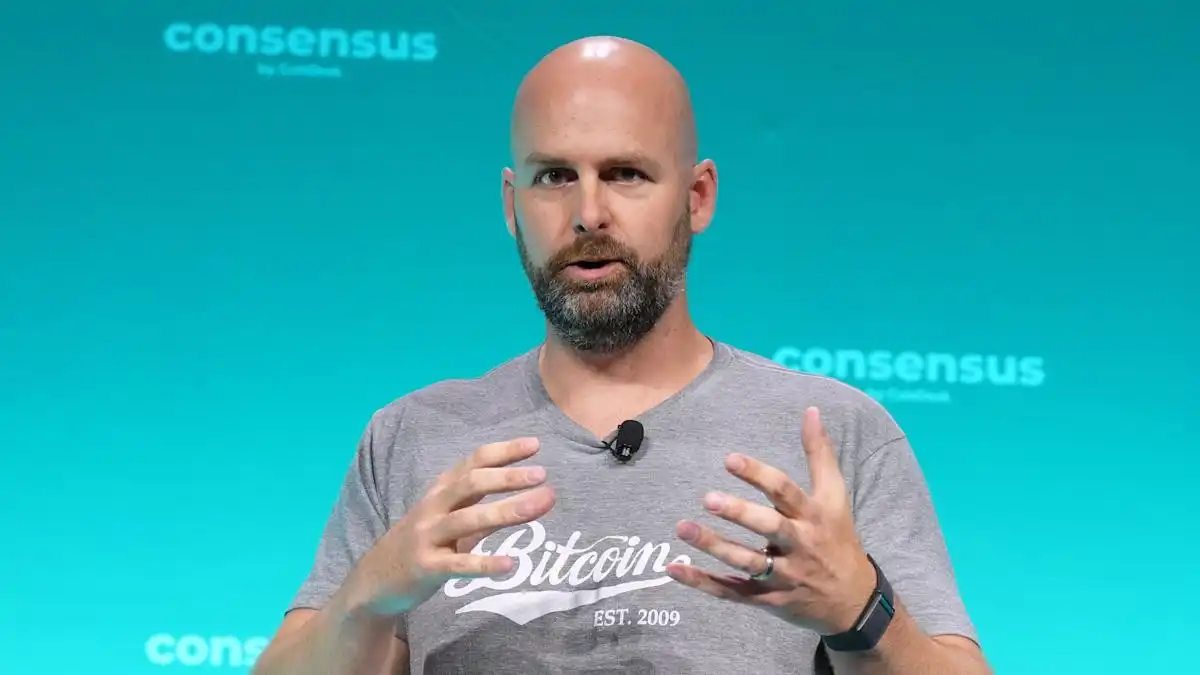
In September 2022, Messari completed a $35 million Series B funding round, led by the crypto arm of Brevan Howard with participation from Point72 Ventures and others, valuing the company at approximately $300 million. This funding round occurred near the peak of the bull market, reflecting the strong demand for high-quality data infrastructure at the time. However, the prolonged bear market post-2022, with tightening crypto project funding and pressure on trading volumes, presented real challenges for Messari. After co-founder and former CEO Ryan Selkis departed in 2024, the company underwent personnel optimization. In a bear market environment, high-valuation data companies struggled to maintain previous growth expectations, increasing survival pressure.

Behind the Acquisition

According to Architect Partners data, there have been 144 M&A transactions totaling $11.8 billion year-to-date in 2026, an increase of about 3.5% compared to the same period last year. Against a backdrop of pressured trading volumes and token prices, some high-valuation startups are opting for mergers and acquisitions to achieve resource consolidation or exit.

Eric Risley, founder of Architect Partners, pointed out that the industry is in a phase of differentiation, where pressure may lead to more distressed sales. Messari's fall from a $300 million valuation to a transaction price in the tens of millions is a microcosm of this phenomenon—valuations based on early growth narratives are being recalibrated in the face of fundamentals and capital efficiency.

Yanowitz emphasized in the announcement: "This acquisition connects the two sides of the market—issuers maintaining the trusted record of their business, and investors, exchanges, and regulators consuming those records through research, APIs, and automated workflows."

The core data foundation provided by Messari is precisely the prerequisite for AI agents to function: an agent's capability depends on the data it can access and the APIs it can call.

The crypto industry is currently at a critical inflection point: institutions are accelerating on-chain adoption, sectors like stablecoins, RWA, and prediction markets continue to expand, and demand for standardized disclosure, compliance monitoring, real-time data, and programmable access is surging.

In traditional financial markets, platforms like Bloomberg, FactSet, and S&P Global have built data moats through long-term consolidation. The crypto field similarly requires such infrastructure but must adapt to the characteristics of on-chain native, real-time, structured data.

Blockworks aims to build a full-cycle ecosystem, from data collection and verification to analysis, distribution, and compliance, using Messari's massive dataset as a foundation and overlaying its own issuer-side disclosure and IR capabilities.

The introduction of AI will further accelerate this process, as high-quality, structured data is the core fuel for training and running on-chain agents. For the Messari team, joining a platform with greater resources and strategic clarity will help its data assets create value within a larger ecosystem, rather than continuing to contract under the pressure of independent operation.

The crypto data and research landscape is transitioning from a flourishing diversity to consolidation by the fittest. Amidst cyclical fluctuations, data and trust are long-term moats, and consolidation is often one of the optimal paths to navigate through the cycles.


Domande pertinenti

QWhat was the acquisition price of Messari by Blockworks, and how does it compare to Messari's peak valuation in 2022?

ABlockworks acquired Messari for just over $10 million. This represents a significant discount compared to Messari's peak valuation of approximately $300 million in 2022, highlighting the pressure on highly-valued startups during the prolonged bear market.

QAccording to the announcement, what is the strategic goal of the integration between Blockworks and Messari?

AThe strategic goal of the integration is to combine Blockworks' strengths in issuer disclosure, investor relations, and compliance workflows with Messari's extensive data breadth and API capabilities. Together, they aim to build a 'single system of record' for the on-chain market.

QWhat was a key driver behind Blockworks's Series A extension funding, which was used to finance this acquisition?

AThe Series A extension funding, which valued Blockworks at about $192 million, was explicitly raised with the purpose of consolidating the fragmented data and information landscape within the cryptocurrency sector.

QWhat significant change did Blockworks undergo in late 2025, and what business line became its focus?

AIn late 2025, Blockworks shut down its news division to concentrate resources on its data, investor relations, and compliance services. Its Blockworks Intelligence business line became the primary focus for growth.

QHow does the article characterize the broader trend in the crypto sector regarding mergers and acquisitions (M&A) in 2026?

AThe article characterizes 2026 as a period of increased consolidation. According to Architect Partners, there have been 144 M&A deals totaling $11.8 billion year-to-date, representing a 3.5% increase compared to the same period last year, with some high-valuation startups opting for mergers or distressed sales under market pressure.

Letture associate

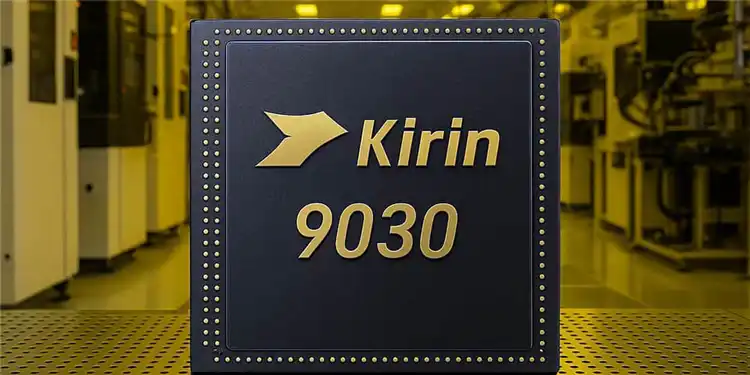
SemiAnalysis Dissects Huawei's Kirin 9030: Process Technology Halted, So They Folded the Chip

SemiAnalysis has published a detailed teardown report on the HiSilicon Kirin 9030 Pro chipset found in Huawei's Mate 80 Pro. Fabricated using SMIC's most advanced N+3 node without EUV lithography, the analysis reveals significant technical achievements and strategic shifts. The report indicates SMIC's N+3 has achieved transistor density comparable to TSMC's N6 (113.4 vs 107.7 MTr/mm²), primarily through aggressive use of Self-Aligned Quadruple Patterning (SAQP) for its metal layers. This results in a notably small 32.5nm M0 metal pitch. However, SemiAnalysis notes this achievement comes with significantly higher process complexity, cost, and potential yield challenges compared to competitors using more advanced tools. The Kirin 9030 design maximizes this constrained density. While its GPU performance has improved ~70% and matches Qualcomm's 2022 flagship level, the CPU core's IPC lags behind current top-tier designs from Apple and Qualcomm, a gap attributed to the underlying manufacturing technology rather than design capability. Facing long-term restrictions on advanced tools, Huawei is charting a new path. The report highlights the company's "LogicFolding" roadmap, a 3D stacking technique aimed at shortening signal paths to boost performance and efficiency. The goal is to reach 5GHz frequency and a projected density of 295 MTr/mm² by 2031. SemiAnalysis concludes that export controls have not halted China's chip progress but have fundamentally altered its trajectory, making it more expensive and complex. This has spurred innovation in alternative areas like 3D stacking and domestic EDA tool development, with Huawei's supply chain also beginning to integrate Chinese memory from CXMT.

marsbit41 min fa

SemiAnalysis Dissects Huawei's Kirin 9030: Process Technology Halted, So They Folded the Chip

marsbit41 min fa

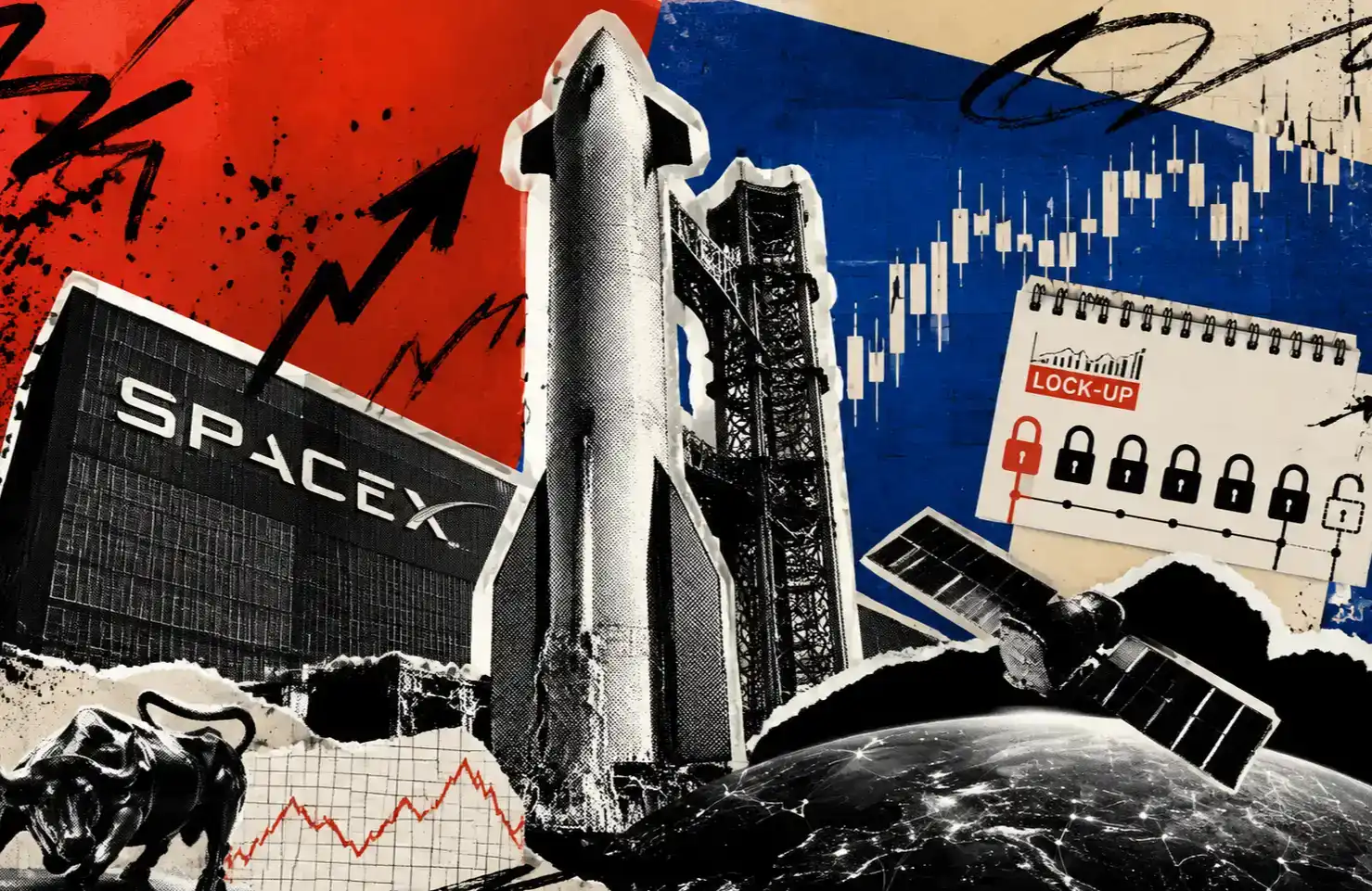
How Will the Price Move Before SpaceX's Next Share Unlock?

TL;DR Investors buying SPCX after SpaceX's IPO are not simply investing in a typical tech stock. It’s a high-valuation asset driven by Musk's narrative, Starlink, and space transport potential, but with a key twist: a very small initial float of ~4% has led to significant post-listing price appreciation. The current price action reflects a timing gap. Before the first lock-up expiration (estimated around August, subject to official confirmation), scarcity and high demand could continue to push prices up. Short-term bulls focus on low float, FOMO, and potential index inclusion. However, bears point to the supply dynamics that will change post-lockup. Existing shareholders still hold over 95% of shares, which will be released in stages starting from the first unlock window. This introduces future selling pressure from low-cost holders. The upcoming Q2 earnings report is a critical catalyst before the unlock. It will test whether the company's fundamentals can justify the current ~$2.1T valuation. Strong results could support the pre-unlock momentum, while weak figures could amplify concerns about future supply. The trading thesis is shifting from immediate scarcity ("can't buy enough") to evaluating future absorption capacity ("who will buy when more supply hits"). The path ahead hinges on the specifics of the unlock schedule, Q2 earnings performance, and whether anticipated passive index buying materializes.

marsbit1 h fa

How Will the Price Move Before SpaceX's Next Share Unlock?

marsbit1 h fa

Bitcoin Short-Term Bullish Structure Validated, HYPE Low-Entry Window Opens | Guest Analysis

**Market Analysis Summary (Week of June 2026)** **Overall Market Context:** The market environment is exceptionally complex, with the unexpected US-Iran agreement and the reopening of the Strait of Hormuz triggering a global asset repricing and significant volatility. This heightened noise underscores the importance of a structured analytical framework. **Bitcoin (BTC) Analysis & Strategy:** * **Current Status:** The price has climbed above $65,000, currently in a rebound phase (segment 38-39) following a complex 12-segment correction from the May high of $82,850. * **Key Levels:** * **Primary Resistance:** $69,500–$70,500. A successful breakout above $65,000 targets this zone. * **Primary Support:** $65,000 (immediate), followed by $59,000–$60,000 and $55,000. * **Weekly Outlook & Strategy:** The focus is on the confirmation of the $65,000 level. * **Bullish Scenario (Hold $65K):** A move toward the $69.5K–$70.5K resistance zone is anticipated, which is a potential area for initiating medium-term short positions. * **Bearish Scenario (Break below $65K):** A retest of the $60,000–$62,000 support range is likely. * **Medium-Term Strategy:** Currently neutral. Plan to establish short positions (up to 60% allocation) either in the $69.5K–$70.5K resistance zone upon signs of rejection, or on a confirmed breakdown below $65,000 and further below $59K–$60K. * **Short-Term Strategy:** Utilize 30% capital for scalping opportunities based on support/resistance levels, using 30/60-minute charts. **HYPE Analysis & Strategy:** * **Current Status:** The price has stabilized around $52 after a four-segment decline from the June high of $75.87 and is now in a rebound (segment 50-51). * **Key Levels:** * **Primary Resistance:** $62.50–$64.57. Watch for potential rejection here to form a lower high. * **Primary Support:** $52–$55.50, followed by $47–$49. * **Weekly Outlook & Strategy:** Adopt a "buy on dips, avoid chasing rallies" approach. * **Core View:** Monitor the price action and potential formation of a lower high ("endpoint 51") in the $62.50–$64.57 resistance zone. * **Short-Term Strategy:** Consider light long positions (max 30% allocation) if the price finds support and shows reversal signals in the $52–$54.50 or deeper $47–$49 support zones, confirmed by proprietary quantitative bottom signals. **Trade Review:** Last week's HYPE short-term long trade, executed based on proprietary "Price Difference" and "Momentum" model signals, yielded a profit of approximately 11.88%. The entry was near $54.39 and exit near $60.85. **Risk Management Reminder:** Always set an initial stop-loss upon entry. Move stop-loss to breakeven at +1% profit, then trail it upwards to lock in gains as the trade progresses. *Disclaimer: All analysis, models, and strategies are based on personal technical analysis for educational purposes only, not investment advice. The market carries inherent risk.*

Odaily星球日报1 h fa

Bitcoin Short-Term Bullish Structure Validated, HYPE Low-Entry Window Opens | Guest Analysis

Odaily星球日报1 h fa

Bitcoin Short-Term Bullish Structure Validated, HYPE Accumulation Window Opens | Guest Analysis

**Bitcoin and HYPE Market Analysis: Short-Term Outlook and Trading Strategies** This market analysis examines Bitcoin (BTC) and HYPE amid volatile conditions, providing short-term outlooks and specific trading strategies. **Key Outlooks:** * **Bitcoin (BTC):** Focus is on whether BTC's recent move above $65,000 holds. A successful breakout could lead to a test of the $69,500-$70,500 resistance zone, where medium-term short positions are considered. A failure, breaking below $65,000, may trigger a decline towards the $59,000-$60,000 support area. * **HYPE:** The token completed a four-wave correction and is now rebounding. The key resistance zone is $62.5-$64.57. The trading strategy is "buy on dips," looking for entry opportunities near the $52-$54.5 or deeper $47-$49 support zones, pending confirmation from proprietary models. **BTC Trading Strategy:** * **Medium-term:** Primarily looking to establish short positions (up to 60% allocated capital) if price rallies to the $69,500-$70,500 resistance area and shows signs of reversal. Alternative plans involve initiating shorts on a breakdown below $65,000. * **Short-term:** Allocate up to 30% capital for intraday "spread" trades based on support/resistance levels on 30/60-minute charts. **HYPE Trading Strategy:** * **Short-term:** Adopt a dip-buying approach. Consider light long positions (under 30% capital) when price tests key support levels ($52-$54.5 or $47-$49) and shows stabilization, confirmed by proprietary "Price Spread" and "Momentum Quant" models. **Trade Recap:** The analysis reviews a successful HYPE long trade from the previous week, executed at ~$54.39 and closed at ~$60.85 for an ~11.88% gain, based on signals from the aforementioned models. **Risk Management Emphasis:** The article stresses strict capital allocation (under 30-60%), immediate initial stop-loss placement, and a trailing stop-loss protocol to lock in profits as trades move favorably. ***Disclaimer:** All analysis, models, and strategies are for educational purposes based on technical analysis, not investment advice. Markets are volatile; trade with caution.*

marsbit1 h fa

Bitcoin Short-Term Bullish Structure Validated, HYPE Accumulation Window Opens | Guest Analysis

marsbit1 h fa

Trading

Spot
Futures
活动图片