Futu's Fine Turns into a Boon for Hyperliquid?

marsbitPubblicato 2026-05-25Pubblicato ultima volta 2026-05-25

Introduzione

The article explores the interconnected narratives of a regulatory crackdown on Chinese fintech brokers and the rise of the decentralized exchange Hyperliquid. It begins with China's May 2026 proposal for severe penalties against brokers like Futu and Tiger for illegal cross-border operations, suggesting this may redirect capital toward platforms like Hyperliquid. This is evidenced by HYPE token's price surge coinciding with the news. The core of the article analyzes Hyperliquid's disruptive potential and the regulatory pressure it faces. Traditional giants like CME and ICE are lobbying the CFTC to crack down on Hyperliquid, citing its lack of KYC, position limits, and market surveillance—particularly for its weekend crude oil contracts, which challenge traditional market hours. Despite this, Hyperliquid demonstrates remarkable efficiency, with a small team generating high revenue, largely funneled into HYPE buybacks. Its innovation lies in synthetic perpetual contracts for pre-IPO companies (e.g., Cerebras, SpaceX), enabling price discovery outside traditional channels. Unlike tokenized equity platforms (PreStocks, Ondo) tied to physical assets or entities, Hyperliquid's "asset-less" synthetic contracts are argued to be more resilient to legal targeting, as they are simply code on a decentralized network. However, the article notes this is not absolute, citing the network's limited validators and past interventions. The piece concludes that Hyperliquid's fundamental advan...

Author: Thejaswini M A

Compiled and Edited: BitpushNews

Bitpush Note:

On May 22, 2026, the China Securities Regulatory Commission (CSRC) dropped a bombshell: it plans to impose severe penalties on the illegal cross-border business activities of institutions such as Tiger Brokers, Futu Securities, and Longbridge Securities. Not only are they facing huge fines, but all illegal gains of related entities both inside and outside China will be confiscated according to law. Furthermore, during a two-year centralized rectification period, all related domestic business will be completely banned, with existing mainland clients only allowed to sell unidirectionally. Upon the news, related US-listed broker stocks plummeted over 40% in pre-market trading.

When compliant cross-border channels are being blocked one by one, where will the capital that still craves global asset allocation, participation in pre-IPO pricing for companies like SpaceX, and the ability to trade any asset anytime, anywhere, flow to?

The answer seems to be faintly emerging: flowing into RWA, flowing into Hyperliquid.

This is not a prophecy. This is happening right now.

On the very same day the news of the fines broke, HYPE hit a new high.
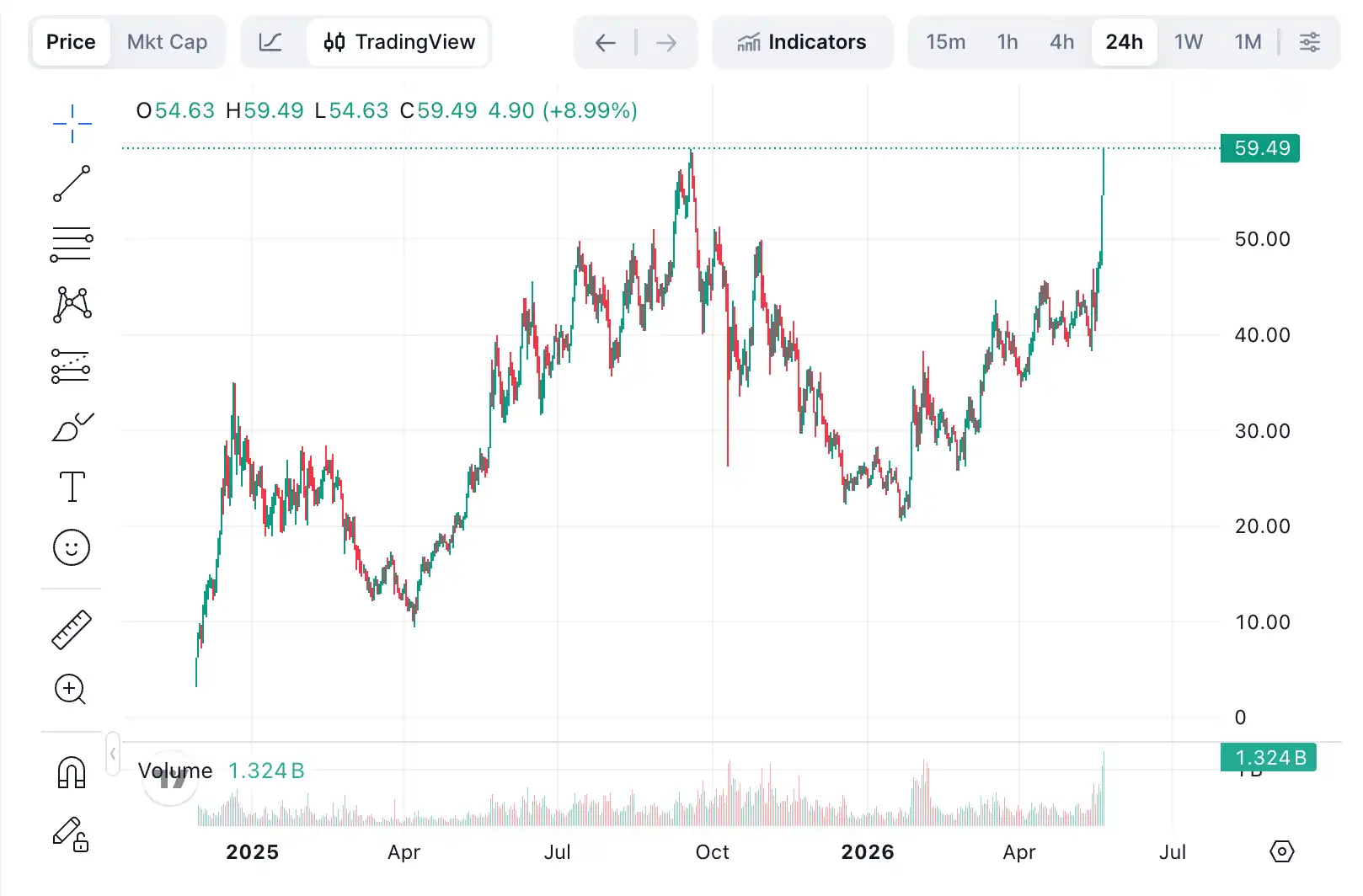
Coincidence? Perhaps. But capital doesn't believe in coincidences. It only believes in exits.

The following is the main text:

CME Group (Chicago Mercantile Exchange) is the world's largest derivatives exchange. It's where professional traders buy and sell futures on crude oil, gold, interest rates, stock indices, and Bitcoin. It handles trillions of dollars in daily trading volume and has existed since 1898.

Intercontinental Exchange (ICE) owns the New York Stock Exchange and operates multiple derivatives exchanges globally. It's another industry giant.

They are among the most powerful financial market infrastructure companies on Earth. When they point at something and call it "extremely dangerous," regulators find it hard not to listen.

Currently, CME and ICE are pressuring the U.S. Commodity Futures Trading Commission (CFTC) and Capitol Hill to crack down hard on Hyperliquid, warning that this "KYC-free" platform is a breeding ground for market manipulation and sanctions evasion.

  • There is indeed zero KYC. While Hyperliquid uses filters on its main site front-end to block addresses sanctioned by the U.S. Office of Foreign Assets Control (OFAC), its underlying protocol is completely permissionless. If someone bypasses the website and interacts directly with the smart contracts, there is no identity check waiting for them.
  • Additionally, there are no position limits on Hyperliquid. At CME, no single trader can hold a position larger than a specific size in any contract, to guard against manipulation and systemic risk. Hyperliquid has no such restrictions.
  • CME closely monitors manipulative trading behaviors like spoofing, wash trading, and coordinated attacks. Hyperliquid has no surveillance system watching for these.

These are indeed objective facts.

Influenced by this news, the HYPE token dropped 9% on May 15. Subsequently, two market makers withdrew $100 million in liquidity on May 18 in response.
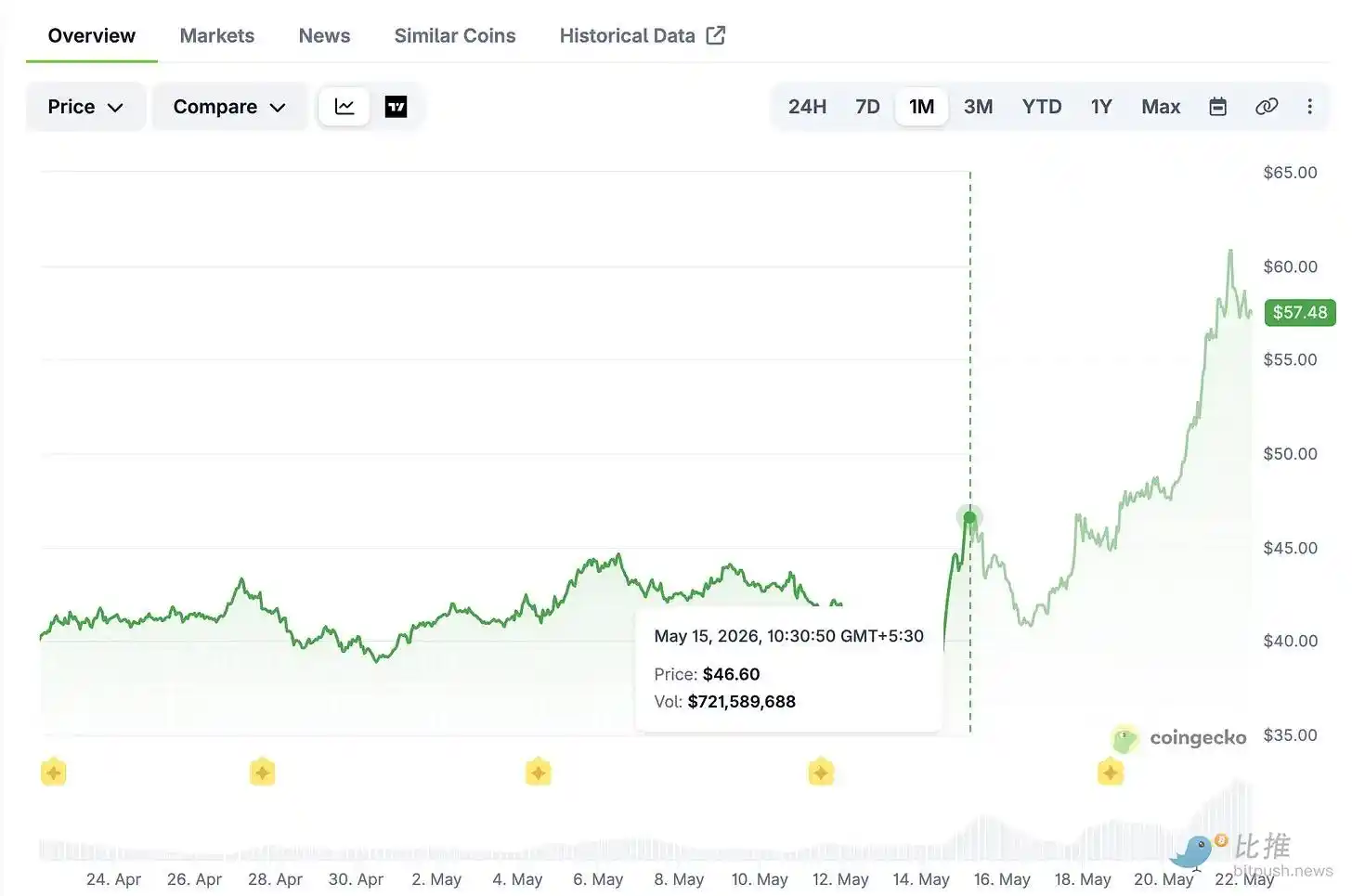
coingecko.com

But, note which specific product they are targeting. It's not the cryptocurrency perpetual contracts that Hyperliquid has been running for years, which regulators never batted an eye at. Their focus is entirely on the crude oil contracts. These are the contracts that generated $720 million in trading volume over weekends when CME's own crude market is closed.

Regarding this regulatory growing pain, CME and ICE's concerns are not entirely without merit, but we also know in our hearts they are anything but neutral observers. Their business models are entirely reliant on a legally protected "trading hours monopoly." They don't mind competing on technology, but when someone competes with them on time, they go absolutely crazy.

By bringing real volume into the crude oil market over weekends, Hyperliquid has essentially broken the space-time continuum of TradFi. And the incumbents are asking the government to force everyone else to also close their eyes while they sleep. If it were me, I'd prefer to apply for a permit to operate on weekends; but clearly, that's just my thinking.

Hyperliquid's office in Singapore has only 11 people. In the 30 days ending May 21, 2026, the protocol generated $51 million in revenue. In March, it processed a staggering $2.6 trillion in nominal derivatives trading volume.
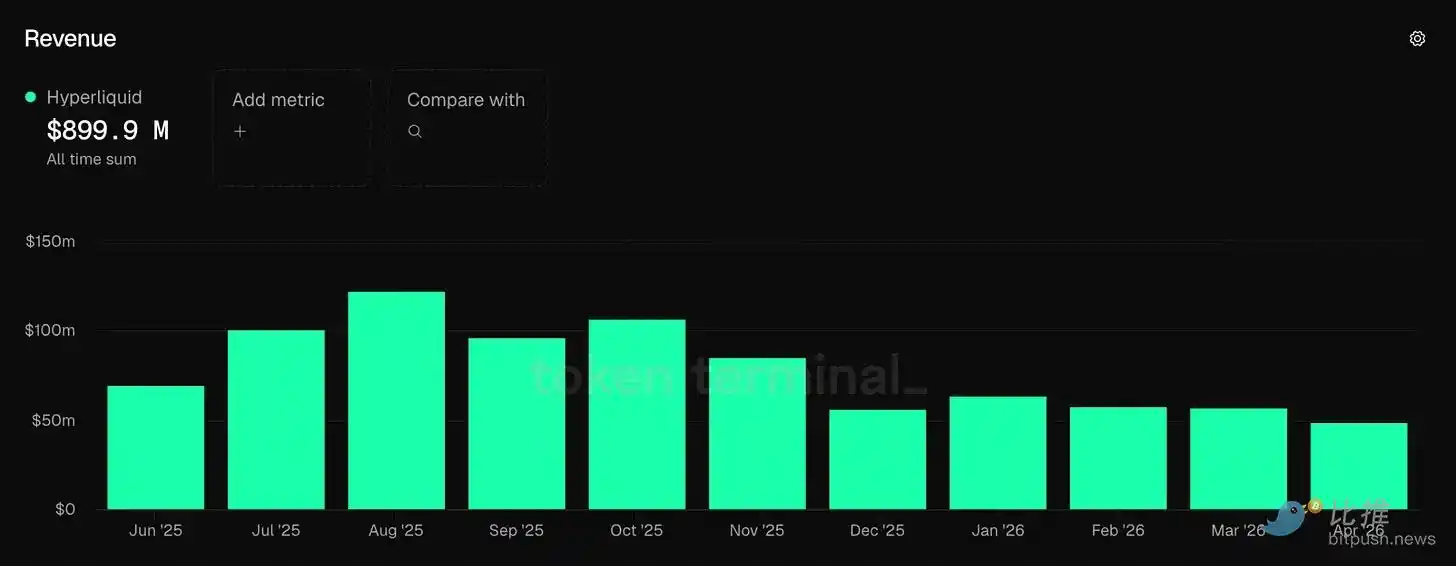
tokenterminal.com

Hyperliquid routes 97% of trading fees through an on-chain fund to buy back HYPE tokens. Generating $51 million in monthly revenue with just 11 people finds no real comparison, whether inside or outside the cryptocurrency industry, in terms of per capita economic efficiency. As of late May, HYPE is up 101% year-to-date.

All of this isn't necessarily because Hyperliquid built a technically superior derivative, strictly speaking. It's simply because it remains open when CME is closed, and therein lies immense value. Recently, some new developments have pushed this logic to an even deeper level.

On May 1, Trade.xyz, a platform built on Hyperliquid, launched a Pre-IPO perpetual futures contract for AI chipmaker Cerebras. The contract ran for two weeks before the IPO. Early in that window, traders had smoothed out a roughly 50% premium relative to the $185 IPO price, implying an opening price around $277. Then market information updated. One hour before Cerebras opened on NASDAQ, the perpetual contract on Trade.xyz was pricing the stock at $340, within less than 3% of the actual opening price. In the end, Cerebras opened at $350 on May 14, a stunning 89% surge from its $185 IPO price. Traditional pre-IPO market platforms like Forge and EquityZen had prediction errors of 35%, while Hyperliquid's error was just 3%.

When genuine uncertainty still existed, $277 was the price the market implied. As information kept flowing in and being priced in, the wisdom of the crowd smoothed out that gap. This is how price discovery is supposed to work.

Then on May 17, a Sunday morning, Trade.xyz launched a SpaceX perpetual futures contract. It opened at a reference price of $150, soared to $216 within hours, and eventually stabilized around $203, implying the crowd valued the company at $2.4 trillion.

Yet at that time, SpaceX had not publicly filed an S-1 registration statement, no Wall Street analyst had given a price target, and an official roadshow was nowhere in sight.

Traders had no idea that SpaceX had actually confidentially submitted a draft filing to the SEC as early as April 1, with a target valuation set between $1.75 trillion and $2 trillion.

Traders settled the contract at $203, implying a $2.4 trillion valuation. Before bankers held their first meeting, without access to the filing documents, the crowd landed smartly at the top end of the company's own target range. Just days later, on May 20, a Wednesday, SpaceX formally filed its actual 277-page S-1 prospectus with the public.

Currently, three products are trying to provide investors with exposure to SpaceX. Each legally bets on a different solution.

PreStocks tried to be clever. They set up special purpose vehicle (SPV) funds to buy real SpaceX shares, then split and mapped those fund shares into blockchain tokens so retail investors could get a slice. It looked like a clean backdoor into private tech companies.

However, shortly before Hyperliquid launched its SPCX contract, Anthropic and OpenAI publicly distanced themselves from third-party SPV products claiming to track their valuations. Platforms in Hong Kong and the UAE had been selling tokenized exposure to these two companies without board approval. Both companies issued warnings that the equity transfers behind these products were invalid. PreStocks' token promptly plunged 50%. When you try to operate by anchoring to real shares, the company you hold shares in always reserves the right to intervene.
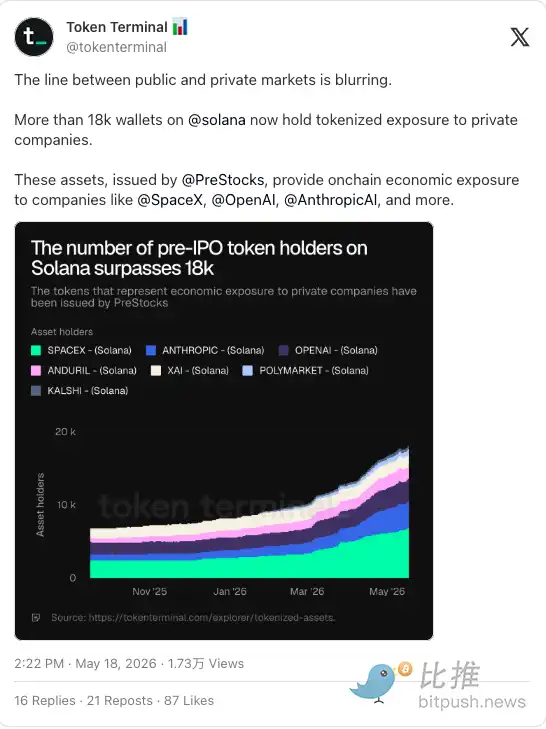
Ondo Global Markets tokenizes shares through a U.S.-registered broker-dealer, with each token backed by underlying securities. Its compliance is very clean; even the Depository Trust & Clearing Corporation (DTCC) is building settlement infrastructure around it.

But Ondo's greatest strength is also its biggest vulnerability. It has a specific physical address. If the SEC decides to shut it down, they know exactly whose door to knock on. If Elon Musk objects, SpaceX's lawyers know exactly which custodian to sue. By choosing to play the game by the rules, Ondo has made itself a perfect target for pinpoint strikes.

Then look at Hyperliquid's SPCX contract — this thing is built entirely on air.

No shares, no registered broker-dealer, no claim on any physical asset. It's a synthetic perpetual contract, a ghost through and through. A pure bet on a price feed, settled entirely in USDC on a decentralized network.

Even if SpaceX wanted to stop people from trading derivatives based on its valuation, it couldn't. There's no corporate entity to serve legal papers to, no central issuer to pressure.

This is really clever. Hyperliquid basically figured out: if you have no face, no one can punch you in the face. By anchoring the product to nothing physical, they've become impossible to target.

I'm not sure this is purely a good thing.

A zero-KYC venue rerouting trillions of dollars around the global banking system — the national security nightmare this poses is hard to argue against. The fact that Hyperliquid co-founder Jeff Yan flew to Washington on May 17 to meet policymakers is proof enough of how real this pressure is.

Speaking of Jeff Yan. He is a real person, shows his face, and went to Harvard. If SpaceX wanted to sue him for trademark infringement or IP violation because his platform lists a contract called "SPCX," they could absolutely serve him the lawsuit.

But suing Jeff wouldn't make the contract disappear.

With PreStocks, if the company deletes the underlying shares, the product ceases to exist. With Ondo, if a judge freezes the bank or custodian, the product stalls. But Hyperliquid's SPCX is an autonomously deployed piece of code. Even if Jeff Yan gets sued into oblivion, those smart contracts are live, the code is immutable, and the global order book would keep running on-chain.

This is the "flawless theory" of decentralization. Reality is more fragile. Hyperliquid only runs on 20 validators, not 900,000. These validators can be identified. And the JELLY incident has already shown: they will intervene if they want to. Validators are not immutable.

Again, time is the only product they can't replicate.

Domande pertinenti

QWhat is Hyperliquid, and how does it differ from traditional derivatives exchanges like CME?

AHyperliquid is a decentralized derivatives exchange that operates 24/7 and without KYC on its underlying protocol, unlike traditional centralized exchanges like CME which have restricted trading hours and strict compliance requirements. It allows users to trade perpetual futures contracts on various assets, including cryptocurrencies and real-world assets (RWAs).

QWhy did the potential fines on Chinese brokerages like Futu and Tiger Securities appear to be a positive catalyst for Hyperliquid's HYPE token?

AThe announcement of severe penalties for illegal cross-border operations by Chinese brokerages signaled a potential crackdown on traditional, compliant channels for accessing global assets. This may have driven capital seeking global asset exposure and 24/7 trading into alternative platforms like Hyperliquid, which offers such access in a decentralized manner, likely contributing to a surge in its HYPE token.

QWhat are the main regulatory concerns raised by traditional exchanges (CME, ICE) against Hyperliquid?

AThe main regulatory concerns raised are: 1) Lack of KYC, which could facilitate market manipulation and sanctions evasion. 2) Absence of position limits to prevent market dominance and systemic risk. 3) No surveillance systems to monitor manipulative trading practices like spoofing or wash trading.

QHow did Hyperliquid's SpaceX (SPCX) perpetual futures contract demonstrate its price discovery capabilities?

AThe SPCX contract started trading before SpaceX's official S-1 filing and without access to confidential documents. It settled at a price implying a $2.4 trillion valuation. Days later, SpaceX's public filing revealed a target valuation range of $1.75-$2 trillion, showing that the Hyperliquid market's 'crowd wisdom' accurately discovered the price at the high end of the company's internal target range.

QWhat is the core strategic advantage of Hyperliquid's synthetic perpetual contracts (like for SpaceX) compared to other tokenized equity platforms?

AThe core advantage is that these contracts are synthetic, not backed by any real underlying asset or equity claim. This makes them legally difficult to target. Unlike platforms that tokenize actual shares (which the issuing company can challenge), Hyperliquid's contracts are pure price bets on decentralized code, offering a form of regulatory and legal resistance by having 'no face to punch.'

Letture associate

MLCC Capacitor Price Increase: A Comprehensive Overview of Beneficiary Companies

Recent teardown reports of Nvidia's next-generation AI chips have reignited investor interest in the MLCC (Multi-Layer Ceramic Capacitor) sector. Analysis of the Rubin architecture VR200 server reveals a 30% increase in MLCC count and a 182% surge in component value per rack compared to the previous generation, with GPU board usage nearly doubling. High-power, high-voltage hardware designs are driving massive adoption of high-end, high-withstand-voltage, and large-capacity MLCCs, exacerbating supply shortages. The global MLCC supply-demand balance remains tight. Leading Japanese and Korean manufacturers have successively raised prices across series, compounded by overseas capacity constraints and long-term customer order locks at major factories. Delivery lead times for high-end products now exceed 20 weeks, with capacity struggling to keep pace with surging orders. Demand drivers include AI servers, automotive electronics, and recovering consumer electronics, leading to both volume and price increases for MLCCs. The industry chain beneficiaries are outlined as follows: **1. MLCC Product Manufacturers:** Direct beneficiaries of price hikes. Key Chinese companies include Fenghua Advanced Technology (leading domestic player), Sanhuan Group (vertical integration from materials to products), and others like Hongyuan Electronics (military focus) and Torch Electron (specialty ceramics). **2. MLCC Raw Materials & Components:** The foundation of the supply chain. * **Release Film:** A critical consumable in production. Companies include Jiemei Technology (domestic leader), Shuangxing New Materials, and Sidike. * **Metal Powders (Ni/Cu):** Core materials for internal electrodes. Key suppliers are Boqian New Materials, Yuean New Materials, and Gripm Advanced Materials. * **Dielectric Ceramic Powder:** The core material determining MLCC performance. Sinocera Advanced Materials is a global leader, while Sanhuan Group and Fenghua Advanced Technology also have significant in-house capabilities. The report highlights that rising AI server power is significantly increasing requirements for chip capacitors and inductors, forecasting explosive industry growth aligned with projected GPU/TPU shipments through 2027-2028.

marsbit30 min fa

MLCC Capacitor Price Increase: A Comprehensive Overview of Beneficiary Companies

marsbit30 min fa

Morning Post | Michael Saylor Says This Week's Buy Was Bonds, Not Bitcoin; StablR Suffers Attack Losing Approximately $2.8 Million; US Congress Reintroduces Bitcoin Reserve Bill

This cryptocurrency industry digest covers key developments from May 25. MicroStrategy's Michael Saylor clarified the company purchased bonds, not Bitcoin, this week. In regulatory news, the US Congress reintroduced a Bitcoin reserve bill, with Republican backing aiming to accumulate 5% of global supply. The legal and audit firms for the collapsed FTX agreed to a $66 million settlement over fraud allegations. Several CFTC officials skeptical of prediction market oversight were reportedly suspended and forced out. On the security front, the StablR stablecoin was attacked and de-pegged, resulting in an estimated $2.8 million loss for the attacker. The Ethereum Foundation faced criticism, though a researcher defended its core protocol-building mission over influencing ETH's price. Market data from GMGN showed the top 24-hour trending meme tokens on ETH were HEX, SHIB, LINK, PEPE, and mUSD. On Solana, leaders were TROLL, neet, WORLDCUP, HANTA, and Buttcoin. Base chain's top tokens included TOSHI, KEYCAT, BRETT, CLANKER, and LUNA. Featured articles included an a16z analysis arguing tokenization, or real-world assets (RWA), is fundamentally transforming asset nature and financial systems, with the market growing tenfold to ~$34 billion in two years. Another piece deconstructed Hyperliquid's success through a five-layer financial stack framework, emphasizing the critical importance of building from a robust settlement layer upward.

链捕手1 h fa

Morning Post | Michael Saylor Says This Week's Buy Was Bonds, Not Bitcoin; StablR Suffers Attack Losing Approximately $2.8 Million; US Congress Reintroduces Bitcoin Reserve Bill

链捕手1 h fa

Trading

Spot
Futures

Articoli Popolari

Cosa è $S$

Comprendere SPERO: Una Panoramica Completa Introduzione a SPERO Mentre il panorama dell'innovazione continua a evolversi, l'emergere delle tecnologie web3 e dei progetti di criptovaluta gioca un ruolo fondamentale nel plasmare il futuro digitale. Un progetto che ha attirato l'attenzione in questo campo dinamico è SPERO, denotato come SPERO,$$s$. Questo articolo mira a raccogliere e presentare informazioni dettagliate su SPERO, per aiutare gli appassionati e gli investitori a comprendere le sue basi, obiettivi e innovazioni nei domini web3 e crypto. Che cos'è SPERO,$$s$? SPERO,$$s$ è un progetto unico all'interno dello spazio crypto che cerca di sfruttare i principi della decentralizzazione e della tecnologia blockchain per creare un ecosistema che promuove l'impegno, l'utilità e l'inclusione finanziaria. Il progetto è progettato per facilitare interazioni peer-to-peer in modi nuovi, fornendo agli utenti soluzioni e servizi finanziari innovativi. Al suo interno, SPERO,$$s$ mira a responsabilizzare gli individui fornendo strumenti e piattaforme che migliorano l'esperienza dell'utente nello spazio delle criptovalute. Questo include la possibilità di metodi di transazione più flessibili, la promozione di iniziative guidate dalla comunità e la creazione di percorsi per opportunità finanziarie attraverso applicazioni decentralizzate (dApps). La visione sottostante di SPERO,$$s$ ruota attorno all'inclusività, cercando di colmare le lacune all'interno della finanza tradizionale mentre sfrutta i vantaggi della tecnologia blockchain. Chi è il Creatore di SPERO,$$s$? L'identità del creatore di SPERO,$$s$ rimane piuttosto oscura, poiché ci sono risorse pubblicamente disponibili limitate che forniscono informazioni dettagliate sul suo fondatore o fondatori. Questa mancanza di trasparenza può derivare dall'impegno del progetto per la decentralizzazione—un ethos che molti progetti web3 condividono, dando priorità ai contributi collettivi rispetto al riconoscimento individuale. Centrando le discussioni attorno alla comunità e ai suoi obiettivi collettivi, SPERO,$$s$ incarna l'essenza dell'empowerment senza mettere in evidenza individui specifici. Pertanto, comprendere l'etica e la missione di SPERO rimane più importante che identificare un creatore singolo. Chi sono gli Investitori di SPERO,$$s$? SPERO,$$s$ è supportato da una varietà di investitori che vanno dai capitalisti di rischio agli investitori angelici dedicati a promuovere l'innovazione nel settore crypto. Il focus di questi investitori generalmente si allinea con la missione di SPERO—dando priorità a progetti che promettono avanzamenti tecnologici sociali, inclusività finanziaria e governance decentralizzata. Queste fondazioni di investitori sono tipicamente interessate a progetti che non solo offrono prodotti innovativi, ma contribuiscono anche positivamente alla comunità blockchain e ai suoi ecosistemi. Il supporto di questi investitori rafforza SPERO,$$s$ come un concorrente degno di nota nel dominio in rapida evoluzione dei progetti crypto. Come Funziona SPERO,$$s$? SPERO,$$s$ impiega un framework multifunzionale che lo distingue dai progetti di criptovaluta convenzionali. Ecco alcune delle caratteristiche chiave che sottolineano la sua unicità e innovazione: Governance Decentralizzata: SPERO,$$s$ integra modelli di governance decentralizzati, responsabilizzando gli utenti a partecipare attivamente ai processi decisionali riguardanti il futuro del progetto. Questo approccio favorisce un senso di proprietà e responsabilità tra i membri della comunità. Utilità del Token: SPERO,$$s$ utilizza il proprio token di criptovaluta, progettato per servire varie funzioni all'interno dell'ecosistema. Questi token abilitano transazioni, premi e la facilitazione dei servizi offerti sulla piattaforma, migliorando l'impegno e l'utilità complessivi. Architettura Stratificata: L'architettura tecnica di SPERO,$$s$ supporta la modularità e la scalabilità, consentendo un'integrazione fluida di funzionalità e applicazioni aggiuntive man mano che il progetto evolve. Questa adattabilità è fondamentale per mantenere la rilevanza nel panorama crypto in continua evoluzione. Coinvolgimento della Comunità: Il progetto enfatizza iniziative guidate dalla comunità, impiegando meccanismi che incentivano la collaborazione e il feedback. Nutrendo una comunità forte, SPERO,$$s$ può affrontare meglio le esigenze degli utenti e adattarsi alle tendenze di mercato. Focus sull'Inclusione: Offrendo basse commissioni di transazione e interfacce user-friendly, SPERO,$$s$ mira ad attrarre una base utenti diversificata, inclusi individui che potrebbero non aver precedentemente interagito nello spazio crypto. Questo impegno per l'inclusione si allinea con la sua missione generale di empowerment attraverso l'accessibilità. Cronologia di SPERO,$$s$ Comprendere la storia di un progetto fornisce preziose intuizioni sulla sua traiettoria di sviluppo e sui traguardi. Di seguito è riportata una cronologia suggerita che mappa eventi significativi nell'evoluzione di SPERO,$$s$: Fase di Concettualizzazione e Ideazione: Le idee iniziali che formano la base di SPERO,$$s$ sono state concepite, allineandosi strettamente con i principi di decentralizzazione e focus sulla comunità all'interno dell'industria blockchain. Lancio del Whitepaper del Progetto: Dopo la fase concettuale, è stato rilasciato un whitepaper completo che dettaglia la visione, gli obiettivi e l'infrastruttura tecnologica di SPERO,$$s$ per suscitare interesse e feedback dalla comunità. Costruzione della Comunità e Prime Interazioni: Sono stati effettuati sforzi attivi di outreach per costruire una comunità di early adopters e potenziali investitori, facilitando discussioni attorno agli obiettivi del progetto e ottenendo supporto. Evento di Generazione del Token: SPERO,$$s$ ha condotto un evento di generazione del token (TGE) per distribuire i propri token nativi ai primi sostenitori e stabilire una liquidità iniziale all'interno dell'ecosistema. Lancio della Prima dApp: La prima applicazione decentralizzata (dApp) associata a SPERO,$$s$ è stata attivata, consentendo agli utenti di interagire con le funzionalità principali della piattaforma. Sviluppo Continuo e Partnership: Aggiornamenti e miglioramenti continui alle offerte del progetto, inclusi partnership strategiche con altri attori nello spazio blockchain, hanno plasmato SPERO,$$s$ in un concorrente competitivo e in evoluzione nel mercato crypto. Conclusione SPERO,$$s$ rappresenta una testimonianza del potenziale del web3 e delle criptovalute di rivoluzionare i sistemi finanziari e responsabilizzare gli individui. Con un impegno per la governance decentralizzata, il coinvolgimento della comunità e funzionalità progettate in modo innovativo, apre la strada verso un panorama finanziario più inclusivo. Come per qualsiasi investimento nello spazio crypto in rapida evoluzione, si incoraggiano potenziali investitori e utenti a ricercare approfonditamente e a impegnarsi in modo riflessivo con gli sviluppi in corso all'interno di SPERO,$$s$. Il progetto mostra lo spirito innovativo dell'industria crypto, invitando a ulteriori esplorazioni delle sue innumerevoli possibilità. Mentre il percorso di SPERO,$$s$ è ancora in fase di sviluppo, i suoi principi fondamentali potrebbero effettivamente influenzare il futuro di come interagiamo con la tecnologia, la finanza e tra di noi in ecosistemi digitali interconnessi.

75 Totale visualizzazioniPubblicato il 2024.12.17Aggiornato il 2024.12.17

Cosa è $S$

Cosa è AGENT S

Agent S: Il Futuro dell'Interazione Autonoma in Web3 Introduzione Nel panorama in continua evoluzione di Web3 e criptovalute, le innovazioni stanno costantemente ridefinendo il modo in cui gli individui interagiscono con le piattaforme digitali. Uno di questi progetti pionieristici, Agent S, promette di rivoluzionare l'interazione uomo-computer attraverso il suo framework agentico aperto. Aprendo la strada a interazioni autonome, Agent S mira a semplificare compiti complessi, offrendo applicazioni trasformative nell'intelligenza artificiale (AI). Questa esplorazione dettagliata approfondirà le complessità del progetto, le sue caratteristiche uniche e le implicazioni per il dominio delle criptovalute. Cos'è Agent S? Agent S si presenta come un innovativo framework agentico aperto, progettato specificamente per affrontare tre sfide fondamentali nell'automazione dei compiti informatici: Acquisizione di Conoscenze Specifiche del Dominio: Il framework apprende in modo intelligente da varie fonti di conoscenza esterne ed esperienze interne. Questo approccio duale gli consente di costruire un ricco repository di conoscenze specifiche del dominio, migliorando le sue prestazioni nell'esecuzione dei compiti. Pianificazione su Lungo Orizzonte di Compiti: Agent S impiega una pianificazione gerarchica potenziata dall'esperienza, un approccio strategico che facilita la suddivisione e l'esecuzione efficiente di compiti complessi. Questa caratteristica migliora significativamente la sua capacità di gestire più sottocompiti in modo efficiente ed efficace. Gestione di Interfacce Dinamiche e Non Uniformi: Il progetto introduce l'Interfaccia Agente-Computer (ACI), una soluzione innovativa che migliora l'interazione tra agenti e utenti. Utilizzando Modelli Linguistici Multimodali di Grandi Dimensioni (MLLM), Agent S può navigare e manipolare senza sforzo diverse interfacce grafiche utente. Attraverso queste caratteristiche pionieristiche, Agent S fornisce un framework robusto che affronta le complessità coinvolte nell'automazione dell'interazione umana con le macchine, preparando il terreno per innumerevoli applicazioni nell'AI e oltre. Chi è il Creatore di Agent S? Sebbene il concetto di Agent S sia fondamentalmente innovativo, informazioni specifiche sul suo creatore rimangono elusive. Il creatore è attualmente sconosciuto, il che evidenzia sia la fase embrionale del progetto sia la scelta strategica di mantenere i membri fondatori sotto anonimato. Indipendentemente dall'anonimato, l'attenzione rimane sulle capacità e sul potenziale del framework. Chi sono gli Investitori di Agent S? Poiché Agent S è relativamente nuovo nell'ecosistema crittografico, informazioni dettagliate riguardanti i suoi investitori e sostenitori finanziari non sono documentate esplicitamente. La mancanza di approfondimenti pubblicamente disponibili sulle fondazioni di investimento o sulle organizzazioni che supportano il progetto solleva interrogativi sulla sua struttura di finanziamento e sulla roadmap di sviluppo. Comprendere il supporto è cruciale per valutare la sostenibilità del progetto e il suo potenziale impatto sul mercato. Come Funziona Agent S? Al centro di Agent S si trova una tecnologia all'avanguardia che gli consente di funzionare efficacemente in contesti diversi. Il suo modello operativo è costruito attorno a diverse caratteristiche chiave: Interazione Uomo-Computer Simile a Quella Umana: Il framework offre una pianificazione AI avanzata, cercando di rendere le interazioni con i computer più intuitive. Mimando il comportamento umano nell'esecuzione dei compiti, promette di elevare le esperienze degli utenti. Memoria Narrativa: Utilizzata per sfruttare esperienze di alto livello, Agent S utilizza la memoria narrativa per tenere traccia delle storie dei compiti, migliorando così i suoi processi decisionali. Memoria Episodica: Questa caratteristica fornisce agli utenti una guida passo-passo, consentendo al framework di offrire supporto contestuale mentre i compiti si sviluppano. Supporto per OpenACI: Con la capacità di funzionare localmente, Agent S consente agli utenti di mantenere il controllo sulle proprie interazioni e flussi di lavoro, allineandosi con l'etica decentralizzata di Web3. Facile Integrazione con API Esterne: La sua versatilità e compatibilità con varie piattaforme AI garantiscono che Agent S possa adattarsi senza problemi agli ecosistemi tecnologici esistenti, rendendolo una scelta attraente per sviluppatori e organizzazioni. Queste funzionalità contribuiscono collettivamente alla posizione unica di Agent S all'interno dello spazio crittografico, poiché automatizza compiti complessi e multi-fase con un intervento umano minimo. Man mano che il progetto evolve, le sue potenziali applicazioni in Web3 potrebbero ridefinire il modo in cui si svolgono le interazioni digitali. Cronologia di Agent S Lo sviluppo e le tappe di Agent S possono essere riassunti in una cronologia che evidenzia i suoi eventi significativi: 27 Settembre 2024: Il concetto di Agent S è stato lanciato in un documento di ricerca completo intitolato “Un Framework Agentico Aperto che Usa i Computer Come un Umano”, mostrando le basi per il progetto. 10 Ottobre 2024: Il documento di ricerca è stato reso pubblicamente disponibile su arXiv, offrendo un'esplorazione approfondita del framework e della sua valutazione delle prestazioni basata sul benchmark OSWorld. 12 Ottobre 2024: È stata rilasciata una presentazione video, fornendo un'idea visiva delle capacità e delle caratteristiche di Agent S, coinvolgendo ulteriormente potenziali utenti e investitori. Questi indicatori nella cronologia non solo illustrano i progressi di Agent S, ma indicano anche il suo impegno per la trasparenza e il coinvolgimento della comunità. Punti Chiave su Agent S Man mano che il framework Agent S continua a evolversi, diversi attributi chiave si distinguono, sottolineando la sua natura innovativa e il potenziale: Framework Innovativo: Progettato per fornire un uso intuitivo dei computer simile all'interazione umana, Agent S porta un approccio nuovo all'automazione dei compiti. Interazione Autonoma: La capacità di interagire autonomamente con i computer attraverso GUI segna un passo avanti verso soluzioni informatiche più intelligenti ed efficienti. Automazione di Compiti Complessi: Con la sua metodologia robusta, può automatizzare compiti complessi e multi-fase, rendendo i processi più veloci e meno soggetti a errori. Miglioramento Continuo: I meccanismi di apprendimento consentono ad Agent S di migliorare dalle esperienze passate, migliorando continuamente le sue prestazioni e la sua efficacia. Versatilità: La sua adattabilità attraverso diversi ambienti operativi come OSWorld e WindowsAgentArena garantisce che possa servire un'ampia gamma di applicazioni. Man mano che Agent S si posiziona nel panorama di Web3 e delle criptovalute, il suo potenziale per migliorare le capacità di interazione e automatizzare i processi segna un significativo avanzamento nelle tecnologie AI. Attraverso il suo framework innovativo, Agent S esemplifica il futuro delle interazioni digitali, promettendo un'esperienza più fluida ed efficiente per gli utenti in vari settori. Conclusione Agent S rappresenta un audace passo avanti nell'unione tra AI e Web3, con la capacità di ridefinire il modo in cui interagiamo con la tecnologia. Sebbene sia ancora nelle sue fasi iniziali, le possibilità per la sua applicazione sono vaste e coinvolgenti. Attraverso il suo framework completo che affronta sfide critiche, Agent S mira a portare le interazioni autonome al centro dell'esperienza digitale. Man mano che ci addentriamo nei regni delle criptovalute e della decentralizzazione, progetti come Agent S giocheranno senza dubbio un ruolo cruciale nel plasmare il futuro della tecnologia e della collaborazione uomo-computer.

521 Totale visualizzazioniPubblicato il 2025.01.14Aggiornato il 2025.01.14

Cosa è AGENT S

Come comprare S

Benvenuto in HTX.com! Abbiamo reso l'acquisto di Sonic (S) semplice e conveniente. Segui la nostra guida passo passo per intraprendere il tuo viaggio nel mondo delle criptovalute.Step 1: Crea il tuo Account HTXUsa la tua email o numero di telefono per registrarti il tuo account gratuito su HTX. Vivi un'esperienza facile e sblocca tutte le funzionalità,Crea il mio accountStep 2: Vai in Acquista crypto e seleziona il tuo metodo di pagamentoCarta di credito/debito: utilizza la tua Visa o Mastercard per acquistare immediatamente SonicS.Bilancio: Usa i fondi dal bilancio del tuo account HTX per fare trading senza problemi.Terze parti: abbiamo aggiunto metodi di pagamento molto utilizzati come Google Pay e Apple Pay per maggiore comodità.P2P: Fai trading direttamente con altri utenti HTX.Over-the-Counter (OTC): Offriamo servizi su misura e tassi di cambio competitivi per i trader.Step 3: Conserva Sonic (S)Dopo aver acquistato Sonic (S), conserva nel tuo account HTX. In alternativa, puoi inviare tramite trasferimento blockchain o scambiare per altre criptovalute.Step 4: Scambia Sonic (S)Scambia facilmente Sonic (S) nel mercato spot di HTX. Accedi al tuo account, seleziona la tua coppia di trading, esegui le tue operazioni e monitora in tempo reale. Offriamo un'esperienza user-friendly sia per chi ha appena iniziato che per i trader più esperti.

935 Totale visualizzazioniPubblicato il 2025.01.15Aggiornato il 2025.03.21

Come comprare S

Discussioni

Benvenuto nella Community HTX. Qui puoi rimanere informato sugli ultimi sviluppi della piattaforma e accedere ad approfondimenti esperti sul mercato. Le opinioni degli utenti sul prezzo di S S sono presentate come di seguito.

活动图片