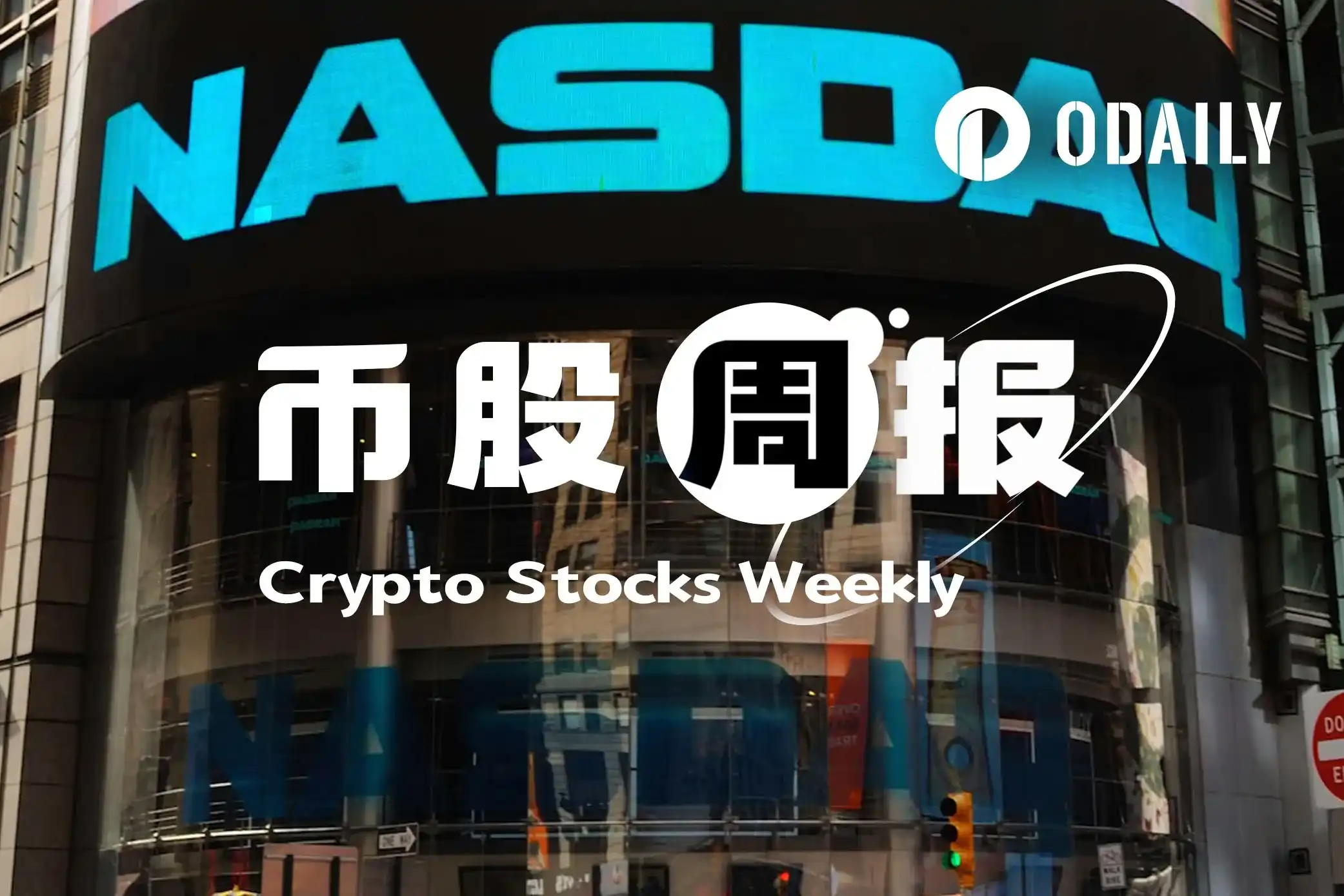
Coin Stock Barometer丨BitMine's Total Assets and Investment Reach $10.7 Billion, Exceeding ~$9.3 Billion Floating Loss; Strategy Buys Only 520 BTC, Strive Adds Positions Against the Trend (June 23)

marsbitPubblicato 2026-06-23Pubblicato ultima volta 2026-06-23

Introduzione

This article provides a weekly market update on "coin-equity" trends, focusing on listed companies holding major cryptocurrencies. Key highlights include: **General Market Trends:** Global equities, particularly in the US, Japan, and South Korea, faced significant sell-offs, led by large tech and AI-related stocks. Analysts cite profit-taking and a shift from hype-driven to performance-driven valuation for AI companies. Market focus is on upcoming Micron Technology's earnings. **Cryptocurrency Treasury Updates:** * **Bitcoin (BTC):** Net weekly BTC purchases by listed companies (excluding miners) totaled approximately $86 million, down 13.97% from the prior week. Strategy (formerly MicroStrategy) purchased only 520 BTC for ~$34.9 million, while Strive Asset Management increased its holdings by 759 BTC for ~$50 million. Other notable actions include Mara Holdings adding 1,000 BTC and Capital B shareholders approving a massive financing plan (up to ~$1.2 trillion) to potentially expand its Bitcoin reserves. * **Ethereum (ETH):** BitMine emerged as the largest corporate ETH treasury, holding 5.67 million ETH (4.7% of supply). It purchased an additional 52,203 ETH ($92 million) in the past week. Sharplink completed a $75 million private placement to fund further ETH accumulation and stock buybacks. * **Solana (SOL):** The top five listed companies hold over 15.7 million SOL combined. However, Solmate Infrastructure, a SOL treasury firm, faces a lawsuit from its largest ex...

Editor's Note: In last week's "Coin Stock Barometer" article, we mentioned that "the stock market's focus remains on AI industry chain-related sectors such as optics, storage, and materials." Relevant individual stock targets and ETF leveraged funds have subsequently risen with the trend. Additionally, the "Trump Quantum Computing Concept" sector we previously mentioned has once again attracted high-level attention and long-term plans from the U.S. government, and IBM has seen another rise.

However, as predicted by the well-known investment research firm Citrini, the U.S. stock market may face a significant correction-style shakeout. Today, Japanese and South Korean stock indices also followed suit with declines: the KOSPI closed with a plunge of nearly 10%, and the Nikkei 225 closed down 3.55%. Meanwhile, the "storage boom" driven by the AI frenzy is also facing a test. The total market capitalization of leveraged ETFs for individual stocks like SK Hynix and Samsung Electronics has grown to around 10 trillion won. Regulatory bodies, concerned about retail investor chase risk, are considering taking related measures.

After breaking through new highs, SpaceX's stock price fell over 16% in a single day, now dropping below its opening price of $150. Before Musk delivers more substance, the stock may continue to face pressure. However, considering potential future index inclusion and limited unlocking, there is still possibility for upward movement.

As for the crypto concept stock sector, treasury companies like Strategy, Bitmine, and Sharplink are still continuously financing and increasing holdings, but it may be difficult for them to rise against the market trend before Q4. The next steps in U.S.-Iran talks and subsequent actions by the Federal Reserve are also focal points for the market. Micron's earnings report on Wednesday may determine the duration of the short-term market correction. Recommended reading: "Micron Earnings Report Arrives Wednesday, Reduce Position Risk and Await Low-Cost Opportunities in the Storage Sector".

In summary, major markets such as U.S. stocks, Japanese and South Korean stocks, Taiwanese stocks, Hong Kong stocks, and A-shares still heavily rely on sentiment-driven speculation under the AI frenzy. Before OpenAI and Anthropic launch their IPO sprints, these markets will likely continue their high-volatility trend of sustained rises and sentiment/message-driven speculation.

More coin stock market information can be found at MSX.COM. (Odaily Planet Daily Note: The content of this article does not constitute investment advice and is for learning and exchange only.)

European and U.S. Stock Index Futures Report Declines, Japanese and South Korean Stocks Correct

U.S. Stock Futures Plunge, Large-Cap Tech Stocks Lead Declines Again

U.S. stock futures fell on Tuesday as large-cap technology stocks faced selling pressure that spread to Asian AI-related stocks, while investors await further developments in U.S.-Iran negotiations.

Asian technology sub-sectors suffered heavy losses on Tuesday, ending an eight-day winning streak, with Japanese and South Korean stock markets collectively correcting, and South Korean stocks plunging nearly 10%. Currently, mega-cap tech stocks generally exhibit synchronized volatility characteristics. Alphabet performed weakly, and SpaceX also declined as the IPO frenzy subsided. Market sentiment is gradually spreading to other leading tech stocks, turning cautious towards the technology sector again. This change stands in stark contrast to last year when almost any company related to artificial intelligence was seen as a "gold mine," and any mention of AI was cheered by the market. But now, the market is gradually entering a "show me the performance" verification period, with investors demanding that massive investments in AI infrastructure must yield actual returns.

This is particularly evident in companies like SpaceX, which have negative cash flow yet raised $75 billion from IPOs. This shift keeps market sentiment tense, with the market focus this week turning to Micron Technology's earnings call. "Many investors hold AI-related stocks and have made considerable gains; any volatility may prompt them to reduce positions and lock in profits,"

said Jian Shi Cortesi, a fund manager at Gam Investment Management. "Currently, tech stocks are also particularly sensitive to interest rate prospects and potential Fed rate hikes."

Morgan Stanley: Liquidity Tightening is the Main Threat to U.S. Stocks

Mike Wilson, Chief Investment Officer and Chief U.S. Equity Strategist at Morgan Stanley, stated that liquidity, not interest rate hikes, is the primary risk for U.S. stocks in the near term. He noted that the size of the reserve management plan has fallen about 75% from its peak, and Treasury repurchase volumes have also shrunk by 50%. Wilson expects U.S. stock market movements to be volatile in July, with possible corrections. The next earnings-driven leg up in the bull market will be delayed until liquidity headwinds subside.

Weekly Updates on Publicly Listed Coin Stock Companies

Representative BTC Treasury Public Companies

Strategy sharply reduces purchases, acquiring only 520 BTC showing restraint, while Strive adds positions against the trend.

According to SoSoValue data, as of 8 AM Eastern Time on June 22, 2026, the total net weekly purchase of Bitcoin by global public companies (excluding mining companies) last week was $86.03 million, a decrease of 13.97% compared to the previous week.

Strategy (formerly MicroStrategy) spent approximately $34.9 million last week to purchase 520 Bitcoins at an average price of $67,068, increasing its total holdings to 847,363 BTC.

Japanese public company Metaplanet did not purchase Bitcoin last week, marking the 9th consecutive week without purchases.

Additionally, 4 other companies purchased Bitcoin last week. Japanese food brand DayDayCook announced on June 17 that it spent $7.43 million to purchase 95 Bitcoins at an undisclosed price, bringing its total holdings to 2,899 BTC; Brazilian Bitcoin company OrangeBTC announced on June 21 that it invested $1.15 million to purchase 18 Bitcoins at $64,121, bringing its total holdings to 3,822 BTC; Asset management company Strive announced between June 15 and June 21 that it spent $49.98 million to purchase 759 Bitcoins at $65,850, bringing its total holdings to 19,864 BTC.

As of press time, the global public companies (excluding mining companies) in the statistics collectively hold a total of 1,142,276 Bitcoins, an increase of 1.87% from the previous week. The current market value is approximately $74.17 billion, accounting for 5.7% of Bitcoin's circulating market capitalization.

Mara Holdings adds 1,000 BTC, total holdings reach 36,303 BTC.

According to BitcoinTreasuries.NET monitoring, public company Mara Holdings added 1,000 BTC last week, bringing its total holdings to 36,303 BTC.

Capital B shareholders approve financing plan exceeding $120 billion, planning to increase Bitcoin reserve expansion.

Shareholders of the Bitcoin treasury company have approved a large-scale financing plan. The company can raise up to approximately $5.76 billion by issuing new shares and refinance up to approximately $115.2 billion through credit facilities to further increase its Bitcoin holdings. This plan implies that Capital B will rely on both equity financing and debt instruments to expand its crypto asset exposure, potentially further increasing the correlation between its capital structure and BTC price.

Calculated at current prices, this financing scale could theoretically support the purchase of over 1.87 million BTC, indicating a possible continued reinforcement of its "Bitcoin treasury" asset allocation strategy in the future.

BitFuFu announces share repurchase plan of up to $5 million.

Nasdaq-listed Bitcoin miner BitFuFu (NASDAQ: FUFU) announced that its board of directors has approved a share repurchase plan of up to $5 million. Under this plan, the company may repurchase its Class A ordinary shares within two years starting from June 24, 2026.

Leo Lu, Chairman and CEO of BitFuFu, stated that this repurchase plan reflects the company's strong confidence in long-term shareholder value, prudent capital allocation, and long-term strategic development. In the future, the company will continue to advance its global infrastructure layout and hash rate expansion strategy, continuously increasing its hash rate scale.

Representative ETH Treasury Public Companies

BitMine: Bought a total of 52,203 ETH worth $92 million in the past week.

As of June 21, 2026, the total value of BitMine's crypto assets, total cash, transferable securities, and "Moonshots" investments reached $10.7 billion. Its crypto asset holdings include 5,672,956 ETH and 205 Bitcoin.

Furthermore, Bitmine has currently staked 4,718,677 ETH. The amount of ETH it holds accounts for 4.7% of ETH's total supply, making it the world's largest corporate ETH treasury. In the past week, BitMine bought a total of 52,203 ETH, worth $92 million.

Sharplink completes $75 million private placement, plans to expand ETH reserves and repurchase shares.

Sharplink announced it has entered into a securities purchase agreement to sell 10,013,400 shares of common stock and warrants for 10,013,400 shares of common stock, raising approximately $75 million. The funds will be used for working capital, continued accumulation of ETH assets, and repurchasing company shares under a stock repurchase plan. As of June 16, Sharplink holds a total of 875,776 ETH.

Representative SOL Treasury Public Companies

Top five public company Solana treasury holdings total over 15.7 million SOL.

Several public companies have added Solana to their balance sheets alongside Bitcoin and Ethereum. Based on currently disclosed holdings, the top five Solana treasury companies collectively hold over 15.7 million SOL.

Forward Industries holds 7,044,079 SOL, ranking first; Upexi holds 2,361,931 SOL, ranking second; DeFi Development Corp. holds 2,294,576 SOL, ranking third. Solana Company holds 2,071,127 SOL, and SkyAI discloses that its balance sheet holds approximately 2,000,000 SOL, ranking fourth and fifth respectively.

Forward Industries has staked all the SOL in its treasury and previously disclosed generating about $4.6 million in staking revenue in Q4. DeFi Development Corp. established a $5 billion equity line of credit in June 2026 for strategic purchases of Solana; Solana Company was renamed from medical device company Helius Technologies; SkyAI was renamed from Sharps Technology.

Solana treasury company Solmate's largest external shareholder sues board of directors.

The largest external shareholder of Solana digital asset treasury company Solmate Infrastructure (SLMT), RBCH, has sued the company's current executives and directors in the New York State Supreme Court, alleging breaches of fiduciary duty, misrepresentations, and self-dealing.

RBCH is associated with RockawayX founder and CEO Viktor Fischer and currently holds about 22.74% of the shares of Solmate's parent company, Brera Holdings. The institution led a $300 million PIPE financing for Solmate in September 2025 and committed $50 million.

The lawsuit alleges that Solmate's board engaged in multiple actions harming shareholder interests, including selling shares while other investors were still in lock-up, signing advisory agreements favoring board-related parties, and directors Ron Sade and Keren Maimon personally purchasing approximately 2.298 million Class B shares at $4.97 per share, diluting shareholders by about 20%. The plaintiff alleges this transaction is illegal.

Fischer stated that Solmate has severely underperformed, currently trading at a discount of about 50% to its net asset value, with the problem lying in mismanagement and board self-dealing. Solmate currently holds approximately 2 million SOL on its books. Its stock price has fallen about 78% year-to-date, making it one of the worst-performing SOL DATs. In contrast, SOL has fallen about 50% during the same period.

Representative Altcoin Treasury Public Companies

Canton Strategic launches $50 million stock repurchase plan.

Nasdaq-listed Canton Coin treasury company Canton Strategic announced that its board of directors has approved the launch of a $50 million stock repurchase plan. It is reported that this repurchase will be executed in compliance with U.S. securities laws through open market or other compliant means. However, the timing, size, and execution method of the repurchase will be adjusted or terminated based on market conditions, stock price performance, trading volume, and regulatory environment, with no commitment to a minimum or fixed repurchase amount.

Litecoin treasury company Lite Strategy leads $1 million strategic investment in LitVM.

Nasdaq-listed Litecoin treasury company Lite Strategy announced leading a $1 million strategic investment in LitVM, while obtaining governance participation rights and potential subscription opportunities for future tokens. LitVM is a zero-knowledge Layer2 scaling network built on Litecoin. The new funds will support its goal of introducing smart contract capabilities and a programmable application layer to Litecoin after its mainnet launch.

Crypto di tendenza

Domande pertinenti

QAccording to the article, what is the total value of assets and investments held by BitMine as of June 21, 2026, and what is the significance of its ETH holdings?

AAccording to the article, as of June 21, 2026, BitMine's holdings of crypto assets, total cash, transferable securities, and 'Moonshots' investments reached $10.7 billion. Its crypto holdings include 5,672,956 ETH and 205 BTC. BitMine currently stakes 4,718,677 ETH, representing 4.7% of the total ETH supply, making it the largest corporate treasury for ETH globally.

QHow did the net weekly purchases of Bitcoin by public companies (excluding miners) change in the week leading up to June 22, 2026, and which companies were mentioned as significant buyers?

AIn the week leading up to June 22, 2026, the net weekly purchases of Bitcoin by public companies (excluding miners) totaled $86.03 million, a decrease of 13.97% compared to the previous week. Significant buyers mentioned include Strategy (MicroStrategy), which purchased 520 BTC for approximately $34.9 million; Strive, which purchased 759 BTC for approximately $49.98 million; DayDayCook, which purchased 95 BTC for $7.43 million; and OrangeBTC, which purchased 18 BTC for $1.15 million.

QWhat major financing plan was approved by Capital B shareholders, and what is its potential impact on the company's Bitcoin reserves?

ACapital B shareholders approved a large-scale financing plan. The company can raise up to approximately $5.76 billion by issuing new shares and refinance up to approximately $115.2 billion through credit facilities. The funds are intended for further accumulation of Bitcoin. At current prices, this financing scale could theoretically support the purchase of over 1.87 million BTC, indicating a potential significant expansion of its 'Bitcoin treasury' asset allocation strategy and a heightened correlation between its capital structure and BTC price.

QWhat reason does the article suggest is the primary threat to US stocks according to Morgan Stanley's chief investment officer, and what is the expected market behavior in July?

AAccording to Mike Wilson, Chief Investment Officer and Chief US Equity Strategist at Morgan Stanley, liquidity, rather than interest rate hikes, is the primary threat to US stocks in the near term. He points to a ~75% reduction in the Reserve Management Plan's size and a ~50% reduction in Treasury repo size. Wilson expects the US stock market to be volatile and potentially experience a pullback in July, with the next leg of an earnings-driven bull market delayed until liquidity headwinds subside.

QWhat legal action was taken against Solana treasury company Solmate Infrastructure, and what are the specific allegations made by the plaintiff?

ARBCH, the largest external shareholder of Solmate Infrastructure, filed a lawsuit in the New York State Supreme Court against the company's current executives and directors. The allegations include breach of fiduciary duty, misleading statements, and self-dealing. Specific claims are that the board sold shares while other investors were still in lock-up, signed advisory agreements favoring board-related parties, and that directors Ron Sade and Keren Maimon personally purchased approximately 2.298 million Class B shares at $4.97 per share, diluting shareholders by about 20% in what the plaintiff calls an allegedly illegal transaction.

Letture associate

The Final Piece of Franklin Templeton's Crypto Ambition

Franklin Templeton Completes Crypto Ambition with Acquisition of 250 Digital On June 22, Franklin Templeton announced the acquisition of 250 Digital and established Franklin Crypto, a new division focused on actively managed cryptocurrency strategies for institutional investors. The unit is led by Christopher Perkins and Seth Ginns. This acquisition marks a key piece in Franklin Templeton's multi-year crypto strategy, which began in 2018 with a digital assets team. The firm's crypto product suite now spans three layers: tokenized funds like the blockchain-based money market fund BENJI (~$831M AUM); a series of passive ETFs including Bitcoin (EZBC, ~$368M), Ethereum (EZET), XRP (XRPZ, ~$252M), Solana (SOEZ), and a multi-crypto index fund (EZPZ); and the newly added active management strategies from Franklin Crypto. The company has also expanded its crypto ecosystem through investments in projects like Ethena and Crossmint, and collaborations with blockchains such as Aptos and Sui. With approximately $18B in digital asset AUM and a total firm AUM of ~$1.78T, Franklin Templeton is positioning itself as a comprehensive crypto asset manager for pensions and sovereign wealth funds. In contrast, competitor Fidelity Investments has taken a different path, focusing early on building its own custody and trading infrastructure. Fidelity's Bitcoin ETF (FBTC) holds over $11B, significantly larger than Franklin Templeton's equivalent offering. Both giants' moves underscore the deepening trend of traditional finance entering the crypto space.

Foresight News9 min fa

The Final Piece of Franklin Templeton's Crypto Ambition

Foresight News9 min fa

Black Tuesday in Japanese and Korean Stock Markets: South Korea Triggers Circuit Breaker, Nikkei Plummets, AI Boom Undergoes Phased Adjustment

"Black Tuesday" for Asian Markets: Korean Stocks Halted by Circuit Breaker, Nikkei Plunges as AI Rally Undergoes Correction Asian stock markets experienced severe turbulence on Tuesday, with South Korea's benchmark KOSPI index plummeting nearly 10% after triggering a market-wide trading halt when its losses exceeded 8%. Japan's Nikkei 225 index also fell sharply by approximately 3.5%, ending an eight-day winning streak. The sell-off was heavily concentrated in the technology and semiconductor sectors, with giants like Samsung Electronics and SK Hynix leading the declines. The plunge reflected a rapid reversal from recent highs, with the KOSPI having retreated over 12% from its mid-June peak. Analysts attribute the sharp correction to multiple converging factors. The direct trigger was weakness in U.S. tech stocks, which fueled profit-taking in overbought Asian markets. Furthermore, stronger-than-expected U.S. jobs data has reinforced expectations that the Federal Reserve will maintain or even raise interest rates, putting pressure on rate-sensitive growth stocks. Structural vulnerabilities also played a role, particularly in South Korea, where the market is highly concentrated in a few semiconductor heavyweights, making it susceptible to shifts in global AI demand and foreign capital outflows. Despite the short-term volatility, the long-term narrative for AI and semiconductors remains intact. Industry forecasts still point to massive growth in global AI capital expenditure over the coming years. South Korean firms like SK Hynix maintain a dominant position in critical segments like High Bandwidth Memory (HBM), with long-term orders secured well into 2027. While near-term fluctuations are expected to continue, driven by U.S. monetary policy signals and upcoming corporate earnings, the current correction may present a buying opportunity for quality assets tied to the enduring AI infrastructure build-out.

marsbit25 min fa

Black Tuesday in Japanese and Korean Stock Markets: South Korea Triggers Circuit Breaker, Nikkei Plummets, AI Boom Undergoes Phased Adjustment

marsbit25 min fa

Trading

Spot
Futures

Articoli Popolari

Cosa è $S$

Comprendere SPERO: Una Panoramica Completa Introduzione a SPERO Mentre il panorama dell'innovazione continua a evolversi, l'emergere delle tecnologie web3 e dei progetti di criptovaluta gioca un ruolo fondamentale nel plasmare il futuro digitale. Un progetto che ha attirato l'attenzione in questo campo dinamico è SPERO, denotato come SPERO,$$s$. Questo articolo mira a raccogliere e presentare informazioni dettagliate su SPERO, per aiutare gli appassionati e gli investitori a comprendere le sue basi, obiettivi e innovazioni nei domini web3 e crypto. Che cos'è SPERO,$$s$? SPERO,$$s$ è un progetto unico all'interno dello spazio crypto che cerca di sfruttare i principi della decentralizzazione e della tecnologia blockchain per creare un ecosistema che promuove l'impegno, l'utilità e l'inclusione finanziaria. Il progetto è progettato per facilitare interazioni peer-to-peer in modi nuovi, fornendo agli utenti soluzioni e servizi finanziari innovativi. Al suo interno, SPERO,$$s$ mira a responsabilizzare gli individui fornendo strumenti e piattaforme che migliorano l'esperienza dell'utente nello spazio delle criptovalute. Questo include la possibilità di metodi di transazione più flessibili, la promozione di iniziative guidate dalla comunità e la creazione di percorsi per opportunità finanziarie attraverso applicazioni decentralizzate (dApps). La visione sottostante di SPERO,$$s$ ruota attorno all'inclusività, cercando di colmare le lacune all'interno della finanza tradizionale mentre sfrutta i vantaggi della tecnologia blockchain. Chi è il Creatore di SPERO,$$s$? L'identità del creatore di SPERO,$$s$ rimane piuttosto oscura, poiché ci sono risorse pubblicamente disponibili limitate che forniscono informazioni dettagliate sul suo fondatore o fondatori. Questa mancanza di trasparenza può derivare dall'impegno del progetto per la decentralizzazione—un ethos che molti progetti web3 condividono, dando priorità ai contributi collettivi rispetto al riconoscimento individuale. Centrando le discussioni attorno alla comunità e ai suoi obiettivi collettivi, SPERO,$$s$ incarna l'essenza dell'empowerment senza mettere in evidenza individui specifici. Pertanto, comprendere l'etica e la missione di SPERO rimane più importante che identificare un creatore singolo. Chi sono gli Investitori di SPERO,$$s$? SPERO,$$s$ è supportato da una varietà di investitori che vanno dai capitalisti di rischio agli investitori angelici dedicati a promuovere l'innovazione nel settore crypto. Il focus di questi investitori generalmente si allinea con la missione di SPERO—dando priorità a progetti che promettono avanzamenti tecnologici sociali, inclusività finanziaria e governance decentralizzata. Queste fondazioni di investitori sono tipicamente interessate a progetti che non solo offrono prodotti innovativi, ma contribuiscono anche positivamente alla comunità blockchain e ai suoi ecosistemi. Il supporto di questi investitori rafforza SPERO,$$s$ come un concorrente degno di nota nel dominio in rapida evoluzione dei progetti crypto. Come Funziona SPERO,$$s$? SPERO,$$s$ impiega un framework multifunzionale che lo distingue dai progetti di criptovaluta convenzionali. Ecco alcune delle caratteristiche chiave che sottolineano la sua unicità e innovazione: Governance Decentralizzata: SPERO,$$s$ integra modelli di governance decentralizzati, responsabilizzando gli utenti a partecipare attivamente ai processi decisionali riguardanti il futuro del progetto. Questo approccio favorisce un senso di proprietà e responsabilità tra i membri della comunità. Utilità del Token: SPERO,$$s$ utilizza il proprio token di criptovaluta, progettato per servire varie funzioni all'interno dell'ecosistema. Questi token abilitano transazioni, premi e la facilitazione dei servizi offerti sulla piattaforma, migliorando l'impegno e l'utilità complessivi. Architettura Stratificata: L'architettura tecnica di SPERO,$$s$ supporta la modularità e la scalabilità, consentendo un'integrazione fluida di funzionalità e applicazioni aggiuntive man mano che il progetto evolve. Questa adattabilità è fondamentale per mantenere la rilevanza nel panorama crypto in continua evoluzione. Coinvolgimento della Comunità: Il progetto enfatizza iniziative guidate dalla comunità, impiegando meccanismi che incentivano la collaborazione e il feedback. Nutrendo una comunità forte, SPERO,$$s$ può affrontare meglio le esigenze degli utenti e adattarsi alle tendenze di mercato. Focus sull'Inclusione: Offrendo basse commissioni di transazione e interfacce user-friendly, SPERO,$$s$ mira ad attrarre una base utenti diversificata, inclusi individui che potrebbero non aver precedentemente interagito nello spazio crypto. Questo impegno per l'inclusione si allinea con la sua missione generale di empowerment attraverso l'accessibilità. Cronologia di SPERO,$$s$ Comprendere la storia di un progetto fornisce preziose intuizioni sulla sua traiettoria di sviluppo e sui traguardi. Di seguito è riportata una cronologia suggerita che mappa eventi significativi nell'evoluzione di SPERO,$$s$: Fase di Concettualizzazione e Ideazione: Le idee iniziali che formano la base di SPERO,$$s$ sono state concepite, allineandosi strettamente con i principi di decentralizzazione e focus sulla comunità all'interno dell'industria blockchain. Lancio del Whitepaper del Progetto: Dopo la fase concettuale, è stato rilasciato un whitepaper completo che dettaglia la visione, gli obiettivi e l'infrastruttura tecnologica di SPERO,$$s$ per suscitare interesse e feedback dalla comunità. Costruzione della Comunità e Prime Interazioni: Sono stati effettuati sforzi attivi di outreach per costruire una comunità di early adopters e potenziali investitori, facilitando discussioni attorno agli obiettivi del progetto e ottenendo supporto. Evento di Generazione del Token: SPERO,$$s$ ha condotto un evento di generazione del token (TGE) per distribuire i propri token nativi ai primi sostenitori e stabilire una liquidità iniziale all'interno dell'ecosistema. Lancio della Prima dApp: La prima applicazione decentralizzata (dApp) associata a SPERO,$$s$ è stata attivata, consentendo agli utenti di interagire con le funzionalità principali della piattaforma. Sviluppo Continuo e Partnership: Aggiornamenti e miglioramenti continui alle offerte del progetto, inclusi partnership strategiche con altri attori nello spazio blockchain, hanno plasmato SPERO,$$s$ in un concorrente competitivo e in evoluzione nel mercato crypto. Conclusione SPERO,$$s$ rappresenta una testimonianza del potenziale del web3 e delle criptovalute di rivoluzionare i sistemi finanziari e responsabilizzare gli individui. Con un impegno per la governance decentralizzata, il coinvolgimento della comunità e funzionalità progettate in modo innovativo, apre la strada verso un panorama finanziario più inclusivo. Come per qualsiasi investimento nello spazio crypto in rapida evoluzione, si incoraggiano potenziali investitori e utenti a ricercare approfonditamente e a impegnarsi in modo riflessivo con gli sviluppi in corso all'interno di SPERO,$$s$. Il progetto mostra lo spirito innovativo dell'industria crypto, invitando a ulteriori esplorazioni delle sue innumerevoli possibilità. Mentre il percorso di SPERO,$$s$ è ancora in fase di sviluppo, i suoi principi fondamentali potrebbero effettivamente influenzare il futuro di come interagiamo con la tecnologia, la finanza e tra di noi in ecosistemi digitali interconnessi.

87 Totale visualizzazioniPubblicato il 2024.12.17Aggiornato il 2024.12.17

Cosa è $S$

Cosa è AGENT S

Agent S: Il Futuro dell'Interazione Autonoma in Web3 Introduzione Nel panorama in continua evoluzione di Web3 e criptovalute, le innovazioni stanno costantemente ridefinendo il modo in cui gli individui interagiscono con le piattaforme digitali. Uno di questi progetti pionieristici, Agent S, promette di rivoluzionare l'interazione uomo-computer attraverso il suo framework agentico aperto. Aprendo la strada a interazioni autonome, Agent S mira a semplificare compiti complessi, offrendo applicazioni trasformative nell'intelligenza artificiale (AI). Questa esplorazione dettagliata approfondirà le complessità del progetto, le sue caratteristiche uniche e le implicazioni per il dominio delle criptovalute. Cos'è Agent S? Agent S si presenta come un innovativo framework agentico aperto, progettato specificamente per affrontare tre sfide fondamentali nell'automazione dei compiti informatici: Acquisizione di Conoscenze Specifiche del Dominio: Il framework apprende in modo intelligente da varie fonti di conoscenza esterne ed esperienze interne. Questo approccio duale gli consente di costruire un ricco repository di conoscenze specifiche del dominio, migliorando le sue prestazioni nell'esecuzione dei compiti. Pianificazione su Lungo Orizzonte di Compiti: Agent S impiega una pianificazione gerarchica potenziata dall'esperienza, un approccio strategico che facilita la suddivisione e l'esecuzione efficiente di compiti complessi. Questa caratteristica migliora significativamente la sua capacità di gestire più sottocompiti in modo efficiente ed efficace. Gestione di Interfacce Dinamiche e Non Uniformi: Il progetto introduce l'Interfaccia Agente-Computer (ACI), una soluzione innovativa che migliora l'interazione tra agenti e utenti. Utilizzando Modelli Linguistici Multimodali di Grandi Dimensioni (MLLM), Agent S può navigare e manipolare senza sforzo diverse interfacce grafiche utente. Attraverso queste caratteristiche pionieristiche, Agent S fornisce un framework robusto che affronta le complessità coinvolte nell'automazione dell'interazione umana con le macchine, preparando il terreno per innumerevoli applicazioni nell'AI e oltre. Chi è il Creatore di Agent S? Sebbene il concetto di Agent S sia fondamentalmente innovativo, informazioni specifiche sul suo creatore rimangono elusive. Il creatore è attualmente sconosciuto, il che evidenzia sia la fase embrionale del progetto sia la scelta strategica di mantenere i membri fondatori sotto anonimato. Indipendentemente dall'anonimato, l'attenzione rimane sulle capacità e sul potenziale del framework. Chi sono gli Investitori di Agent S? Poiché Agent S è relativamente nuovo nell'ecosistema crittografico, informazioni dettagliate riguardanti i suoi investitori e sostenitori finanziari non sono documentate esplicitamente. La mancanza di approfondimenti pubblicamente disponibili sulle fondazioni di investimento o sulle organizzazioni che supportano il progetto solleva interrogativi sulla sua struttura di finanziamento e sulla roadmap di sviluppo. Comprendere il supporto è cruciale per valutare la sostenibilità del progetto e il suo potenziale impatto sul mercato. Come Funziona Agent S? Al centro di Agent S si trova una tecnologia all'avanguardia che gli consente di funzionare efficacemente in contesti diversi. Il suo modello operativo è costruito attorno a diverse caratteristiche chiave: Interazione Uomo-Computer Simile a Quella Umana: Il framework offre una pianificazione AI avanzata, cercando di rendere le interazioni con i computer più intuitive. Mimando il comportamento umano nell'esecuzione dei compiti, promette di elevare le esperienze degli utenti. Memoria Narrativa: Utilizzata per sfruttare esperienze di alto livello, Agent S utilizza la memoria narrativa per tenere traccia delle storie dei compiti, migliorando così i suoi processi decisionali. Memoria Episodica: Questa caratteristica fornisce agli utenti una guida passo-passo, consentendo al framework di offrire supporto contestuale mentre i compiti si sviluppano. Supporto per OpenACI: Con la capacità di funzionare localmente, Agent S consente agli utenti di mantenere il controllo sulle proprie interazioni e flussi di lavoro, allineandosi con l'etica decentralizzata di Web3. Facile Integrazione con API Esterne: La sua versatilità e compatibilità con varie piattaforme AI garantiscono che Agent S possa adattarsi senza problemi agli ecosistemi tecnologici esistenti, rendendolo una scelta attraente per sviluppatori e organizzazioni. Queste funzionalità contribuiscono collettivamente alla posizione unica di Agent S all'interno dello spazio crittografico, poiché automatizza compiti complessi e multi-fase con un intervento umano minimo. Man mano che il progetto evolve, le sue potenziali applicazioni in Web3 potrebbero ridefinire il modo in cui si svolgono le interazioni digitali. Cronologia di Agent S Lo sviluppo e le tappe di Agent S possono essere riassunti in una cronologia che evidenzia i suoi eventi significativi: 27 Settembre 2024: Il concetto di Agent S è stato lanciato in un documento di ricerca completo intitolato “Un Framework Agentico Aperto che Usa i Computer Come un Umano”, mostrando le basi per il progetto. 10 Ottobre 2024: Il documento di ricerca è stato reso pubblicamente disponibile su arXiv, offrendo un'esplorazione approfondita del framework e della sua valutazione delle prestazioni basata sul benchmark OSWorld. 12 Ottobre 2024: È stata rilasciata una presentazione video, fornendo un'idea visiva delle capacità e delle caratteristiche di Agent S, coinvolgendo ulteriormente potenziali utenti e investitori. Questi indicatori nella cronologia non solo illustrano i progressi di Agent S, ma indicano anche il suo impegno per la trasparenza e il coinvolgimento della comunità. Punti Chiave su Agent S Man mano che il framework Agent S continua a evolversi, diversi attributi chiave si distinguono, sottolineando la sua natura innovativa e il potenziale: Framework Innovativo: Progettato per fornire un uso intuitivo dei computer simile all'interazione umana, Agent S porta un approccio nuovo all'automazione dei compiti. Interazione Autonoma: La capacità di interagire autonomamente con i computer attraverso GUI segna un passo avanti verso soluzioni informatiche più intelligenti ed efficienti. Automazione di Compiti Complessi: Con la sua metodologia robusta, può automatizzare compiti complessi e multi-fase, rendendo i processi più veloci e meno soggetti a errori. Miglioramento Continuo: I meccanismi di apprendimento consentono ad Agent S di migliorare dalle esperienze passate, migliorando continuamente le sue prestazioni e la sua efficacia. Versatilità: La sua adattabilità attraverso diversi ambienti operativi come OSWorld e WindowsAgentArena garantisce che possa servire un'ampia gamma di applicazioni. Man mano che Agent S si posiziona nel panorama di Web3 e delle criptovalute, il suo potenziale per migliorare le capacità di interazione e automatizzare i processi segna un significativo avanzamento nelle tecnologie AI. Attraverso il suo framework innovativo, Agent S esemplifica il futuro delle interazioni digitali, promettendo un'esperienza più fluida ed efficiente per gli utenti in vari settori. Conclusione Agent S rappresenta un audace passo avanti nell'unione tra AI e Web3, con la capacità di ridefinire il modo in cui interagiamo con la tecnologia. Sebbene sia ancora nelle sue fasi iniziali, le possibilità per la sua applicazione sono vaste e coinvolgenti. Attraverso il suo framework completo che affronta sfide critiche, Agent S mira a portare le interazioni autonome al centro dell'esperienza digitale. Man mano che ci addentriamo nei regni delle criptovalute e della decentralizzazione, progetti come Agent S giocheranno senza dubbio un ruolo cruciale nel plasmare il futuro della tecnologia e della collaborazione uomo-computer.

554 Totale visualizzazioniPubblicato il 2025.01.14Aggiornato il 2025.01.14

Cosa è AGENT S

Come comprare S

Benvenuto in HTX.com! Abbiamo reso l'acquisto di Sonic (S) semplice e conveniente. Segui la nostra guida passo passo per intraprendere il tuo viaggio nel mondo delle criptovalute.Step 1: Crea il tuo Account HTXUsa la tua email o numero di telefono per registrarti il tuo account gratuito su HTX. Vivi un'esperienza facile e sblocca tutte le funzionalità,Crea il mio accountStep 2: Vai in Acquista crypto e seleziona il tuo metodo di pagamentoCarta di credito/debito: utilizza la tua Visa o Mastercard per acquistare immediatamente SonicS.Bilancio: Usa i fondi dal bilancio del tuo account HTX per fare trading senza problemi.Terze parti: abbiamo aggiunto metodi di pagamento molto utilizzati come Google Pay e Apple Pay per maggiore comodità.P2P: Fai trading direttamente con altri utenti HTX.Over-the-Counter (OTC): Offriamo servizi su misura e tassi di cambio competitivi per i trader.Step 3: Conserva Sonic (S)Dopo aver acquistato Sonic (S), conserva nel tuo account HTX. In alternativa, puoi inviare tramite trasferimento blockchain o scambiare per altre criptovalute.Step 4: Scambia Sonic (S)Scambia facilmente Sonic (S) nel mercato spot di HTX. Accedi al tuo account, seleziona la tua coppia di trading, esegui le tue operazioni e monitora in tempo reale. Offriamo un'esperienza user-friendly sia per chi ha appena iniziato che per i trader più esperti.

1.1k Totale visualizzazioniPubblicato il 2025.01.15Aggiornato il 2026.06.02

Come comprare S

Discussioni

Benvenuto nella Community HTX. Qui puoi rimanere informato sugli ultimi sviluppi della piattaforma e accedere ad approfondimenti esperti sul mercato. Le opinioni degli utenti sul prezzo di S S sono presentate come di seguito.

活动图片